SMALL PETS & BIRDS
DIY Toilet Paper Roll Toys for Hamsters: A Step-by-Step Guide
A step-by-step guide to building safe, chewable toilet paper roll toys for hamsters, including tunnels, bridges, pyramids, and foraging tubes, plus sizing and safety tips.
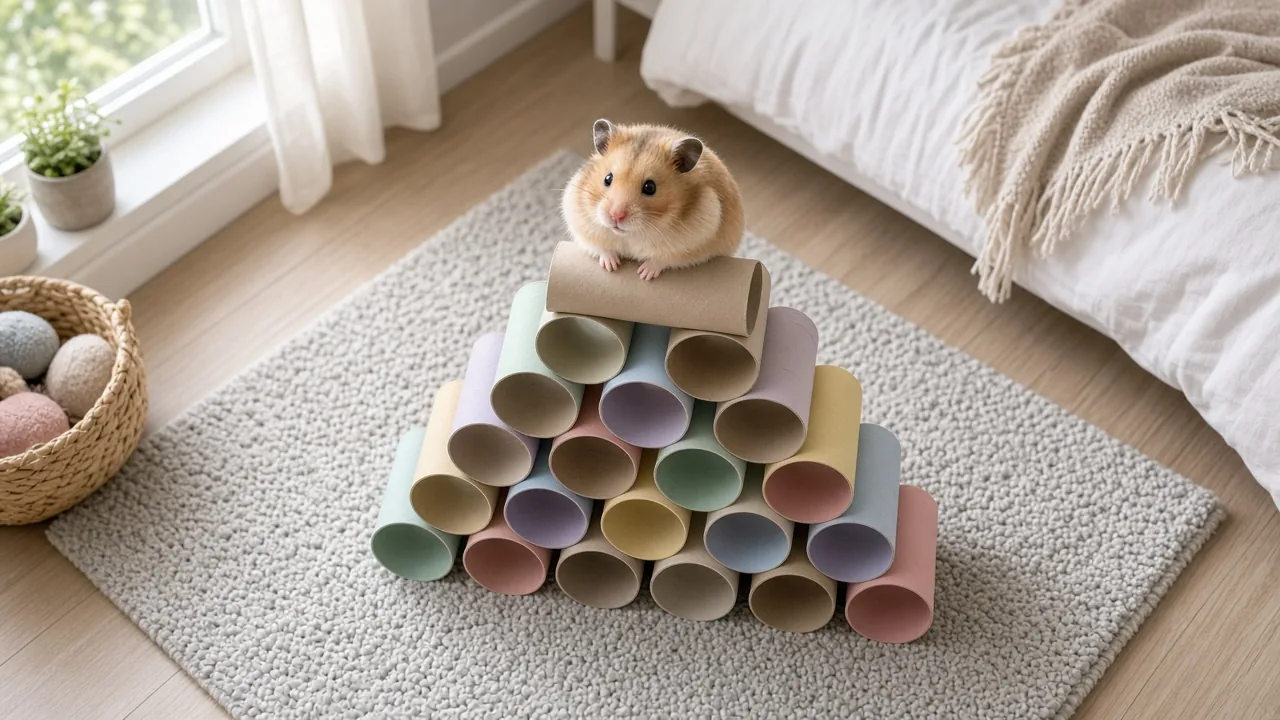
Saved toilet paper tubes can become safe, chewable hamster toys once you size and assemble them correctly, and you don’t need glue, paint, or a trip to the pet store to get started. Picture the stack of empty tubes sitting in your bathroom cabinet right now: with a few folds, some plain paper tape, and ten minutes, that stash turns into tunnels, bridges, and foraging toys your hamster can dig into the same day. This guide walks through exactly how to build DIY toilet paper roll toys for hamsters, how to size them for different small pets, and how to keep every tube toy safe between replacements.
What You Need to Make DIY Toilet Paper Roll Toys for Hamsters (Materials and Tools)
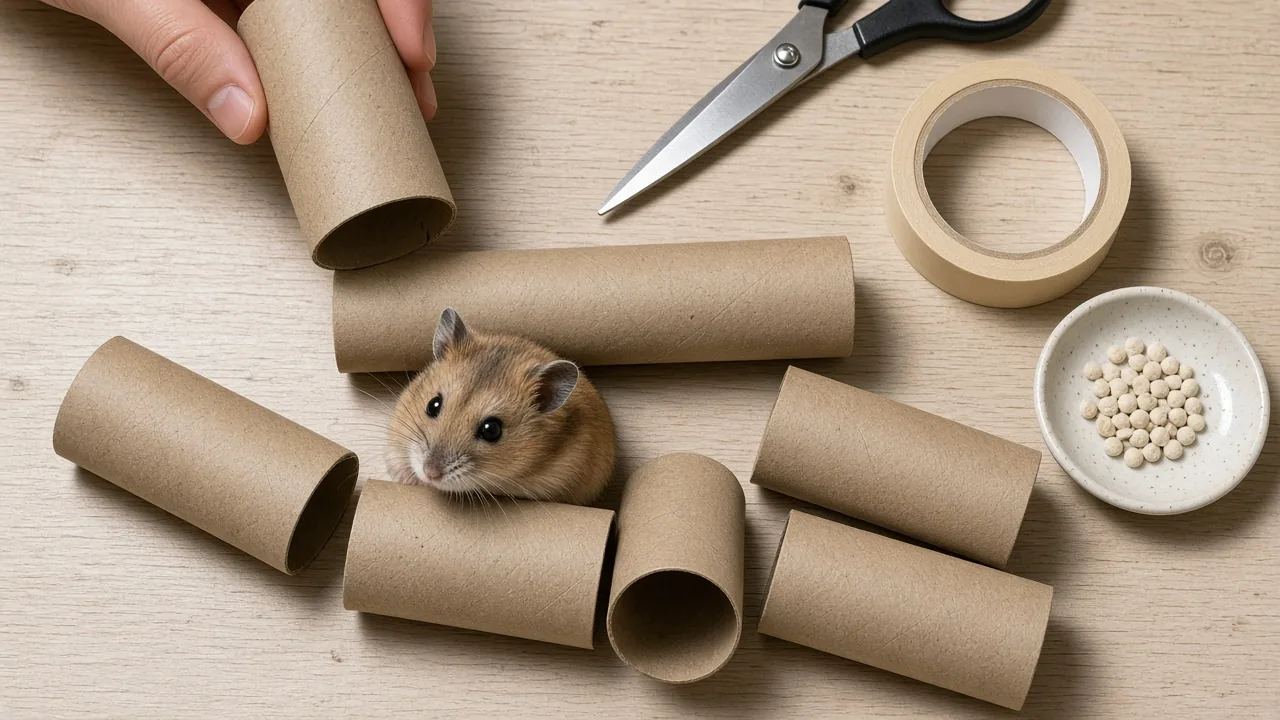
You only need a handful of supplies, and most of them are already in your recycling bin.
- Clean, dry toilet paper tubes (cardboard only, no plastic liner)
- Plain paper tape or masking tape, or no adhesive at all if you fold and tuck the tabs
- Scissors for cutting slits and trimming rough edges
- Plain, unscented treats if you plan to fill a tube for foraging
A few common additions can turn a safe toy into a hazard, so skip them:
- Staples or metal fasteners. A hamster can chew through cardboard fast enough to expose a staple within a day, and a swallowed staple is a real choking and internal injury risk.
- Printed glossy cardboard or tubes with heavy ink. Standard toilet paper tubes are usually plain brown or white, but gift wrap tubes, paper towel tubes with printed designs, or anything coated in glossy finish can carry inks and coatings you don’t want your hamster ingesting.
- Glue sticks, super glue, or craft glue. Paper tape or a simple fold-and-tuck closure holds just as well for a toy that’s going to get chewed apart within a week or two anyway.
Keep the build simple. The fewer materials involved, the fewer things that can go wrong once your hamster starts gnawing.
How to Size DIY Toilet Paper Roll Toys for Hamsters and Other Small Pets
A standard toilet paper tube runs about 1.6 inches in diameter, and that width works well for a syrian or dwarf hamster’s body, but it isn’t a universal fit for every small pet. One pet owner who tried the same tube design for her pet rats found the opening too narrow and had to rebuild with wider paper towel tubes instead. Before you tape together a stack of tubes, hold one up next to your pet and judge whether its body, including whiskers, can pass through without squeezing.
Guinea pigs present the opposite problem: a toilet paper tube is often too small to be useful at all. A guinea pig’s rounder, heavier body doesn’t fit through a standard tube diameter, so these DIY toys work better as a hamster, mouse, rat, or gerbil project rather than a one-size-fits-all small pet craft.
Are Toilet Paper Roll Toys Safe for Hamsters, Rats, and Gerbils?
Toilet paper roll toys can be safe for hamsters, rats, and gerbils when the tube diameter matches each pet’s body size and you check the toy regularly for wear. Here’s how the fit tends to break down across common small pets.
| Pet | Typical Fit with Standard Tube | Notes |
|---|---|---|
| Hamster (Syrian or dwarf) | Good fit | Standard tube width usually works as-is |
| Mouse | Good fit, sometimes roomy | May need a slightly narrower fold for very small mice |
| Gerbil | Good fit | Similar body size to hamsters, tube width usually works |
| Rat | Often too narrow | Many owners need paper towel tubes or two tubes taped side by side for extra width |
| Guinea pig | Usually too small | Body size doesn’t suit a standard tube; better suited to other DIY materials |
Rats tend to need wider tubes than hamsters because their bodies are longer and heavier, even though they’re still a small pet by cage standards. If you’re building for a mixed household with hamsters and rats, don’t assume one tube size will satisfy both.
Step 1: How to Build a Simple Tunnel Toy from a Toilet Paper Roll
A basic tunnel is the easiest starting project and the foundation for most of the other toys in this guide.
- Flatten one end of the tube slightly and fold the open end of a second tube around it.
- Secure the overlap with a strip of paper tape, or fold the cardboard tabs into each other without any adhesive.
- Repeat with additional tubes until you reach your desired tunnel length.
- Check every opening along the tunnel: it needs to stay wide enough for your pet’s full body plus whiskers to pass through without brushing the sides.
That last check matters more than the overall length of the tunnel. A tube that looks roomy when empty can feel tight once a hamster’s cheek pouches are full of bedding or food, so err on the side of a looser fit rather than a snug one.
Step 2: How to Make a Suspension Bridge Toy for Hamster Cages
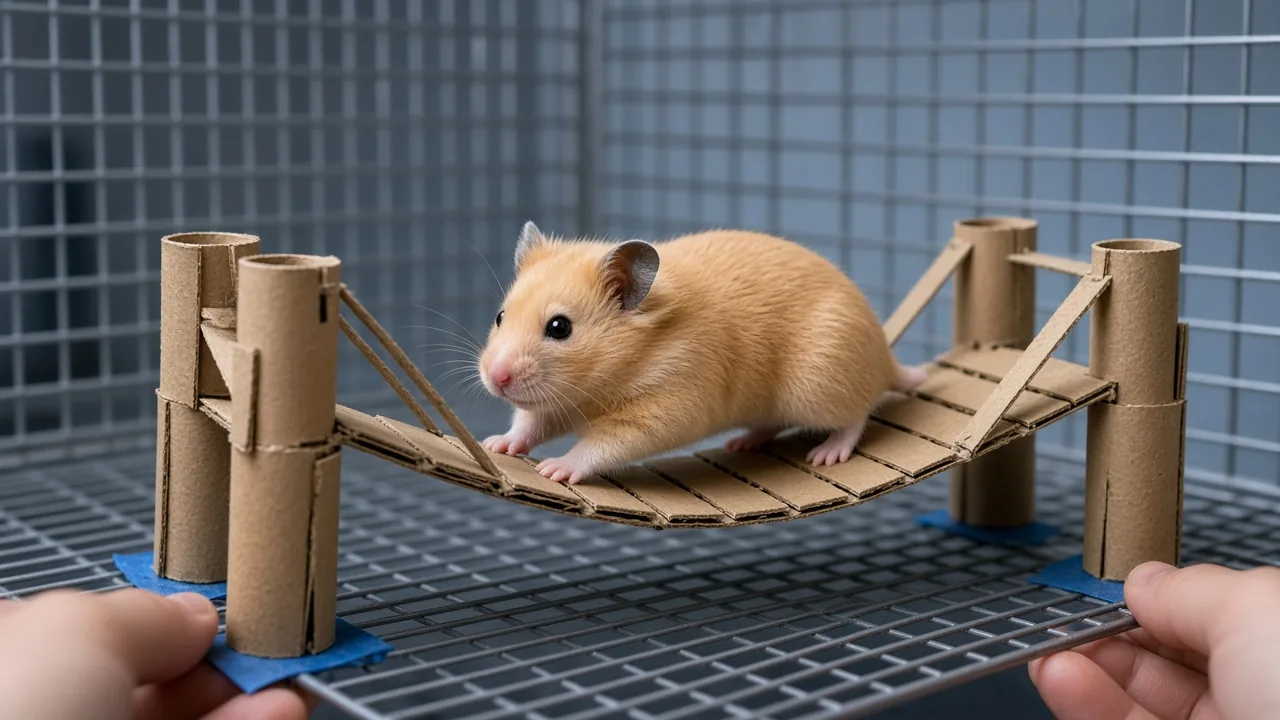
Once you’ve got the tunnel down, a bridge design adds a different kind of movement and keeps a hamster from treating every cardboard toy the same way.
- Cut two tubes lengthwise so each opens into a flat, curved sheet.
- Cut small slits along each long edge of the flattened tubes.
- Link the slits together with narrow strips of cardboard cut from a spare tube, forming a connected walkway between two points in the cage.
- Tape or tuck the ends to secure the bridge to the cage floor, a platform, or another sturdy toy.
A bridge gives your hamster a climbing surface instead of just a crawl-through tunnel, which adds variety to a cage that otherwise only has flat-floor toys. Pet owners who rotate between tunnel and bridge shapes often notice their hamster investigates the cage more actively than when the same tunnel sits in place for weeks at a time.
Step 3: How to Build a Toilet Paper Roll Pyramid for Foraging
A pyramid shape turns a handful of tubes into a multi-level climbing and foraging structure.
- Arrange four or five tubes side by side, standing upright, to form the bottom row.
- Tape the tubes to each other along their touching edges.
- Stack a shorter row of two or three tubes on top, offset so they rest on the bottom layer.
- Add a single tube at the very top if your base is wide enough to support it.
Some pets focus almost entirely on the bottom layers for darting through and barely touch the top tier. One owner noticed her hamster loved racing through the bottom two rows but ignored the top tube completely. If you notice the same pattern, skip the full pyramid and build a simpler two-tier version instead. It uses fewer tubes and still gives your hamster the darting behavior it actually seems to enjoy.
Step 4: How to Make a Treat-Filled Tube Toy for Enrichment
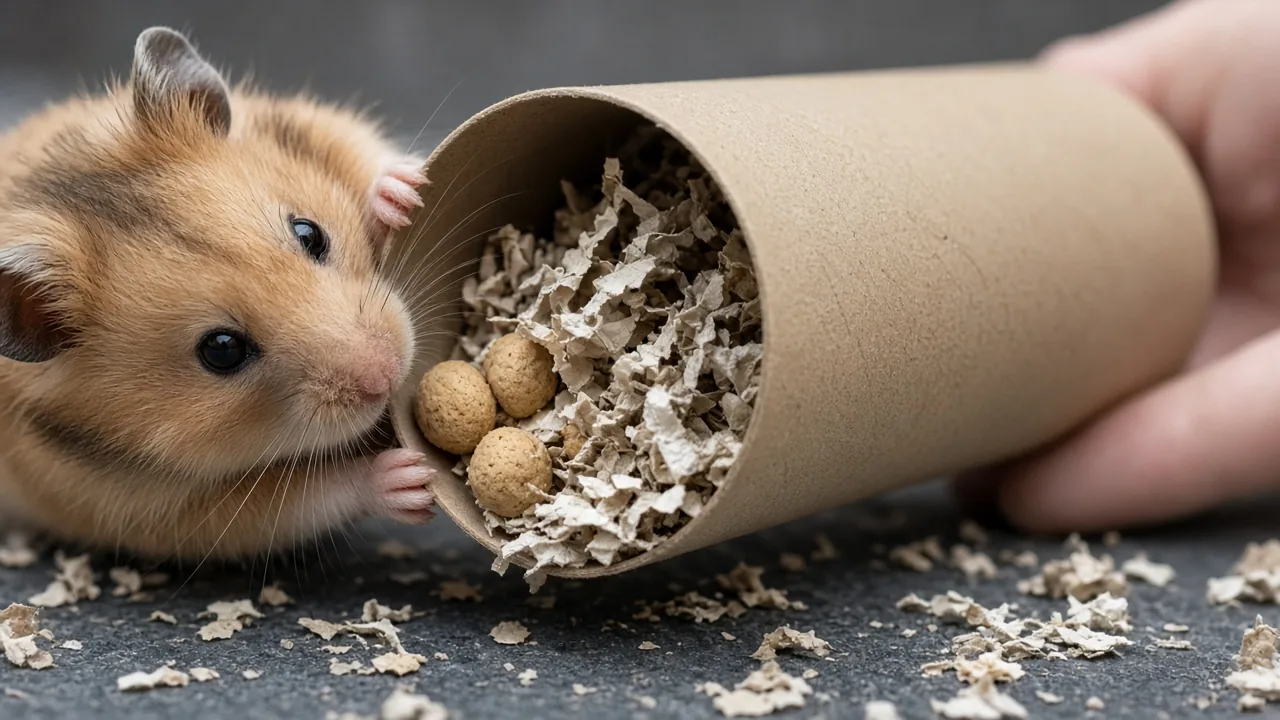
A folded tunnel becomes a foraging activity the moment you add a few plain treats inside it.
- Fold one end of a tube closed by tucking the cardboard flaps into each other.
- Place a small amount of a plain, unscented treat inside, then add a layer of bedding or shredded paper on top.
- Repeat the treat-and-bedding layers two or three times along the tube’s length.
- Fold the opposite end closed the same way, leaving the tube sealed at both ends.
Your hamster has to chew and dig through each layer to reach the next treat, which stretches out a snack that would otherwise disappear in seconds. This same layering approach works for foraging birds too. Owners of sun conures have used the same folded-tube method to give their birds a chew-and-forage activity, since the behavior of working through layers for a reward isn’t unique to rodents.
Step 5: How to Make a Cardboard Water Bottle Holder for a Hamster Cage
A rolled tube section can double as a makeshift holder that steadies a water bottle against wire cage bars, which is useful if your current setup lets the bottle slide or tilt.
- Cut a tube section slightly longer than the diameter of your water bottle.
- Cut a slit along the length of the tube so it can open slightly, like a clip.
- Wrap the tube around the water bottle’s neck or base, just below the point where it rests against the cage bars.
- Tape the tube in place against the wire bars so it braces the bottle and stops it from shifting.
This isn’t a permanent fixture and it won’t hold up the way a dedicated plastic or metal water bottle holder would, but it works as a low-cost stopgap if your cage bars don’t have a built-in slot, or if you’re setting up a cage in a pinch. Check it daily since cardboard softens with any moisture contact near the bottle’s drip spout.
Which Small Pets Can Use DIY Toilet Paper Roll Toys (and Which Can’t)
Tube toys work well for several small pets, but the fit and chew-durability needs shift from species to species.
| Pet | Suitable for Tube Toys? | Why |
|---|---|---|
| Hamster | Yes | Body size matches standard tube width |
| Mouse | Yes | Small body fits easily, enjoys tunneling behavior |
| Gerbil | Yes | Similar size and digging instinct to hamsters |
| Rat | Yes, with wider tubes | Standard width often too narrow, needs paper towel tubes or doubled tubes |
| Foraging birds (e.g., conures) | Yes, for foraging activities | Can chew through folded layers to find treats, though not for climbing toys |
| Guinea pig | Not usually | Body too large for standard tube diameter |
| Chinchilla | Not usually | Needs sturdier, wider material that can stand up to harder chewing |
Guinea pigs and chinchillas generally do better with wider, more rigid materials like untreated wood or wider cardboard boxes rather than toilet paper tubes, since their size and chewing strength outpace what a thin cardboard tube can hold up to.
How to Check a Toilet Paper Roll Toy for Safety Before Each Use
Run through this checklist before you put any tube toy back in the cage, not just the first time you build it.
- Tears or thinning walls. A tube that’s gone soft or thin in spots can collapse mid-use, and the exposed edges can be sharp enough to scrape skin.
- Loose or peeling tape. Tape that’s lifting at the edges gives your pet something to chew off and swallow, so re-tape or remove the section entirely.
- Chewed-through walls. Once a hole opens up large enough for a paw or head to get stuck, retire that section of tube.
- Ink, glossy coating, or printed designs. Any tube with heavy printing or a shiny finish carries chemicals you don’t want your pet ingesting, so stick to plain tubes from the start and this won’t be an issue later.
These checks only take a minute, but they matter because cardboard degrades unevenly. A tube can look fine on the outside while the inside wall has already worn thin from gnawing.
How Often to Replace Homemade Cardboard Tube Toys
Replace a toilet paper roll toy as soon as it looks visibly soft, soiled, or chewed through, rather than waiting for a set schedule. Cardboard breaks down much faster than the wood or plastic used in commercial hamster toys, so a tube that held up fine on day one can be unsafe by day five or six depending on how much your pet chews and how humid the cage environment is.
Keep an eye on soiling too. A tube that’s absorbed urine or wet bedding softens quickly and can grow mold inside the walls where you can’t see it. When in doubt, swap it out. A fresh tube costs nothing and takes a few minutes to rebuild.
How to Store Leftover Toilet Paper Tubes So They Don’t Get Thrown Out
The most common obstacle to this whole project isn’t the building, it’s keeping the tubes around long enough to use them. One pet owner described coming home to find her mother had thrown out all ten tubes she’d been saving for a project. If you share a household, that frustration is easy to avoid with a little setup.
- Designate a labeled bin, box, or drawer specifically for pet craft supplies, and put the label where everyone in the house will see it.
- Mention the stash to whoever handles the trash or recycling in your home, so it doesn’t get swept up during a cleaning pass.
- Flatten and store tubes somewhere visible, like a clear bin on a shelf, rather than tucked inside a bathroom cabinet where they look like trash.
A little communication upfront saves you from starting your tube collection over every time someone tidies up.
Common Problems When Making Toilet Paper Roll Toys (Troubleshooting)
A few issues come up often enough that it’s worth planning for them ahead of time.
Your pet ignores part of a pyramid or structure. This usually means the shape doesn’t match your pet’s natural movement, not that something’s wrong with the build. Watch which sections get used and rebuild around that pattern, like switching to a simpler two-tier pyramid if the top tier goes untouched.
A tube collapses under your pet’s weight. Thin single-layer cardboard can sag once it’s chewed or damp. Reinforce weight-bearing sections with a second tube taped inside the first, or switch that section to a tunnel design instead of a bridge or elevated platform.
A parent or housemate hesitates to approve a new pet or project. If you’re building toys in anticipation of getting a hamster, some families take convincing. One hopeful owner described asking for a hamster for years before her parents finally agreed. Starting with a small, low-cost project like this one can be an easy way to show you’ve thought through the care involved before bringing a pet home.
FAQ: Toilet Paper Roll Toys for Hamsters
Is glue safe to use on these toys?
Skip glue if you can. Paper tape or a simple fold-and-tuck closure holds the structure together well enough for a short-lived toy, and it removes any risk of your pet chewing through a glued seam and ingesting adhesive residue.
Can I use printed or glossy cardboard tubes?
Stick to plain cardboard. Printed designs and glossy coatings can carry inks or finishes that aren’t meant to be chewed or swallowed, and plain tubes are just as functional for building tunnels, bridges, or pyramids.
Do these toys work for pet birds too?
Yes, for foraging activities specifically. Layering treats inside a folded tube gives foraging birds like conures something to chew through for a reward, the same way it works for hamsters, though birds won’t use the tunnel or bridge shapes the same way a rodent would.
Will these toys work for guinea pigs or chinchillas?
Not reliably. Both pets tend to need wider or sturdier materials than a standard toilet paper tube can offer, either because of body size or chewing strength.
Watch how your own pet actually plays with each tube you build, whether that’s tunneling through, chewing the cardboard apart, or digging for treats, and let that guide which shapes you build more of. Check every DIY toy for tears, loose tape, and chewed-through spots on the same schedule you’d use for your pet’s other cage toys, and swap out anything that’s gotten too worn to trust.
This article is for general information only and is not a substitute for advice from your veterinarian. Always supervise your pet with a new toy, and replace any toy that is damaged or small enough to swallow.

Contributor
admin
Continue reading
All stories
SMALL PETS & BIRDS · 11 October
How to Build a DIY Acrylic Hamster Cage: Costs and Mistakes
SMALL PETS & BIRDS · 11 October
What Size Wheel Does a Hamster Need to Stay Healthy and Safe
SMALL PETS & BIRDS · 11 October
Responses
Moderated discussion