CAT TOYS
Why Do Cats Ignore Automatic Cat Toys? The Prey Instinct Explained
Automatic cat toys often fail because they skip the stalk-pounce-carry sequence cats are wired to expect. Here's the research behind the prey instinct, real toy test results, and the features that actually keep cats engaged.
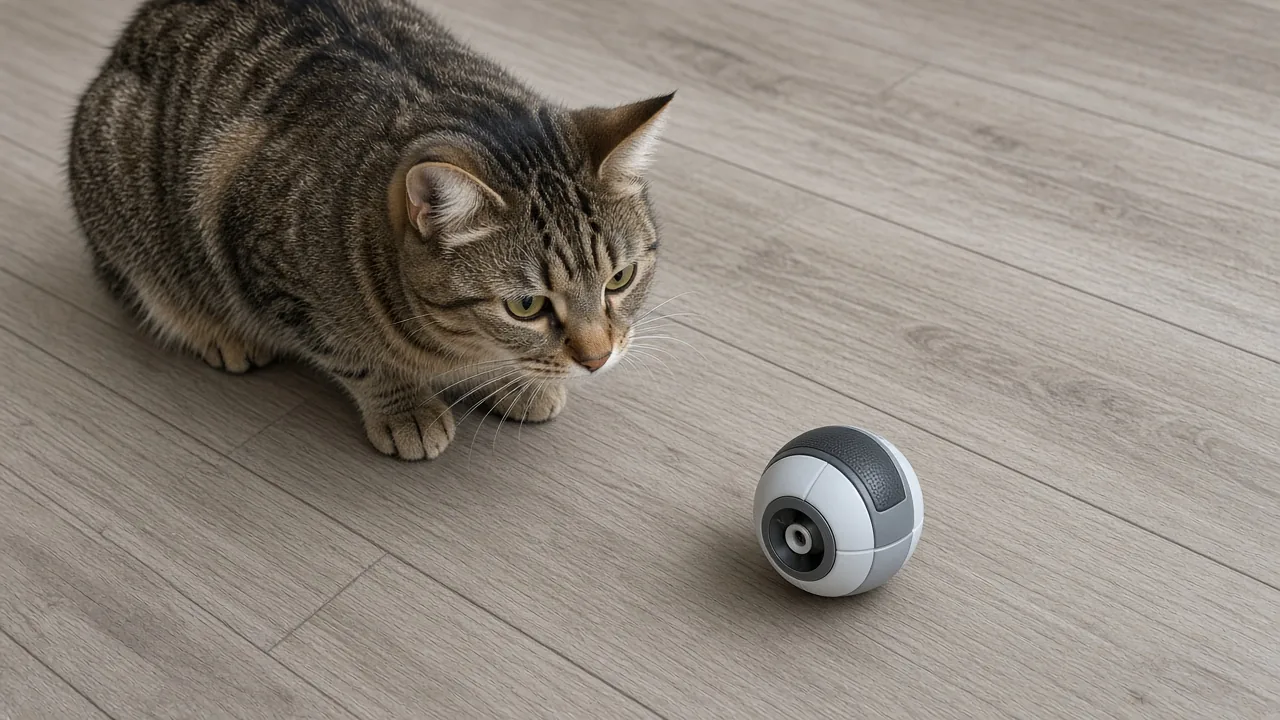
Most automatic cat toys spin, roll, or flash on a fixed pattern, which explains why do cats ignore automatic cat toys within days or even minutes of unboxing. Real prey never moves on a loop. A mouse does not circle the same spot every ten seconds, and a bird does not blink in rhythm. Once a cat figures out the pattern, the chase stops feeling like a chase.
Why Do Cats Ignore Automatic Cat Toys in the First Place?
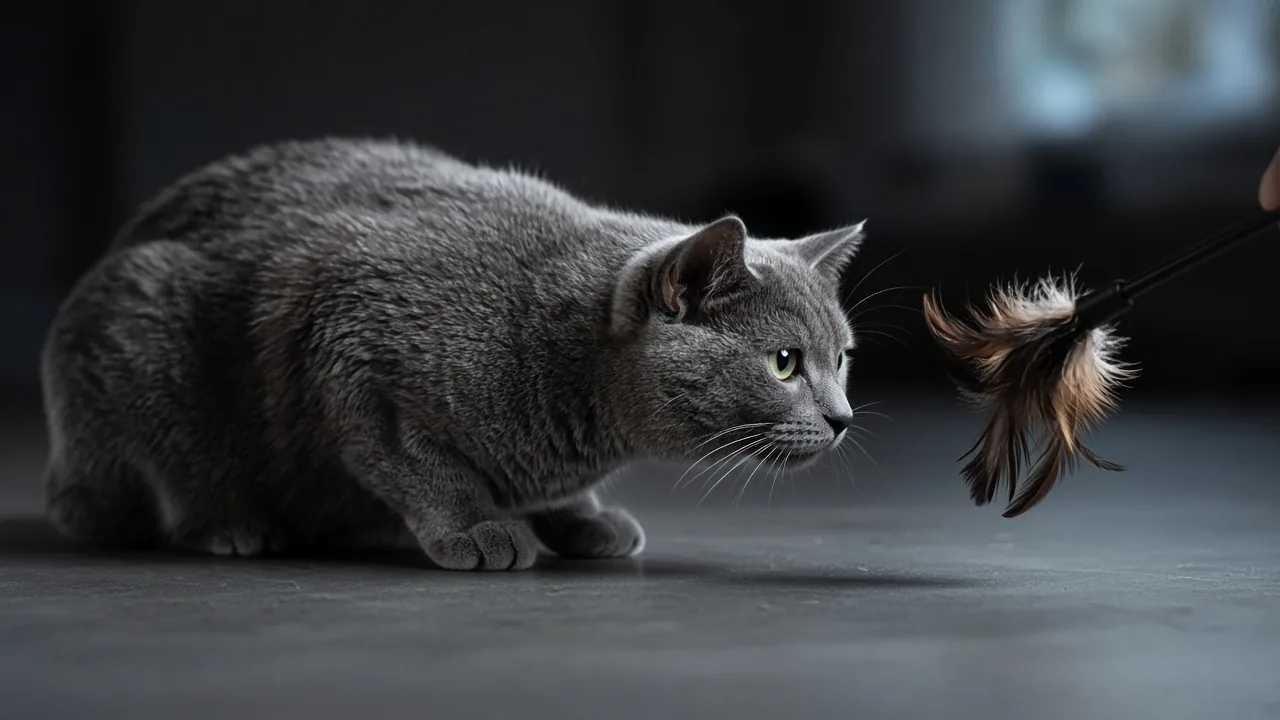
Cats hunt in a sequence, not a single action. They spot a target, stalk it low to the ground, pounce, then carry or bat the "kill" around before losing interest. Each stage matters because it mirrors how a cat would catch a meal in the wild, and skipping any of them changes how the whole encounter registers to a hunting brain.
Automatic toys usually skip straight to constant motion. There is no slow stalk-and-freeze moment, no sense of a creature trying to escape. A toy that just rolls back and forth removes the stages a cat’s brain is wired to expect, so the whole exercise reads as noise rather than prey. A cat may glance at it once out of curiosity, then move on because nothing about the motion asks for a response.
Some automatic toys try to compensate with speed settings or sound effects, but speed alone does not create unpredictability. A ball that goes fast in a straight line is still predictable. A dying mouse staggers, pauses, and changes direction without warning, and that erratic quality is what triggers sustained interest. Buying a toy with more settings does not fix this if every setting still runs on a loop.
What Does the Research Say About a Cat’s Hunting Instinct?
Behavior research on feline predatory sequences, dating back nearly fifty years, found that the urge to hunt stays strong in cats regardless of whether they are well fed. A full bowl does not switch off the drive to stalk and catch something. This matters for toy shopping because it shifts the real question away from "is my cat hungry enough to play" and toward "does this toy actually behave like something worth hunting."
That distinction explains a lot of frustrated purchases. A cat ignoring an expensive gadget usually is not bored with play in general. The cat is bored with that specific object because it fails to trigger the stalk-pounce-carry pattern described above. Feeding schedule rarely has much to do with it, and a well-fed cat can still throw itself at a crumpled receipt with more enthusiasm than it ever showed a motorized toy.
Are Expensive Automatic Ball Toys Actually Worth It?
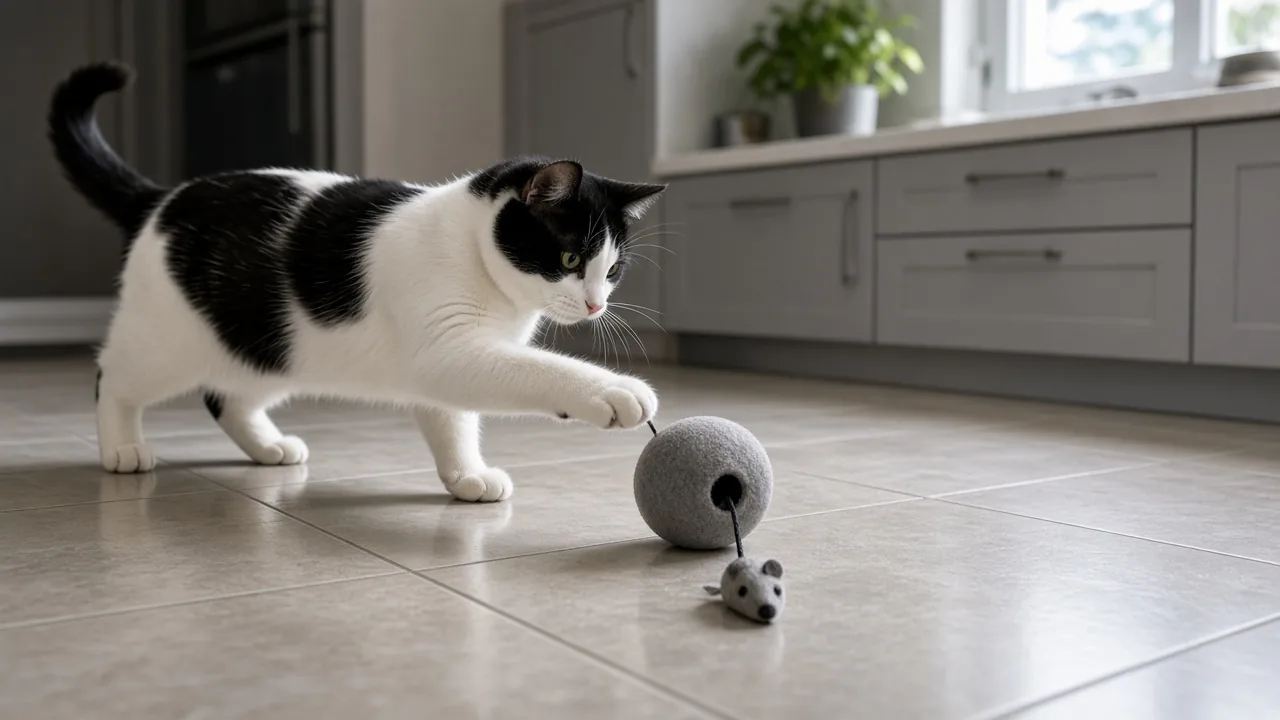
One pet owner tested two bestselling automatic ball toys, each with thousands of five-star reviews on major retail sites, and found that star ratings told her almost nothing about whether her cats would actually play. The first ball offered multiple speed settings, bird-call sound effects, three play modes, a soft silicone shell, and a dangling mouse attachment. The second was a harder plastic ball with a long cord, colored LED lights, and a single random zigzag pattern that ran for about three minutes after being tapped.
Neither held up long term. The two cats played with the softer, sound-equipped ball for a few weeks before losing interest entirely. The LED ball barely got a glance. Its lights did not spark curiosity, its zigzag movement did not read as fleeing, and roughly half the time a tap did not even wake the cats up to notice it was moving.
The underlying lesson is that feature lists and review counts measure what a toy claims to do, not whether it mimics prey well enough to hold attention. A toy covered in settings can still fail the basic test of acting like something alive and dying, which is the behavior that keeps a cat engaged. Reviews also tend to reflect how a toy performed in the first week, before a cat has fully learned its pattern, so early five-star praise does not always predict long-term interest.
Automatic Ball Toy Comparison: Features, Risks, and Real Engagement
| Feature | Soft-Shell Ball (sound + modes) | Hard-Shell Ball (LED + cord) |
|---|---|---|
| Sound | Bird-call effects | None |
| Speed settings | Multiple, plus interactive mode | None, fixed random pattern |
| Material | Soft silicone shell | Hard plastic shell |
| Attachment | Dangling mouse lure on string | Long cord |
| Lighting | None | Colored LED |
| Observed engagement | Interested for a few weeks | Largely ignored |
| Notable risk | Lure attachment caught in fur during play | Cord presents tangling risk |
The table shows a pattern worth remembering: more settings and brighter lights did not translate into more interest. The toy with a lure and sound held attention longer, but it also introduced a hazard that the flashier ball did not, which is a trade-off worth weighing before paying extra for a feature-heavy model.
Are Automatic Cat Toys Safe to Leave Unsupervised?
The dangling lure on the soft-shell ball above caught in one cat’s fur during an unsupervised play session and pulled some fur out when the toy kept moving. That is a reasonable warning sign for any toy with strings, cords, or hanging attachments, even when the toy itself seems otherwise well made.
Supervise the first several sessions with any new automatic toy, cat or kitten alike. Watch for the attachment wrapping around a leg, catching in fur, or getting chewed loose from the main unit. If a cat shows any sign of getting tangled, remove the toy and reconsider whether it is safe to run without you in the room.
Cords and lures are not the only concern. Battery compartments on cheaper toys can crack with repeated chewing, and a damaged battery is not something a cat should have access to. Set a habit of unplugging or putting away automatic toys when you leave the room, at least until you know how your own cat interacts with the moving parts.
What Prey-Like Features Actually Keep a Cat Interested?
A toy that holds a cat’s attention tends to share six traits, and checking a product against this list before buying can save money on gadgets that end up untouched after a week.
- Realistic shape. Something resembling a mouse, bird, or bug reads as prey faster than an abstract ball or disc.
- Soft or furry texture. A texture a cat can sink claws and teeth into feels closer to real fur or feathers than hard plastic.
- Workable weight. Light enough to bat and drag, heavy enough that it does not fly across the room with one swat.
- Natural sound. A faint squeak or rustle beats a synthesized electronic tone every time.
- Scent. Catnip, silvervine, or real feathers add a sensory layer that plastic and LED lights cannot replicate.
- Unpredictable movement. Speeding up, slowing down, pausing, and changing direction without a repeating pattern is what separates a toy a cat chases from one it walks past.
Most failed automatic toys miss at least three or four of these traits. A toy that nails texture and scent but moves in a straight line on a timer, for instance, still falls short of a full prey impression. Toys that check more of these boxes at once tend to earn more consistent play over weeks rather than days.
How to Choose a Toy Based on Your Cat’s Play Style
Not every cat hunts the same way, and a single toy style rarely satisfies stalking, pouncing, carrying, and shredding all at once. Watching how your cat already plays with household objects is the fastest way to figure out what to buy next.
| Play style | What it looks like | Toy types that match |
|---|---|---|
| Stalker | Crouches low, creeps toward moving objects | Wand toys, feather teasers dragged slowly |
| Pouncer | Waits still, then lunges suddenly | Toys hidden under blankets or paper, sudden-movement wand play |
| Carrier | Picks up toys and walks them to another room | Small, lightweight plush mice or catnip socks |
| Shredder | Bites and claws until the toy falls apart | Cardboard, sisal rope, durable plush with reinforced seams |
A cat that mostly carries toys to a food bowl or hiding spot is telling you plush and lightweight items work better than anything bulky. A cat that shreds everything within a day needs tougher material, like sisal, rather than delicate fabric that falls apart fast. Many cats show more than one of these play styles depending on mood, which is part of why having a small variety on hand usually works better than relying on one toy type.
Simple and DIY Toys That Often Outperform Automatic Ones
A plastic spring, a simple wand toy, a sock filled with catnip, or a cardboard box with holes cut into it frequently holds a cat’s attention longer than a battery-powered gadget costing far more. The common thread is that a human is controlling the movement, which naturally introduces the unpredictability a motor cannot fake.
Cardboard works especially well as a low-cost base. An empty shipping box can become a tunnel, and leftover packing paper crumpled inside gives a cat something to dig through and chase by sound alone. A long strip of sturdy paper with holes cut along it, draped over a box or tunnel, turns an ordinary cardboard setup into a maze a cat can crawl and swat through.
Budget wand toys sold in multi-packs for a few dollars often beat an automatic toy costing many times more, simply because a person is behind the handle creating the chase. If a wand toy has ribbon streamers, check them carefully: ribbon can fray into thin, strong strands that pose a stronger tangling and swallowing risk than a solid plush strip. Trimming off loose ribbon before giving the toy to your cat removes that risk without losing the toy’s appeal.
How to Play With a Wand Toy So Your Cat Stays Engaged
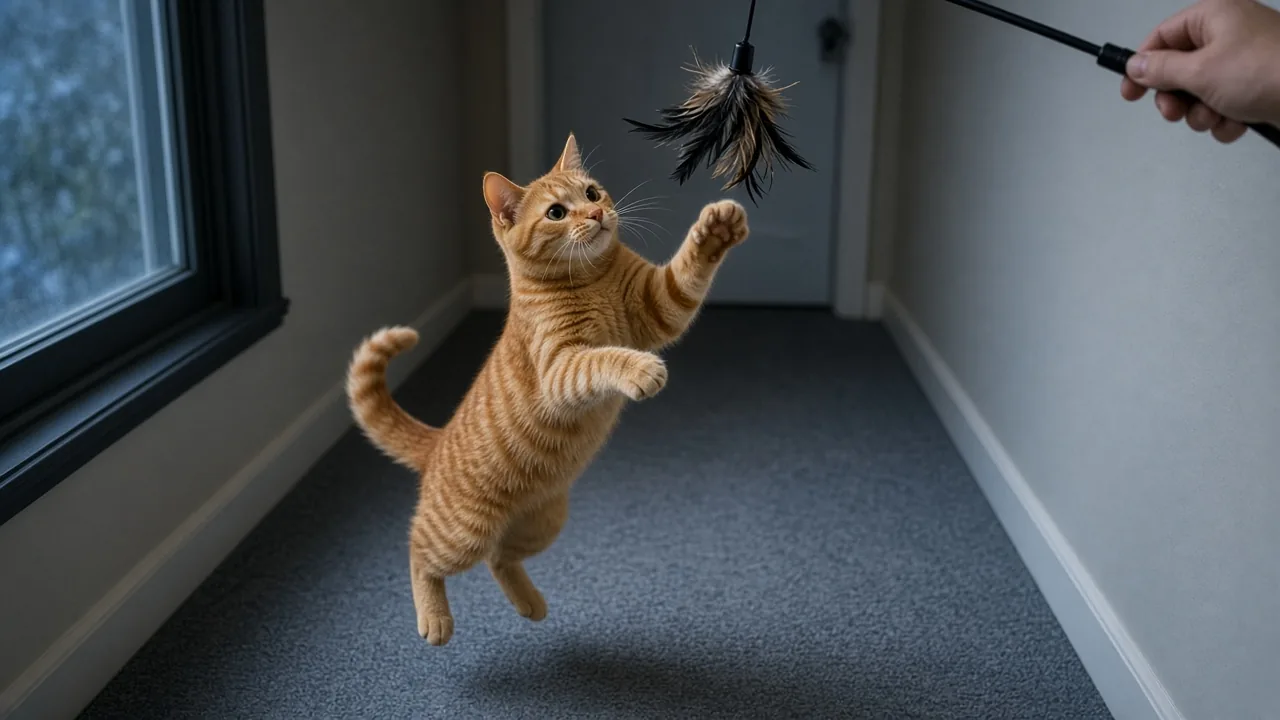
Waving a wand toy back and forth at a constant speed gets old fast for the same reason automatic toys fail: the motion becomes predictable. Treat the toy like it is alive, and the session lasts longer.
- Start slow, letting the toy "notice" your cat and freeze in place for a second or two.
- Drag it low and close to the ground, mimicking a creature trying not to be seen.
- Speed up suddenly for a short burst, then stop completely, as if the prey froze in fear.
- Let the toy disappear behind a couch leg or door frame, then reappear from a different angle.
- Allow your cat to catch it periodically. Ending every single chase with a miss leads to frustration rather than satisfaction.
- Wind the session down gradually instead of stopping abruptly, giving your cat a chance to "finish" the hunt by carrying or biting the toy.
A toy left alone on the floor usually loses a cat’s interest within about thirty seconds. The human hand holding the wand is doing most of the work that makes play worthwhile, which is a large part of why automatic versions struggle to compete no matter how many settings they offer.
How Many Times a Day Should You Play With an Indoor Cat?
An indoor cat with no outdoor hunting outlet still carries the same prey drive as a cat that goes outside, so that energy needs somewhere to go. Several short sessions spread across the day, rather than one long session, tend to match a cat’s natural hunting rhythm better. Wild cats make many short attempts at prey throughout a day rather than one marathon chase, and indoor play that mirrors this pattern often holds interest longer than a single ten-minute block.
Rotating toys helps for a similar reason. A toy that stays out all day loses its novelty quickly, even a well-designed one, because the cat has already learned exactly how it moves and smells. Putting a toy away after a session and swapping in a different one a day or two later can make both toys feel newer than they actually are. This costs nothing beyond a bit of storage space, and it tends to work better than buying a steady stream of new products hoping one finally sticks.
How Often Should You Check Cat Toys for Wear and Replace Them?
Daily biting and batting adds up faster than it looks. Check toys regularly for frayed string, loose plastic parts, cracked battery compartments, or seams coming apart at the stitching.
Replace a toy immediately once you spot damage rather than waiting to see how much worse it gets. A loose eye on a plush mouse or a cracked plastic shell on a ball toy can turn into a choking hazard the next time your cat chews on it. For wand toys, inspect the string or ribbon attachment point each time you put it away, since that connection point tends to wear out before the handle does.
A simple habit that works well: give toys a quick once-over whenever you pick them up off the floor, rather than scheduling a separate inspection day. It takes seconds and catches problems before they become dangerous.
Why ‘Popular’ or ‘Viral’ Pet Products Don’t Always Work for Your Cat
The gap between a trending product and a product that actually works for your cat shows up well beyond the toy aisle. Clear plastic carriers look appealing in photos, but many cats find them stressful because the lack of a hiding spot removes the sense of cover a nervous cat wants during travel. A soft-sided or hard-shell carrier that your cat cannot see fully out of often works better for vet visits.
Novelty litter boxes designed to look like furniture or a cute object frequently prioritize appearance over a shape and depth cats actually prefer. A plain, deep litter box tends to serve a cat’s needs better than a design built mainly for how it photographs. The same goes for double-bowl water and food sets: fur and food debris can drift into the water side and make a cat reluctant to drink, where a single ceramic bowl, cleaned on its own schedule, usually stays more appealing.
The pattern across all of these items matches what shows up with automatic toys. A product can rack up strong reviews and look impressive in marketing photos while still missing the specific details that make a cat comfortable, interested, or willing to use it the way it was designed for. Treating high ratings as a starting point rather than a guarantee tends to save money across every category of cat gear, not just toys.
Frequently Asked Questions About Automatic Cat Toys
Is it dangerous if an automatic toy’s battery gets damaged?
Yes, treat a cracked or chewed battery compartment as a reason to retire the toy. Battery components are not meant to be accessible to a cat’s teeth, and damaged batteries can leak or overheat. If you notice any swelling, odor, or exposed battery contacts, stop using the toy and dispose of it properly.
Does a cat’s age affect how interested it is in toys?
Age can play a role, but it does not mean senior cats stop wanting to play. An older cat may prefer shorter, gentler sessions over the high-energy chasing a kitten enjoys, so adjusting pace and toy weight often works better than assuming an older cat has simply lost interest in play altogether.
Why does my cat genuinely love an automatic toy that most cats ignore?
Individual personality matters as much as toy design. Some cats respond well to a specific sound, color, or movement pattern that would not appeal to another cat at all. If your cat consistently chases and bats at an automatic toy without issue, there is no need to swap it out just because the general trend points the other way, though it is still worth checking it periodically for wear.
Watch how your own cat prefers to play, whether that means stalking, pouncing, carrying toys around the house, or digging through a box, before buying anything new. Keep checking toys for fraying, cracks, or loose parts on a regular basis, and consider rotating a few different toy types so playtime stays both engaging and safe.
This article is for general information only and is not a substitute for advice from your veterinarian. Always supervise your pet with a new toy, and replace any toy that is damaged or small enough to swallow.

Contributor
admin
Continue reading
All stories
CAT TOYS · 11 October
Do Senior Cats Still Play With Toys? A Guide for Fading Senses
CAT TOYS · 11 October
Do Cat Mouse Hunting Videos Actually Work? What the Reactions Mean
CAT TOYS · 11 October
Responses
Moderated discussion