CAT TOYS
Do Cat Mouse Hunting Videos Actually Work? What the Reactions Mean
Do cat mouse hunting videos actually work? The answer depends on the cat: some pounce at the screen while others ignore it entirely, and video alone can't complete the full hunt cycle a physical toy can.
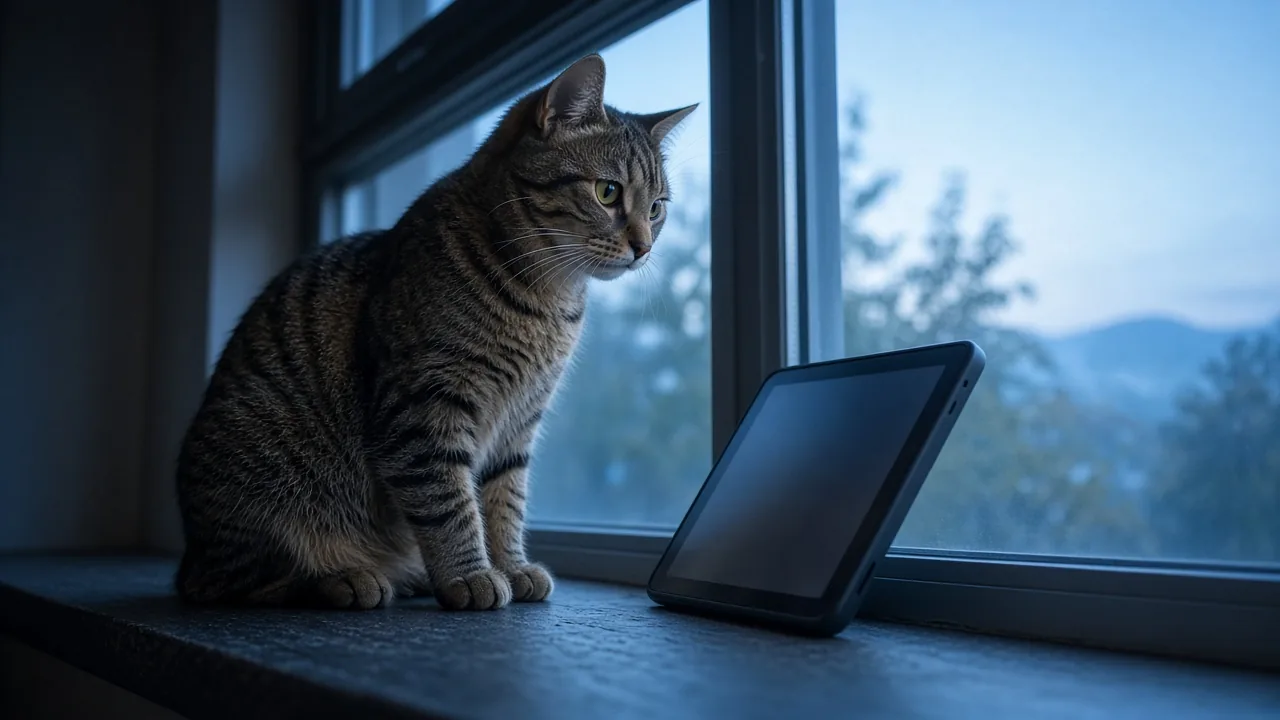
So do cat mouse hunting videos actually work? The honest answer is: sometimes, and only partly. A short clip of mice scurrying across a screen can trigger a cat’s hunting instinct for a few minutes, but reactions range from intense paw-swiping to a single glance before the cat walks away. A video also skips the physical catch that finishes a real hunt, so it works best as a short-term stand-in rather than a daily replacement for play.
Do Cat Mouse Hunting Videos Actually Work? What the Reactions Tell You
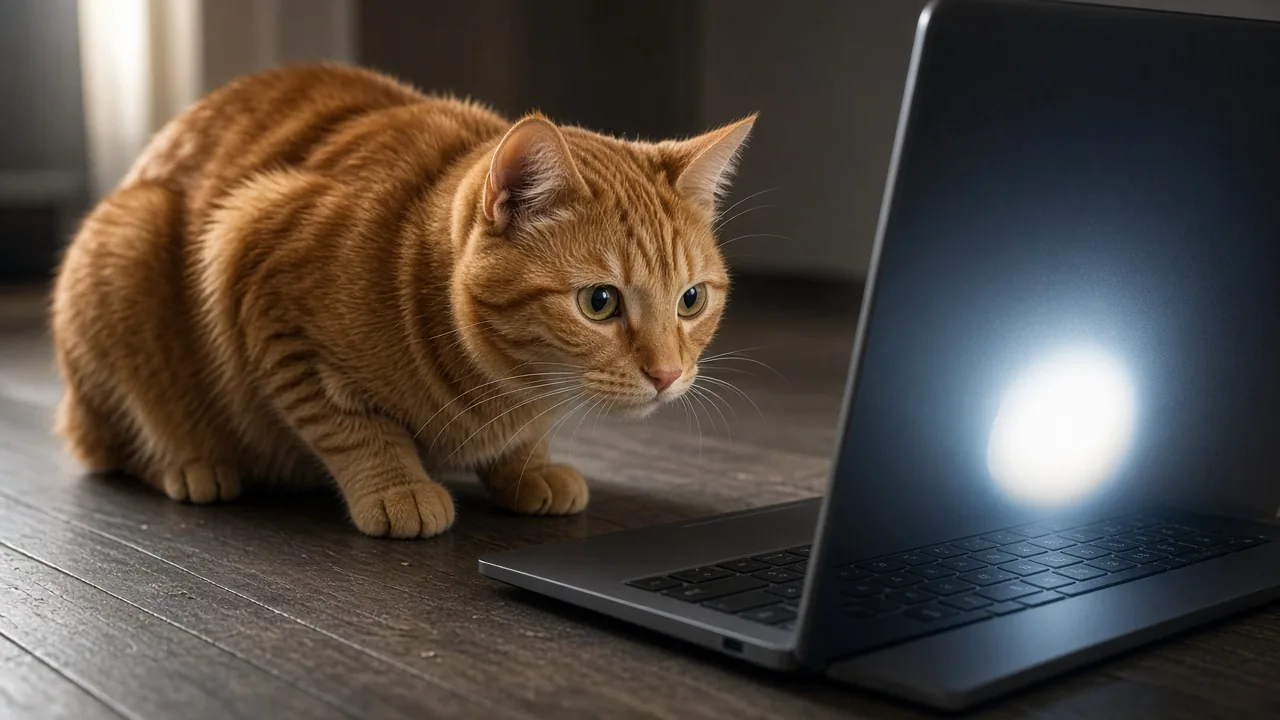
Online comment sections under popular cat-hunting videos tell a split story. One widely watched six-minute clip, which runs with no narration and only cat chirps and mouse sounds, has drawn comments from owners thrilled that their cat tracked every movement across the screen. The viewer counts and comment volume on these videos are high, which suggests a lot of owners are testing this out at home.
But scroll further and you find just as many owners reporting the opposite: their cat looked at the screen for a few seconds, then wandered off to nap. Some comments single out specific moments in the video, around the three-minute mark, as the point where certain cats perk up and start pawing. Other cats never engage at that same point, or at any point.
This pattern matters for anyone trying to decide if a mouse hunting video is worth queuing up. It is not a universal yes or no. It depends heavily on the individual cat, and that is worth unpacking before you rely on video as entertainment.
Why Some Cats React Strongly and Others Ignore the Screen Entirely
The difference in reaction likely has less to do with the video itself and more to do with the cat watching it. Cats with a strong prey drive, the kind that stalk a feather toy across the living room without being asked, tend to respond faster to on-screen movement. Cats with a lower prey drive, or ones that are older, more laid-back, or simply uninterested in novelty, may barely register the screen.
Vision also plays a role. Cats are drawn to fast, erratic motion more than to the content itself, so a video with mice darting unpredictably across the frame is more likely to catch attention than slow or repetitive movement. A cat that has never been exposed to screens before may need a few short sessions to even recognize that something on the TV or tablet is worth chasing.
Prior exposure matters too. A cat raised in a household where screens are often on in the background may tune out moving images entirely, treating the mouse video the same way it treats a muted television. On the other hand, a cat that rarely sees a screen lit up may find the sudden movement novel enough to investigate.
None of this means the video is poorly made or that your cat is unusually dull. It simply means engagement with mouse hunting videos is a personal match, similar to how one cat obsesses over a particular wand toy while another cat in the same house ignores it.
What Makes These Videos Different From Interactive Toys
A mouse hunting video delivers two of the four pieces a cat’s instinct is built around: sight and sound. The darting shapes and occasional squeaks mimic the sensory triggers that would normally kick off a hunt. For a cat with a strong visual prey drive, that can be enough to produce real excitement, including crouching, tail twitching, and pawing at the screen.
What the video cannot deliver is the physical sequence that completes a hunt: stalk, chase, pounce, and capture. A cat can see the mouse on screen and even swipe at it, but there is nothing to grab, no weight to feel under its paws, and no moment of catching anything. For some cats this unfinished sequence is only mildly frustrating. For others, especially cats with high energy needs, it can leave them more wound up rather than satisfied.
This is the core reason video should not be treated as a substitute for a wand toy or a felt mouse the cat can actually catch. The video can start the instinct chain. It cannot close it.
Video vs. Physical Toy: Comparing Engagement, Effort, and Outcome
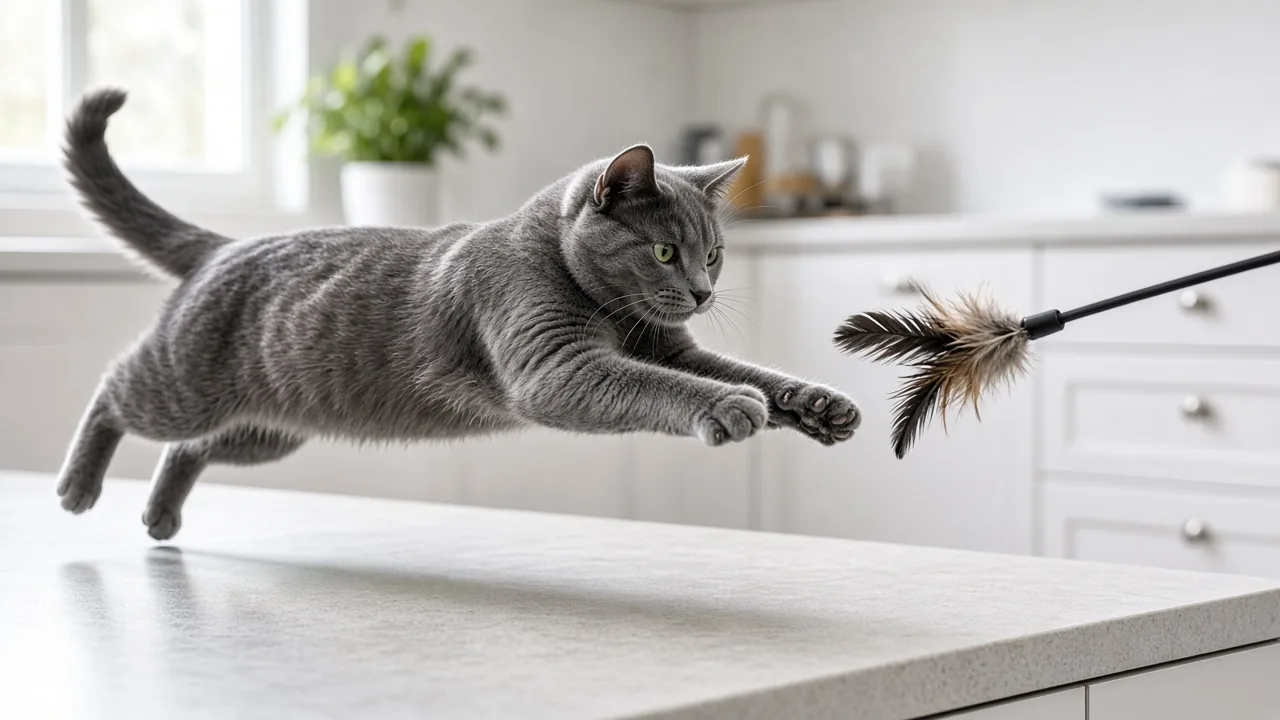
Side by side, the differences in what each option offers become clearer. This comparison can help you decide which to reach for depending on your situation.
| Factor | Mouse Hunting Video | Physical Toy (wand, mouse toy, ball) |
|---|---|---|
| Engagement level | Varies widely by cat; some ignore it entirely | Generally more consistent once a cat finds a toy it likes |
| Physical exercise | Minimal; mostly head and eye movement, occasional paw swipes | Can involve running, jumping, and full-body stalking |
| Ends in a "catch" | No; nothing to grab or hold | Yes; cat can pounce and physically capture the toy |
| Owner effort required | Low; press play and walk away | Higher; requires active participation for most interactive toys |
| Best for | Short distraction, quiet moments | Daily instinct-satisfying play |
| Risk of frustration | Can be higher if cat engages but never "catches" anything | Lower, since the cat gets a resolution |
The table makes the trade-off plain. A video asks almost nothing of you but also gives the cat almost nothing physically. A toy asks more of your time but delivers a complete experience. Most households will get the best results treating video as an occasional supplement, not a daily habit.
When a Mouse-Hunting Video Can Be a Useful Stand-In
There are a handful of situations where turning on a hunting video makes practical sense. These are moments when a full play session is not possible, but you still want to give your cat something to focus on besides pacing by the door.
Short absences are the clearest example. If you are stepping out for a quick errand or spending ten minutes in another room, a video can hold a cat’s attention and reduce the following-you-around behavior some cats show when they sense you are about to leave. One owner found this approach helpful specifically for easing separation-related restlessness during brief outings, though it will not work for every cat.
A sick or recovering cat is another case where video can fill a gap. If your cat cannot physically chase a toy because of injury or illness, a low-effort visual distraction can still offer some mental engagement without requiring movement. This should be viewed as comfort, not treatment, and any ongoing illness still needs a veterinarian’s input.
Quiet distraction moments, like during a thunderstorm, a vet visit anxiety spike, or a houseguest your cat is unsure about, are also reasonable times to try a video. The goal in these cases is simply redirecting attention for a few minutes, not providing exercise.
Using Video to Distract a Cat During Illness or Low-Energy Periods
Some owners have used calming hunting footage specifically to help a cat through a rough patch, including during serious illness. The idea is that a familiar, low-stakes visual can offer a bit of mental stimulation when a cat is too weak or in too much discomfort for physical play.
Results here differ a great deal from cat to cat. A cat that was never particularly interested in screens before getting sick is unlikely to suddenly find them fascinating. A cat that already enjoyed watching birds or mice on a screen may find some comfort in familiar movement and sound during a difficult stretch.
This approach should never be mistaken for pain management or medical care. If your cat is showing signs of serious illness, including repeated vomiting, blood in urine, or ongoing lethargy, a video is not a step in treatment. It is, at most, a small comfort measure alongside a veterinarian’s guidance.
When You Should Choose a Real Toy Instead
Certain situations call for a physical toy, not a screen, and recognizing them helps you avoid relying on video past the point it is useful.
A cat that needs daily exercise is the most obvious case. Indoor cats in particular benefit from movement that gets their heart rate up and gives their muscles something to do, which a screen simply cannot provide no matter how engaging the footage is.
Watch for frustration pacing, too. If your cat paws at the screen repeatedly, meows at it, or seems agitated after watching, that is a sign the unfinished hunt sequence is building tension rather than releasing it. A real toy that ends in a pounce resolves that tension in a way video cannot.
And if your cat shows no interest in the screen at all after a couple of tries, there is no reason to keep attempting it. Some cats simply are not screen-oriented, and your time is better spent with a wand toy or a toy mouse they can actually catch.
How to Build a Short Daily Hunting-Style Play Session Indoors
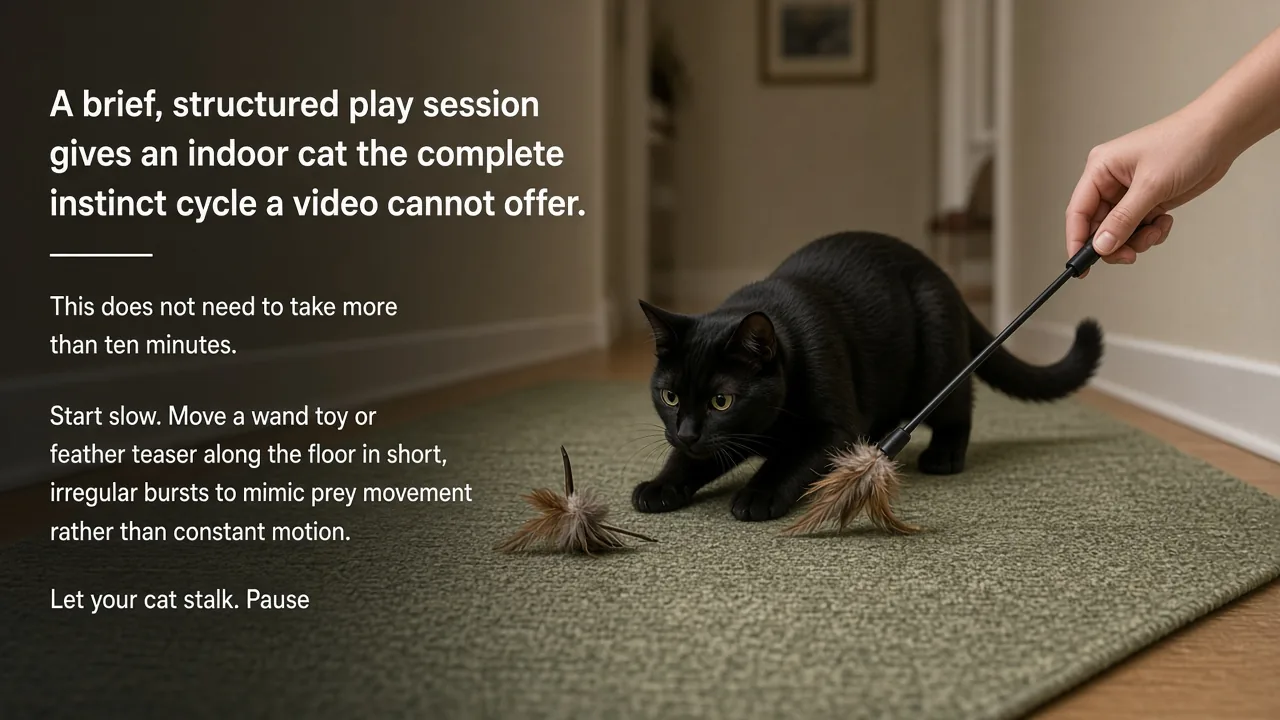
A brief, structured play session gives an indoor cat the complete instinct cycle a video cannot offer. This does not need to take more than ten minutes.
- Start slow. Move a wand toy or feather teaser along the floor in short, irregular bursts to mimic prey movement rather than constant motion.
- Let your cat stalk. Pause the toy periodically so your cat can crouch, watch, and prepare, rather than chasing it the entire time.
- Build to a chase. Speed up the movement briefly, then slow again, varying the pace the way real prey would move.
- Allow a pounce. Let the toy stay still long enough for your cat to catch it. This is the step a video cannot provide, and it is the one that satisfies the instinct cycle.
- Finish with a reward. Follow the catch with a small treat or a few minutes of praise, since this mimics the "eat" step that naturally follows a real hunt.
- Repeat two to three times daily. Several short sessions tend to work better for most cats than one long one, especially for high-energy or younger cats.
Rotating between a few different toys, feather wands, small plush mice, and the occasional ball, keeps sessions interesting and prevents your cat from losing interest in a toy that is overused.
Low-Cost Ways to Round Out Your Cat’s Play and Care Routine
Not every part of a cat’s comfort setup needs a specialty price tag. A large mouse pad, the kind made for a computer desk, can work as a stand-in for a dedicated cat heating pad at a fraction of the cost. It offers a flat, warm surface a cat can stretch out on, which is often all a cat is looking for in a heated mat.
A folding step stool can serve a similar purpose for a cat bed. Raised off the floor, it gives a cat the elevated, enclosed feeling many prefer, and tends to hold up to daily use better than some lower-cost specialty cat beds, which some owners find wear out within a year.
An open, uncovered litter box is also worth considering over a covered or enclosed style. Many cats actually prefer the open design, and it tends to cost noticeably less than enclosed options marketed as premium.
Which Household Swaps Are Worth Trying, and Which Cats Reject Them
Not every substitute lands well with every cat, and scratching tools are a good example. Sisal rope, wrapped around a table leg or post, can work as a budget alternative to a store-bought cat scratcher, and it tends to last for years once installed.
The catch is that some cats simply will not use it. Owners who tried swapping a familiar scratching post for sisal rope have reported their cat ignoring the rope entirely and continuing to scratch the furniture or the original post instead. Cats can be particular about the material and location they are used to, so a swap that works for one cat may be a non-starter for another.
If your cat rejects a substitute, do not force the issue. Go back to whatever scratching surface your cat already uses, and consider the swap a worthwhile experiment rather than a failure on your part.
Safety Checks Before You Rely on Any Substitute Toy or Setup
Before leaning on any stand-in, whether a mouse pad heating surface or a repurposed stool bed, run the same safety checks you would with a store-bought toy.
- Check for loose threads or fraying edges on anything your cat might chew, since loose fibers can become a swallowing hazard.
- Inspect any heating surface for overheating risk before leaving your cat unsupervised with it, and test the temperature yourself first.
- Look for sharp edges on repurposed furniture items like a stool, especially at joints or hardware points.
- Supervise the first use of any new substitute the way you would a brand-new toy, watching for chewing, scratching, or ingestion attempts.
- Replace any item, substitute or purpose-made, as soon as it shows cracking, splitting, or exposed material.
A cheaper alternative is only a good trade if it is also reasonably safe. If a swap requires constant monitoring to stay safe, it may not actually save you effort or peace of mind in the long run.
Frequently Asked Questions About Cat Hunting Videos and Toy Substitutes
Can my cat go back to normal play after watching a hunting video?
Yes. There is no evidence that watching a hunting video changes how a cat behaves with physical toys afterward. One owner noted their cat looked toward them after the video accidentally paused, which seemed more like a request to resume than any sign of lasting effect.
How can I tell if my cat is actually engaged versus just curious?
Genuine engagement usually includes a lowered, stalking posture, twitching tail, focused stare, and attempts to paw or pounce at the screen. Mild curiosity looks more like a brief glance, a sniff toward the device, then disinterest within a minute or two.
Is it bad for my cat to watch these videos often?
There is no indication that occasional viewing causes harm. The concern is more about using video as a complete replacement for physical play, which can leave an active cat under-exercised over time.
Are household substitutes like a mouse pad or stool bed as good as purpose-made cat products?
They can work well for many cats and cost less, but results vary. Some cats readily accept these swaps, while others, as with scratching posts, prefer the item they already know. Try a substitute as an experiment rather than a guaranteed fix.
Watch how your own cat actually plays, whether it favors stalking low to the ground, chasing fast-moving objects, or batting things across the floor, and let that guide which toys and videos you reach for. Check wand toys, scratchers, and any substitute items regularly for fraying, cracking, or loose parts, and swap them out before they become unsafe. If you are also comparing scratching posts or thinking about rotating toys to keep your cat interested, those are worth a closer look as part of the same routine.
This article is for general information only and is not a substitute for advice from your veterinarian. Always supervise your pet with a new toy, and replace any toy that is damaged or small enough to swallow.

Contributor
admin
Continue reading
All stories
CAT TOYS · 11 October
Do Senior Cats Still Play With Toys? A Guide for Fading Senses
CAT TOYS · 11 October
Can Robotic Cats Replace a Real Cat? What Owners Should Know
CAT TOYS · 11 October
Responses
Moderated discussion