CAT TOYS
Do Senior Cats Still Play With Toys? A Guide for Fading Senses
Senior cats do still play with toys, but they often prefer scent-based and close-range options as vision and hearing fade. Learn how to choose safe, engaging toys for older cats.
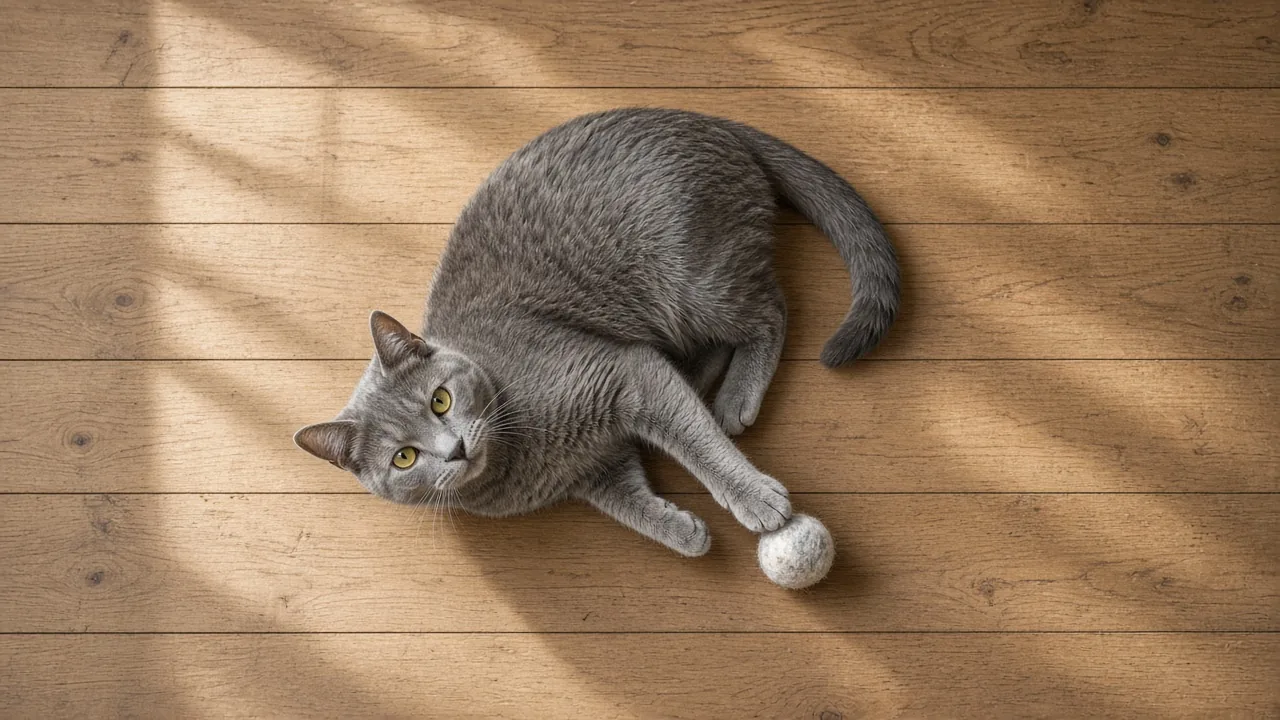
Do senior cats still play with toys? Yes—many still do, but only when toys match the senses they still use. A 19-year-old cat may ignore a motorized fish yet chase a rolling ball a few inches away. If your older cat sleeps through the feather wand or stares blankly at a squeaking mouse, playtime is not necessarily over. It usually means the toy no longer fits how she now sees, hears, and smells the world. Adjusting for those shifts can bring back short, happy play sessions.
Do Senior Cats Still Play With Toys?
Yes, but play often shifts from fast chase to scent-based or close-range movement. Many senior cats still enjoy daily sessions into their late teens and even early twenties. Hunting drive does not usually disappear with age; what changes is a cat’s ability to locate, track, and capture a target. A cat who once chased a feather wand may now prefer a toy she can sniff, bat slowly, or watch roll a few inches away. Adjusting your expectations and toy box often brings play back.
What Changes in Play as Cats Age
As cats age, their eyes may track fast or distant movement less well, and hearing loss may make squeaking toys less noticeable. Smell often remains relatively strong, and touch still works well. That explains why some senior cats ignore a flapping fish but still respond to a scented plush mouse or catnip. Play becomes less about long chase and more about close investigation, smell, pawing, and short bursts of biting or kicking. Stiff joints can also make low, contained toys easier than high jumps or sharp turns.
Why a 19-Year-Old Cat Chased a Ball but Ignored a Motorized Fish
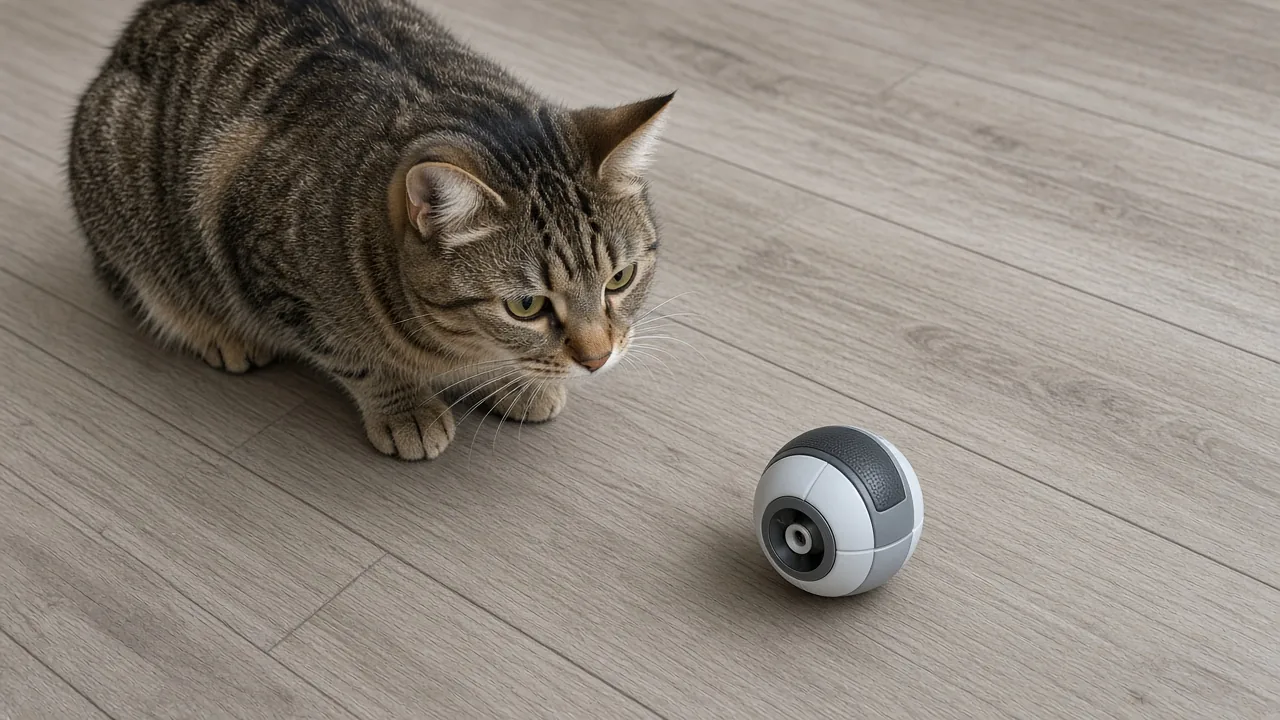
A motorized fish advertised as making any cat play like a kitten again did nothing for one 19-year-old cat named Frodo. He ignored the flapping body. What worked was a roller circuit with a ball that stayed close, moved predictably, and made a soft sound he could follow without sharp vision. He would even leave his food to chase that ball. The mismatch is common because motorized toys often rely on visual and auditory cues that are too quick, too quiet, or too far away for an older cat’s senses.
How to Tell Normal Play Changes From a Health Problem
A slow shift over months—shorter sessions, fewer zoomies, less interest in fast toys—is usually normal. A sudden stop in play for a week, or added hiding, limping, appetite loss, or litter box changes, should prompt a veterinary check. Arthritis, dental disease, or thyroid issues can reduce play drive. Test by offering a scent- or touch-based toy. If she responds, the drive is still present; the delivery needs to change. If she sniffs and then walks away from several familiar toys, the issue may be physical rather than preference.
How to Choose Toys When a Cat’s Vision and Hearing Fade
Think like a near-sighted, hard-of-hearing predator. Hunt something you can smell first, touch, and then capture within reach. Choose toys that are easy to locate, do not require fast head turns, and can be caught without long chases. A good senior-cat toy often stays close to the ground, smells interesting, and can be interacted with from a lying or crouched position.
Are Laser Pointers Good for Older Cats?
Laser pointers rely on sharp vision and fast tracking. A cat with fading sight may not see the dot, and even a cat who can see it never gets to catch it. That missing capture can frustrate an older cat. If you use a laser, end with a physical toy she can catch and bite. For most senior cats, skip it and choose something she can smell and touch. If you do try one, watch whether your cat follows the dot with her eyes before pouncing. A blank stare or slow head turn usually means she is not seeing it well.
Why Smell-Based Toys and Catnip Often Work
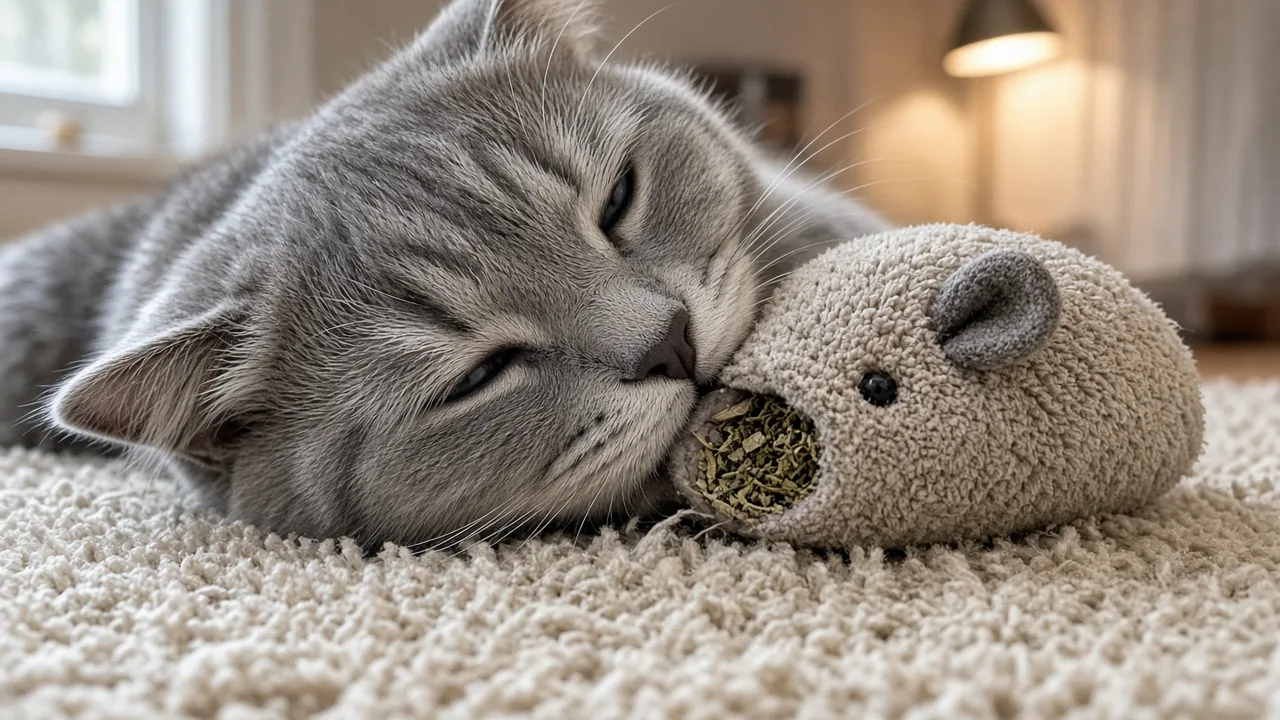
Frodo, nearly deaf and almost blind, responded strongly to catnip even though his owner expected little. The smell triggered rolling, rubbing, and a playful burst. Catnip does not affect every cat, but when it works, it can reach cats that ignore squeakers and laser dots. Scented plush toys, silver vine, valerian, and food-stuffed toys use the same sense. Start with a small amount near your cat, and watch whether she shows calm rubbing or excited play. Some cats become briefly agitated or overly rough after catnip. Remove the item if she seems distressed rather than engaged, and try a smaller amount next time.
Motorized Toys vs. Simple Track and Wand Toys
Motorized toys often move on their own, which can spook an older cat or simply not match what she can see. They also tend to operate away from a cat’s comfort zone. A simple track, rolling ball, or slow wand gives you control over speed and distance. You can bring the toy close, pause, and let the cat sniff or pounce without being rushed.
| Toy Style | Sensory Channel It Uses | Suited For | Limitations for Senior Cats |
|---|---|---|---|
| Laser pointer | Sight, fast movement | Young cats with sharp vision | Poor for low vision; no capture reward |
| Motorized fish | Sight, sound, motion | Cats who react to unpredictability | May be too fast or too noisy; cat may ignore body |
| Catnip toy | Smell, then touch | Cats who still respond to scent | Not all cats respond; can cause overexcitement |
| Roller circuit | Sight, touch, mild sound | Cats who like close, predictable chase | May be too subtle for some; cat may not engage |
| Slow wand | Sight, touch, your movement | Cats who need close-range targets | Requires your participation; some cats fixate on string |
| Crinkle ball or paper bag | Sound, touch, smell | Cats who like texture and gentle noise | Lightweight; may be carried off or swallowed if torn |
Toy Options That May Work for Senior Cats
Offer a rotation of two or three scent-heavy, close-range toys. Pay attention to what she sniffs first and whether she bats or bites. That tells you more than product claims. A toy that works one week may be ignored the next, which is normal. Rotating toys every few days can keep them feeling newer and reduce boredom without buying more.
Catnip, Scented Plush, and Food-Dispensing Toys
A stuffed mouse with a catnip pouch is easier to locate than a plastic bell ball. She can smell it, bite it without chasing, and bunny-kick it. Food-dispensing toys give a scent trail and reward. For a slow-moving senior, a low-difficulty food toy adds mental stimulation without a sprint. Choose easy-to-clean fabrics and avoid chemical smells that compete with catnip. These toys suit cats who investigate with their nose and mouth more than their legs.
Roller Circuits and Low-Light Chase Toys
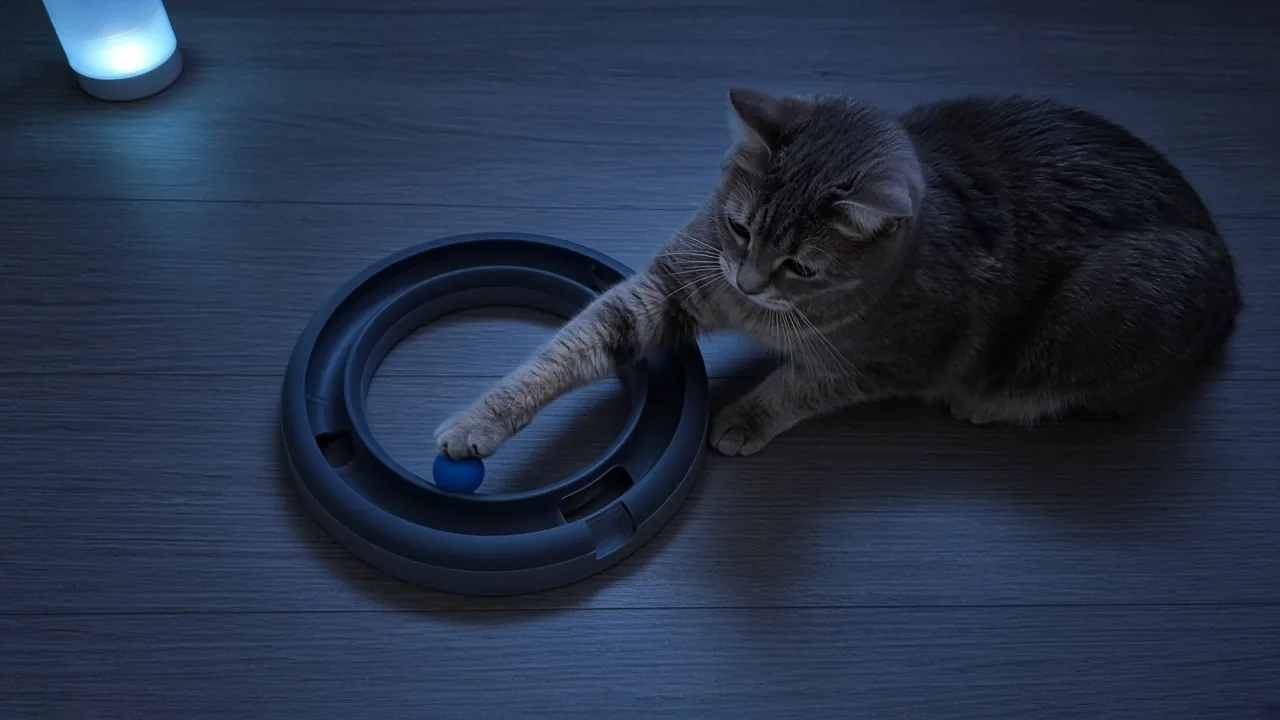
Roller circuits keep the ball contained and predictable. A senior cat can learn the circle without fast head turns. Frodo’s owner rated the first roller circuit only 1 out of 10 overall, but the brief moment he left his food to chase the ball was worth recording. One or two short bursts count as play for an older cat. Choose a low-profile circuit with a ball too large to bite off and swallow. This style is most helpful for cats that still track close movement but no longer pounce on airborne teasers.
Wand Toys with Simple, Close-Range Targets
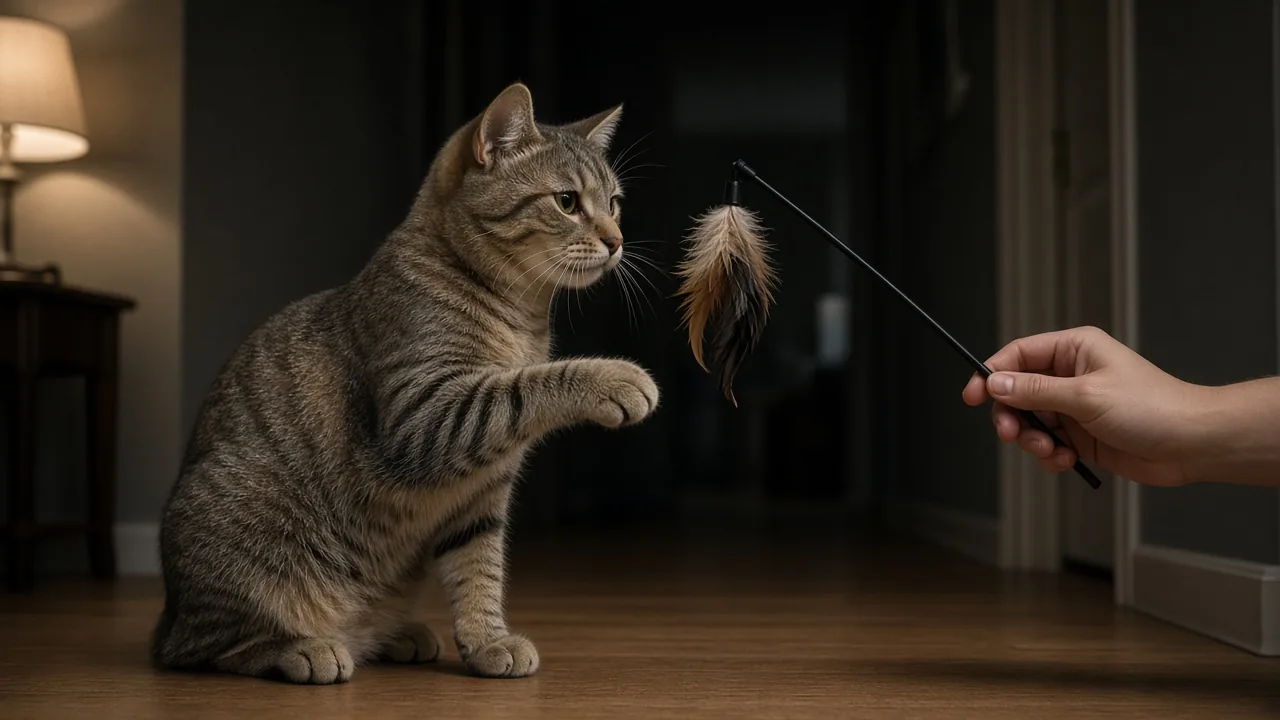
A feather wand is versatile, but an older cat needs slower technique. Draw the target a few inches from her nose, pause, and let her sniff. Some senior cats prefer the wand handle or string to the feather. Let her choose. If she only watches without pouncing, end before she gets bored. Try dragging the wand along the floor rather than lifting it into the air. The idea is to imitate prey that is casually moving near her paws, not a bird darting overhead.
How to Introduce a New Toy to an Older Cat
A senior cat may need several introductions. Place the toy near her resting spot for a day without moving it, then try two or three minutes while sitting on the floor. Avoid motorized parts at first. The goal is a normal, safe object, not a sudden intruder. Rubbing a little catnip or a treat smell on the toy can help a cat who usually ignores new items.
First Sessions: Short, Supervised, and Close to Your Cat
Set a limit of three to five minutes. Sit with the toy near you. Let her sniff it while still. Move it only after she shows interest. The moment she looks away, yawns, or grooms, stop. Quitting while she is slightly engaged builds anticipation. Pushing for more play can create a negative association. If the first session produces no response, leave the toy near her feeding area for a day and try again later.
How to Read Interest, Frustration, and Overstimulation
Interest looks like forward ears, a twitching tail tip, lowered head, and slow stalking. Frustration often shows as staring without movement, flattened ears, or a quick tail flick. Overstimulation may include rippling skin, dilated pupils, sudden biting, or a hard swat. Stop if you see frustration or overstimulation. Do not chase your cat with the toy. Try a sniffing or chewing toy later. A senior cat may take several sessions to warm up, but a consistent sign of fear—such as running away or hiding—means the toy should be removed.
Safety Checks for Senior Cat Toys
A toy safe three years ago may not be safe now. Arthritis slows reaction time, and dental disease can make chewing painful. Before each session, check seams, bells, feathers, and strings. Loose parts, frayed cord, cracked plastic, and exposed stuffing are reasons to take a toy away immediately.
Size, Small Parts, and Swallowing Risks
The main body should be larger than your cat’s open mouth. A senior cat with missing teeth may still gum fabric and loosen glued-on parts. Small bells, plastic eyes, and string can come off and be swallowed. If a tear releases filling, it may cause an intestinal blockage. String, ribbon, and wand cords are especially risky because they can cause a linear foreign body if swallowed. Electric toys with battery compartments should be checked for loose covers, magnets, and chewable edges. If you can pinch a piece off, it is too small to leave unattended.
How Often to Replace Worn or Damaged Toys
No fixed timeline fits every toy. Replace plush toys that are soaked or missing parts, plastic tracks with cracks, and wands with frayed string or splintering feathers. A toy that has been chewed into a small, hard-edged shape can injure gums or teeth. Do not repair with household glue or tape. Remove and replace. If a plush toy begins to smell even after washing, it is probably time to toss it.
Cleaning Catnip, Plush, and Track Toys
Fabric toys collect dust, saliva, and litter dust. Machine wash on gentle with mild detergent, and air dry if the label allows. Catnip often loses potency after washing, so replace the insert or use a toy with a separate pouch. Wipe plastic tracks with warm water and a little dish soap, rinse, and dry completely before returning it to your cat. Avoid heavily scented cleaners, because a strong chemical odor can make an older cat avoid the toy.
Play Preferences vs. Resource Guarding: What to Watch
Most odd play habits are quirks. A cat who chews the wand handle instead of the feather is simply choosing the part she likes. But if she growls, hisses, or swats when you approach, that may be resource guarding. Knowing the difference helps you avoid accidentally rewarding fear or aggression.
When ‘Wrong Part’ Play Is Just a Quirk
Frodo, the 19-year-old cat, ignored the fish lure but fixated on the rod end—the part he was not supposed to play with. That kind of preference is common and usually harmless. Your cat may like the texture of wood, the way string moves, or your scent on the handle. As long as she does not swallow fibers or ignore food completely, let her keep her strange favorite. It still counts as play. In fact, playing with the “wrong” end may be the only way some senior cats feel comfortable joining the game.
How Resource Guarding Differs From Normal Play Preferences
A cat with a quirk lets you touch, pick up, or trade the toy. A guarding cat may freeze, hunch, growl, hiss, or snap if you approach. This can be more common in former strays, because they may have learned to defend resources to survive. Treat guarding as a training issue. Do not scruff, hit, or yell; that can make fear worse. Instead, focus on making your approach feel predictable and safe.
Steps to Reduce Toy Guarding Without Physical Punishment
If your cat growls over a toy, stop interaction and calmly remove it if safe. Leave for a minute or two. When she settles, offer the toy again or a different one. The goal is to teach that a warning noise ends the game and calm behavior keeps it going. Repeat consistently. Do not physically restrain or correct a cat; that can lead to bites and stronger guarding. If guarding is sudden, severe, or also involves food, consult a veterinarian or certified cat behavior consultant. A professional can help you distinguish fear-based guarding from pain or other behavioral changes.
Common Questions About Senior Cat Play
Do senior cats still play with toys if they sleep most of the day?
Yes, many still enjoy brief play sessions even if they sleep more. Expect shorter sessions—one to five minutes—maybe twice a day. A good time is often after a nap and before a meal, when a cat is mildly alert but not too stiff from lying down. Keep the toy close and let the cat set the pace. A senior cat may only bat a toy twice and then rest; that still counts as play.
Is catnip safe for older cats, and why does it sometimes cause excitement?
The response to catnip is inherited; some cats never respond, but an older cat’s response can still be strong. Excitement, rolling, and mild aggression are normal for some, while others relax. Start with a pinch or small toy in a safe area. If she becomes too agitated, remove it and consider smaller amounts or silver vine. Always watch a senior cat after catnip, because excitement can make her misjudge a jump or roll off a couch.
Why does my cat only play with the wrong part of a toy?
A wand handle, crinkly wrapper, or cardboard box may be more interesting than the attached feather or mouse. Cats explore with nose and mouth, so texture and smell can beat a fuzzy toy. As long as the object is safe and not swallowed, let her enjoy it. You can use that preference by tying a safe, appropriately sized object to a string and dragging it slowly. Often the “wrong” part is simply the part your cat can control best.
How many play sessions should I offer a senior cat?
There is no single schedule that fits all seniors. Many cats do well with one or two short sessions a day, each lasting a few minutes. Watch for stiffness after napping and interest before meals. If your cat walks away, do not keep moving the toy. A senior cat’s energy can fluctuate from day to day, so some days may call for only a brief sniff-and-bat session.
Before buying, watch how your senior cat plays: sniffing first, batting, short chases, or biting and kicking. Choose low-effort, scent-friendly options, and check for wear before each short session. A cat who has not played in months may just need the right invitation. While you refresh the rotation, inspect current toys for cracks and loose parts, and replace anything questionable.
This article is for general information only and is not a substitute for advice from your veterinarian. Always supervise your pet with a new toy, and replace any toy that is damaged or small enough to swallow.

Contributor
admin
Continue reading
All stories
CAT TOYS · 11 October
Do Cat Mouse Hunting Videos Actually Work? What the Reactions Mean
CAT TOYS · 11 October
Can Robotic Cats Replace a Real Cat? What Owners Should Know
CAT TOYS · 11 October
Responses
Moderated discussion