CAT TOYS
Are Expensive Cat Toys Worth It, or Will a Box Do Just Fine?
Expensive cat toys aren't automatically worth it — value depends on safety, how much your cat actually uses the toy, and whether it does something a free household item can't. This guide breaks down which pricier toys earn their keep and which ones often lose out to a cardboard box.
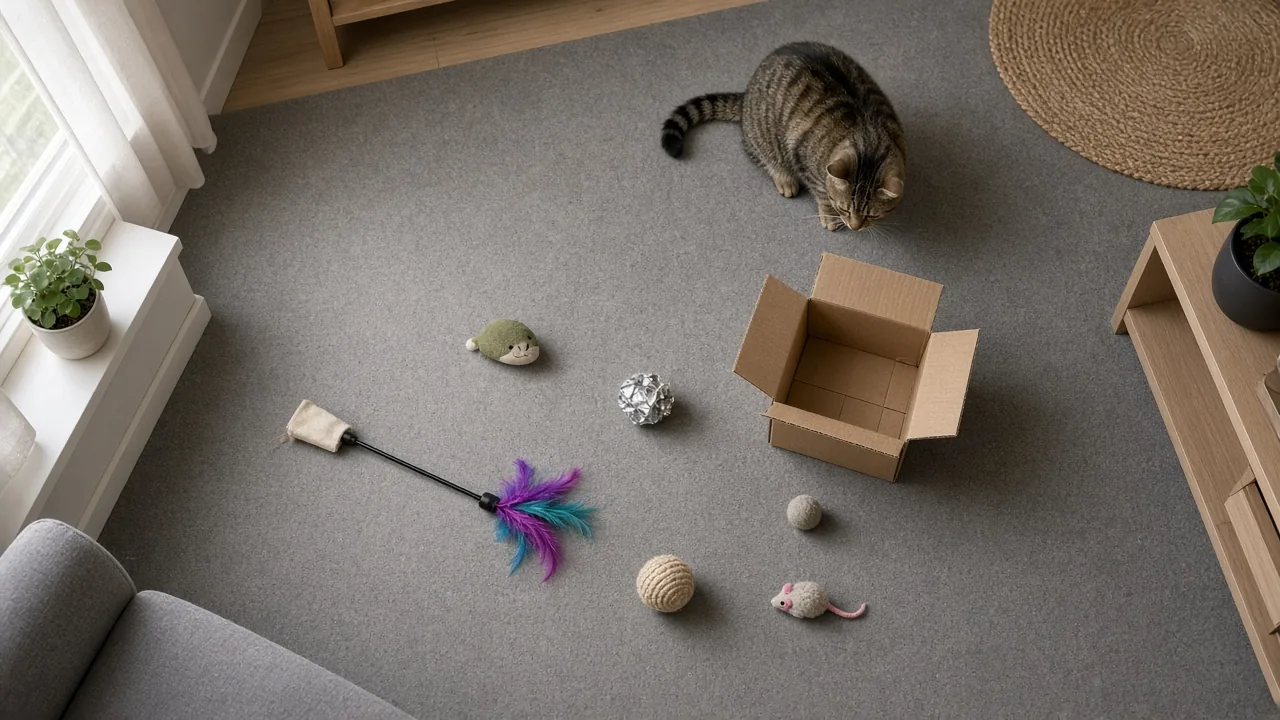
Many cats ignore a $30 toy in favor of the box it shipped in, so the honest answer to whether expensive cat toys are worth it depends on what your cat likes to do and how you judge value, not just the price tag. A toy earns its cost if your cat actually engages with it, if it’s durable enough to survive regular play, and if it solves something a free household item can’t. For some cats, that’s a refillable catnip toy. For others, it’s a flattened cardboard box.
How to Decide Whether a Pricier Cat Toy Is Worth the Cost
Price alone tells you almost nothing about whether a toy will earn its keep. A better approach is to judge each toy on three things: safety, how often your cat actually plays with it, and whether it does something a free alternative can’t.
Safety comes first because a toy that sheds small parts or frays into loose string isn’t worth any price. Engagement matters because a $40 toy your cat sniffs once and abandons is a worse deal than a $3 ball of foil your cat chases every day. And the "solves a problem" test separates toys that are genuinely useful — a puzzle feeder that slows down a fast eater, a scratcher that saves your couch — from toys that are mostly decorative.
Keep a simple mental checklist before you buy:
- Does this toy match how my cat actually plays — stalking, chasing, pouncing, or carrying?
- Can it be cleaned or refilled, or is it a one-time-use item?
- Will my cat likely lose interest once the novelty wears off?
- Is there a free or cheap version that does the same job?
If you can’t answer "yes" to at least two of these, the toy may not be worth the cost compared to something already in your recycling bin.
1. Catnip Toys with Refillable Pouches
Catnip toys split into two categories: ones with a sealed scent that fades after a few weeks, and ones with a refillable pouch you can restock indefinitely. A plush squirrel-shaped toy with a zippered or Velcro pocket for catnip refills tends to stay useful for months, while a sealed version becomes a dead toy the moment the scent wears off. That difference alone often decides whether a catnip toy is worth paying more for.
The refillable design costs a little more upfront, but you’re not replacing the whole toy every few weeks. Think of it as buying the shell once and paying only for catnip refills afterward.
Who it suits and who should skip it
Catnip toys generally work well in single-cat homes where you control exactly how the toy gets used. In multi-cat households, though, things get complicated. Some cats mark or urinate on catnip-scented items, which can make the toy unusable for the rest of the household — and once that happens, there’s often no fixing it. If you’ve seen this behavior from any cat in your home, it may be simpler to skip catnip toys altogether and choose unscented alternatives instead.
What to watch for
Catnip toys with feathers or dental netting look appealing but need supervision, especially the first few times your cat plays with them. Cats can chew off small feathers or shred netting material, and swallowing those pieces creates a choking hazard or digestive risk. Watch the first several play sessions closely, and remove the toy if you notice fraying, loose threads, or missing feathers.
2. Wand and Feather Teasers
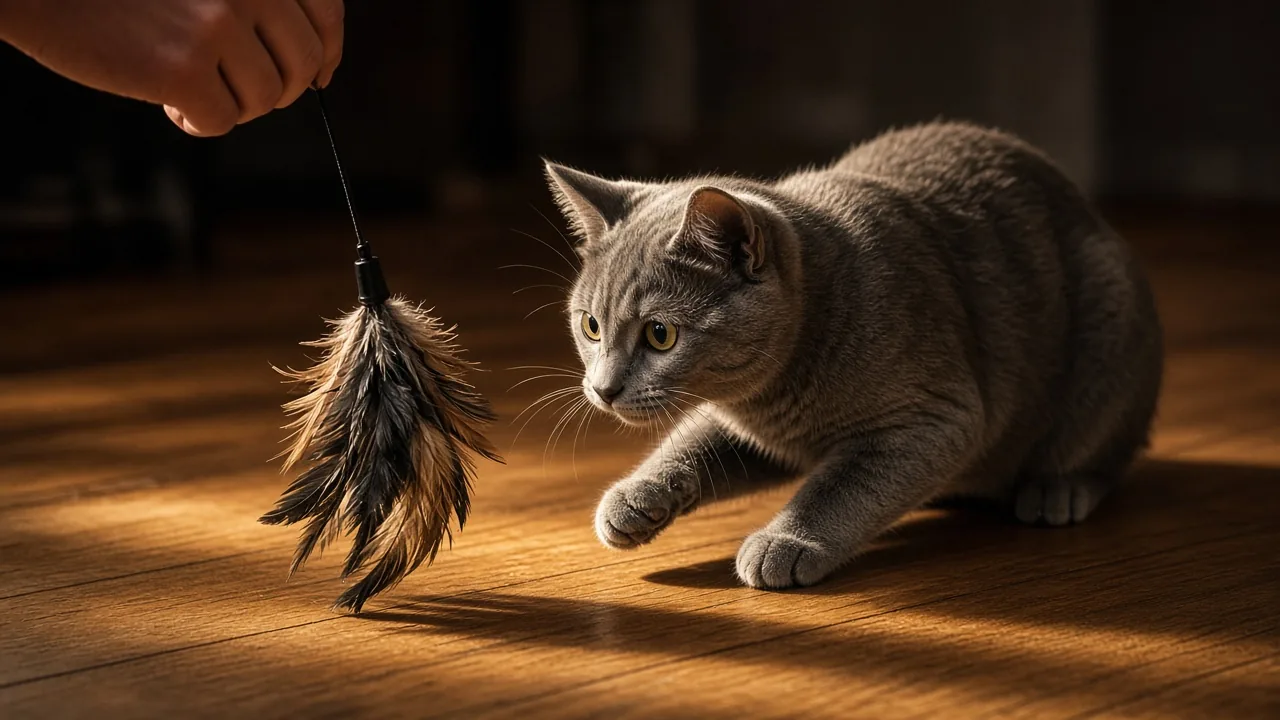
Wand and feather teasers consistently rank among the best-performing toys you can buy, and the reason is simple: they mimic the movement of real prey and require you to participate. That combination — unpredictable motion plus human interaction — taps into a cat’s hunting instinct more reliably than almost anything a cat plays with alone.
Why hands-on play beats solo toys
One experienced cat owner found that toys requiring a person’s involvement held her cat’s attention far longer than anything meant for solo play. This tracks with how hunting behavior works for cats: stalking and chasing are more satisfying with a moving, unpredictable "prey" than with a stationary toy. If you want a toy that reliably gets your cat moving, a wand teaser with feathers or fabric strips is a safe bet, even if it means setting aside ten minutes a day to swing it around.
Safety and storage habits that matter
Wand toys come with string, feathers, or small attached bells, so they need the same supervision as catnip toys. Put the wand away after each session instead of leaving it on the floor — this does two things. It prevents your cat from getting bored of a toy that’s always visible, and more importantly, it removes the strangulation risk that comes with leaving string-based toys unsupervised. Never leave a wand toy where a cat can get the string wrapped around its neck while you’re not watching.
3. Puzzle Feeders for Mental Stimulation
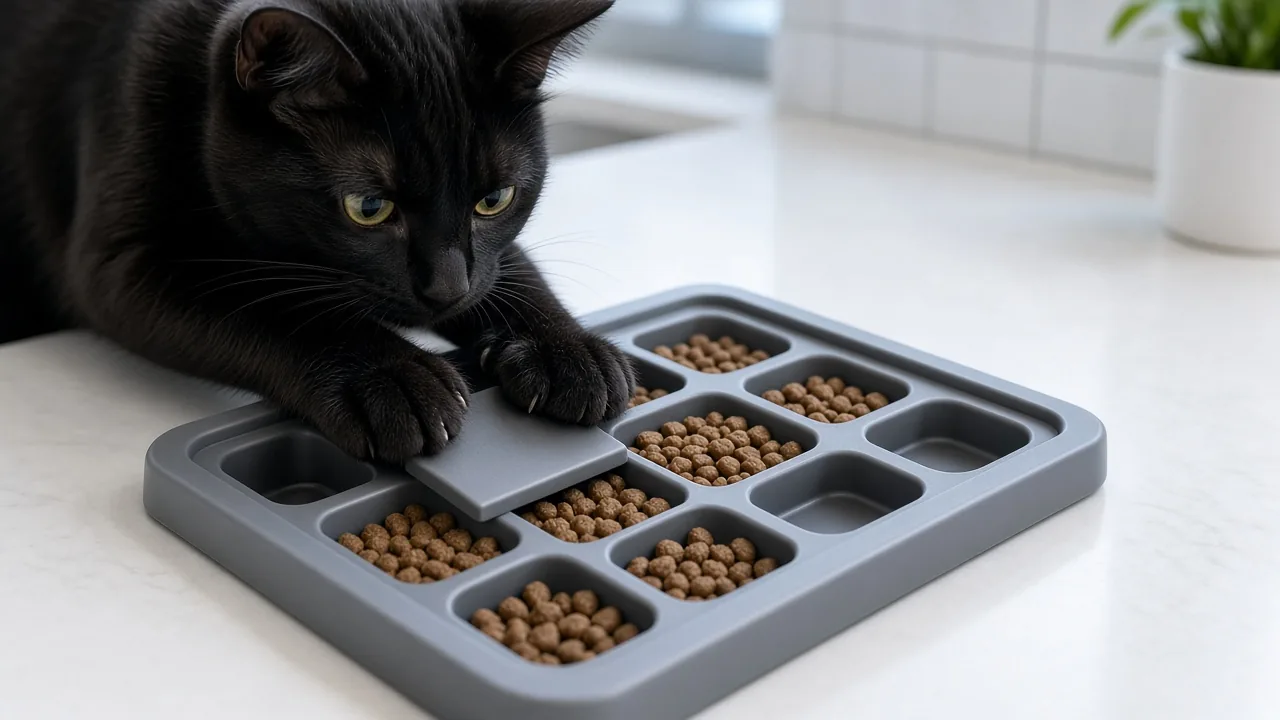
Puzzle feeders turn part of a meal into a hunting-style task instead of a simple bowl of food. A design with multiple compartments or movable pieces — such as a tray of small cups a cat has to flip or slide open — can hold a quarter cup or so of dry food and keep an indoor cat occupied for a meaningful stretch of a workday.
This matters most for cats that spend long hours alone. Instead of eating in thirty seconds and then looking for trouble, a cat working through a puzzle feeder gets both food and mental exercise at the same time.
Best fit for bored or overweight indoor cats
Puzzle feeders suit cats that need to eat more slowly, cats carrying extra weight who’d benefit from working for their food, and cats that get restless or destructive when understimulated. They’re not a universal fix, though. A cat that gives up quickly on multi-step puzzles may just walk away hungry and frustrated, so it helps to start with an easier design and work up to more complex ones.
4. Laser Toys: Fun to Watch, Limited Payoff
Laser toys produce an instant chase response — point a laser dot across the floor and most cats will take off after it. The catch is that a cat can never physically catch the light. Over time, many cats either lose interest or seem visibly frustrated once they realize there’s nothing to grab.
This is one of the few points where feedback from different cat owners lines up closely: a laser toy gets an enthusiastic start but often ends with a cat looking confused or let down, because the hunt sequence never gets to finish.
When a laser toy makes sense anyway
A laser pointer isn’t worthless — it works well as a brief warm-up before switching to a physical toy. Run the laser for a minute or two to get your cat moving and excited, then swap in a wand toy or a soft toy mouse so your cat can actually catch something at the end. This lets the hunt finish the way it’s supposed to, with a real catch instead of an empty dot of light.
5. Scratching Furniture and Cardboard Climbers
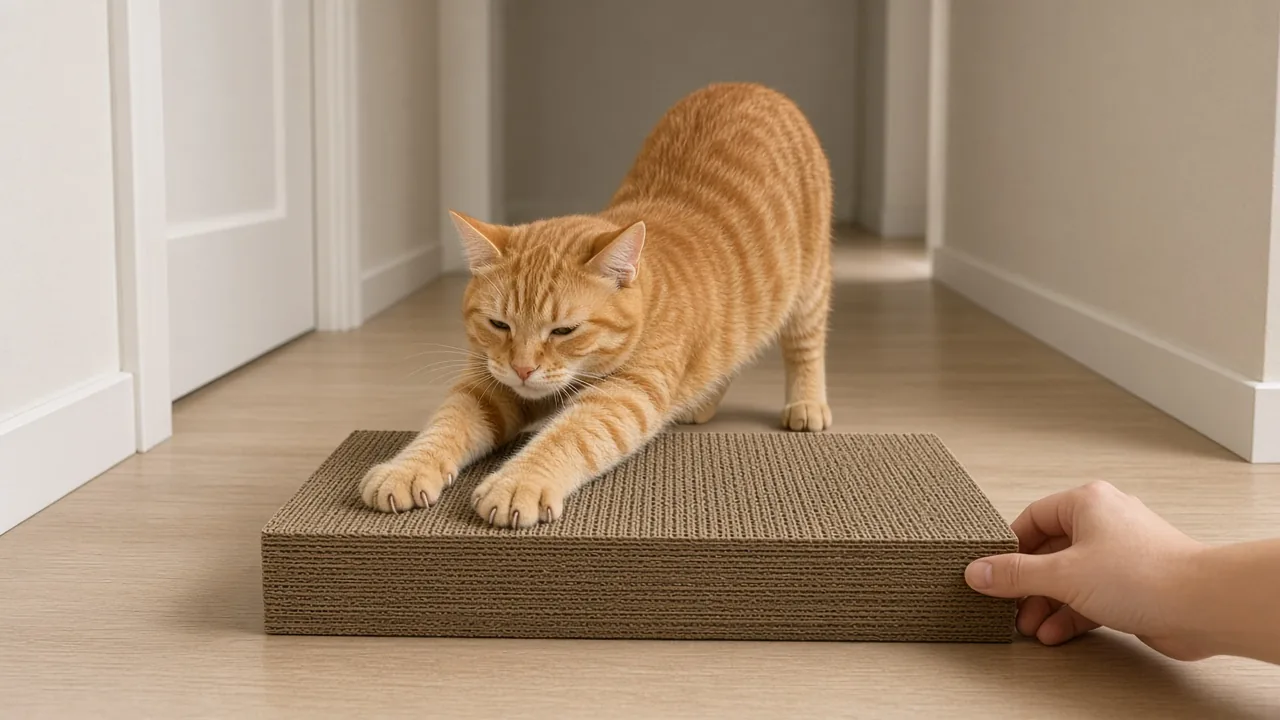
A sturdy scratcher or vertical climber is one of the few cat products where paying more upfront often makes sense. Scratching protects your furniture from damage, and height gives your cat a vantage point to survey the room — something that matters more to cats than owners sometimes expect.
Cardboard scratchers made from recyclable material offer a middle ground: they’re inexpensive, double as a place to lounge, and can be replaced easily once they wear down. Taller cat trees cost more but give a cat both scratching surface and elevated territory in one piece.
Why size and stability matter more than price
A compact cat tree or scratcher that’s stable and offers real height tends to work better than an expensive model that wobbles or doesn’t fit the room it’s placed in. Before buying a tall climbing structure, check the base width and weight — a top-heavy design that tips over will scare your cat away from using it at all, no matter what it cost.
6. Multi-Cat Activity Mats and Tunnels
In homes with more than one cat, activity mats and tunnels built to accommodate several cats at once can reduce the competition that happens when there’s only one toy to go around. A foldable mat that forms tunnels, caves, and raised sections gives each cat a separate spot to use at the same time, which cuts down on the pushing and guarding that often happens over a single toy.
Some of these mats run small for larger cats, though, so it’s worth checking the dimensions of individual compartments before assuming it’ll work for a bigger breed.
What makes these worth the higher price
Scratch-resistant materials made from recycled content and a foldable, reconfigurable layout are the features that justify a higher price on this type of product. These extras matter most in multi-cat homes where durability and flexible setup get used daily. A single-cat household probably doesn’t need the extra size or the multiple configurations, and a simpler, cheaper mat or tunnel will likely do the job just as well.
Are Expensive Cat Toys Worth It Compared to Boxes, String, and Other Free Items?
This is where the honest answer gets complicated. Free items — a cardboard box, a crumpled piece of foil, a knotted shoelace — often win out over purchased toys in terms of pure engagement. Plenty of cat owners have watched a cat ignore an expensive toy entirely in favor of the box it arrived in, and that’s not a coincidence. Boxes offer hiding spots, texture to scratch, and an enclosed space that appeals to a cat’s instinct to feel safe while watching its surroundings.
So are expensive cat toys worth it at all? The most balanced approach mixes both. Free items are great for novelty and for satisfying instincts like hiding or batting at crinkly textures, but they don’t replace what a well-designed commercial toy offers: refillable catnip, interactive hunting play, mental stimulation through puzzles, or a sturdy scratching surface built to last. Rely on free items for variety, and reserve a few purchased toys for the specific jobs — interaction, mental exercise, dental cleaning — that household items generally can’t do as well.
| Toy Type | Material | Durability | Cleaning | Best Play Style |
|---|---|---|---|---|
| Refillable catnip plush | Fabric with catnip pouch | Moderate — fabric can wear | Spot wash | Carrying, biting |
| Wand/feather teaser | Fabric, feathers, string | Low to moderate — needs replacement parts over time | Wipe handle, replace feathers | Chasing, pouncing |
| Puzzle feeder | Hard plastic | High | Hand wash, dishwasher-safe pieces vary | Problem-solving, slow eating |
| Laser toy | Plastic, electronic | High (mechanical parts) | Wipe exterior only | Chasing |
| Cardboard scratcher | Recycled cardboard | Low — wears down with use | Not washable, replace when worn | Scratching, lounging |
| Activity mat/tunnel | Recycled fabric, scratch-resistant material | High | Spot clean or machine wash depending on model | Hiding, stalking, multi-cat play |
Where free alternatives fall short
Free items aren’t risk-free, and this is where commercial toys often have an advantage. Loose string, ribbon, rubber bands, and small plastic bottle caps all carry a real swallowing and intestinal blockage risk. A cat that bats a loose piece of ribbon across the floor can end up chewing and swallowing a length of it, which may require a trip to the vet. Commercial toys are generally designed with this risk in mind — feathers are more securely attached, strings are shorter or retractable, and parts are sized to reduce the chance of a cat swallowing something dangerous. If you’re going to use household items as toys, inspect them the same way you’d inspect a purchased toy, and skip anything with small detachable pieces.
How to Choose Based on Your Cat’s Play Style and Household
Not every cat plays the same way, so the right toy depends on what your specific cat does during play. Some cats are primarily stalkers that love hiding and waiting to ambush. Others are chasers that want constant motion. Many cats want to finish a hunt by actually catching and carrying something in their mouth.
Match the toy to the behavior:
- Stalking cats — tunnels, boxes, and activity mats with hiding spots work well.
- Chasing cats — wand teasers and laser toys (followed by a physical toy) satisfy the pursuit instinct.
- Pouncing cats — small toy mice or crinkle balls give something to lunge at.
- Carrying cats — soft plush toys they can pick up and parade around the house.
Beyond play style, factor in your household setup. Multiple cats may need multiple toys of the same type to avoid competition, plus you’ll want to check whether any cat reacts to catnip by marking or urinating on it before bringing more catnip toys home. Age matters too — kittens tend to chase anything that moves, while older cats may prefer lower-effort options like a puzzle feeder over a high-energy wand session.
How to Check Cat Toys for Safety Before and During Play
A quick safety check before every play session takes less than a minute and catches most problems before they become emergencies. Make this part of your routine, especially with new toys or ones that have been in heavy rotation.
Before each session, check for:
- Loose or missing feathers that could be chewed off and swallowed
- Cracked or splitting hard plastic edges
- Battery compartments that aren’t fully secured
- Fraying string, ribbon, or fabric that could unravel
- Small bells, pom-poms, or other attachments that look loose
If you spot any of these issues, set the toy aside for repair or replacement rather than letting your cat keep playing with it. This is especially important with wand toys and catnip plushies, since both commonly include feathers, netting, or string that can come loose with repeated use.
How to Clean and Maintain Cat Toys
How you clean a toy depends mostly on what it’s made of. Fabric toys like catnip plushies and activity mats can usually be spot-cleaned or machine washed, depending on the manufacturer’s instructions — check the tag before tossing one in the washer. Hard plastic toys, including puzzle feeders, can typically be hand washed with warm water and mild soap, and some pieces are dishwasher-safe.
Electronic and water-based toys need more frequent attention than owners sometimes expect. Any toy involving moving water — including automatic components — can build up residue that harbors bacteria if it isn’t cleaned regularly, so these need more frequent attention than a plain plastic toy would. Wipe down laser toys and other electronic toys on the outside only, since water and batteries don’t mix well.
How Often to Replace Cat Toys
Replace any toy immediately if you notice cracks, missing parts, exposed stuffing, or fraying that goes beyond light wear. These issues aren’t cosmetic — they’re the point where a toy stops being safe to use.
For toys still in good shape, rotating what’s available weekly can help keep your cat interested without buying anything new. Put a few toys away in a drawer and swap them out every so often; cats often respond to a "new" toy that’s really just one they haven’t seen in a few weeks. This approach also saves money, since you’re not constantly replacing toys your cat has simply gotten bored of.
Frequently Asked Questions About Buying Cat Toys
Do cats care about reviews or ratings?
No, and that’s worth remembering before you buy based on star ratings alone. A toy with a strong rating from other cat owners is more likely to be well-made and safe, but your own cat’s preferences are the only rating that actually matters for whether it gets used.
Are $30 cat toys worth it?
Sometimes, but not automatically. A $30 cat tree or activity mat that gets daily use for years is a better value than a $30 toy your cat sniffs once and ignores. Judge each toy by engagement and durability, not by the number on the price tag.
What if my cats fight over catnip toys?
If one cat in a multi-cat household marks or urinates on catnip items, it’s often simplest to avoid catnip toys for that household entirely rather than trying to manage access. Switch to unscented alternatives like plain plush toys or wand teasers instead.
Why does my cat ignore expensive toys but love a box?
Boxes satisfy a cat’s instinct to feel enclosed and secure while still being able to watch the room, which is a different need than chasing or hunting. This doesn’t mean the toy was a waste — it just means that particular toy didn’t match what your cat wanted at that moment. Keep both the box and a few interactive toys in rotation.
Watch how your cat actually plays — whether it loves to bite, chase, carry, dig, or burrow into tight spaces — and let that guide what you buy. Mix a few durable paid toys with free household items like boxes and foil balls, and check everything regularly for wear so you can swap out anything damaged before it becomes a hazard.
This article is for general information only and is not a substitute for advice from your veterinarian. Always supervise your pet with a new toy, and replace any toy that is damaged or small enough to swallow.

Contributor
admin
Continue reading
All stories
CAT TOYS · 11 October
Why Is My Rolling Cat Toy Ball So Loud, and Can You Fix It?
CAT TOYS · 11 October
Are DIY Cat Toys Safe From Choking Hazards? What to Check First
CAT TOYS · 11 October
Responses
Moderated discussion