SMALL PETS & BIRDS
Do Hamsters Need an Exercise Wheel to Be Happy? A Buyer’s Guide
Most hamsters need an exercise wheel to burn off their nightly energy and stay calm. This guide covers wheel safety, sizing, noise, cleaning, and what to do if your hamster won't use it.
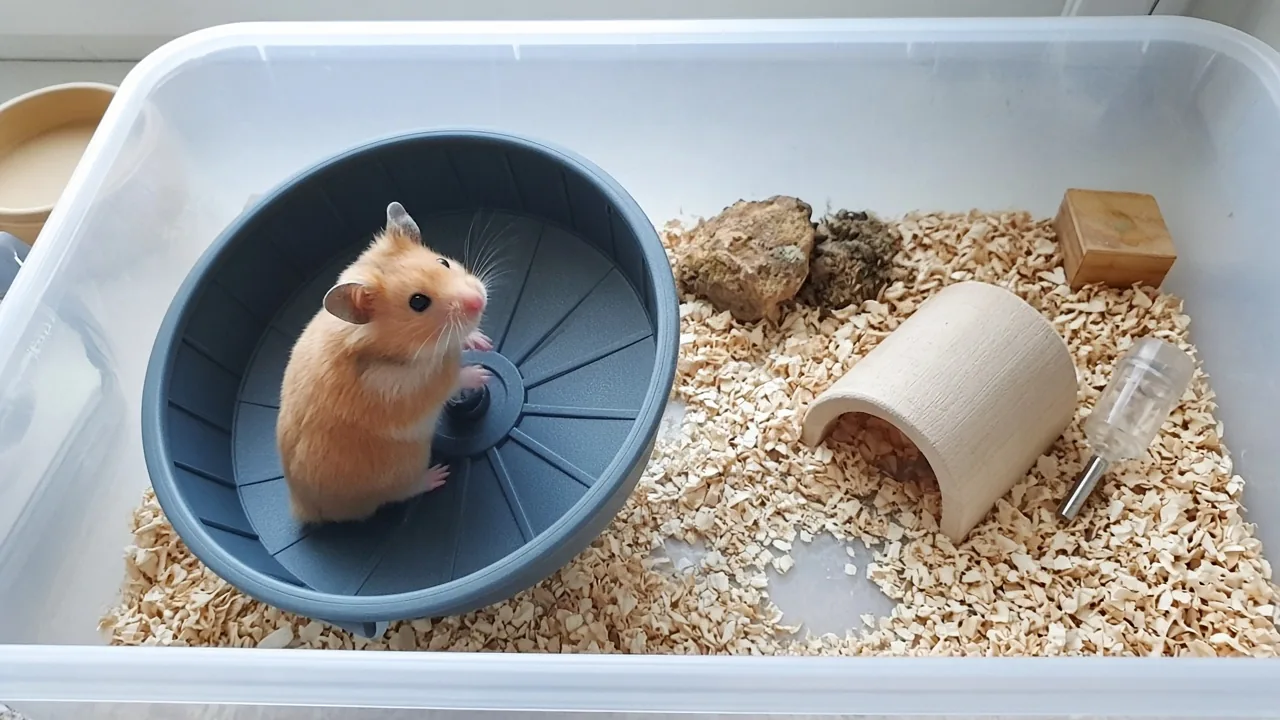
If you’ve ever watched a hamster pace the same corner of its cage at night, you already have part of the answer: do hamsters need an exercise wheel to be happy? For most hamsters, yes. Running lets them burn off the energy they’d naturally spend covering ground after dark, and a cage without an outlet for that instinct often leads to a restless, stressed-looking pet. This guide walks through why a wheel matters, how to size and clean one, and what to do if your hamster ignores it.
Why Do Hamsters Need an Exercise Wheel to Be Happy?
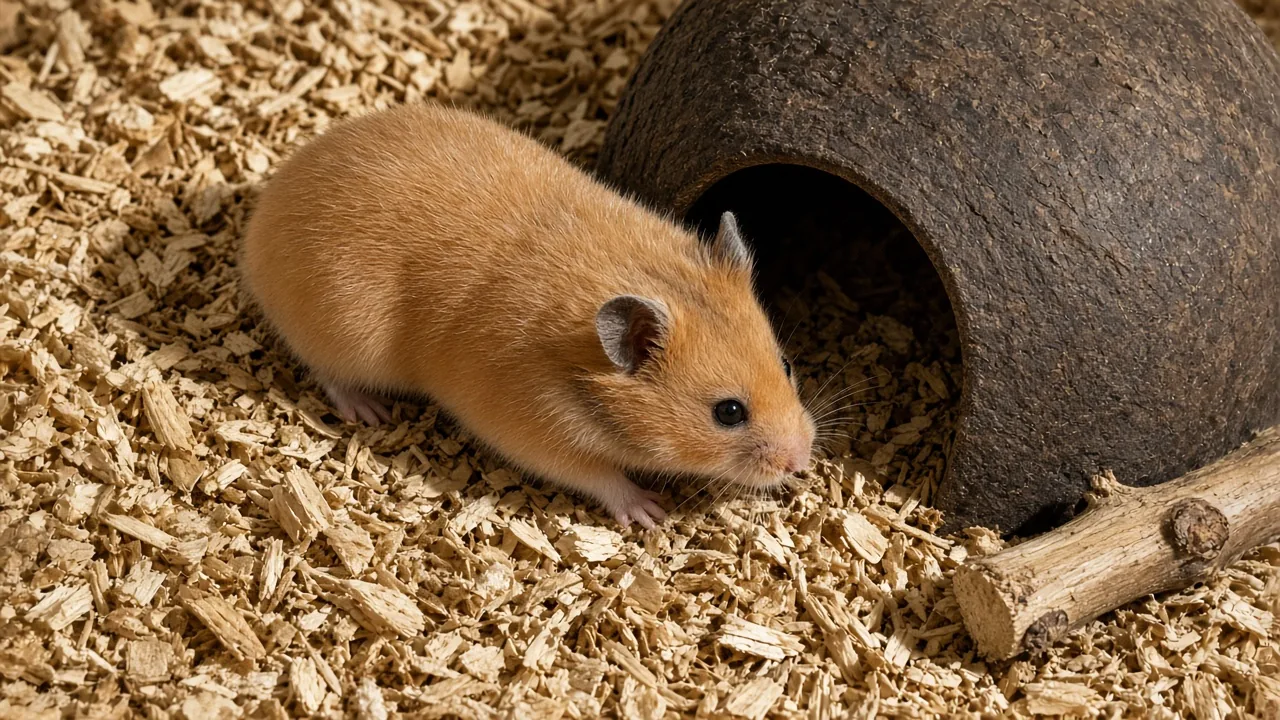
In the wild, hamsters travel long distances overnight while foraging and checking their territory. A pet hamster in a cage has no way to do that unless you give it one, and an exercise wheel is the closest substitute most households can offer. Without it, that drive to move doesn’t just disappear.
A hamster that has no wheel and little floor space to explore may pace along the bars, chew on cage corners, or seem unusually jumpy when you reach in to handle it. Owners who add a properly sized wheel often notice calmer behavior within a few days, since the hamster finally has somewhere to put that nightly burst of energy. A wheel alone won’t fix every behavior problem, but it covers a basic need that’s easy to overlook in a small, quiet-looking pet.
A full setup still matters more than the wheel by itself. Hamsters that get a wheel plus some floor space, a hideout, and chew-safe enrichment tend to settle into a steadier daily rhythm than hamsters with a bare cage and nothing to climb into. Think of the wheel as one piece of a cage that gives your hamster a reason to move, hide, and dig, not a stand-alone fix. A cage that only offers a wheel and nothing else can still leave a hamster bored during the hours it isn’t running, so pair the wheel with something to chew, something to burrow into, and a little open floor to investigate.
Solid-Surface Wheels vs. Wire Mesh Wheels: Which Is Safer?
Wheel surface matters almost as much as size. Wire mesh wheels were common for years, but the gaps between the rungs can catch a hamster’s foot or tail mid-stride, especially as the animal picks up speed.
Solid-surface wheels, usually molded plastic with a continuous running track, remove that gap entirely. There’s nothing for toes or a tail to slip through, which lowers the risk of small cuts, scrapes, or a caught limb during a fast run. For young hamsters still learning to balance on a wheel, and for older hamsters with less steady footing, a solid surface is the safer default.
| Feature | Solid-surface wheel | Wire mesh wheel |
|---|---|---|
| Foot/tail safety | Low injury risk; no gaps | Higher risk of catching toes or tail |
| Best suited for | All ages, especially young and senior hamsters | Rarely recommended now; avoid for young or injury-prone hamsters |
| Noise | Generally quieter running surface | Can rattle more as rungs flex |
| Cleaning | Wipe or rinse flat surface | Waste can lodge between rungs |
| Durability | Holds up well with regular cleaning | Rungs can bend or rust over time |
If you already own a wire mesh wheel, it’s worth replacing with a solid-surface model rather than waiting for an injury to show you it’s a problem. The cost difference between the two styles is usually small compared to a vet visit for a torn toenail or an injured foot, so this is one upgrade that pays for itself quickly.
What Wheel Size Fits Syrian vs. Dwarf Hamsters?

Wheel diameter needs to match the hamster, not just the cage. A hamster running on a wheel too small for its body has to arch its back to follow the curve, and doing that night after night can strain the spine over time.
As a general guide, many small-pet owners and retailers aim for:
- Syrian hamsters: at least 8 inches in diameter, since Syrians are the largest common pet hamster and need the most room to keep their back flat while running.
- Dwarf hamsters (Robo, Campbell’s, Winter White): around 6.5 to 8 inches, depending on the individual hamster’s size, since dwarf breeds vary more than Syrians do.
A simple check works better than a strict number: watch your hamster run and see whether its back curves upward noticeably at any point in the stride. If it does, size up. When in doubt, buying slightly larger than the minimum is safer than buying too small, since a hamster can comfortably use an oversized wheel but struggles on an undersized one.
Quiet, Low-Vibration Wheels for Bedrooms and Shared Spaces
Hamsters are most active at night, which is exactly when a squeaky or rattling wheel becomes a problem if the cage sits near a bed or a shared living space. Noise usually comes down to two things: bearing quality and how the wheel is mounted.
Wheels with a smooth, well-fitted axle and bearing tend to spin with a soft whir instead of a squeal. Stand mount design also plays a role, since a wheel that wobbles on its post transfers more vibration into the cage frame, which can amplify sound. A little bit of noise is normal and even useful, since it tells you your hamster is awake and active, but a wheel that squeaks loudly enough to wake you up is worth replacing or oiling (with a pet-safe lubricant, not household oil).
Before buying, it helps to check whether reviews or product notes mention the running sound, since a wheel described as quiet by a few different owners is a reasonable bet for a bedroom setup. Keep in mind that a wheel described as silent in a listing rarely stays that way forever; bearings wear down with regular use, so plan on checking noise levels again every few months rather than assuming a quiet wheel will stay quiet indefinitely.
Stand-Alone Wheels vs. Cage-Attached Wheels: Which Fits Your Setup?
Hamster wheels generally come in two mounting styles, and each one suits a different cage type.
Stand-alone (free-standing) wheels sit on their own base inside the cage. They work well in bin-style or glass tank setups that don’t have bars to attach a wheel to, and they’re easy to pull out for cleaning since nothing needs to be unscrewed first. The trade-off is floor space: a stand-alone wheel takes up cage footprint that could otherwise go to tunnels, a hideout, or digging substrate.
Cage-attached (bar-mounted) wheels clip onto the bars of a wire cage, usually up off the floor. This frees up ground-level space for other enrichment, which matters in smaller cages. The downside is that attached wheels can be slightly less stable if the mounting clip is cheap or loose, and cleaning means detaching the wheel each time rather than just lifting it out.
If you keep your hamster in a bar cage with limited floor space, an attached wheel is usually the better fit. If you use a bin or tank setup, a sturdy stand-alone wheel is the more practical choice. Either way, check the mounting point itself every so often, since a clip that loosens over weeks of nightly use can let the wheel tilt or drop without much warning.
How to Choose the Right Exercise Wheel for Your Hamster
Picking a wheel comes down to five factors, run through them in order before you buy:
- Hamster size and species – Syrian hamsters need a wheel at least 8 inches across; dwarf breeds can often use 6.5 to 8 inches depending on the individual.
- Age – growing hamsters and senior hamsters may need a different size than a healthy adult (more on this below).
- Cage space – measure your cage floor and bar spacing before deciding between a stand-alone or attached wheel.
- Noise tolerance – if the cage is near a bedroom, prioritize a solid-surface wheel with a smooth bearing over a cheaper, noisier option.
- Budget tier – budget wheels can work fine for a first hamster, but mid-range or premium wheels generally use sturdier bearings and axles that hold up longer and run quieter, which matters more the longer you keep the same hamster.
None of these factors overrides the others completely. A quiet wheel that’s the wrong size still risks spine strain, and a correctly sized wheel that rattles all night isn’t a win either. Weigh all five before settling on one model, and don’t be afraid to swap a wheel out later if your hamster’s needs change as it grows or ages.
Matching Wheel Size to Age and Growth
A wheel that fit your hamster as a young adult may not fit as well later on. Hamsters reach most of their adult size within a few months, but body shape can still shift as they age, and a senior hamster may move more slowly or lose some flexibility in the spine.
Check the fit every few months rather than assuming the original wheel still works. Watch the same thing you checked at purchase: does the back stay flat through the full turn of the wheel, or does it arch upward at any point? If an older hamster has slowed down and seems to avoid the wheel it used to run on daily, a slightly smaller or lower-step wheel can sometimes bring it back to using the wheel comfortably. A sudden drop-off in wheel use at any age is also worth noting in its own right, since it can be the first visible sign that something else needs attention.
Are Hamster Wheels Safe? Signs a Wheel Needs Replacing
Any wheel wears out eventually, and running on a damaged one puts your hamster at real risk. Check the wheel every week or two for these warning signs:
- Cracks in the running surface or frame, which can pinch a foot or snap further under weight.
- A loose or wobbling axle, which makes the wheel spin unevenly and can trap toes at the point where it rubs.
- Rust on any metal parts, which can flake and get ingested, and also roughens the surface the hamster’s feet touch.
- Splintered or rough edges on the running track, which can scrape paws with every rotation.
If you spot any of these, remove the wheel immediately rather than waiting to see if it gets worse. A cracked or loose wheel is not something to patch up and keep using; replace it before putting it back in the cage. Keep a spare wheel on hand if you can, since a sudden replacement is easier to manage than leaving your hamster without one for several days while you shop.
How Often to Clean a Hamster Exercise Wheel
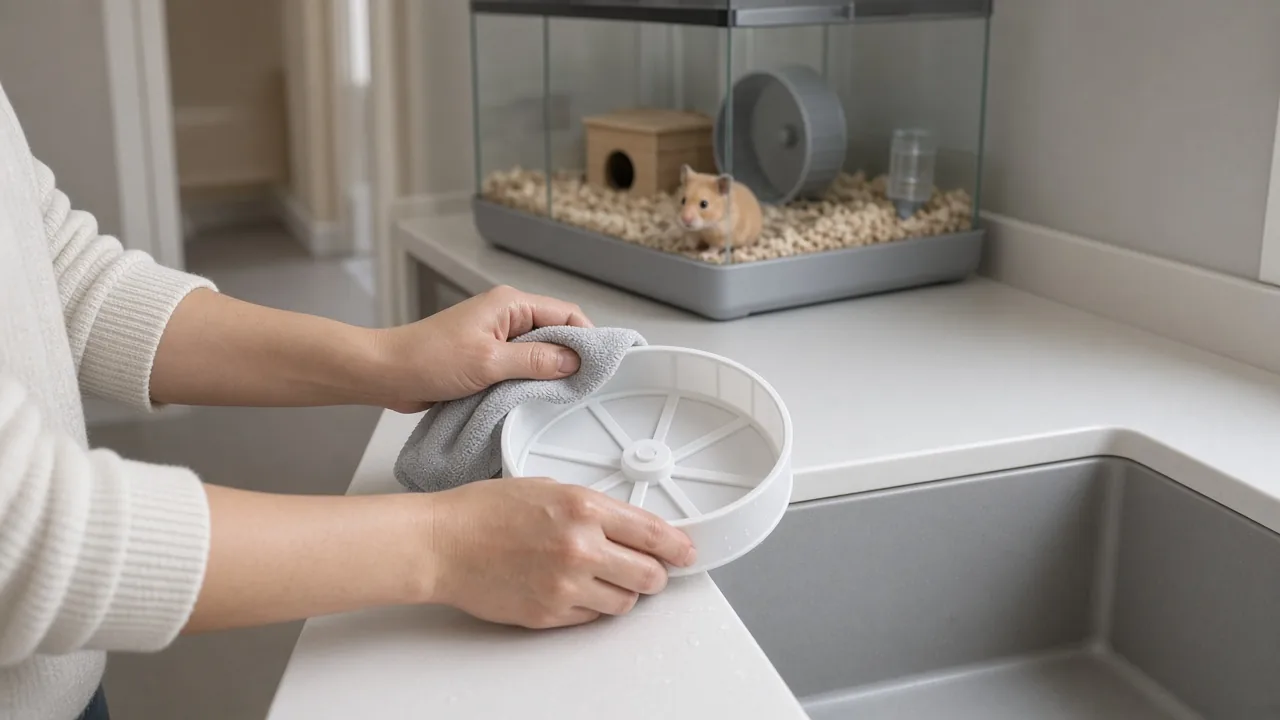
Hamsters often use the wheel as a bathroom spot, since the enclosed running motion feels secure to them, which means waste can build up fast. Left too long, that buildup can cause foot infections or a lingering odor in the cage.
A simple routine works well for most households:
- Wipe down the running surface daily or every other day with a damp cloth to remove visible waste.
- Do a full clean weekly: remove the wheel from the cage, wash it with warm water and a mild, pet-safe cleaner, and scrub any grooves where waste collects.
- Dry the wheel completely before putting it back, since a damp running surface can trap more debris and encourage odor or mold.
- Check the axle and bearing area during the weekly clean, since dried waste there can slow the spin and make the wheel noisier.
Solid-surface wheels tend to be easier on this front than wire mesh ones, since there are no small gaps for waste to lodge into. If you notice the wheel needs cleaning more often than this routine suggests, it may simply mean your hamster is an especially frequent runner, which is generally a good sign rather than a problem.
What to Do If Your Hamster Won’t Use the Wheel
Some hamsters ignore a wheel completely, and the cause is usually one of a few common issues:
- Wrong size – a wheel too small forces an uncomfortable arched posture, and a hamster that associates the wheel with discomfort may simply avoid it.
- Noisy bearing – a squeaky or grinding wheel can be unpleasant or even startling for a hamster that’s naturally cautious.
- Poor placement – a wheel wedged in a corner with the entrance partly blocked, or placed somewhere the hamster rarely goes, can get skipped simply because it’s inconvenient.
Try adjusting size, swapping to a quieter model, or repositioning the wheel to a more open spot in the cage before assuming your hamster just dislikes running. Give each change a week or so before moving to the next one, since a hamster that’s cautious by nature may take a few nights to trust a newly placed or newly swapped wheel. If you’ve ruled out all three and your hamster still shows little to no running behavior over several weeks, especially alongside other changes like reduced appetite or unusual stillness, it’s worth mentioning to a veterinarian, since persistent inactivity can sometimes point to an underlying health issue rather than a wheel preference.
Do Rabbits and Guinea Pigs Need a Wheel Too?
No, and this is a point worth clearing up if you keep more than one type of small pet. Rabbits and guinea pigs don’t use exercise wheels; their bodies and natural behaviors aren’t suited to that kind of enclosed running motion, and attempting to put either animal on a hamster-style wheel can actually injure the spine.
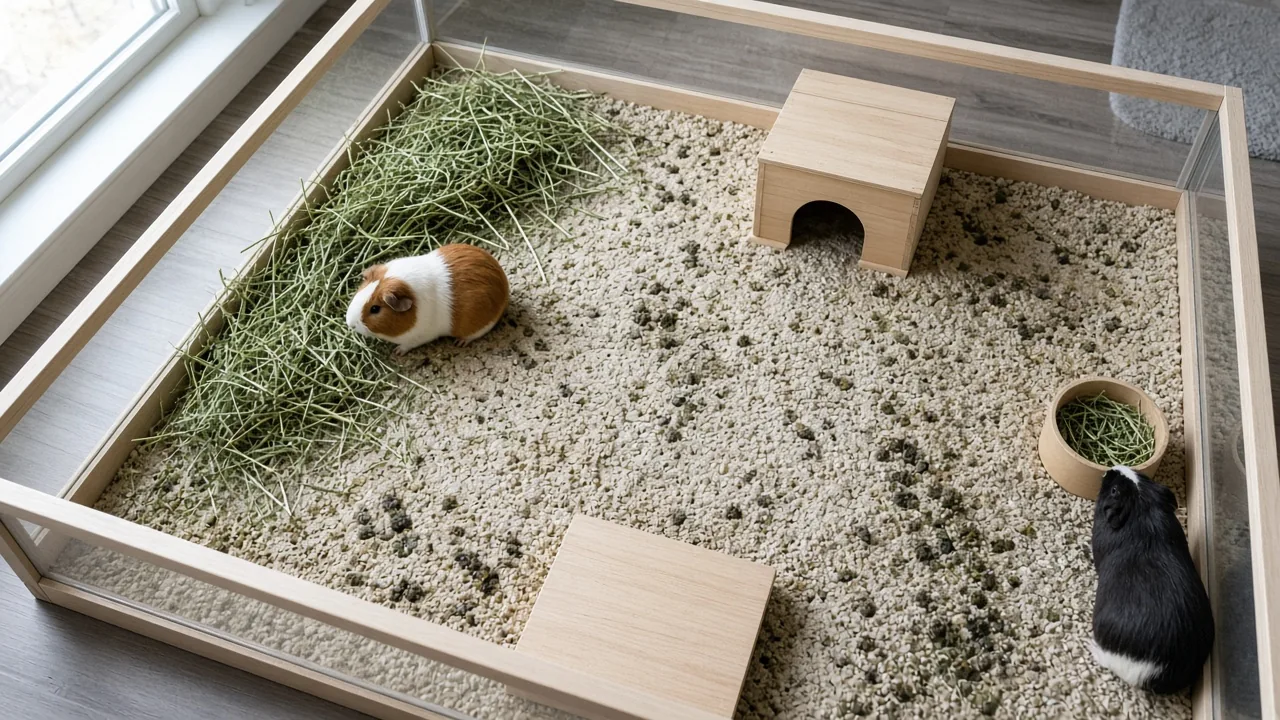
Instead, both species rely on floor space, hideouts, and material to forage through for enrichment. A guinea pig does well with a hay bed to burrow into and chew on, since that satisfies both its need to graze and its instinct to tunnel into soft cover. Rabbits similarly benefit more from room to hop and stretch out, along with safe hiding spots, than from any wheel-based setup. If you’re housing hamsters alongside guinea pigs or rabbits, keep their enrichment separate and sized to each animal rather than assuming one solution fits all three. A setup built around one species’ habits rarely translates well to another, even when the animals look similarly small and low-maintenance at a glance.
Frequently Asked Questions About Hamster Wheels
Can a Hamster Stay Happy Without a Wheel?
Some hamsters get a meaningful amount of activity from supervised playpen time outside the cage, especially if that time happens daily and includes tunnels or climbing structures. That said, playpen sessions are usually shorter and less frequent than the running a hamster would otherwise do on a wheel every night. A wheel still covers more of a hamster’s natural running instinct than occasional supervised play, so it’s worth offering both rather than treating playpen time as a full substitute.
Are AI or Robotic Companion Toys a Substitute for a Wheel?
No. Voice-controlled companion toys, the kind that chat, play games, or respond to spoken commands, are built around interacting with a person, not meeting a rodent’s physical needs. Even a well-designed companion toy has no running surface and no way to let a hamster burn off its nightly energy, so it doesn’t replace a wheel in any practical sense. If you’re drawn to interactive gadgets for your own entertainment, that’s fine, just keep your hamster’s actual exercise setup separate from it.
How Big Should a Hamster Wheel Be at Minimum?
As a quick reference: Syrian hamsters generally need a wheel at least 8 inches in diameter, and dwarf hamsters typically do fine with 6.5 to 8 inches depending on their individual size. If your hamster’s back arches noticeably while running, size up regardless of what the label recommends.
Pay attention to how your hamster actually runs, chews, and moves around the cage before you settle on a wheel, since the right fit depends more on your hamster’s own habits than on any general size chart. Check the wheel often for cracks, rust, or a loose axle, and swap it out the moment you notice any of those signs rather than waiting for it to fail mid-run.
This article is for general information only and is not a substitute for advice from your veterinarian. Always supervise your pet with a new toy, and replace any toy that is damaged or small enough to swallow.

Contributor
admin
Continue reading
All stories
SMALL PETS & BIRDS · 11 October
Why Do Parrots Need Shreddable Chew Toys, and What Materials Are Safe?
SMALL PETS & BIRDS · 11 October
Is Millet Spray Holder Safe for Birds? What to Check Before You Buy
SMALL PETS & BIRDS · 11 October
Responses
Moderated discussion