SMALL PETS & BIRDS
Is Millet Spray Holder Safe for Birds? What to Check Before You Buy
Not every millet spray holder is safe for every bird, since sharp rims and narrow gaps can cut feet or trap toes. This guide shows exactly how to inspect a holder before installing it and pick safer foraging gear for your bird's size.
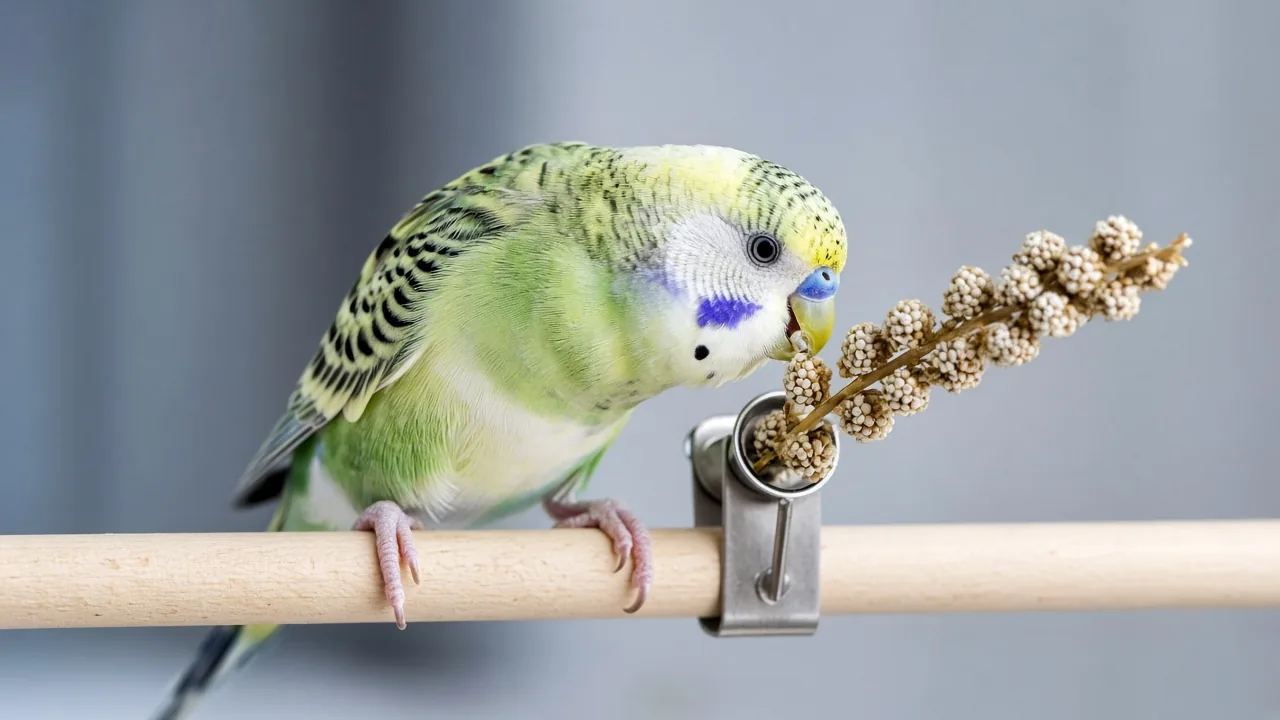
Not every millet spray holder is safe for every bird. Some models have a sharp molded rim or a narrow slot that can cut a bird’s foot or trap a toe when the bird grips the edge while feeding. One widely shared, highly rated negative review described exactly that: a bird owner who used the product exactly as recommended ended up with two birds injured, one with a cut foot and one with a leg caught in the gap. Before you add a millet holder—or any foraging toy—to your cage, it helps to know what to check first.
What You’ll Need Before Setting Up Bird Feeding and Enrichment Gear
A basic bird setup usually includes a few core pieces: a millet spray holder, a playground or play stand, a bathing option, and a cage with some way to manage spilled seed and droppings. You don’t need all of these at once, and not every piece suits every bird.
Here’s a quick rundown of what this guide covers:
- Millet spray holder – a clip or cup that holds millet spray so your bird works to pull seeds out
- Playground or play stand – a freestanding perch setup with ladders, toys, and chewable wood pieces
- Bath setup – anything from a shallow dish to a repurposed water fountain
- Cage with spill control – either a store-bought model with a built-in guard or a do-it-yourself frame
Each of these comes with its own safety and cleaning considerations, which the rest of this guide walks through.
Step 1: Understand How a Millet Spray Holder Works and Why It’s Popular
A millet spray holder clips a strand of millet spray in place so your bird has to work at pulling seeds loose instead of stripping the whole thing in minutes. This slows down feeding, which gives your bird something to do between meals and reduces boredom-driven behaviors. It also keeps husks from scattering as far across the cage floor and surrounding area.
Bird owners generally like this type of holder because it doubles as a foraging toy. Instead of just eating, the bird has to grip, pull, and manipulate the millet, which mimics the kind of problem-solving that wild foraging would involve. That’s the appeal, and it’s a reasonable one. The catch is that the holder itself has to be built in a way that doesn’t turn a foraging exercise into a foot hazard.
Step 2: Is Millet Spray Holder Safe for Birds? Checking Edges and Gaps
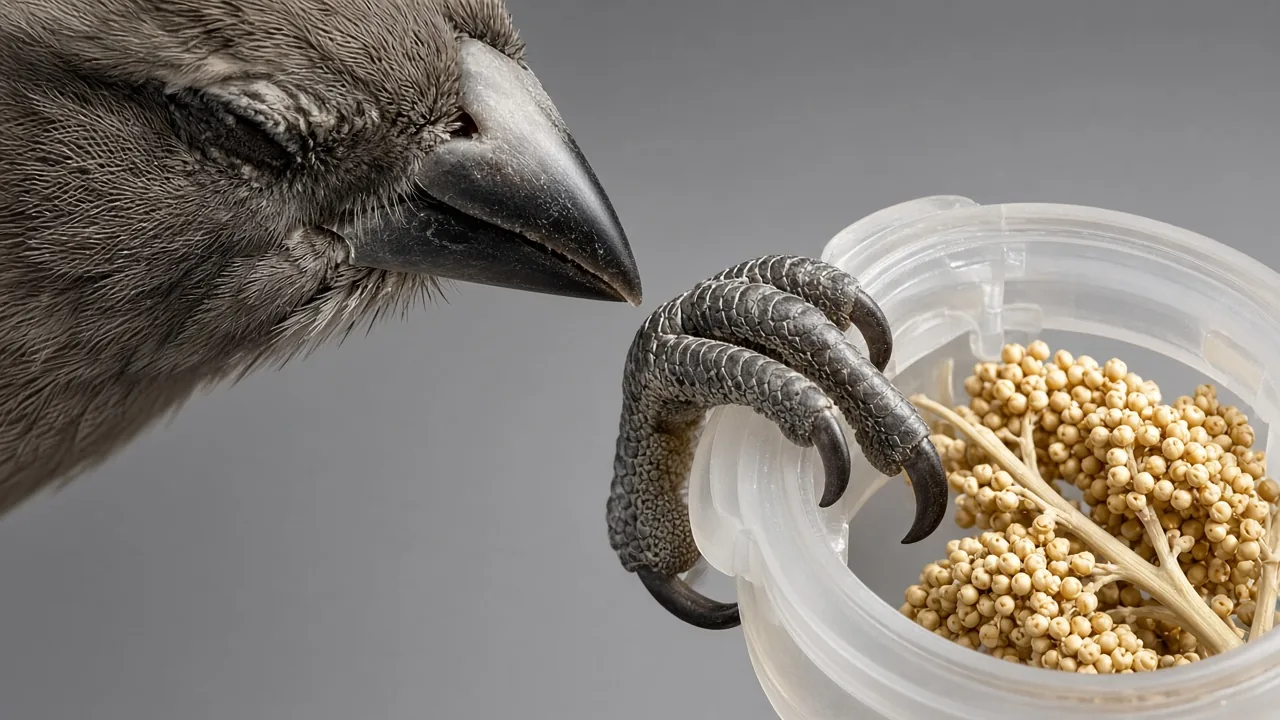
This is the core question worth asking before you clip any millet holder into your cage: is millet spray holder safe for birds in the specific design you’re looking at. The honest answer is that it depends on the individual product’s construction, not the category as a whole.
The concern that pushed this topic into the spotlight came from a bird owner who had used a particular holder based on a positive recommendation, only to find the product’s rim was sharp enough to cut a bird’s foot. In the same case, a narrow gap in the design trapped a bird’s leg. That outcome directly contradicted the glowing review the product had originally received, which is exactly why it’s worth treating any single positive review as a starting point rather than a guarantee.
This doesn’t mean every millet holder on the market is dangerous. It means you need to inspect the specific one you’re buying, every time, regardless of what the packaging or a product description promises.
How to Inspect a Millet Holder for Sharp Edges in Person
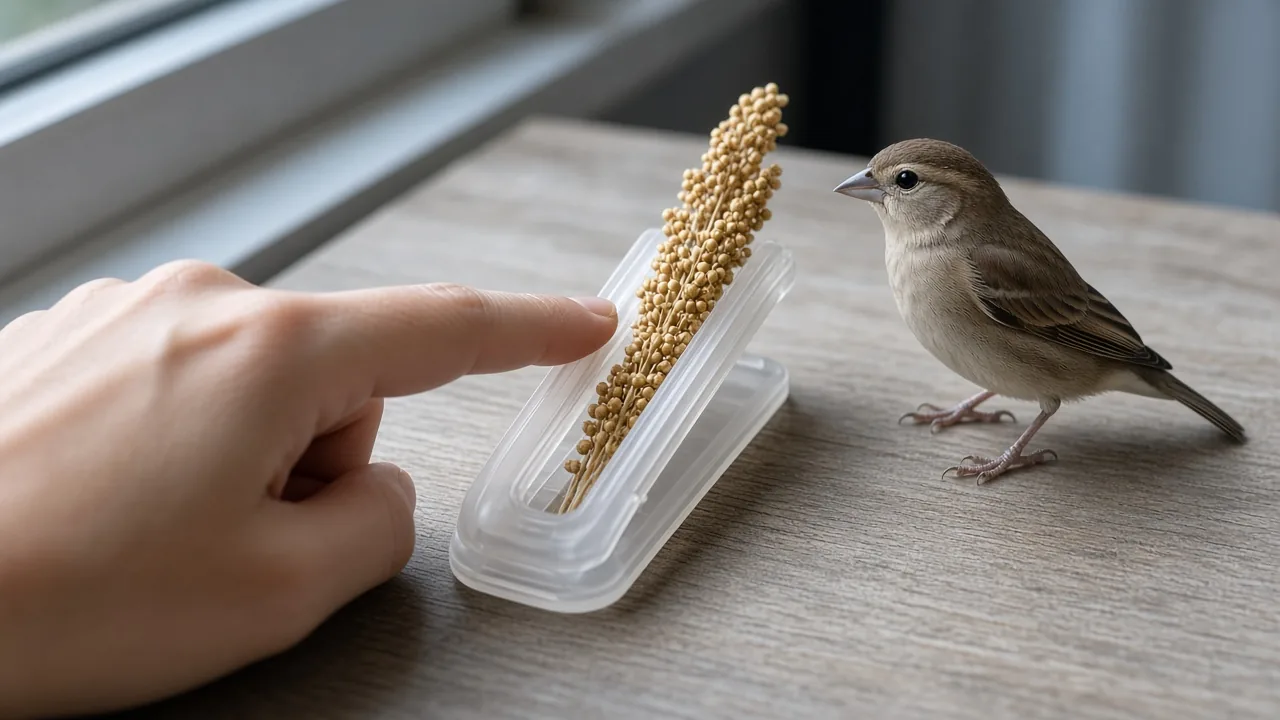
Before you install any millet spray holder, run through this checklist:
- Run a finger slowly along every seam and edge. Molded plastic parts can have a thin ridge left over from manufacturing. If you feel any snag or sharp line, don’t use it.
- Measure the gap against your bird’s toe size. A slot that looks fine for a budgie’s thin toes can be a serious trap for a cockatiel or lovebird with slightly thicker feet. If a toe can slide in but not easily slide back out, that gap is too narrow.
- Test for wobble before mounting it in the cage. A holder that shifts or rotates under light pressure can pinch a foot between the holder and the cage bar it’s clipped to.
- Watch the first few feeding sessions closely. Even a holder that passes a manual check can behave differently once a bird is actively gripping and pulling at it under real use.
If a holder fails any of these checks, don’t install it. A cut foot or trapped toe is a painful, preventable injury, and no amount of foraging value makes up for that risk.
Step 3: Choose Millet and Foraging Toys Based on Your Bird’s Size and Species
Not every foraging toy suits every bird, and size is the biggest factor. Smaller birds like budgies, cockatiels, and lovebirds tend to do well with lighter, smaller-scale accessories, since these birds aren’t strong enough to destroy well-built lightweight toys through normal chewing. Larger, stronger chewers like cockatoos are a different story—one owner noted that a playground designed for smaller birds held up fine for species like budgies and lovebirds but wouldn’t be appropriate for a cockatoo, since the bird would likely chew through it.
| Bird size/species | Suitable toy weight | Chewing strength | Notes |
|---|---|---|---|
| Budgie, lovebird | Lightweight plastic or thin wood | Low to moderate | Small millet gaps and thin perches usually fit their foot size |
| Cockatiel | Light to medium | Moderate | Check millet holder gap width carefully; toes are thicker than a budgie’s |
| Larger parrots (cockatoo and similar power chewers) | Heavy-duty, solid wood or reinforced materials | High | Lightweight playgrounds and thin plastic holders can be destroyed quickly |
If you have a larger, stronger chewer, look for toys described as built for heavier use rather than general all-purpose accessories. A toy that’s labeled as suitable for small birds isn’t necessarily a safety issue for a bigger bird, but it likely won’t last, and the resulting broken pieces can become a separate hazard if your bird swallows a fragment.
Playground-style setups generally arrive as some assembly required, with a ladder, a small wood toy, and instructions included. Assembly is straightforward enough for a first-time bird owner, but it’s still worth double-checking every joint and screw before letting your bird climb on it.
Step 4: Set Up Bath and Play Accessories Safely
Bathing matters for most pet birds, and you don’t need a bird-specific product to provide it. One owner repurposed a cat water fountain as a bird bath, simply plugging it in and filling it with water. Many of these fountains come with a flower-shaped attachment meant for cats; removing that piece opens up more usable space for a bird to actually get in and splash around.
Attachment-style toys, like a weighted swing that moves when a bird touches it, can serve a real emotional purpose. One owner used a swinging toy specifically to give a bird company after it lost its companion. The trade-off worth knowing about: some birds form a strong attachment to these toys and may regurgitate onto them, which is a normal (if messy) bonding behavior, not a sign of illness, but it does mean more frequent cleaning.
A few practical notes for bath and play setups:
- Always supervise a bird’s first time with a new bath or toy, just as you would with any new toy
- Clean fountains and bath attachments regularly, since standing water and food debris can both build up quickly
- Check swing attachment points periodically for wear, since a loose mount can fail while a bird is perched on it
Step 5: Pick a Cage Design That Limits Mess Without Creating New Hazards
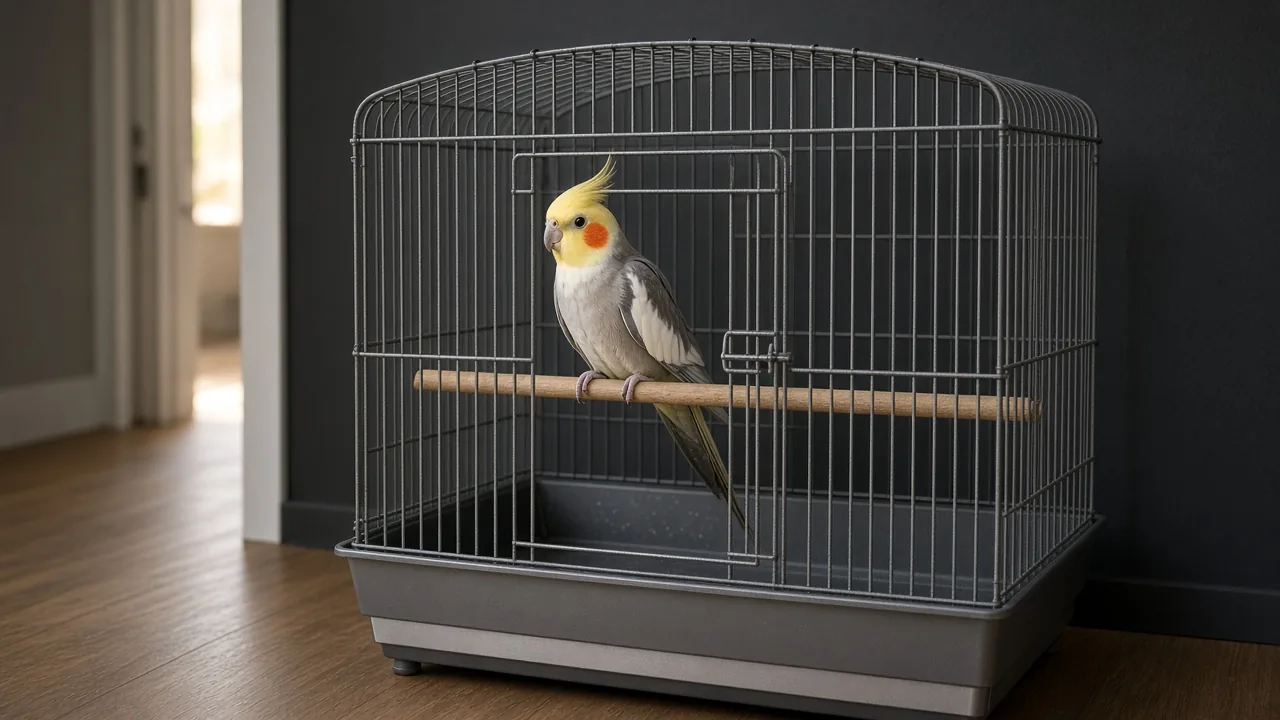
Cage cleanup is one of the most common frustrations bird owners mention, and two very different approaches show up across real setups: a store-bought cage with a built-in spill guard, and a custom-built aluminum frame.
| Design | Mess control | Cleaning method | Trade-off |
|---|---|---|---|
| Store-bought cage with spill-guard base | Strong—one owner went from mopping floors around the cage four times a day to barely seeing any spilled seed outside it | No slide-out tray; you lift the whole cage to clean the bottom | More effective at containing mess, less convenient to clean |
| DIY aluminum frame with curved tray | Reduces seed husks getting stuck in tray seams | Tray slides out for easy access | Curved surface still collects some droppings, so it’s not a complete fix |
Neither option is perfect, and which one makes sense for you depends on what you’d rather deal with: lifting a heavier cage occasionally, or sliding out a tray more often but with droppings sitting on a curved surface. If you’re buying a cage rather than building one, ask specifically whether the base has a spill guard and how the bottom is accessed for cleaning before you commit.
How to Clean a Bird Cage Bottom Without Buying Extra Supplies
You don’t need a specialized liner system to make cage cleanup easier. One budget-friendly approach: line the feeding area of your cage bottom with plastic sheeting or a small trash bag. When it’s time to clean, you simply lift the liner out with the mess already contained, rather than scraping or wiping the tray itself. This works with almost any cage design and costs next to nothing.
DIY Smart Cage Upgrades: What Worked and What Didn’t
If you’re the type of owner who enjoys building rather than buying, a custom aluminum-frame cage gives you more control over ventilation, cleaning, and added features. One owner’s build process is a useful example of what tends to work and what doesn’t translate well to a homemade setup.
What worked:
- Swapping a standard 3-inch cooling fan for a quieter "cat fan" style fan cut down on cage noise noticeably
- Replacing a fine filter pad (which clogged easily with seed dust and oils) with a large-pore filter and a magnetic mount made cleaning the exhaust vent far easier
- Adding a timed cover light designed for parrots provided both warmth and periodic UV exposure on a schedule
- Installing cameras at two corners and the center of the cage top gave full monitoring coverage
What didn’t work:
- Pairing a smart speaker with a sound-level sensor to automatically play calming music when the bird got loud sounded good on paper, but the automation logic proved difficult to tune reliably
- A month-long attempt to train a Pacific parrotlet to say "hello" didn’t succeed in that timeframe, which is a reminder that speech training takes patience and doesn’t follow a fixed schedule
- The owner eventually gave up on reactive automation and switched to simply playing calming bird sounds on a fixed timer instead, which was far more reliable
The lesson here isn’t that smart features are a waste of effort—several of them genuinely improved daily cage maintenance. It’s that automation tied to a bird’s unpredictable behavior is harder to get right than automation tied to a simple schedule.
Is a DIY Aluminum Bird Cage Worth the Cost Compared to Buying One?
Cost estimates for building your own aluminum cage vary widely depending on who you ask. Some owners report spending more than $55 just on materials, not counting any smart features like cameras or timed lighting, and argue that figure makes a store-bought cage the better value. Others say they kept their build under $28 total.
That gap likely comes down to material choices—stainless steel mesh in particular tends to drive costs up fast—and how much you already have on hand versus buying everything new. If you’re considering a DIY build, price out your main materials (frame, mesh, and tray) before you start, so you know whether you’re actually saving money or just spending it differently than you would on a finished cage.
How Often to Replace Millet Holders and Other Bird Toys
Bird toys and feeding accessories don’t last forever, and waiting until damage is obvious can mean waiting too long. Check your millet holder and other cage accessories regularly for:
- Sharp edges that weren’t there when the item was new, including ones that develop from wear rather than manufacturing
- Cracked or splintering plastic, which can create new sharp points or small pieces a bird could swallow
- Loose parts, screws, or attachment points that have started to wiggle
If you spot any of these, replace the item right away rather than waiting to see if it gets worse. A toy that was safe when installed can become a hazard after weeks of a bird gripping, chewing, or pulling at it, and the cost of a replacement toy is small compared to the cost of treating an injury.
Frequently Asked Questions About Millet Spray Holders and Bird Cage Setups
Are wood playground toys safe for birds?
Solid wood toys included with playground sets are generally considered safe for the bird sizes they’re designed for, and one owner specifically noted their playground’s wood toy held up well even under heavy chewing with no signs of harm to the bird. That said, "safe" still depends on the bird’s size matching the toy’s scale, so a wood piece rated for a budgie-sized playground isn’t necessarily appropriate for a much larger chewer.
Where can I find a weight-perch scale for my bird?
A weight-perch scale—a stand your bird perches on that also tracks its weight—isn’t something every pet store carries, and sourcing one often means looking at specialty bird supply retailers or online marketplaces rather than a general pet aisle. If you can’t find a dedicated one, a standard kitchen scale with a perch attachment can serve a similar purpose for basic weight tracking.
How do I secure an acrylic wind guard on my cage?
Acrylic wind or privacy panels are typically mounted so they can slide in and out, which lets you adjust ventilation and remove them for cleaning without disassembling the cage. If you’re adding one to a custom cage build, track-style mounting along the frame edges tends to work better than permanent adhesive, since you’ll want to pull the panel for regular cleaning.
Before you settle on a millet holder or any new foraging toy, spend a little time watching how your own bird actually forages, chews, and perches. A bird that grips hard and pulls aggressively needs a sturdier setup than one that nibbles gently, and that difference matters more than any single product’s reputation. Whatever you install, check it regularly for sharp edges, cracks, or loose parts, and swap it out the moment something looks off rather than waiting for a clear problem to show up.
This article is for general information only and is not a substitute for advice from your veterinarian. Always supervise your pet with a new toy, and replace any toy that is damaged or small enough to swallow.

Contributor
admin
Continue reading
All stories
SMALL PETS & BIRDS · 11 October
Why Do Parrots Need Shreddable Chew Toys, and What Materials Are Safe?
SMALL PETS & BIRDS · 11 October
Do Hamsters Need an Exercise Wheel to Be Happy? A Buyer’s Guide
SMALL PETS & BIRDS · 11 October
Responses
Moderated discussion