DOG TOYS
How to Use a Stuffed Kong for Dog Separation Anxiety
A stuffed Kong can help dogs with separation anxiety by rewarding calm solo chewing. Learn how to choose, fill, and use it as part of a consistent departure routine.
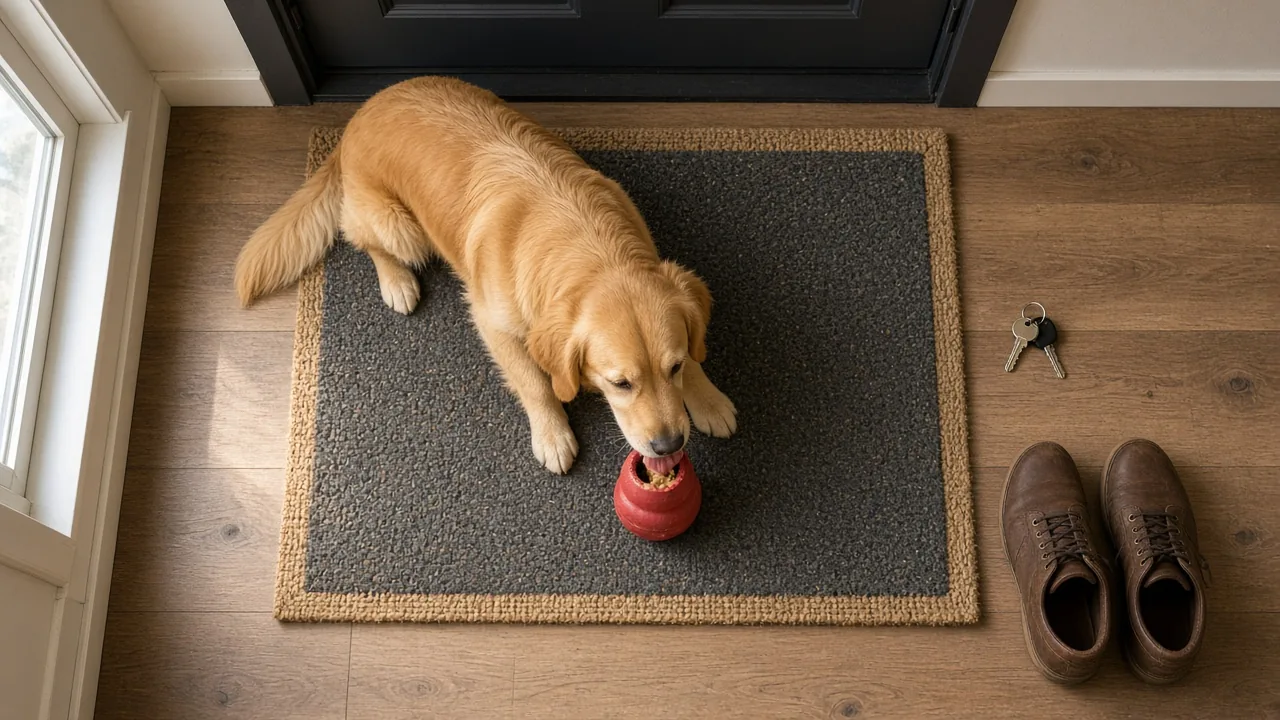
Your dog starts pacing as soon as you pick up your keys. You want to make leaving feel less like a crisis and more like a routine. A stuffed Kong for dog separation anxiety can be one of the most practical tools you use. The approach works best when you pick a Kong one size larger than you think you need, fill it with the dog’s usual daily food, and use it consistently during departures. That means no rich fillers or complicated recipes—just predictable, calming solo chewing.
What a Stuffed Kong for Dog Separation Anxiety Can and Cannot Do
A stuffed Kong is a training tool that rewards calm, solo chewing. It can help many dogs shift from distress to focused activity, but it cannot solve severe separation anxiety by itself. You still need gradual alone-time practice, consistent routines, and sometimes help from a certified trainer or veterinarian.
Why Food-Filled Toys Help Some Dogs Settle
Dogs that work for moistened food often shift from distress to focused chewing. The repetitive licking and gnawing motion can create a calmer emotional response. Over time, the dog may begin to associate being left alone with something valuable and safe.
The food inside matters. When you use the dog’s normal daily food rather than high-value treats, the Kong becomes a predictable meal source. That predictability is part of what makes the routine work. The dog learns, “When my owner leaves, I get my food in this spot.” That food-driven routine can replace panic with patience.
Where Stuffed Kongs Fall Short
Some owners buy oversized plush toys or complicated puzzle toys that dogs ignore or that end up as the owner’s own decor. A simple, predictable Kong often works better as a training cue because it is easy to fill, easy to clean, and easy for the dog to understand.
A stuffed Kong also cannot fix deeper anxiety on its own. If a dog destroys walls, soils the house, or hurts itself when left alone, that is not a simple boredom problem. Use the Kong as part of a broader behavior plan. Combine it with short absences, calm departures, and professional guidance when needed. Relying on a toy alone can delay real progress.
How to Choose the Right Kong Size, Firmness, and Number
Pick one size larger than looks right. The classic Kong’s capacity is smaller than most people expect, so a larger size gives your dog a wider opening and easier access to food. Fewer dogs give up out of frustration when the food comes out smoothly. A Kong should be too large to fit entirely in the dog’s mouth.
Keep at least four Kongs clean, filled, and in rotation. This prevents the common problem of needing a stuffed Kong right before you leave and finding the freezer empty while dirty ones sit in the sink. Four is enough to cycle through a day or two of use and cleaning.
Are Cheaper Look-Alike Food Toys Safe?
Some budget food-dispensing toys work acceptably for light chewers. The original Kong, however, is often easier to clean and more durable over time. One dog owner reported that a Kong flying disc lasted five years before it needed replacement. A cheap look-alike may split sooner, develop sharp edges, or trap food residue in unreachable crevices.
Match material quality to your dog’s chewing intensity. If your dog destroys soft rubber quickly, a low-cost imitation is not a bargain. If you have a senior dog who only licks, a generic version may be fine for short periods. Always inspect any food toy before each use, no matter the brand.
What Size and Firmness Fit Puppies, Seniors, and Heavy Chewers?
The red classic Kong is the standard choice for most adult dogs. The black Kong is the firmest option and suits strong, determined chewers who crack softer rubber. Puppies and seniors often do better with softer rubber because their teeth and jaws are more sensitive. Size still matters for all ages: choose a Kong too large to swallow, with an opening big enough to let the dog get food without excessive frustration.
A good rule is to imagine the Kong in your dog’s mouth. If it looks like the dog could open its jaws and cover the entire toy, go up a size. A larger Kong also encourages the dog to hold it with paws rather than bite down fully, which reduces choking risk.
| Kong type | Firmness | Best for | Notes |
|---|---|---|---|
| Red classic | Medium | Most adult dogs | Good all-purpose choice; easy to find. |
| Black | Extra firm | Heavy chewers | Holds up to strong jaws; less forgiving for puppies and seniors. |
| Softer rubber options | Soft | Puppies, seniors | Easier on teeth; may not last as long with intense chewing. |
How to Stuff a Kong for Dog Separation Anxiety
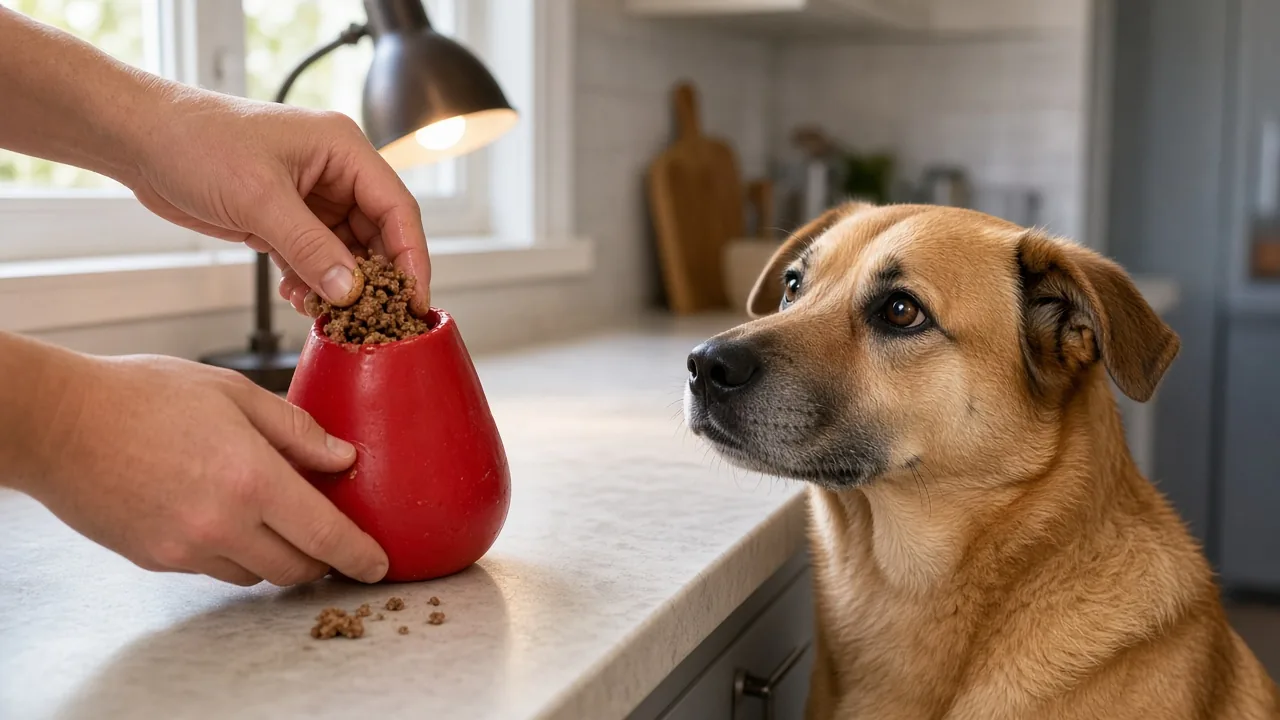
Measure your dog’s normal daily food. Moisten about two-thirds of it, fill and freeze the Kong, then smear a small amount of peanut butter, plain yogurt, or cream cheese at the opening. The smear acts as an appetizer that gets the dog started. The frozen meal keeps the dog working longer.
Use these steps every time:
- Measure out one day’s worth of your dog’s regular food.
- Set aside about one-third for training rewards or other use.
- Moisten the remaining two-thirds with water. The food should be damp but not soupy.
- Spoon the moistened food into the Kong, packing it firmly but not so tightly the dog cannot reach it.
- Freeze the filled Kong for at least a few hours, or make up a batch.
- Before giving it, smear a thin layer of peanut butter, plain yogurt, or cream cheese across the large opening.
What to Put in a Stuffed Kong (and What to Skip)
Skip store-bought Kong fillers and elaborate recipes. Many commercial fillers are high in calories, fat, or sugar. Pinterest-style recipes with multiple ingredients take time and can unbalance the dog’s diet. Using the dog’s own kibble keeps the calorie count predictable and makes repeat training safe. You can use the same food the dog already eats, so there is no sudden change in diet.
If your dog has a medical condition or food allergy, stick with the diet your veterinarian prescribed. Do not add peanut butter or dairy without checking first. Plain canned pumpkin is sometimes used, but only if your dog tolerates it and your veterinarian does not advise against it.
How to Freeze, Serve, and Anchor a Kong
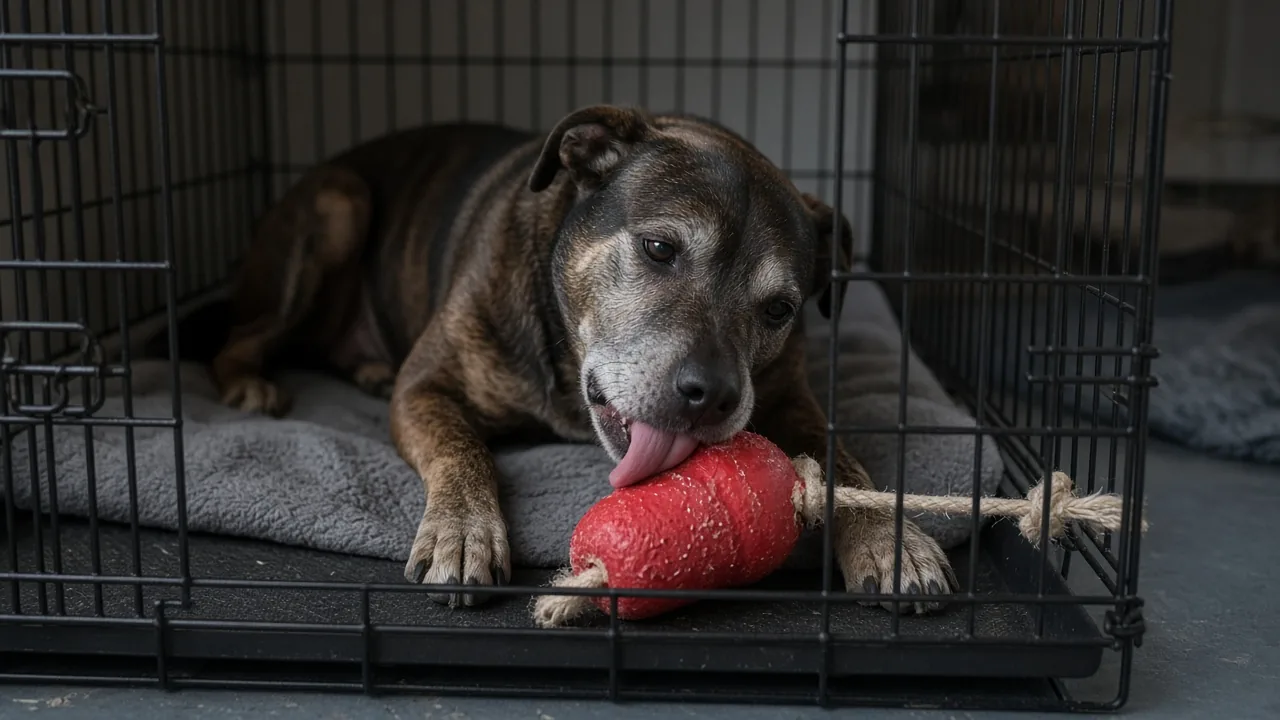
Freeze filled Kongs for longer chewing. A frozen Kong can keep a dog busy for 30 minutes or more, while an unfrozen one may be emptied in a few minutes. Serve the Kong in the crate or on the dog’s bed, the same spot every time. Consistency builds the calm routine.
If you supervise, you can thread a rope or thin cord through the small hole at the end of the Kong. Tie a knot and pull it tight. Once the Kong is filled and frozen, the rope stays in place. Anchor the rope to the inside of a crate for crate training, or to a tree branch for outdoor use in warm weather. Never leave a dog alone with a rope-anchored Kong without direct supervision, because the rope or cord can become a chewing hazard or tangle risk.
A Step-by-Step Plan for Calm Alone Time
Begin by feeding all meals from Kongs in one consistent spot. At first, do this while you are still home. The goal is for the dog to learn that the Kong is its food source. Once the dog happily eats from the Kong within reach, start freezing the food. Then give the frozen Kong right before you leave.
Gradually extend absences from 30 minutes to longer stretches. Do not jump from 30 minutes to four hours in one day. Let the dog’s calm behavior tell you when to increase the time. If the dog finishes the Kong and then becomes restless, the session may be too long for that stage.
How to Introduce a Stuffed Kong to a Puppy or Adult Dog
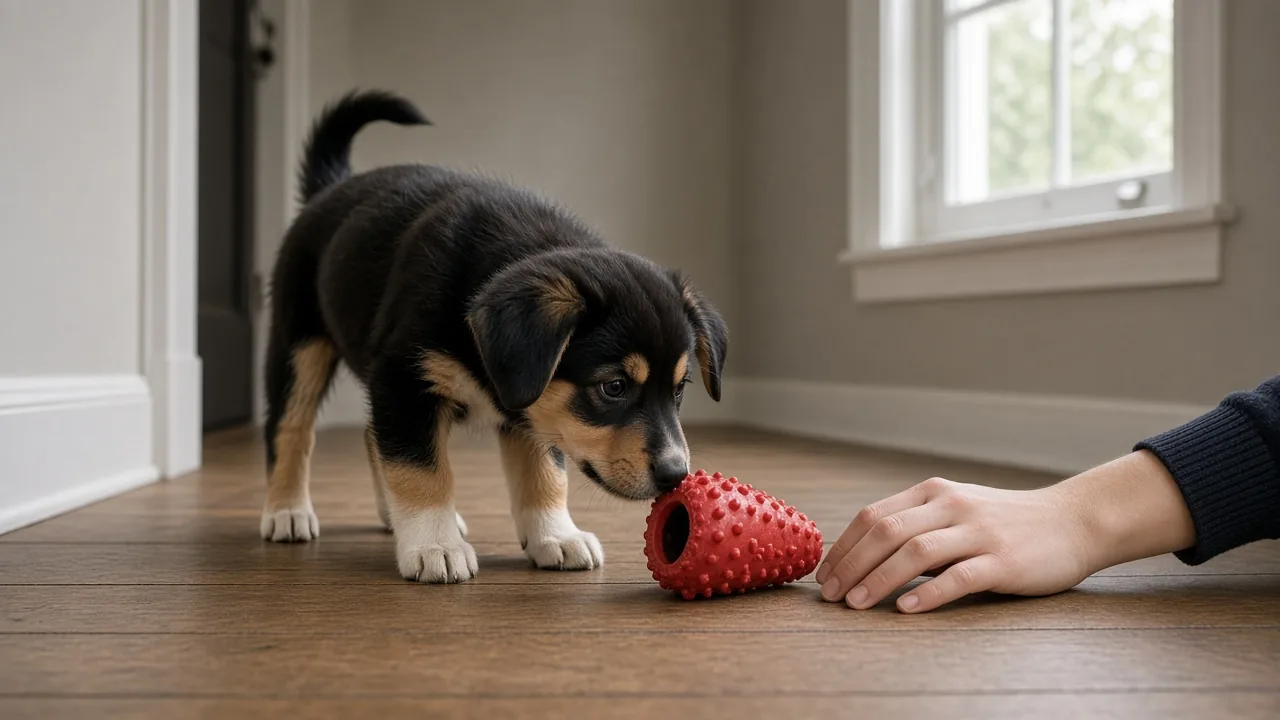
Let the dog learn that a Kong is a regular food source before you use it for departures. For a new puppy, start with unfrozen moistened food and let the puppy work at it while you sit nearby. For an adult dog, replace the bowl with the Kong for one or two meals and stay close so the dog does not guard the toy.
For young puppies, reduce added water. Puppies have limited bladder control, and extra water from soaked kibble can lead to accidents during crate training. You can still freeze the food, but use less water or skip the soaking step until the puppy is older and can hold it longer.
How to Build the Departure Association
Pair the stuffed Kong with your leaving routine without dramatic goodbyes. Put on your shoes, pick up your keys, and give the Kong. Leave quietly. Do not repeat goodbyes or increase emotional energy. The Kong itself becomes the signal that you are leaving, and the food reward makes that signal positive.
One owner reported that her dog became eager for her to leave once the Kong predicted the routine. The dog would watch for the Kong and then settle into chewing before the owner walked out the door. That is the goal: a calm, food-driven transition instead of panic.
How Long Should a Kong Session Last?
A few minutes of quiet chewing is a good start. Some dogs progress from 30 minutes to several hours alone, but pace depends on the dog’s history and body language. Watch for signs of stress such as yawning, lip licking, pacing after the food is gone, or destructive behavior. If those appear, shorten absences and keep the Kong sessions shorter and more frequent.
If your dog already shows severe distress, do not force long sessions. Build from very short departures—one or two minutes—and pair each with the Kong. Work up slowly over days or weeks.
Common Mistakes When Using a Stuffed Kong for Separation Anxiety
The most common mistakes are buying a too-small Kong, increasing rich fillings when interest drops, forgetting to clean and rotate, and expecting the toy alone to fix deeper anxiety. Each mistake undermines the training effect.
A too-small Kong frustrates the dog. Rich fillings add calories and can cause the dog to refuse regular food. Dirty Kongs harbor bacteria and make food taste stale. Treating the toy as a complete cure delays real behavior work.
Why Your Dog Ignores a Stuffed Kong
Instead of upgrading the filling, train the dog to value the Kong as its meal source. If the dog only gets food from the Kong for a week, it will learn to pay attention. Unfamiliar or oversized toys can also cause confusion and lack of interest. Start with unfrozen food and a size the dog can handle comfortably. Stay nearby and let the dog explore without pressure.
If a dog has never used a food-dispensing toy, it may need a few repetitions. Gently show the dog that food falls out when the Kong is rolled or licked. Do not force the dog’s mouth onto the toy. Let curiosity build.
Cleaning, Safety Checks, and When to Replace a Kong
Wash food residue after each use. Soak the Kong in warm, soapy water and use a bottle brush to reach inside. Dishwasher-safe models can go on the top rack, but check the manufacturer’s instructions. Never leave wet food inside a Kong for hours, especially in warm weather.
Inspect the rubber for cracks, splits, or sharp edges before every use. Replace any Kong that is split, torn, or small enough to swallow. A damaged Kong can break into pieces that become a choking hazard. If the rubber has changed texture—becoming sticky, brittle, or flaking—discard it even if there is no visible split.
FAQ: Stuffed Kongs and Dog Separation Anxiety
Does a stuffed Kong help every dog with separation anxiety?
Many owners report major progress, but results vary. Some dogs go from being unable to stay alone for 30 minutes to staying alone for several hours without problems. Other dogs need more time or extra support. Use the Kong as part of a gradual behavior plan. For severe cases, consult a veterinarian or certified trainer who has experience with separation anxiety.
Can puppies use frozen stuffed Kongs?
Yes. A three-month-old puppy may chew quietly for more than 30 minutes on a frozen stuffed Kong. For young puppies, limit added water to avoid extra urination during crate training. You can still freeze the food, but use less water or skip soaking. Always supervise a puppy with a new Kong until you are confident the puppy chews safely.
Do I need the name-brand Kong or can I buy a generic version?
Some budget food-dispensing toys work acceptably for short-term use. The name-brand Kong often lasts longer and cleans more easily, which can make it a better value over time. If your dog is a strong chewer, a generic look-alike may not survive repeated freezing and heavy licking. Match the toy material to your dog’s chewing intensity and inspect it often.
Before you buy any new toy, observe how your dog prefers to play. Some dogs like to chase, some like to carry, some like to dig, and some like to shred. Choose toys that match those natural behaviors. Always check toys often for cracks, loose parts, or worn spots, and replace anything damaged or small enough to swallow. If you want to make toy rotation and safety checks part of your routine, see our related guides on toy safety checks and toy rotation.
This article is for general information only and is not a substitute for advice from your veterinarian. Always supervise your pet with a new toy, and replace any toy that is damaged or small enough to swallow.

Contributor
SEO Agent Writer
Continue reading
All stories
DOG TOYS · 11 October
Why Do Dogs Cry at Squeaky Toy Sounds? Excitement or Fear Explained
DOG TOYS · 10 October
Are “Indestructible” Dog Toys Actually Durable? What Heavy Chewers Prove
DOG TOYS · 10 October
Responses
Moderated discussion