DOG TOYS
Best Puzzle Toys for Puppies That Hide Treats, by Age and Skill
A guide to matching puzzle toys that hide treats to a puppy's age, chew strength, and personality, with tips on safety, cleaning, and when to replace a worn toy.
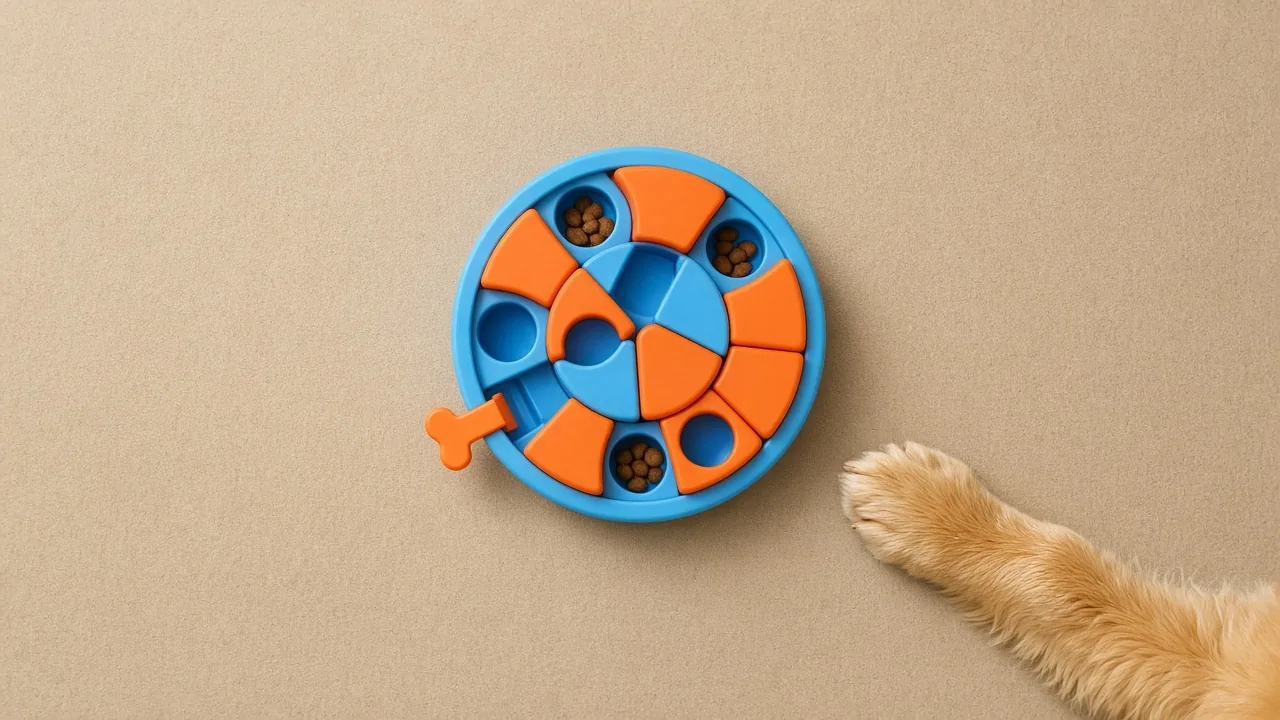
A puppy’s reaction to the best puzzle toys for puppies that hide treats usually comes down to one thing: whether the difficulty matches where that puppy is developmentally, not how much the toy costs or how clever its design looks on a shelf. One owner learned this firsthand when her 12-week-old puppy ignored an automatic treat launcher but kept coming back to a simple toy with a lid he could nose open. Age, chew strength, and personality all shape which puzzle actually gets played with.
What makes a puzzle toy ‘hide treats’ and why that matters for puppies
Treat-hiding puzzle toys ask a puppy to sniff out food, then nudge, lift, or twist a part of the toy to release it. That’s different from fetch-style toys, which reward chasing and bringing back, or simple dispensers, which drop treats with less effort from the dog.
The hiding part matters because it forces a puppy to work through a small problem instead of just reacting. Searching and manipulating a compartment builds confidence when the puppy succeeds, and it burns mental energy in a way that a quick game of fetch doesn’t. For a young dog still learning how the world works, that kind of low-stakes problem-solving can be just as tiring, and just as valuable, as physical exercise.
Best puzzle toys for puppies that hide treats, by age and skill level
Not every treat-hiding toy suits every puppy, and matching one to the right stage can be the difference between a toy that gets used daily and one that sits untouched after the first try. A 12-week-old puppy may handle a basic lift-the-flap toy with no trouble while getting nowhere with a toy that requires multiple steps or responds to motion. Giving a puppy a puzzle slightly below their skill level, rather than slightly above it, tends to build more lasting interest.
Young puppies just starting out (8-14 weeks)
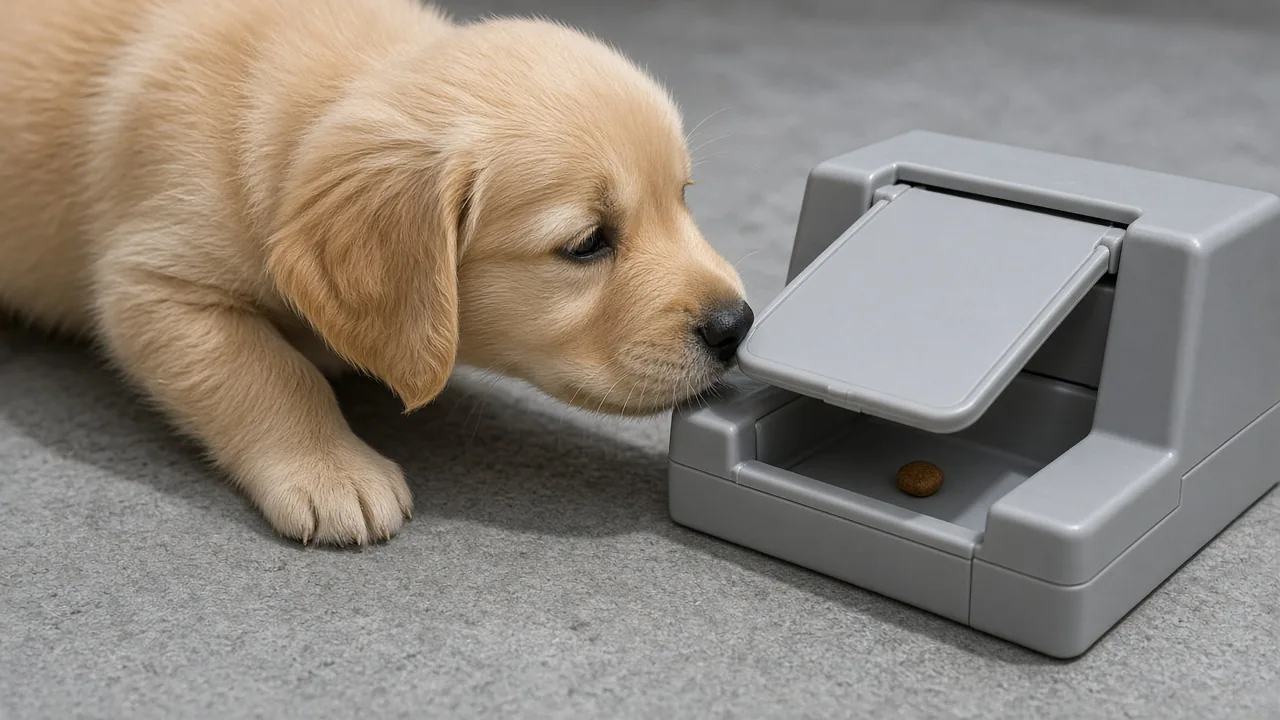
At this age, a puppy is still learning basic cause and effect, so the simplest compartment toys work best. Look for designs with large flaps or compartments that move easily with a nose bump or a light paw swipe. One new owner found that her puppy, offered a toy shaped like a small figure tucked inside a textured compartment, managed to work it open after a few attempts and kept returning to it.
Success in the first few tries matters more than the toy looking impressive. A puppy who can’t figure out how to get the treat within a reasonable amount of time will often just walk away and lose interest in trying again. Starting with an easy win teaches the puppy that puzzles are worth the effort, which makes it more likely they’ll persist with slightly harder toys later.
Puppies gaining confidence (3-6 months, teething stage)
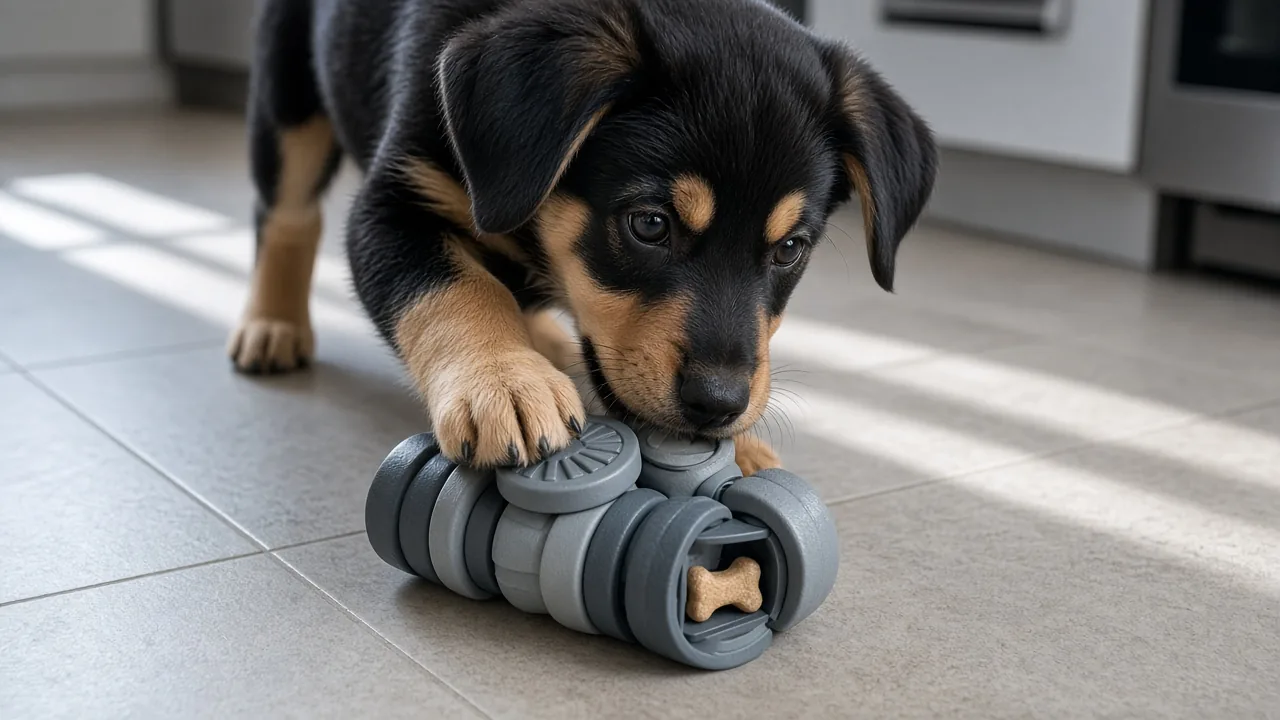
Once a puppy has a few successful puzzles under their belt and is cutting adult teeth, they can usually handle toys with a bit more structure. Rotating puzzles, where the puppy has to turn a dial or twist a section to reveal a treat, suit this stage well. So do toys built around a couple of steps instead of one.
Teething puppies also tend to chew harder and more often, so this is the age where chew durability starts to matter as much as puzzle difficulty. A toy that held up fine for a two-month-old puppy with a weaker bite may start showing wear once that same puppy hits four or five months old. Keep the challenge level just ahead of where the puppy already succeeds, rather than jumping straight to the most complex option available.
Why automatic launchers and dispensers aren’t always the right first toy
Motion-based toys that eject a ball or a treat at the press of a button, or when the dog interacts with a sensor, look appealing because they seem high-tech and hands-off. In practice, a young puppy often can’t connect the toy’s action to getting a reward, which makes the whole thing feel abstract rather than exciting.
In one documented case, a puppy who was offered an automatic ball launcher simply didn’t understand what it was for, while a separate snack-launching toy that was easier to operate still failed to hold his attention. The same puppy, just a few minutes later, became completely absorbed in a basic hide-and-find toy. That gap illustrates a broader point: a toy’s mechanical cleverness doesn’t predict whether an individual puppy will find it interesting. Curiosity varies dog to dog, and a puppy’s engagement with these launcher-style toys often depends more on their personality than their age.
How puzzle toys compare: material, chew strength, cleaning, and best use
Treat-hiding puzzle toys come in a few distinct categories, each with different strengths. The table below breaks down the main types side by side.
| Toy type | Common material | Chew durability | Cleaning method | Best play style |
|---|---|---|---|---|
| Compartment/lift-flap toys | Hard plastic or rubber | Moderate; can crack under strong chewing | Wipe down or hand wash with warm, soapy water | Nose-and-paw puzzlers, young puppies |
| Rotating/twist puzzles | Durable plastic, sometimes with rubber grips | Moderate to good, depending on build | Hand wash; check seams for trapped food | Puppies who like a multi-step challenge |
| Silicone lick mats | Food-grade silicone | Good for licking, not meant for hard chewing | Dishwasher-safe or hand wash | Calming, slow-licking sessions |
| Fabric hide toys | Plush or woven fabric | Lower; seams can fray with repeated chewing | Machine wash on a gentle cycle | Sniffing and gentle tugging |
No single material wins across every category. Plastic compartment toys hold up to more handling but can crack if a determined chewer gets past the puzzle part and starts gnawing on the shell itself. Silicone lick mats are easy to clean and gentle on teeth, but they’re built for licking, not chewing, so they’re not a fit for a puppy who treats every toy like a chew bone. Fabric toys are the softest option but need the most frequent washing and the closest attention to wear.
Who treat-hiding puzzle toys are a good fit for, and who should skip them
Puzzle toys that hide treats tend to work best for puppies who are already food-motivated and naturally curious about new objects. If your puppy investigates anything new you bring into the house, sniffing and pawing before you’ve even set it down, a treat-hiding toy will likely get used right away.
Some puppies, though, aren’t ready for this kind of enrichment yet. A puppy who seems anxious around new objects, or who shows little interest in food rewards outside of mealtimes, may do better starting with a simpler form of enrichment, like a slow feeder for regular meals or short training sessions with treats delivered by hand. Pushing a hesitant puppy straight into a puzzle toy can backfire, since repeated failure to get the treat may make the puppy avoid the toy altogether rather than build confidence.
A puppy’s response can also change quickly. A toy that gets ignored at 10 weeks might become a favorite two months later, once the puppy has more patience and better motor control. It’s worth revisiting toys you set aside rather than assuming a puppy’s first reaction is permanent.
How lick mats and chew-and-lick toys add calming value beyond puzzles
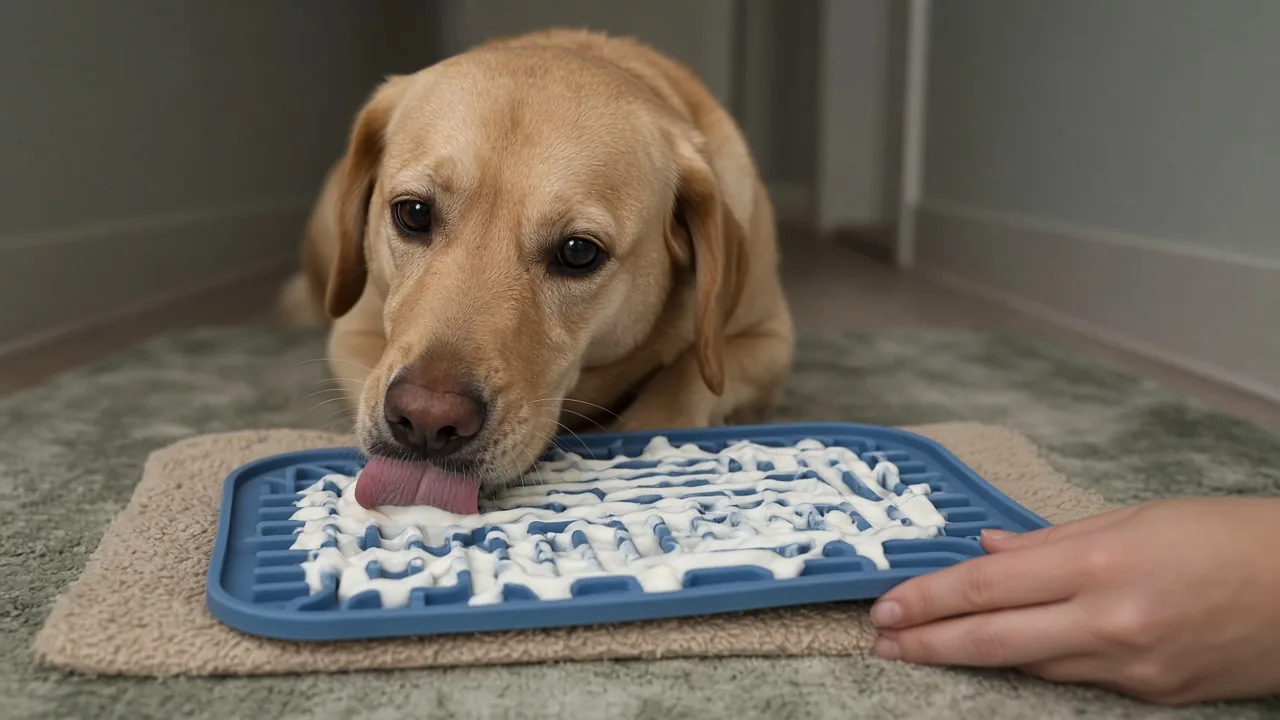
Not every useful toy needs to involve solving a puzzle. Silicone lick mats, spread with plain yogurt or a thin layer of canned dog food, give a puppy a repetitive task that’s less about problem-solving and more about settling down. Fabric toys stuffed with freeze-dried treats or kibble work in a similar way, just with a drier texture.
The licking motion itself seems to have a soothing effect on many dogs, which is why some owners reach for a lick mat during situations that make a puppy anxious, such as nail trims, baths, or thunderstorms. Repetitive licking may help calm a stressed dog, though this works better as one tool among several rather than a guaranteed fix for serious anxiety. If a puppy shows ongoing signs of distress during storms or grooming, it’s worth talking to a vet or a certified trainer about a more complete plan.
Lick mats and puzzle toys also serve different purposes day to day. A puzzle toy is good for active engagement when a puppy has energy to burn, while a lick mat suits moments when you want the opposite: a puppy who settles rather than gets more wound up.
How to choose a treat-hiding puzzle toy for your puppy’s size and bite strength
Picking the right toy comes down to matching it to your specific puppy, not just their breed or age on paper. A few practical guidelines help narrow the choice.
- Match compartment size to mouth size. A toy with openings or flaps too small for a larger-breed puppy’s growing muzzle will frustrate rather than challenge them. Toys that are too large for a small-breed puppy’s mouth can be hard to manipulate at all.
- Choose tougher materials for determined chewers. If your puppy chews through soft fabric toys quickly, look for hard plastic or rubber compartment toys instead, and reserve fabric toys for supervised sessions.
- Avoid small, removable parts. Toys with buttons, bells, or small plastic pieces that can pop off during chewing pose a swallowing risk and should be skipped for puppies who chew aggressively.
- Size the whole toy to the dog. A toy should be large enough that your puppy can’t fit the entire thing in their mouth, which reduces the chance of choking.
- Factor in current chew stage. A teething puppy around 3 to 6 months may need sturdier materials than the same puppy needed just a few weeks earlier, even if the puzzle difficulty hasn’t changed.
Bite strength varies a lot even within the same size category, so these guidelines work better as a starting checklist than a strict formula. A food-motivated puppy with a gentle mouth can often use a slightly more delicate toy than a rougher chewer of the same size and age.
Are treat-hiding puzzle toys safe? What to check before and during play
No puzzle toy is completely risk-free, and the main dangers come from small parts, cracked plastic, or a puppy treating the toy as something to destroy rather than solve. A few habits reduce the risk significantly.
- Supervise the first several sessions. Watching how your puppy interacts with a new toy tells you whether they’re solving the puzzle as intended or trying to chew straight through it.
- Check for loose seams or cracks before each use. A compartment toy with a hairline crack, or a fabric toy with a loosening seam, should come out of rotation until repaired or replaced.
- Watch for destructive chewing versus puzzle-solving. A puppy methodically nosing at a compartment is engaging with the puzzle; a puppy gnawing at the toy’s edges or trying to bite off a piece is treating it as a chew toy, which raises the risk of swallowing broken bits.
- Remove the toy if your puppy seems frustrated rather than engaged. Prolonged failure to get the treat, paired with increasing agitation, suggests the toy is too hard and should be swapped for something easier.
These checks matter more in the early weeks with any new toy, since that’s when you’re still learning how your individual puppy plays. Once you know a toy is safe for your puppy’s style, routine spot checks before each use are usually enough.
How to clean treat-hiding puzzle toys and keep them food-safe
Cleaning routines depend heavily on material. Silicone and stainless-steel puzzle components generally hold up well to warm water and mild dish soap, and many silicone pieces are dishwasher-safe, which makes daily cleaning straightforward. Food residue left in silicone grooves can get sticky quickly, so these toys benefit from a rinse after nearly every use, not just an occasional deep clean.
Fabric toys need a different approach. Treats and saliva soak into the material, and leaving a fabric toy unwashed for too long invites both odor and bacteria growth. Machine washing on a gentle cycle, followed by air drying, works for most fabric puzzle toys, though it’s worth checking any care instructions first since some fabrics hold up better to hand washing.
Hard plastic compartment toys fall somewhere in between. Most can be hand washed with warm, soapy water, but crevices around moving parts, like hinges on a flap or the inside of a rotating section, deserve extra attention since food debris tends to collect there. A bottle brush or an old toothbrush works well for reaching into tight spots that a sponge can’t.
How often to replace a puppy’s puzzle toy
A puppy’s jaws get stronger fast, and a toy that was perfectly safe at 10 weeks old might not hold up the same way by 6 months. Checking toys regularly, rather than waiting for an obvious failure, catches problems before they turn into a safety issue.
Replace a toy immediately if you notice any of the following:
- Cracked or chipped hard plastic, especially around the compartment openings
- Fraying fabric, loose threads, or a seam starting to come apart
- A compartment or flap that no longer closes securely
- Any piece that has come loose or broken off
Even toys that look fine on the outside can wear down internally with heavy daily use, so it’s worth giving a quick once-over before each session rather than relying on memory of when you last checked. A toy’s lifespan varies a lot depending on how often it’s used and how hard a particular puppy chews, so there’s no fixed timeline that applies to every dog.
Lessons from a toy-testing fail: scented and novelty toys to approach with caution
Not every toy that seems appealing to a human translates to something a puppy enjoys. One owner tried out a bacon-scented bubble machine designed to entertain dogs with floating bubbles infused with a food scent. Rather than drawing her puppy in, the device startled him, and the bacon smell lingered through the entire apartment long after the bubbles had popped.
The same testing session included a couple of costume-style accessories, including a hooded garment with ear-shaped decorations. The puppy’s reaction was clear and immediate resistance; he refused to move while wearing it. These experiences point to a pattern worth keeping in mind: features that catch a human’s attention, like a fun scent or a cute design, don’t guarantee a puppy will tolerate or enjoy them. Introducing anything with a strong scent or an unusual texture in a small, low-pressure way first, rather than committing to full use right away, gives a puppy the chance to show whether they’re actually interested.
FAQ: common questions about puzzle toys for puppies
How long should a puppy play with a puzzle toy unsupervised?
Most owners find it safer to limit unsupervised puzzle time, especially with a new toy or a young puppy, since chewed-off pieces or a toy getting stuck can happen quickly. Once you’ve confirmed a specific toy is safe for your puppy’s chewing style, short unsupervised stretches are generally more reasonable than leaving a puppy alone with it for hours.
Can puzzle toys replace walks?
Puzzle toys add mental stimulation, but they don’t replace the physical exercise, sniffing opportunities, and socialization that come from regular walks. The two work best together rather than as substitutes for each other.
What should I do if my puppy loses interest after a few tries?
A puppy who gives up quickly is often telling you the puzzle is either too hard or not interesting enough yet. Try making the toy easier at first, such as leaving a flap partly open, or set the toy aside and reintroduce it in a few weeks once the puppy has more experience with simpler puzzles.
Watch how your puppy naturally plays, whether they chew, paw, sniff, or carry things around, before settling on a puzzle toy, and get in the habit of checking it for wear so you can swap it out before it turns into a safety risk. If puzzle toys become a regular part of your routine, it’s worth applying the same wear checks and rotation habits to the rest of your puppy’s toy box, not just the treat-hiding ones.
This article is for general information only and is not a substitute for advice from your veterinarian. Always supervise your pet with a new toy, and replace any toy that is damaged or small enough to swallow.

Contributor
admin
Continue reading
All stories
DOG TOYS · 11 October
Why Do Dogs Cry at Squeaky Toy Sounds? Excitement or Fear Explained
DOG TOYS · 10 October
Are “Indestructible” Dog Toys Actually Durable? What Heavy Chewers Prove
DOG TOYS · 10 October
Responses
Moderated discussion