CAT TOYS
DIY Cardboard Box Toy for Cats: A Simple No-Supervision Project
A free, five-minute DIY cardboard box toy for cats taps into natural stalking and pouncing instincts, keeping cats entertained solo without batteries or supervision.
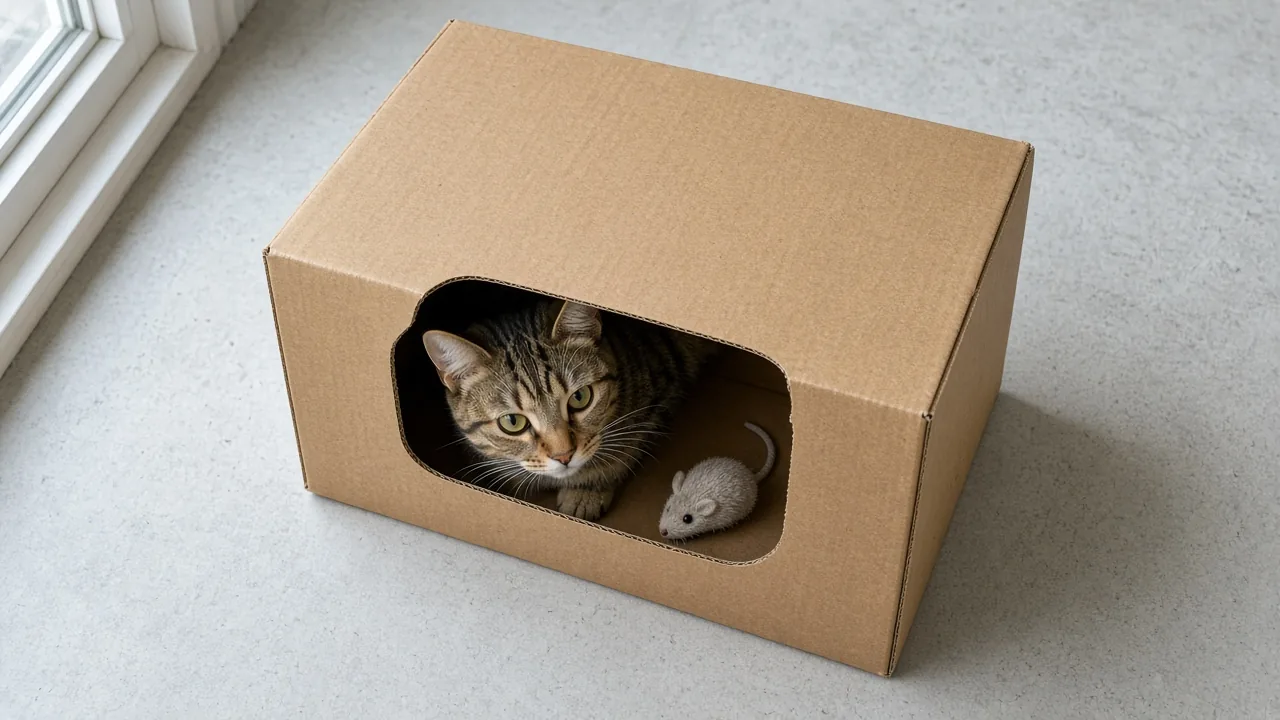
A DIY cardboard box toy for cats costs nothing, takes about five minutes to put together, and keeps most cats busy on their own. Unlike a wand toy or a spinning teaser that needs you holding one end, a cut-open box lets your cat stalk, peek, and pounce without you in the room. If your cat already treats delivery boxes like personal real estate, this project turns that habit into an actual game.
Why a DIY Cardboard Box Toy for Cats Beats Buying Another Toy
Plenty of cat owners know the pattern: a new toy shows up, the cat bats it around for a day or two, and then it sits ignored on the floor. One cat owner who tried this with her indoor cats noted that buying toy after toy for a cat that gets bored fast just means more plastic clutter and no lasting interest. That frustration is common enough that it is worth asking what actually keeps a cat engaged before you spend more money on the next shiny option.
A cardboard box toy works differently because it taps into instinct instead of novelty. Cats are built to stalk, hide, and ambush, and a box with a hole gives them a spot to do exactly that. The box does not need batteries, does not need a treat inside to stay interesting, and does not require you to wiggle anything. The appeal is closer to a cat’s natural hunting sequence of stalking, chasing, and finishing a catch, which many commercial toys only cover in part.
Commercial toys still have a place. Feather wands get a strong reaction when you move them and let your cat "catch" the end, and that catch moment matters for cats that like a clear finish to the hunt. But a wand toy only works while you are holding it. A cardboard box keeps working after you walk away, which is the main reason it earns a spot next to the fancier toys in your closet.
There is also a cost argument that is hard to ignore. A box is something you already have, while a mid-range interactive toy or an automatic teaser can run from a few dollars to a higher-end price depending on the mechanism. Neither option replaces the other completely, but the box is the one you can replace for free the moment it wears out.
How to Make a DIY Cardboard Box Toy for Cats (Step by Step)
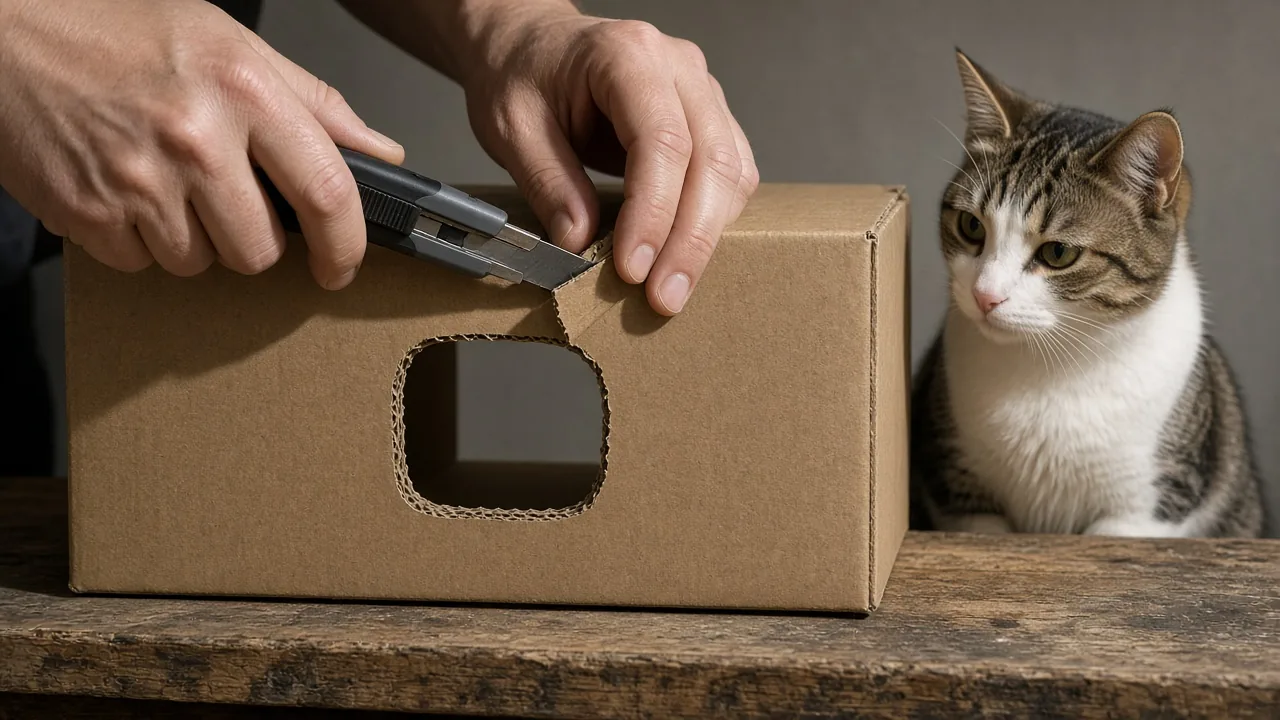
You do not need glue, scissors skills beyond a basic box cutter, or any craft supplies. The whole project uses a box you probably already have in the recycling pile.
- Find a clean, dry cardboard box with no food residue, tape adhesive flaking off, or staples left inside.
- Pick one side of the box and cut a hole large enough for your cat’s body to fit through comfortably, not just a paw.
- Position the hole off to one side of that panel rather than dead center.
- Drop a small toy, like a lightweight mouse toy, inside the box.
- Set the box on the floor in a spot your cat already visits, then let her find it.
That is the entire build. A kitten or an adult cat usually investigates a new box within minutes, so you rarely need to coax her toward it. If your cat seems hesitant at first, try sprinkling a small amount of catnip near the hole or leaving the box in a quiet corner for a day before adding the toy inside, since some cats prefer to approach new objects on their own schedule rather than right after setup.
Why the Hole Placement Matters
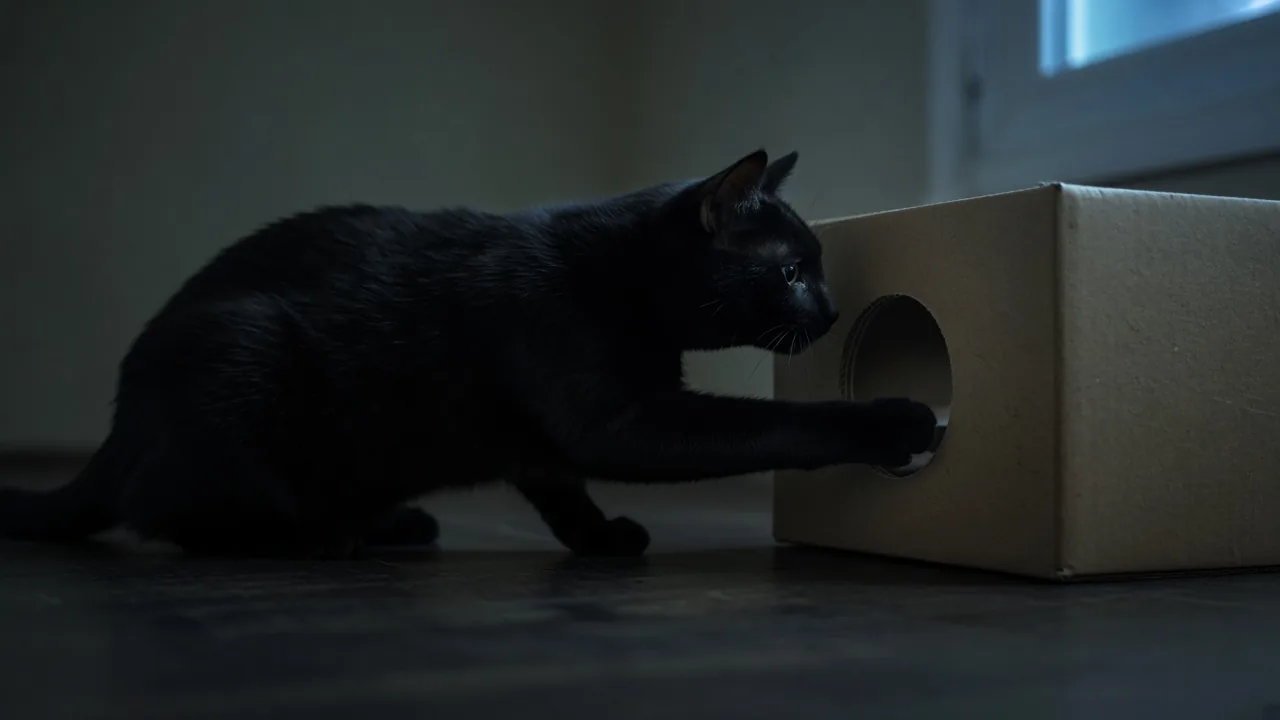
An off-center hole changes how the game plays out. If the opening sits in the exact middle of the panel, your cat can see straight through and the box loses its hiding value fast. Move the hole to one side instead, and your cat has to lean, peek, or stick a paw around the edge to see what is inside.
That small adjustment mimics how cats actually hunt. They do not usually walk straight at prey; they peer around a corner first. A side-set hole keeps that peeking-and-swiping cycle going for longer stretches, which is the real reason this box holds attention better than one with a hole punched straight in the center.
Box size matters here too, even though it rarely gets mentioned. A box that is too small forces your cat to crouch awkwardly near the hole, which can shorten play sessions. A box roughly the length of your cat’s body, with enough interior room to turn around, tends to work better than a box sized for a smaller item like shoes or snacks.
What to Put Inside for Best Results
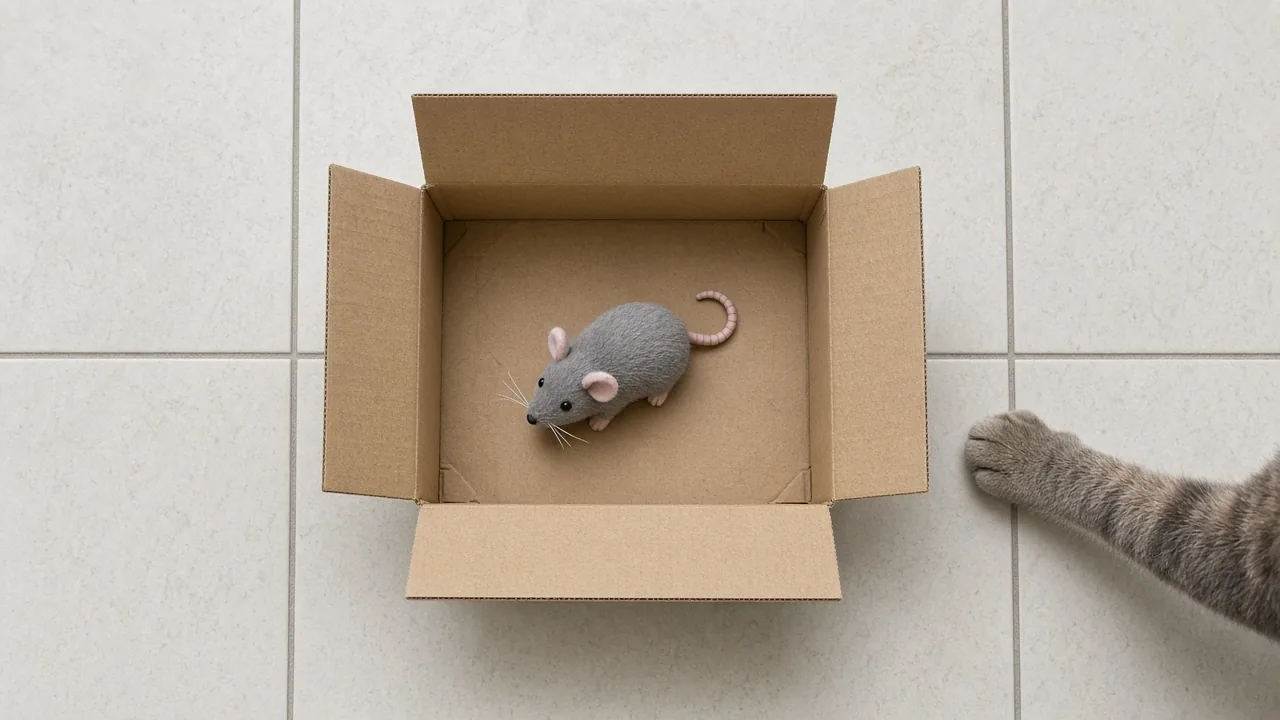
A small mouse toy works well because it is light enough to skid across the cardboard floor when your cat taps it, which keeps triggering chase instincts. Avoid anything with loose string, a bell that could come loose, or small parts that could separate from the body.
Check the toy before you drop it in:
- No fraying seams or exposed stuffing
- No parts small enough to swallow if they break off
- Light enough to move easily when your cat pats it, not so heavy it just sits still
If you do not have a dedicated mouse toy, a crumpled piece of paper or a lightweight ball can substitute, as long as it is not something your cat could tear apart and swallow in pieces. Some owners also try a ping pong ball for the same effect, since the hard shell holds up to batting without shredding the way paper does, though the rattling sound can startle a shy cat the first time she hears it inside the box.
DIY Box Toy vs Store-Bought Cat Toys: How to Choose
Different toys solve different problems. A box works best for solo play, while a feather wand or spinning teaser works best for active bonding time with you.
| Toy Type | Supervision Needed | Durability | Play Style |
|---|---|---|---|
| Cardboard box with hole | None once set up | Low; wears out as it gets chewed or scratched | Solo stalking, peeking, pouncing |
| Cat tunnel | Low | Moderate; fabric can fray at seams | Running through, hiding, can spark competition between two cats |
| Feather wand | Full supervision during play | Moderate; feathers and string wear down with use | Interactive chase and catch, led by you |
| Spinning mouse teaser | Low to moderate | Moderate; mechanical parts can wear out | Self-moving chase, less hands-on than a wand |
If your cat loves water play, keep any electronic or battery-powered toy away from spill zones, since cardboard and water-loving cats are a bad combination you will read about in the cleaning section below.
The practical takeaway: a box fills the gaps when you cannot play actively, and a wand or teaser fills the gaps when you can. Most households end up using both rather than picking one. A reasonable weekly routine might pair a few minutes of wand play, where you control the pace and let your cat finish with an actual catch, with a cardboard box left out for the hours in between when nobody is free to play.
Which Cats Benefit Most From a Cardboard Box Toy
Indoor-only cats with limited outdoor stimulation tend to benefit the most, since the box gives them a hiding spot and a hunting target in one object. Cats that already gravitate toward boxes, bags, or tight spaces usually take to this project within minutes.
Multi-cat households can benefit too, but with a caveat. Two cats sharing a tunnel toy often end up competing for the same space rather than taking turns, and a single-hole cardboard box can trigger the same kind of standoff. If you have more than one cat, consider setting up two boxes in different rooms rather than expecting them to share one.
Kittens often respond well to the motion and sound of cardboard scraping and tearing, but a kitten’s first session with any new toy is worth watching, since kittens are more likely to chew on edges or try to squeeze through a hole that is too small.
Older cats are worth a separate note. A senior cat with stiff joints or reduced mobility may not want to climb in and out of a tall box as often as a younger cat would, so a lower box or one with a wider hole closer to the floor can keep the game accessible without asking for a jump she is not up for. If your older cat shows little interest even after a few days, that is not unusual, and it does not mean the project failed; some cats simply prefer a flatter play style like swatting at a toy on the floor rather than climbing into anything.
How to Check a DIY Cardboard Box Toy for Safety Issues
Cardboard is forgiving material, but it is not maintenance-free. Run through this check before leaving your cat alone with the box and again every few days once it is in regular use.
- Sharp edges: Run a finger along the cut hole. If the cardboard has split into jagged points, trim them smooth or round the corners.
- Loose tape: Remove any shipping tape or labels before cutting the hole, since peeling tape can stick to fur or get chewed off in strips.
- Chewed pieces: Check for small cardboard fragments on the floor near the box. A cat that chews and swallows cardboard pieces can run into digestive trouble, so remove any box your cat is actively chewing through rather than batting at.
- Toy parts inside: Reach in and check the hidden toy for loose seams, missing eyes, or anything that looks ready to detach.
- Staples and plastic tape dispensers: Some shipping boxes arrive with staples holding the bottom flaps together. Pull these out completely before your cat gets access, since a loose staple is sharp enough to cut a paw pad.
If you notice your cat chewing on cardboard itself rather than just the toy inside, that can be a sign of boredom, teething in a kitten, or in some cases a behavior worth mentioning to your veterinarian, especially if it becomes a daily habit. Occasional light chewing on an edge is common and usually harmless, but swallowing larger pieces on a regular basis is different from an occasional nibble and deserves a closer look.
How Often to Replace or Refresh the Box
A cardboard box has a shorter lifespan than a plastic or fabric toy, and that is expected rather than a flaw. Replace the box once any of these show up:
- The cardboard feels soft, damp, or soggy anywhere
- There are tears beyond the hole you originally cut
- Your cat has chewed through a corner or edge
- The box no longer holds its shape when you pick it up
Most boxes last anywhere from a few days to a couple of weeks depending on how hard your cat plays and whether she scratches at the cardboard itself. A cat that mostly peeks and pounces gently may stretch a box’s life closer to two weeks, while a heavy scratcher or a cat that likes to chew corners can wear through the same box in a few days. Keep a flattened spare box on hand so you can swap in a fresh one without a gap in playtime.
Rotating the hidden toy matters just as much as replacing the box. Swapping the mouse toy for a different small object every few days, even something as simple as a crumpled paper ball, can renew interest faster than leaving the same toy inside for weeks. This mirrors a broader pattern with cat toys in general: interest tends to fade with repetition, not because a toy is poorly made, but because cats respond strongly to novelty during a hunt-style game.
How to Clean a Cardboard Box Cat Toy
Cardboard cannot go through the wash or get wiped down with cleaning spray the way a plastic ball or silicone toy can. Once cardboard absorbs liquid, it loses structural integrity and starts to break down.
If your cat knocks over water near the box, or has an accident on it, the safest move is to toss the box and set up a new one rather than trying to dry it out. Trying to salvage a water-damaged box is rarely worth the effort, since soft, weakened cardboard can collapse under your cat’s weight or tear in ways that expose sharp edges. For everyday upkeep, shake out loose cardboard dust or shredded bits every few days, and keep the box away from food and water bowls so spills do not reach it in the first place.
The toy inside the box is a different story. If it is a plastic or fabric mouse toy, you can usually wipe it down or hand-wash it according to its own care instructions, separate from the box itself. Letting the toy air-dry fully before putting it back inside the box also helps, since a damp toy left in an enclosed cardboard space can speed up the same softening and mold risk you are trying to avoid with the box itself.
Frequently Asked Questions About DIY Cardboard Box Toys for Cats
Is tape safe to leave on the box?
Remove tape before giving your cat access, especially near the hole you cut. Tape can peel into strips that stick to fur or get chewed off, and the adhesive is not something you want your cat ingesting.
How many holes should I cut?
One off-center hole is usually enough for a single cat. If you have a larger box and want to add a second hole, keep both off-center and on different panels so your cat still has to work around corners rather than seeing straight through.
Do kittens need supervision the first time?
Yes. Watch your kitten’s first session to see whether she tries to squeeze through a hole that is too small, chews on loose cardboard edges, or shows interest in the hidden toy in a way that suggests she might try to swallow small parts.
Can two cats share one box?
They can, but it often leads to one cat guarding the hole while the other waits nearby, similar to how two cats compete over a shared tunnel. Separate boxes avoid the standoff if you have more than one cat at home.
What if my cat ignores the box completely?
Some cats need a day or two before a new object feels worth investigating. Try moving the box to a different room, adding a pinch of catnip near the opening, or swapping the hidden toy for something with a stronger scent. If your cat still shows no interest after a week, she may simply prefer a different play style, such as chasing a wand toy or batting at something on the floor rather than climbing inside an enclosed space.
Before you decide between a cardboard box, a wand toy, or both, spend a few days watching how your cat actually plays, whether she stalks and hides, chases anything that moves, or carries toys around in her mouth. That pattern will tell you more than any toy label. Whatever you choose, check it regularly for wear, and swap out anything torn, soggy, or missing pieces before your cat gets the chance to chew through to a problem.
This article is for general information only and is not a substitute for advice from your veterinarian. Always supervise your pet with a new toy, and replace any toy that is damaged or small enough to swallow.

Contributor
admin
Continue reading
All stories
CAT TOYS · 10 October
Why Cats That Ignore Store Bought Toys Love Free Alternatives
CAT TOYS · 10 October
DIY Food Puzzle Toys for Cats Using Household Items That Actually Work
CAT TOYS · 10 October
Responses
Moderated discussion