CAT TOYS
Why Is My Rolling Cat Toy Ball So Loud, and Can You Fix It?
A loud rolling cat toy ball is usually gear friction, housing bumps, or a built-in "struggling prey" mode rather than a defect. Learn how to tell normal noise from a warning sign, and when to lubricate, keep using, or retire the toy.
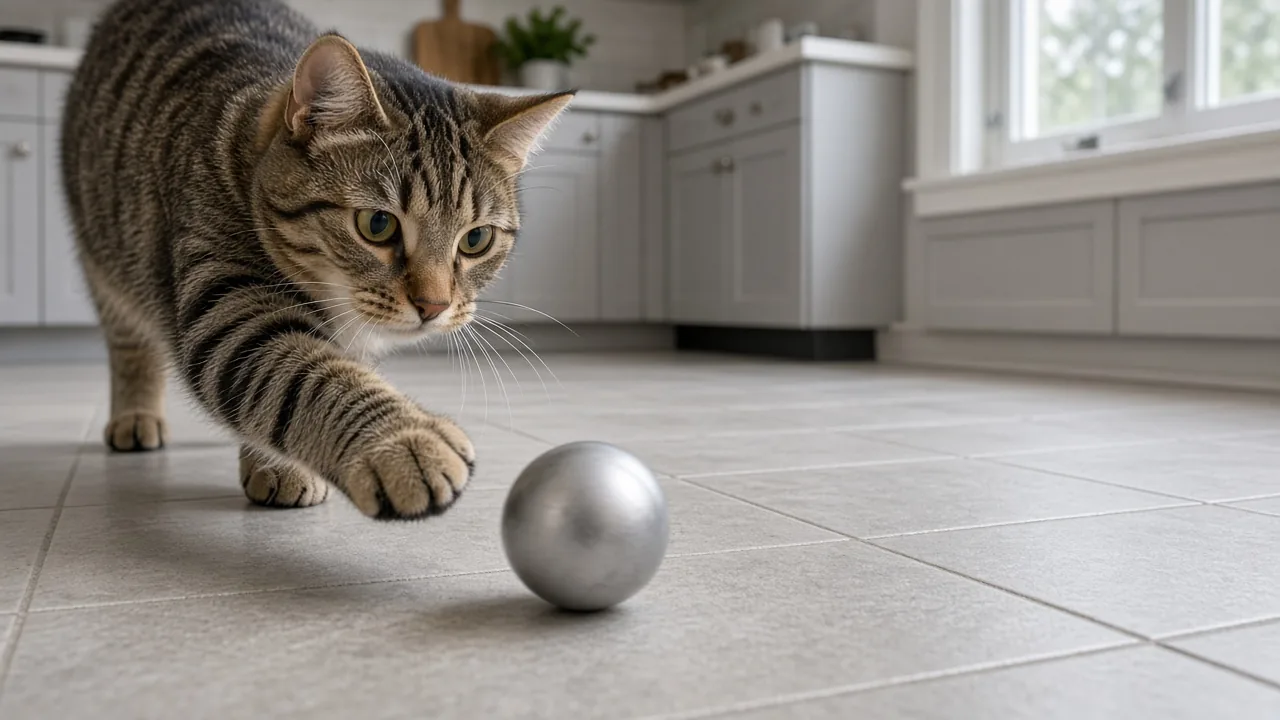
If your rolling cat toy ball suddenly grinds, clicks, or startles your cat mid-play, it is usually gear noise or a sudden mode change rather than a defect that always needs replacing. Many of these self-rolling balls run quietly most of the time, then let out a burst of clicking or jerking that catches both cat and owner off guard. Understanding why is my rolling cat toy ball so loud helps you decide whether to adjust how you use it, try a simple fix, or retire the unit.
What This Toy Is and How It’s Supposed to Sound
A self-rolling cat toy ball typically pairs a wheel-drive motor inside the ball with a wiggling tail attachment that mimics a small animal’s movement. The idea is to let the toy roam on its own so your cat can stalk, chase, and pounce without you holding anything. Sound quality varies quite a bit from one unit to the next. Some owners describe the motor as barely audible, while others hear a persistent grinding sound from the first time they turn it on. That spread isn’t unusual with small motorized pet toys, since manufacturing tolerances on tiny gear assemblies can differ even within the same product line. If you’re shopping based on noise concerns, treat any single glowing review about quietness with some caution, since your unit may not match it. It also helps to read a handful of reviews rather than one, since a pattern of repeated noise complaints across several buyers tells you more about a model’s typical behavior than a single owner’s experience either way.
How the Modes and Button Work
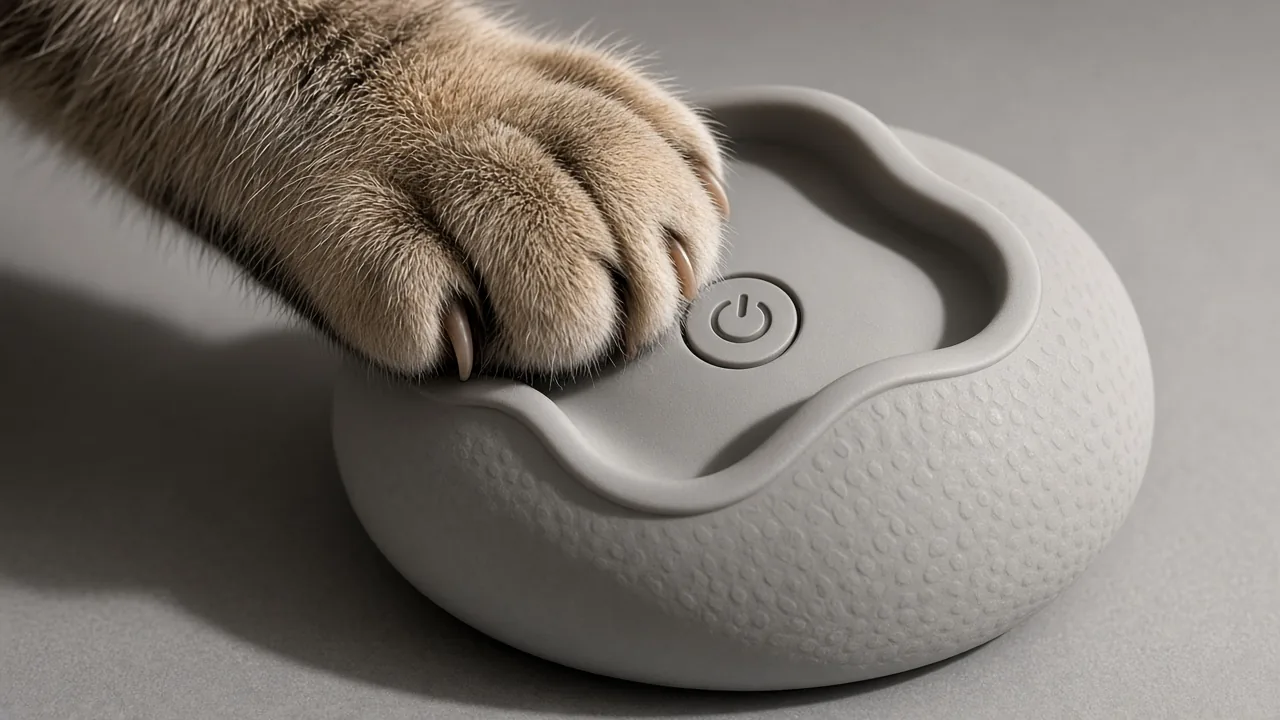
Most of these balls use a long press on the power button to turn on, and the same long press to turn off. Once powered on, an indicator light cycles through colors—often blue, purple, and green—to signal different movement modes. Each mode changes the ball’s speed, pause pattern, and how often it changes direction. This matters for noise troubleshooting because a sudden burst of clicking or jerking often means the toy switched modes, not that something broke. If the noise always happens right after a color change, that’s a strong clue it’s a programmed behavior rather than a mechanical problem.
One frequent snag: many owners can’t find the power button on their first try. On most of these balls, the button sits along the silicone portion, on the wavy-edge side opposite the charging port. If you’re hunting for it, run your finger along that silicone seam rather than along the hard plastic shell.
Why Is My Rolling Cat Toy Ball So Loud: Common Causes
Loud operation usually comes down to one of three things. First, gear friction inside the motor housing can produce a steady grinding hum, especially as the toy ages or if the gears were never well-lubricated from the factory. Second, the plastic housing itself can knock against hard flooring, furniture legs, or baseboards as the ball changes direction, which creates a sharp rattling sound that has nothing to do with the motor. Third, many of these toys include a "struggling prey" mode designed to mimic a small animal trying to escape—this mode intentionally jerks, pauses, and accelerates in bursts, and the clicking sound that comes with it is a built-in feature, not malfunction.
Separating these causes matters because the fix is different for each one:
- Gear grinding that’s constant and low: points to the motor or gear assembly itself
- Sharp knocking only near furniture or walls: points to the housing hitting hard surfaces, not the mechanism
- Sudden jerky clicking tied to a mode change: points to the "struggling prey" setting working as intended
Normal Noise vs. a Warning Sign
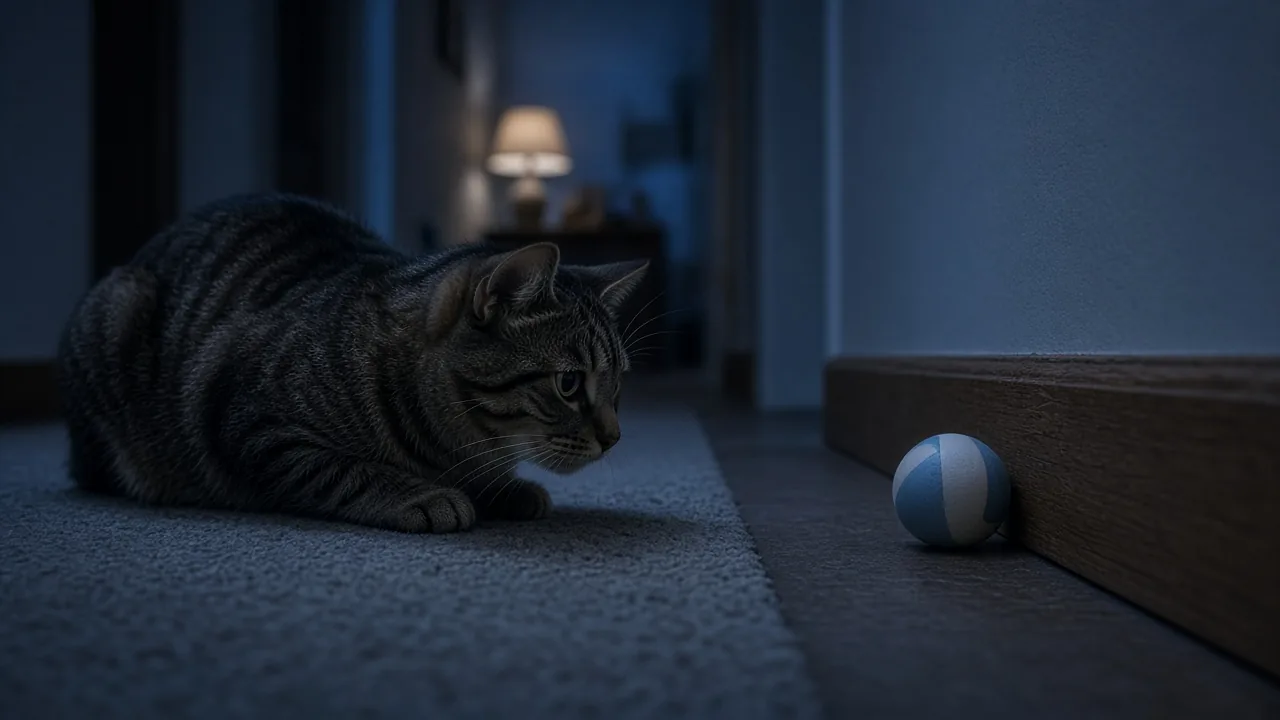
A soft rolling hum punctuated by the occasional bump against a couch leg or doorframe is typical for this kind of toy. The rubber trim on the ball’s edges is meant to absorb some of that impact, and most owners describe this baseline sound as easy to tune out after a day or two.
Watch for a different pattern, though. If the grinding noise is getting louder over days or weeks, or if the toy charges normally but stops moving once you try to use it, that points toward internal wear rather than the toy’s normal operating sound. A toy that worked fine for weeks and then develops escalating noise is behaving differently than one that was simply built with a noisier motor from day one—the first suggests something is wearing out inside. Keeping a rough mental note of how loud the toy sounded in its first week gives you a baseline to compare against later, which makes a gradual change easier to catch than if you’re only noticing the noise in the moment.
Does Lubricating the Gears Actually Reduce the Noise?
One cat owner who dealt with persistent gear noise opened the ball’s housing to inspect and lubricate the internal gears, expecting that to quiet things down. The gears turned out to already have grease on them from the factory, yet the noise continued after adding more lubricant. This suggests that in at least some cases, loud gear sound isn’t simply a dry-gear problem that oil can solve—it may stem from motor strain, a slightly misaligned part, or the toy’s basic design rather than a lack of lubrication.
That doesn’t mean lubrication never helps. If you open a toy and find gears that look visibly dry or dusty, adding a small amount of appropriate lubricant may reduce friction noise. But if the gears already look well-greased and the noise persists anyway, more oil likely won’t fix it, and you’re better off treating the noise as a sign of a deeper mechanical issue. Use a small amount of a product labeled safe for plastic gears rather than a household oil, since some lubricants can soften or discolor plastic housings over time.
When DIY Fixes Are Worth Trying (and When to Stop)
Opening up a rolling toy ball to look at the gears can be a reasonable first step if you’re past the return window and curious whether a quick fix is possible. It’s worth trying when:
- The toy is clearly out of any return or exchange period
- You can see or feel that the gears are dry to the touch
- You’re comfortable that opening the housing won’t create a safety hazard (sharp edges, exposed wiring)
It’s worth stopping—and not repeating the process—when:
- The toy is still within its warranty window, since repeated disassembly can void support for an unresolved defect
- The noise persists after your first attempt at lubrication, since a second or third attempt likely won’t change the outcome
- You notice cracked housing, loose screws, or any part that doesn’t sit flush after reassembly
If your toy is still under warranty and making grinding noise, it’s generally smarter to contact the seller before taking it apart.
Is a Noisy Rolling Ball Safe to Keep Using Around Your Cat?
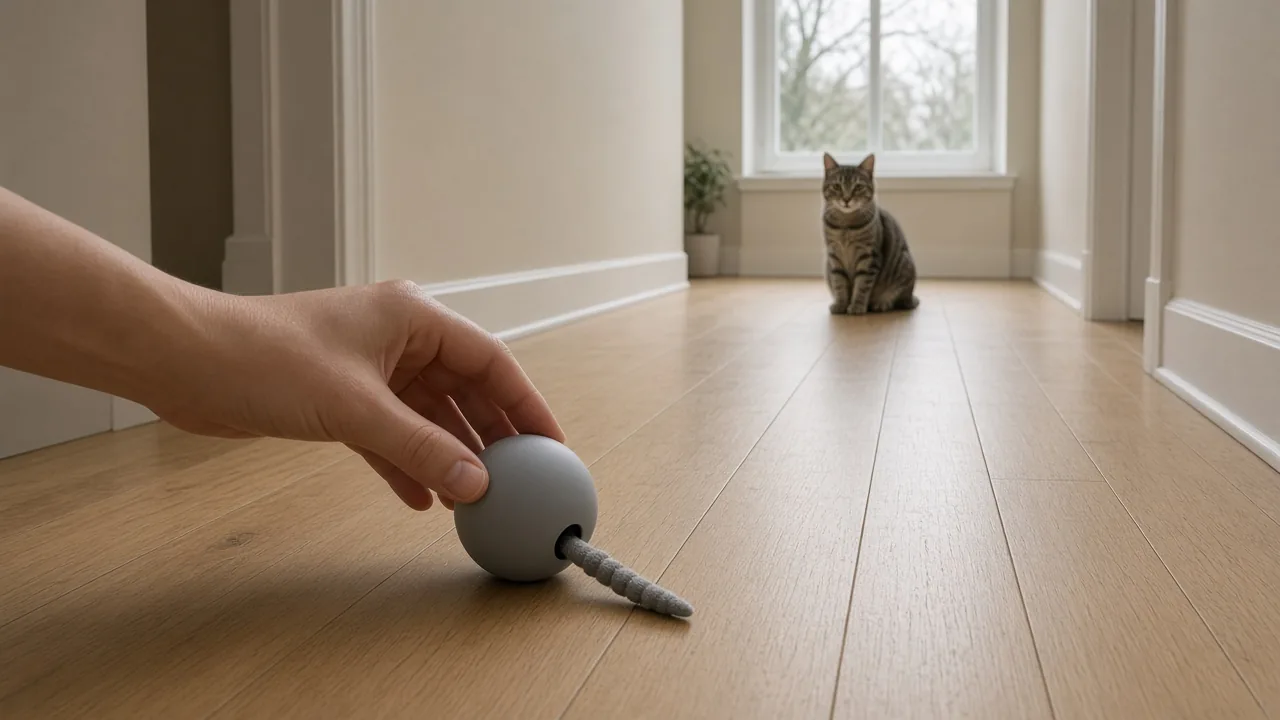
A sudden loud click or grinding burst can genuinely startle a cat, especially one that was calmly sniffing or watching the toy up close. The bigger safety concern comes up when a cat bites down on the wiggling tail attachment and the motor restarts or lurches forward unexpectedly. If the cat’s teeth are clamped around the tail at that moment, there’s a real risk of a tooth injury from the sudden pull. This is one of the clearer reasons to supervise any new rolling toy closely during its first several sessions, rather than leaving your cat alone with it right away.
Practical steps to reduce this risk:
- Watch the first few sessions fully before leaving the room
- Discourage your cat from mouthing the tail attachment directly
- Keep the toy on hard, open flooring away from furniture edges during early use, so you can see and hear how it behaves
- Retire the toy immediately if you notice cracks, loose seams, or any part that looks like it could separate during play
Signs Your Cat Is Scared vs. Just Startled
Most cats flinch, freeze, or back away the first time this type of toy turns on and starts moving unpredictably. That reaction alone isn’t a reason to give up on it. Many cats relax within a few days once they learn the ball isn’t a threat, and some end up actively chasing it.
A cat that continues hiding, refuses to enter the room when the toy is out, or shows signs of stress days or weeks into ownership is telling you something different. At that point, the toy likely isn’t a good match for that particular cat’s temperament, and a quieter, non-motorized toy is probably a better fit going forward. A timid cat and a bold, play-driven cat can have completely opposite reactions to the exact same unit, so what works for one cat in your household may not work for another, and that’s worth factoring in before you assume a toy is simply defective.
How Durability Complaints Relate to the Noise Problem
Several owners have reported that these rolling balls stop working after a relatively short period—some mentioning failure around the three-week mark, with the toy still charging but no longer running. Other owners describe needing to keep spares on hand because units wear out faster than expected.
This pattern matters for how you interpret noise. A toy that’s grinding loudly and also showing other signs of strain—slower movement, inconsistent charging behavior, warm housing after short use—may already be partway through the failure process that eventually leads to it stopping altogether. In other words, persistent loud grinding isn’t always just an annoying quirk you can live with; in some units, it may be an early warning that the motor or gear assembly is wearing down toward a full failure. If you notice this combination of symptoms within the first month of ownership, it’s worth documenting the issue and reaching out to the seller rather than waiting to see if it resolves on its own, since early failures like this often fall within a standard return or warranty period.
How to Choose a Rolling Toy If Noise Matters to Your Cat
If your cat startles easily at sudden sounds, movement, or changes in routine, it’s worth prioritizing toys with rubber-edged construction and a track record of quieter reviews over toys packed with features like multiple modes and "prey" simulation effects. More modes and movement patterns generally mean more moving parts and more chances for a jarring noise burst.
| Toy Type | Noise Level | Best Suited For |
|---|---|---|
| Simple rolling ball, few modes | Lower, more predictable | Cats who startle easily, first-time exposure to motorized toys |
| Multi-mode ball with "prey" simulation | Variable, includes sudden bursts | Bolder, play-driven cats who enjoy unpredictability |
| Rubber-trimmed housing | Quieter impact noise against furniture | Homes with hard flooring or tight furniture spacing |
| Hard plastic housing, no trim | Louder impact noise | Open floor space with fewer obstacles to bump into |
For cats with a more cautious or anxious temperament, a high-energy spinning or jerking toy may do more harm than good. Save those feature-heavy motorized toys for cats who already show confident, play-driven behavior around new objects. Kittens and younger cats often adjust to noise and movement faster than older cats who are set in their routines, so age is worth factoring in alongside temperament when you’re deciding how much noise and unpredictability your cat can reasonably handle.
Keeping Your Cat Interested Without Overusing a Noisy Toy
Many cats lose interest in a single rolling toy after roughly a week of regular use, regardless of how quiet or loud it is. Rotating the toy out of sight for a few days and then reintroducing it tends to restore some of that initial curiosity. This approach has a side benefit if your toy’s noise is a known issue: less daily exposure to the sound means fewer chances for your cat to get stressed, while you keep an eye on whether the grinding is worsening between uses.
How This Differs from AI Pet Companion Devices
It’s worth drawing a clear line between mechanical rolling cat toys and the growing category of AI-powered, cat-shaped companion devices. A self-rolling ball is built to move on its own and directly engage your cat’s hunting instinct—chasing, pouncing, and physical play are the whole point. An AI pet companion device, by contrast, is built to interact with you, the human owner, using a microphone, a screen, and a cloud-connected conversation system. Any cat-shaped exterior on these gadgets is a design choice, not a feature meant to entertain an actual cat.
Why Smart Pet-Shaped Gadgets Aren’t the Same as Cat Toys
Because these two product types serve completely different purposes, the quality factors that matter are different too. For a rolling cat toy, you care about gear noise, motor durability, and how the housing holds up to bumps and bites. For an AI companion gadget, what matters is microphone clarity for voice recognition, speaker sound quality, how natural the screen animations look, and how stable the WiFi or cellular connection is. If you’re troubleshooting a noisy rolling ball, none of the fixes relevant to a smart speaker-style device—like checking firmware or network settings—will apply. These are fundamentally different categories that happen to share "cat" in their marketing, so it helps to keep your expectations and troubleshooting approach separate for each.
FAQ: Noisy Rolling Cat Toy Balls
Where is the power button on my rolling cat toy ball?
On most models, it’s located on the silicone portion of the ball, along the wavy-edge side that sits opposite the charging port. If you’re having trouble finding it, run your fingers along that seam rather than searching the smooth plastic shell.
Do all rolling cat toy balls make the same amount of noise?
No. Noise levels vary noticeably between individual units, even within the same model line. Some owners describe their unit as nearly silent, while others hear loud grinding from day one, which points to real manufacturing variation rather than a universal design flaw.
Is it still worth keeping a noisy toy if my cat seems to tolerate it?
If your cat has adjusted to the sound and shows no signs of ongoing stress—no hiding, no avoidance—the noise alone usually isn’t a safety issue. Keep watching for signs the noise is worsening over time, and retire the toy if you notice cracks, loose parts, or declining movement, since those can signal the motor is failing.
Can I return a rolling cat toy ball just because it’s louder than I expected?
Check the seller’s return policy before assuming you’re stuck with it. Since noise levels vary so much between units of the same model, a return or exchange within the standard window is often the simplest fix if the sound is bothering you or your cat, rather than attempting a repair on a toy you’re not confident about opening.
Watch how your cat actually plays—whether they chase, pounce, bat at the tail, or back away from the noise—before settling on a rolling toy as a regular part of your routine. Check any motorized toy regularly for cracks, loose seams, or worsening grinding, and swap it out for something quieter if your cat never fully warms up to it. Rotating in a couple of different toy types tends to keep play sessions interesting while also giving you natural opportunities to spot wear before it becomes a bigger problem.
This article is for general information only and is not a substitute for advice from your veterinarian. Always supervise your pet with a new toy, and replace any toy that is damaged or small enough to swallow.

Contributor
admin
Continue reading
All stories
CAT TOYS · 11 October
Can Robotic Cats Replace a Real Cat? What Owners Should Know
CAT TOYS · 11 October
Why Do Cats Ignore Automatic Cat Toys? The Prey Instinct Explained
CAT TOYS · 11 October
Responses
Moderated discussion