CAT TOYS
Felt Cat Tunnel vs Cardboard Scratcher: Which Is Better?
Felt tunnels and cardboard scratchers solve different problems for cats, trading price and mess for comfort and tidiness. This guide compares durability, cleanup, and multi-cat suitability to help you pick the right toy for your home.
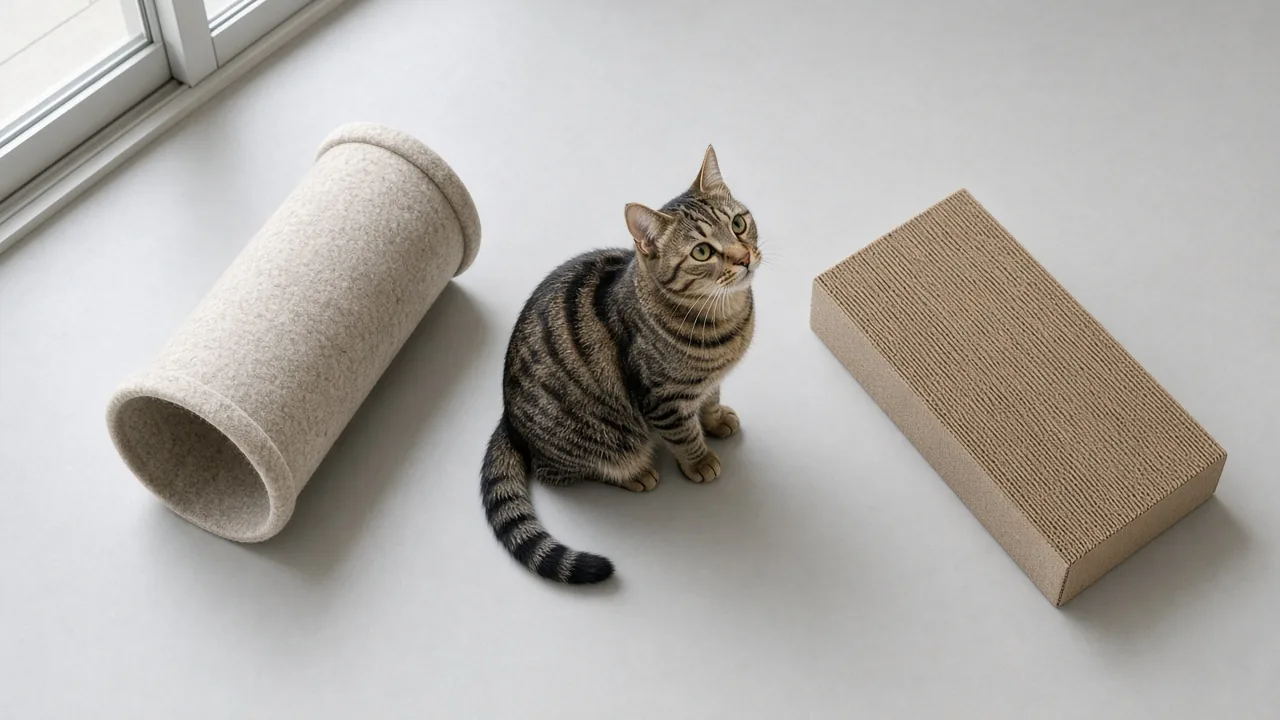
If your cat is tearing through a cardboard scratcher in weeks but ignores an expensive felt tunnel sitting in the corner, you’re not imagining a pattern. Corrugated scratchers win on scratching function and price but shed debris as the arched sides wear down, while felt tunnels stay tidier and fold flat for storage but cost more and collect fur fast. When you’re weighing a felt cat tunnel vs cardboard scratcher, the better choice depends less on which material is "best" and more on how your cat plays, how many cats share your home, and how much cleanup you’re willing to do each week.
Felt Tunnels and Cardboard Scratchers Serve Different Purposes
These two toy types aren’t really competing for the same job. Felt tunnels, mats, and connected pieces are soft play structures built for hiding, crawling, and lounging. Cardboard scratchers are stiff, textured surfaces shaped to match the way a cat naturally stretches forward and drags its claws down.
Because they solve different problems, many households end up using both rather than picking one over the other. A cat that loves to duck into a tunnel before pouncing on a toy will still want somewhere to scratch afterward, and a cat that scratches first thing in the morning may also want a soft spot to curl up in once it’s done. Thinking of these as complementary purchases, rather than a single either-or decision, often makes more sense than trying to find one toy that does both jobs well. Knowing what each one is actually designed to do makes the comparison easier.
What a Felt Cat Tunnel Offers
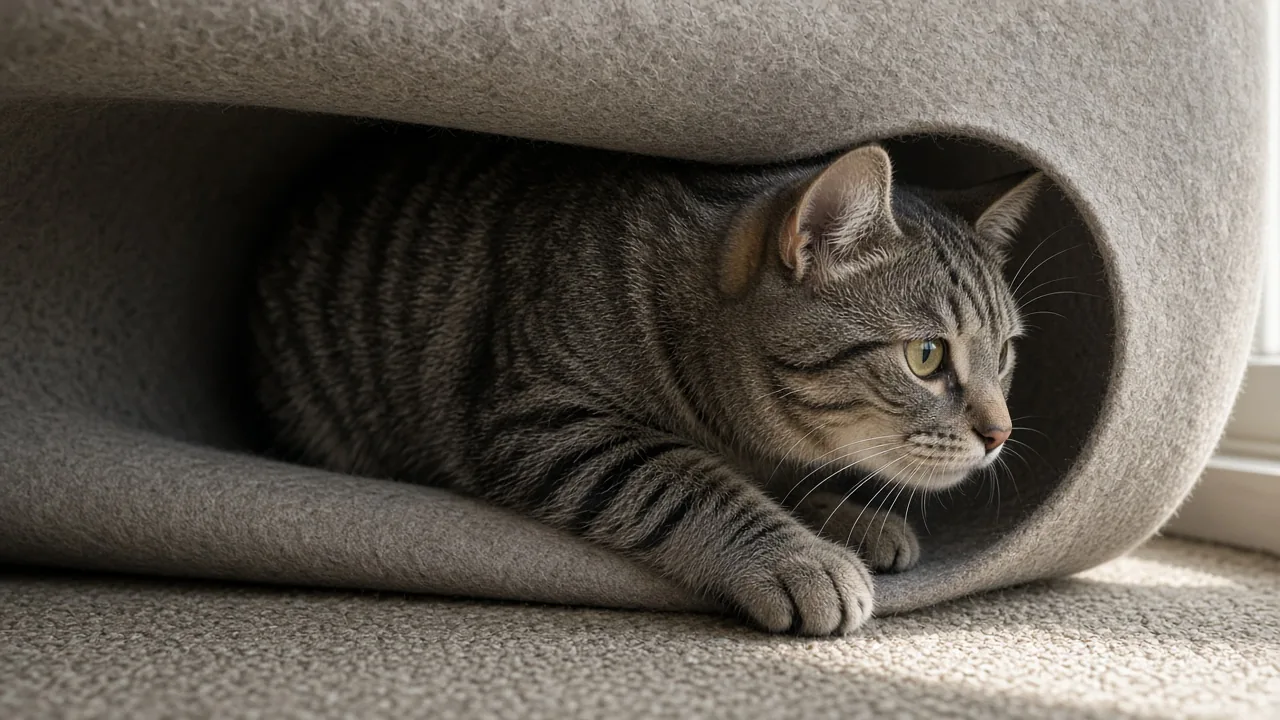
Felt pieces are flexible by design. Many are sold as separate sections, such as tunnels, flat mats, and tunnel-shaped cat beds, that connect with buttons or zippers into longer setups. One cat owner found that a long tunnel built this way worked well with a mesh pocket added partway through, giving a cat a spot to settle while still letting a wand toy poke through a side opening for interactive play. That kind of setup turns a simple tunnel into something closer to an obstacle course, with a resting point built in rather than a single straight-through crawl space.
The appeal goes beyond the shape itself:
- Collapses flat for storage – unused pieces press down to almost nothing, so they don’t take up floor space between play sessions
- Modular setup – sections can be used alone or combined into longer tunnels, which is useful if your space or your cat’s interest changes over time
- Soft landing surface – comfortable for lounging and hiding, which suits cats that like to disappear between bursts of activity
The downsides are consistent across felt products. The material sheds cat hair easily and needs frequent attention to stay presentable, and that upkeep only grows if you have more than one cat contributing fur to the pile. Softer sections, like plain mats or tunnel walls without a frame, also sag or cave in where there’s no added support, which is why some tunnel designs are built to pair with a firmer cardboard cat bed for structure. Without that extra support piece, a long tunnel can start to look more like a flattened sleeve than something a cat wants to climb through.
What a Cardboard Scratcher Offers
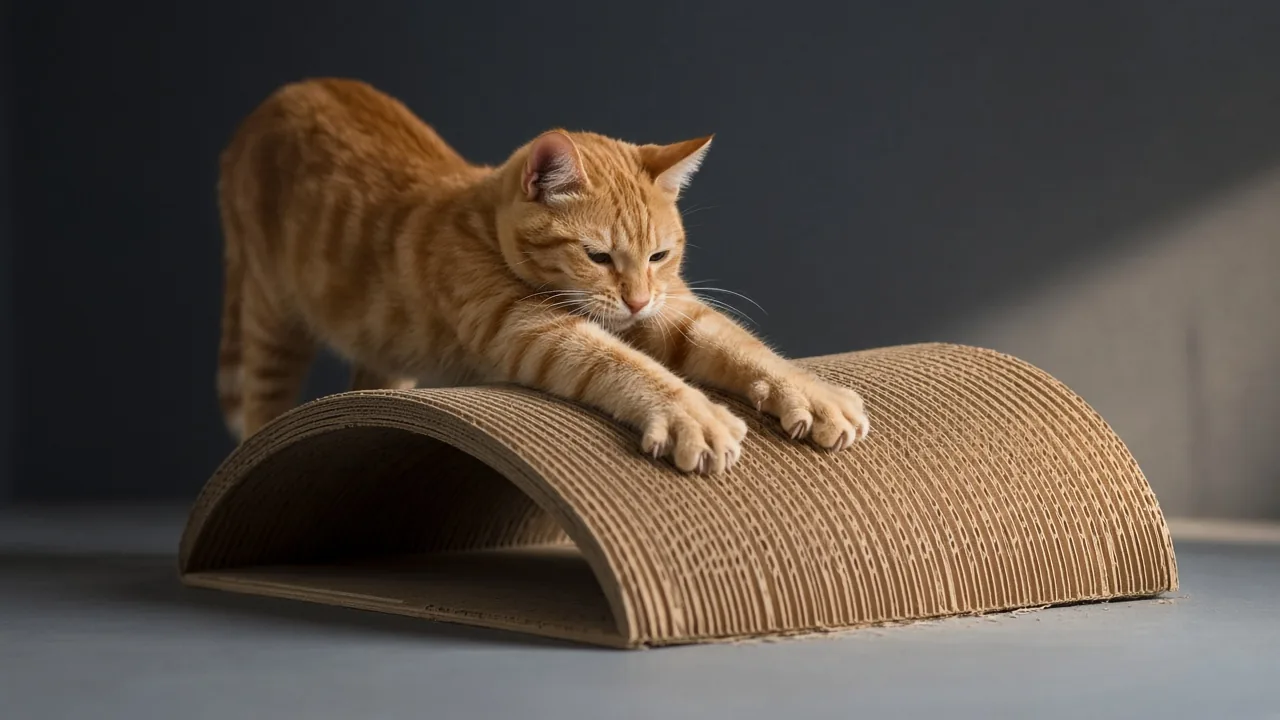
Corrugated scratchers, especially curved or arched designs, are built around a cat’s natural scratching posture. The angle lets a cat stretch its body the way it would scratching a tree trunk, and most of these scratchers work on both sides since the base is left open rather than sealed, effectively doubling the usable life of a single piece before you have to flip or replace it.
For multi-cat households, this format scales well. Buying two or three curved scratchers and lining them up side by side turns a single narrow scratching spot into a wider play area where more than one cat can scratch at the same time. Some owners also flip one scratcher upside down occasionally to change the angle and keep things interesting for cats that have gotten used to the usual setup. This kind of rearranging costs nothing extra and can extend how long a cat stays interested in a piece it might otherwise ignore after a few weeks.
The trade-off shows up with use. Cats tend to focus their scratching on the raised, curved sides, and that’s exactly where the corrugated layers break down fastest. Over time this creates loose cardboard flakes and visible debris around the scratcher, which is the single biggest complaint about this material. If you keep the scratcher on carpet rather than hard flooring, the flakes can also work their way into the fibers, making cleanup a bit more involved than a quick sweep.
Felt Cat Tunnel vs Cardboard Scratcher: Which Is Better for Durability, Mess, and Multi-Cat Play
Lined up side by side, neither option wins across every category. Each one trades a cleaner living room for a lower price tag, or the reverse.
| Factor | Felt Tunnel/Mat | Cardboard Scratcher |
|---|---|---|
| Material | Felt fabric, often with a frame or support piece | Corrugated cardboard, uncoated or coated |
| Durability | Holds shape well unless seams or zippers fail | Wears down fastest at curved, high-contact areas |
| Mess level | Sheds loose fur that spreads around the room | Sheds cardboard flakes and dust near the toy |
| Cleaning method | Lint rolling or vacuuming on a regular basis | Shaking out debris or rotating the piece |
| Multi-cat suitability | Good when multiple sections are linked together | Good when 2–3 units are placed side by side |
| Typical cost | Mid-range to high-end | Budget-friendly |
A coated version, sometimes made with a smoother white cardstock-style layer instead of plain brown corrugated board, trades some of that scratching satisfaction for a cleaner look since the surface is sealed and doesn’t flake onto the floor as readily. If keeping your floors free of debris matters more than maximum scratch appeal, that’s a reasonable swap. If your cat is a dedicated scratcher who really digs into the material, a standard corrugated option may hold more of its interest even though it wears faster. There isn’t a clear right answer between the two cardboard finishes; it’s really a question of whether you’d rather manage a bit of mess or accept that your cat might scratch a touch less enthusiastically on the smoother surface.
How to Choose Between a Felt Tunnel and a Cardboard Scratcher
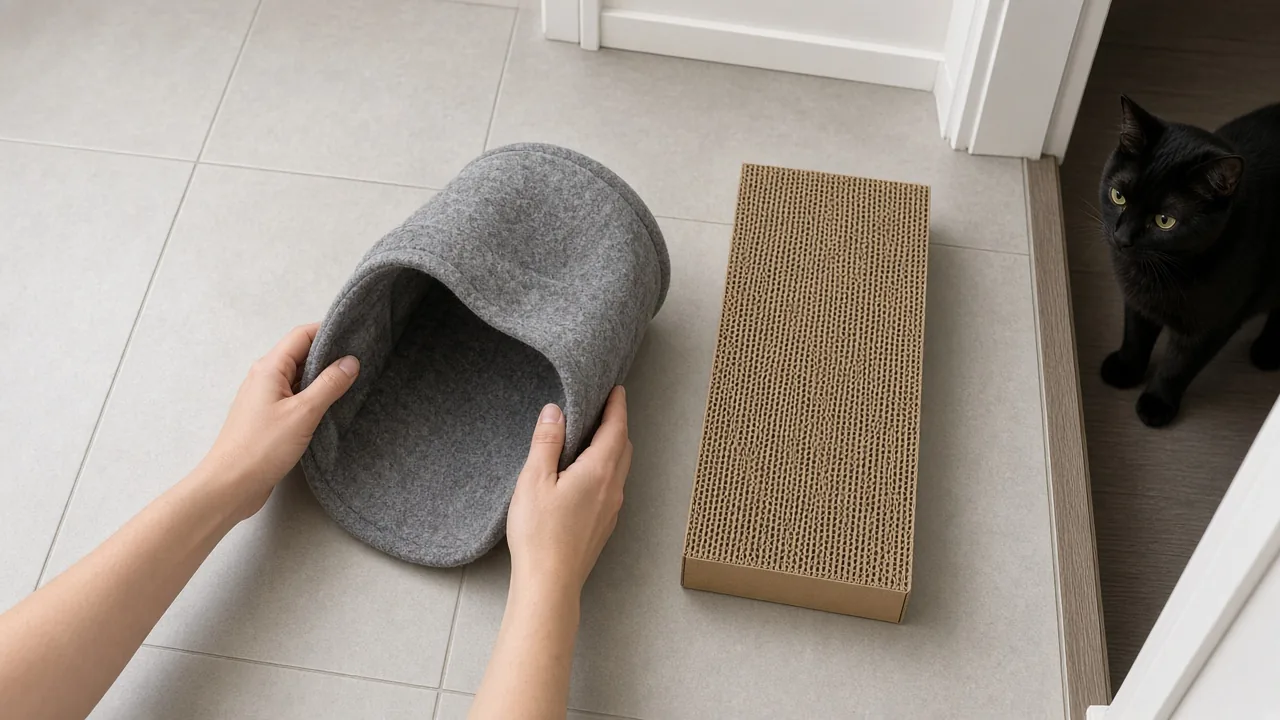
There’s no single right answer here, but there is a right answer for your specific cat and household. Walking through how your cat plays, how many cats you have, and how much upkeep you want to commit to narrows the decision quickly.
Match the Toy to How Your Cat Plays
Cats express their hunting instincts in a sequence: stalk, chase, pounce, and then a "capture" where they often want to hold still with their prize. A cat that leans into the stalking and capturing part of that sequence may gravitate toward a tunnel, since the enclosed shape gives it somewhere to hide before springing out at a toy or a housemate.
Cats that spend more time stretching, scratching, and marking territory with their paws tend to respond better to a scratcher. Watch which behavior shows up more often during normal play. A cat that’s constantly scratching furniture corners is signaling a stronger preference for a dedicated scratching surface, while a cat that disappears under blankets or behind curtains during play is telling you it wants a hiding spot like a tunnel. Older cats and kittens can differ here too: a kitten still working through teething and high-energy play may bounce between both behaviors in a single session, while an older, more settled cat often shows a clearer, more consistent preference you can plan around.
Consider How Many Cats Share the Space
In single-cat homes, one well-chosen piece is usually enough. Multi-cat households run into a different problem: cats waiting their turn, or worse, guarding a single toy and keeping other cats away from it entirely.
The fix is similar for both materials. Linking two or three curved scratchers side by side widens the usable scratching surface so more than one cat can use it at once. Connecting several tunnel sections into a longer run creates multiple entry and exit points, which reduces the odds of one cat getting cornered by another inside a single tunnel opening. If you’ve noticed one cat consistently blocking access to a toy, adding a second unit of the same type is often more effective than trying to referee shared access to one piece. For households with three or more cats, it’s worth placing these multi-unit setups in different rooms rather than one corner, so a more assertive cat can’t simply stand guard over both the scratching area and the tunnel entrance at once.
Weigh Cost Against Cleanup Time
Felt pieces generally sit at a higher price point, particularly modular sets with multiple connecting sections, and they ask for regular fur removal to stay usable. If you’re not willing to lint-roll or vacuum a tunnel every few days, fur buildup will make it look worn out well before the structure itself fails.
Cardboard scratchers cost less upfront, which makes them an easier starting point if you’re not sure your cat will take to the toy at all. The catch is that debris builds up as the scratching surface wears down, which can mean replacing it sooner than a well-maintained felt piece. If you’d rather pay once and clean regularly than replace a cheaper item every few months, felt may work out better for your routine even with the higher sticker price. If your budget is tight and you’re not sure which style your cat will prefer, starting with an inexpensive scratcher and adding a felt piece later, once you’ve seen how your cat plays, is a reasonable way to avoid an expensive guess.
Common Mistakes When Comparing Felt Tunnels and Cardboard Scratchers
A few assumptions tend to steer people toward the wrong purchase:
- Assuming one material wins outright. Durability, mess, and cost don’t all favor the same option, so "better" depends on which factor matters most in your home.
- Overlooking individual cat preferences. Some cats take to a brand-new texture immediately, while others ignore an unfamiliar toy for days or weeks. Judge a new tunnel or scratcher by actual use, not by how exciting it looks to you.
- Skipping a weight-support check. Soft felt mats and tunnel walls without a frame can sag under a cat’s weight, especially a larger cat, if there’s no supporting structure underneath. A firmer felt piece, or one paired with a rigid cardboard base, holds up better for cats that like to stand or lounge directly on top rather than just crawl through.
- Buying based on looks instead of layout. A tunnel or scratcher that photographs well in a corner of a store display doesn’t always fit the traffic patterns of your own home. Walk through where your cat actually spends time before deciding where a new piece will go, since a toy placed somewhere your cat rarely visits won’t get much use regardless of how well it’s made.
Are Felt Tunnels and Cardboard Scratchers Safe for Cats?
Both toy types are generally low-risk when they’re in good condition, but each has specific wear patterns worth watching.
On felt pieces, check seams regularly for loose threads, and inspect any buttons or zippers used to connect sections. These fasteners can work loose over time, and a cat that chews or paws at a connection point risks swallowing a small piece. On cardboard scratchers, the main hazard is crumbling cardboard flakes, which are usually just messy rather than dangerous, but a cat that ingests larger chunks could still have digestive upset.
Supervise any new tunnel or scratcher the first few times your cat uses it, and remove the toy from use if you notice fraying felt, a stuck or broken zipper, or heavy flaking that leaves sharp cardboard edges exposed. If you have a cat that tends to chew on fabric or cardboard rather than just scratching or crawling, keep a closer eye on wear, since that kind of chewing accelerates damage well beyond normal play and ages the toy faster than its appearance might suggest.
How to Clean and Maintain a Felt Tunnel or Cardboard Scratcher
Routine upkeep looks different for each material, which is worth factoring into your decision before you buy.
For felt tunnels and mats:
- Lint-roll or vacuum the surface every few days, more often if you have multiple cats or a heavy shedder
- Shake out loose fur before it gets worked into the fabric
- Spot-clean any marked or soiled areas following the product’s care instructions
- Check zippers and button connections during cleaning to catch wear early
For cardboard scratchers:
- Shake or tap the scratcher over a trash can to remove loose debris
- Rotate the piece occasionally, or flip it upside down if the design allows, to spread wear more evenly across the surface
- Vacuum nearby flooring where flakes tend to collect
Felt pieces demand more frequent, hands-on attention because of ongoing shedding. Cardboard scratchers need less frequent maintenance, but the debris they produce tends to spread further across the floor if it isn’t cleaned up promptly. If cleaning time is a real constraint in your household, it’s worth factoring that into the initial purchase rather than discovering after a few weeks that neither toy fits your actual routine.
How Often to Replace a Felt Tunnel or Cardboard Scratcher
Timing a replacement comes down to function rather than age. A cardboard scratcher is due for replacement once the scratching surface flattens out, stops holding claw marks well, or sheds heavily even after shaking it out. At that point, it’s no longer giving your cat the resistance that makes scratching satisfying, and the debris problem usually gets worse rather than better.
A felt tunnel or mat is ready to retire when seams start to fray, a zipper or button connection fails and won’t hold the pieces together, or support sections stop holding their shape and sag no matter how you position them. A tunnel that’s lost its structure can also become less safe, since a collapsed section may trap or startle a cat trying to move through it. As a general habit, run your hand along seams and check zipper pulls whenever you clean a felt piece, since catching a small tear early is easier than dealing with a full seam failure later.
Frequently Asked Questions About Felt Tunnels and Cardboard Scratchers
Does one option last longer than the other?
It depends on use. A cardboard scratcher used daily by a determined scratcher may wear out faster than a felt tunnel that’s mostly used for lounging, but a felt piece used by a cat that chews on seams or fasteners can fail just as quickly. Watch wear patterns rather than assuming either material automatically lasts longer.
Do cats lose interest in these toys over time?
Some do, particularly with static scratchers that never change position or orientation. Flipping a scratcher upside down or rearranging tunnel sections into a new layout can renew interest without buying anything new. Rotating toys in and out of regular use, rather than leaving everything out all the time, also tends to keep both tunnels and scratchers more engaging.
Can felt and cardboard toys be used together safely?
Yes, and many households already combine them, since the two materials solve different needs. A cat can scratch on a corrugated piece and then retreat into a felt tunnel to rest, with no conflict between the two as long as both pieces are checked regularly for the wear signs described above.
Is it worth buying both right away, or should you start with one?
If you’re not sure how your cat will respond to either style, starting with the lower-cost cardboard scratcher is a reasonable way to gauge interest before committing to a pricier felt setup. Cats that show a strong scratching habit from the start are a safer bet for a scratcher; cats that spend more time hiding or lounging may be worth testing with a smaller, single felt piece before investing in a larger modular set.
Watch whether your cat prefers crawling, hiding, or scratching before choosing between a felt tunnel and a cardboard scratcher, since matching the toy to that preference matters more than picking a single "winning" material. Rotate toys periodically to keep both options interesting, and check felt seams and cardboard edges for wear on a regular basis so you catch problems before they become a bigger mess, or a hazard, than you expected.
This article is for general information only and is not a substitute for advice from your veterinarian. Always supervise your pet with a new toy, and replace any toy that is damaged or small enough to swallow.

Contributor
admin
Continue reading
All stories
CAT TOYS · 11 October
Can Robotic Cats Replace a Real Cat? What Owners Should Know
CAT TOYS · 11 October
Why Do Cats Ignore Automatic Cat Toys? The Prey Instinct Explained
CAT TOYS · 11 October
Responses
Moderated discussion