SMALL PETS & BIRDS
Best Cat Litter Box for Rabbits: Safe, Easy-Clean Picks
A solid plastic cat litter box is often the safest, easiest-to-clean option for rabbits. Learn how to choose the right size, set it up, and keep it odor-free.
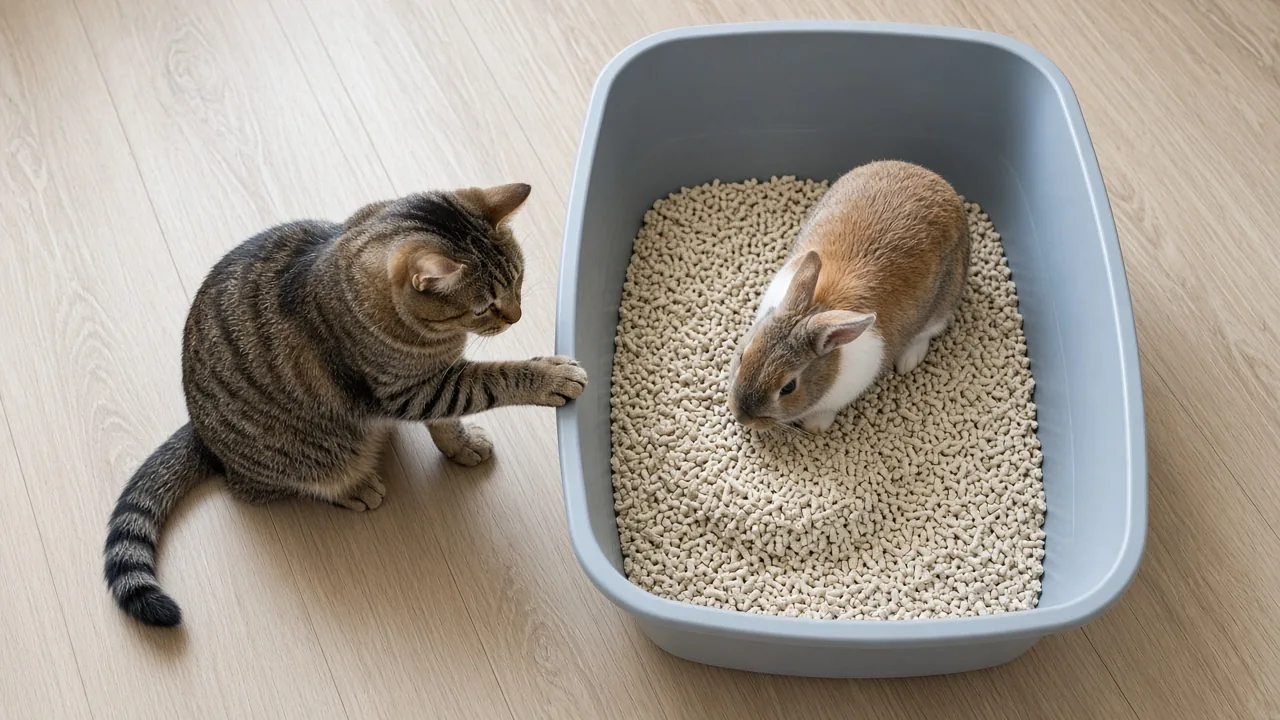
If you have searched for a rabbit litter box, you have probably already seen wire-bottom pans marketed with a bunny on the package. A little more digging often leads experienced owners to the same conclusion: a plain, solid plastic cat litter box is frequently safer, easier to clean, and more comfortable for your rabbit. This guide explains why many rabbit-marketed boxes underperform, how to choose the best cat litter box for rabbits, and how to set one up so your rabbit actually uses it.
Why Rabbit-Marketed Litter Boxes Can Be Riskier
Many rabbit-marketed pans use wire floors or flimsy plastic. That is the core problem. A product labeled for rabbits is not automatically designed around how a rabbit moves, stands, or chews. Starting in the cat litter box category often gives you safer materials and a simpler shape because the best options there are built to hold waste and survive regular scrubbing.
What’s Wrong with Wire-Bottom Rabbit Pans?
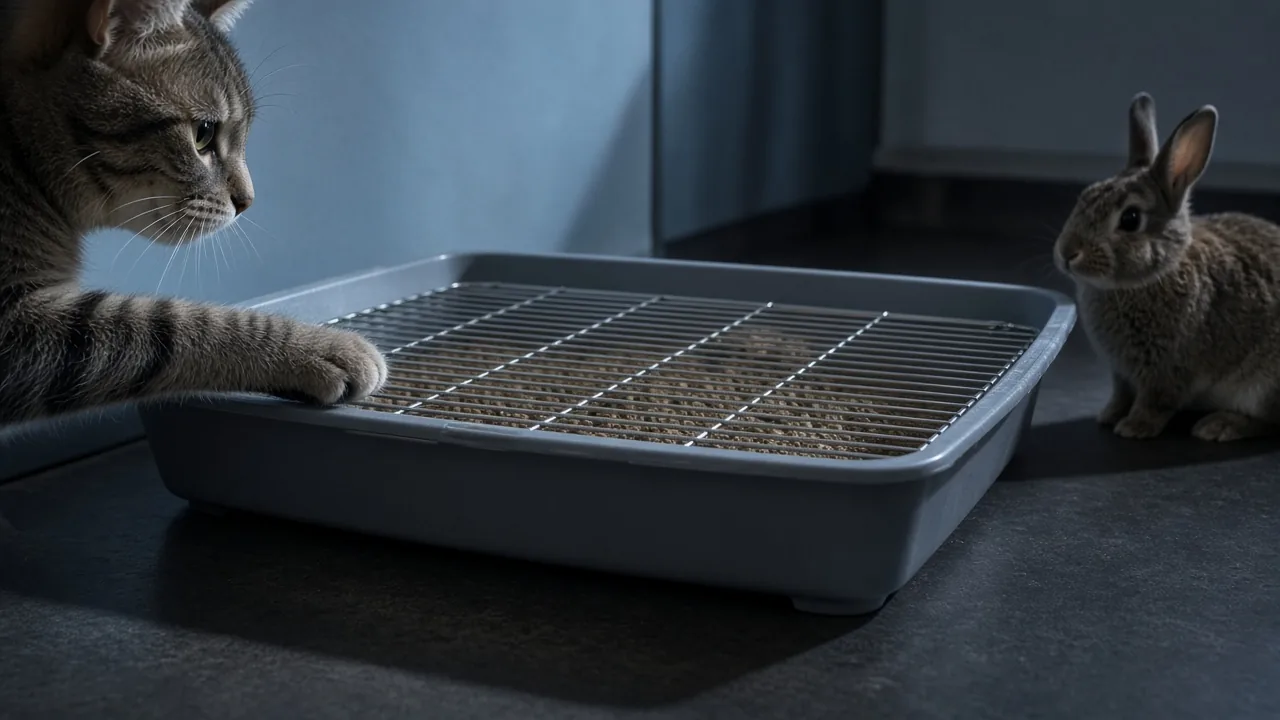
A wire floor can catch toes or irritate a rabbit’s feet, especially if the rabbit spends time sitting in the box. Unlike cats, rabbits do not always hop in and out quickly. They may rest, dig, or eat hay while standing over the pan. Over time, pressure on a wire grate can rub against the hocks and make sore areas worse.
Wire grates also trap urine-soaked hay against the metal. Once the wet hay dries, it forms a crust that is harder to remove than residue on a smooth plastic surface. A solid plastic cat pan is easier to sanitize and softer on a rabbit’s feet, which matters for a litter box the rabbit will visit several times a day.
Why “Rabbit” on the Label Is Not a Safety Guarantee
Just as with rabbit toys, a rabbit image on the package does not prove that the material is non-toxic, properly sized, or durable enough for daily use. Some rabbit-marketed pans are made from thinner plastic that can crack under a rabbit’s weight or when the box is tipped during cleaning. Others have seams, hinges, or removable grates that trap moisture and odor.
Before buying any pan, check the construction. Look at the edges, the thickness of the plastic, and how easy it would be to scrub every surface. A product can be advertised for rabbits and still be a poor match for your rabbit’s size or habits.
How to Choose the Best Cat Litter Box for Rabbits
A basic high-sided cat litter box, such as the Van Ness model many rabbit owners use, gives rabbits room to turn and dig while keeping hay and urine contained. The goal is to find a pan that is simple, smooth, and big enough for your rabbit to use without bracing against the walls.
Check Body Length and Turning Room Before You Buy
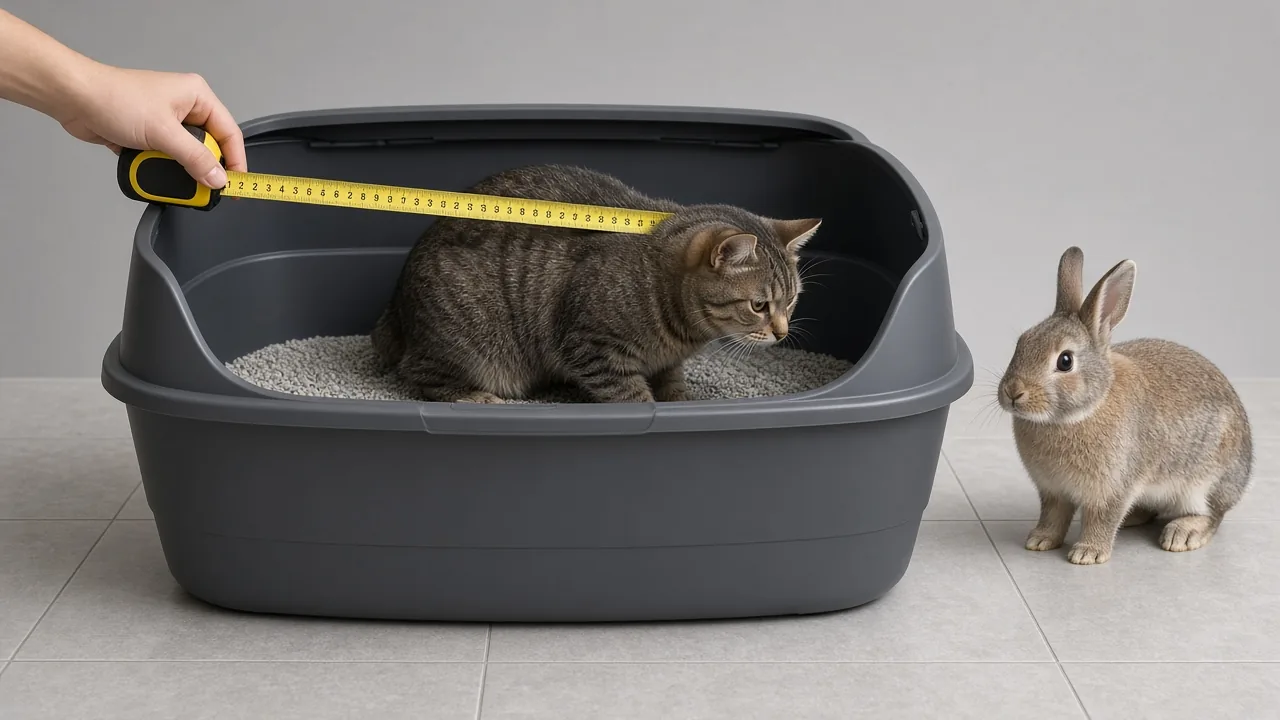
The box should let your rabbit sit with all four feet inside and turn around comfortably. If the rabbit cannot turn without pressing against the sides, the box will feel unstable and may cause the rabbit to avoid it or kick litter out.
Small to medium rabbits often fit a standard cat pan. Larger breeds may need a bigger or higher-sided box. To estimate the right size, measure your rabbit from nose to base of tail while relaxed, then choose a pan that is at least one and a half times that length when possible.
Entry Height and Corner Boxes for Small or Senior Rabbits
A lower front cutout helps older or less mobile rabbits step in without hopping. If the pan has high sides all the way around, a rabbit with arthritis or hind-limb weakness may struggle to enter cleanly.
A corner cat pan like the Van Ness corner enclosed style saves floor space and can fit into a pen layout more easily. It may, however, limit turning room. Check the interior width carefully. For a small rabbit or a rabbit with limited mobility, a low-entry corner pan can work well as long as there is still enough space to stand fully inside.
Comparing Common Litter Box Styles
| Box type | Best for | Cleaning ease | Chewing risk | Notes |
|---|---|---|---|---|
| Basic high-sided solid pan | Most small to medium rabbits | Easy; continuous smooth surface | Low if thick plastic | Room to turn and dig; widely available |
| Corner cat pan with low entry | Small rabbits, senior rabbits, tight pen layouts | Moderate; corners need attention | Low to moderate | Saves floor space but may reduce turning room |
| Low-entry front pan | Rabbits with mobility issues | Easy; open front | Low if molded | Easier entry; may need higher sides if rabbit kicks litter |
| Storage bin with cut doorway | Diggers and heavy litter kickers | Moderate; outer bin catches scatter | Moderate; cut edge must be smoothed | Inner pan lifts out; outer bin contains mess |
What to Look for in Materials and Ease of Cleaning
Choose a solid molded plastic pan without crevices where urine scale can build up. Avoid attached grates, flimsy plastic, or painted surfaces that may peel. The easier the pan is to clean, the more consistently you will clean it, and the less odor will build up in the rabbit’s living area.
Why Smooth Plastic Is Easier to Scrub Than Textured or Wire
Smooth, non-porous surfaces release urine deposits with warm water and mild detergent. Rough patches or seams trap odor and require more aggressive scrubbing. That extra effort adds up, especially if you are spot-cleaning daily and doing a deeper wash weekly.
A molded cat pan with a continuous bottom and simple wall curves can usually be wiped down quickly. Avoid pans with a textured interior intended to improve grip. That texture becomes a home for mineral buildup and makes the box harder to fully clean.
When a Stylish Pan Like New Age Litter Loo May Not Be Worth It
A high-end pan may look better in a living room and can be a reasonable choice if appearance matters a lot to you. The New Age Habitat and Home Litter Loo, for example, has a more finished look than a basic cat pan, but it can also cost much more for the same essential function.
Pay for cleanability and function before aesthetics. If a stylish pan has hard-to-reach corners, a removable inner tray with extra edges, or brittle plastic, the cheaper plain pan may actually be the better long-term tool.
Setting Up the Box: Litter, Hay, and Placement
Place the box where your rabbit already chooses to urinate. Use a rabbit-safe paper or aspen litter, and put hay at one end so eating and eliminating do not soil all the hay. Rabbits often like to eat and use the litter box at the same time, so the hay location matters.
What to Avoid: Clumping Clay, Cedar, and Strong Odor Controls
Many cat litters are unsafe for rabbits. Skip clumping clay, because rabbits can ingest litter particles while grooming and clumping material may swell in the digestive tract. Pine or cedar shavings may release aromatic oils that can irritate a rabbit’s respiratory system, and heavily scented formulas can be overwhelming in a small room.
Choose a paper-based or aspen litter that is labeled for small animals when possible. The label should clearly state that the product is safe for rabbits or small mammals. If it does not, look for a different option.
Step-by-Step Setup for a New Cat Litter Box
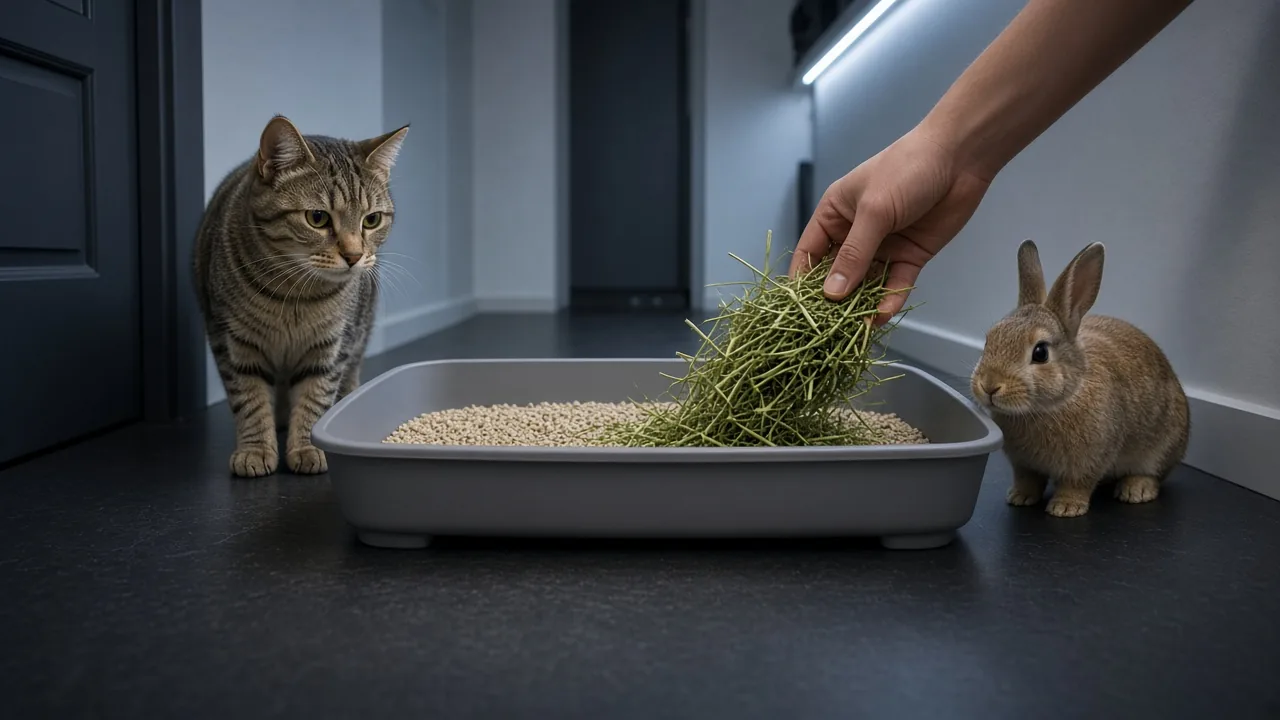
- Rinse the new pan with warm water and dry it fully. Remove any labels or adhesive residue.
- Add a 1 to 2 inch layer of rabbit-safe paper or aspen litter across the bottom.
- Place a generous handful of fresh hay at one end of the pan. Some rabbits prefer hay in a rack above the box, while others eat from the floor of the pan.
- Put the box in the exact corner where your rabbit already urinates or leaves droppings.
- Add a small amount of soiled litter or a few fresh droppings from the old box to transfer the rabbit’s scent.
- Watch how your rabbit uses it for the first day before making changes to litter depth or hay placement.
How to Make the Switch Without Accidents
Leave a small amount of used litter or droppings in the new box for a day or two. This gives the new pan the rabbit’s own scent and helps signal that this is the correct bathroom area. If the rabbit has been using a different spot, move the new box to that exact location before gradually shifting it toward your preferred placement.
For the first few days, avoid a full deep clean of the box. You can remove wet litter and refresh the hay, but keeping a little scent in the pan helps the rabbit accept the change.
Cleaning and Replacement Schedule
Spot-clean soiled litter daily, do a deeper scrub weekly, and replace the box when plastic becomes scratched, chewed, or persistently odorous. A regular schedule prevents ammonia smell and gives you a chance to notice early signs of chewing or cracks.
How Often Should You Clean a Rabbit Litter Box?
Daily spot cleaning removes wet litter and prevents ammonia smell. Use a scooper or a dedicated cloth to remove soiled patches, then add a small amount of fresh litter. You do not need to empty the entire pan every day, but any wet clumps should come out promptly.
A weekly wash with warm water and unscented soap keeps surfaces from caking. Rinse thoroughly and dry the box before refilling, because residual soap can leave an odor that discourages use.
For a deeper clean, follow these steps:
- Empty all litter and hay into the trash.
- Rinse the pan with warm water to loosen stuck-on material.
- Scrub with a mild unscented dish soap and a sponge or brush reserved for pet items.
- Rinse until no soap film remains.
- Dry with a paper towel or let the pan air-dry completely before adding fresh litter.
When to Replace a Plastic Litter Box
Deep scratches and chew marks harbor bacteria and are hard to disinfect. Once the smooth surfaces become rough or cracked, urine and waste can settle into those small openings. If the box retains an odor after washing, or if the rabbit has chewed through part of an edge, replace it.
Any plastic piece that breaks off is a risk that the rabbit may swallow fragments. Check each time you clean. If the edges feel sharp or uneven, a replacement is overdue.
Common Problems When Switching to a Cat Litter Box
If your rabbit kicks litter or avoids the box, adjust height, texture, or placement before assuming the product is wrong. Rabbits are particular about bathroom areas, and the solution is often simpler than a completely different box.
Rabbit Won’t Use the New Box
Move the box to the area with the most droppings, add a little soiled bedding, and temporarily block off the old accident spot. If the rabbit has chosen a corner, respect that preference rather than forcing a different location. Once the habit transfers to the box, you can often relocate the pan gradually if needed.
Rabbit Chews or Scratches the Box
Occasional chewing can be normal rabbit behavior. Rabbits test objects with their teeth, especially new plastic. If the rabbit only nibbles the rim lightly and the box remains intact, you may not need to intervene. If the rabbit breaks off plastic pieces, switch to a thicker pan and watch for swallowed fragments. Pair the change with more hay or safe chew options nearby so the rabbit has a better chewing outlet.
Rabbit Digs or Tosses Litter
Some rabbits dig energetically in the box as part of normal behavior. If this causes litter to fly far beyond the pan, use a higher-sided box or place the inner pan inside a larger storage bin with a wide doorway. The outer bin contains the scatter while the inner pan stays easy to remove. Leave the digging behavior alone unless the rabbit seems stressed or the pan becomes unstable.
Kicks Litter Everywhere
Use a box with higher sides or place the pan inside a larger storage bin with a doorway cut in. This contains digging without making the rabbit feel trapped. The outer bin can catch scattered litter and hay while the inner pan remains easy to lift out for cleaning.
Check that the doorway has no sharp edges. Smooth the cut plastic with sandpaper or choose a bin with a pre-made opening.
How to Spot Early Health Red Flags Through Litter Box Use
Daily litter box use is one of the most useful health monitors you have. A hamster owner who built a simple run-counter noticed that daily activity dropped suddenly from a normal pattern, and the cause turned out to be the hamster escaping its enclosure rather than a health problem. The same logic applies to litter box output.
Less urine, straining, avoidance of the box, or a sudden increase in accidents can signal illness. If the change lasts more than a day or your rabbit seems quiet, off food, or uncomfortable, contact a veterinarian.
FAQ: Cat Litter Boxes for Rabbits
Are cat litter boxes safe for rabbits?
Yes, a solid plastic cat litter box without a wire grate is often safer than many rabbit-marketed pans. Size and material still need checking because not every cat pan works for every rabbit.
Do rabbits need a special rabbit litter box?
No, many experienced owners use plain cat pans because they are sturdier, easier to find, and easier to clean than wire-floor rabbit boxes. The term “rabbit litter box” often brings up products that are actually less suitable.
What is the best cat litter box for rabbits?
For most small to medium rabbits, a basic high-sided solid plastic pan like the Van Ness model works well. Larger rabbits may need a bigger or higher-sided pan, and older rabbits may need a lower entry.
Is a covered cat litter box a good idea for rabbits?
Usually not. Enclosed or hooded boxes can trap ammonia odor and make a rabbit feel cornered. If you want to control hay scatter or litter spray, use a high-sided open pan or place an open pan inside a larger bin with an entrance cut in. That keeps airflow open while still containing the mess.
How often should I replace the litter box?
Replace when smooth surfaces become scratched, cracked, or retain odor after washing. A heavily chewed box should be replaced immediately to prevent the rabbit from swallowing plastic fragments.
Can I use a cat litter box for a rabbit with mobility issues?
Yes, choose a low-entry or cut-down front edge. A corner pan can work if floor space is limited, but make sure the rabbit still has enough interior room to stand and turn without straining.
Watch how your rabbit uses the box during the first few days, adjust litter type or placement if needed, and check for scratches, cracks, or chew damage each time you clean. Notice whether your rabbit digs, chews, or rests in the box, and let those habits guide your setup. A plain, smooth plastic cat pan is usually the safest starting point. Once you find the right setup, a consistent cleaning routine matters as much as the box itself in keeping your rabbit comfortable and your home fresh. For more help, you can also read nearby guides on checking plastic pet products for wear and rotating safe chew outlets for rabbits.
This article is for general information only and is not a substitute for advice from your veterinarian. Always supervise your pet with a new toy, and replace any toy that is damaged or small enough to swallow.

Contributor
admin
Continue reading
All stories
SMALL PETS & BIRDS · 11 October
Why Do Parrots Need Shreddable Chew Toys, and What Materials Are Safe?
SMALL PETS & BIRDS · 11 October
Is Millet Spray Holder Safe for Birds? What to Check Before You Buy
SMALL PETS & BIRDS · 11 October
Responses
Moderated discussion