DOG TOYS
How to Make Frozen Dog Treats Toy Recipes Dogs Actually Love
A step-by-step guide to filling, freezing, and safely serving a fillable freezer toy, plus sizing, ingredient, and cleaning tips so the treat lasts longer and stays safe.
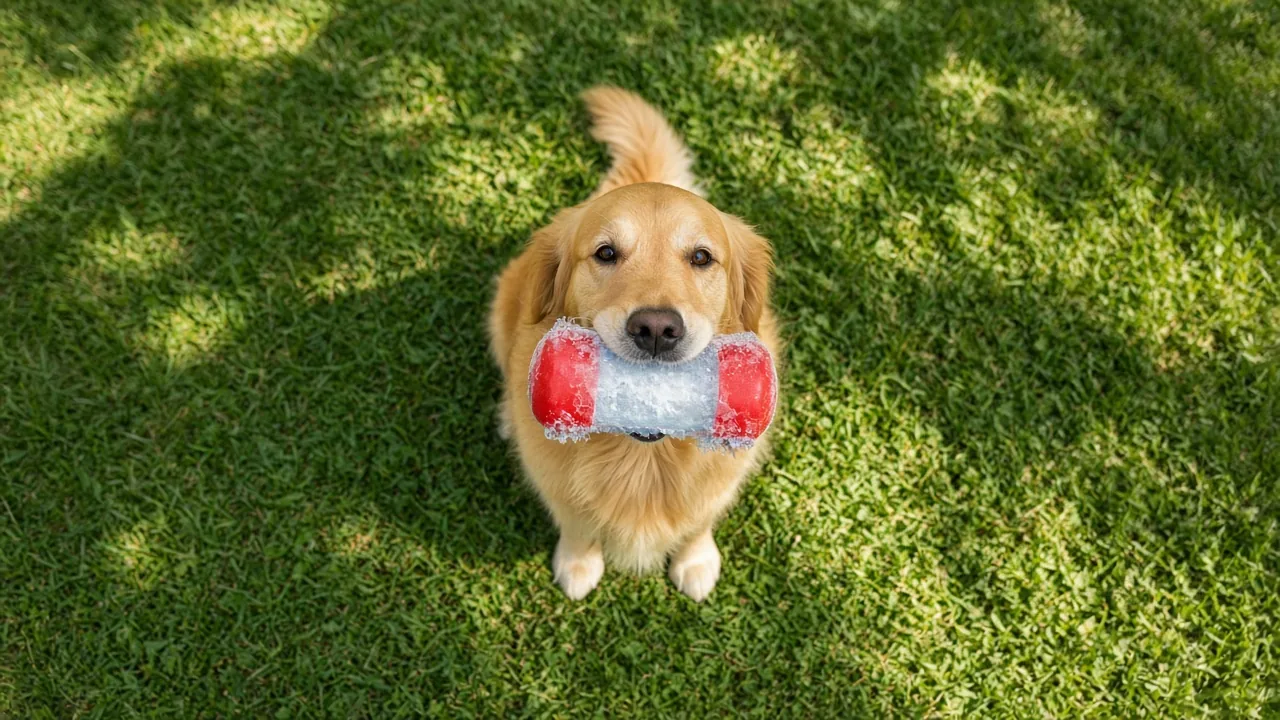
If you want to know how to make frozen dog treats toy recipes that actually hold a dog’s attention, the short answer is this: unscrew the toy’s chamber, pack it with a dog-safe filling, screw it back together, and freeze it solid for several hours before handing it over. A fillable freezer toy like Pupsicle works because the ice itself becomes the chew challenge, not just the toy’s rubber or nylon walls. Below, you’ll find sizing guidance, filling ideas, step-by-step instructions, and the safety checks that matter more than any marketing claim.
What Makes a Fillable Freezer Treat Toy Different From a Regular Chew
A standard chew toy relies entirely on its material to slow a dog down. A fillable, freezable toy adds a second layer of resistance: a block of ice that has to melt and get licked or gnawed away before the dog can reach the next bite.
This two-part design is also why these toys tend to outlast a loose handful of treats or a rawhide chew. Rawhide softens quickly once it’s wet, and loose treats disappear in seconds. A frozen filling inside a hollow chamber takes much longer to break down, especially if you pack it dense.
The tradeoff is that you’re now responsible for what goes inside. Unlike a sealed, pre-made chew, you control the ingredients, the texture, and how solid the mixture freezes. That control is useful, but it also means the toy is only as safe as what you choose to put in it.
It also means the toy suits a narrower range of dogs than a plain rubber chew does. A dog who prefers to carry toys around the house rather than work them for food may lose interest in a fillable freezer toy once the novelty of the first lick wears off. A dog who’s motivated by food, on the other hand, often treats one of these as the most engaging item in the toy basket, simply because there’s a reward built into the resistance.
How to Choose the Right Size Fillable Toy for Your Dog
Size matters more here than with most toys because you’re not just thinking about jaw strength. You’re also thinking about the chamber opening and whether the frozen contents could ever be swallowed as one solid chunk once they start to loosen.
A good rule: the filled, frozen chamber should be too wide for your dog to close their mouth around it fully. If a toy feels like it disappears into your dog’s mouth when they pick it up dry, it will feel even smaller once the filling softens and the toy becomes slippery with saliva and melted liquid.
Jaw strength matters too. A toy sized correctly for a 15-pound terrier won’t hold up to a 70-pound dog with a hard bite, even if the chamber technically fits. Match the toy to both your dog’s weight and how hard they typically chew, not just one or the other.
Sizing Guide by Breed Size: Small, Medium, Large, and Giant Dogs
| Dog Size | Typical Weight | Suggested Toy Length | Chamber Capacity | Notes |
|---|---|---|---|---|
| Small | Up to 20 lbs | 4–5 inches | Small (a few tablespoons) | Freeze softer fillings; shorter freeze time |
| Medium | 21–50 lbs | 5–7 inches | Medium (small cup) | Most versatile size for mixed households |
| Large | 51–90 lbs | 7–9 inches | Large (full cup or more) | Needs a firmer, denser filling to last |
| Giant | 90+ lbs | 9+ inches | Extra-large | Supervise closely; strong jaws can crack worn plastic |
This table reflects general sizing logic rather than fixed brand specifications, since manufacturers vary chamber dimensions. When in doubt, size up rather than down, especially for dogs that chew with real force.
Play style matters alongside size. A dog who licks patiently can work through a smaller chamber safely because there’s less direct bite pressure on the shell. A dog who gnaws and bites down hard needs more chamber volume and thicker walls, since the same freezing-and-thawing cycle that’s harmless for a gentle licker can stress a shell that’s already being bitten.
How to Pick Ingredients That Freeze Well and Stay Safe for Dogs
Freezing changes texture, but it does not change toxicity. Anything unsafe for a dog to eat at room temperature is still unsafe frozen solid. This is the part of the process where it pays to be conservative rather than creative.
Reliable base ingredients include plain unsweetened yogurt, low-sodium broth, mashed pumpkin, or plain cooked rice mixed with a small amount of wet dog food. These freeze into a dense, slow-melting block and avoid added sugar, salt, or artificial sweeteners that can upset a dog’s stomach or, in the case of xylitol, cause serious harm.
Avoid grapes, raisins, onions, garlic, chocolate, and anything sweetened with xylitol, even in small amounts. Also skip very high-fat mixtures for dogs with sensitive stomachs or a history of pancreatitis, since a frozen high-fat treat is still a high-fat treat.
Portion matters as much as ingredient choice. A chamber packed full of calorie-dense filling can add up fast if it becomes a daily habit rather than an occasional enrichment activity. Treat a frozen filling as part of your dog’s regular food and treat allowance, especially for a dog who’s already watching their weight, rather than as something extra on top of normal meals.
If your dog has a known health condition, allergy, or is on a prescription diet, check with your veterinarian before freezing a new ingredient combination, since general advice here can’t account for individual medical needs.
How to Make Frozen Dog Treats Toy Fillings Step by Step
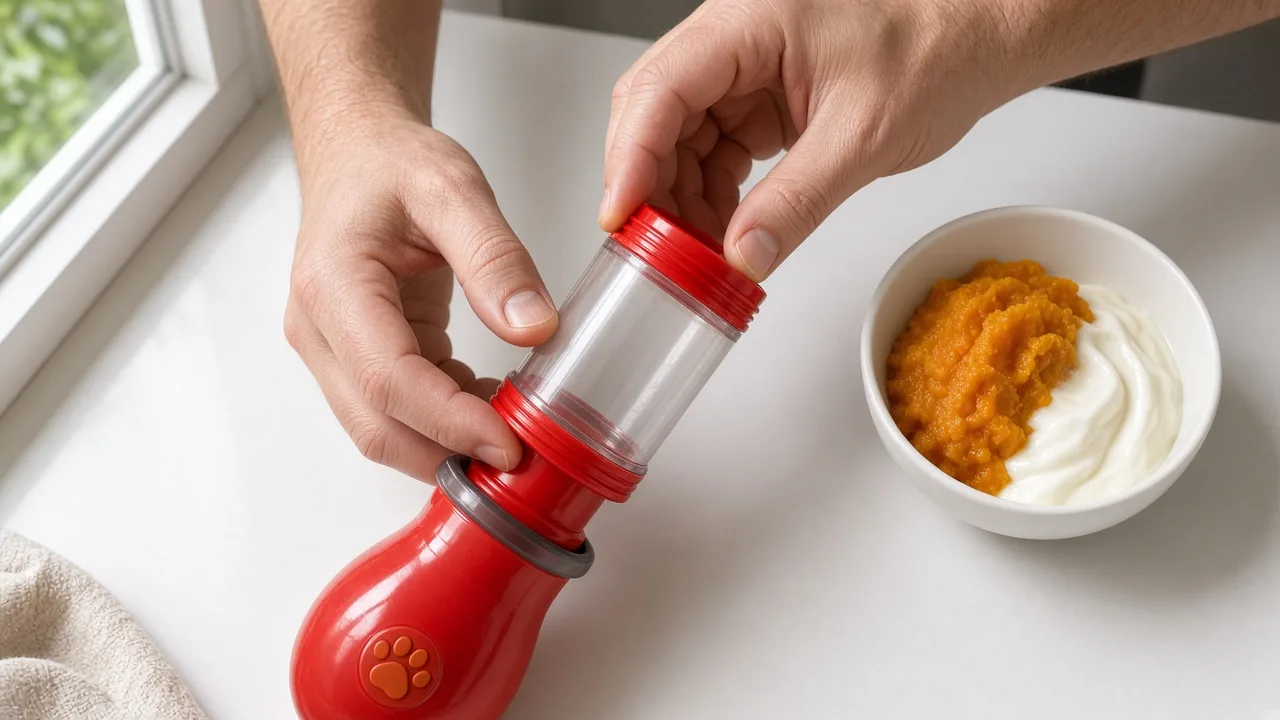
Making a frozen filling for a toy like Pupsicle follows a simple sequence, whether you’re using a homemade mixture or a pre-made frozen refill.
- Unscrew the toy’s chamber to open it fully.
- Pack the chamber with your prepared filling, or insert a pre-made frozen refill if you’re using one that doesn’t require refrigeration beforehand.
- Press the filling down firmly to remove air pockets, which helps it freeze into one solid piece rather than a crumbly mixture.
- Screw the chamber shut securely, checking that the threads align and the cap sits flush.
- Place the toy in the freezer for at least several hours, or overnight for a denser mixture.
- Check the toy for a solid, firm feel before handing it to your dog; if the filling still feels soft in the center, give it more freezer time.
If you’re short on time, a pre-made refill that doesn’t need refrigeration can work as a reasonable backup, since it skips the mixing and some of the freezing wait.
How to Make the Frozen Treat Last Longer During Play
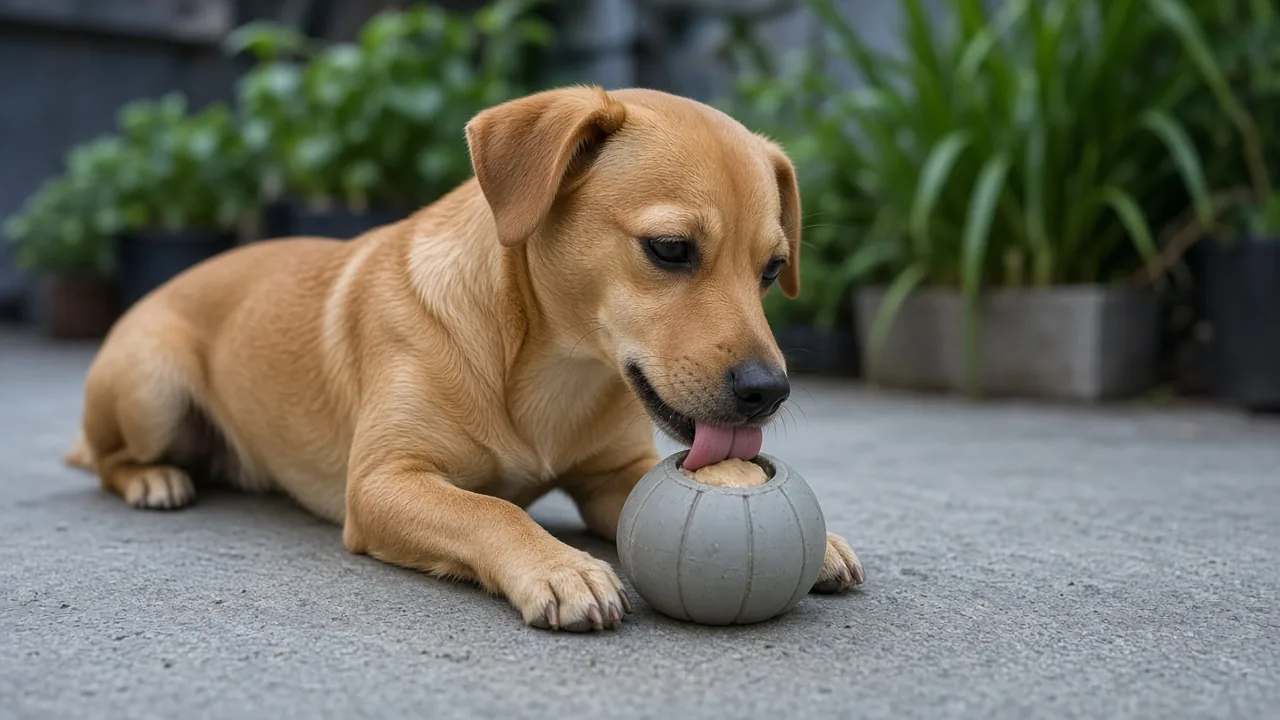
A few adjustments can stretch out how long a toy keeps your dog occupied, which matters if you’re hoping for 20 or 30 minutes of quiet chewing rather than five.
- Use a denser mixture. Thinner, watery fillings freeze into a looser block that breaks apart faster.
- Layer ingredients in a treat tray before transferring them to the chamber, so your dog works through different textures and flavors in stages instead of one uniform mix.
- Freeze the toy longer than the minimum. A fully solid block takes noticeably more effort to work through than one that’s still slightly soft at the core.
- Serve it cold, not thawed. Letting a filled toy sit out before giving it to your dog shortens its working life considerably.
- Give the toy in a low-distraction spot. A dog who’s constantly getting up to check on household activity takes longer to settle into steady licking, which can make a filling melt and drip before it’s actually consumed.
None of these changes guarantee a specific amount of play time, and no toy holds up the same way across every dog’s chewing style. They simply shift the odds toward a longer, calmer session.
How to Clean a Fillable Freezer Toy Between Uses
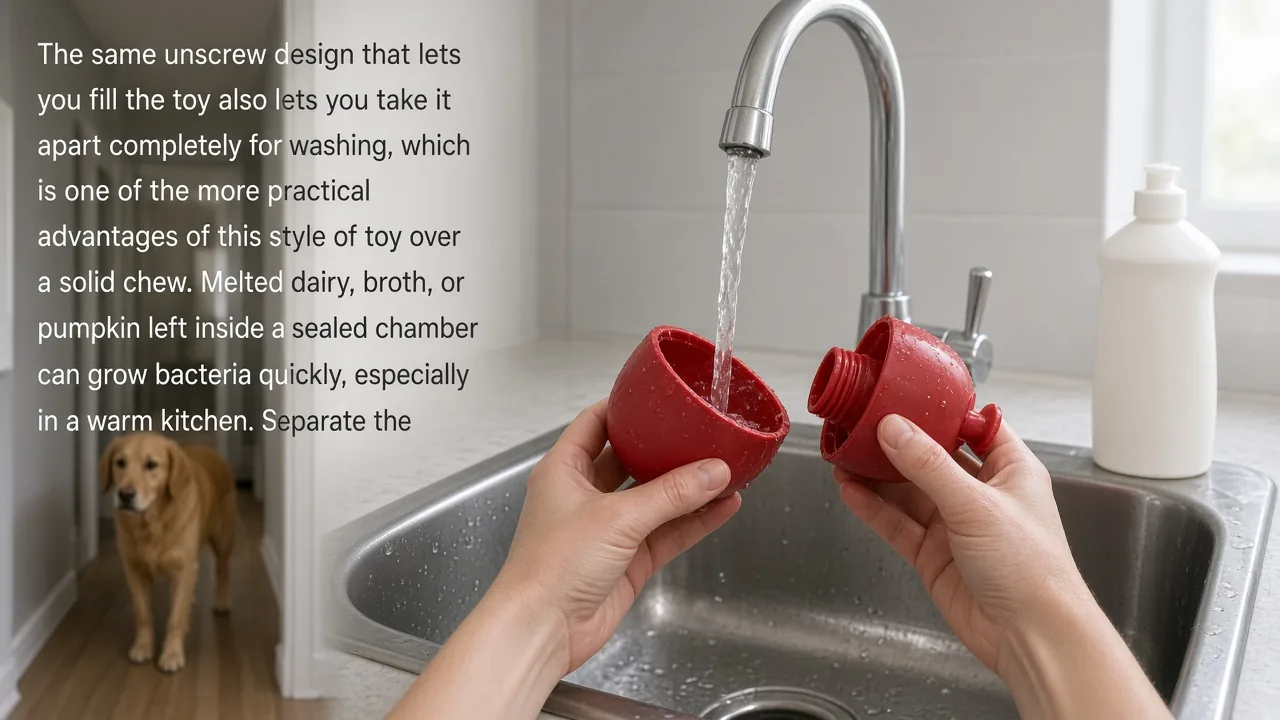
The same unscrew design that lets you fill the toy also lets you take it apart completely for washing, which is one of the more practical advantages of this style of toy over a solid chew.
Melted dairy, broth, or pumpkin left inside a sealed chamber can grow bacteria quickly, especially in a warm kitchen. Separate the chamber from the body after each use, rinse both pieces with warm water, and wash with mild dish soap, paying attention to the threads where residue tends to collect.
Let the pieces air dry fully before reassembling and refilling. A toy that’s still damp inside when you pack in the next batch of filling can trap moisture against the ice, which may encourage mold or odor over time.
A quick rinse right after your dog finishes also makes the deeper weekly wash easier, since dried-on residue in the threads is harder to clear out than fresh residue.
How Often to Replace a Fillable Treat Toy and What to Check For
No claim about a toy’s durability should override what you see with your own eyes. Check a fillable freezer toy regularly, and retire it the moment any of the following shows up.
- Cracked or worn threads where the chamber screws together, which can let the cap pop loose mid-chew.
- A cap that no longer screws on tightly, even after cleaning the threads.
- Chew marks or gouges clustered near the opening, which weaken the seal over repeated freeze-and-thaw cycles.
- Discoloration or a persistent odor that cleaning doesn’t resolve, which can signal bacteria working into small cracks.
Freezing and thawing stresses plastic and rubber more than dry chewing alone, so these toys may wear out faster than a toy that never gets wet or cold. When you notice any of the warning signs above, replace the toy rather than waiting to see how much longer it holds up.
Are Fillable Freezer Treat Toys Safe for Puppies, Seniors, and Heavy Chewers?
These toys can work well across life stages, but "can work" isn’t the same as "works the same way for everyone." Each group has its own considerations.
Teething puppies often enjoy the cold sensation against sore gums, and a frozen filling can be soothing during that stage. Supervision still matters, since puppies are prone to chewing off and swallowing small pieces of plastic they shouldn’t. A puppy left alone with any chew toy, frozen or not, is at higher risk of chewing through a weak spot before an adult notices.
Heavy chewers and dogs with strong jaws need extra attention to the toy’s material and condition. A toy rated for moderate chewing may crack faster under a dog that chews with real force, and a cracked toy near the mouth opening is a choking and swallowing risk. If your dog has a history of destroying hard plastic or rubber toys within minutes, a fillable freezer toy may not be the right category for them at all, regardless of size.
Senior dogs may do better with softer fillings and smaller portions, particularly if they have dental issues, missing teeth, or jaw sensitivity. A rock-solid frozen block that’s manageable for a healthy adult dog may simply be too hard for an older dog to work through comfortably, and pushing against a fully frozen block with a sore jaw can discourage a senior dog from using the toy at all.
Adjusting Fill and Supervision by Life Stage and Chew Strength
| Life Stage / Chew Type | Suggested Adjustment | Why |
|---|---|---|
| Teething puppy | Shorter freeze time, softer filling | Reduces risk of overly hard ice against developing teeth |
| Healthy adult, moderate chewer | Standard freeze time, denser filling | Can handle a firmer texture for longer engagement |
| Senior dog | Shorter freeze time, smaller portion | Easier on sensitive teeth and gums |
| Heavy or aggressive chewer | Close supervision, frequent toy inspection | Higher risk of cracking plastic and swallowing fragments |
If your dog has a history of chewing through hard plastic toys, treat any fillable freezer toy as something to watch closely rather than leave unattended, regardless of how the toy is marketed.
How Fillable Freezer Toys Compare to Other Frozen or Interactive Treat Options
Brands selling fillable freezer toys often claim their design is safer than alternatives like rawhide chews, pointing to the fact that you control the ingredients and avoid the digestive risks sometimes associated with rawhide. That’s a reasonable argument in principle, since a plain yogurt-and-broth filling is generally easier on a dog’s stomach than a rawhide chew that softens into a slippery, swallowable mass.
That said, this kind of safety comparison usually comes from the toy maker itself rather than from independent testing, so it’s worth treating "safer than rawhide" as a plausible claim rather than a proven one. There isn’t a solid body of independent, side-by-side comparisons between fillable freezer toys and other interactive treat toys on the market, which makes it hard to say definitively that one category outperforms another across durability, mess, or how much enrichment value a dog actually gets.
Compared to a puzzle feeder that dispenses kibble as a dog noses or paws at it, a fillable freezer toy asks for a different kind of effort: steady licking and gentle gnawing rather than problem-solving. Some dogs do better with one style than the other, which is a good reason to keep a mix of enrichment toys on hand rather than relying on a single type for every situation.
What you can reasonably conclude is this: fillable freezer toys give you more control over ingredients than rawhide, and they add a cold, slow-melting challenge that loose treats and most interactive puzzle toys don’t offer. Whether that translates to "better" depends on what you’re trying to solve, whether it’s teething relief, longer solo chew time, or simply a mess-free way to serve homemade treats.
Frequently Asked Questions About Fillable Freezer Dog Treat Toys
Can I use pre-made frozen refills instead of making my own filling?
Yes. Some fillable toys are designed to accept pre-made frozen treat refills in addition to homemade mixtures, which can save time if you don’t want to prep and freeze a batch yourself.
Do I need to refrigerate refills before freezing them?
Not necessarily. Some refills are formulated so they don’t need refrigeration before you load them into the toy and freeze it, which makes them a convenient backup when you’re short on time.
How long should I freeze the toy before giving it to my dog?
Plan for several hours at minimum, and overnight if you want a denser, longer-lasting block. The exact time depends on your freezer’s temperature and how thick the filling is.
Can I reuse the toy right away after my dog finishes a frozen filling?
Only after washing it thoroughly. Refilling a toy that still has melted residue inside, without cleaning it first, increases the chance of bacterial buildup.
Is a fillable freezer toy a good option for a dog with no teeth issues versus one with dental problems?
Generally yes for both, but adjust the filling. A fully frozen, dense block suits a healthy adult, while a dog with dental sensitivity may need a softer, less solid filling or a shorter freeze time.
What should I do if my dog loses interest in the toy after a few uses?
Try rotating fillings and freeze density rather than assuming the toy itself has failed. A dog who gets the same yogurt-and-pumpkin mix every time may simply need variety, the same way they’d lose interest in any single flavor of treat offered repeatedly.
Every dog chews, licks, and plays differently, so pay attention to how your own dog works through a frozen filling before locking in one recipe or freeze time. Some dogs lick patiently for half an hour; others gnaw hard and fast and need a denser mix to slow them down; a few lose interest entirely and would rather carry a toy around than work it for food, which is worth noticing before you invest in a bigger size. Check the toy regularly for cracked threads, loose caps, or chew damage near the opening, and retire it as soon as you see wear, the same way you’d check any other chew toy or interactive toy in rotation.
This article is for general information only and is not a substitute for advice from your veterinarian. Always supervise your pet with a new toy, and replace any toy that is damaged or small enough to swallow.

Contributor
admin
Continue reading
All stories
DOG TOYS · 10 October
Are “Indestructible” Dog Toys Actually Durable? What Heavy Chewers Prove
DOG TOYS · 10 October
Best Puzzle Toys for Puppies That Hide Treats, by Age and Skill
DOG TOYS · 10 October
Responses
Moderated discussion