DOG TOYS
Raw Meaty Bones vs Recreational Bones for Dogs: What’s Safer
Raw meaty bones are edible and digestible, while recreational bones like antler, hoof, and nylon exist only for chewing and carry different risks. This guide breaks down which chews suit your dog's size, age, and chewing style.
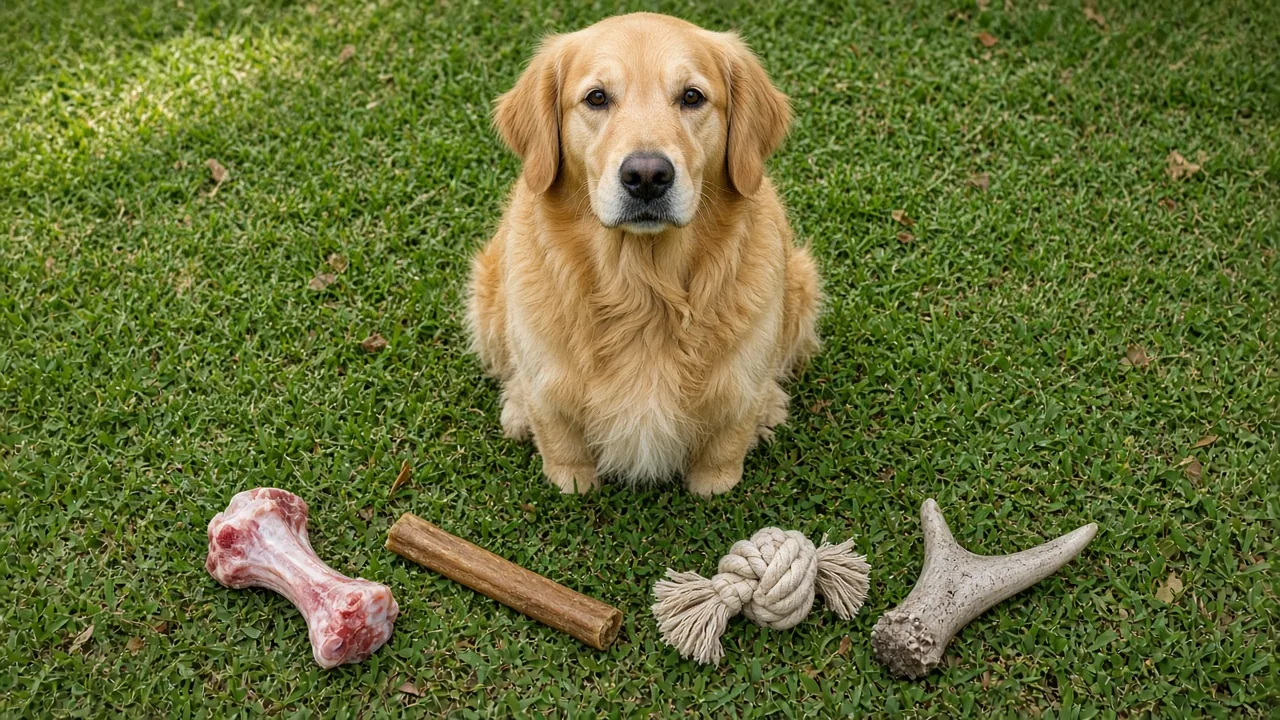
Your dog’s bone isn’t just a bone. A raw chicken neck and a nylon chew stick put entirely different stress on teeth, gums, and digestion, and mixing them up is where owners run into trouble. Raw meaty bones are meant to be eaten for nutrition, while recreational bones like antler, hoof, and nylon exist only for chewing and should get tossed once they’re worn down. Understanding raw meaty bones vs recreational bones for dogs helps you match the right product to your dog’s size, age, and chewing style.
Raw Meaty Bones vs Recreational Bones for Dogs: What’s the Difference?
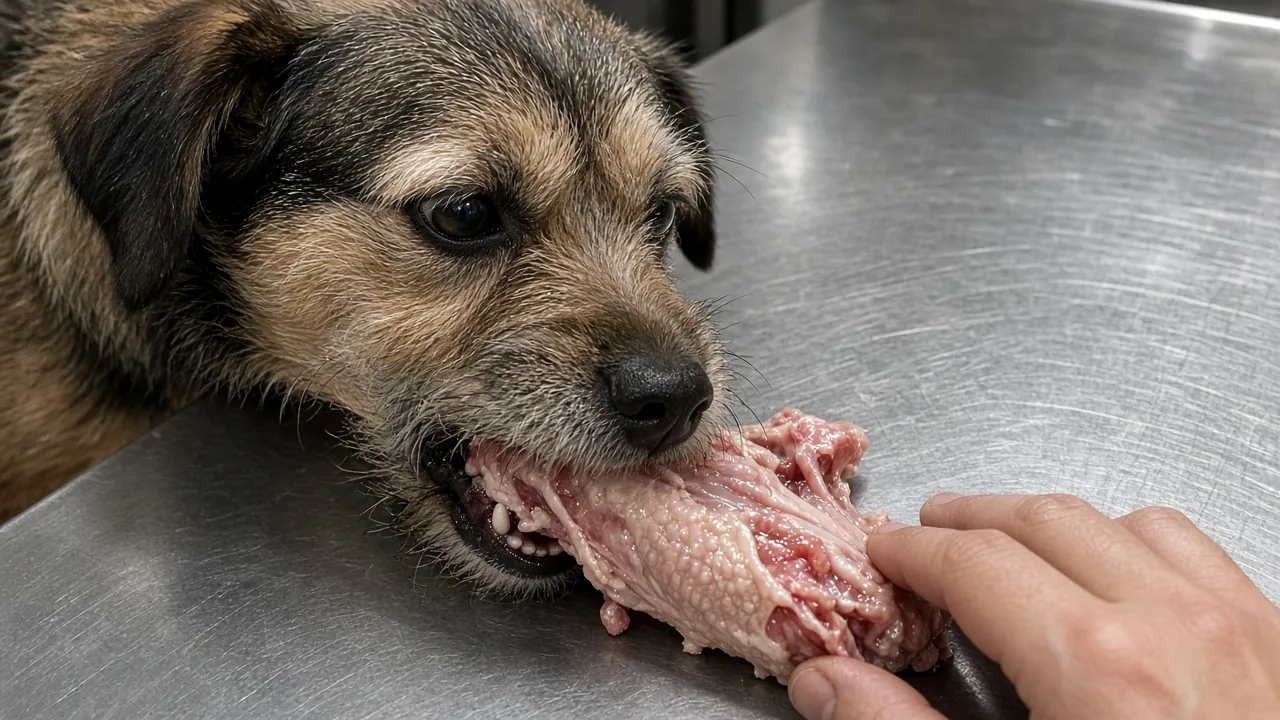
Raw meaty bones, think chicken necks, turkey necks, or lamb pieces, are edible. Your dog chews through the meat, cartilage, and softer bone, and the whole thing gets digested. These are sized for regular feeding, often once a week, and they disappear in one sitting.
Recreational bones work differently. Antler, hoof, and nylon products aren’t meant to be eaten at all. Your dog gnaws on them over days or weeks, and the goal is to wear them down slowly, not consume them. That distinction matters because the risks for each category are different.
With raw meaty bones, the main concerns are bacteria from raw meat and matching bone size to your dog’s mouth. With recreational bones, the bigger worries are tooth fractures and swallowed fragments from a bone that never breaks down. Here’s a quick side-by-side look.
| Type | Edible? | Hardness | Main Risk | Best For |
|---|---|---|---|---|
| Raw meaty bones (chicken/turkey neck, lamb) | Yes | Soft to medium | Bacteria if left out too long | Weekly feeding, most dogs |
| Antler chew | No | Very hard | Tooth fracture, splintering | Light chewers only, with caution |
| Cow hoof | No | Hard | Tooth wear, sharp splinters | Not generally recommended |
| Nylon/plastic bone | No | Very hard | Tooth fracture, plastic fragments | Not generally recommended |
| Rawhide | No (not digestible the same way) | Medium, softens with chewing | Swallowing whole, blockage | Supervised chewing only |
| Himalayan cheese chew | No, though digestible if swallowed | Hard, softens | Choking if gulped whole | Moderate chewers |
| Bully stick | Semi-edible | Medium | Blockage if swallowed in large pieces | Most dogs, supervised |
| Collagen stick | Yes, digestible | Soft | Wears down fast | Light chewers |
Why Some Chew Bones Can Break a Dog’s Teeth
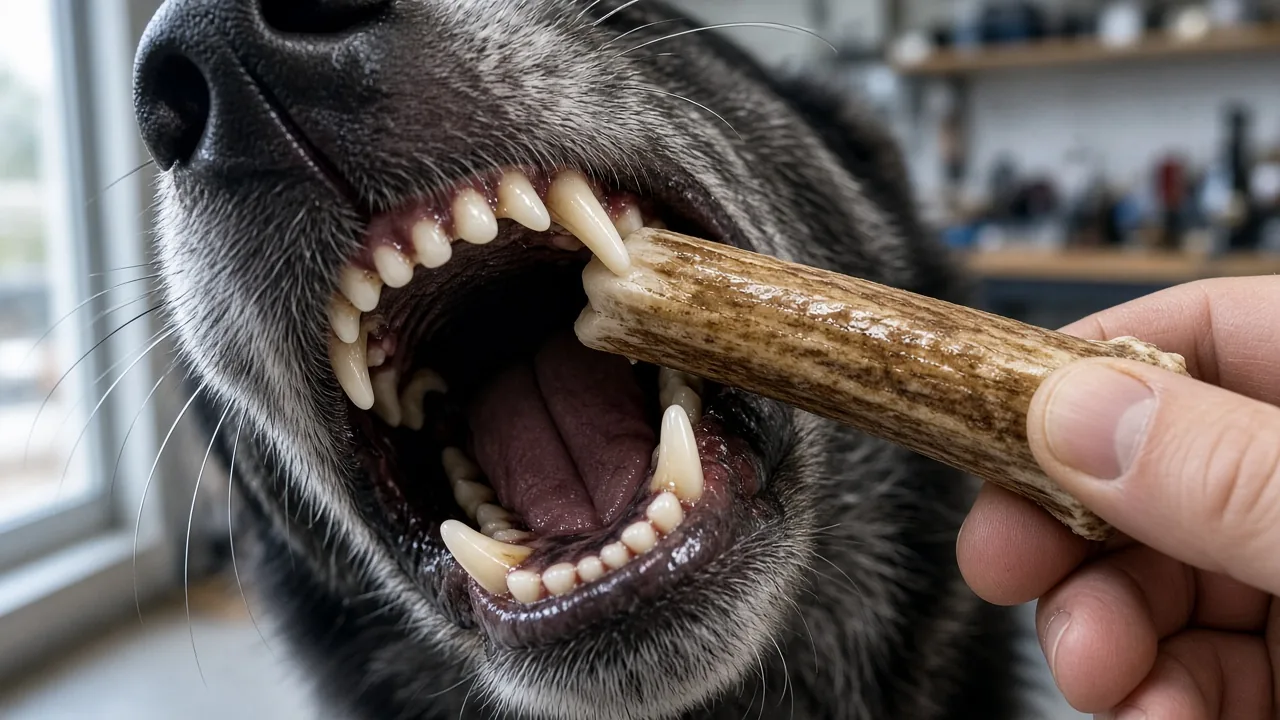
Antler and cow hoof sit near the top of the hardness scale, and that rigidity is exactly the problem. A dog’s molars aren’t built to grind against something that doesn’t give, so repeated chewing on antler or hoof can crack or fracture a tooth. Once a molar splits, you’re looking at a vet visit and likely an extraction.
Cow hoof carries a second risk on top of tooth wear. It can splinter into hard, sharp-edged pieces that a dog swallows before you notice anything’s wrong. Those fragments can scrape the digestive tract or get stuck, which shows up later as vomiting or a reluctance to eat.
The general rule with recreational bones: if you can’t dent it with a fingernail, your dog’s molars probably can’t handle it safely either. Antler and hoof fail that test more often than not.
Are Nylon and Plastic Bones Safe for Dogs?
Nylon bones, often flavored with bacon or similar coatings, appeal to dogs because of the smell, but the material itself is unforgiving. It’s hard enough to crack a tooth the same way antler and hoof can, and it doesn’t soften with use the way rawhide or cheese chews do.
The added concern with nylon is what happens during chewing. Dogs gnawing on a nylon bone often shave off small plastic fragments that get swallowed along the way. Those pieces aren’t digestible, so they either pass through (sometimes causing stomach upset) or, in less common cases, contribute to a blockage.
If your dog is a committed power chewer who works through nylon bones quickly, that’s actually a sign to stop using them rather than a sign they’re holding up well. Fast wear means fast fragment ingestion.
Softer Recreational Options: Rawhide, Bully Sticks, and Himalayan Chews
Compared to antler, hoof, and nylon, rawhide, bully sticks, and Himalayan cheese chews are considerably softer and carry less fracture risk. That’s the upside. The trade-off is that softer chews eventually break down into pieces small enough to swallow whole, and that’s where choking and blockage risk shows up instead.
Rawhide softens the more a dog chews it, and once it’s reduced to a soft, slick wad, some dogs swallow it in one gulp rather than finishing the job with their teeth. That swallowed piece can expand or lodge in the throat or gut. Rawhide also tends to run higher in fat, so dogs with sensitive stomachs may not tolerate it well even without a choking incident.
Himalayan cheese chews are hard at first but soften with saliva and chewing, similar to rawhide. One practical trick some owners use is softening a Himalayan chew in warm water before giving it to a dog with a weaker bite or dental issues. The good news here is that if your dog does swallow a piece, it’s typically digestible rather than a blockage risk, unlike rawhide or nylon fragments.
Bully sticks fall somewhere in the middle. They offer decent nutritional value and are softer than hoof or antler, but a large dog working through the last few inches can bite off and swallow a chunk big enough to cause problems. Skip bully sticks with artificial smoke flavoring or other additives, and always take the stick away once it’s down to a size your dog could swallow whole.
Why Collagen Sticks May Not Last Long
Collagen sticks are made from a genuinely dog-friendly ingredient, and they’re fully digestible, which makes them a lower-risk choice on paper. The catch is durability. A strong, motivated chewer can work through a collagen stick in minutes, which isn’t much of a chew session and isn’t much value for the cost either.
These tend to suit light chewers, older dogs with softer bites, or puppies better than heavy chewers who’ll finish one before you’ve sat back down. If your dog is a fast, aggressive chewer, a collagen stick may just be a quick snack rather than real engagement.
How to Choose a Raw Meaty Bone for Your Dog’s Size
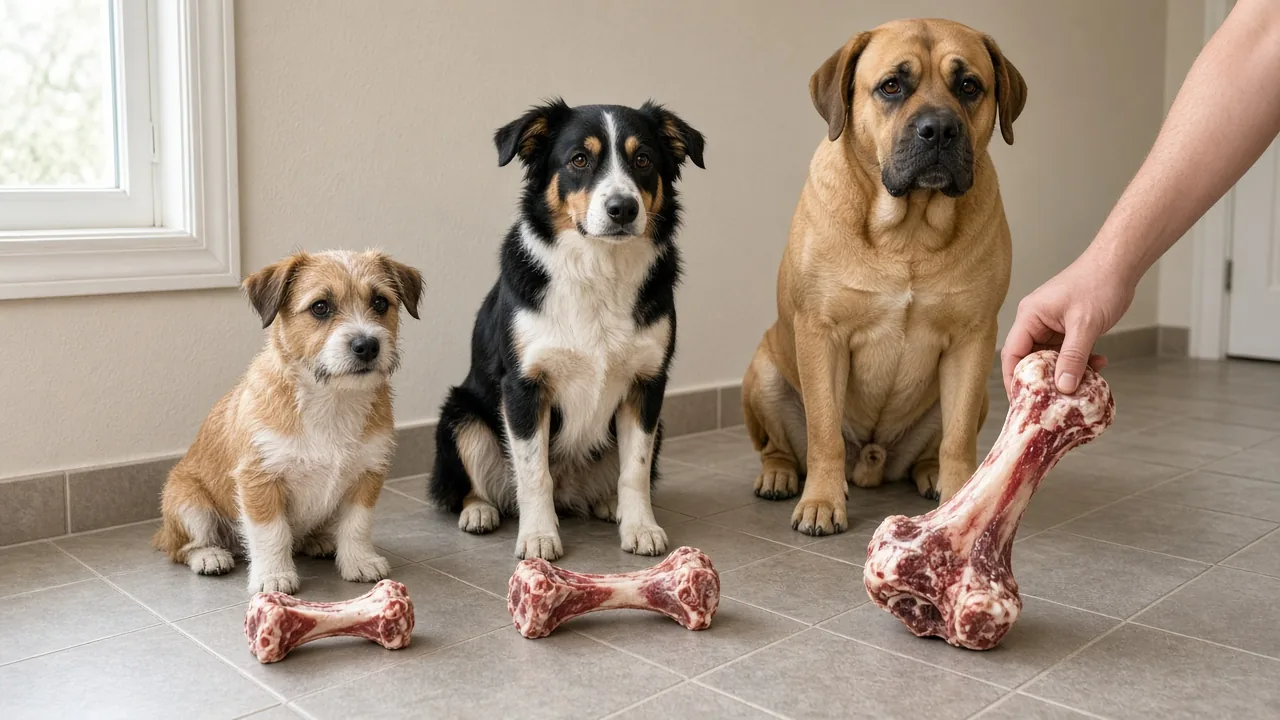
Size matching is the single biggest safety factor with raw meaty bones. A bone that’s too small for your dog can be swallowed whole; one that’s sized correctly forces slow, controlled gnawing.
Here’s how size generally breaks down by dog:
- Small-breed dogs: Softer options like chicken necks or small turkey necks work well. These bones are proportionate to a small dog’s jaw and don’t require the crushing force that could otherwise lead to a dog swallowing too large a piece.
- Medium to large-breed dogs: Larger raw bones from lamb or beef can work, but very big bones often need to be split lengthwise so the dog can access marrow and softer bone without gnawing on something too dense to make progress on safely.
- Giant-breed dogs: Stick with substantial bones appropriately sized for their jaw strength, and still supervise, since giant breeds can generate enough bite force to crack even bones meant for their size.
The underlying logic is simple: a raw meaty bone should be big enough that your dog can’t close their jaw around the whole thing and swallow it in one motion, but still accessible enough that they’re not just gnawing fruitlessly on solid bone.
How Often to Feed Raw Meaty Bones Safely
Because raw meaty bones are, by definition, raw meat, they come with handling rules that recreational bones don’t. Many owners settle into offering one raw meaty bone per week rather than making it a daily habit.
A practical routine looks like this:
- Give the bone in a spot that’s easy to clean, like a kitchen floor or outdoor area.
- Let your dog chew for a few hours under supervision.
- Remove whatever’s left once your dog loses interest or the meat is mostly gone.
- Discard the remainder rather than letting it sit out or refrigerating it for later.
The reasoning behind quick removal is straightforward: raw meat left at room temperature for extended periods develops bacteria, and a half-chewed bone left on the floor is also an invitation for your dog to drag it onto furniture or bedding. Treating it as a timed activity rather than a toy left out indefinitely keeps the raw-feeding benefits without the mess or bacterial risk.
Dental Chews and Dissolving Gels: What Actually Cleans Teeth
Not every product marketed as a dental chew does what it claims. Gel-based and starch-based dental chews are a common example. These often dissolve almost as soon as your dog starts working on them, which means there’s little to no physical scrubbing against the teeth.
Without that mechanical scraping action, these products don’t meaningfully reduce tartar buildup, even if the packaging suggests otherwise. There’s also a digestive angle: because these chews dissolve so quickly, a dog can end up swallowing a fair amount of gel or starch in a short time, and that can trigger vomiting in some dogs.
If dental health is your goal, a chew needs enough texture and resistance to physically work against the tooth surface as your dog gnaws. A product that disappears in seconds isn’t providing that, no matter what the label says about plaque or tartar.
Puppy Teething and Chew Bone Safety by Age and Bite Strength
Puppies start losing their baby teeth around four months old, and that teething window changes what’s appropriate to chew on. A hard antler or nylon bone meant for an adult heavy chewer can be uncomfortable or even damaging to a puppy’s developing mouth and loosening teeth.
Softer options make more sense during this stage. Puppies generally do better with gentler chews that give a little, rather than rigid materials designed to withstand an adult dog’s full bite force. As your dog matures into adulthood and you get a sense of how hard they actually chew, you can reassess whether firmer options are appropriate.
It’s also worth checking your puppy’s mouth periodically during teething. A chew that seems fine one week might cause discomfort the next as new adult teeth come in, so watching how your puppy interacts with a chew, not just assuming it’s still a good fit, matters here.
Choosing Safer Everyday Chew Toys Alongside Bones
Bones aren’t the only chew-related decision you’ll make. Everyday toys carry their own set of trade-offs, and material matters as much here as it does with bones.
Solid rope toys or leather toys tend to hold up well to regular chewing and are easy to clean, which makes them a reasonable staple alongside bones. Stuffed plush toys are a different story. Dogs often treat these as something to rip open rather than something to chew gently, and that instinct to tear into a toy and pull out the stuffing can lead to a dog swallowing fabric or filling material.
If your dog already shows a pattern of shredding toys rather than just mouthing them, plush toys are probably not the safest everyday option, regardless of how appealing they look on a shelf. Matching toy type to your dog’s actual play style, gnawing versus shredding, does more for safety than any specific brand claim.
How to Check a Chew Bone or Toy for Wear Before Each Use
A quick inspection before handing over any bone or toy takes thirty seconds and catches most problems before they become emergencies. Make this a habit rather than a one-time check.
Look for:
- Splinters or sharp edges, especially on bones that have been gnawed down unevenly
- Soft, worn spots on rope or rawhide that suggest the material is close to coming apart
- Cracks running through nylon, antler, or hoof products
- Pieces small enough to swallow, including anything that’s been chewed down to a fraction of its original size
If anything on that list shows up, pull the item immediately rather than letting your dog finish it off. A chew that was safe last week isn’t automatically safe this week, particularly for dogs who chew daily and wear things down fast.
What to Look for on the Label: Sourcing and Additives
Where a chew is made and how it’s processed affects what ends up in your dog’s mouth. Chews made in the US at USDA-inspected facilities generally go through more oversight than unlabeled imports, which can reduce the chance of unexpected chemical treatments during processing.
Artificial smoke flavoring is another thing worth skipping, particularly on bully sticks and similar products. It’s an additive rather than a necessary ingredient, and dogs don’t need it to find these chews appealing on their own.
When a label doesn’t specify country of origin or processing standards, that’s useful information in itself. It doesn’t necessarily mean the product is unsafe, but it does mean you’re choosing with less information than a clearly labeled US-made alternative would give you.
Frequently Asked Questions About Raw Meaty Bones and Recreational Bones
Are cooked bones ever okay for dogs?
Cooked bones behave differently than raw ones. Cooking changes the bone’s structure, making it more likely to splinter into sharp pieces rather than break down the way a raw bone does. Raw meaty bones are generally the safer route if you want an edible bone option.
How long should a chew session last?
For raw meaty bones, a few hours is typical before the dog loses interest or finishes the edible portions, at which point you remove what’s left. For recreational bones like antler or nylon, there’s no natural endpoint, which is exactly why regular wear checks matter more with those products.
What should I do if my dog swallows a bone fragment?
Watch for signs like vomiting, lethargy, straining, or refusal to eat, and contact your vet if any of these appear. Even a piece that seems small can cause irritation or, less often, a blockage, so it’s worth erring on the side of a call rather than waiting to see what happens.
Can small-breed dogs have the same bones as large-breed dogs?
Not generally. Bone size needs to scale with jaw size, so a bone appropriate for a large-breed dog may be too big for a small dog to engage with safely, while a bone sized for a small dog may pose little challenge, and limited benefit, for a much larger one.
Watch whether your dog gulps food down, gnaws patiently at a bone for an hour, or tears a toy apart in minutes, and let that chewing style guide what you put in front of them next. A bone or chew that works well for a calm, methodical chewer can be the wrong choice for a dog who shreds everything fast, so size and material should match the individual dog, not just the breed. Check whatever you hand over for cracks, splinters, or worn-down spots before every use, and if you want more on keeping everyday toys in safe rotation, that’s worth looking into as a companion step to bone safety.
This article is for general information only and is not a substitute for advice from your veterinarian. Always supervise your pet with a new toy, and replace any toy that is damaged or small enough to swallow.

Contributor
admin
Continue reading
All stories
DOG TOYS · 11 October
DIY Dog Toys From Old T-Shirts: No-Sew Braided Build
DOG TOYS · 11 October
What Size Kong Is Safe for My Dog? A Weight and Bite Chart
DOG TOYS · 11 October
Responses
Moderated discussion