SMALL PETS & BIRDS
Why Does My Hamster Keep Digging Out of Its House? What Owners Observe
If your hamster keeps digging out of its house instead of nesting in it, the cause could be space, security, temperature, or bedding. One owner's soil tank experiment reveals what actually works.
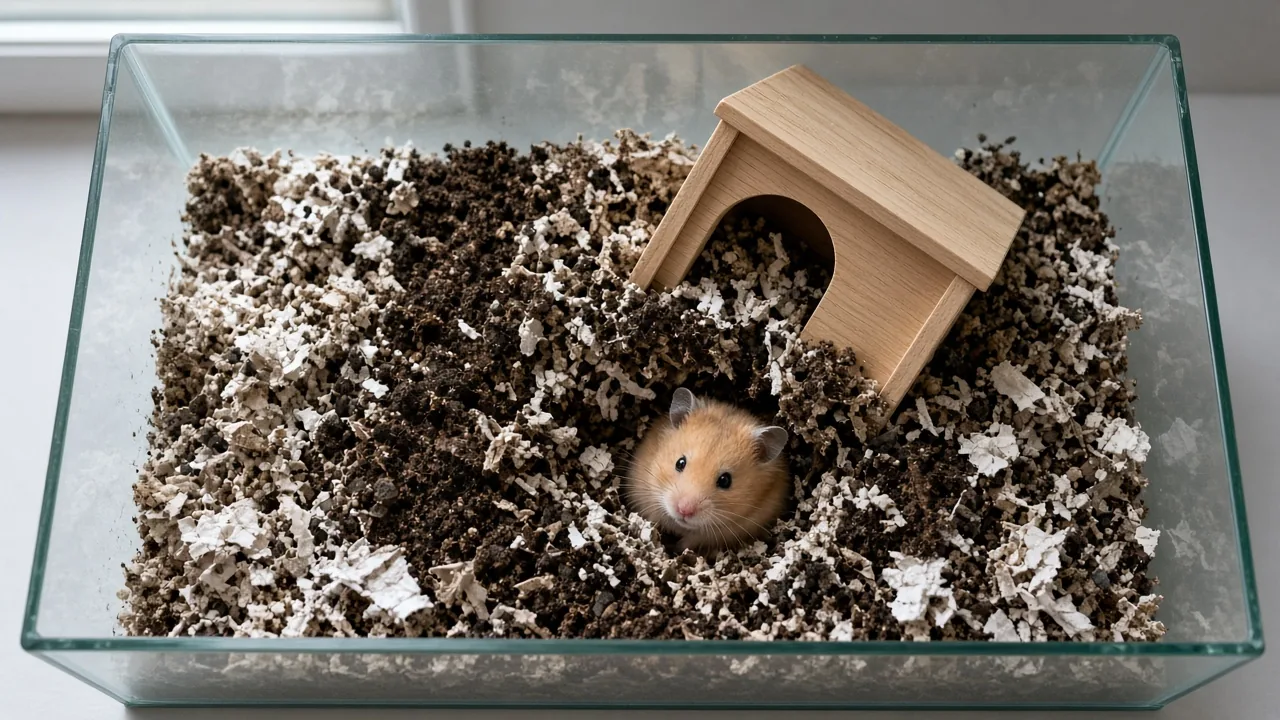
If you’ve set up a cozy wooden house with soft bedding and your hamster still digs it apart instead of moving in, you’re not alone. Many owners ask why does my hamster keep digging out of its house, and the honest answer is that no single reason fits every hamster. The space may feel too small, the hamster may not feel safe yet, the setup may not hold warmth, or there simply isn’t enough loose material to burrow into the way the hamster wants.
Watching how your hamster digs, where it digs, and what it does with the bedding afterward gives you real clues. One owner who moved a hamster from a wire cage into a soil tank documented this struggle closely, and the pattern that played out offers a useful case study for anyone facing the same puzzle.
Why Does My Hamster Keep Digging Out of Its House Instead of Nesting In It
Owners and online commenters most often point to four explanations when a hamster abandons a bedding-filled house: the house is too cramped for natural burrowing, the hamster doesn’t feel secure in it, the enclosure doesn’t hold heat well, or there isn’t enough loose bedding to satisfy the urge to burrow. None of these theories is wrong on its own. Hamsters are driven to dig by instinct, and in the wild they create branching tunnel systems with separate areas for sleeping, storing food, and waste.
A single wooden house, no matter how well built, can’t replicate that. So when your hamster tears through bedding and heads for the corners of the tank instead of settling into the house you provided, it may simply be doing what its body tells it to do.
Is the House Too Small for Natural Burrowing Behavior

Some owners compare a hamster digging past a small wooden house to someone renting a closet-sized room and renovating it anyway. The comparison holds up because hamsters in burrows don’t use one room for everything. They instinctively want separate spaces for sleeping, stashing food, and relieving themselves, and a single-chamber house can’t offer that.
If your hamster keeps pushing bedding out of a house that looks plenty big to you, size relative to a human’s sense of "enough room" isn’t the measure that matters. What matters is whether the hamster can create more than one functional area, either inside the house or by digging around it.
Does Frequent Handling or Lid-Opening Make the House Feel Unsafe
A different theory focuses on disturbance rather than space. If you frequently lift the tank lid to check on your hamster, peek inside, or move the house to clean it, your hamster may learn that this spot isn’t private. Hamsters are prey animals, and repeated interruptions near a nest site can push them to look for somewhere less exposed.
In this view, the digging isn’t really about escaping the house. It’s about finding a hiding spot that hasn’t been disturbed yet. If your hamster digs toward corners, under substrate, or behind objects rather than simply scattering bedding everywhere, this explanation fits better than the space theory.
Could Temperature Be Driving the Digging Instead of Nesting
A third explanation centers on insulation. Glass or wood enclosures don’t hold warmth the way several inches of packed soil does, and in the wild, deeper tunnels tend to stay warmer and more stable than the surface. Some owners believe hamsters dig at night mainly to reach warmer material, not to avoid the house itself.
If your hamster’s digging increases on cooler nights, or if it tends to burrow downward rather than sideways, temperature-seeking behavior may be part of what you’re seeing, alongside the other factors.
Comparing the Likely Causes: Space vs. Security vs. Temperature vs. Bedding
These four theories aren’t mutually exclusive, and more than one can apply to the same hamster at the same time. Still, comparing them side by side can help you narrow down which one explains the behavior you’re watching before you redo the whole setup.
What Each Theory Predicts You’ll See in Your Tank
| Likely Cause | Typical Digging Pattern | Supporting Clue | Suggested Fix |
|---|---|---|---|
| House too small | Hamster digs around or past the house, creating extra chambers | Hamster uses the house briefly, then expands tunnels outward | Add more floor space or let it dig a connected tunnel system |
| Lack of security | Digging increases after handling or lid checks | Hamster relocates its nest after being disturbed | Reduce lid-lifting; check from the side glass instead |
| Poor insulation | Digging concentrates at night or in cooler rooms | Hamster burrows downward into deeper substrate | Add a thicker bedding layer or keep the room at a steady temperature |
| Not enough loose bedding | Hamster repeatedly empties the house of what little is there | Hamster drags in whatever loose material it finds nearby | Offer generous loose bedding separate from the house |
Matching your hamster’s pattern to one or two rows here beats guessing at a fix and hoping it works.
How One Owner’s Soil Tank Setup Kept Collapsing Under a Digging Hamster
One owner switched a hamster to a soil tank after the hamster had been gnawing persistently at a wire cage. The idea was to give the hamster a more natural substrate to work with. The first night did not go as planned.
Within a short time after the soil went in, the tank was unrecognizable. The hamster had dug through the entire night, reshaping the packed soil into tunnels and piles. The owner cleaned out the loosened dirt to keep things tidy, only to have the hamster dig again the following night, this time collapsing the nest it had built for itself. By morning, the hamster was curled up in a bare corner with no shelter left standing.
Why Burying the House in the Soil Still Wasn’t Enough
The owner’s next move was to bury a wooden house directly into the substrate, reasoning that a fixed structure under the dirt would survive the digging. It didn’t. A single night was enough for the hamster to undo the work again, leaving the tank in the same disorganized state as before.
This is worth keeping in mind if you’re tempted to assume that one clever fix will stop the digging for good. A hamster with a strong urge to dig can rework a tank faster than most owners expect, and underestimating that drive is a common mistake.
How to Set Up a Tank or Cage So Digging Doesn’t Destroy the House
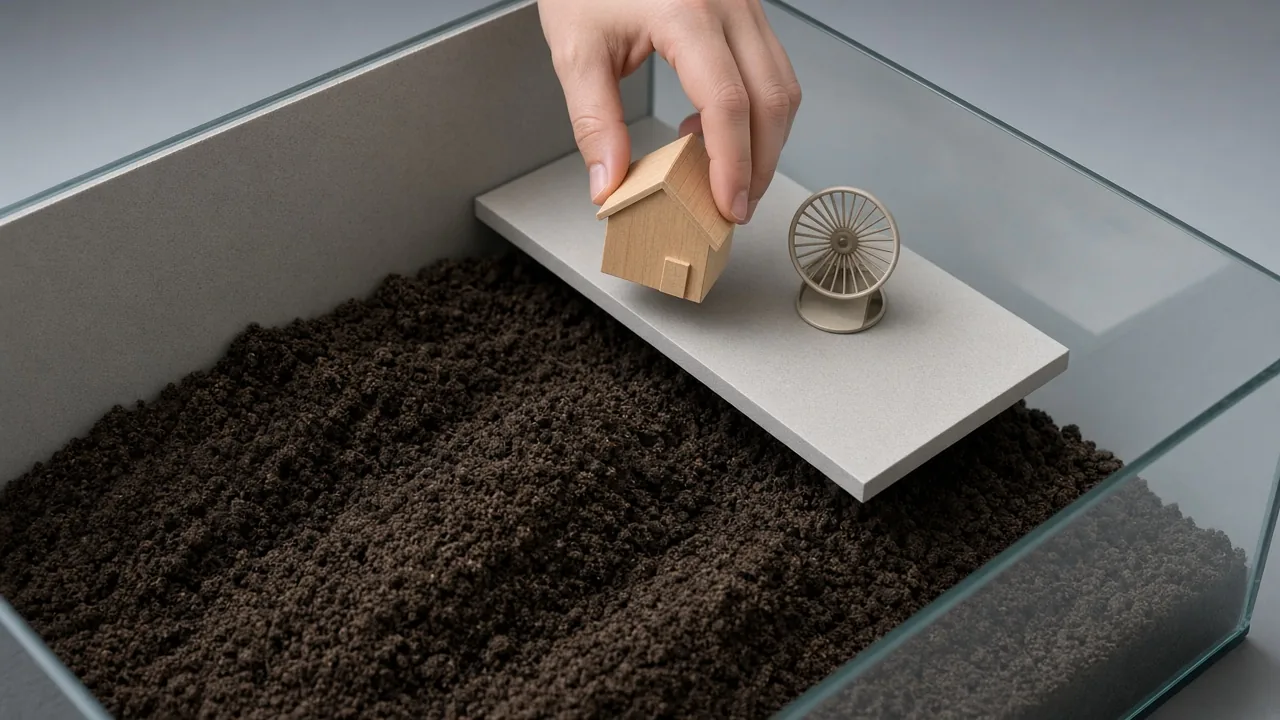
After two collapses, the owner changed the approach entirely. Instead of fighting the digging, the setup was redesigned around it.
- Add a solid backing board along one side of the tank so the soil has structure to push against.
- Place the house and the exercise wheel on a raised platform above the digging layer, not directly in the soil.
- Leave a deep layer of soil below the platform for the hamster to dig freely without risking the house’s stability.
- Check the platform supports periodically to confirm digging hasn’t loosened anything underneath.
With the house and wheel elevated, the hamster could dig as much as it wanted below without any risk of its living area caving in. The first night in the new setup still involved plenty of rearranging, but this time the wooden house stayed exactly where it was.
Should You Let a Hamster Carry Its Own Bedding Into the House
Rather than placing bedding directly inside the house, the owner put loose paper bedding in the food bowl instead and let the hamster haul it into the house on its own. This small change made a noticeable difference. The hamster accepted the house faster when it had done the work of furnishing it itself, compared to earlier attempts where bedding was placed inside for it.
If your hamster keeps rejecting a pre-filled house, try offering loose bedding somewhere nearby instead of inside, and see whether it chooses to move the material in on its own schedule.
Do You Still Need a Wheel If the Hamster Digs All Night
Some owners who watch a hamster dig for hours question whether a running wheel is even necessary on top of that activity level. There’s no clear agreement on this. Digging and wheel-running work different muscle groups and satisfy different instincts, so many owners keep both available and let the hamster choose. If your hamster ignores the wheel entirely once it starts digging heavily, that’s not necessarily a problem, but keep it in reach in case its preferences change later.
When Digging and Bedding Removal Might Signal Something Else
Behavior that looks like simple pickiness can sometimes signal a bigger shift. After the hamster in this story had finally settled into the new house, using the bedding she’d carried in herself, the acceptance didn’t last. A few days later, she began emptying the house again, dragging all the paper bedding back out and curling up bare in a corner.
This time the cause wasn’t about space, safety, or temperature. The owner noticed her abdomen had visibly enlarged, a sign of pregnancy. The sudden reversal in behavior lined up with a life-stage change rather than a setup problem.
Should You Move a Pregnant Hamster to a Simpler Cage
Given the pregnancy, the owner moved her out of the layered soil tank and back into a plain acrylic cage before birth. A tank with tunnels, platforms, and loose soil carries more risk during labor and in the days right after, simply because there’s more terrain for a newborn to get lost in or for the mother to navigate awkwardly. The simpler cage made it easier to monitor her closely. She gave birth that same night, without complications.
If you notice this kind of sudden behavior reversal alongside physical changes in your hamster, moving her to a simpler, easier-to-observe setup before she gives birth is a reasonable precaution.
How to Harden Soil or Choose Bedding That Resists Constant Digging
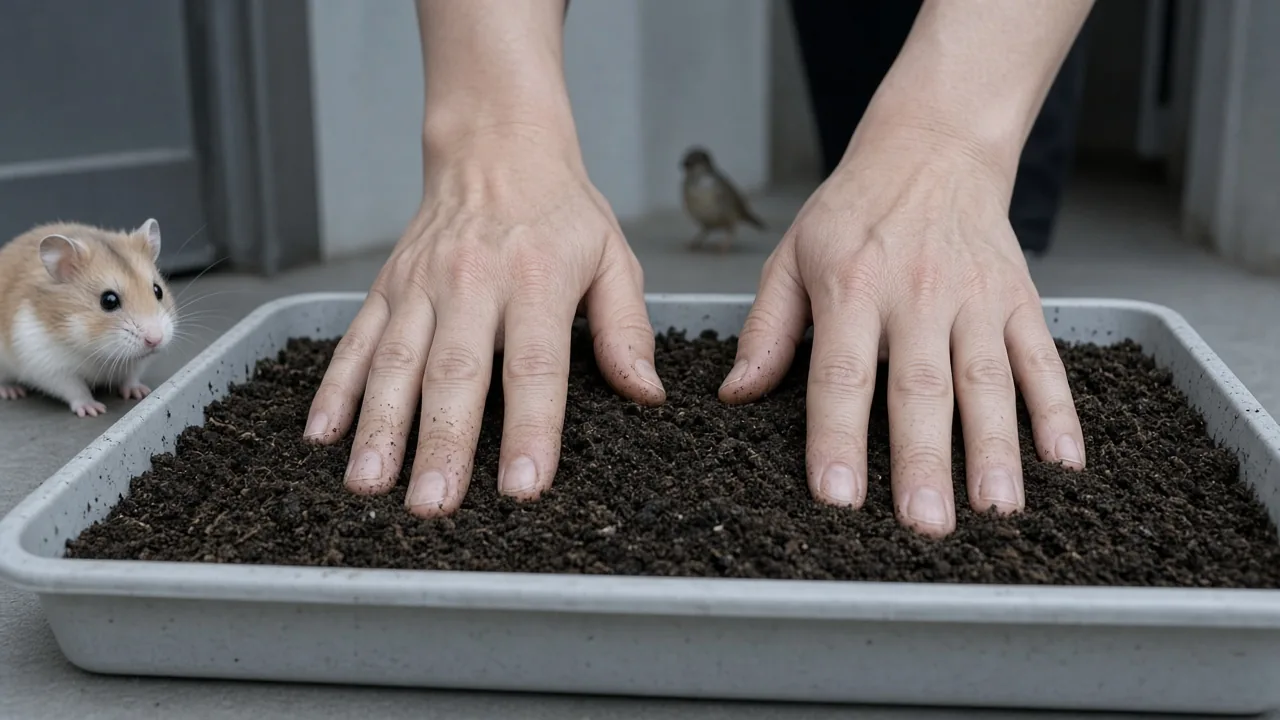
If you want soil or substrate that holds up better against determined digging, a few approaches can slow things down, though none will stop a motivated hamster indefinitely.
- Pack soil down firmly, by hand or by stepping it in layers, before adding the hamster. Loose soil gets dug through almost immediately.
- One reader’s homemade approach mixed steamed glutinous rice and egg whites into the soil before packing it, which reportedly made the substrate hard enough that digging wore down the hamster’s claws and teeth faster than it wore through the soil.
- Pre-compressing soil into blocks with a hydraulic press before placing it in the tank is another option some readers suggested for a harder starting surface.
Keep your expectations realistic here. Even heavily compacted soil can eventually give way to a hamster that digs every night, so plan your setup assuming some ongoing rework rather than a one-time fix.
Compacting Soil vs. Using a Hydraulic Press vs. Standard Loose Bedding
| Method | Hardness | Setup Effort | Cleaning Needs | Risk of Collapse |
|---|---|---|---|---|
| Hand-packed soil | Moderate | Low to moderate | Occasional removal of loosened soil | Moderate, especially around structures |
| Hydraulic-pressed soil blocks | High | High, requires equipment | Less frequent, blocks resist crumbling | Lower, but still possible over time |
| Standard loose bedding | Low | Very low | Frequent spot cleaning | High if used alone without a platform |
If you don’t have access to a press or don’t want to experiment with homemade hardening recipes, a layered setup with a raised platform, as described above, solves the collapse problem more reliably than trying to out-harden the substrate alone.
Choosing a Housing Setup Based on Your Hamster’s Personality and Life Stage
Not every hamster needs the same enclosure. A young, exploratory hamster that digs constantly and shows no sign of stopping may genuinely benefit from a layered, dig-friendly tank with a protected upper platform for its house and wheel. This setup lets natural behavior play out without constant cleanup battles.
A pregnant or older hamster is a different case. Lower-maintenance, simpler cages make it easier to spot problems quickly, reduce the physical demands of navigating a complex tank, and lower the risk during birth or recovery. If your hamster’s activity level drops, her body shape changes, or she seems less steady than before, a simpler setup is worth considering even if she previously thrived in a more elaborate one.
What to Do When Pups Are Ready to Leave the Nest
Once hamster pups reach about one month old, it’s time to separate them by sex. Keeping male and female littermates together past this point often leads to additional, unplanned litters, since young hamsters can reproduce earlier than many new owners expect. In the case described here, the female pups stayed together in the large soil tank while the males were moved to separate housing once they were old enough to be weaned and handled.
If you’re raising a litter, plan for this separation in advance so you’re not scrambling to find extra cage space once the pups are grown.
Common Questions About Hamsters Digging Instead of Nesting
Should You Clean Out Loosened Soil or Leave It for the Hamster to Reuse
Opinions differ here, and there’s no clear right answer. Some owners feel that removing soil the hamster has already loosened wastes its digging effort and disrupts tunnels it was still working on. The owner in this story chose to clean out loosened dirt anyway, prioritizing a sanitary tank over preserving every tunnel. If you go this route, consider leaving at least part of the dug area intact so your hamster isn’t starting completely from scratch every time you clean.
Are Habitat Upgrades Really for the Hamster or for the Owner’s View
It’s a fair question to ask yourself before investing time and materials into an elaborate dig tank. Not every redesign that looks impressive actually improves life for the hamster living in it. Before committing to a complex layered setup, consider whether a simpler cage with adequate bedding and a secure house would meet your hamster’s needs just as well, and save the more involved design for cases where your hamster clearly shows a strong digging drive that a basic cage can’t satisfy.
Watch which digging pattern your own hamster shows, give it a layered setup that survives nightly digging, and recheck bedding and housing whenever its behavior or body shape changes noticeably.
This article is for general information only and is not a substitute for advice from your veterinarian. Always supervise your pet with a new toy, and replace any toy that is damaged or small enough to swallow.

Contributor
admin
Continue reading
All stories
SMALL PETS & BIRDS · 11 October
Is Millet Spray Holder Safe for Birds? What to Check Before You Buy
SMALL PETS & BIRDS · 11 October
Do Hamsters Need an Exercise Wheel to Be Happy? A Buyer’s Guide
SMALL PETS & BIRDS · 11 October
Responses
Moderated discussion