CAT TOYS
Is Turbo Tail Cat Toy Worth It, or Just Hype on Instagram?
The Turbo Tail 2.0 sparks real chase instincts on hardwood floors, but struggles on carpet and has build quality issues. Here's whether it beats a cheaper wand toy.
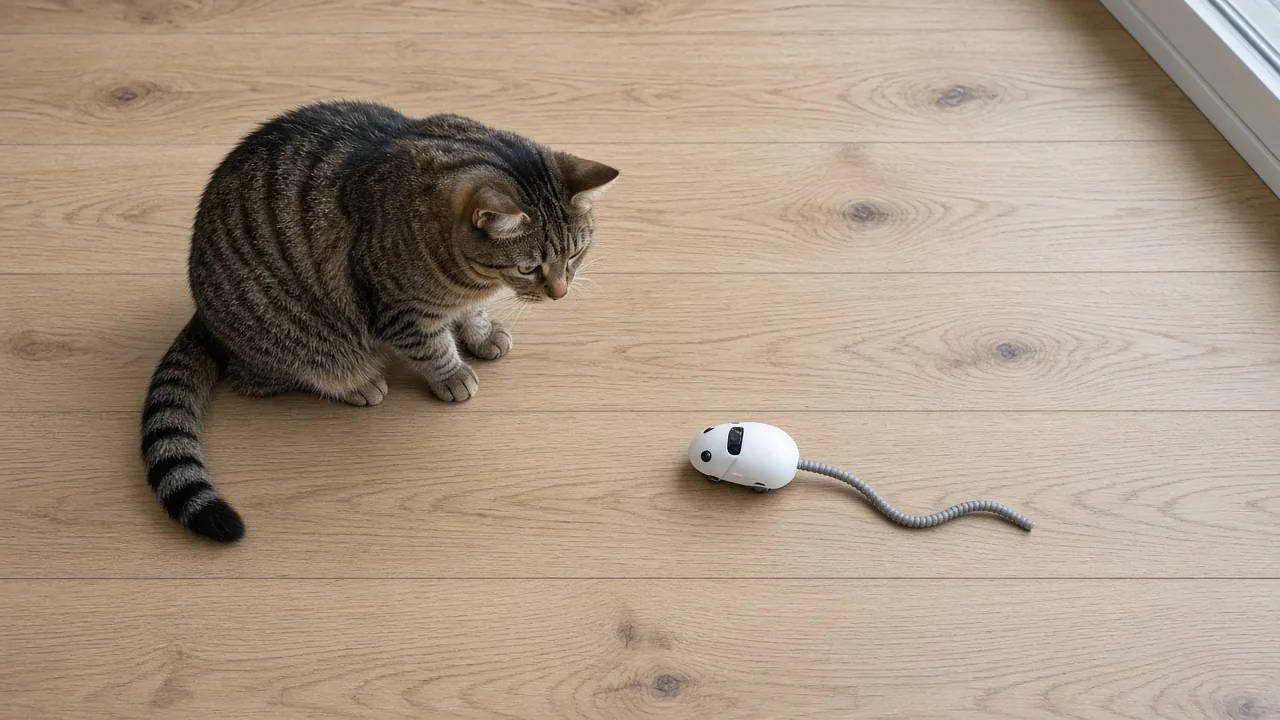
If you’ve seen the Turbo Tail 2.0 zipping across a hardwood floor in a sponsored video and wondered whether to buy one, here’s the short answer: is Turbo Tail cat toy worth it depends heavily on your flooring and your cat’s patience for fast, unpredictable movement. It works well as a short burst of chase entertainment on hard surfaces, but the build quality and price don’t hold up well against far cheaper wand toys and spinners that deliver similar engagement. If you’re on the fence, it helps to know exactly what you’re buying before the controller and charging cable show up at your door.
What Is the Turbo Tail 2.0 and How Is It Supposed to Work
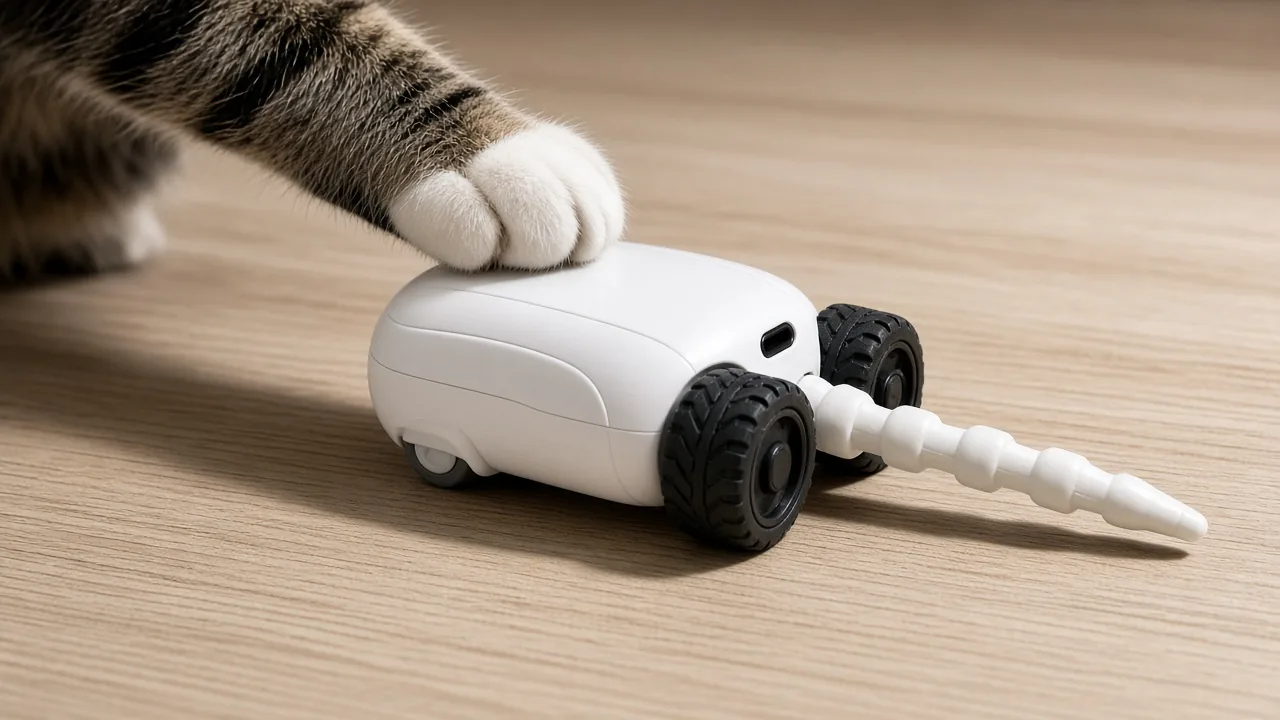
The Turbo Tail 2.0 is a small robotic toy priced around $28, built to mimic a fleeing prey animal that your cat chases around the floor. The box includes a handheld controller, a USB-A to USB-C charging cable, a removable "worm" attachment that drags behind the body, a non-rotating front wheel, and two rear wheels.
Those rear wheels are designed to pop off easily, which matters more than it sounds. Cat hair wraps around spinning wheels fast, and a toy you can’t clean quickly becomes a toy that sits in a drawer.
The device runs in three modes. Smart mode lets it drive around on its own, following a basic pattern meant to simulate random prey movement. Manual mode hands control to you through the included controller, so you can steer it toward your cat directly. Standby mode kicks in after five minutes without input, then wakes up again with a touch, which helps the battery last longer between charges.
In practice, switching between these three modes doesn’t feel clean. One reviewer found that the toy seemed to blend all three behaviors together rather than clearly separating them, which made it harder to predict what the toy would do next, and harder to explain to a first-time user in thirty seconds.
Is Turbo Tail Cat Toy Worth It? How to Judge Any Automated Cat Toy
Before you spend money on any electronic toy, run it through four questions: does your cat actually chase it, does it hold up to real play, does it work on the floors you actually have, and does the price match what you’re getting compared to a manual alternative. These four checks apply whether you’re looking at Turbo Tail or any similar trending toy.
Marketing photos and short clips rarely show you the full picture. A toy can look exciting in a fifteen-second video and still frustrate your cat within a week, either because it moves too fast to catch or because the parts wear out faster than expected.
How Well Does It Actually Engage Your Cat
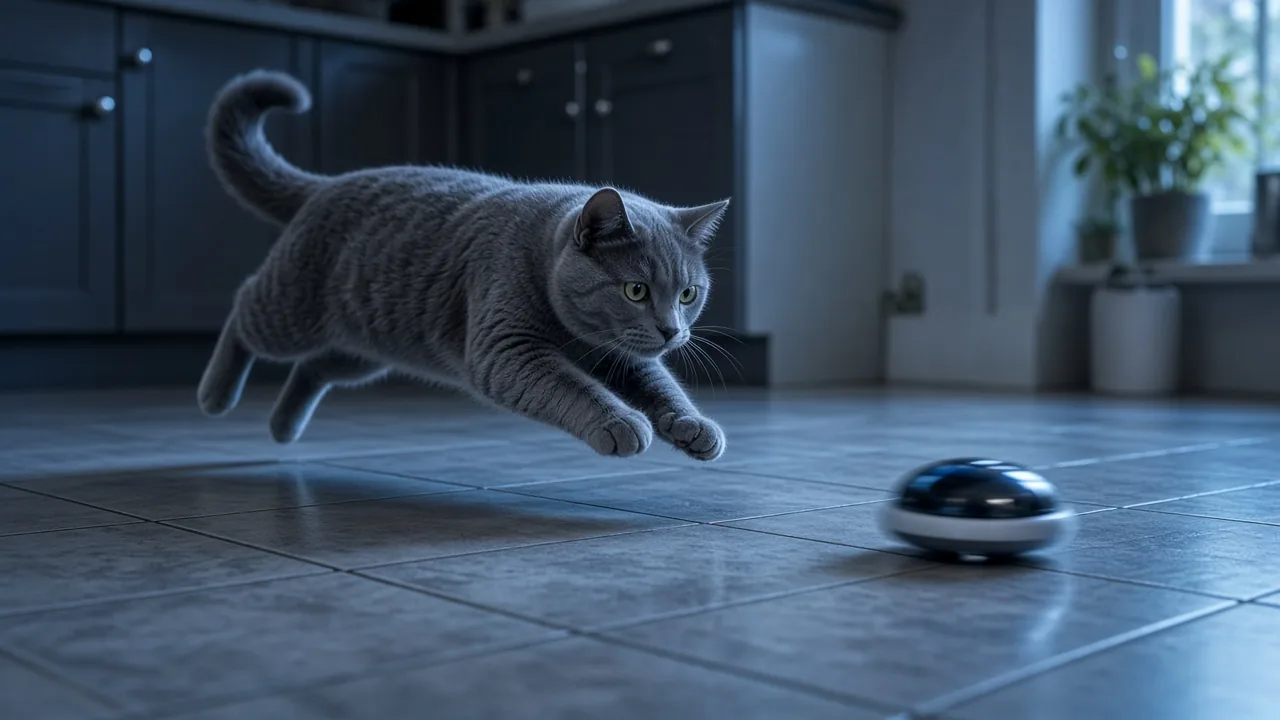
On hard flooring, the Turbo Tail 2.0 does trigger a real chase response. Cats tend to go after it the way they’d chase a mouse, sprinting and pouncing in short bursts, which is the reaction most owners want from this kind of toy.
The problem is in what comes after the chase. Because the mode switching isn’t clearly separated, the toy’s movement can look erratic rather than prey-like, more like a runaway gadget than something stalking away from your cat. A real prey animal pauses, changes direction, and sometimes freezes, which is part of what makes chase toys satisfying. A toy that only moves fast and straight loses that realism quickly, and cats seem to notice the difference after the first few sessions.
Does It Work on Carpet and Different Flooring
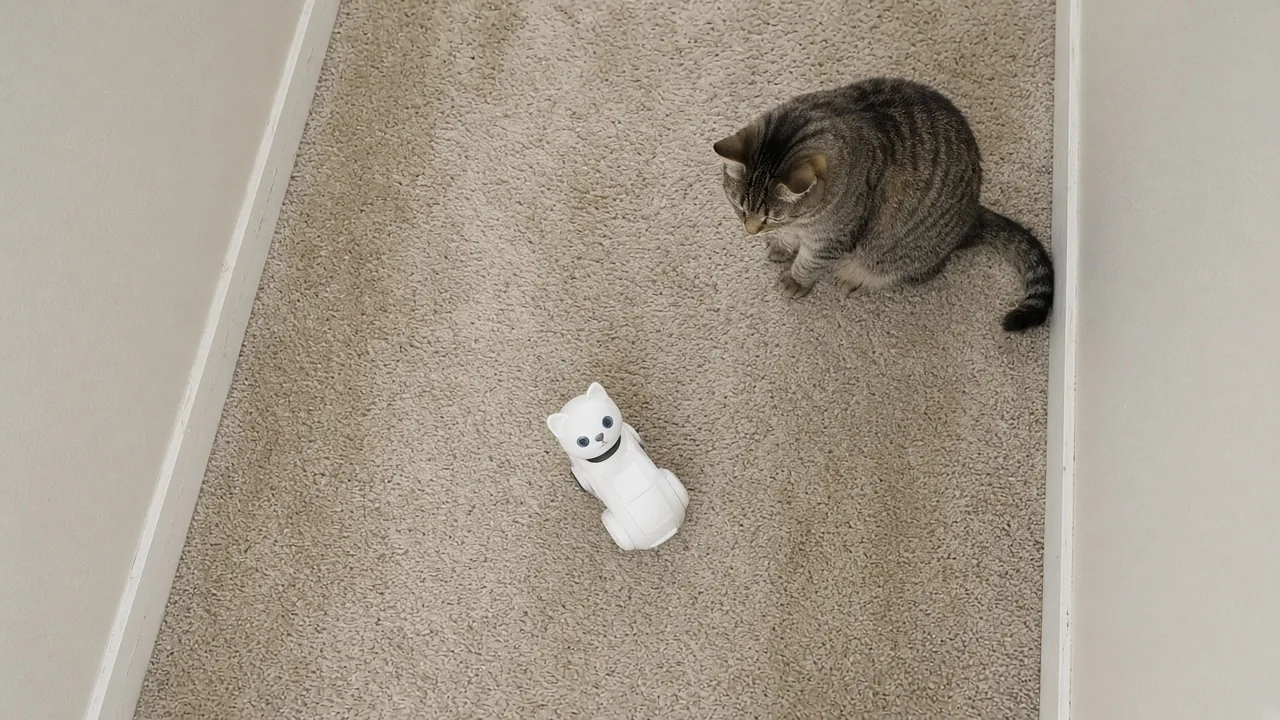
Marketing for the Turbo Tail 2.0 suggests it handles any surface in your home. That claim doesn’t match what happens on thick carpet, where the toy reportedly struggles badly and can barely move at all.
If your home is mostly carpeted, this is the single biggest reason to reconsider. A toy that only performs on hardwood, tile, or low-pile rugs isn’t useless, but it narrows where your cat can actually enjoy it, and it means you can’t leave it running in the living room if that’s where the carpet is.
Is Turbo Tail 2.0 a Private-Label Product, and Does That Matter
Looking at Amazon listings, you’ll find multiple toys that look visually identical to the Turbo Tail 2.0 sold under different brand names, and several of those carry noticeably lower ratings. This pattern points to private labeling, where one manufacturer produces a base product that gets rebranded and resold by several sellers.
Private labeling itself isn’t automatically a problem, but it does mean you can’t always trust a high rating on one listing to reflect consistent quality across the production run. Before buying any trending gadget toy, it’s worth searching for the same product under different brand names to see if ratings vary widely. If they do, that inconsistency is a sign of loose quality control somewhere in the supply chain, and you may end up with a worse unit than the one in the video that convinced you to buy it.
Turbo Tail 2.0 Pros and Cons Compared
Weighing the toy honestly means looking at what it does well against where it falls short.
Pros:
- Grabs attention effectively; cats chase it with real enthusiasm on the right surface
- Compact, tech-forward design that looks appealing next to other cat toys
- Rechargeable battery means no disposable batteries to replace
Cons:
- Movement is fast and inconsistent, making it hard for some cats to catch or stay interested
- The worm attachment is flimsy and can tear after just a short test session
- Replacement parts can be difficult to find, with some buyers reporting no luck sourcing them from the original seller
A toy that moves in short bursts with pauses, rather than constant fast motion, tends to hold a cat’s interest longer because it mimics real prey behavior more closely. That’s a design choice worth looking for in any automated toy you’re considering, Turbo Tail included.
Turbo Tail 2.0 vs. Cheaper Automated and Manual Toys: Which Should You Choose
Several toys on the market offer similar play value at a fraction of the price. Here’s how they compare on the factors that matter most.
| Toy | Material/Build | Durability | Play Style | Price Range |
|---|---|---|---|---|
| Turbo Tail 2.0 | Plastic body, removable worm attachment | Worm tears easily; wheels tangle with hair | Fast, erratic chase | Mid-range (~$28) |
| Catit Groovy Fish | Plush with catnip | Needs periodic washing; wears with heavy biting | Chase, carry, bite-and-kick | Budget |
| Pixie Spinner | Plastic spinner base | Generally sturdy for a spinning toy | Batting, chasing a moving target | Budget |
| Baton Ball/wand toy | Wand with attached ball or feather | Depends on attachment; some fray with repeated use | Interactive, owner-directed chase | Budget |
The pattern here is consistent: wand toys and spinners often match or exceed what the Turbo Tail 2.0 offers for roughly a quarter to half the price. The main trade-off is that manual toys require you to hold the wand and play actively, while Turbo Tail can run on its own in smart mode. If hands-free play matters more to you than price, that’s a real reason to consider it. If you don’t mind a few minutes of active play each day, a wand toy likely gives you more reliable engagement for less money.
How to Choose a Cat Toy Based on Your Cat’s Play Style
No single toy works for every cat, because play style varies as much as personality does. Before buying anything, watch how your cat already plays with what’s around the house.
- Stalkers tend to crouch and creep before pouncing; they often do best with toys that move unpredictably and pause, like a wand toy you control by hand
- Pouncers go for fast, direct movement and may enjoy something like the Turbo Tail 2.0 on the right flooring
- Chewers want something they can bite down on and carry, such as a plush fish or a catnip toy with durable stitching
- Carriers like to grab a toy and walk off with it, which favors lightweight plush toys over hard plastic gadgets
Age and household size matter too. Kittens tend to chase almost anything that moves, so a fast gadget like Turbo Tail can wear them out quickly, while senior cats often prefer slower, lower-effort play like a wand toy moved gently along the floor rather than something that darts around the room. In multi-cat homes, a single automated toy can also become a source of competition if more than one cat wants it at once, so having a couple of manual toys on hand for one-on-one sessions tends to work better than relying on one gadget for everyone.
Indoor cats especially benefit from multiple short play sessions throughout the day rather than one long session, since this better matches natural hunting patterns of short bursts followed by rest. Rotating two or three toys in and out of reach also helps keep interest up, since cats tend to lose enthusiasm for anything that’s been sitting in the same spot for weeks.
One owner found that her cat consistently preferred the simple worm attachment on a basic wand toy over any automated gadget, reaching for it daily while ignoring pricier options entirely. This kind of individual preference comes up often enough that it’s worth testing a cheap toy before investing in an expensive one.
Safety Checks Before Letting Your Cat Play Unsupervised
Any toy with small, detachable parts needs a quick inspection before you leave your cat alone with it. For the Turbo Tail 2.0, check the worm attachment and wheels for tears or looseness before each session, and remove the worm entirely if it shows signs of fraying.
For wand toys, never leave the wand itself within reach when you’re not supervising. Cats can bite through string or feather attachments and swallow pieces, and a dangling cord presents a strangling risk if left unattended.
Collar-style or wearable cat toys deserve extra caution. If a cat gets caught on furniture or a door handle while wearing one, it can turn into a real hazard rather than a toy, so these are best avoided for unsupervised play altogether.
Charging cables are also worth a mention with any battery-powered toy. Keep the USB cable unplugged and out of reach between charges, since cords are an easy thing for a cat to chew on, and a cat that likes to gnaw on cords is a cat that shouldn’t have unsupervised access to one.
Basic unsupervised-play checklist:
- Check all small or removable parts for looseness before each session
- Remove wand attachments, worm pieces, and string toys after play ends
- Skip collar-style or clip-on wearable toys if your cat will be alone with them
- Replace anything that’s cracked, torn, or missing a piece immediately
How to Clean and Maintain Interactive and Catnip Toys
Catnip toys, including catnip balls and plush fish, need regular washing because they can develop mold or attract small pests if left sitting out for too long, especially once a cat has drooled on or chewed them. A simple rotation of wash, dry, and return to the toy bin every week or two keeps them usable longer.
Toys with built-in catnip and newspaper filling, like some long plush fish designs, shouldn’t be chewed for more than a few minutes at a stretch. Extended biting can push the toy’s moisture content higher than it should be, which isn’t great for hygiene even if your cat seems to love the soggy result.
Sisal scratchers, by contrast, need very little upkeep. They don’t shed fibers the way carpet-covered scratchers can, and a single sisal pad can last around two years of regular use without needing replacement, which makes them one of the lower-maintenance options in any toy collection.
For the Turbo Tail 2.0 itself, maintenance mostly comes down to the wheels and the worm attachment. Popping off the rear wheels to clear out trapped hair every so often keeps the toy moving smoothly, and wiping down the body after play helps it survive longer in households with multiple cats shedding onto the same floor it runs across.
How Often to Replace Cat Toys, Including Turbo Tail Parts
Replace any toy as soon as you notice real damage, not after it’s already fallen apart. That means swapping out torn wand attachments right away, tossing cracked toy wheels, and retiring frayed catnip toys before the stuffing starts coming loose.
For the Turbo Tail 2.0 specifically, sourcing replacement parts can be a genuine headache. Some buyers, particularly in the UK, have reported being unable to find replacement worm attachments or wheels either from the original retailer or anywhere else. That’s worth factoring into your decision, since a toy you can’t repair or restock becomes disposable the moment one small piece breaks.
General replacement guidelines:
- Wand attachments: replace at the first sign of fraying or exposed thread
- Plastic wheels or small gadget parts: replace if cracked, loose, or missing
- Catnip and plush toys: replace when stuffing is exposed or fabric is visibly worn thin
- Sisal scratchers: replace once the surface wears smooth, typically after a long stretch of regular use
Frequently Asked Questions About Turbo Tail and Similar Cat Toys
Is Turbo Tail cat toy worth it, or is it overhyped?
It depends on your flooring and how much you value hands-free play. On hardwood or tile, it does trigger real chase behavior, but the erratic movement, questionable build quality, and difficulty finding replacement parts mean a cheaper wand toy often delivers comparable or better engagement for less money.
Why does my cat ignore trending toys that other cats seem to love?
Play style varies a lot between individual cats, and a toy that works for one household may get completely ignored in another. This isn’t unusual, and it’s one reason it’s smart to test a cheap version of a toy type before investing in a pricier automated one.
How do I mount a sisal scratcher on a smooth door or fridge?
Smooth surfaces like refrigerator doors don’t hold adhesive-backed sisal pads well over time, since the weight of scratching pulls at the bond. Command-style hooks or a small mounted bracket tend to hold better than adhesive strips alone, and checking the mount regularly for peeling keeps it from falling at an inconvenient moment.
Should I buy a cheap toy to test before buying an expensive one?
Yes, this is a reasonable approach, especially for any toy marketed heavily on social media. Testing a $5 or $10 version of a wand toy or spinner first can tell you whether your cat even likes that play style before you commit to a pricier automated option.
Are random-movement toys like spinners and springs reliable for every cat?
Not consistently. Reactions to spring toys and spinning gadgets tend to be highly individual, with some cats fully engaged and others showing no interest at all, so it’s worth treating any single toy as one option among several rather than a guaranteed hit.
Is it normal for a cat to lose interest in an automated toy after a few weeks?
It happens often, and it doesn’t necessarily mean the toy is defective. Cats habituate to repetitive movement patterns, which is part of why rotating toys in and out of reach, rather than leaving one gadget running constantly, tends to keep play sessions more engaging over time.
Watch how your cat naturally plays, whether chasing, biting, carrying, or digging, before choosing a toy, and check any toy for wear on a regular schedule. If you’re also weighing safety checks for other toy types or thinking about how to rotate toys to keep your cat interested, those same habits apply well beyond this one gadget.
This article is for general information only and is not a substitute for advice from your veterinarian. Always supervise your pet with a new toy, and replace any toy that is damaged or small enough to swallow.

Contributor
admin
Continue reading
All stories
CAT TOYS · 11 October
Can Robotic Cats Replace a Real Cat? What Owners Should Know
CAT TOYS · 11 October
Why Do Cats Ignore Automatic Cat Toys? The Prey Instinct Explained
CAT TOYS · 11 October
Responses
Moderated discussion