DOG TOYS
Rope and Ball Dog Toy for Interactive Play: A Safer Way to Bond
A rope and ball dog toy gives your dog a sturdy chew end and a rope handle for tug and retrieve, making it a safer, more interactive alternative to squeaky plush toys. Learn how to size, use, inspect, and clean one for safe, lasting play.
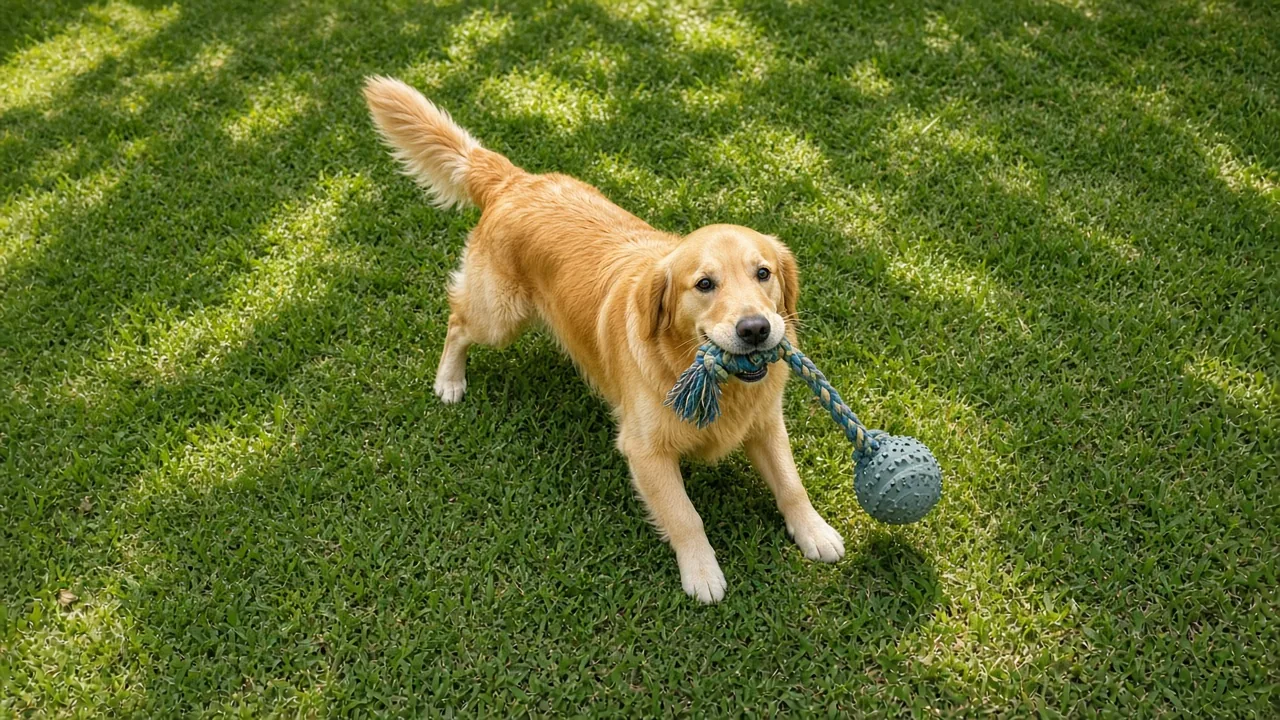
Picture this: your dog drags a squeaky plush duck across the living room, shreds it in under ten minutes, then loses interest completely. A rope and ball dog toy for interactive play solves a different problem than squeakers do — it gives your dog something sturdy enough to chew while the rope end keeps you in the game for tug and retrieve. This guide walks through how to pick one, use it safely, and know when to retire it.
What Makes a Rope and Ball Dog Toy Good for Interactive Play
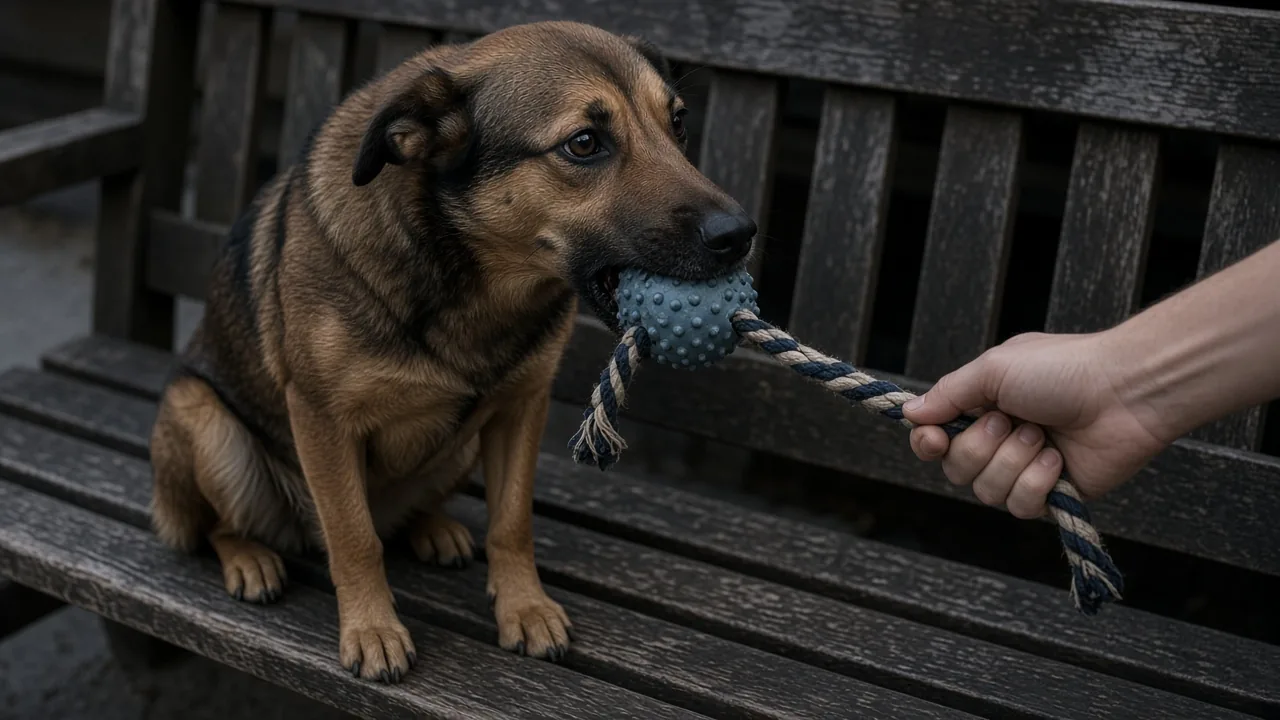
Most squeaky toys and plush animals are built for solo play. Your dog bats them around, shakes them, maybe tears into the stuffing, and you stand off to the side. A rope and ball toy works differently because the two parts have separate jobs: the ball gives your dog something firm to clamp down on and carry, while the rope end is made for you to hold.
That rope handle changes the whole dynamic. Instead of watching your dog entertain itself, you’re holding one end during a gentle tug session or tossing the toy for a retrieve. The design pulls you into the play instead of letting the toy replace you.
This matters more than it sounds. A dog that chews alone for twenty minutes gets some jaw exercise, but a dog that tugs and retrieves with you gets exercise plus attention, plus a small training opportunity every time you ask for a release. The toy becomes a tool for connection rather than a babysitter.
Are Squeaky and Plush Toys Safe Compared to Rope-and-Ball Designs
Not every toy on the shelf delivers what the packaging promises, and material matters more than most buyers realize. Squeaky balls, plush animals, and rope-and-ball toys each carry different risks depending on what they’re made from and how your dog plays.
Here’s a general comparison to use as a starting point, not a universal rule — always check the specific product’s labeling and construction.
| Toy Type | Material Hardness | Choking/Ingestion Risk | Dental Chewing Benefit | Best For |
|---|---|---|---|---|
| Soft squeaky ball | Soft rubber | Moderate to high if chewed apart | Low — too soft for real wear | Light chewers, fetch |
| Plush toy | Fabric with stuffing | Moderate — loose stuffing and small parts | None | Comfort, shredding instinct |
| Hard textured ball (small) | Firm rubber | High for large dogs, low for small dogs if sized correctly | Moderate | Small-breed dogs only |
| Rope-and-ball combo | Rope fiber plus firm ball | Low to moderate with regular inspection | Moderate, from rope fraying action | Tug, retrieve, supervised chewing |
| Plain plastic toy | Varies, often hard plastic | Can be high — some materials aren’t food-safe | Low to moderate | Generally lower safety priority |
Plain plastic toys deserve extra caution. Some are made from materials that weren’t designed with ingestion safety in mind, even though your dog will inevitably mouth and lick them. If a toy doesn’t specify food-safe or non-toxic materials, treat that as a gap in information rather than an assumption of safety.
Why Soft Squeaky Balls May Not Deliver Real Dental Benefits
A lot of squeaky balls carry claims about cleaning teeth or supporting dental health. Look closely at the material before trusting that claim. Dental wear happens through friction against a surface with some resistance — a soft rubber ball that gives way under light pressure doesn’t create that kind of friction.
Some of these soft squeakers have a bumpy or ridged surface and get marketed as treat-dispensing toys, where you smear yogurt or pureed meat into the grooves for your dog to lick out. That can work fine as an enrichment activity, but it’s a different function from dental cleaning. If a toy is soft enough for your dog to compress with a light bite, don’t count on it to do much for tartar or gum health.
Why Plush Toy Shredding Is Normal, Not a Behavior Problem
If your dog tears a plush toy apart within the first play session, that’s not a sign of poor training or an overly destructive personality. Ripping into fabric and pulling out stuffing taps into a natural chewing and foraging instinct that many dogs carry regardless of breed or age.
Scolding your dog for destroying a plush toy sends a confusing message, since the toy was never meant to survive. The more practical concern is what happens to the stuffing and squeaker afterward, not the act of shredding itself. Stay nearby during plush play so you can step in before loose stuffing or a small squeaker becomes something your dog swallows.
How to Choose a Rope and Ball Toy by Size, Age, and Chew Strength
Sizing a rope and ball toy correctly matters more than picking a specific color or style. A toy that’s right for your neighbor’s dog might be the wrong size, firmness, or rope thickness for yours.
Start with these factors:
- Body size. The ball should be too large for your dog to fully close its jaw around or swallow whole.
- Age and teething stage. Puppies in the teething window (roughly three to six months) often do better with slightly softer rope fibers that won’t hurt sensitive gums, while adult dogs can usually handle thicker, more tightly braided rope.
- Senior gum sensitivity. Older dogs may need a softer ball and a rope with less abrasive texture, since their gums and remaining teeth may be more sensitive than they once were.
- Chew strength. A dog that destroys toys quickly needs a denser, more tightly woven rope and a firmer ball than a gentle chewer.
A toy that looks durable in a product photo isn’t automatically right for your dog’s size or jaw strength. Watch how your dog interacts with a new toy in the first few sessions and adjust from there.
Why Small Dogs and Large Dogs Need Different Ball Sizes
This is one of the most overlooked safety issues with ball toys. A ball sized comfortably for a small-breed dog — something that fits snugly between its jaws — becomes a serious choking hazard in a large dog’s mouth. Large dogs have wider jaws and stronger bite force, which means a small ball can get pushed further back in the mouth or even lodged in the throat.
The reverse problem exists too: an oversized ball meant for a large-breed dog may be too heavy or bulky for a small dog to carry or grip during tug. Always check that a ball is large enough to resist being swallowed by your specific dog, not just "a dog" in general. If you have multiple dogs of different sizes in the house, don’t let the small dog’s toys sit in a shared toy bin where the large dog can reach them, and vice versa.
How to Use a Rope and Ball Toy for Bonding and Tug Play
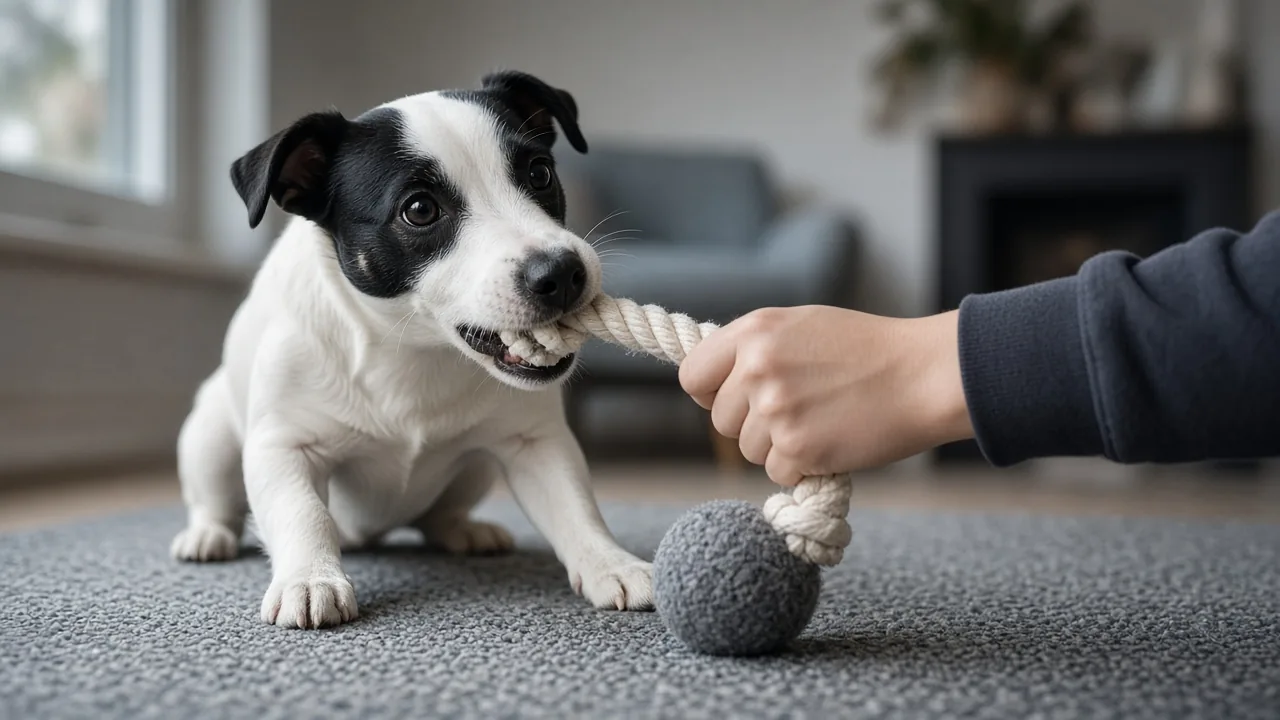
Getting the most out of a rope and ball toy depends on how you present and play with it, not just the toy’s design. Here’s a simple sequence to follow:
- Introduce the toy like prey. Move it along the ground or wiggle it side to side rather than holding it still, which triggers your dog’s natural chase instinct more effectively than a stationary toy.
- Let your dog grab the ball end. Once your dog has a solid bite on the toy, hold the rope end steady rather than yanking hard, especially during the first few sessions.
- Engage in gentle tug. Apply light, steady resistance. Avoid sudden upward jerks that could strain your dog’s neck or spine.
- Pause periodically. Stop moving the toy every so often to keep your dog thinking rather than purely reacting, which keeps the game engaging longer.
- Ask for "drop it." Use a consistent cue to end the tug and have your dog release the toy on command.
- Reward the release. Praise or offer a small treat when your dog lets go, so the release feels rewarding rather than like losing the game.
Why Teaching ‘Drop It’ Matters More Than the Toy Itself
No rope-and-ball design, no matter how well made, replaces a dog that reliably responds to "drop it." This single cue gives you control over when tug play starts and stops, which matters for safety and for preventing possessive behavior from building up over repeated sessions.
A dog that never learns to release on command may start guarding the toy, growling when you reach for it, or escalating grip intensity each time you play. Training a release cue takes repetition and patience, and a certified trainer can help if your dog struggles with it. Think of the cue as a built-in safety switch that works no matter which toy you’re holding.
Is Growling During Tug Play a Warning Sign
A low growl during an energetic tug session usually just reflects excitement and arousal, not aggression. Dogs vocalize during physical play the same way people might grunt during a workout — it’s a byproduct of effort, not a threat.
That said, pay attention to the rest of your dog’s body language alongside the sound. A relaxed, wiggly body with a growl is very different from a stiff, frozen posture with hard eye contact. If your dog’s body tenses up, ears pin back, or the growl shifts in tone and intensity, stop the game and give your dog space. When in doubt, a certified trainer can help you read your individual dog’s signals more accurately.
How Often to Check a Rope and Ball Toy for Wear and Damage
Rope and ball toys hold up reasonably well compared to plush or soft squeaky toys, but they aren’t immune to wear. Build a habit of checking the toy before and after each play session, especially if your dog chews or tugs aggressively.
Look for these warning signs:
- Frayed rope strands that have come loose or separated from the main braid
- Cracks or deep bite marks on the ball surface
- Loose fibers that your dog could pull free and swallow
- A ball that’s become soft, sticky, or misshapen from repeated chewing
Retire the toy immediately if you notice any of these. A frayed rope might seem minor, but loose strands can wrap around teeth or get swallowed as linear material, which is a different and often more serious risk than a solid object. Don’t wait for the damage to get worse before replacing the toy — the cost of a new toy is much lower than the cost of an emergency vet visit.
How to Clean a Rope and Ball Dog Toy
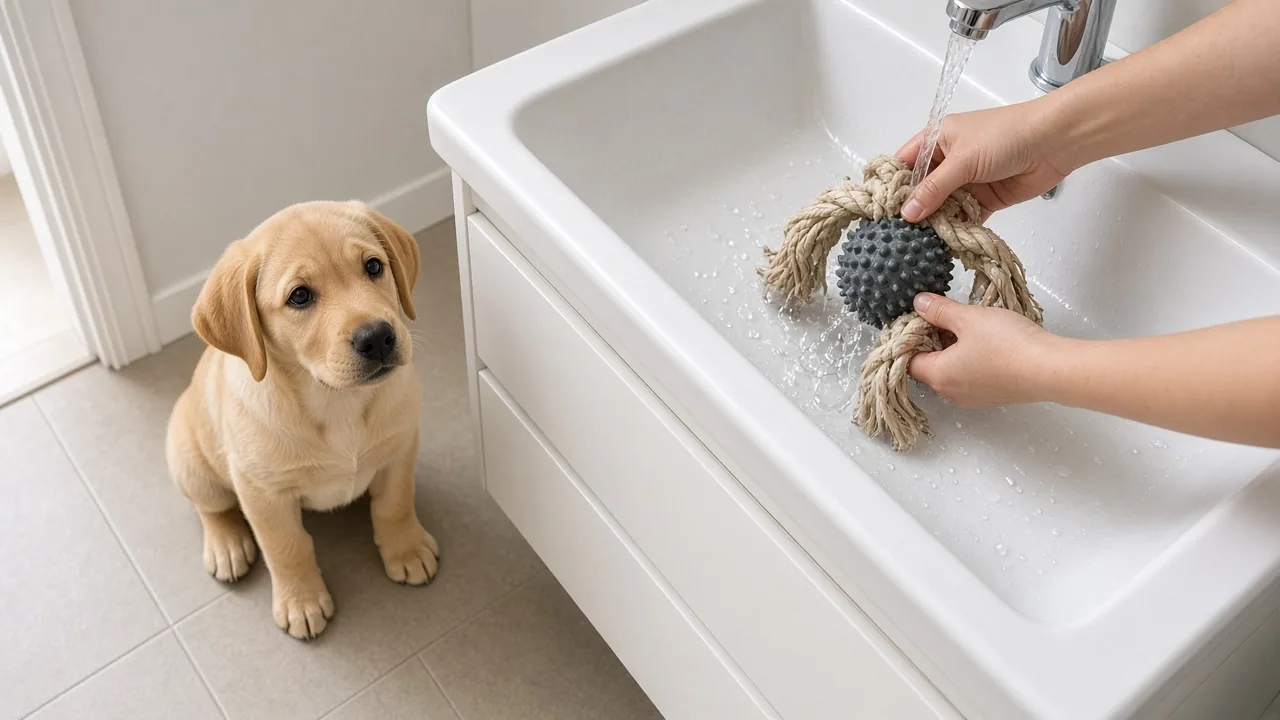
Rope and rubber ball components need different cleaning approaches because they hold moisture and odor differently.
For the rope portion, hand wash with mild soap and warm water every one to two weeks, or more often if your dog drools heavily or plays outside in dirt. Rope fiber absorbs water and dries much slower than rubber, so squeeze out excess moisture and let it air dry fully before giving it back to your dog — a damp rope left in a toy bin can develop mold.
For the hard rubber ball section, wipe it down or rinse it under running water after outdoor play, and a weekly wash with soap and water is usually enough for indoor use. If the ball has deep grooves or texture, use a small brush to work out trapped dirt or residue, since bacteria can build up in crevices over time.
What to Do When Your Dog Ignores Rope-and-Ball Toys
Some dogs simply don’t take to a rope and ball design right away, and that doesn’t mean something is wrong with your dog or the toy. A few common patterns come up often enough to be worth troubleshooting.
If your dog ignores every structured toy but goes straight for plush toys to shred and pull out the stuffing, that’s a texture and activity preference, not pickiness. One owner found her dog had zero interest in anything except digging stuffing out of soft toys, no matter how many other options she tried. Rather than buying more toys hoping one will click, try offering a plush toy specifically for supervised shredding sessions and save the rope-and-ball for active tug and retrieve time, so each toy has its own role.
Other dogs actively dislike squeakers. One owner described how her dog lost all interest in a new toy the moment it squeaked, becoming visibly less engaged rather than more excited. If your dog shows the same reaction, look for a rope and ball toy without a squeaker built in, since the sound itself may be the problem rather than the toy’s shape or material.
If your dog still won’t engage even with a quiet rope-and-ball toy, try the prey-style presentation described earlier instead of just dropping the toy on the floor. Many dogs respond to movement and your own enthusiasm far more than to the toy sitting still. A toy that stays interesting usually depends more on how you use it than on which toy you bought.
Rope and Ball Toy FAQs
Is it safe to let kids join tug-of-war with the dog’s rope toy?
Supervised tug with older kids can work if your dog has a reliable "drop it" cue and the child understands not to grab at the toy suddenly or scream if the dog growls. For younger children or dogs that get overly aroused during tug, it’s safer to have an adult hold the toy instead.
Are rope and ball toys good for teething puppies?
Many puppies benefit from a softer rope version during the teething window since it offers some relief for sore gums, but keep sessions gentle and short. Avoid stiff, heavily braided rope for very young puppies until their adult teeth come in and their jaw strength increases.
How many toys does a dog actually need?
There’s no fixed number, but having two or three toy types — one for chewing, one for tug or fetch, and one for shredding or enrichment — usually covers most dogs’ needs without creating a cluttered toy bin. Rotating which toys are available week to week often keeps your dog more interested than leaving every toy out all the time.
Pay attention to whether your dog gravitates toward tugging, fetching, or shredding before buying another toy, since that preference tells you more than any product description. Check rope and ball toys regularly for fraying, cracked plastic, or loose fibers, and retire anything showing real wear rather than waiting for a problem. No toy, no matter how well designed, replaces the time you spend actually playing with your dog.
This article is for general information only and is not a substitute for advice from your veterinarian. Always supervise your pet with a new toy, and replace any toy that is damaged or small enough to swallow.

Contributor
admin
Continue reading
All stories
DOG TOYS · 10 October
Are “Indestructible” Dog Toys Actually Durable? What Heavy Chewers Prove
DOG TOYS · 10 October
Best Puzzle Toys for Puppies That Hide Treats, by Age and Skill
DOG TOYS · 10 October
Responses
Moderated discussion