DOG TOYS
How to Teach Dog to Play Gently with Plush Toys, Step by Step
A step-by-step method for teaching dogs to handle plush toys gently, using a tug-to-plush handoff drill, consistent timeouts, and short structured sessions.
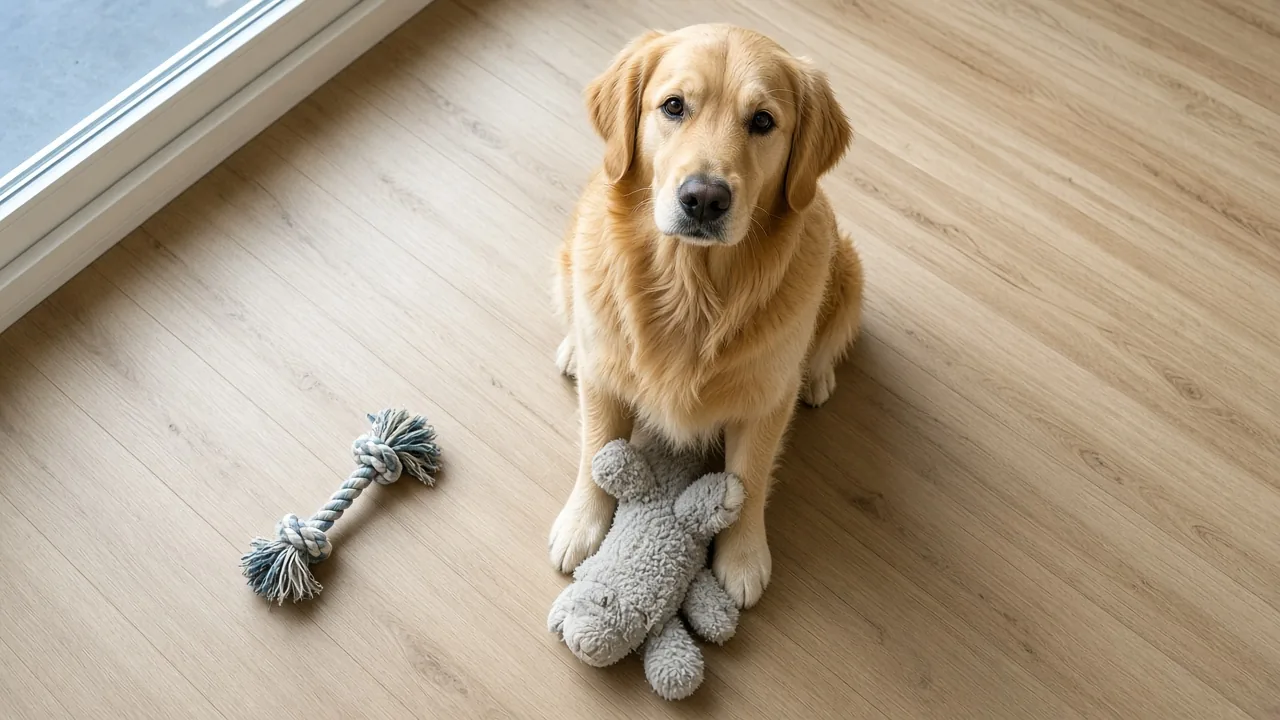
A plush toy that gets shredded within days is not a sign of a "destructive" dog. It usually means the toy was handed over with no structure at all. Teaching a dog to play gently with plush toys is a trainable skill, built through short, repeated sessions that teach your dog to treat the toy carefully instead of ripping into it the second it lands on the floor. The method below walks you through exactly how to run those sessions.
Why Dogs Shred Plush Toys Instead of Playing Gently
Most plush toy destruction starts with unsupervised access. When a dog finds a soft, squeaky toy lying around with no one directing the play, the natural response is to grab, shake, and tear rather than handle it with any care. There’s no cue telling the dog what "gentle" even looks like, so excited grabbing becomes the default.
Toys with squeakers built in make this worse. The sound itself is stimulating, and for many dogs it triggers the same instinct that drives them to "kill" a squeaky toy as fast as possible. Add free access to the mix, and a plush toy that could last indefinitely ends up with a torn seam and exposed stuffing within a week. None of this means your dog has a behavior problem that needs fixing on its own — it usually just means the toy has never been introduced as something that comes with rules.
How Toy Category Confusion Makes Plush Play Worse
Part of the problem comes down to how owners sort their dog’s toys. One common framework splits toys into four groups: chew toys, dental toys, interactive toys, and plush toys. A different approach groups toys into three categories instead: interactive, comfort, and puzzle.
These two systems don’t map onto each other perfectly, and that mismatch matters for plush toys specifically. The three-category version doesn’t call out plush toys on their own, which makes it tempting to lump them in with comfort toys, the kind meant to be left out for a dog to chew on alone. Chew toys and comfort toys hold up fine with that kind of free access; durable rubber and silicone are built for it. Plush toys are not. They behave more like interactive toys that need an owner to control when they come out and how long they stay out.
When a dog is allowed to treat a plush toy the way it treats a chew toy — left on the floor, no supervision, no end point — the plush toy simply isn’t built to survive that. Shredding isn’t really a toy problem. It’s a category problem, and fixing it starts with handling plush toys the way you’d handle any other interactive game.
How to Teach Dog to Play Gently with Plush Toys: The Step-by-Step Method
The training sequence below treats plush play as a game with rules, not a free-for-all. You start with a toy your dog already knows how to grab with excitement — a tug toy — and use it to teach the cues you’ll need. Then you swap in the plush toy and apply the same structure, correcting any rough handling the moment it shows up.
How to Set Up the Session Before You Start
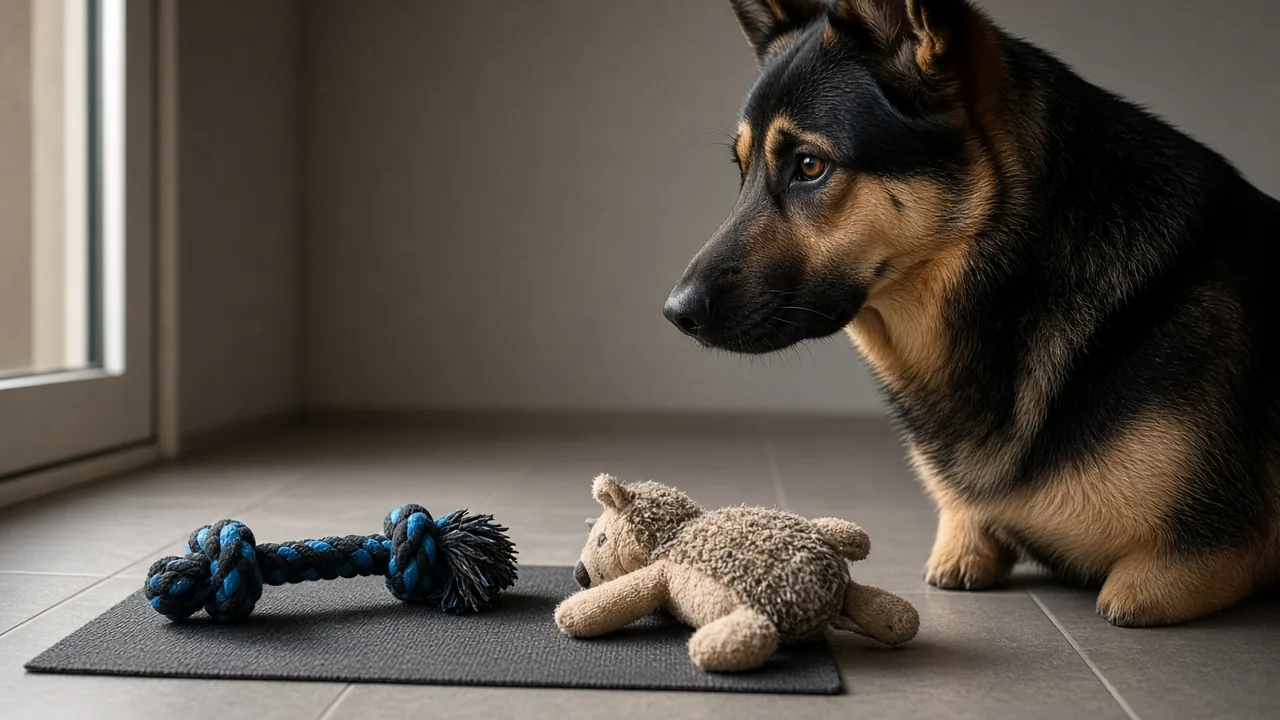
Pick a quiet space with minimal distractions before you begin. A busy living room with other pets, kids, or background noise makes it harder for your dog to focus on the cues you’re teaching.
Have both toys ready before you call your dog over:
- A tug toy your dog already enjoys
- The plush toy you want your dog to learn to handle gently
Keep the session short from the start. Five to ten minutes is long enough to make progress without pushing your dog into overstimulation, which is exactly the state that leads to grabby, destructive behavior in the first place.
How to Run the Tug-to-Plush Handoff Drill
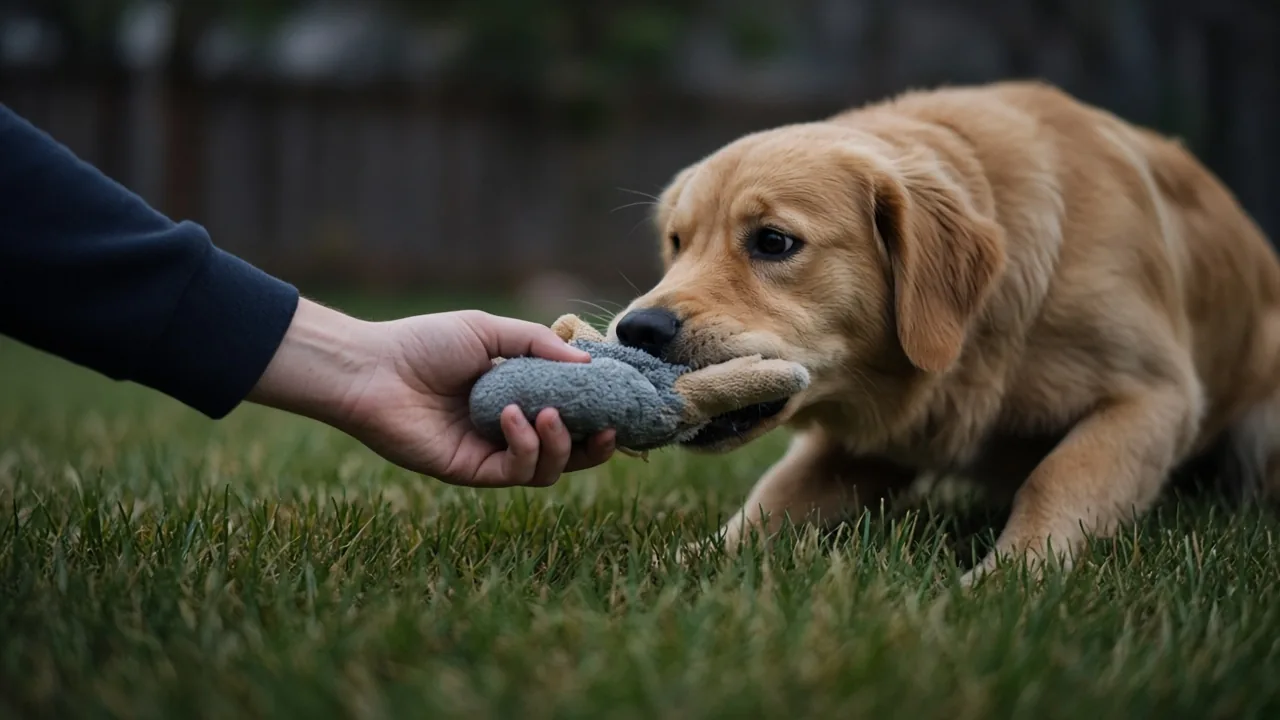
This drill has a clear rhythm, and repeating that rhythm is what teaches the behavior. Walk through it in order:
- Present the tug toy and give the cue "take it" before your dog is allowed to grab it.
- Let your dog tug for about a minute — no longer.
- Cue "drop it" and have your dog release the toy completely.
- Set the tug toy aside and bring out the plush toy.
- Hand over the plush toy as though it’s fragile, something your dog has to handle carefully rather than snatch.
- Correct any rough grabbing immediately — a firm, calm response that makes it clear the plush toy isn’t a tug toy.
- Cycle back to step 1 and repeat several times within your five- to ten-minute window.
The point of alternating between the two toys is contrast. Your dog learns that the tug toy is for rough play on cue, while the plush toy calls for a completely different kind of handling. Over repeated sessions, that distinction starts to carry over to plush toys in general, not just the one used in training.
What to Do When Your Dog Grabs or Bites Too Hard
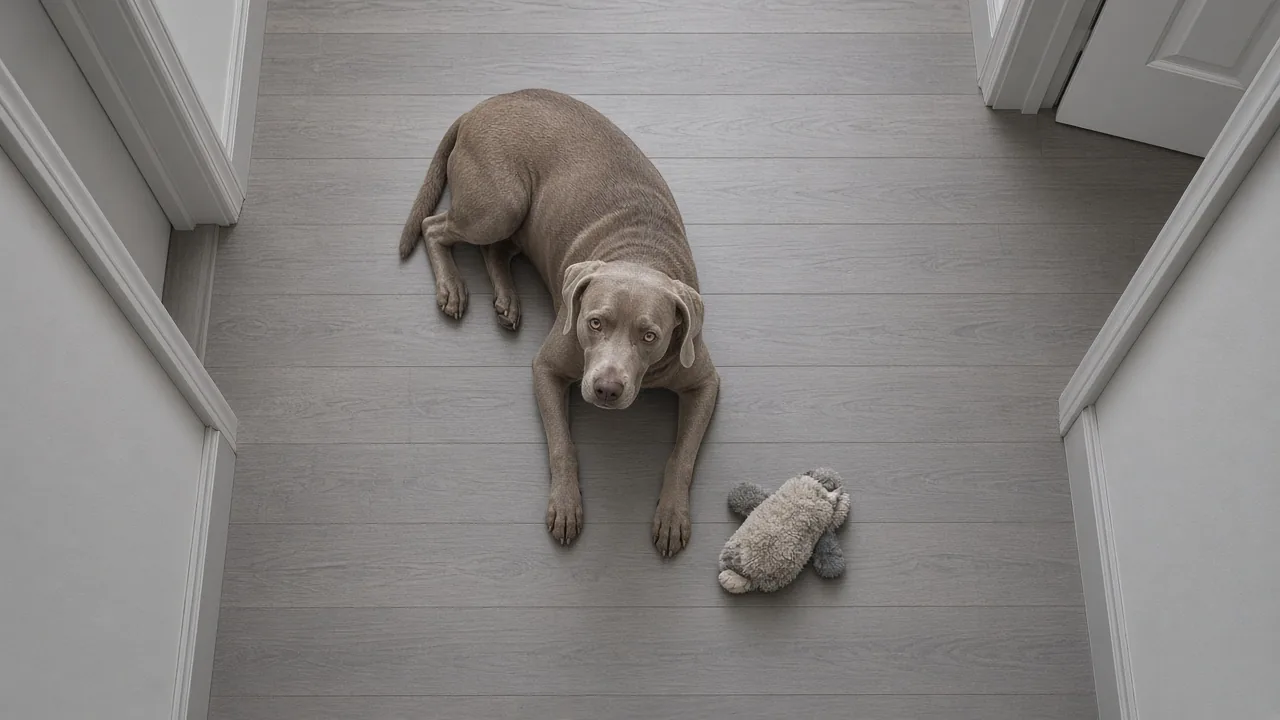
Some dogs will grab too hard or ignore "drop it" entirely, especially early on. When that happens, use a brief down-position timeout: ask your dog to lie down and hold that position for about five seconds before the game resumes.
This isn’t a punishment in the harsh sense. It’s an instructive pause that interrupts the excitement and resets your dog before trying again. One correction rarely teaches the lesson on its own — what works is applying the same timeout every single time the rule gets broken, so your dog learns the pattern rather than guessing which attempt earned the consequence.
Consistency matters more than any single "perfect" repetition. A dog that gets the timeout sometimes and gets away with rough grabbing other times will struggle to connect the behavior to the result.
How Long and How Often to Practice Gentle Plush Play
Stick to five or ten minutes per session. Longer sessions tend to wear down a dog’s focus and increase the odds of overexcitement, which works against the entire point of the exercise.
End every session the same way, with a clear closing cue such as "all done, thank you," then put both toys away. That consistent ending helps your dog understand the game has a defined start and stop, rather than treating plush toys as something always available to grab.
Repeat this short session regularly — daily or every other day works better than one long marathon attempt. Gentle handling is a habit built through repetition, not a lesson your dog absorbs in a single afternoon.
Why Squeaky Toys and Free Access Undermine This Training
One owner who removed the squeaker from a tug toy noticed a clear drop in overexcitement during play. That lines up with a broader pattern: sound can ramp a dog up fast, and a dog that’s already amped up is far more likely to grab and shred rather than handle a toy carefully.
That said, sound isn’t universally bad for every toy type. Some interactive toys are designed around sound on purpose — toys built to mimic prey use noise specifically to trigger a dog’s chase-and-catch instinct, and that’s the intended use case. The difference is context. A squeaker on a toy meant for controlled, owner-led play can work in your favor. A squeaker on a plush toy left out for free access just adds fuel to a behavior you’re trying to prevent.
If your dog tends to go from zero to frantic the moment a toy squeaks, consider keeping squeaky toys out of early plush training sessions altogether, or choose a quiet tug toy to start. You can reintroduce sound later once your dog has a solid handle on gentle handling without it.
How to Manage Plush and Other Toys So Training Sticks
Training only sticks if your dog’s everyday access to toys matches what you’re teaching in sessions. Plush toys fall into the same bucket as other interactive toys: they need to come out when you initiate play and go away when the session ends. Leaving a plush toy on the floor between sessions undoes the structure you just built.
Chew toys and comfort-style toys are different. These are generally fine to leave out for independent use, since they’re built to withstand sustained, unsupervised chewing in a way plush toys aren’t. One source even recommends keeping chew toys available around the clock. Another source takes a narrower view, suggesting comfort toys work best reserved for specific situations like crate time or alone time, rather than scattered through shared living spaces. Either way, the underlying logic holds: toys meant for independent chewing can stay accessible, while toys meant for structured play — plush included — need you to control the start and stop.
If your dog currently has free access to a pile of plush toys, pulling most of them away and reintroducing just one or two through structured sessions is a reasonable way to reset the pattern.
Is Tug-of-War Safe to Use During Plush Toy Training
A persistent claim floating around is that tug-of-war is inherently dangerous and shouldn’t be part of training at all. In practice, many trainers and dog owners find structured tug play to be a useful, low-risk tool — the key word being structured.
The version used in this method isn’t unregulated roughhousing. It has a clear start ("take it"), a clear stop ("drop it"), and a short duration of about a minute per round. That structure is what makes it useful here: it gives your dog practice following cues during an exciting activity, which is exactly the skill you need when you hand over something fragile like a plush toy a moment later.
If your dog struggles to release the tug toy on cue even after repeated practice, that’s worth addressing on its own before relying on tug as a warm-up for plush training. A dog that can’t reliably drop a tug toy isn’t ready to use tug as a bridge into gentler handling.
How to Check Plush Toys for Wear and When to Replace Them
Even a plush toy chosen specifically for its durability, including inexpensive ones in the two-to-three-dollar range, is meant to last — not forever without checking, but well beyond a few play sessions if it’s handled correctly. Regular inspection still matters, because stitching and stuffing wear down with use no matter how gently a dog plays.
Check for these signs before and after each session:
- Loose or separating seams
- Stuffing poking through fabric
- A squeaker that’s gone silent or come loose
- Small parts (eyes, bows, tags) that are cracked or hanging by a thread
If you spot any of these, take the toy away immediately. A toy with exposed stuffing or a loose squeaker becomes a choking and swallowing risk fast, even with a dog that’s otherwise playing gently. Replace it rather than trying to patch it and send it back into rotation.
How Dog Size, Age, and Bite Strength Change the Training
The same drill doesn’t play out identically across every dog, and it helps to adjust your expectations based on size and bite strength rather than assuming one pace fits all.
Small dogs and toy breeds often approach plush toys more cautiously, but a tiny mouth can still wear down a toy quickly if it’s the wrong size. A plush toy sized for a much larger dog tends to get dragged and chewed at the seams rather than carried properly, which speeds up damage regardless of how gently your dog is trying to play. Choose a plush toy close to your dog’s head size, and expect sessions to go smoothly — small dogs often pick up "drop it" and "take it" fairly quickly once the toy’s value is clear.
Medium and large dogs typically need closer attention to force rather than enthusiasm. A large or giant breed dog — generally one over 50 to 70 pounds — can crush a squeaker or split a seam in a single hard bite even while technically following the rules of the drill, simply because of the physical force involved. For these dogs, check seams and stuffing after every session rather than every few sessions, and don’t assume a toy that survived ten rounds of play will survive the eleventh.
Age matters too. Puppies in the teething stage, roughly three to six months old, chew harder and less predictably than adult dogs, which is one reason shorter sessions matter more for them. Adult dogs with a long history of unsupervised rough play may need more repetitions before gentle handling becomes automatic, since a habit built over months doesn’t reverse in a single session. Senior dogs, particularly those with dental sensitivity or missing teeth, often do well with this kind of structured, lower-force play — though if a senior dog suddenly avoids toys altogether, that’s a pattern worth mentioning to your veterinarian rather than treating as a training gap.
How to Adjust This Method for Teething Puppies and Multi-Pet Homes
Puppies in the teething stage benefit from shorter, more frequent sessions than adult dogs. Their mouths are sore, their impulse control is still developing, and asking for a full ten minutes of focused gentle play may be more than they can manage. Three to five minutes, repeated more often throughout the day, tends to work better than one longer attempt.
In homes with more than one dog, plush toy sessions need closer supervision. Two dogs competing over the same soft toy can escalate quickly from excited grabbing to resource guarding, which isn’t something this training method is designed to address on its own. Run sessions with one dog at a time when possible, and if you notice stiffening, growling, or guarding behavior around toys, that’s a situation worth discussing with a certified trainer rather than working through alone.
Frequently Asked Questions About Teaching Dogs to Play Gently with Plush Toys
Can every dog learn to play gently with plush toys?
Most dogs can improve significantly with consistent practice, though individual temperament, breed drive, and age all affect how quickly and how far that progress goes. Some dogs naturally have a softer mouth and pick this up fast. Others, particularly high-drive breeds or dogs that have practiced rough handling for a long time, take longer and may never fully match a naturally gentle dog’s handling.
How fast should I expect to see progress?
There’s no fixed timeline, since it depends on the dog and how consistently sessions run. Many owners notice a difference within the first few sessions if the drop-it and timeout steps are applied consistently every time.
What if my dog never fully stops shredding plush toys?
Some dogs may always play more roughly than others, even with training. If that’s the case for your dog, it may make more sense to accept that plush toys aren’t the right fit for unsupervised play and focus instead on toy types your dog naturally handles well, while keeping plush sessions short, supervised, and structured.
Watch how your own dog actually plays before building a routine around plush toys — some dogs are chewers, some are chasers, some live to fetch and retrieve, and matching the training to that preference makes the whole process go faster. Whatever toys end up in rotation, keep checking them for wear on a regular basis, so training time doesn’t go to waste on a toy that’s already falling apart underneath the fun.
This article is for general information only and is not a substitute for advice from your veterinarian. Always supervise your pet with a new toy, and replace any toy that is damaged or small enough to swallow.

Contributor
admin
Continue reading
All stories
DOG TOYS · 11 October
Why Do Dogs Cry at Squeaky Toy Sounds? Excitement or Fear Explained
DOG TOYS · 10 October
Are “Indestructible” Dog Toys Actually Durable? What Heavy Chewers Prove
DOG TOYS · 10 October
Responses
Moderated discussion