SMALL PETS & BIRDS
Free DIY Chew Toys for Rabbits: Pine Cones, Twigs, and More
Pine cones, twigs, grape stems, and cardboard tubes make free DIY chew toys for rabbits in minutes. Learn how to prepare each one safely and when to replace them.
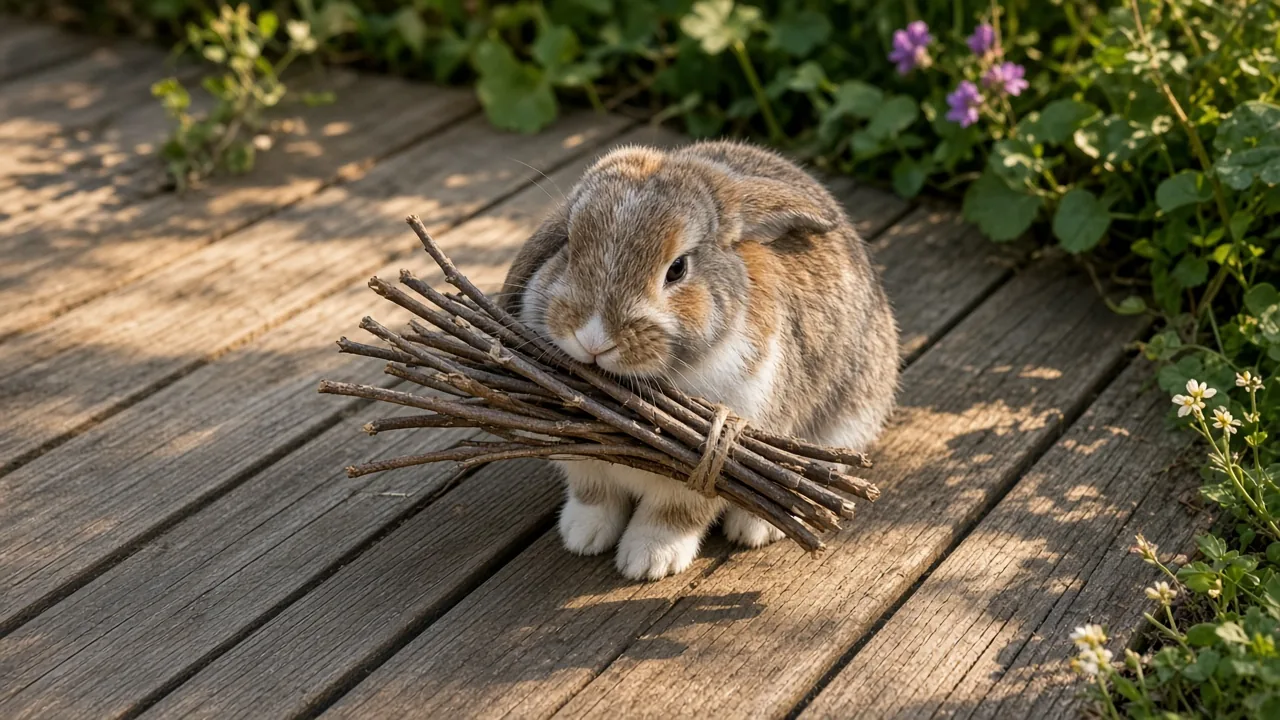
If your rabbit needs more to gnaw on, pine cones, twigs, grape stems, and cardboard tubes from around your house make free DIY chew toys for rabbits in minutes. Each material offers a different texture and chew intensity, so you can match what you offer to how your rabbit actually likes to chew. None of these replace hay, but they give your rabbit something safe to work on between meals.
Why Rabbits Need to Chew and When Free Materials Are Enough
A rabbit’s teeth grow continuously throughout its life. Without enough to wear them down, teeth can become overgrown and uncomfortable, which is one reason rabbits reach for furniture, baseboards, or cage bars.
Hay should do most of this work. The constant side-to-side grinding motion rabbits use to eat hay wears teeth down naturally, and it also keeps their digestive system moving. Chew toys made from household materials are a supplement to that process, not a substitute for it.
Young rabbits, especially those still growing, tend to chew almost constantly as they explore their environment, so you may notice free toys disappearing faster in a baby bunny’s cage than in an adult rabbit’s. Older rabbits often settle into steadier, more predictable chewing habits, and some slow down on chewing altogether once they’re well past a year old. Either pattern is normal; what matters more than age is whether the chewing stays destructive toward things you don’t want chewed.
If your rabbit already gets unlimited fresh hay and still chews on things it shouldn’t, free toys like the ones below can help redirect that behavior. But if hay intake is low, start there before adding more toys to the mix.
Are Pine Cones Safe Chew Toys for Rabbits
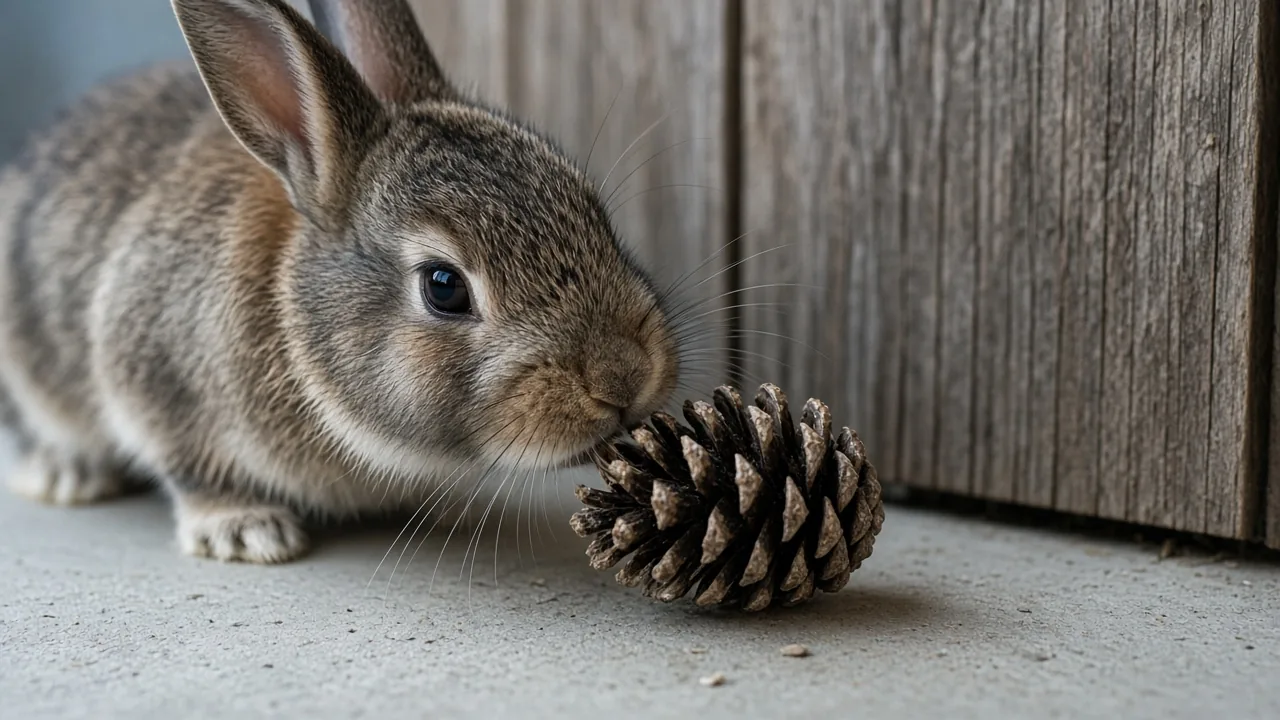
Pine cones are one of the easiest free chew toys to offer. If you have access to pine trees, you can collect cones, brush off loose dirt, and hand them straight to your rabbit with no other prep needed.
That said, not every rabbit takes to them right away. One rabbit owner found that after bringing home a batch of pine cones, her rabbit mostly ignored them for the first year before showing any real interest. This kind of individual preference is common with natural chew items, so don’t assume a pine cone is a failure just because your rabbit sniffs it and walks away.
To boost appeal, try tucking a sprig of fresh parsley into the gaps between the cone’s scales, or sprinkle a few flakes of dried cilantro over it. The scent can draw curious rabbits in for a first bite, and once they discover the texture underneath, many keep coming back on their own.
A few basics for pine cone safety:
- Only use cones that are fully dried out and free of mold or sap buildup
- Skip cones collected near roads or treated lawns, since they can carry residue
- Watch the first chew session to see how your rabbit handles the woody scales
How to Turn Twigs Into a Safe Bundled Chew Toy
Twigs from untreated trees are another no-cost option, and rabbits can chew them directly without any preparation. Thinner twigs tend to work better than thick branches because they’re more brittle and easier for small teeth to bite through cleanly.
Bundling several twigs together with twine turns a handful of sticks into a toy that lasts longer than any single twig would on its own. Here’s a simple way to put one together:
- Collect a handful of thin, dry twigs of similar length
- Line them up side by side into a bundle about the width you want your rabbit to grip
- Tie twine tightly around one end of the bundle
- Tie a second knot around the other end so the bundle holds its shape
- Offer the bundle and watch to confirm your rabbit chews the wood rather than pulling at the twine
Trim away any twine your rabbit manages to loosen, since stray string can pose a tangling or swallowing risk if left dangling.
Should You Disinfect Twigs Before Giving Them to Your Rabbit
Twigs picked up outside can carry dirt, bird droppings, or other residue you can’t always see. Rinsing and letting them dry fully, or giving them a brief disinfecting soak before offering them, reduces that exposure.
This step isn’t strictly required if you’re confident about where the twigs came from, but it’s a reasonable precaution, especially if you gathered them from a yard that gets foot traffic from other animals. Letting twigs dry completely afterward also helps prevent mold from forming once the toy is in your rabbit’s cage.
How to Make a Grape Stem Chew Toy From Leftover Stems
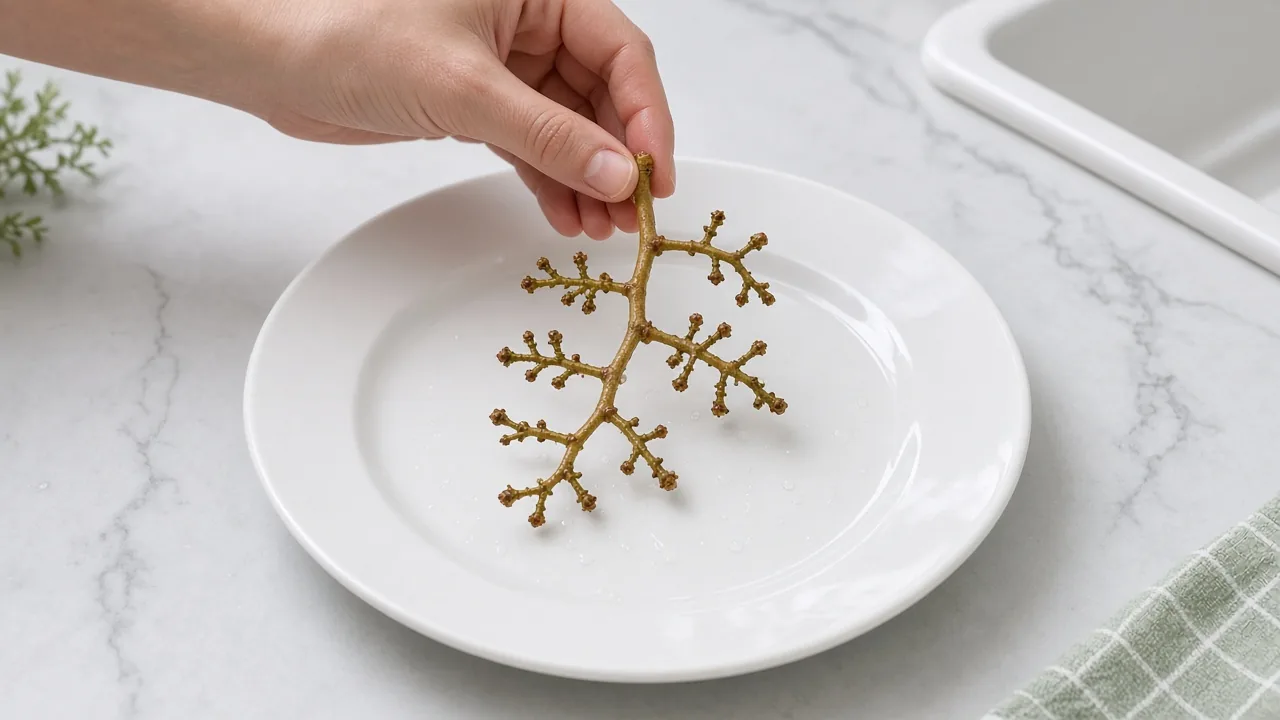
If you buy seedless grapes, you likely already have a free chew toy source sitting in your refrigerator. Once you’ve eaten the grapes, the stem that’s left behind can go straight to your rabbit.
To prepare one:
- Remove every grape from the stem, checking carefully for any that are still attached
- Rinse the stem to remove surface residue
- Offer it fresh, or set it aside to air dry for a day or two
Fresh stems carry a mild grape scent that some rabbits find more appealing, while dried stems take on a crunchier texture that other rabbits seem to prefer. There’s no clear rule for which one your rabbit will like better, so it’s worth trying both and seeing which gets more interest.
Always use seedless grapes for this. Seeds left on a stem are a choking risk, and they offer no benefit as a chew item.
Cardboard Tube Toys: The Easiest Free DIY Chew Toy for Rabbits
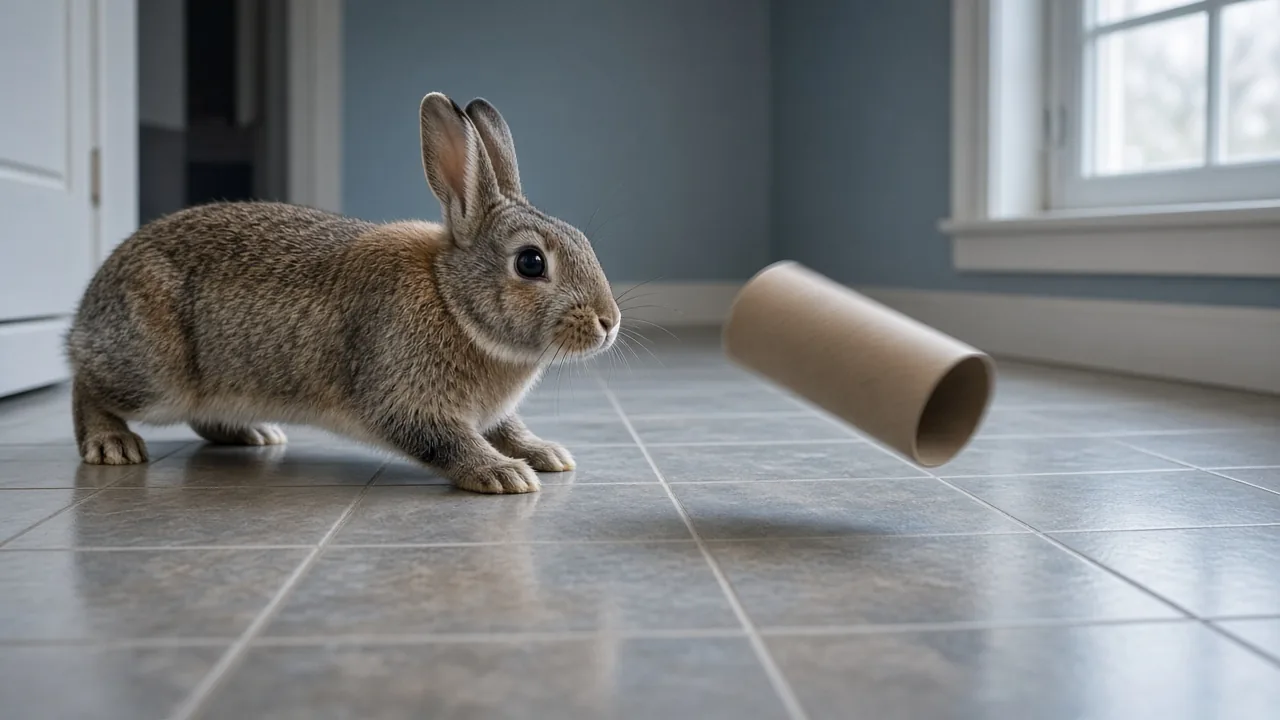
The cardboard tube left over from a roll of paper towels or toilet paper is probably the lowest-effort chew toy on this list. There’s no cleaning, drying, or outdoor collecting involved, just an empty tube you’d otherwise throw away.
You can hand the tube over as-is, or cut it into smaller pieces or shapes with scissors first. It doesn’t need to look neat. Many rabbits spend extended stretches of time chewing, flattening, and tossing these tubes around their space, which makes them a solid option for keeping a rabbit occupied during the day.
Stuffing a tube loosely with hay can add extra value, encouraging your rabbit to pull hay through the tube while chewing on the cardboard itself.
Comparing Free Chew Toy Materials: Durability, Chew Intensity, and Cleanup
Each material suits a slightly different chewing style. This table can help you decide where to start.
| Material | Durability | Chew Intensity Needed | Cleanup | Best For |
|---|---|---|---|---|
| Pine cones | Moderate, lasts several sessions | Light to moderate | Minimal, discard when flattened | Rabbits who like picking apart scales |
| Twig bundle | High if twigs are thick, lower if thin | Moderate to heavy | Low, just untie and replace twine | Rabbits with strong chewing habits |
| Grape stems | Low, consumed quickly | Light | None, fully edible | Rabbits that enjoy scent-driven chewing |
| Cardboard tube | Low to moderate | Light to moderate | Minimal, toss when shredded | Rabbits who like tossing and flattening |
None of these materials will hold up the way a hard wooden toy might, which is part of why they’re free. Expect to replace all of them more often than a store-bought chew toy.
Which Free Chew Toys Work Best for Which Rabbit
Breed size and chewing style both play into which of these materials is worth your time. A larger breed, like a Flemish Giant, generally has stronger jaws and can work through a twig bundle or pine cone faster than a dwarf breed, so you may need to offer these in larger quantities or alongside more durable twig bundles to keep up. Smaller or dwarf rabbits often do fine with the same materials in smaller portions, and some seem to prefer the lighter chewing involved in working through grape stems or cardboard rather than tackling thicker twigs.
Rabbits recovering from dental work, or those with known tooth alignment issues, aren’t always good candidates for harder materials like dense twig bundles until a veterinarian has weighed in. Softer options like cardboard tubes or fresh grape stems put less strain on teeth that are already sensitive. On the other end, a rabbit with no dental issues and a strong chewing drive may barely notice a cardboard tube and get more lasting value from pine cones or bundled twigs.
How to Choose the Right DIY Chew Toy for Your Rabbit
Rather than picking one material and sticking with it, think about three things: how hard your rabbit chews, how much space it has, and how bored it tends to get.
A rabbit that chews aggressively will go through grape stems in seconds but may get real value out of a twig bundle, since the bundled sticks take longer to work through than a single twig alone. A rabbit that’s a lighter chewer might be perfectly happy with pine cones or a cardboard tube.
Cage size matters too. If your rabbit’s enclosure is on the smaller side, boredom-driven chewing is more likely, and that’s a sign to focus on toys that take longer to destroy, like a bundled twig toy, alongside more time out of the cage.
If your rabbit seems to lose interest in a toy within a day or two, rotating between two or three materials at once often works better than offering the same one repeatedly. Boredom with a toy isn’t the same as the toy being unsafe, it’s just a sign your rabbit wants variety.
Safety Checks: What to Inspect Before and During Chew Time
Supervise the first time your rabbit chews on any new material, whether it’s a pine cone, a twig bundle, or a cardboard tube. This lets you see how your rabbit handles it before leaving it unattended.
During and after chewing, check for:
- Splintering wood that creates sharp edges rather than soft, chewed-off bits
- Visible mold, which can appear on twigs or pine cones that got damp and didn’t dry out fully
- Loose twine fibers from a twig bundle that your rabbit could ingest
- Small cardboard or twig fragments broken off in a size your rabbit could swallow whole
If you notice any of these, remove the toy. It’s not worth waiting to see if the issue gets worse.
How Often to Replace Homemade Rabbit Chew Toys
Natural materials wear down faster than most manufactured chew toys, and they lose their safety margin quickly once that happens. A pine cone that’s been flattened into loose, sharp fragments, or a twig bundle with splintered ends, should be replaced right away rather than left in the cage "a little longer."
As a general guide:
- Replace pine cones once the scales are mostly chewed off or starting to splinter
- Replace twig bundles when any twig snaps into sharp pieces or the twine comes loose
- Grape stems typically get eaten through in one or two sessions, so there’s little to monitor beyond mold if left too long
- Replace cardboard tubes once they’re flattened into small chewed pieces that could be swallowed
Since none of these toys cost anything, there’s no real reason to stretch their lifespan past the point where they’re still safe.
Is Your Rabbit Chewing the Cage Out of Boredom or a Deeper Issue
Chewing on cage bars isn’t always a sign that your rabbit needs more chew toys. It can also point to boredom, a cage that feels too small, hormonal changes, or stress.
Before assuming more chew toys will fix the behavior, work through a few questions:
- Is your rabbit getting unlimited fresh hay, or just a measured portion?
- Does the cage give enough room to move, stretch, and turn around comfortably?
- Is your rabbit getting daily time out of the cage to explore?
- Has anything changed recently in the household that might be stressful?
If hay and space check out but the cage-chewing continues, adding a chew toy like a papaya chew block alongside your other options can help, but it works best as one part of a broader fix rather than the whole solution. One rabbit owner noted that cage-chewing got noticeably worse during stretches when their rabbit was kept in the cage longer than usual, which lines up with boredom and limited movement being real contributing factors, not just a lack of something to gnaw on.
When Cage-Chewing Signals a Health Problem That Needs a Vet Visit
Some signs mean it’s time to call your veterinarian rather than add another chew toy. Watch for drooling, a noticeable drop in appetite, weight loss, or teeth that look misaligned or overgrown.
These symptoms can point to dental problems that chew toys alone won’t resolve, and they may need professional evaluation and treatment. If you notice any of them, don’t wait to see if more enrichment helps first.
Other Free and Low-Cost Toy Ideas From Rabbit Owners
Chew toys aren’t the only free enrichment option. Rabbit owners have found plenty of ways to repurpose household items into toys that cost nothing beyond what you’d already throw away.
A few ideas worth trying:
- An old T-shirt, which rabbits can tug, drag, and toss around
- A cardboard box with a cutout doorway, which doubles as a hideout and a chew target
- Strips of paper braided together into a rope-like toy
- An old sock stuffed loosely with hay and a few dried fruit pieces
One creative version of this came from a classroom setting, where an Amazon shipping box got cut-out windows and a door to turn it into a makeshift rabbit house. Keep in mind that rabbits sometimes find their own "free toys" with less desirable results. One owner described coming home to a large bare patch chewed into the carpet, which ended up costing part of a rental deposit. Giving your rabbit enough approved chew options can help steer that instinct toward something you don’t mind losing.
As with any free material, these household toys deserve the same scrutiny you’d give a pine cone or twig bundle. Pull off any loose threads from an old T-shirt before handing it over, remove staples or tape from cardboard boxes, and check braided paper strips for small pieces that could come loose and end up swallowed.
Frequently Asked Questions About Free DIY Chew Toys for Rabbits
Do all rabbits like pine cones?
Not necessarily. Interest varies by individual rabbit, and some show little curiosity about pine cones for a long time before eventually trying them. If your rabbit ignores one, try adding parsley or cilantro, or move on to a different material.
How do I stop my rabbit from chewing on furniture or baseboards?
Offering appealing alternatives like twig bundles or cardboard tubes in the same area your rabbit tends to chew can help redirect the behavior. Pairing this with enough hay and daily time outside the cage addresses the underlying reasons rabbits chew in the first place.
Are DIY treats safe for rabbits?
Treats made from rabbit-safe ingredients, like small amounts of fresh herbs or dried fruit, can work as occasional additions, but they shouldn’t replace hay as the core of the diet. Stick to known rabbit-safe foods and keep portions small.
Can I mix different free chew toys in the cage at once?
Yes, and rotating a few materials often keeps a rabbit more engaged than offering just one option repeatedly.
Watch how your rabbit prefers to chew, dig, or toss toys, offer a rotating mix of free materials, and swap out anything that looks worn before it becomes a hazard.
This article is for general information only and is not a substitute for advice from your veterinarian. Always supervise your pet with a new toy, and replace any toy that is damaged or small enough to swallow.

Contributor
admin
Continue reading
All stories
SMALL PETS & BIRDS · 10 October
How to Tame a New Hamster Without Getting Bitten: A Patient Guide
SMALL PETS & BIRDS · 10 October
Bottomless Hamster Hideouts: How to Clean a Hamster Hideout Without a Bottom
SMALL PETS & BIRDS · 10 October
Responses
Moderated discussion