DOG TOYS
How to Choose Puzzle Toys for Dogs by Difficulty Level
A practical guide to matching puzzle toy difficulty to your dog's skill level, with signs of boredom versus frustration and tips for safely stepping up the challenge.
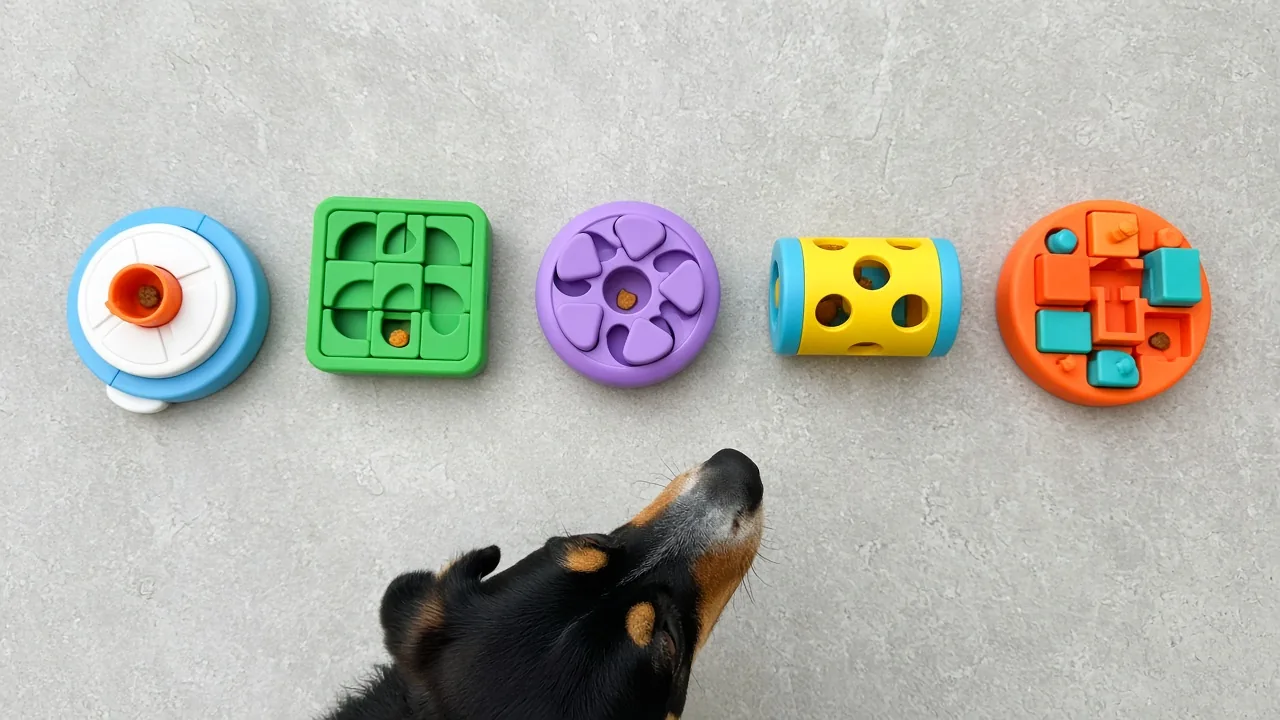
Start with a beginner-level puzzle toy and watch how your dog solves it before buying anything harder. Skill levels on puzzle toy packaging vary widely between dogs, and a toy labeled "easy" by the manufacturer can still stump a dog who has never had to work for a treat before. Learning how to choose puzzle toys for dogs by difficulty level mostly comes down to one thing: watching your own dog’s first few attempts instead of guessing from the box.
What Do Beginner, Intermediate, and Advanced Puzzle Toy Levels Actually Mean?
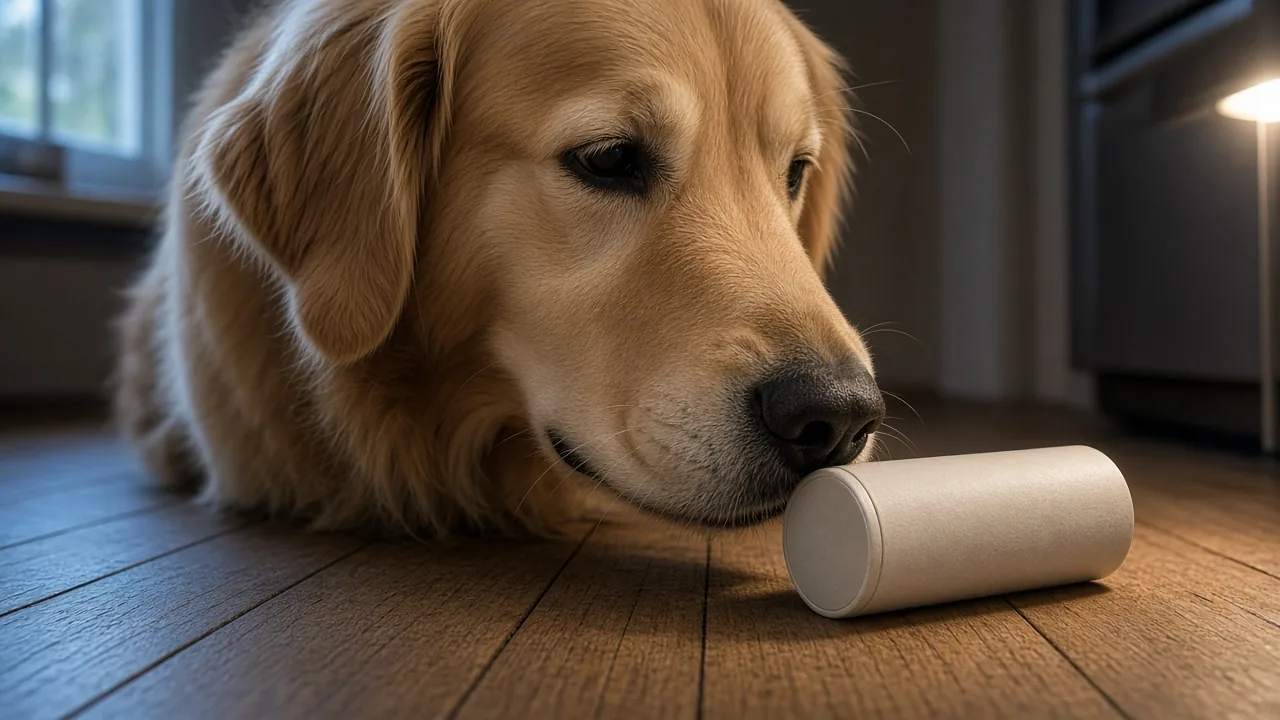
Difficulty labels on puzzle toys describe mechanism complexity, not a universal scale that works the same way across every brand. A toy marked "beginner" usually asks the dog to do one simple motion, like nudging a lid open or tipping a piece over. A toy marked "intermediate" or "advanced" often stacks several motions together, so the dog has to lift, turn, and then push in a specific order before the treat drops out.
This matters because a "level 2" toy from one brand can be noticeably harder than a "level 2" toy from another. The number on the box tells you roughly how many steps are involved, but it doesn’t tell you whether your particular dog has the paw coordination or patience to string those steps together yet.
How a Simple Tube Feeder Differs from an Advanced Locking Puzzle
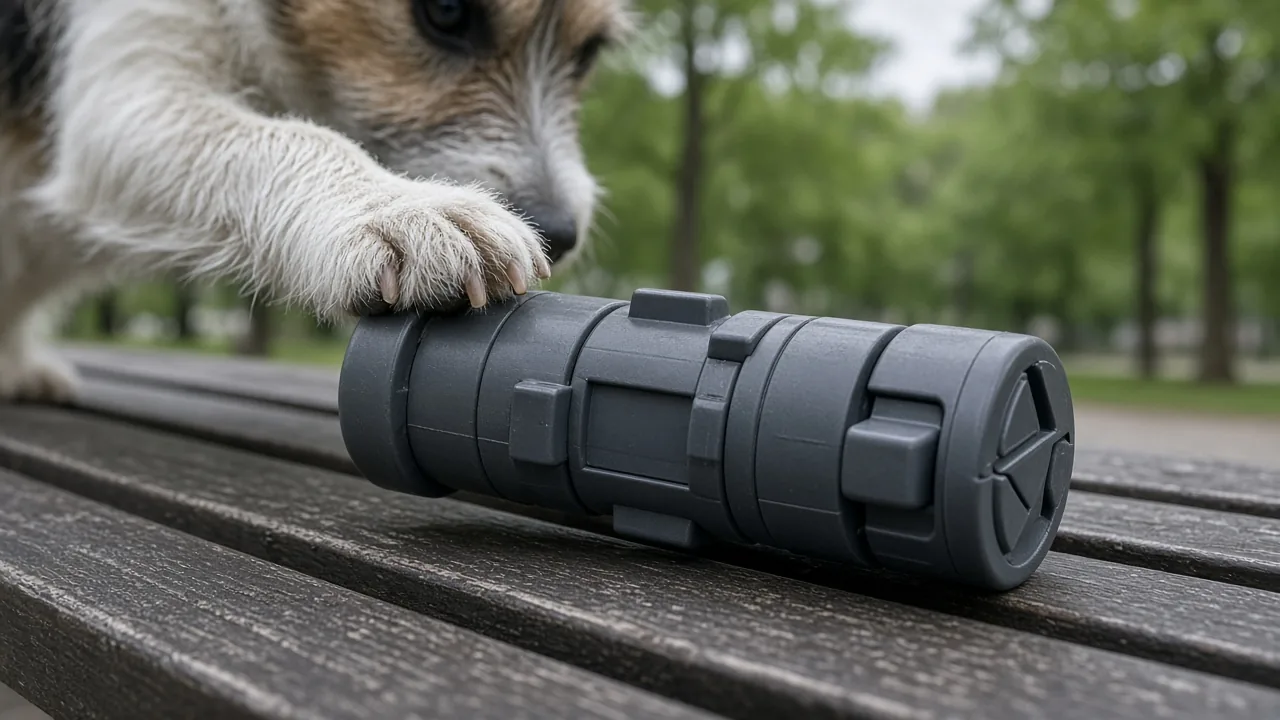
A basic tip-and-spill tube asks very little of a dog. The dog noses or paws the tube, it rolls, and treats fall out through an opening. There’s no sequence to remember and no fine motor skill required beyond batting at something round.
A multi-step locking puzzle sits at the opposite end. One owner’s Corgi, for example, worked through a toy that was labeled skill level intermediate and required pawing at it and flipping it upside down without just letting momentum spin the treats out. A separate toy in the same difficulty tier asked for the same upside-down maneuver but was brand new to the dog, so even a dog with some puzzle experience needed a few tries to figure it out.
The real jump in difficulty showed up with an advanced-level toy built like a locking door: the dog had to rotate a mechanism to release the latch before the compartment would even open. That dog appeared to trigger the unlock partly by accident, through repeated turning rather than a clear understanding of cause and effect. That’s a useful reminder that "advanced" toys often reward persistence more than they reward quick comprehension, and dogs can succeed through trial and error rather than insight.
How to Choose Puzzle Toys for Dogs by Difficulty Level: Where to Start
New dog owners get the best results starting with an inexpensive beginner toy rather than jumping straight to something labeled intermediate or advanced. The upfront cost is low, so if the toy turns out to be too easy or too hard, you haven’t spent much figuring that out.
For the first few attempts, guide your dog through the motion yourself instead of walking away and expecting them to figure it out alone:
- Show the dog the toy with a treat already visible inside.
- Demonstrate the motion once, slowly, with your own hand.
- Let the dog try on their own for a minute or two.
- Step back in and physically guide a paw or nose through the motion if they’re stuck.
- Repeat for two or three short sessions before deciding whether the toy is too easy, too hard, or just right.
Skipping this guided introduction is one of the more common reasons dogs seem to "hate" puzzle toys when the real issue is that nobody showed them what to do the first time.
How Do You Know If Your Dog Is Ready for a Harder Puzzle?
Move up to the next difficulty level only after your dog solves the current toy quickly and confidently without help. "Quickly" generally means the dog gets the treats out in under a couple of minutes, and "confidently" means they go straight for the correct motion instead of flailing at random.
Rushing to advanced toys before a dog has mastered the basics is a common way to waste money. A dog who hasn’t learned the core idea of working for a reward, lifting something to find a treat underneath, isn’t going to suddenly handle a rotating lock mechanism just because you bought a pricier toy. Skill builds in layers, and skipping a layer usually means returning the toy or watching it sit untouched.
Signs Your Dog Is Bored, Not Challenged, by a Puzzle
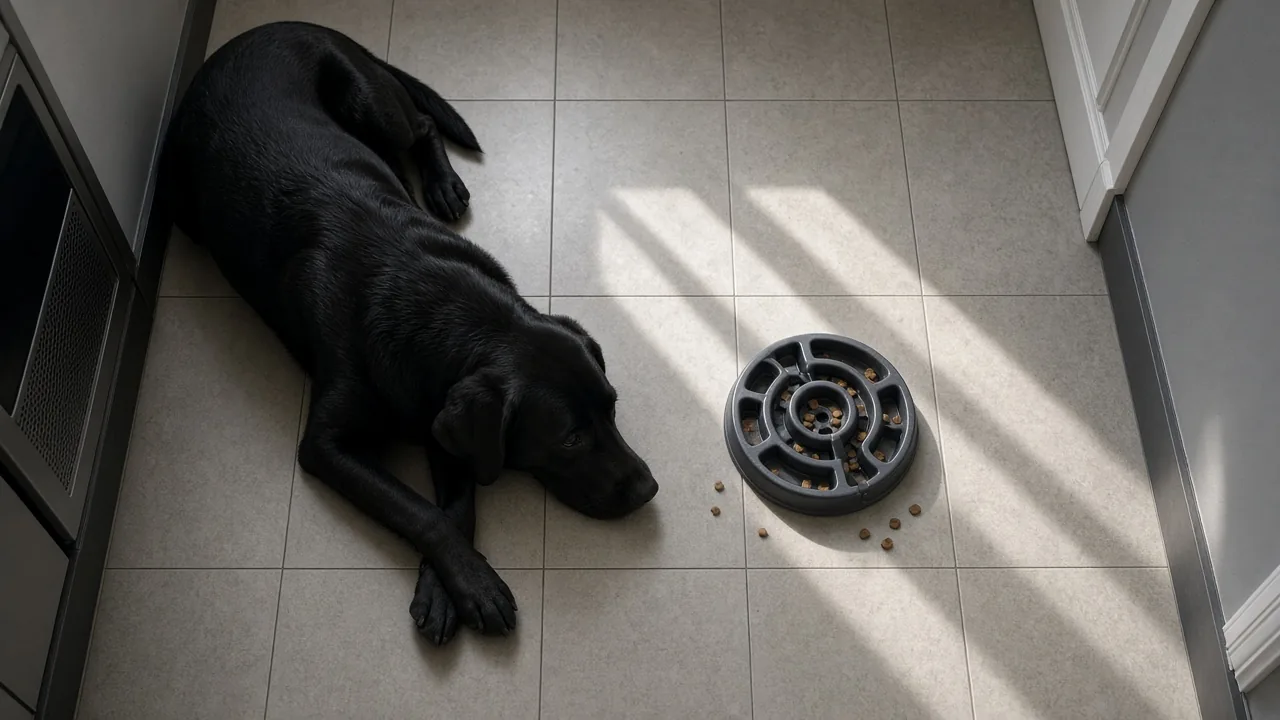
Quick disinterest or giving up after a few seconds often signals that a toy is too easy, not that your dog dislikes puzzle toys as a category. Watch for these signs:
- The dog solves the toy in seconds and then ignores it entirely.
- The dog glances at the toy, sniffs once, and walks away without trying.
- The dog seems to solve it almost without looking, like it’s muscle memory.
If this sounds like your dog, it’s reasonable to try the next difficulty tier rather than assuming puzzle toys just aren’t for them.
Signs a Puzzle Toy Is Too Hard and Causing Frustration
Repeated failed attempts, biting or chewing at the toy itself instead of working the mechanism, and walking away after a short struggle are all signs the puzzle is too hard right now. These reactions suggest frustration rather than disinterest, and the appropriate response is to simplify the puzzle temporarily, not to keep pushing the dog through it.
Forcing a frustrated dog to keep working a toy they clearly can’t solve doesn’t build confidence. It tends to create a negative association with the toy, and sometimes with puzzle toys generally, which makes the next one harder to introduce.
Can You Temporarily Make a Puzzle Toy Easier?
Yes. Many puzzle toys have removable pieces, like an outer cap or an extra baffle, and taking one off can lower the difficulty while your dog learns the core skill. This was exactly the workaround one owner used with a tube-style feeder: the original design called for the dog to flip the tube upside down using only a paw, without letting gravity or spinning do the work, but removing the cap made the mechanism easier to access while the dog got comfortable with the general idea.
Once your dog reliably solves the simplified version, reintroduce the removed piece and let them work through the full difficulty again. This step-down, step-up approach lets you use a single toy at two different difficulty levels instead of buying a separate easier toy and a harder one.
A few practical notes on this approach:
- Only remove pieces the manufacturer designed to be removable; don’t pry apart a toy that isn’t built to come apart.
- Reintroduce the harder version within a session or two, so the dog doesn’t just get used to the easy version permanently.
- If the dog still struggles once you add the piece back, that’s useful information that the toy may be a tier above what your dog is ready for.
Are Puzzle Toys Safe for All Dogs?
Not automatically. Match the toy’s size to your dog’s mouth and body size before buying, and supervise the first several uses regardless of how simple the toy looks. A puzzle sized for a small or medium dog can present a choking risk for a large or giant breed who tries to mouth the whole thing, and a toy with small removable parts, caps, pegs, or sliding pieces, can become a swallowing hazard for any dog that chews rather than paws at a puzzle.
Dental risk is a separate concern. Dogs who get frustrated with a hard mechanism sometimes start biting or gnawing at the toy’s housing instead of working it with their paws. Repeatedly chewing on a hard plastic puzzle casing can stress teeth in a way the toy wasn’t designed for, which is another reason to simplify or pause a puzzle that’s clearly causing frustration rather than letting a dog chew through their frustration.
A quick safety check before handing over any puzzle toy:
- The whole toy is too big for your dog to fit in their mouth.
- No pieces are already cracked, loose, or coming apart in the packaging.
- You’ll be in the room for the first two or three sessions, not just during the first try.
- Nothing about the mechanism requires forceful biting to operate; if it does, it’s built for chewing, not puzzle-solving.
If your dog has a pattern of persistent destructive chewing, resource guarding around food-based toys, or seems unusually anxious when a puzzle doesn’t open right away, those are behavior patterns worth discussing with your veterinarian or a certified trainer rather than something to solve through toy selection alone.
What Other Toy Types Should You Combine With Puzzle Toys?
Puzzle toys work best as one piece of a varied toy rotation rather than a dog’s only form of enrichment. Chew toys, lick mats, and interactive play each serve a different purpose, and dogs generally benefit from having access to more than one category.
| Toy type | Main purpose | Good for | Typical cost tier |
|---|---|---|---|
| Puzzle/treat-hiding toy | Mental problem-solving | Dogs who like working for food | Budget to mid-range |
| Chew toy (wood, antler chew) | Satisfying the urge to gnaw | Teething puppies, strong chewers | Budget to mid-range |
| Lick mat | Slow, calming licking | Anxious dogs, mealtime slowdown | Budget |
| Interactive play (tug-of-war, fetch) | Bonding and physical exercise | Any dog, any age | Free to budget |
| Squeaky toy / plush toy | Short bursts of play, chase instinct | Dogs who enjoy quick, low-stakes play | Budget |
Chew toys are meant to hold up to sustained gnawing. A textured, antler-style chew that lets a dog bite from multiple angles tends to hold their interest longer than a plain straight stick, and wood-based chews are generally a safer material choice than some softer plastics for dogs who chew hard and often. Because dogs produce more saliva while gnawing, especially in warm weather, check wood chews periodically for mold and toss any that show it.
Lick mats serve a calming rather than a mental-challenge role. A textured mat with a fresh treat spread across it, something your dog doesn’t get every day, can turn a few minutes of licking into a genuinely engaging activity, and many mats have suction cups that let you stick them to a glass door or wall so the dog licks while standing rather than lying down. In hot weather, a frozen lick mat makes a reasonable warm-afternoon activity. Ceramic lick plates are generally easier to clean than plastic versions and carry less risk of your dog chewing off and swallowing a piece of the mat itself.
Interactive play doesn’t need an expensive toy at all. A tug-of-war session with a rope you already own, a round of fetch, or simply chasing a toy around the living room does the real work, which is the shared activity and the exercise, not the price tag on the toy. If your dog tends to clamp down hard during tug-of-war, aim for an even back-and-forth rather than consistently winning by force, since repeatedly yanking a toy out of a dog’s mouth can jar their teeth and jaw. Squeaky toys and plush toys are the most disposable category here; they wear out quickly no matter how much they cost, so there’s little reason to spend more on them than you would on a budget option.
How Often Should You Replace or Rotate Puzzle Toys?
Check puzzle toys regularly for cracks, mold, or a mechanism that’s gotten loose from repeated use, and replace anything showing those signs right away rather than waiting for it to fail completely. A locking or rotating mechanism that’s worn loose can release treats too easily, which defeats the purpose of the puzzle and can also create small gaps where a paw or tooth gets caught.
Rotating toys, bringing one puzzle out while putting another away for a week or two, keeps a dog engaged longer than leaving the same toy out indefinitely. Dogs that have fully mastered a puzzle tend to lose interest in it the way they would with any toy they’ve already "solved," so swapping it out and bringing it back later often renews interest without requiring a new purchase.
A simple rotation and inspection routine:
- Inspect puzzle toys weekly for cracks, missing pieces, or loose mechanisms.
- Set aside any toy showing mold, especially chew-adjacent puzzle pieces that get wet from saliva.
- Rotate two or three toys on a weekly basis rather than leaving one out permanently.
- Retire a toy once the dog solves it instantly every time and shows no more interest.
Frequently Asked Questions About Choosing Puzzle Toys by Difficulty
Is the dye in cheap plush or puzzle toys risky if my dog swallows some while chewing?
There isn’t solid evidence pointing to a specific chronic risk from the dye itself, but any toy material your dog swallows along with saliva is worth limiting. If your dog tends to chew the fabric or shell of a toy rather than just interact with the mechanism, that’s more of a reason to supervise and replace worn plush or puzzle toys promptly than a reason to worry specifically about color.
Does tug-of-war carry different safety rules than puzzle toys?
Yes, the concerns are different. Puzzle toy safety is mostly about size, swallowable pieces, and frustration-driven chewing on the housing. Tug-of-war safety is more about force: a back-and-forth pace that lets the dog release and re-grip on their own is gentler on teeth and jaw than a contest where one side yanks hard to "win."
My dog won’t engage with any puzzle toy and just tries to tear it apart instead. Is that normal?
It’s common enough that it’s worth treating as information rather than a failure. Some dogs are more motivated by destruction than by problem-solving, at least at first. Dropping down to the simplest possible puzzle, or removing a piece the way you would to lower difficulty temporarily, is a reasonable next step before concluding puzzle toys just aren’t for that dog.
My dog has mastered every puzzle toy I own. Do I need to keep buying harder ones?
Not necessarily. Rotating toys your dog already has, combined with other enrichment like lick mats and interactive play, often keeps a dog engaged without needing to buy progressively more expensive puzzles.
Watch how your dog naturally plays, whether they gravitate toward chewing, pawing, or digging at things, before deciding what difficulty level of puzzle toy to bring home. Check the toy regularly for cracks, loose mechanisms, or mold, and rotate it with other toys so your dog stays interested without you needing to keep buying harder versions. A little observation up front saves you from the toy sitting untouched in a drawer a week later.
This article is for general information only and is not a substitute for advice from your veterinarian. Always supervise your pet with a new toy, and replace any toy that is damaged or small enough to swallow.

Contributor
admin
Continue reading
All stories
DOG TOYS · 11 October
Why Do Dogs Cry at Squeaky Toy Sounds? Excitement or Fear Explained
DOG TOYS · 10 October
Are “Indestructible” Dog Toys Actually Durable? What Heavy Chewers Prove
DOG TOYS · 10 October
Responses
Moderated discussion