CAT TOYS
How to Pick a Wand Toy That Cats Won’t Destroy in Weeks
If your cat shreds every wand toy within weeks, the fix is often design, not durability. Here's how to choose a wand toy that cats won't destroy, from magnetic lures to track toys.
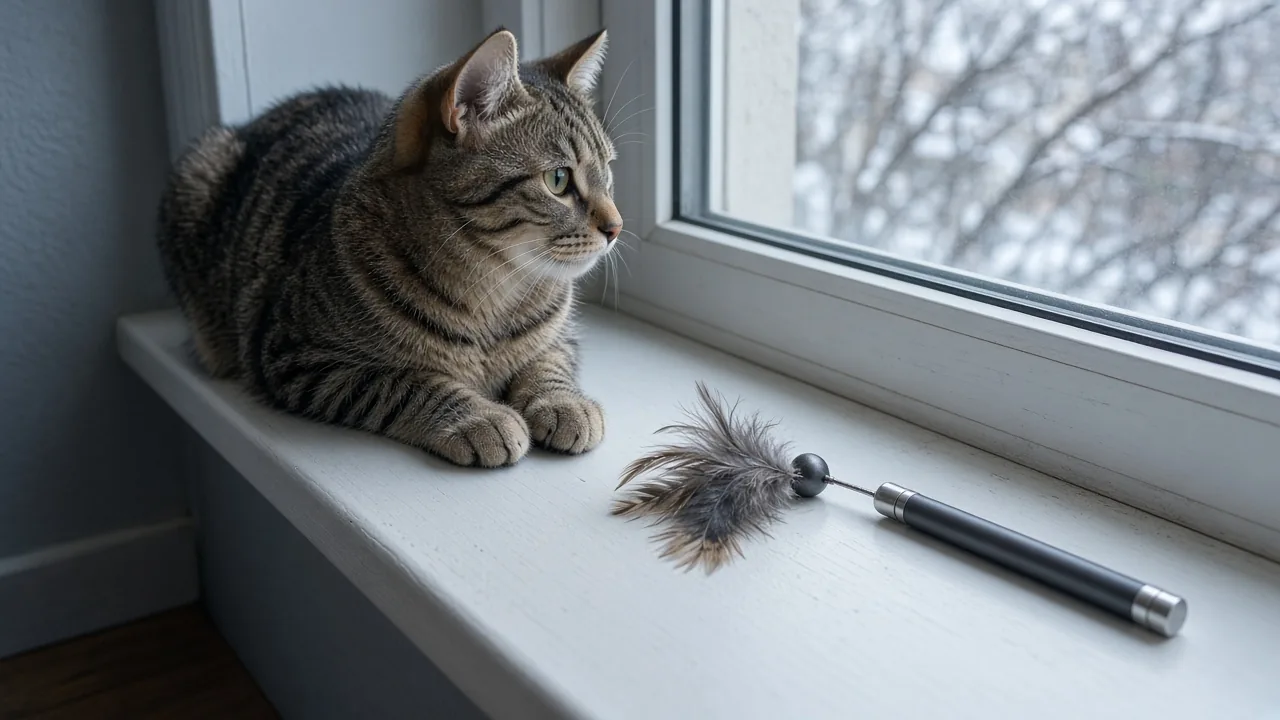
If your cat treats every wand toy like a chew toy, the fix usually isn’t a sturdier stick, it’s a design that lets your cat actually win. A wand toy that cats won’t destroy typically has a detachable or magnetic lure, a rod that doesn’t need to withstand a death grip, and a play routine where you let your cat catch and hold its prize instead of yanking it away. One cat owner found this out after losing a favorite wand toy to her cat’s jaws so often that she had to hide it between play sessions just to keep it intact.
Why Cats Destroy Wand Toys So Quickly
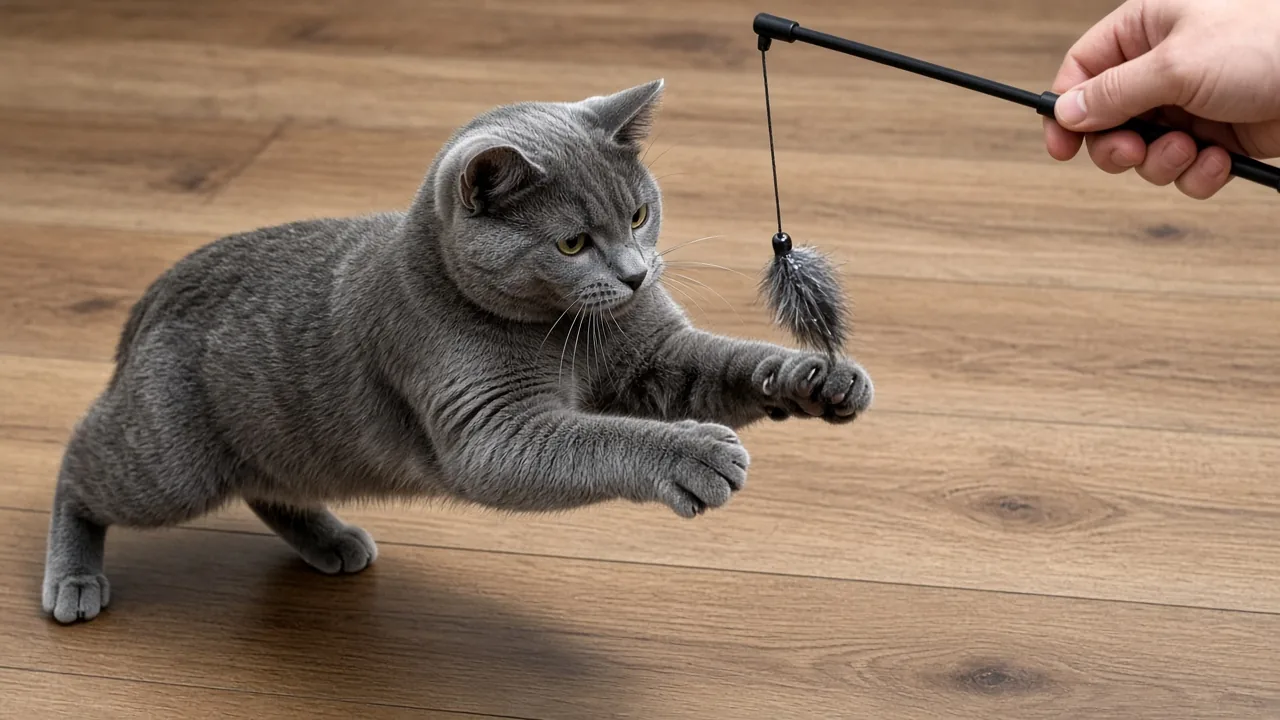
Wand toys are built to trigger a hunting sequence: stalk, chase, pounce, then capture. Most cats move through the first three steps easily, since the toy darts and flutters the way prey does.
The trouble starts at "capture." A standard wand toy stays tethered to the rod, so the moment your cat clamps down, you often pull it away to keep the game going. Your cat never gets to finish the sequence, and that unfinished instinct can show up as harder, longer biting on the rod, the line, or the lure itself.
One longtime cat owner documented this pattern directly: her cat caught a fishing-rod-style wand toy, refused to let go, and ended up destroying three rods in a row before she switched to a different design.
It helps to separate normal hunting-driven biting from biting that’s really about frustration. A cat who grabs the lure, carries it a few steps, then drops it has likely satisfied the hunt. A cat who clamps down, shakes its head, and won’t release even when you stop moving the toy is often reacting to a game that keeps getting interrupted at the exact moment it should end. The second pattern is the one that wears out rods, snaps lines, and eventually breaks lures apart.
Is It Normal for Cats to Bite and Chew Wand Toys This Hard?
In most cases, yes. Hard, repeated biting on a wand toy is often less about aggression and more about a cat trying to complete a hunt it can’t otherwise finish. If your cat clamps down and shakes the lure or won’t release the rod, that’s a strong signal the toy isn’t letting the capture instinct play out.
That said, persistent destructive chewing deserves a second look, especially if it comes with other changes like reduced appetite, drooling, or avoiding hard food. A cat that chews everything in sight, not just wand toys, may be dealing with a dental issue or a behavior concern worth discussing with your veterinarian.
Kittens add another layer to this. Young cats go through a teething period with sharp, needle-like milk teeth, and they often bite down on wand toys simply because everything in reach gets mouthed and tested. An adult cat clamping down with a full set of adult teeth puts more sustained pressure on a toy than a kitten does, so a design that holds up for a six-month-old kitten won’t necessarily survive a two-year-old cat with a stronger bite.
How to Choose a Wand Toy That Cats Won’t Destroy
Before buying, compare the three common wand toy styles against how they hold up to biting, whether they let your cat feel like it caught something, and how much upkeep they need.
| Design | Bite resistance | Capture satisfaction | Cleaning needs | Best for |
|---|---|---|---|---|
| Fixed-string, traditional rod | Low to moderate; line and rod can snap under repeated hard bites | Low; toy usually gets pulled away mid-bite | Wipe lure as needed | Light biters, cats who mostly watch or swat |
| Magnetic detachable lure | Moderate to high; rod stays intact even when the lure takes a beating | High; lure detaches so the cat keeps its "prize" | Wipe lure and magnet point regularly | Cats who bite down hard and won’t release |
| Track and motion toy (no hand-held rod) | High; nothing hangs within easy bite range during movement | Moderate; satisfies chase more than capture | Wipe track and suction cups, check cord tension | Cats who overpower hand-held wands |
None of these designs is unbreakable. The goal is matching the design to how your cat actually plays, not finding a toy that never shows wear.
Fixed-String Wand Toys: Pros, Cons, and When They Still Work
Fixed-string wand toys are the most common style you’ll find, and for good reason: they’re inexpensive, simple to use, and work well for cats who mostly chase and swat rather than bite down hard.
The downside shows up with aggressive biters. Because the lure stays tied to the rod, a cat that clamps down and refuses to let go puts constant strain on the line and the joint where it meets the rod. Repeated hard bites can snap the string or crack the rod over time, and the same owner who lost three rods to her cat’s jaws found that pulling against a locked bite was the main culprit.
If you use a fixed-string wand toy, avoid yanking the line while your cat is biting down. A sudden pull against clenched teeth risks a tooth injury, not just a broken toy. These toys still work fine for cats with a lighter bite or for short supervised sessions where you can swap the toy out before it frays.
Magnetic Wand Toys: Why They Hold Up Better to Biting
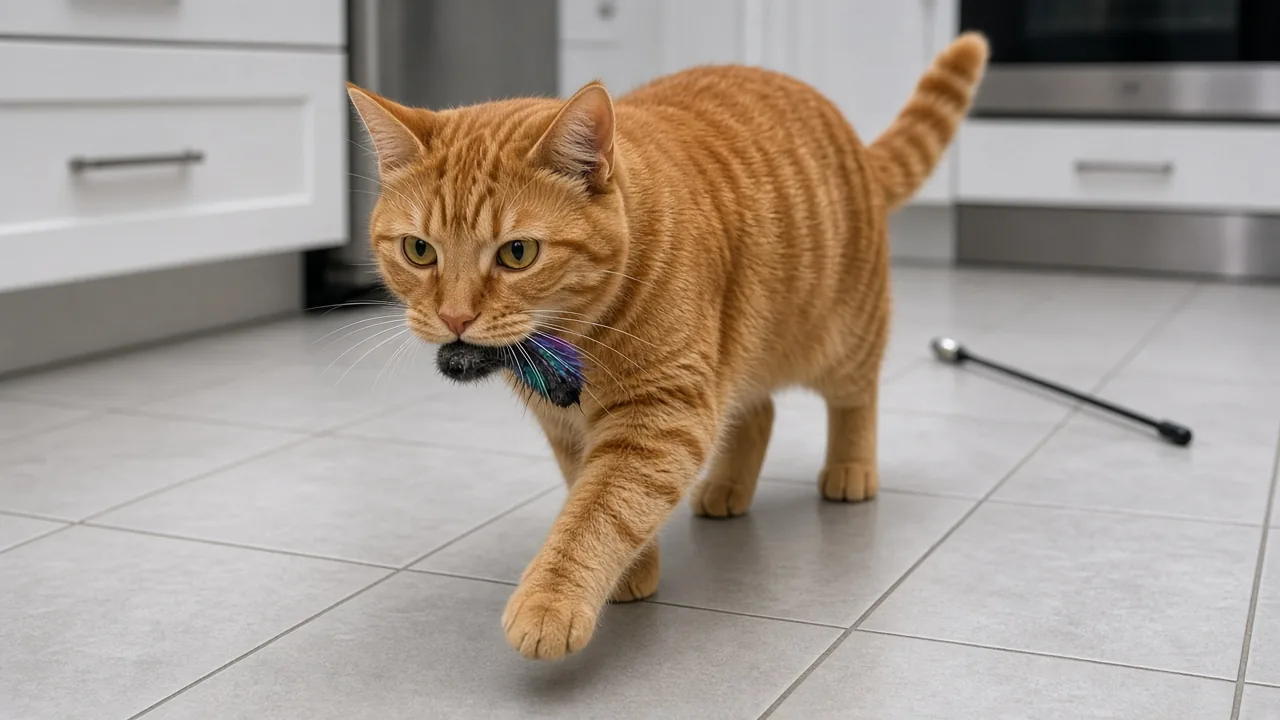
Magnetic wand toys solve the "capture" problem directly. The lure attaches to the rod with a magnet instead of a knot or clip, so once your cat pounces and catches it, you can detach the lure right there instead of pulling it free.
That small change matters more than it sounds. Letting your cat walk off with its "catch," even for a few seconds, can give it the sense of victory a tethered toy never allows. One owner noticed her cat would leap specifically to try to grab the magnetic lure, a response she hadn’t seen with a standard wand toy.
Because the rod and lure separate instead of staying under tension, magnetic designs tend to hold up better when a cat bites down hard. You’re not fighting your cat for control of the toy, so there’s less strain on any single part. Reattach the lure once your cat loses interest, and you can run another round without digging out a backup toy.
Magnets bring their own safety consideration, though. Any magnet small enough to fit inside a lure can be a hazard if your cat manages to pry it loose and swallow it, so check the housing around the magnet regularly for cracks or looseness, and never let a cat play with a detached magnetic piece unsupervised.
Track and Motion Toys as an Alternative to Hand-Held Wands

If your cat consistently overpowers hand-held wands, a track-style motion toy skips the hand-held rod altogether. These toys use suction cups to anchor a square track to a smooth floor, with a cord strung between the four corners and a small toy that moves along it.
To set one up:
- Attach the four suction-cup corners to a smooth, clean floor to form a square.
- Run the cord between the corners, keeping it taut; add a light weight if your cat tends to pull the cord off track.
- Hook the moving toy onto the cord.
- Turn on the motor and adjust speed and direction as needed.
Because the toy moves on its own track rather than dangling within easy reach of a cat’s jaws, there’s less for your cat to clamp onto mid-chase. This style tends to appeal to cats across different temperaments, and it works well as a rotation option alongside a magnetic wand toy, giving aggressive biters a chase outlet that doesn’t put a rod or line at risk.
Motor-driven track toys run on batteries, so treat the battery compartment as a safety check item, too. A compartment with a loose or missing screw can expose a small battery, which is a swallowing hazard distinct from the usual frayed-string or cracked-rod wear you’d watch for on a hand-held wand.
What Materials Hold Up Best for a Wand Toy’s Lure
The lure matters almost as much as the rod mechanism. A few common materials show up again and again, and each has tradeoffs:
- Feathers: light and appealing to cats who like watching movement, but they shed and tear easily under hard biting, which turns them into a choking risk piece by piece rather than all at once.
- Fabric strips or faux fur: more durable than feathers and easier to wipe clean, though loose threads can still fray at the seams with repeated chewing.
- Sisal or rope-wrapped lures: often favored for cats who like to gnaw as much as chase, since the rough texture holds up to biting better than soft fabric, though frayed rope fibers can still work loose over time.
Whatever the material, check that it’s free of small glued-on embellishments like plastic eyes or sequins that can detach and get swallowed. Simpler lures with fewer separate pieces are generally easier to inspect and safer over the long run.
Matching Wand Toy Design to Your Cat’s Play Style
Not every cat needs a heavy-duty, detachable-lure setup. Pay attention to which part of the hunting sequence your cat actually enjoys before choosing a toy.
- Watchers and swatters: cats who mostly track the lure with their eyes or take light swats at it usually do fine with a simple fixed-string wand toy. A floating fish-style toy in a shallow tub of water can also hold this kind of cat’s attention for a long stretch, since the movement alone is often enough.
- Chasers: cats who sprint after the lure but don’t fixate on biting it may enjoy a track-style motion toy or a long tunnel they can dash through and ambush from.
- Aggressive biters: cats who clamp down hard and won’t release the lure need a design built for that grip, which usually means magnetic or detachable lures over tethered string.
In multi-cat households, it’s worth watching each cat separately rather than assuming they’ll all respond to the same toy. One cat may stalk and swat while another in the same room clamps down and won’t let go, and running a single fixed-string toy for both can mean replacing it far more often than if each cat had a design suited to its own style.
Signs Your Cat Needs a Heavier-Duty Wand Toy
A few patterns suggest it’s time to size up:
- You’ve replaced the same style of wand toy two or more times because the rod snapped or the line frayed. Repeated breakage with the same design is a clearer signal than a single damaged toy, since it points to a mismatch between the toy and your cat’s bite rather than a one-off defect.
- Your cat shreds the fabric or feathers on the lure within a session or two, which suggests the material itself can’t withstand how hard your cat is biting down.
- Your cat catches the toy and refuses to let go, even when you try to continue the game, which is the clearest sign the capture step isn’t being satisfied.
If any of these sound familiar, a magnetic detachable design or a hands-off track toy is worth trying before you buy another fixed-string replacement that’s likely to meet the same fate.
Safety Checks to Protect Your Cat’s Teeth and Prevent Swallowing Hazards
Before and after every play session, take a few seconds to check the toy your cat just used.
- Frayed string or line: loose threads can wrap around a tooth or get swallowed.
- Loose feathers or fabric pieces: small bits that detach easily are a choking and swallowing risk.
- Cracked or splintered plastic or wood on the rod: sharp edges can cut a cat’s mouth or paw.
- Loose small parts, including bells, magnets, or battery covers that have come free from their housing.
Also watch how your cat bites during play. A cat biting down on a rigid plastic rod or wire repeatedly risks a tooth fracture over time, which is another reason detachable lures that reduce prolonged clamping on hard materials can be a safer long-term choice. Always supervise a new wand toy the first few times you use it, and never leave a wand toy out for unsupervised play, since the cord and small parts pose a real risk when you’re not there to intervene.
How Often to Replace a Wand Toy and Cleaning Tips
Retire a wand toy immediately if you notice exposed wire, a splintered rod, or string that’s starting to unravel. Waiting to "get more use" out of a damaged toy isn’t worth the risk of a swallowed piece or an injury to your cat’s mouth.
For everyday upkeep:
- Wipe the lure after each session, since cats mouth and drool on it during play.
- Check magnetic attachment points on magnetic wand toys for buildup that could weaken the hold.
- Inspect suction cups on track toys for grime that reduces their grip on the floor, and check the battery compartment seal while you’re at it.
- Store rods out of reach between sessions rather than leaving them on the floor, which also helps the toy last longer and keeps your cat from fixating on it unsupervised.
There’s no fixed timeline for replacement that applies to every cat. A light player might keep the same wand toy intact for months, while an aggressive biter may wear through a fixed-string toy in a matter of weeks.
Common Mistakes That Make Cats Destroy Wand Toys Faster
A few habits tend to shorten a wand toy’s lifespan more than the toy’s design does:
- Leaving the wand toy out unsupervised. Beyond the safety risk, a cat with unsupervised access to a dangling string or lure will often chew on it out of boredom, not play.
- Yanking the line to "win" a tug. Pulling against a locked bite strains the string and the rod, and it risks your cat’s teeth in the process. Let your cat release on its own, or detach a magnetic lure instead.
- Relying on novelty instead of rotation. Constantly buying new toys to chase a fresh reaction can backfire, since preference for "whatever’s newest" fades fast. Rotating a handful of proven favorites, including one detachable-lure design and one chase-focused option, tends to hold a cat’s interest longer than a revolving door of new purchases.
- Running one long session instead of several short ones. Cats, especially indoor-only cats without outdoor hunting outlets, often bite down harder near the end of a long session as frustration builds. Several five-minute sessions spread through the day can produce less of that pent-up clamping than one marathon play period.
Frequently Asked Questions About Durable Wand Toys for Cats
Is any wand toy truly bite-proof?
No. Even magnetic and track-style designs show wear with heavy use. The goal is choosing a design that matches your cat’s bite strength and checking it regularly, not expecting any single toy to go forever without damage.
How many wand toys does a household need?
Having two or three in rotation, ideally different styles, tends to work better than relying on one toy. That way you can swap in a backup the moment one shows damage, and your cat doesn’t lose interest in a single overused lure.
Do indoor-only cats bite harder out of pent-up energy?
It’s possible. Cats without outdoor access to hunt may channel more intensity into play sessions, which can mean more frequent, shorter sessions throughout the day work better than one long one. A tunnel or climbing structure your cat can use to stalk and ambush on its own between wand toy sessions may also help burn off extra energy.
Should kittens use the same wand toys as adult cats?
A kitten’s milk teeth are sharper but generally less forceful than an adult cat’s bite, so many kittens do fine with a basic fixed-string toy at first. As a kitten grows into its adult teeth and bite strength, usually sometime in its first year, watch for the same wear signs you’d check for in any cat, and move to a magnetic or detachable design if the biting gets noticeably harder.
Watch whether your cat prefers to stalk, chase, or bite down hard once it catches the lure, then choose a wand toy design that matches that instinct instead of hoping any single toy will fit every style. Keep checking your toys for fraying, cracks, or loose parts, and swap them out before wear turns into a hazard. If you’re setting up a broader toy rotation, it’s worth running the same wear checks across your cat’s other favorites, not just the wand toy.
This article is for general information only and is not a substitute for advice from your veterinarian. Always supervise your pet with a new toy, and replace any toy that is damaged or small enough to swallow.

Contributor
admin
Continue reading
All stories
CAT TOYS · 10 October
Why Cats That Ignore Store Bought Toys Love Free Alternatives
CAT TOYS · 10 October
DIY Food Puzzle Toys for Cats Using Household Items That Actually Work
CAT TOYS · 10 October
Responses
Moderated discussion