SMALL PETS & BIRDS
How to Litter Train a Caged Rabbit: A Step-by-Step Method
A gradual six-day confinement method can litter train most caged rabbits, while reward-based, scent, and gap-blocking alternatives help when confinement doesn't stick.
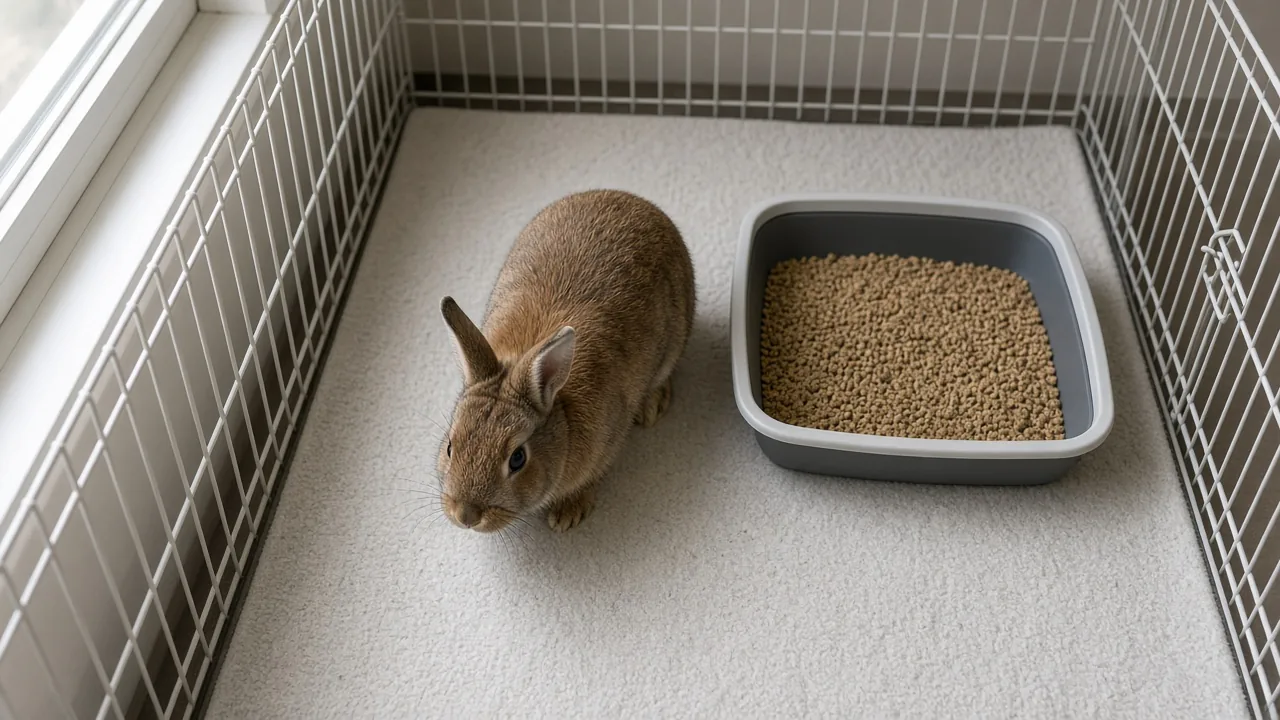
Confining a rabbit near a fixed litter box for about six days can build a habit, but it is not the only option and does not work for every rabbit. If you’re wondering how to litter train a caged rabbit, the short answer is that gradual confinement works for many rabbits, while reward-based and scent-based methods help when confinement stalls. The right approach depends on your rabbit’s age, temperament, and how it already behaves around the cage.
How to Litter Train a Caged Rabbit Using the Confinement Method
A gradual, days-based confinement setup narrows a rabbit’s space around the litter box so elimination happens there by default rather than by force. One rabbit owner who adopted a young rabbit with no bathroom habits at all found that six days of structured confinement built a lasting pattern. Within a week or two, accidents outside the box became rare, though a few stray dry droppings outside the box were considered a normal and acceptable exception.
The logic behind this method is simple: a rabbit in a small space has fewer places to go, so it defaults to the box out of convenience rather than punishment. This works best with younger rabbits that have not yet settled into a fixed bathroom spot elsewhere in the cage.
Step-by-step: setting up the box and limiting space over six days
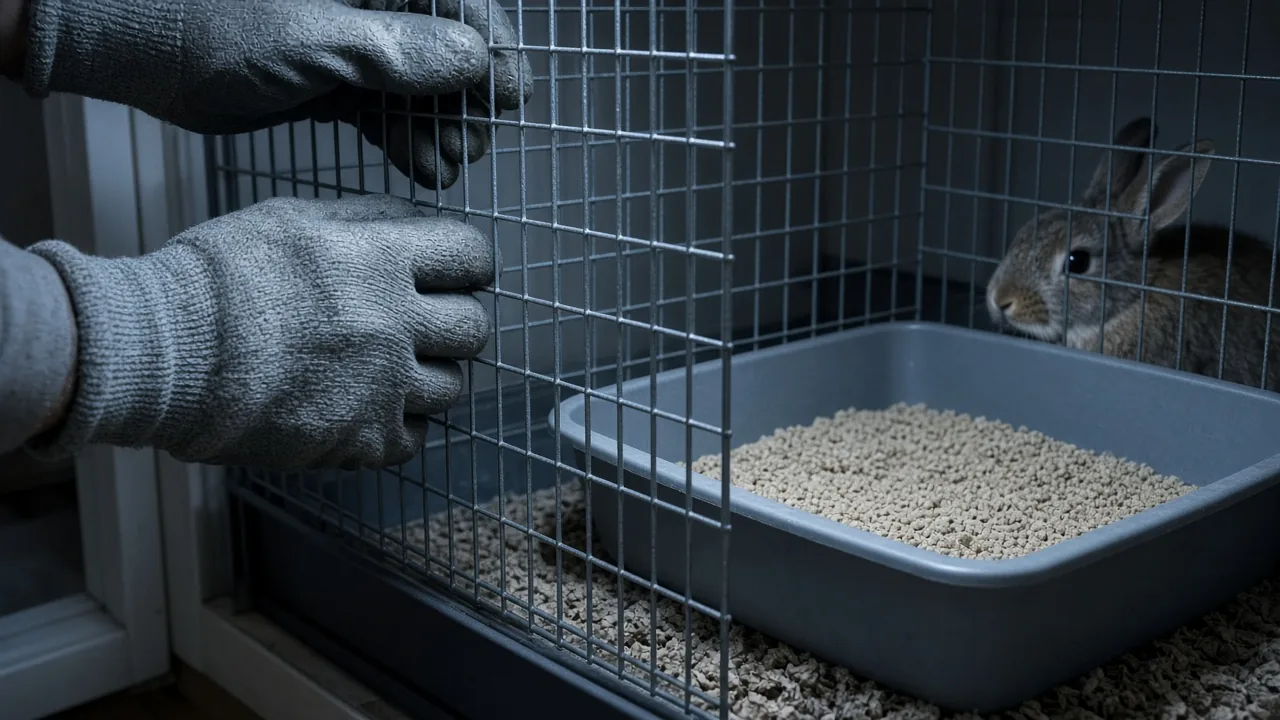
This method unfolds in two three-day phases, with the box position changing partway through.
- Fix the litter box against one side of the cage, leaving only a narrow gap for the rabbit to slip in and out.
- Block off the rest of the cage with barriers so the rabbit’s food, water, and resting spot all sit close to the box. For three days, the rabbit should have no realistic option except to eliminate in the box.
- After three days, remove the barriers, flip the box so it faces the opposite direction, and set up a new, smaller confined zone around the new box position.
- Keep the rabbit in this second configuration for another three days, bringing the total to six days of structured confinement.
- Once the six days are up, remove all barriers and let the rabbit access the full cage again, watching closely for the first week to confirm the habit has stuck.
Flipping the box direction partway through is meant to make the rabbit relearn the box by its texture and smell rather than by a single fixed layout, which the original trainer believes builds a sturdier habit than relying on one static position.
Using gentle redirection instead of punishment
A light nudge toward the box, stopped the moment the rabbit enters it, teaches the area feels safe rather than teaching fear. The idea is not to chase or startle the rabbit, just to give it a small physical cue that the box is the destination. As soon as the rabbit steps inside, the nudging stops completely.
This distinction matters because rabbits that associate the box with ongoing pressure or fear may avoid it altogether. The nudge should end the instant the rabbit arrives, so the box itself becomes linked with relief rather than chasing.
Why this method may not suit every rabbit
The creator notes this approach is meant for caged rabbits and its results for free-roaming or already habituated adult rabbits remain unknown. If your rabbit already free-roams your home or has an established bathroom pattern from months or years of habit, six days of confined space may not produce the same result, because there’s no equivalent way to limit a free-roaming rabbit’s options the same way a cage does.
Older rabbits that have already settled into eliminating in a particular corner, under furniture, or near a specific piece of carpet may also resist retraining through confinement alone, since the behavior is more entrenched. In those cases, it helps to pair confinement with one of the alternative methods below rather than relying on it in isolation.
What to Do When Confinement Training Fails
When restricting space does not stick once barriers come down, reward-based and scent- or texture-based alternatives can succeed where forced confinement does not. Not every rabbit responds the same way, and some owners have found that a method working well for one rabbit does almost nothing for another, even within the same litter.
Positive reinforcement: rewarding the pre-pee posture
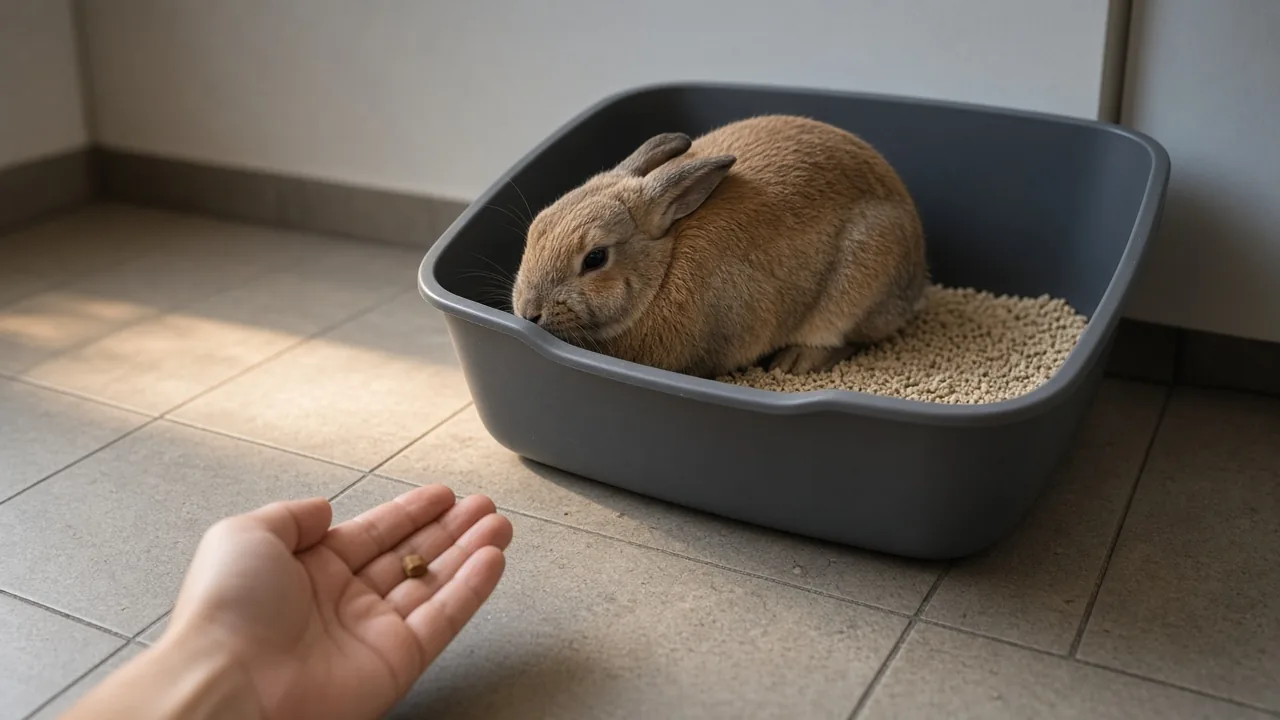
Watching for a rabbit’s pause-and-crouch cue before it urinates and guiding it to the box, then offering a treat, can train faster without confinement, according to reader accounts. Rabbits often give a brief physical signal right before eliminating, a kind of settling or crouching posture that signals the moment is imminent.
Catching that cue and gently carrying or guiding the rabbit to the box, then rewarding it with a small treat immediately after it goes, builds a direct link between the box and a positive outcome. Several owners reported this approach worked faster than forced confinement and didn’t require blocking off any part of the cage. The tradeoff is that it requires more active supervision in the early days, since you need to be present to catch the cue.
Scent cues: should you leave urine-soaked paper in the box?
Leaving a trace of scent in the box helps some rabbits locate it quickly, though the original trainer favors relying on location and texture memory instead. Some owners wash the litter box fully after each use and have reported that keeping a lightly soiled paper towel in the box for a few days helped their rabbit learn the spot within two to three days.
The trainer behind the confinement method takes a different view, preferring to let the rabbit remember the box by its fixed position and the feel of the litter material rather than by smell. Both approaches have supporters, and there’s no clear consensus on which works better across all rabbits. If you’re short on time to manage scent cues consistently, such as during a busy work week, leaning on a fixed box location and texture may be the more practical fallback.
Blocking gaps when a rabbit keeps choosing the wrong spot
If a rabbit favors any gap it can leak through, covering every opening except the litter box can indirectly redirect the habit. One owner found that forced confinement produced no results at all for their rabbit, who continued to seek out any crack or opening where urine could drain through rather than using the box itself.
The workaround was to physically cover every such gap in the cage setup, leaving the litter box as the only accessible spot where elimination was possible. This isn’t a direct training method so much as process of elimination, but it worked when direct confinement training did not.
Slower options: puppy pads and hay-box fading
A soft puppy pad placed where the rabbit already prefers to go, or gradually emptying hay from a decoy box into the litter box, can work but may take weeks. Rabbits often gravitate toward soft surfaces for elimination, so placing a puppy pad (the inexpensive waterproof kind made for small dogs) at the rabbit’s current preferred spot can nudge the habit toward a designated area over time. One owner reported this method took around a month to fully take hold.
A second slow-build option uses the rabbit’s attachment to hay. Give the rabbit an empty hay box as a toy, keep hay in it initially, and gradually move the hay supply into the actual litter box instead. Over time, the rabbit’s habit of sitting near hay to eat and eliminate shifts toward the litter box itself. Neither method works overnight, but both avoid the stress of confinement for owners who prefer a gentler pace.
Is Litter Training a Caged Rabbit Instinct or a Trained Skill?
Opinions differ sharply on whether consistent litter habits come naturally or require deliberate training, and owners should expect variation by individual rabbit. Some owners believe litter habits are essentially instinctive once a rabbit is spayed or neutered and settles into a routine. Others argue that most rabbits never fully master consistent litter use regardless of training effort, and that the rabbits shown succeeding online represent the exceptions rather than the norm.
Neither position has solid proof behind it, and the truth likely sits somewhere in between: some rabbits pick up the habit with minimal effort, while others need active, ongoing management no matter which method you try. If your rabbit falls into the second group, treat consistent litter use as an ongoing project rather than a one-time fix, and don’t assume you’re doing something wrong if progress is slow.
Why Litter Habits Break Down During Heat or Hormonal Changes
A previously reliable habit can relapse once a rabbit reaches sexual maturity, so a return to accidents is not necessarily a training failure. One owner described a rabbit that used the litter box reliably from the day it was introduced, only to start eliminating outside the box again once it reached sexual maturity and began showing signs of heat-related behavior.
This kind of relapse is common enough that it shouldn’t be read as a sign the original training failed. If your rabbit’s habits deteriorate around this stage, consider talking to your veterinarian about spaying or neutering, since hormonal behavior often settles down afterward, and reinforce the original training steps once the hormonal period passes.
How to Choose Safe Chew Toys for a Caged Rabbit
Pairing litter training with safe, engaging chew toys gives a caged rabbit something constructive to do instead of chewing cage bars or nearby woodwork. A rabbit with nothing to gnaw on will often redirect that energy toward whatever is available, including furniture, baseboards, or the cage itself.
The goal with chew toys isn’t just entertainment. Rabbits’ teeth grow continuously, so regular gnawing helps wear them down naturally. Choosing toys made from safe, digestible materials matters more here than with most other small pets, since rabbits tend to actually swallow bits of what they chew.
Straw and natural-fiber toys: why untreated matters
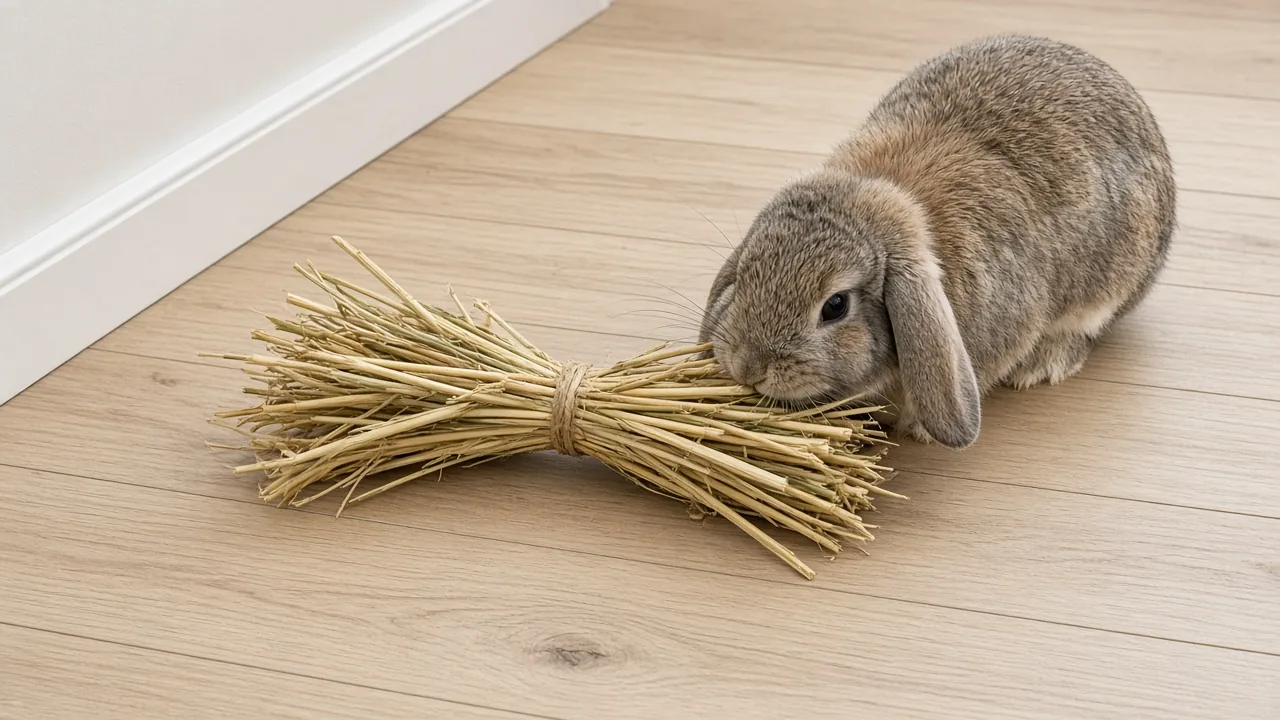
Straw toys are popular chew items, but imported ones may carry pesticide treatments, so untreated options are generally the safer default choice. Many rabbits enjoy straw-based toys enough to chew them down completely over time, which is part of the appeal, but it also means anything on the straw ends up in your rabbit’s system.
Some imported straw products are treated with chemicals as a condition of import regulations, and in some cases this treatment is described as having no adverse effect on rabbits. Even so, checking labels for untreated or pesticide-free straw gives you more certainty, especially since you can’t always verify what a specific batch was treated with.
Are slinky and tunnel toys safe for rabbits?
Springy coils and tunnels are enjoyable but can trap a rabbit’s head or body if sized wrong, so fit and an open second exit matter more than novelty. A plastic slinky-style coil toy can be genuinely fun for a rabbit to push through or chew on, but if the coil is too large relative to the rabbit’s head, there’s a real risk of the rabbit getting its head caught and panicking when it can’t back out.
Plastic versions are generally a better pick than metal ones, mainly because they’re easier to spot on the floor and less likely to get stepped on by accident. The same caution applies to tunnels: a tunnel that’s closed at one end, or any container a rabbit can crawl into but not easily reverse out of, carries a risk of the rabbit feeling trapped. Oatmeal canisters with holes cut into them fall into this same risky category, as does any enclosed container without a clear second way out. When choosing a tunnel or tube toy, check that a rabbit can enter and exit from either end without having to turn around in a tight space.
DIY toy idea: a fringed toilet paper roll stuffed with hay
A plain cardboard tube with fringed edges and hay inside is a low-cost toy that some rabbits prefer over store-bought ones. To make one, take an empty toilet paper roll, cut the open ends into fringe-like strips with scissors to make them easier to chew into, then pack the inside loosely with hay, such as timothy hay or another grass-based variety.
One owner reported that their rabbit ignored two purchased toys entirely but immediately took to a homemade fringed tube, carrying it around and tossing it repeatedly. This kind of result isn’t universal, but it’s a low-cost experiment worth trying before investing in pricier store-bought options, particularly for rabbits that seem indifferent to toys you’ve already bought.
Toy Safety Checks and When to Replace Worn Toys
Closed containers and single-exit tunnels carry a panic risk, so regularly checking fit and escape routes matters more than checking for wear alone. Before giving any toy to your rabbit, confirm there are at least two ways in and out of any tunnel or tube shape, and that coil-style toys are sized so your rabbit’s head can pass through without resistance.
Beyond fit, watch for the usual signs of wear: fraying cardboard that’s shedding small pieces, straw toys that are breaking into sharp fragments, or any plastic coil that’s cracked or losing its shape. Supervise your rabbit with any new toy the first few times it’s introduced, since you won’t know how your particular rabbit interacts with it until you watch it happen. Replace any toy showing damage, loose pieces, or a shape that no longer matches its original safe design, rather than waiting for an obvious failure.
Frequently Asked Questions About Litter Training a Caged Rabbit
Is the confinement method too harsh for a rabbit?
Some owners find the restricted space uncomfortable to watch and prefer reward-based training instead, since it doesn’t involve limiting the rabbit’s movement at all. Both approaches can work; the confinement method just asks for a short, structured period of reduced space rather than ongoing restriction.
Does confinement training work for every rabbit?
No. Some rabbits revert to old habits the moment barriers come down, and others never respond to it in the first place, instead favoring any gap they can access. In these cases, blocking off alternative spots or switching to a reward-based approach tends to work better.
Will this work for a free-roaming or already adult rabbit?
The original trainer only confirms results for caged rabbits and is upfront that outcomes for free-roaming rabbits or adults with established habits remain unknown. If your rabbit falls into either category, treat confinement as untested rather than a guaranteed fix.
What if my rabbit ignores the toys I bought?
Try a DIY option like the fringed, hay-stuffed toilet paper roll before assuming your rabbit dislikes toys altogether. Some rabbits respond far better to simple, chewable shapes than to more elaborate store-bought designs.
Watch how your own rabbit responds to confinement, rewards, or scent cues, and choose the method that fits its temperament rather than forcing one approach to work. While you’re adjusting its litter habits, keep an eye on any chew toys in the cage for fraying, cracks, or loose pieces, and swap them out as soon as you notice wear.
This article is for general information only and is not a substitute for advice from your veterinarian. Always supervise your pet with a new toy, and replace any toy that is damaged or small enough to swallow.

Contributor
admin
Continue reading
All stories
SMALL PETS & BIRDS · 10 October
How to Tame a New Hamster Without Getting Bitten: A Patient Guide
SMALL PETS & BIRDS · 10 October
Bottomless Hamster Hideouts: How to Clean a Hamster Hideout Without a Bottom

SMALL PETS & BIRDS · 10 October
Responses
Moderated discussion