DOG TOYS
Why Do Dogs Cry at Squeaky Toy Sounds? Excitement or Fear Explained
Dogs can cry at squeaky toys out of pure excitement or genuine fear, and the difference shows up in their body language, not the sound itself. This guide explains how to tell the two apart and choose toys that fit your dog's temperament.
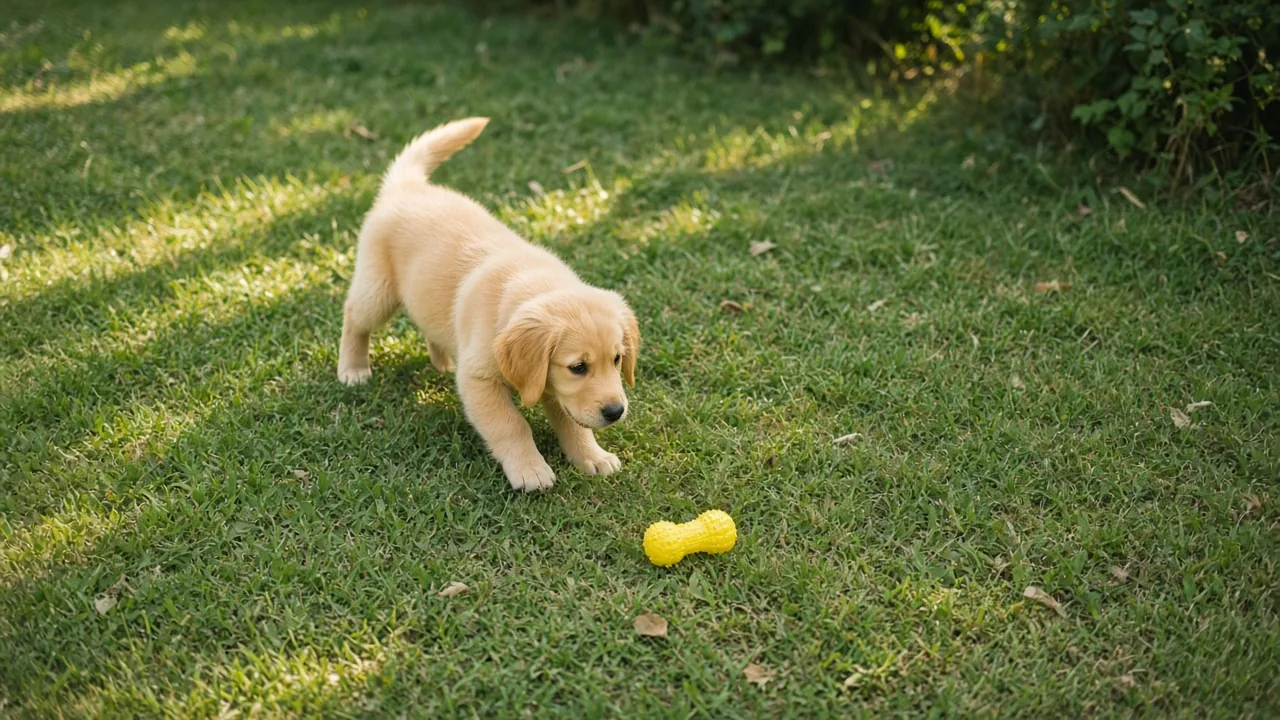
Picture two dogs hearing the exact same squeaky toy for the first time. One pounces, grabs it, and squeaks it over and over with his tail going like a metronome. The other backs into a corner, ears flat, letting out a thin, worried whine. Both reactions answer the question why do dogs cry at squeaky toy sounds, but they mean very different things, and reading them correctly matters more than the sound itself.
Why Do Dogs Cry at Squeaky Toy Sounds? Excitement vs Distress Explained
The cry or whine by itself tells you almost nothing. A high-pitched noise can come from a dog who is thrilled and overstimulated in a good way, or from one who finds the sound genuinely unpleasant or confusing.
What actually separates the two is everything happening around that sound: the dog’s posture, how close she stays to the toy, and whether she looks loose or stiff. You have to watch the whole dog, not just listen to her.
This is why the same toy can get wildly different reactions from different owners’ dogs. One person sees a dog going wild with joy; another sees a dog who seems scared of her own toy box. Both are accurate descriptions of real dogs, just different dogs with different sound sensitivities, and that variation is normal rather than a sign that something is wrong with either dog.
What to Watch For: Signs That Point to Excitement
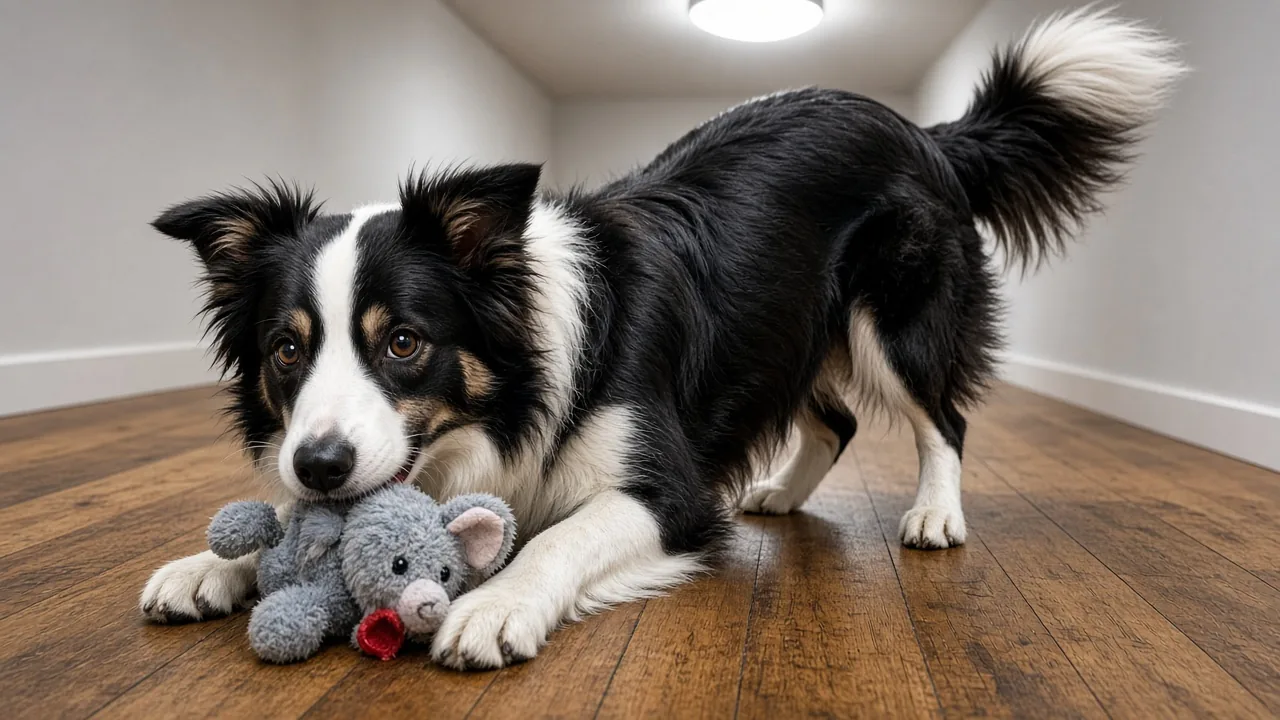
Excited dogs tend to move toward the sound, not away from it. Look for a loose, wiggly body rather than a tense one.
Common signs of playful arousal include:
- A play bow (front end down, rear end up) before or after the squeak
- A tail held mid-height or higher, moving in a loose wag
- Ears in a relaxed, forward or neutral position
- Repeatedly bringing the toy back to you or picking it up again right after dropping it
- Short bursts of barking that sound bright, not panicked
If your dog shows most of these, the crying or yipping is almost certainly part of the fun, not a sign of a problem.
How Dogs Act When They’re Enjoying a Noisy Toy
A dog who genuinely enjoys a squeaky toy usually mouths it eagerly, shakes it side to side, and pounces on it again each time it goes quiet. She treats the squeak like a reward for "catching" the toy, similar to how a dog might react to catching prey.
You’ll often see her carry the toy to a favorite spot, drop it, and immediately squeak it again rather than walking away. That persistence, returning to the noise instead of avoiding it, is one of the clearest markers that the sound is rewarding rather than stressful for her.
What to Watch For: Signs That Point to Fear or Overstimulation

A fearful or overstimulated dog typically tries to put distance between herself and the sound. The whining tends to last longer and sound thinner or more strained than a happy yip.
Watch for these signals:
- A tucked tail or lowered body posture
- Flinching or startling each time the toy squeaks
- Trying to leave the room, hide under furniture, or push away from the toy
- Whining that continues well after the sound stops
- Trembling, panting when it isn’t hot, or pinned-back ears
If you see several of these together, treat it as a request to stop. Put the toy away, let your dog settle, and don’t force another round that day. If this kind of fear shows up repeatedly across different sounds or situations, not just one toy, it’s worth mentioning to your veterinarian or a certified trainer, since general noise sensitivity can sometimes point to a broader anxiety issue that benefits from professional guidance rather than toy swaps alone.
When a Reaction Looks Aggressive or Confused Instead of Scared
Not every uneasy reaction looks like fear on the surface. Some dogs bark sharply at the toy, lunge toward it, or circle the room trying to find where the noise is coming from, over and over, without ever settling.
This pattern often reflects frustration or confusion rather than straightforward fear: the dog can hear the sound but can’t locate or control its source, and that mismatch is unsettling on its own. Treat repeated searching, barking, or lunging the same way you’d treat clearer fear signs, by lowering the intensity of the toy or pausing the activity, since pushing through confusion rarely resolves it on its own. A dog who regularly guards or growls over the toy once she does get it is showing a different issue, resource guarding, which calls for its own training approach rather than a change in toy type.
Excitement vs Distress: A Side-by-Side Comparison
| Signal | Excitement | Fear or Distress |
|---|---|---|
| Body posture | Loose, wiggly, play bow | Tense, crouched, tail tucked |
| Vocal pitch and duration | Short, bright yips or barks | Thin, prolonged whining or howling |
| Movement toward the toy | Approaches, pounces, retrieves | Backs away, hides, tries to leave |
| Ear position | Forward or neutral | Flattened or pinned back |
| Recommended response | Let the play continue | Pause the toy, let the dog decompress |
Use this table as a quick check during the first few sessions with any new squeaky toy, since most dogs show a fairly consistent pattern once you know what to look for.
How to Safely Test a Dog’s Reaction to a New Squeaky Toy
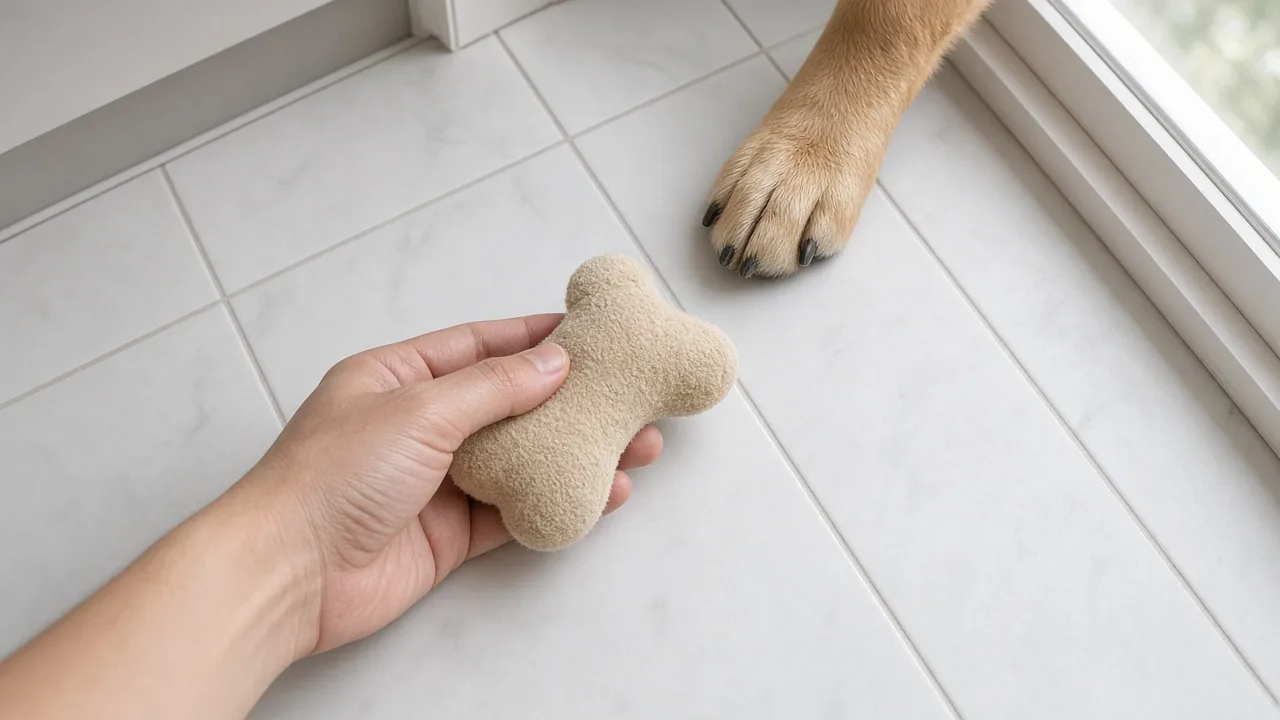
Because reactions vary so much between individual dogs, it’s worth testing a new noisy toy carefully rather than handing it over for free play right away.
- Start in a quiet, familiar room with no other dogs or distractions present.
- Squeak the toy once, briefly, from a few feet away rather than right next to your dog’s ear.
- Watch her body language for about ten seconds before doing anything else.
- If she approaches with loose body language, let her investigate and play at her own pace.
- If she backs away, freezes, or whines persistently, stop and remove the toy from sight.
- Wait at least a day before trying again at a lower volume or with more distance, if you try again at all.
- Keep the first few sessions short, under a couple of minutes, even if your dog seems to be enjoying it.
This gradual approach costs you nothing but a little patience, and it avoids flooding a sound-sensitive dog with noise before you understand how she’ll respond.
Matching Squeaky Toys to Your Dog’s Size, Age, and Bite Strength
Once you know whether your dog leans toward excitement or sensitivity, match the toy to that temperament rather than buying whatever looks fun on a package. A small, high-pitched squeak can suit a confident terrier and overwhelm a nervous rescue dog of the same size, so sound sensitivity and physical size don’t always line up the way you’d expect.
Size and bite strength matter just as much as sound. The toy needs to be large enough that your dog can’t close her whole mouth around it, and sturdy enough to hold up to her typical chewing force. A light plush squeaker that’s perfectly suited to a toy breed won’t survive, or safely contain, a determined chewer in a large or giant breed.
| Dog group | What usually works | What to avoid | Why |
|---|---|---|---|
| Small breeds, toy and teacup dogs | Lightweight plush with a sewn-in squeaker, sized to their jaw | Hard rubber or dense latex toys made for big dogs | A toy that’s too hard for a small mouth can be awkward to carry and may chip baby or adult teeth |
| Puppies in the teething stage | Soft rubber or textured plush labeled for puppies, offered in short supervised sessions | Toys with small plastic eyes, bows, or any part that can be chewed off | Teething puppies chew harder and more randomly than adult dogs, so loose parts come off faster |
| Medium and large breed adults | Thicker rubber, reinforced plush with multiple stitched layers, or vinyl squeakers | Thin single-layer plush for a heavy chewer | Average adult jaws can shred a thin toy within one play session, scattering stuffing and squeaker parts |
| Giant breeds and strong chewers | Dense rubber or heavy-duty fabric designed for aggressive chewing, checked often for cracks | Anything marketed only for light or occasional chewing | A toy that can’t handle real bite pressure becomes a choking risk faster, not slower |
| Senior dogs | Softer textures that are easier on worn teeth and gums, still large enough to avoid swallowing | Very hard rubber or dense nylon that can stress aging teeth | Older dogs may have fewer healthy teeth and need less bite pressure, not more durability |
If your dog falls between categories, size the toy to her mouth and chew style rather than only her weight. A gentle 70-pound dog who mostly licks and carries toys needs something different than a 30-pound dog who shreds everything in minutes.
How to Check a Squeaky Toy for Safety Before and During Play
A squeaky toy isn’t risky because of the sound; it’s risky because of what’s inside it. Before you hand over a new toy, and periodically after that, check for the following:
- Exposed or loose squeakers. The small plastic squeaker mechanism is a choking hazard if it comes free, so squeeze the toy and look for any seam near the squeak point that’s starting to separate.
- Stuffing coming through torn seams. Loose stuffing can be swallowed and, in rare cases, cause a blockage, so stop play as soon as you see fluff poking out.
- Dangling strings, ribbons, or fabric strips. Linear items like string are a particular concern because they can wrap around the intestines if swallowed, which is more dangerous than a single solid piece.
- Batteries or magnets in electronic toys. Toys that vibrate or make sound electronically should have a securely sealed, screw-fastened battery compartment; never let a dog chew directly on the housing.
- Cracks or chunks missing from hard rubber or plastic. A toy that’s starting to crack is weaker everywhere, not just at the visible crack, and can shed sharp fragments.
No toy on the market is risk-free, no matter how it’s marketed, so supervision during the first several sessions with anything new matters more than the toy’s price or reputation.
How to Clean a Squeaky Toy, and How Often to Replace One
Cleaning depends on the material. Plush toys with a squeaker inside usually can’t go through a washing machine without risking the mechanism, so hand-wash them in warm water with a small amount of mild, unscented soap, then air-dry completely before giving the toy back. Rubber, vinyl, or silicone toys without electronics can typically be washed with warm water and mild soap, or run through the top rack of a dishwasher if the manufacturer’s care label allows it.
A few general cleaning habits worth building in:
- Rinse and dry chew toys weekly if your dog plays with them daily, more often if she drools heavily or the toy touches the floor outdoors.
- Avoid soaking any toy with a battery compartment or internal electronics, even briefly.
- Let toys dry fully before storing them, since trapped moisture inside plush toys can lead to mold or odor.
Replace a squeaky toy as soon as you notice any of the safety issues above, rather than waiting for a scheduled interval. Beyond that, a toy that’s lost its squeak, flattened past recognition, or developed a strong odor that doesn’t wash out has reached the end of its useful life even if it still looks intact. Heavy chewers typically go through soft toys faster than light chewers or dogs who mainly carry and squeak without chewing, so the real replacement schedule is set by how your dog plays, not by the calendar.
Can an Auto-Standby Feature Reduce Overstimulation?
Some interactive toys are built to pause automatically after a few minutes without contact and reactivate only when touched again. One pet owner using this kind of toy found it useful partly because it saved battery, but the standby period also meant the pet wasn’t exposed to constant repeated noise the whole time it sat untouched.
For a sound-sensitive dog, that built-in pause can work in your favor. It limits the toy to shorter, dog-initiated bursts of sound rather than one long continuous squeak, which gives an unsure dog more control over when the noise starts and stops.
Quiet Alternatives: Tunnels and Foraging Games
If squeaky sounds consistently put your dog on edge, you don’t need to force the issue. Tunnel-style toys give dogs a way to burn energy and satisfy curiosity through movement and exploration rather than noise, and one owner reported that a collapsible tunnel held up well through nearly six months of regular play, which suggests this category can be fairly durable even under daily use.
Scattering a portion of your dog’s regular food around a safe area for her to sniff out is another low-cost option. It turns mealtime into a foraging game, builds confidence through a sense of accomplishment, and sidesteps the noise question entirely. It also costs nothing beyond the food itself, which makes it worth trying before buying anything new.
When Squeaky Sounds Can Help, and When to Avoid Them
Used sparingly, a squeaky toy’s sound can double as a quick way to call a distracted dog back toward the house from the yard; one owner found that a dog absorbed in exploring outside came running back within a couple of seconds of hearing a familiar squeak. Used as an occasional attention-getter like this, it’s a low-stakes trick worth trying.
Relying on it heavily, or using a loud toy repeatedly to call a dog who’s already shown signs of sound sensitivity, can backfire. For a noise-wary dog, repeated squeaking from across the yard may read as stressful rather than inviting, so it works best as an occasional shortcut rather than your main recall method, and it’s no substitute for actual recall training.
Buying Lessons: Why the Same Toy Gets Different Reactions
It’s tempting to assume a toy with a steep discount or glowing description will work for your dog simply because it worked for someone else’s. In practice, individual temperament overrides price or popularity almost every time; one shopper described buying a heavily promoted fish-shaped toy only to find their cat completely ignored it, a pattern that shows up just as often with dogs and squeaky toys.
Before buying, read a range of reviews rather than just the top one, and pay attention to any mentions of pets being scared, uninterested, or aggressive toward the toy. Price point alone, whether a toy sits at the budget end or the premium end of the shelf, doesn’t predict how your particular dog will react to the sound or texture. Then treat your dog’s first real reaction, not the packaging or the price tag, as the final verdict on whether that toy is a good fit.
Frequently Asked Questions About Dogs and Squeaky Toy Sounds
Is It Normal for a Puppy to Cry at Squeaky Toys?
Yes, to a point. Puppies have had far less exposure to household sounds, so an intense reaction to a new squeak, more whining or startling than an adult dog might show, isn’t unusual on its own.
That said, ongoing distress is still a signal to listen to. If a puppy continues to whine, tremble, or try to leave the area well after a couple of calm introductions, put the toy away and try a quieter alternative instead of assuming she’ll simply grow out of it.
Can Squeaky Sounds Help Call My Dog Back Outside?
They can work as an occasional attention-grabber for a dog who already associates the sound with something positive, as one owner found when a distracted dog in the yard ran straight back at the first squeak. It’s a handy trick to have, especially in a moment when your dog is more interested in the yard than in you.
It shouldn’t replace real recall training, though, since it depends entirely on the toy being nearby and the dog being in a receptive mood. Think of it as a backup, not a strategy.
Why Does My Dog Lose Interest in a Squeaky Toy So Fast?
Losing interest after a few days is a common pattern and not a sign you bought the wrong thing. Dogs habituate to repetitive sounds and textures fairly quickly, the same way a new sound effect stops being novel once they’ve heard it dozens of times.
Rotating two or three toys in and out of circulation, rather than leaving every toy out all the time, usually keeps a dog more engaged over the long run. Putting a toy away for a week or two and reintroducing it often renews interest almost as well as buying something new.
How Do I Know When It’s Time to Throw a Squeaky Toy Away?
Any sign of a cracked seam, exposed squeaker, loose stuffing, or a chunk that’s gone missing means it’s time to retire the toy immediately, regardless of how new it is or how much your dog still likes it. Short of visible damage, a toy that’s gone flat, lost its sound, or started smelling sour even after washing has also run its course.
Pay attention to how your own dog typically plays, whether she’s a chewer, a chaser, a retriever, or someone who’d rather dig and sniff, before deciding whether a squeaky toy is the right fit for her at all. Whatever you choose, check it regularly for cracks, loose seams, or exposed squeakers, replace it the moment it looks worn, and rotate a small set of toys in and out to keep both her interest and her safety in good shape. The same wear checks and rotation habit apply to tunnels, rope toys, and anything else in her toy basket, not just the squeaky ones.
This article is for general information only and is not a substitute for advice from your veterinarian. Always supervise your pet with a new toy, and replace any toy that is damaged or small enough to swallow.

Contributor
admin
Continue reading
All stories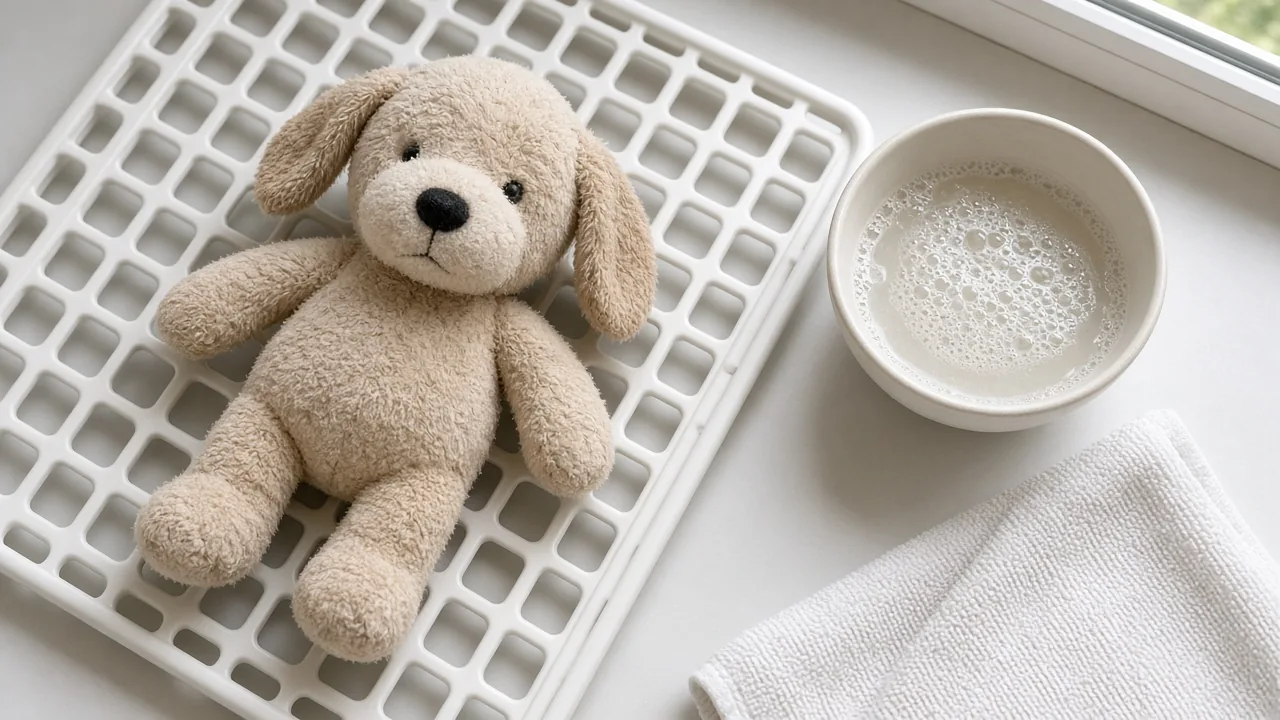
DOG TOYS · 11 October
How to Clean Smelly Plush Dog Toys Safely at Home
DOG TOYS · 11 October
Is Tether Tug Durable for Strong Dogs? What Owners Report
DOG TOYS · 11 October
Responses
Moderated discussion