DOG TOYS
Is Tether Tug Durable for Strong Dogs? What Owners Report
Tether Tug holds up for many dogs, but owners of rottweilers and bullies report broken poles and bases within hours. Here's how to pick the right size and fix common failure points.
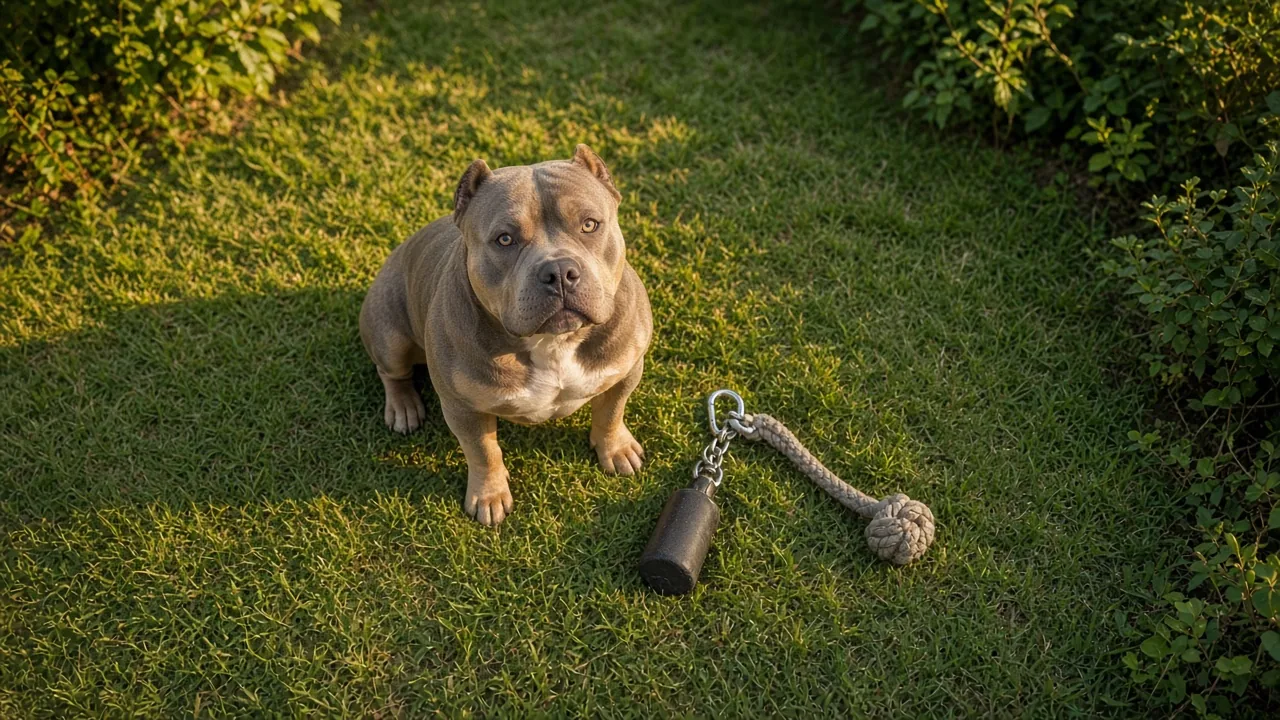
Tether Tug can hold up well for many dogs, but owners of rottweilers, bullies, and other powerful chewers report broken poles or bases within hours. So is Tether Tug durable for strong dogs? The honest answer depends on your dog’s size, bite strength, and how you set the toy up, not just the price tag or the marketing copy on the listing.
Is Tether Tug durable for strong dogs, or does it break easily?
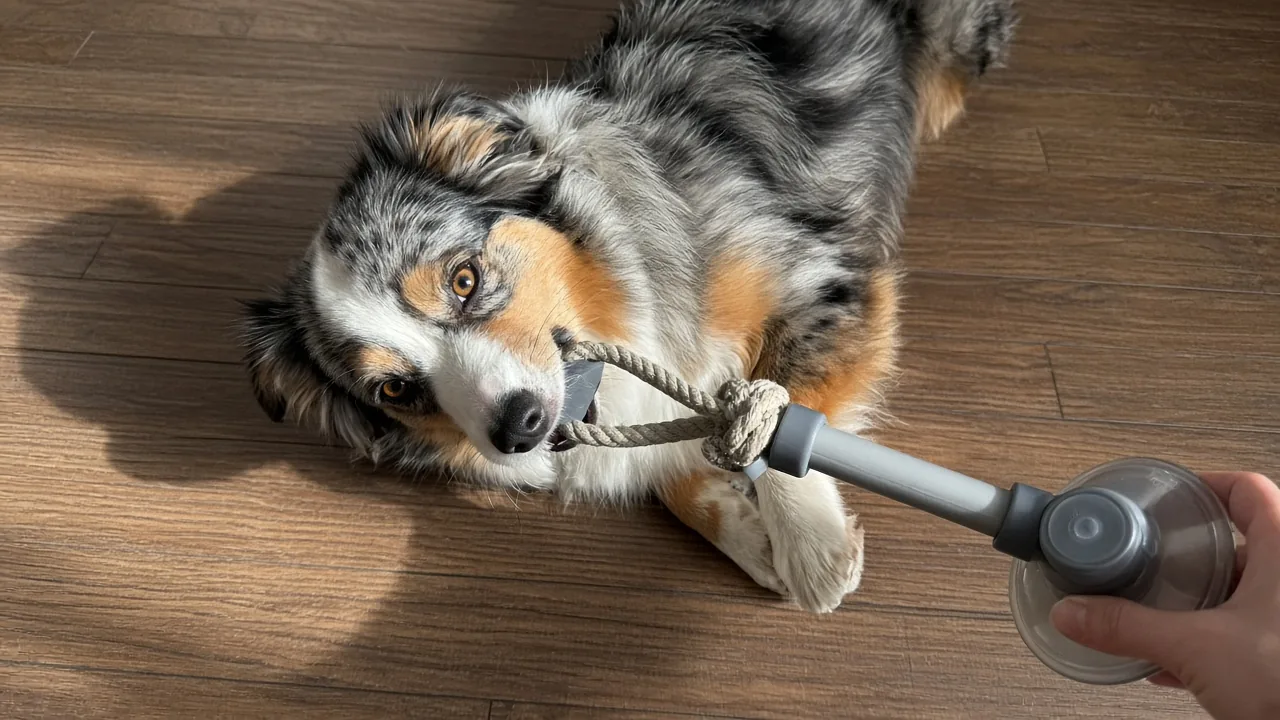
Owner reports on this toy are split, and the split lines up almost exactly with dog size and chewing power. Some owners describe using the same pole and base for close to two years with no issues, including one owner whose Mini Aussie wore an indoor model for nearly that long without a single repair.
Other owners, mostly with large and powerful breeds, describe failures that happen fast. One owner said a one-year-old rottweiler snapped the pole in about 30 minutes. Another reported that an American bully cracked the base in roughly two hours.
That gap matters when you’re deciding whether this toy is right for your household. A toy that lasts two years for a moderate chewer can fail in an afternoon for a dog that pulls hard, twists its body weight into the tug, and chews at every part it can reach.
How to choose the right Tether Tug size for your dog’s breed and bite strength
The core idea behind Tether Tug is simple: a pole that bends and rotates, paired with a tug toy that flips back and forth, gives your dog a way to get cardiovascular exercise and work out energy that might otherwise turn into destructive behavior. That design works well for dogs that like to pull against resistance.
Picking the right size means looking past the weight range on the label and asking a few more specific questions:
- What’s your dog’s actual weight, not an average for the breed?
- How hard does your dog pull during tug games, fetch, or leash walks? A dog that drags you across the yard needs a sturdier setup than one that tugs gently.
- Does your dog chew at the connection point, or just pull on the toy itself? Chewers put stress on parts that pullers don’t.
- What connects the toy to the pole — a metal carabiner or a plastic strap? This affects how long the attachment survives, separate from the pole’s thickness.
Answering these before you buy helps you avoid landing in the "broken within hours" group instead of the "used it for years" group.
Small and medium dogs: when the standard size is enough
For dogs with moderate chewing habits and lighter body weight, a standard-size Tether Tug tends to hold up fine without any reinforcement. The Mini Aussie case mentioned above is a useful reference point: a dog in that weight class, playing indoors, didn’t need any modifications to get years of use.
If your dog falls into this category, you likely don’t need to buy up a size "just in case." Spending more on a larger model that your dog doesn’t have the weight or bite force to stress isn’t necessary, and the standard pole should flex and rotate the way it’s designed to.
Large and extra-large breeds: rottweilers, bullies, and other powerful chewers
The reports of poles snapping in 30 minutes and bases cracking in two hours both came from large, powerful breeds — specifically a rottweiler and an American bully. That pattern suggests these dogs need the largest size the manufacturer offers, and ideally one with reinforced hardware at the connection points, not just a model that technically fits their weight on paper.
If you own a large or extra-large breed known for strong jaw pressure — think rottweilers, American bullies, pit bull-type dogs, or similar builds — treat the size chart as a starting point, not a guarantee. Watch how your dog interacts with the toy in the first few sessions, and be ready to reinforce or replace parts early if you see stress on the plastic strap or wobble at the base.
Why manufacturer weight claims and durability marketing can be misleading
One listing for this toy was rated for dogs over 100 pounds and marketed with language suggesting it could stand up to almost anything. In practice, some dogs well under that weight limit still broke it, while the rottweiler that failed in 30 minutes likely weighed less than 100 pounds too.
That gap between the marketing and the real-world outcome is worth remembering any time you shop for chew-resistant pet gear. A weight rating describes an average case, not a promise for every dog that falls under that number. Bite force, chewing style, and how much a dog fixates on a specific part of the toy all vary more than a single weight threshold can capture.
No toy on the market can honestly be guaranteed to survive every dog, and durability claims that sound absolute are worth reading with some skepticism rather than taking at face value.
How to fix a Tether Tug that keeps coming loose or breaking
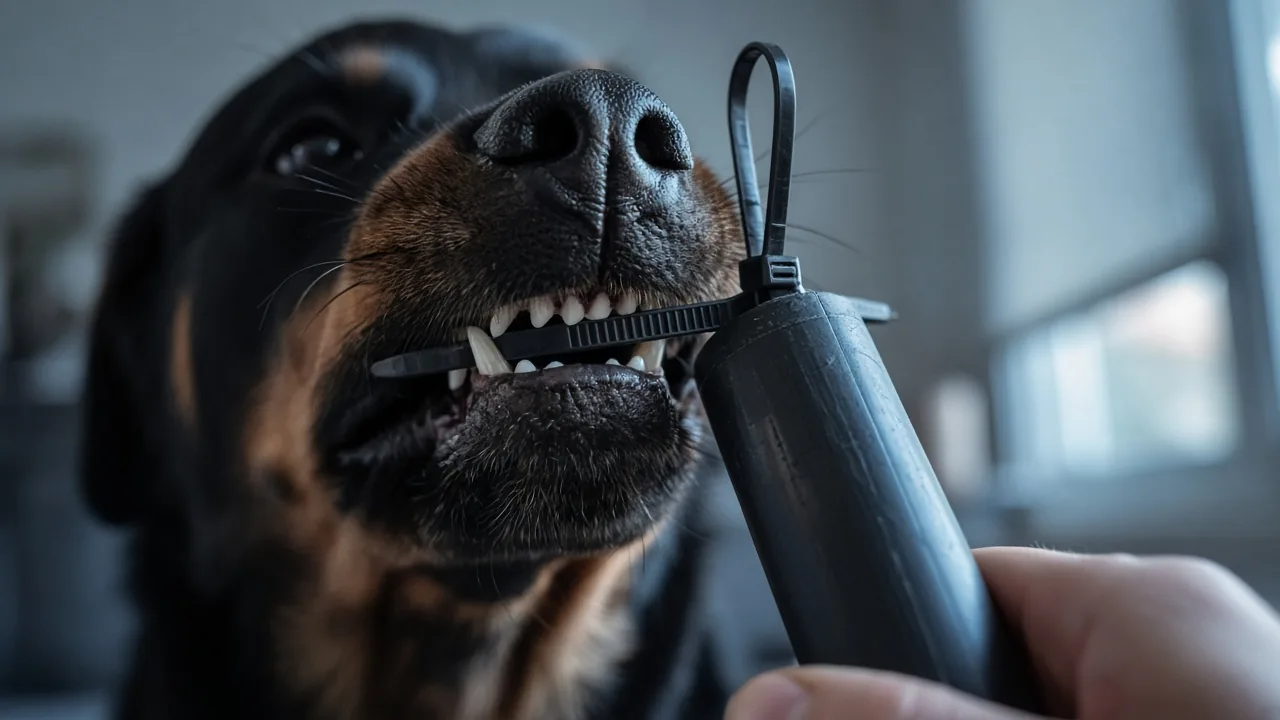
If your dog has already started working at the plastic strap connecting the toy to the pole, you don’t necessarily need to replace the whole unit right away. One owner found a workaround after noticing her dog had learned to jump onto the couch to reach the top of the pole and chew through the strap.
Here’s the approach that worked for her, broken into steps:
- Remove the damaged plastic strap and replace it with a heavy-duty zip tie, which resists chewing better than the original plastic.
- Apply one or two drops of a very hot liquid hot sauce directly on the zip tie — not on the toy itself, since getting hot sauce on the toy can make your dog avoid the toy altogether.
- Let your dog redirect naturally. Over a few months, most dogs learn to focus their biting and pulling on the intended tug end instead of the connection point.
- Stop reapplying hot sauce once the behavior shifts. This owner reported she no longer needed it after her dog settled into the new habit.
This method targets the exact spot where a lot of damage happens — the connection between toy and pole — rather than trying to make the whole unit chew-proof. It also uses a deterrent on the hardware rather than the toy, which keeps your dog engaged with the part of the toy meant for play.
Why metal carabiner connections may outlast plastic straps
Some newer Tether Tug models have moved from plastic straps to metal carabiners for attaching the toy to the pole. One longtime owner noted that this change looked like a more straightforward fix for the chewing-through-the-strap problem than any zip-tie workaround, since a metal clip gives a dog’s teeth much less to grip and tear.
If durability is your main concern and you’re choosing between model versions, a metal carabiner attachment may matter more for strong chewers than the overall thickness of the pole itself. The pole bending or flexing is part of the normal design; a dog defeating the connection point by chewing through it is usually the actual failure point owners report.
Is it safe to leave your dog alone with a Tether Tug?
Any toy that combines a rigid pole, rope or strap material, and metal fittings carries some risk if a part breaks or a dog manages to chew through hardware while unsupervised. A cracked base, a frayed strap, or an exposed metal edge can turn a durable toy into one that risks a cut lip, a swallowed fragment, or an escape from a damaged connection point.
A few practical safety habits apply here, as they do with most tug and chew toys:
- Supervise the first several sessions with any new Tether Tug, especially if you have a strong chewer, so you can see early signs of wear before leaving your dog alone with it.
- Check the pole, base, and connection hardware before any unsupervised play, looking for cracks, loose bolts, or a strap that’s starting to fray.
- Remove the toy if you see a part that’s bent, cracked, or coming loose, rather than waiting to see if it holds for one more session.
None of this means the toy is unsafe by default. It means that, like most outdoor dog toys with hardware, it’s worth a quick visual check before you walk away and leave your dog with it.
How to tell if your dog will actually enjoy a Tether Tug
Not every dog takes to this style of toy, and that’s a preference issue more than a durability one. Dogs that already like to tug on ropes, chase moving objects, and bite down hard during play tend to engage with a Tether Tug for the long haul, which lines up with the nearly two-year Mini Aussie example.
On the other hand, some owners have found their dogs show little interest in tug-style toys and gravitate toward soft plush toys or items they can carry around instead. If your dog has never shown much enthusiasm for games of tug, chances are a Tether Tug will sit unused regardless of how durable it turns out to be.
Before buying, think honestly about how your dog already plays:
- Does your dog grab the end of a rope toy and pull against you, or just drop it after a sniff?
- Does your dog chase moving targets with sustained energy, or lose interest after a minute?
- Does your dog bite down firmly during play, or mouth things gently?
A dog that answers yes to the first two is a strong candidate; a dog that prefers soft, carryable toys may be better served by a different type of toy entirely.
What other dog toys fail quickly for strong chewers, and how to choose better ones
Tether Tug isn’t the only toy category where durability claims and real-world results don’t always match. Looking at a few common toy types side by side shows that most failures trace back to one factor you can actually check before buying: material thickness, closure strength, or how well the toy fits your dog’s specific chewing style.
| Toy type | Common failure point | Durable for strong chewers? | What to check before buying |
|---|---|---|---|
| Tether Tug (pole + tug) | Plastic strap or connection point | Varies widely by breed and setup | Metal carabiner attachment, pole weight rating |
| Squeaky plush toys | Fabric and seams tear quickly | Rarely, for determined chewers | Treat as short-term only |
| Flying disc treat toys | Opening too wide, food spills out | Depends on opening size | Test opening size against your dog’s kibble or treats |
| Freeze-dried treat dispensers | Narrow design traps treats inside | Depends on fit | Match opening size to treat size before buying |
| Suction-cup toys | Suction fails to hold, or material too hard | Often disappointing | Check surface compatibility and bite-softness |
Squeaky plush toys: why they rarely survive strong chewers

Low-cost plush and squeaky toys are built for soft play, not sustained chewing, and that shows up fast with a determined dog. One owner bought four squeaky duck toys from different stores, and none of them lasted more than three days with her strong-chewing dog.
If your dog falls into that category, it’s more realistic to treat plush toys as short-term entertainment rather than a durable purchase. Rotating a few budget plush toys and retiring each one as soon as the seams start to give way is a more sustainable approach than expecting any single plush toy to last.
Treat-dispensing toys: avoiding flying discs that spill and freeze-dried food that jams
Treat-dispensing flying discs and freeze-dried food toys both run into fit problems, just in opposite directions. A flying disc with too wide an opening lets kibble spill out the moment your dog starts playing, which defeats the point of a slow feeder. A freeze-dried treat dispenser with too narrow an opening can trap treats inside so your dog can’t get them out, or so they’re hard to load in the first place.
Before buying either style, check the opening size against the specific food you plan to use. A toy that works well with kibble might fail completely with larger freeze-dried pieces, and vice versa.
Suction-cup toys: common fit and grip problems
Suction-cup toys that attach to a floor or wall tend to run into two separate issues. First, the suction base often doesn’t hold well enough for a dog actively pulling or chewing on it, so it detaches mid-play. Second, some of these toys use chew material that’s too hard and too bulky, which makes dogs reluctant to bite down on them at all.
If you’re considering a suction-cup toy, test the suction on the actual surface you plan to use (tile, hardwood, etc.) and look closely at the chew material. A toy your dog won’t bite isn’t durable in any meaningful sense, since it just goes unused.
How often to replace a Tether Tug and other chew toys for durability
Regular checks matter more than any specific replacement schedule, since wear depends on how often and how hard your dog plays. A quick inspection routine works for most tug, chew, and feeder toys:
- Check the pole for cracks or splits, especially near the base and near the top where the connection point sits.
- Check straps and carabiners for fraying, stretching, or loosening every few weeks if your dog is a frequent or aggressive player.
- Check the base for stability, making sure it hasn’t shifted, cracked, or come loose from repeated pulling.
- Replace any part showing damage immediately, rather than waiting for a full break. A frayed strap or a hairline crack in the base is a warning sign, not something to monitor indefinitely.
This same logic applies across chew and feeder toys generally: catching a crack, a loose seam, or a worn-through strap early means you’re swapping out one small, inexpensive part instead of dealing with a toy that fails while your dog is using it unsupervised.
How to clean and maintain tug and feeder toys between uses
Different toy materials need different care routines, and some need far more frequent attention than owners expect. Soft fabric toys and snuffle mats in particular tend to hold onto odor and dirt quickly, since the fabric traps saliva, food residue, and whatever your dog has been dragging the toy through outside.
For fabric-based toys like snuffle mats, plan on washing them regularly, more often than you might with a hard rubber or rope toy. If frequent washing isn’t practical for your schedule, having two or three in rotation lets you swap in a clean one while the other is being washed, rather than letting one toy go unwashed for weeks.
For the pole and rope sections of a Tether Tug, wiping down the pole and spot-cleaning the rope end after outdoor use helps prevent dirt buildup at the connection points, which can also help you spot fraying or wear sooner.
Frequently asked questions about Tether Tug durability and sizing
Where can I find a larger size than what’s listed online?
Some owners have reported trouble locating an extra-large size through standard retail listings. If you can’t find a larger model through the usual outdoor pet toy retailers, it’s worth checking directly with the manufacturer, since availability for larger sizes can be inconsistent across sellers.
Does "chew-proof" or Kevlar-style marketing actually hold up for strong chewers?
Not always. One owner noted that a Kevlar-branded toy was destroyed within five minutes by her strong-chewing dog, despite similar durability claims to what you’ll see on other toys. Treat any chew-resistant marketing claim as a starting point for research, not a guarantee, and look for specific owner reports from dogs with a similar bite strength to yours.
What if my dog shows no interest in tug toys at all?
This comes up fairly often, and it usually comes down to play style rather than the toy being defective. If your dog consistently ignores pulling and tugging toys, try toys that match what your dog actually does during play, such as plush toys for a dog that likes to carry and shake, or scent-based toys for a dog that enjoys sniffing more than chasing.
Watch how your dog naturally plays, tug, chase, chew, or dig, before picking a toy size and style, and check any toy regularly for wear so you can retire it before it becomes a hazard. The same wear checks that apply here are worth running on any other chew or tug toy in your rotation, and keeping a couple of toy types on hand can help you figure out what actually holds your dog’s interest long term.
This article is for general information only and is not a substitute for advice from your veterinarian. Always supervise your pet with a new toy, and replace any toy that is damaged or small enough to swallow.

Contributor
admin
Continue reading
All stories
DOG TOYS · 11 October
Best Long Lasting Dog Chew Toys Ranked by Safety and Durability
DOG TOYS · 11 October
Is a Plastic Bottle Safe as a DIY Dog Toy? What to Check First
DOG TOYS · 11 October
Responses
Moderated discussion