DOG TOYS
Best Long Lasting Dog Chew Toys Ranked by Safety and Durability
A ranked breakdown of the best long lasting dog chew toys—marrow bones, frozen stuffed Kongs, and bully sticks—scored on safety, durability, and how much dogs actually love them.
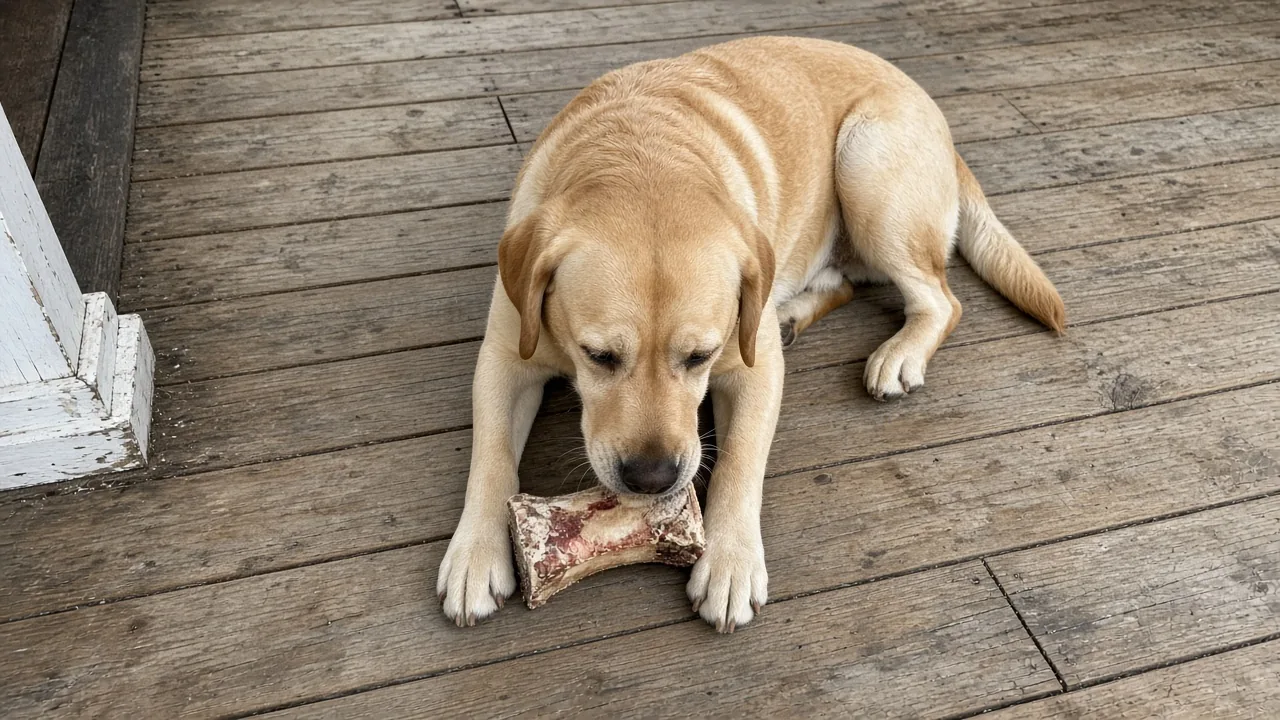
Your dog destroys a plush toy in minutes but can make a bully stick last an afternoon, so which chews actually hold up? Among the best long lasting dog chew toys ranked by owners and trainers, frozen stuffed Kongs, marrow bones, and bully sticks consistently come out on top, though the right choice still depends on your dog’s size, chewing style, and how closely you can supervise.
What Makes a Chew Toy Safe and Long Lasting
Ranking chew toys fairly means looking at more than how long they last. A useful system scores each option across five areas: safety, reinforcing value (how much your dog actually wants it), durability, cost, and odor.
Safety covers choking risk, tooth damage, and whether the material breaks into sharp pieces. Reinforcing value matters because a chew your dog ignores is useless no matter how durable it is. Durability is measured in realistic terms — a chew that keeps a dog occupied for 45 minutes to an hour counts as long lasting, not something that needs to survive for days.
Cost and odor are secondary factors but still shape whether a chew fits your routine. A product that’s cheap but smells bad within a day, or one that’s pleasant but expensive to replace weekly, changes the math for most households.
Best Long Lasting Dog Chew Toys Ranked From Highest to Lowest Score
When these five factors are combined, three chews consistently land at the top: marrow bones, frozen stuffed Kongs, and bully sticks. Himalayan yak chews, antlers, and dehydrated fish skin form a second tier, each trading off durability against safety or appeal in a different way.
| Chew Type | Safety | Reinforcing Value | Durability | Best For |
|---|---|---|---|---|
| Marrow bone | Moderate (hard texture) | High | Very high | Heavy chewers, adult dogs |
| Frozen stuffed Kong | High | High | Moderate (45–60 min) | Separation anxiety, puppies |
| Bully stick | Moderate (swallow risk at end) | High | High | Dogs that like leathery textures |
| Fish skin | High | Very high | Very low (minutes) | Short-term distraction |
| Yak chew | Moderate | Moderate | High | Low-odor households |
| Antler | Moderate (hard, can fracture teeth) | Low | Very high | Dogs that chew for the activity, not the taste |
Marrow bones edge out the others for pure durability, frozen Kongs win on mental engagement, and bully sticks offer the best balance for dogs that need supervision anyway. Fish skin and antlers sit at opposite extremes — one disappears almost instantly, the other barely wears down but doesn’t hold a dog’s interest the same way.
Frozen Stuffed Kong: Best for Mental Enrichment and Anxiety
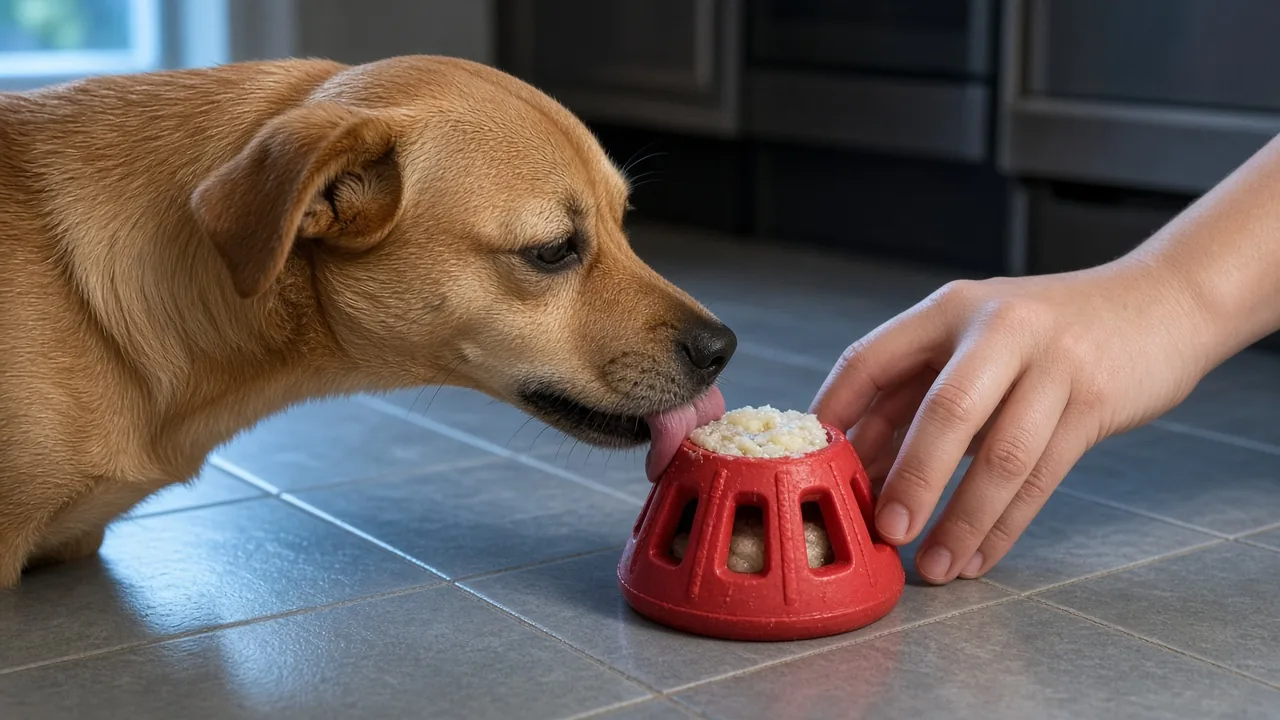
A frozen stuffed Kong scores high on safety because the rubber is sturdy and doesn’t splinter, and dogs have to work for the food inside rather than gulping it down. It also scores well on reinforcing value — most dogs find the combination of scent and slow food release genuinely engaging.
Durability is moderate compared to a bone, lasting roughly 45 minutes to an hour once frozen. That’s shorter than a marrow bone, but it’s long enough to cover a crate session, a work call, or the window right after you leave the house, which is exactly when many dogs with separation anxiety struggle most.
One owner raising a puppy used four frozen stuffed Kongs a day, making up about half the dog’s daily food. That approach turns a meal into an enrichment activity instead of a five-minute bowl dump, which can help with both boredom and anxious behaviors during the day.
Marrow Bones: Top-Ranked for Durability
Marrow bones come out on top of this ranking largely because their durability is close to as high as it gets. A raw marrow bone resists cracking in a way that cooked bones don’t, which is one reason raw is the safer choice — cooked bones dry out and splinter more easily.
Safety is rated moderate rather than high because the bone’s hardness can be a problem for puppies, light chewers, or dogs with sensitive teeth. A dog that chews gently may do fine, but a dog that bites down hard and fast is more likely to crack a tooth on something this dense.
You can extend a marrow bone’s life and reinforcing value by packing wet food into the hollow center and refreezing it, essentially turning it into a reusable version of a stuffed Kong. That combination of hardness and refillable value is a big part of why marrow bones take the top spot on this list.
Bully Sticks: Strong All-Rounder With a Choking Caveat
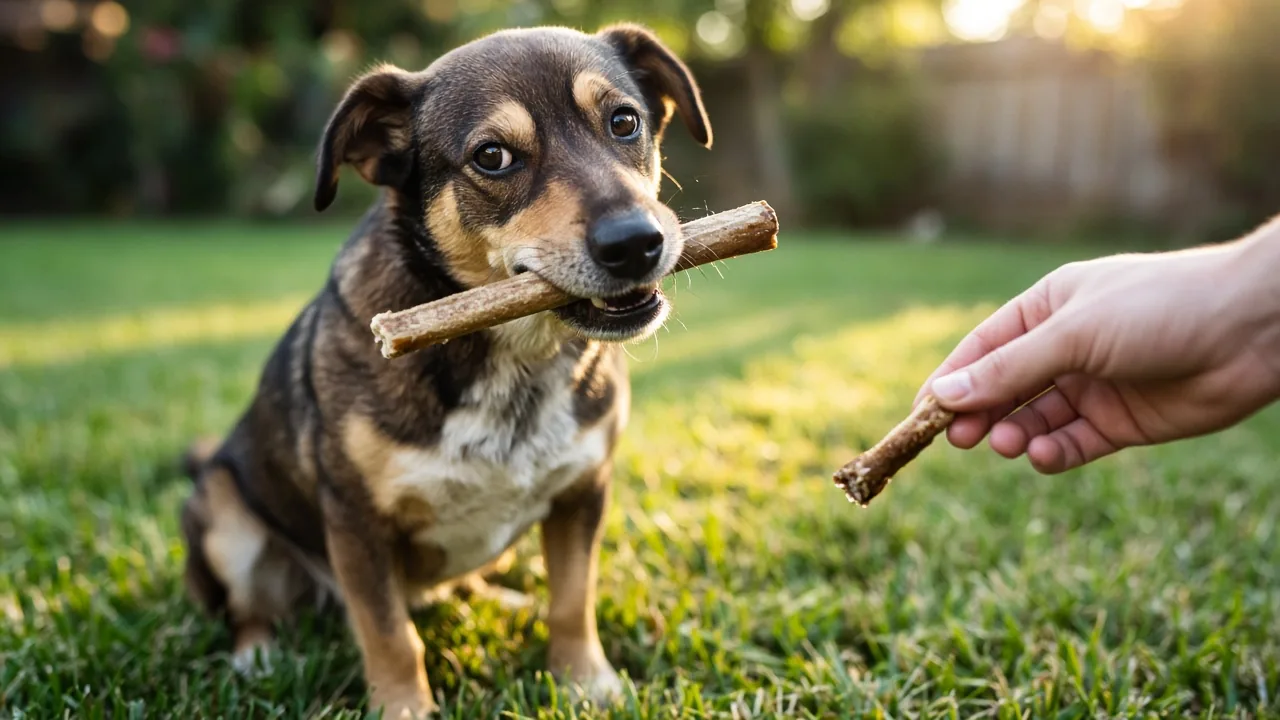
Bully sticks land in the "pretty safe" category rather than the safest tier, mainly because of what happens at the end. As the stick shrinks down to a small final piece, some dogs try to swallow it whole instead of chewing it, which creates a real choking risk if no one’s watching.
Beyond that caveat, bully sticks score well across the board — dogs tend to find them highly appealing, and they hold up longer than fish skin or a Kong session. They work especially well for dogs that gravitate toward leathery textures rather than hard, bone-like chews.
Two practical issues come up with regular use. Bully sticks can make dogs thirstier, so keep water easily accessible while they’re chewing. They also tend to pick up an odor over time, and once that happens, some dogs lose interest and leave the stick alone.
Himalayan Yak Chews, Antlers, and Fish Skin: Where They Fit
Himalayan yak chews are made from yak milk, cow’s milk, salt, and lime juice, and they land in the middle of the pack — safe enough, moderately appealing, and durable, though no chew holds up forever once a dog gets determined. Their biggest advantage is that they’re nearly odor-free, which matters if a bully stick’s smell has ever driven you to banish your dog to another room.
Antlers score among the highest for durability but near the bottom for appeal, since many dogs don’t find the flavor as rewarding as marrow or bully stick. They’re also hard enough that tooth fracture is a real concern, so they suit dogs that chew more for the activity than the taste, and owners who are fine with a steeper upfront cost in exchange for a chew that lasts.
Fish skin sits at the opposite extreme. It scores extremely high on both safety and reinforcing value, but durability is the lowest of any option here — some dogs finish one in a matter of minutes. That makes it a poor choice as a primary chew, but a good one for short, high-value distraction, like keeping a dog settled while guests arrive.
How Durability Changes for Large and Heavy-Chewing Dogs
Everything above holds up reasonably well for small and medium-sized dogs, but durability looks very different once you’re dealing with a large or heavy-chewing breed. One Golden Retriever owner found that even hard rubber balls, including glow-in-the-dark models, got chewed apart — a result the owner admitted was surprising given how tough those balls were supposed to be.
Plush toys fared even worse. A stuffed pig toy had its stuffing completely pulled out, and most plush toys in that household didn’t survive past the first day, with some destroyed in seconds and others lasting only a few minutes.
The lesson here isn’t that the rankings above are wrong — they’re based mostly on moderate chewers. For large or powerful dogs, you may need to treat every durability rating as a rough estimate and expect it to drop. The one toy that did survive long-term in that household got visibly worn and discolored but never broke, so the owner bought a second one as backup rather than searching for something new.
How to Choose a Chew Toy Based on Size, Age, and Chew Style
Matching the chew to your dog cuts down on guesswork and wasted money. Start with three questions:
- Size and bite force: Small and medium dogs generally do fine with the full range above. Large and giant-breed dogs need tougher options and should have even the "durable" choices checked more often for cracking.
- Age and teething stage: Puppies in the teething phase benefit more from softer chews like frozen stuffed Kongs than from marrow bones or antlers, since their teeth and jaws aren’t ready for maximum hardness.
- Texture preference: Watch what your dog already gravitates toward. A dog that likes gnawing on leather items (shoes included, unfortunately) usually takes well to bully sticks. A dog that goes for hard objects tends to prefer marrow bones or antlers.
Senior dogs often do better with moderate chews like yak sticks or stuffed Kongs rather than very hard options, since aging teeth and gums can be more prone to injury. If you’re not sure where your dog fits, start with a softer option and watch how they handle it before moving to something harder.
Are Marrow Bones, Antlers, and Yak Chews Safe for Teeth?
This is one of the most common worries, and it’s a fair one. Marrow bones and antlers score only moderate on safety specifically because of tooth fracture risk — the harder the material, the more force it puts on a dog’s teeth with every bite.
Some owners report noticing a grinding or crunching sound while their dog chews these products and have stopped offering them out of concern, even though these chews are often considered reasonably safe when every factor is weighed together. That disagreement is worth taking seriously: there’s no way to guarantee a hard chew won’t crack a tooth, and a dog that bites down forcefully is at higher risk than one that gnaws gently.
A reasonable approach is to watch your dog’s chewing style rather than relying on a general safety score. If your dog is an aggressive, fast chewer, softer options like a stuffed Kong or yak chew may be the safer long-term choice, even if they don’t last as long. If you notice any chipped teeth, bleeding, or reluctance to chew on one side of the mouth, stop using hard chews and check with your veterinarian.
How to Prevent Choking on Bully Sticks and Fish Skin
Bully sticks and fish skin share the same core risk: a dog trying to swallow a piece that’s too large once it’s been softened or chewed down. Fish skin can turn almost noodle-like when wet, and some dogs attempt to gulp it down whole rather than finishing the chewing process, which can cause choking.
With bully sticks, the danger shows up near the end, once the stick shrinks to a small nub that a dog can fit entirely in its mouth. At that point, many dogs stop chewing and try to swallow the remaining piece in one go.
To reduce the risk:
- Stay in the room the entire time your dog has a bully stick or fish skin chew — never leave them unsupervised with either.
- Take the bully stick away once it gets down to about two inches, well before your dog can fit the whole thing in their mouth.
- Watch for gagging, pawing at the mouth, or sudden gulping motions, and remove the chew immediately if you see any of these signs.
- Consider a bully stick holder, a small device designed to hold the stick in place so your dog can’t swallow the final piece.
If your dog does choke or seems to be struggling to breathe, contact your veterinarian or an emergency animal hospital right away.
How to Stuff and Freeze a Kong the Right Way
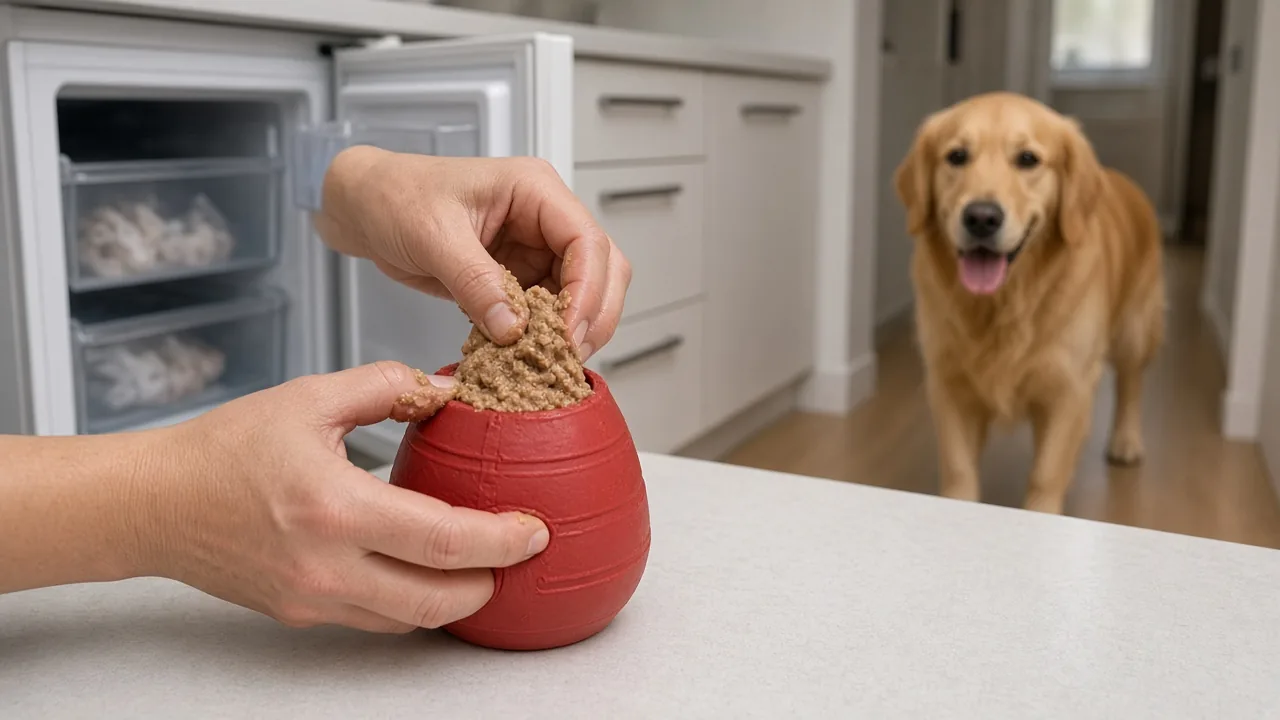
Getting a stuffed Kong right makes a real difference in how long it holds your dog’s attention. Dogs generally stay engaged longer with pate-style wet food than with chunky varieties, since chunky food tends to fall out in a few licks instead of requiring sustained work.
- Choose a pate-style wet dog food rather than one with large chunks or pieces.
- Pack the food into the Kong, pressing it down firmly so there are no air pockets, and fill all the way to the opening.
- Place the stuffed Kong in the freezer and leave it overnight.
- Give your dog the frozen Kong when you need 45 minutes to an hour of calm, focused chewing — before you leave the house, during a video call, or as part of a meal.
If your dog seems uninterested in a stuffed Kong at first, that’s common, especially if they’re used to eating from a bowl. Try gradually reducing their regular kibble portion — for example, from four cups a day down to three and a half — while offering the stuffed Kong as a replacement for the missing food. Many dogs start showing real interest within about four days once hunger motivates them to work for it.
A couple of variations can help keep things interesting: layering peanut butter with kibble inside the Kong, then sealing the opening with more peanut butter, or hiding the frozen Kong in another room so your dog has to search for it first. The second trick works especially well for dogs with a lot of energy who need both a mental and physical outlet.
Low-Cost Alternatives: Snuffle Mats and DIY Towel Puzzles
Not every day allows time to stuff and freeze a Kong overnight, and that’s fine — there are lower-effort options that still tap into a dog’s natural urge to forage for food. A snuffle mat, which hides kibble in fabric strips for your dog to sniff out, can hold a dog’s attention for around 30 minutes with no prep beyond scattering the food.
A knotted towel works on the same principle at essentially no cost. Twist or knot a towel to create folds and gaps, tuck pieces of kibble into them, and let your dog work the food loose. It won’t last as long as a marrow bone, but it’s a reasonable stand-in on a busy morning or as a way to add variety without buying anything new.
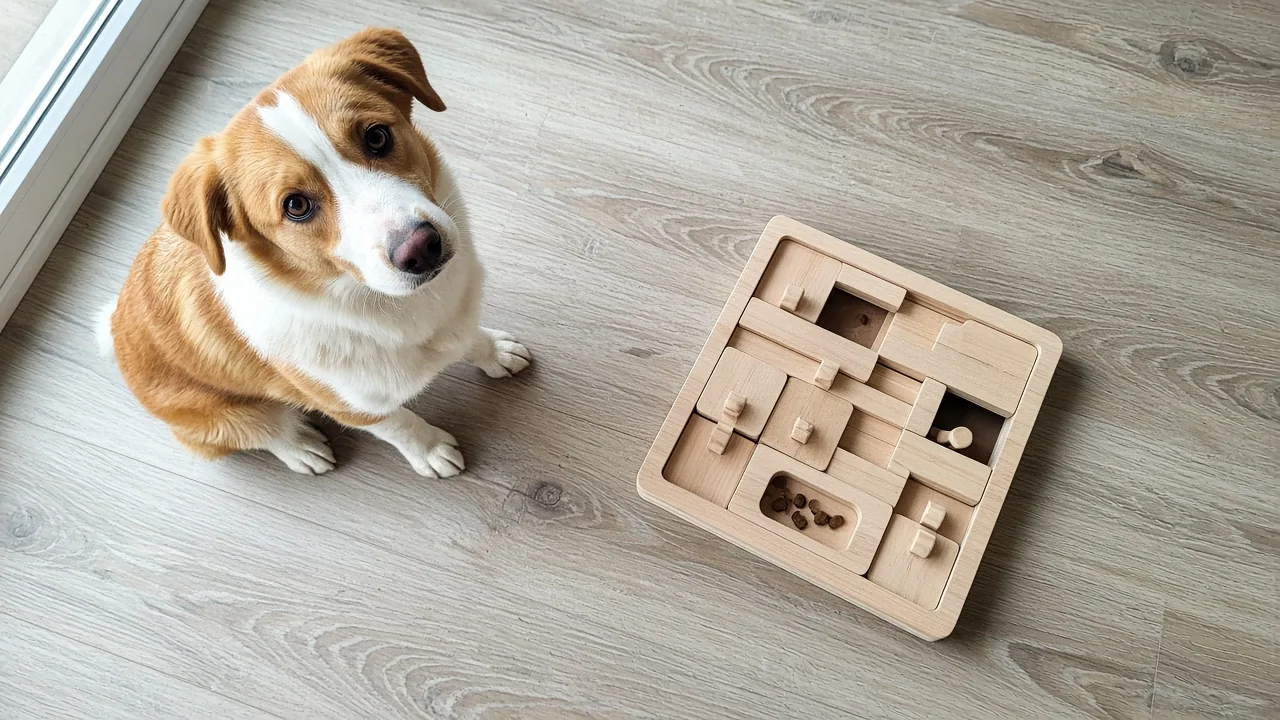
Puzzle feeders that release kibble as your dog rolls or noses them around are another option worth having on hand, particularly for dogs that get bored with the same feeding routine. Rotating between a few of these low-cost methods and your regular chews can keep your dog from losing interest in any single one.
How Often to Replace a Chew Toy and What to Check For
Even the most durable chew eventually needs to be replaced, and waiting too long increases the risk of a piece breaking off and being swallowed. Check chews regularly — daily for frequently used items like bully sticks and Kongs, and after every session for harder items like bones and antlers.
Signs it’s time to retire a chew:
- Cracks or splintering, especially on bones, which can create sharp edges capable of injuring your dog’s mouth or digestive tract.
- A strong, lingering odor, which often means the chew has broken down enough that your dog may lose interest anyway.
- A slimy or soft texture on items like bully sticks or rawhide-style chews, which can indicate bacterial growth.
- Missing chunks or a piece small enough to fit entirely in your dog’s mouth — this applies directly to bully sticks nearing their end and to any chew that’s been gnawed down significantly.
- Visible wear that changes the shape of hard chews like antlers, since this can mean the structure is weaker than it looks.
For large or heavy-chewing dogs, check more often than you think you need to. A toy that would last a small dog for weeks might show dangerous wear in a single session with a powerful chewer.
FAQ: Common Questions About Long Lasting Dog Chews
Can a frozen stuffed Kong actually help with separation anxiety?
It can help with mild cases, particularly when combined with exercise beforehand. One owner found that a long walk followed by a frozen Kong largely resolved their dog’s anxious behavior around departures. That said, separation anxiety ranges widely in severity, and a chew toy alone isn’t a substitute for proper training — for persistent or severe cases, talk to your veterinarian or a certified trainer.
Are hard chews like marrow bones and antlers safe for my dog’s teeth?
They carry more risk of tooth fracture than softer options simply because of how hard they are. Some dogs handle them without issue for years; others are more prone to injury, particularly aggressive chewers. If you hear grinding sounds or notice any change in how your dog chews on one side, stop and check with your vet.
Can low-cost options like snuffle mats hold up for large or heavy-chewing dogs?
Generally yes, since the fabric isn’t meant to be chewed through the way a toy is — your dog is sniffing and nosing rather than biting down hard. That said, supervise the first few uses with any new item, especially for large dogs, since fabric and loose threads can still pose a risk if swallowed.
Should I worry about bully sticks or fish skin going bad?
Watch for a stronger-than-usual odor or a slimy texture, both of which mean it’s time to toss the chew. A fresh bully stick has a noticeable but tolerable smell; if it starts to seem off or your dog suddenly avoids it, trust that reaction.
Pay attention to how your dog actually chews, chases, or shreds before settling on a toy, and get in the habit of checking it for wear so you can swap it out before it turns into a hazard. If you’re also building out a toy rotation, it’s worth applying the same wear checks to interactive and plush toys, not just chews.
This article is for general information only and is not a substitute for advice from your veterinarian. Always supervise your pet with a new toy, and replace any toy that is damaged or small enough to swallow.

Contributor
admin
Continue reading
All stories
DOG TOYS · 11 October
Why Do Dogs Lose Interest in Rubber Toys So Fast?
DOG TOYS · 11 October
How to Use Nina Ottosson Puzzle Toys: A Level-by-Level Guide

DOG TOYS · 11 October
Responses
Moderated discussion