CAT TOYS
Do Cats Get Bored of Automatic Toys? What Owners Keep Noticing
Many owners notice their cats lose interest in automatic toys faster than toys moved by hand. Here's why that happens and how to choose toys that keep your cat engaged.
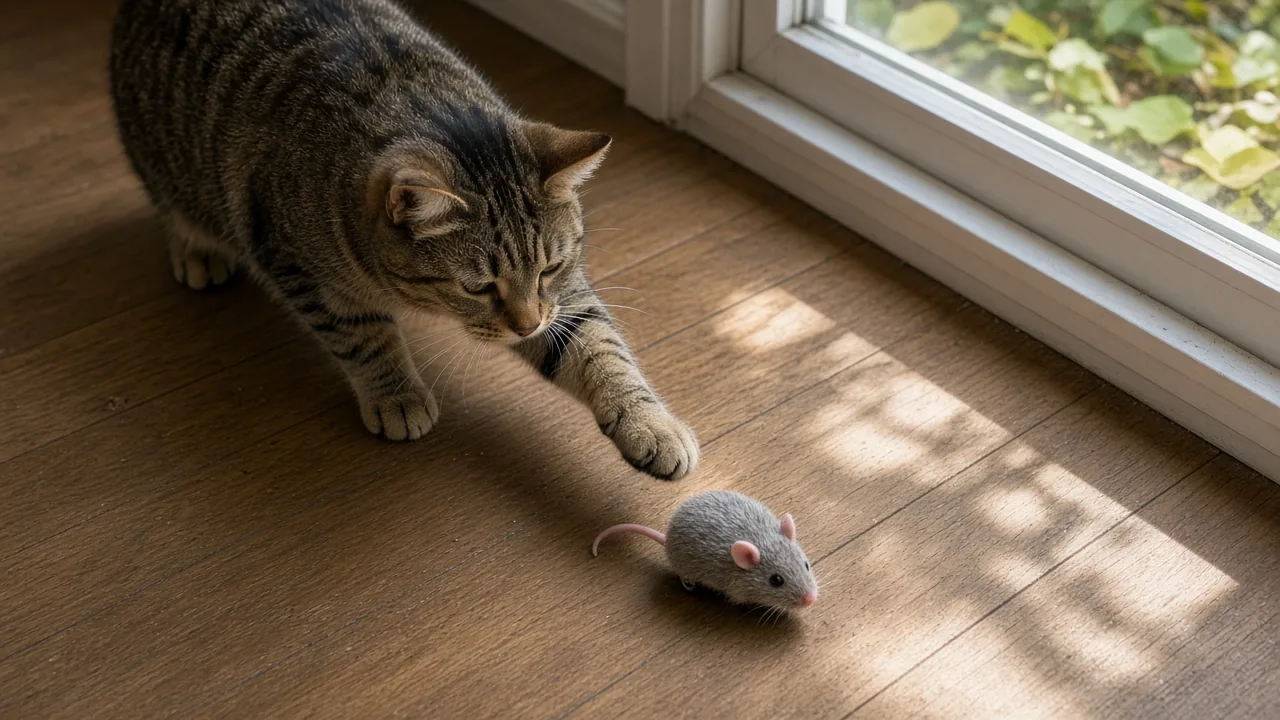
Picture this: you set a battery-powered mouse zipping across the floor, and your cat glances at it once, then walks away to watch a leaf outside instead. Many owners ask do cats get bored of automatic toys because this scene plays out so often. The short answer is yes, often faster than with toys you move yourself, because a cat’s hunting instincts respond to unpredictable, human-driven motion rather than repeating machine patterns.
That doesn’t mean automatic toys are useless. It means they work best in specific setups, and owner-moved toys tend to win when you compare raw engagement over time. The rest of this guide walks through why that happens, which toys hold up over weeks instead of minutes, and how to match a toy to your own cat’s play style, budget, and home.
Why Cats Often Prefer Owner-Operated Toys Over Automatic Ones
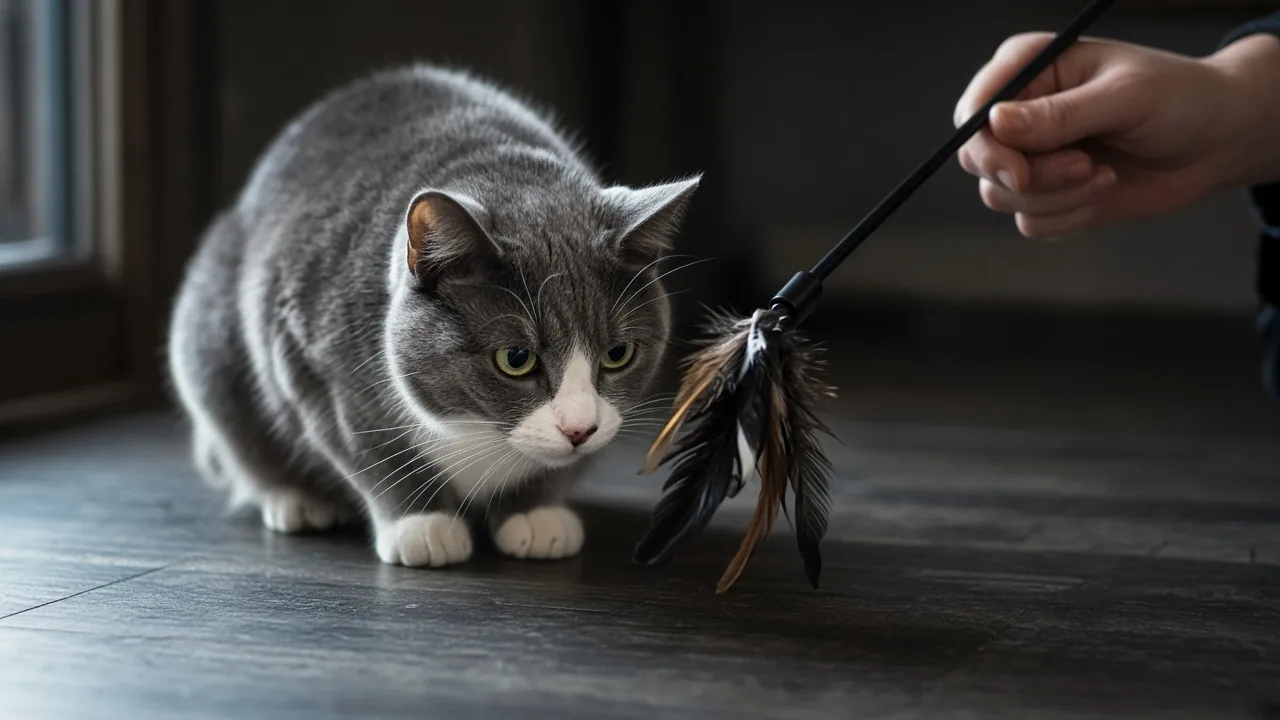
Cats hunt in a sequence: stalk, chase, pounce, capture. A toy that lets your cat move through all four stages tends to hold attention far longer than one that only triggers the first stage or two. This matters more than most toy packaging suggests, because a toy can look exciting in a store display and still fall flat at home if it skips the stages your cat actually needs.
Owner-controlled toys, like a basic wand toy, let you change speed and direction on the fly. You can slow down when your cat crouches, dart sideways when it creeps closer, then let it catch the toy. Automatic toys usually can’t read those cues, so they repeat the same path regardless of what your cat is doing. Over several sessions, that repetition is often what turns a cat’s curiosity into indifference.
What the Stalk-Chase-Pounce-Capture Cycle Means for Toy Choice
If a toy never lets your cat "win," interest tends to fade. This shows up clearly with some automatic laser toys: the dot moves, the cat watches, but there’s nothing physical to grab at the end. Without that final capture step, the play session can end in frustration instead of satisfaction, even if the cat looked engaged for the first minute or two.
When you’re choosing a toy, ask whether your cat can actually complete the capture stage. A wand toy with a feather or fabric end gives your cat something to sink claws into. A moving light does not, no matter how often it changes direction. Toys that combine motion with a graspable object, like a toy mouse dragged on a string, tend to satisfy this cycle better than purely visual or purely automatic options.
Reader Reports: Cats That Only Respond to Human-Moved Toys
Individual preference plays a real role here. One owner of a Burmese cat found that her cat ignored self-moving gadgets completely but reacted instantly the moment she picked up the exact same toy and moved it by hand. The toy itself hadn’t changed; only the source of the motion had.
This pattern comes up often enough that it’s worth testing with your own cat before assuming a pricier automatic toy will be the better buy. Some cats simply need the unpredictability of a human hand behind the motion, while others, often more food- or scent-driven cats, respond just as well to a toy that moves on its own as long as it’s paired with catnip or a treat at the end.
Do Cats Get Bored of Automatic Toys? What the Evidence Suggests
Across multiple toy tests, automatic toys often lose a cat’s attention within minutes once the motion becomes predictable. A cat that watches a device make the same loop two or three times tends to stop tracking it, even if it looked interested at first. This drop-off tends to happen faster with toys that move along a fixed track or a single repeating pattern.
That said, results vary by product design and by the individual cat. Some automatic toys hold up better than others, and some cats stay curious about movement longer than their housemates do. This is one area where owners genuinely disagree, and the disagreement usually comes down to how the toy moves and how the room is set up. A toy tested once in a quiet room may get a very different reaction than the same toy tested in a busy household with other pets or children nearby.
When Automatic Toys Still Work: Self-Moving Floor Toys and Obstacles
Self-propelled floor toys that bump into things and change direction can hold a cat’s interest much longer than toys moving in a fixed pattern. One tester found that adding more obstacles around the toy made it noticeably more engaging, since the random bounces off furniture legs and walls created the kind of unpredictable path a cat’s instincts respond to.
This setup works best in homes with enough open floor space for the toy to roam and bump into things naturally. In a small apartment with a cluttered floor, the toy may just stall in a corner, which defeats the point of adding obstacles in the first place. If your space is tight, you may get more consistent results from a wand toy or tunnel than from this category.
Why Automatic Lasers Often Get a Mixed Reaction
Laser toys can get a cat watching intently without ever triggering a pounce, since there’s no physical object to catch. One owner testing an automatic laser unit noted her cat seemed interested in the moving dot but wasn’t sure the cat would keep chasing it over repeated sessions.
Over time, this gap between "watching" and "catching" can lead to frustration rather than satisfaction. If you use a laser toy, it helps to end each session by letting your cat pounce on a physical toy or treat so the hunting sequence actually finishes. Some owners also report that automatic laser units need a longer charge than expected before they’ll respond at all, so it’s worth charging a new unit well past the first attempt before deciding it’s defective.
Low-Cost Owner-Operated Toys That Cats Rarely Get Bored Of
Price and play value don’t line up the way you’d expect. Across toy comparisons, some of the cheapest items, like a simple wire toy with a textured end, consistently outperformed automatic products that cost far more.
The reason comes back to motion. A cheap wand toy works because your hand supplies the unpredictable movement cats respond to. A motor, no matter how advanced, repeats itself. This is worth keeping in mind if you’re on a tight budget: spending more on an automatic gadget doesn’t guarantee more engagement than a toy that costs a fraction of the price.
| Toy Type | Typical Cost Tier | Owner Effort Needed | How Long Interest Lasts |
|---|---|---|---|
| Wire/wand toy | Budget | High (you move it) | Long-term, if rotated |
| Catnip-filled toy | Budget | Low | Short bursts, repeats well |
| Tunnel | Budget to mid-range | Medium | Long-term favorite for many cats |
| Automatic laser | Mid-range | Low | Often short, varies by cat |
| Self-moving floor toy | Mid-range to premium | Low | Longer with obstacles |
Wand Toys and Wire Toys: Why Inexpensive Often Wins
A basic wire toy with a feather, fabric strip, or crinkled paper on the end can outperform toys costing several times more. In one roundup of popular Amazon cat toys, prices ranged from as little as 25 cents to close to $100, and the simple wire-and-fabric design still came out as one of the most consistently praised options in the whole lineup.
The reason is simple: your hand movement mimics how prey actually darts, pauses, and flees. A motor can’t replicate that improvisation, no matter the price tag. This doesn’t mean every expensive toy is a poor choice, but it’s a useful reminder to judge a toy on how it moves rather than on what it costs.
If you want to try this without buying anything, you can make your own version. Several owners have reused worn-out scratcher cardboard, cutting it into thin strips and rolling it up to tie onto a stick or length of wire. It’s a reasonable way to test whether your cat responds to this toy style before spending money on a store-bought version, and it also gives you a quick replacement on hand once the original wears out.
Tunnels: A Toy Cats May Return to for Months
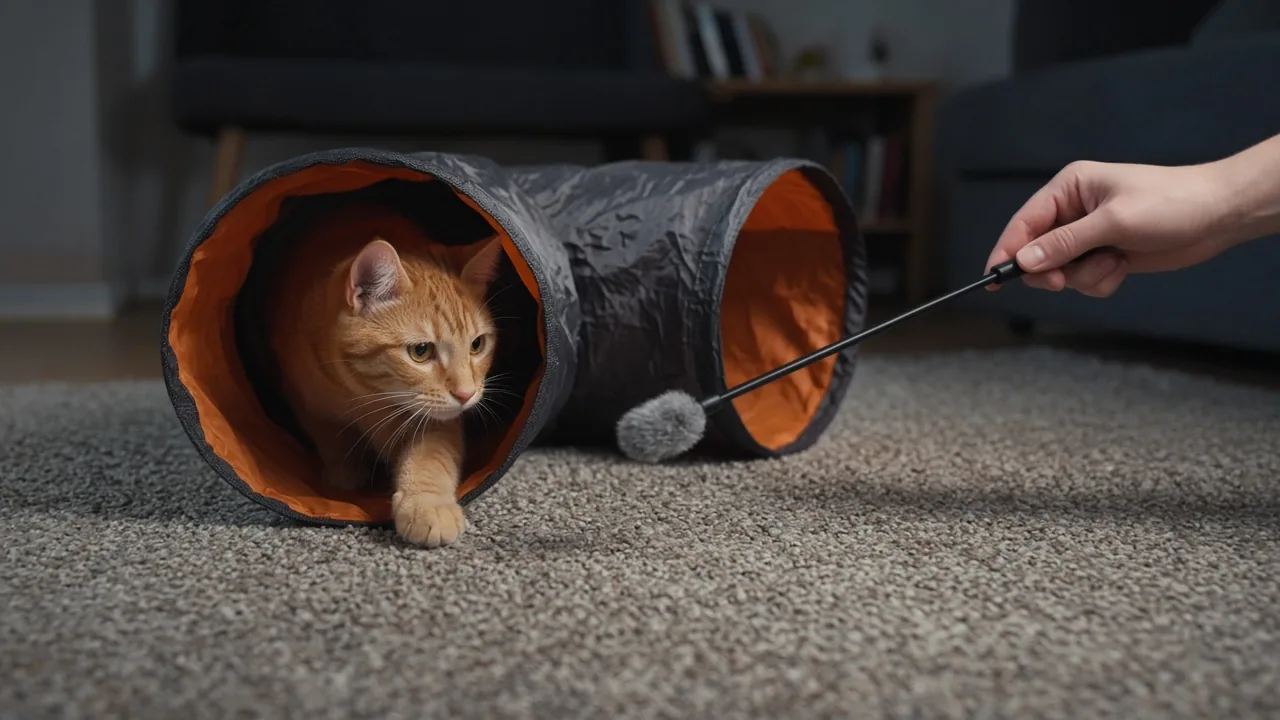
Open-ended tunnels, the kind with an opening on each side rather than a dip in the middle, let your cat hide, peek out, and ambush a toy moving near the entrance. Testers on both sides of this comparison singled out tunnels as a toy that stayed popular for months, not days, which puts them well ahead of most automatic gadgets in long-term value.
To get the most out of a tunnel, pair it with a hand-moved wand toy. Dangle or drag the toy near one opening while your cat waits inside, then let the toy "escape" toward the other end so your cat has to chase it through. Multi-cat households can also set up a tunnel as a shared resource, though it’s worth watching the first few sessions to make sure one cat isn’t blocking the other from entering or exiting.
Catnip-Filled Toys and DIY Alternatives on a Budget
Catnip toys work well for short bursts of excitement rather than sustained chase play. Stuffing a plain fabric toy generously with loose catnip, rather than relying on toys with just a light dusting, tends to produce a stronger reaction.
If you’re testing whether your cat even responds to catnip, a cheap plain toy filled by hand works just as well as a pricier pre-filled version. Not every cat reacts to catnip, so it’s worth testing on a budget item first before buying a whole set of catnip toys that may end up ignored.
How to Choose Between Automatic and Owner-Operated Cat Toys
The right choice depends less on price and more on three things: your cat’s play style, how much time you have for interactive sessions, and how much floor space your home offers. A kitten, an adult cat, and a senior cat may also respond to the same toy very differently, so it helps to think about age alongside play style.
A cat that pounces hard and wants contact will usually get more out of a wand toy or tunnel setup than a hands-off gadget. A cat that enjoys tracking movement across a room, without necessarily catching it, may get real value from a self-moving floor toy, especially with obstacles added.
Matching Toy Type to Your Cat’s Hunting Style
Watch how your cat plays before buying anything new:
- Hard pouncers that go for a full tackle tend to do best with wand toys and tunnels, where they can complete the capture stage.
- Trackers that enjoy watching and following motion across a room may get more mileage from a self-moving floor toy surrounded by furniture or obstacles.
- Mixed players often benefit from rotating both types rather than relying on one.
Kittens, Adult Cats, and Senior Cats Play Differently
Kittens tend to chase almost anything that moves, which can make automatic toys look more effective with them than they’ll be once the kitten matures. As cats grow into adulthood, many become more selective, favoring toys that reward a focused pounce over ones that just keep moving. By the time a cat reaches its senior years, shorter and gentler sessions, like a slow-moving wand toy near the floor, often work better than fast automatic gadgets that encourage sprinting.
If you have an older cat with stiff joints or reduced mobility, it’s worth checking with your veterinarian about how much activity is appropriate before introducing a new high-energy toy, automatic or otherwise.
How Often You Can Play Matters More Than the Toy’s Price
If your schedule only allows a few minutes of hands-on play a day, a well-placed automatic toy with obstacles can help fill in some of the gap. It generally shouldn’t replace short interactive sessions, though, since the stalk-chase-pounce-capture cycle is harder to complete without a human hand involved.
Several short sessions spread through the day tend to work better than one long session, especially for cats that lose interest quickly once a pattern becomes familiar. Two or three five-minute sessions, morning and evening, often produce more sustained enthusiasm than one twenty-minute block.
Indoor Cats and the Need for Daily Movement
Indoor cats that don’t get enough daily movement face a real set of health concerns. Low activity has been linked to sluggish digestion, a higher chance of hairball issues, weight gain, joint strain, and urinary problems.
This is part of why rotating toy types matters more for indoor-only cats than for cats with outdoor access. A tunnel one day, a wand toy session the next, and an obstacle-surrounded floor toy on a day you’re busier can keep activity levels more consistent than relying on a single toy.
A climbing setup can help too. Attaching a climbable fabric panel to a wall, with a few small perches, gives your cat another way to burn energy beyond ground-level chasing, especially when you guide the climb with a wand toy. Combined with a cat tree in another part of the home, this gives a cat multiple vertical and horizontal options to work off energy across the day rather than in one burst.
Safety Checks and Cleaning for Both Toy Types
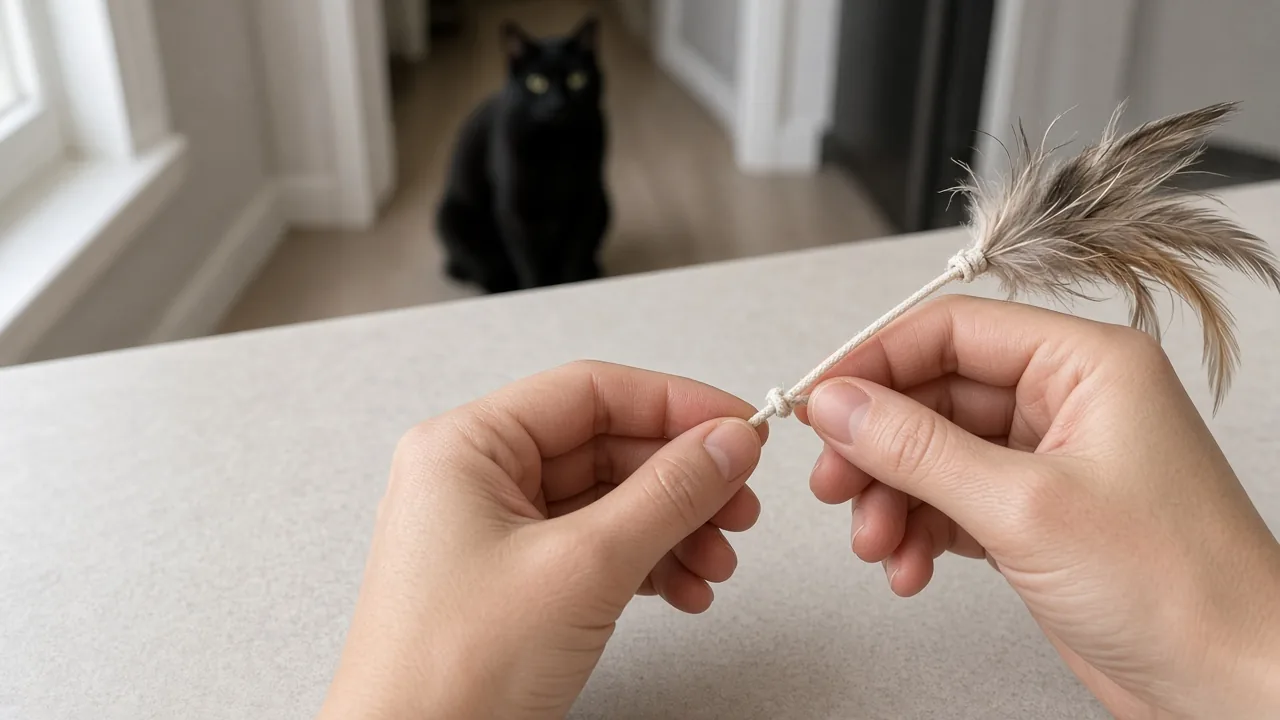
Wand toys, strings, and automatic toy housings all need regular inspection, not just when a toy looks obviously damaged. Loose parts, frayed cords, and cracked battery compartments are common failure points that can turn into choking or ingestion risks.
Always supervise a new toy the first few times your cat uses it, whether it’s a $1 wand toy or a $90 automatic gadget. This is when you’ll spot problems like a loose feather, a fraying string, or a battery door that doesn’t close securely. Strings and ribbons deserve particular attention, since a swallowed length of string can cause a serious internal injury that needs emergency veterinary care, not just a trip to the vet when convenient.
What to Inspect Before and After Each Play Session
Before handing your cat a toy, check:
- String and cord attachments, making sure nothing is unraveling at the knot.
- Small decorative ends like feathers, bells, or fabric strips, confirming they’re still firmly attached.
- Battery compartments on automatic toys, checking the door closes flush and the casing has no cracks, since a loose battery or magnet is a swallowing hazard.
Run through this same check again after play, since repeated chewing or dragging across the floor can loosen parts that looked fine beforehand. Store wand toys up and away between sessions rather than leaving them on the floor, since an unsupervised cat can chew through string or swallow a small part when no one is watching.
When to Replace a Worn Cat Toy
Replace a toy as soon as you notice frayed string, exposed stuffing, or a cracked casing on an automatic unit. Minor wear on cat toys tends to get worse quickly with continued use, not slower, so it’s not worth waiting to see if it holds up for another week.
A toy with a loose small part is also a toy your cat could swallow, so when in doubt, retire it rather than keep using it a few more times. Keeping a backup wand toy or two on hand makes it easier to retire a worn one right away instead of putting it off until a replacement arrives.
Frequently Asked Questions About Automatic and Interactive Cat Toys
Is It Normal for a Cat to Play Hard Then Sleep for Hours?
Yes, this is a common pattern. Cats often have bursts of high energy, sometimes in the early morning or late at night, followed by long stretches of rest.
If this schedule suddenly changes, or your cat starts sleeping far more than usual with little activity in between, it’s worth mentioning to your veterinarian rather than assuming it’s just a phase.
Do Curly Cardboard or Novelty Toys Actually Work?
Novelty-shaped toys, like curly cardboard pieces, get mixed reactions. Some cats treat them as a new and interesting texture to bat around, while others ignore them entirely.
The most reliable way to find out is to introduce one new toy at a time rather than several at once. That way you can actually tell which specific toy is holding your cat’s interest instead of guessing from a pile of options.
Can Automatic Toys Work for Multi-Cat Households?
They can, though the results tend to depend on whether your cats compete over the toy or ignore it together. A self-moving floor toy placed in open space may draw two or three cats into a shared chase, while a smaller gadget in a tight spot can lead to one cat guarding it from the others.
If you notice tension building around a shared toy, it’s often simpler to add a second toy in another room rather than trying to force cats to share one.
Watch whether your cat prefers stalking, chasing, or pouncing before buying anything new, and lean toward toys that let that instinct play out fully. Rotate wand toys, tunnels, and any automatic gadgets regularly, and check strings, small parts, and battery housings often for wear so playtime stays both engaging and safe.
This article is for general information only and is not a substitute for advice from your veterinarian. Always supervise your pet with a new toy, and replace any toy that is damaged or small enough to swallow.

Contributor
admin
Continue reading
All stories
CAT TOYS · 11 October
Are Expensive Cat Toys Worth It, or Will a Box Do Just Fine?
CAT TOYS · 11 October
Are DIY Cat Toys Safe From Choking Hazards? What to Check First
CAT TOYS · 11 October
Responses
Moderated discussion