CAT TOYS
Why Do Cats Scratch Holes in Water Mats? Causes and Fixes
Most water mats leak because claws puncture the thin vinyl seal during normal cat scratching and kneading. Here's why it happens and how to pick a mat built to survive it.
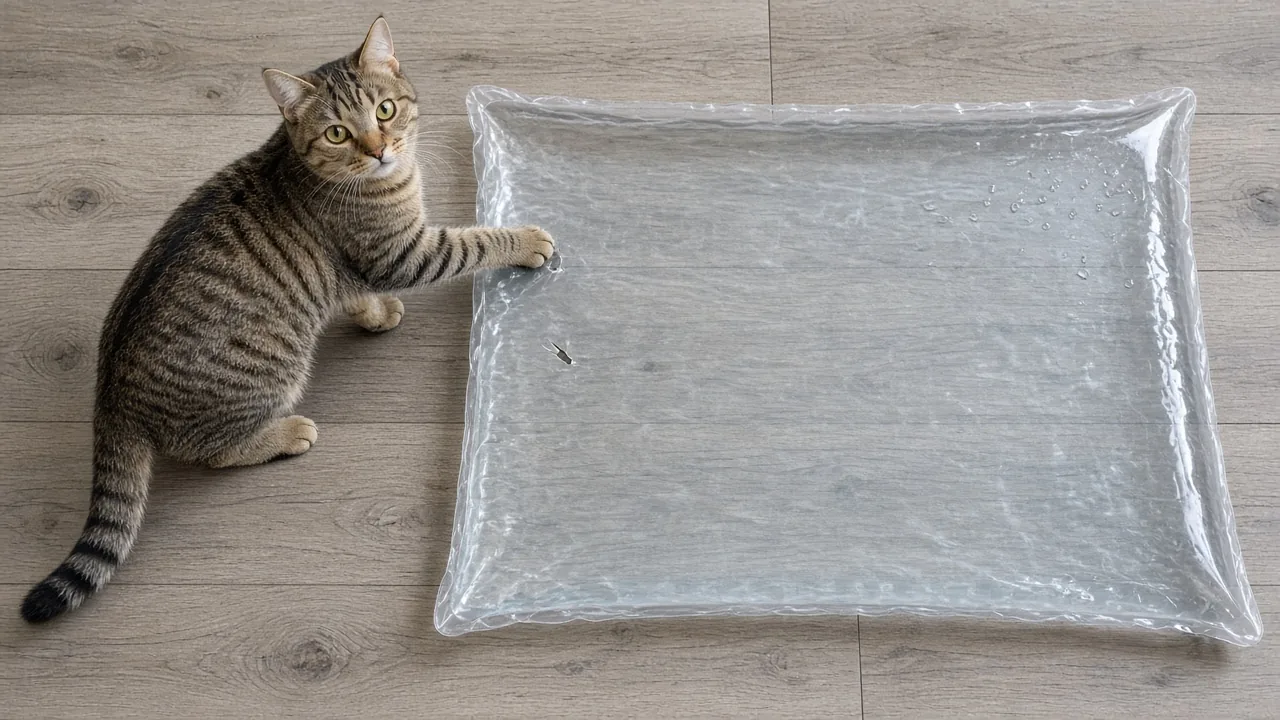
Most water mats leak because a cat’s claws puncture the thin vinyl layer within minutes of normal scratching or kneading, not because the mat was defective. If you’ve searched why do cats scratch holes in water mats after watching a brand-new toy go flat in your living room, the pattern is almost always the same: a claw catches an edge or seam, the thin plastic skin tears, and water finds its way out through a hole you can barely see. Understanding why this happens—and what separates a mat built to handle claws from one that isn’t—can save you from buying the same toy twice.
Why Do Cats Scratch Holes in Water Mats in the First Place
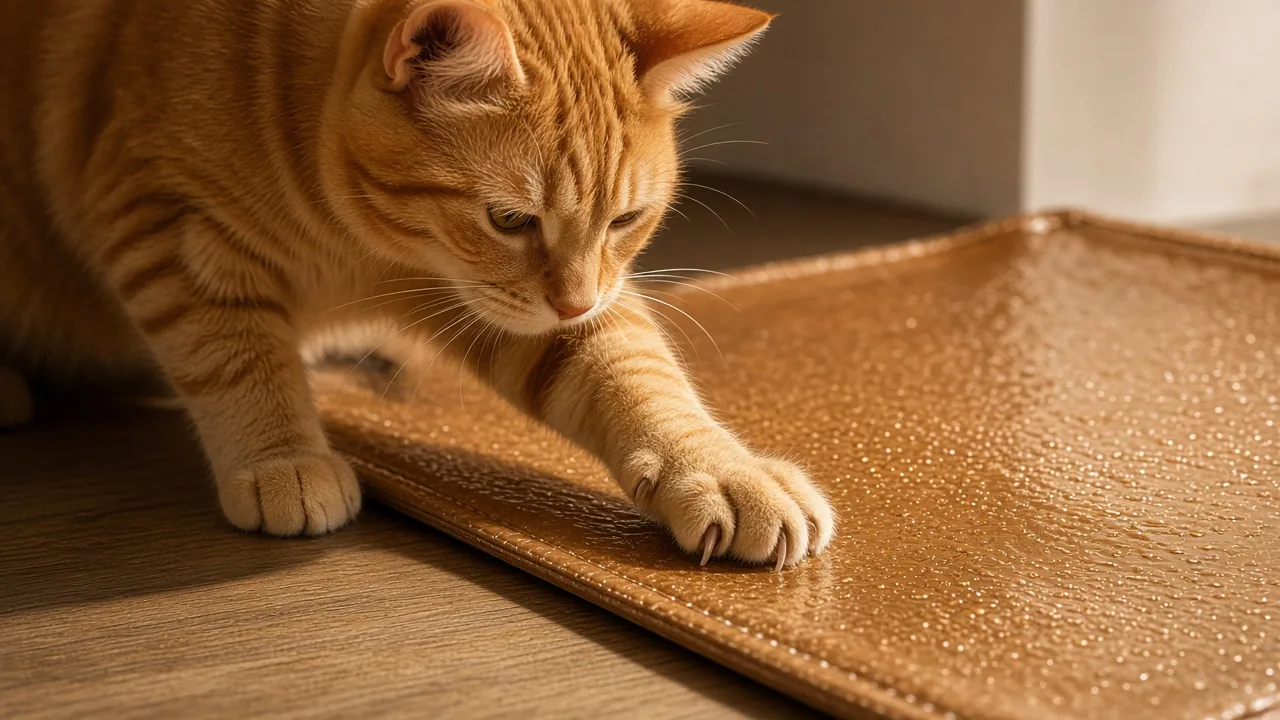
Cats scratch at flat, unfamiliar surfaces as part of normal exploring behavior. When a cat steps onto a mat, kneads it, or digs at the edges before lying down, it’s testing the texture the same way it would test a cardboard box or a cushion. That instinct doesn’t pause just because the surface happens to be filled with water.
A water mat that looks sturdy from the outside is usually just two layers of thin vinyl sealed around the edges. Claws that would barely scuff a couch cushion can break that seal in seconds. The scratching itself isn’t unusual or aggressive—it’s the same behavior a cat shows toward almost any new flat object, which is exactly why these toys are vulnerable. A scratching post or a woven doormat can absorb that same digging motion without damage; a vinyl mat filled with water has no give in the same way, so the claw tip does all the work of finding the weak point in the seal.
What Happens Inside the Mat When a Claw Punctures It
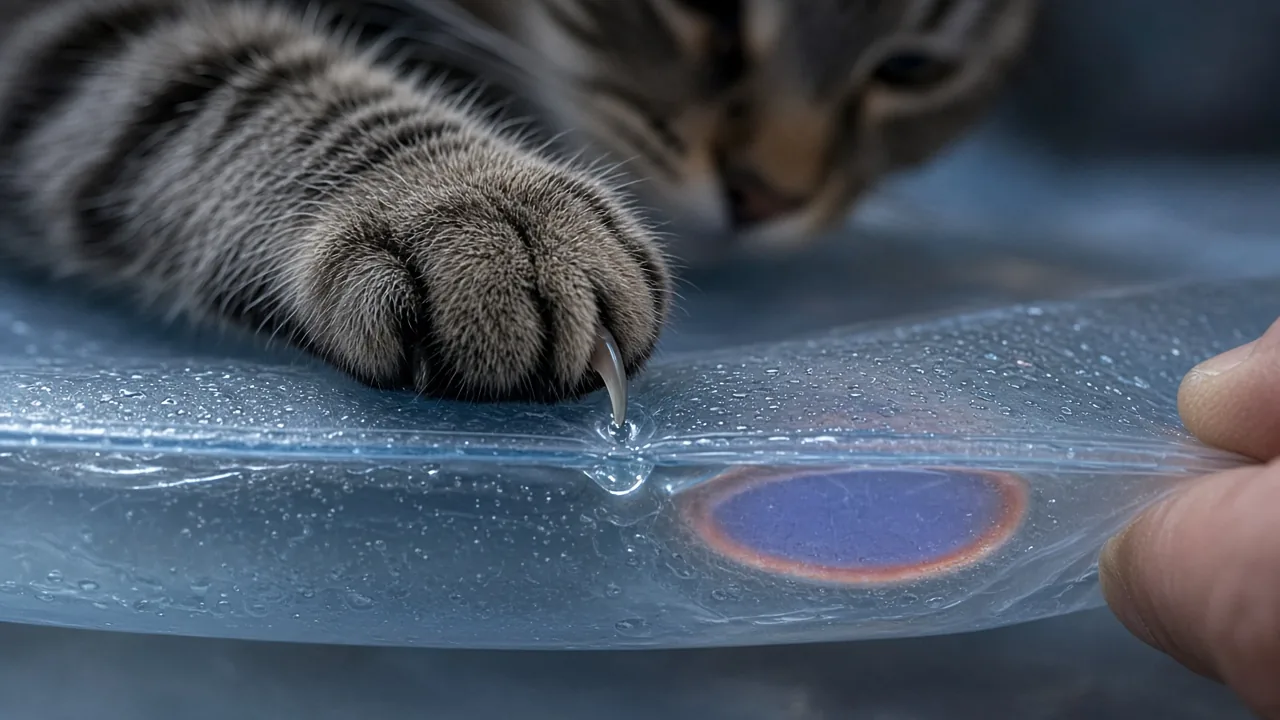
A water mat holds its shape because the top and bottom vinyl layers are sealed together, trapping water and sometimes a floating object or colored light panel inside. A single claw tip pressing into that seal can separate the layers enough to let water seep through, even if the visible mark looks like a pinprick.
Once that seal is compromised, the leak rarely stays small. Water pressure against the puncture point tends to widen it slightly every time the cat climbs on and off the mat, which is why a "tiny hole" today often becomes a steady drip within a day or two. This is also why a mat that seemed fine the first evening can be visibly deflated by the following morning—the damage happened at first contact, and the leak simply needed a few more rounds of weight and movement to show itself.
Signs a Water Mat Is Too Thin to Survive Scratching
Not all water mats are built the same way, and you can often tell which ones will fail quickly before you ever fill them with water. A few warning signs to check for at the store or right after unboxing:
- The vinyl flexes loosely and feels thinner than a pool float or inflatable toy
- You can pinch the seam between your fingers and feel the two layers separate slightly
- The surface has no texture or ridges, so a claw has nothing to grip except the smooth top layer
- The printed pattern or lighting panel inside shifts around loosely instead of sitting flush against the plastic
A mat that passes these checks isn’t guaranteed to survive every cat, but one that fails them is unlikely to last through a single play session with an adult cat that likes to dig in before lying down.
Not Every Cat Takes to a Water Mat the Same Way
One owner testing toys alongside an adult cat and a newly adopted kitten found a clear split in how each one responded to a water-filled mat with a glowing fish design inside. The adult cat loafed directly on top of it for long stretches, treating it almost like a small water bed. The kitten refused to step onto it at all, no matter how the toy was positioned.
That gap lines up with something worth keeping in mind before you buy: a water mat asks a cat to lie down and settle, which tends to appeal more to adult or older cats that already enjoy lounging in one spot. Kittens, which are still in an exploring and pouncing phase, often show little interest in a stationary surface no matter how it’s decorated. A kitten’s play instinct is built around stalking, chasing, and "capturing" something that moves, and a mat sitting flat on the floor gives it none of that.
Interestingly, the same kitten that ignored the mat was drawn to a separate kiddie pool during testing—not for any floating toy inside it, but for the water itself. It kept pushing its face into the water and sneezing, clearly more curious about the water than about anything marketed as a toy. That detail is a useful reminder that a cat’s actual interest doesn’t always match what a product is designed to showcase, and it’s worth watching what your own cat investigates rather than assuming the marketed feature is what will hold its attention.
How Water Mats Compare to Other Common Cat Toys
Seeing how a water mat stacks up against other popular toys can help explain why it tends to wear out faster and why interest in it can fade quickly even when it survives.
| Toy type | Material | Durability under claws | Best play style | Supervision needed |
|---|---|---|---|---|
| Water mat | Thin double-layer vinyl | Low — punctures easily | Lounging, settling in | Yes, during first sessions |
| Tennis-style ball | Rubber core with felt cover | Moderate — felt wears and can tear | Chasing, batting | Yes, if your cat chews felt |
| Jelly box or plain plastic container | Rigid plastic, not toy-grade | High — holds up to repeated play | Batting, pushing, investigating | Minimal |
| Wand or fishing-pole toy | String or feather on a wand | Moderate — string frays over time | Interactive chasing with a person | Yes, string is a choking risk unattended |
| Battery-powered spinning toy | Plastic housing, moving parts | Moderate, depends on build quality | Independent play, short bursts | Occasional checks for loose parts |
| Wall-mounted rolling toy | Small plastic balls on a track | Moderate | Independent or shared play between cats | Yes, small pieces are a choking hazard |
The pattern that stands out is that toys asking for stillness, like a water mat, tend to have the thinnest material, while toys built for repeated impact—plastic containers, rigid balls—hold up longer simply because they weren’t designed around a fragile seal.
Why Cats Often Prefer Simple or Unofficial Toys Over Water Mats
Across more than one household, the toy that got the most consistent use wasn’t a purpose-built cat product at all. One owner found that a plain plastic jelly box, never intended as a toy, kept a cat engaged for months without losing its appeal, while toys bought specifically for play—including a hunting dome and a cat tree—saw a sharp drop-off in interest after the first few days.
A tennis ball picked up as an afterthought during a food delivery told a similar story. The cat’s interest was mild the first time it saw the ball, then picked up noticeably on the second try. But in a side-by-side test against the jelly box, repeated twice to check the result, the cat went straight for the jelly box both times and barely touched the tennis ball.
That pattern suggests novelty and texture matter more to a cat than how official or well-marketed a toy looks. A water mat, by comparison, offers a fixed texture and a fixed shape every time—interesting at first, but with nothing new to investigate once the cat has explored it once or twice. A jelly box can be pushed, flipped, and batted into new positions, which may explain why it holds up as a long-term favorite in a way a flat mat rarely does.
One caution if you try a tennis ball as a lower-cost alternative: the felt surface on a standard tennis ball can wear down a cat’s teeth over time, and a cat that manages to tear off and swallow pieces of that felt risks intestinal blockage. A cat-specific ball or a plain ping-pong ball avoids that felt entirely and is a safer stand-in if your cat seems drawn to that shape and size.
How Interactive Play Affects Whether a Water Mat Gets Used at All
A spring-loaded wand toy that retracts and extends when pulled showed a telling pattern in one test: the cat barely reacted in the first minute, then began chasing it with real intensity about two minutes in. The toy required a person to operate it the entire time, and that ongoing back-and-forth appeared to be exactly what held the cat’s attention. The tradeoff is that this kind of toy only works when someone is available to run it—it isn’t something you can leave out for a cat to enjoy alone.
Toys that run on their own told a different story. A battery-powered spinning ball meant to mimic a moving tail got only occasional interest and was easily thrown off by background noise, while a wall-mounted rolling toy that two cats could trigger themselves produced loud, excited chirping from both of them—though its small rolling pieces are a genuine choking hazard and need supervision rather than unattended play.
A water mat falls into the same category as those self-running toys: it sits there waiting for the cat to engage with it, without any back-and-forth. That can explain why a mat gets intense attention for the first day or two, when it’s still novel, and then sees declining use once the cat realizes nothing changes no matter how it interacts with it. If your cat is the type that mostly wants a person involved in play rather than entertaining itself, that’s worth factoring into whether a water mat is a good match before you buy one.
How to Choose a Water Mat That Resists Scratching
If your cat has already shown interest in lounging on flat surfaces, a water mat can still be worth trying—you just want one built to hold up to normal claw contact rather than tear on the first scratch. Look for these features before buying:
- Double-layer vinyl that feels thick and stiff, not thin or flimsy when you press on it in the store or through the packaging
- Reinforced or double-stitched seams around the entire edge, rather than a single thin seal
- A textured top surface, which gives a claw something to grip instead of catching directly on smooth plastic
- A size that matches your cat’s body, since a mat too small to fully support an adult cat’s weight tends to flex and strain at the seams more than one sized appropriately
Budget mats are usually the thinnest vinyl available and tend to puncture the fastest, while mid-range and higher-priced mats more often use reinforced seams and thicker material—though price alone isn’t a guarantee, so checking the seams and vinyl thickness yourself still matters more than the price tag. Even a well-built mat deserves a trial run. Fill it partway and watch your cat’s first few sessions on it before leaving the toy out unattended, the same way you’d supervise any new toy during its first days in the house.
How to Check a Water Mat for Damage Before Each Use
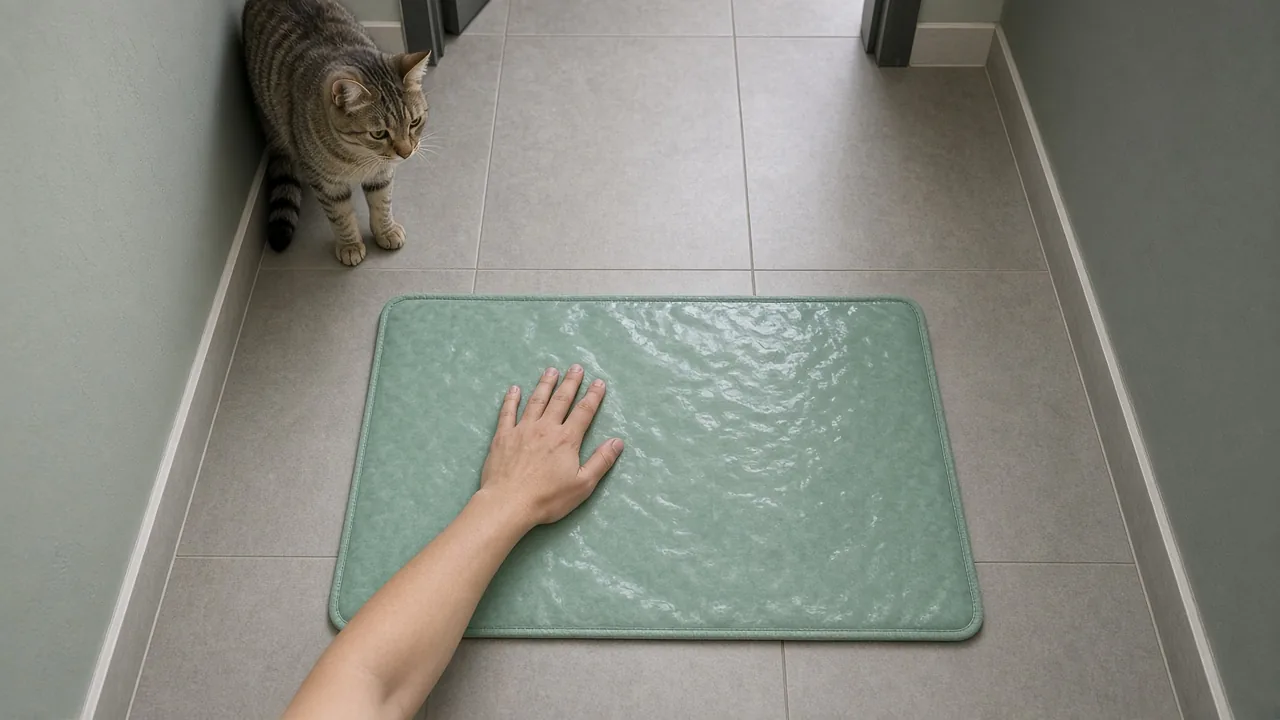
A quick check before refilling or setting out the mat takes under a minute and catches most problems before they turn into a mess on the floor:
- Run your hand flat across the entire surface, feeling for any soft or slightly sunken spots that suggest water has already started to leak internally
- Press gently along the seams, since this is where the two layers are most likely to separate first
- Look closely at any area your cat tends to dig at or step on repeatedly, as repeated pressure in the same spot wears through vinyl faster than scattered contact
- If the mat has been filled before, check that the water level hasn’t dropped since the last use, which is often the first sign of a slow leak
If anything feels uneven, soft, or separated, it’s worth draining and inspecting the mat fully before letting your cat near it again.
How to Clean and Store a Water Mat Between Play Sessions
Water mats don’t need much upkeep, but how you store them between sessions affects how long the seams last. After use, wipe the surface dry rather than letting water sit and evaporate on its own, since standing moisture near a seam can speed up wear at that spot.
Store the mat flat instead of folding it. Creases from folding put repeated stress on the same line every time, and that’s often where a seam fails first even before a cat ever scratches it. Keeping the mat somewhere your cat can’t reach it when you’re not supervising play also avoids the slow, unsupervised scratching that leads to most punctures in the first place.
When to Replace a Leaking Water Mat Instead of Patching It
A single small puncture can sometimes be patched, but water mats rarely stay fixed for long once the inner seal has been compromised. A few signs that patching isn’t worth attempting:
- Water is seeping out in more than one location, not just a single pinprick
- The inner and outer layers feel separated or loose from each other over a wider area, not just at the puncture point
- The mat has already been patched once before and started leaking again
In any of these cases, replacement is the safer choice. A patched mat that fails again while your cat is lying on it, or that leaves adhesive or tape within reach of curious teeth, isn’t worth the risk compared to buying a sturdier mat from the start.
Frequently Asked Questions About Cats and Water Mat Toys
Do older cats still enjoy water mats?
Many do, especially cats that already prefer lounging over active play. An adult cat loafing on a filled mat is a common sight, though some older cats simply lose interest in most toys the way they lose interest in highly active play in general. If your older cat seems uninterested, that’s often a normal shift in energy level rather than a sign something’s wrong—though a sudden drop in play or activity is worth mentioning to your vet.
Why do automatic toys often get ignored?
Toys that run on their own, including water mats and battery-powered spinners, tend to hold attention only briefly compared to toys that involve a person. Cats appear to respond more to the back-and-forth of interactive play, like a wand toy or a laser pointer session, than to a toy that behaves the same way every time without any input from them. If your cat seems to lose interest in solo toys quickly, a few short interactive sessions spread through the day may hold its attention better than any single self-running toy.
Are tennis-ball-style toys safe for teeth?
A standard felt tennis ball can be rougher on a cat’s teeth than toys made specifically for cats, and a cat that tears off and swallows felt pieces risks intestinal blockage from accidental ingestion. A cat-sized ball made for pets, or a plain ping-pong ball, gives a similar size and bounce without the felt surface.
How often should a water mat be replaced?
There’s no fixed timeline—it depends on how often your cat scratches at it and how the seams hold up to your damage checks. Replace it as soon as you notice leaking in more than one spot or any separation between the layers, rather than waiting for a full failure.
Is it normal for a kitten to ignore a water mat completely?
Yes. A mat asks for stillness, and kittens are generally more interested in chasing, pouncing, and investigating things that move. A kitten’s disinterest in a water mat doesn’t mean the toy is poorly made—it may simply be a toy better suited to an older cat in the household, if you have one, or worth revisiting once the kitten matures into calmer play.
Watch how your own cat already plays—stalking, pouncing, or settling in to lounge—before deciding whether a water mat fits that pattern. Check any toy regularly for punctures, loose seams, or small pieces that could come loose, and retire it before it becomes something your cat could swallow or get hurt on. Rotating in a few different toys, rather than relying on one mat or ball, also tends to keep a cat’s interest going longer than any single toy on its own.
This article is for general information only and is not a substitute for advice from your veterinarian. Always supervise your pet with a new toy, and replace any toy that is damaged or small enough to swallow.

Contributor
admin
Continue reading
All stories
CAT TOYS · 11 October
Why Is My Rolling Cat Toy Ball So Loud, and Can You Fix It?
CAT TOYS · 11 October
Are Expensive Cat Toys Worth It, or Will a Box Do Just Fine?
CAT TOYS · 11 October
Responses
Moderated discussion