DOG TOYS
How to Choose Puzzle Feeders for Dogs by Difficulty Level
Matching a puzzle feeder's mechanism to your dog's current skill level is the key to keeping them engaged, and this guide breaks down five toy types by difficulty, size, and age fit.
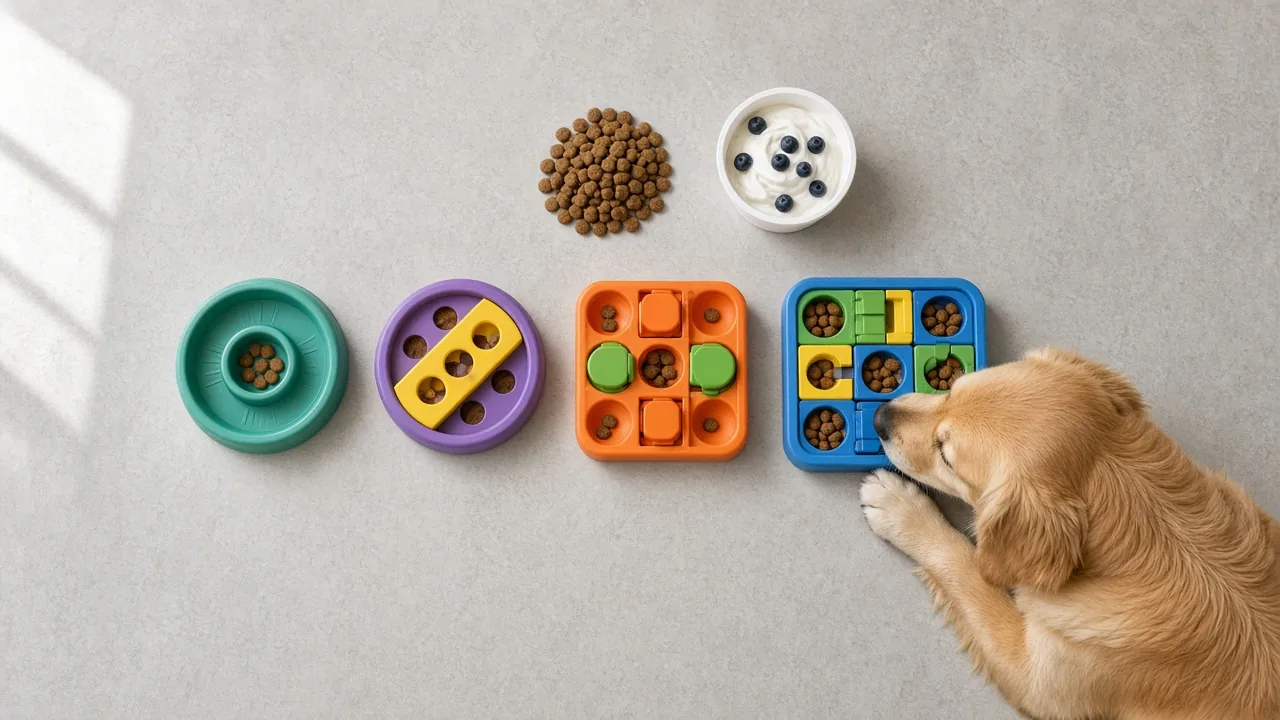
A dog pawing uselessly at a locked puzzle toy, then losing interest and walking away, is a common sight for new owners who grabbed whatever looked fun on the shelf. The real fix for how to choose puzzle feeders for dogs by difficulty isn’t price or color — it’s matching the toy’s mechanism to what your dog can already do and where you want them to go next. Get that match right, and a puzzle feeder stays useful for months instead of gathering dust after one try.
How to Choose Puzzle Feeders for Dogs by Difficulty: What Makes One Easy, Medium, or Hard
Difficulty comes down to a handful of design choices, not marketing labels. A one-piece toy with a single opening is almost always easier than a separable design with multiple compartments, because there’s less for a dog to figure out.
Hole size matters too. Larger openings let kibble fall out with minimal effort, while narrow holes force a dog to nudge, lick, or shake the toy repeatedly.
Lid and lock mechanisms add another layer. A snap-on lid opens with one good push, but a twist-lock or ribbon-threaded closure needs sustained effort and some trial and error.
Finally, whether food can be frozen or wedged in changes difficulty on the same toy. A trough filled with loose kibble empties fast; the same trough packed with frozen yogurt or peanut butter can keep a dog occupied for a much longer stretch.
1. Treat-Dispensing Balls: Rolling Puzzles for Body-and-Brain Exercise
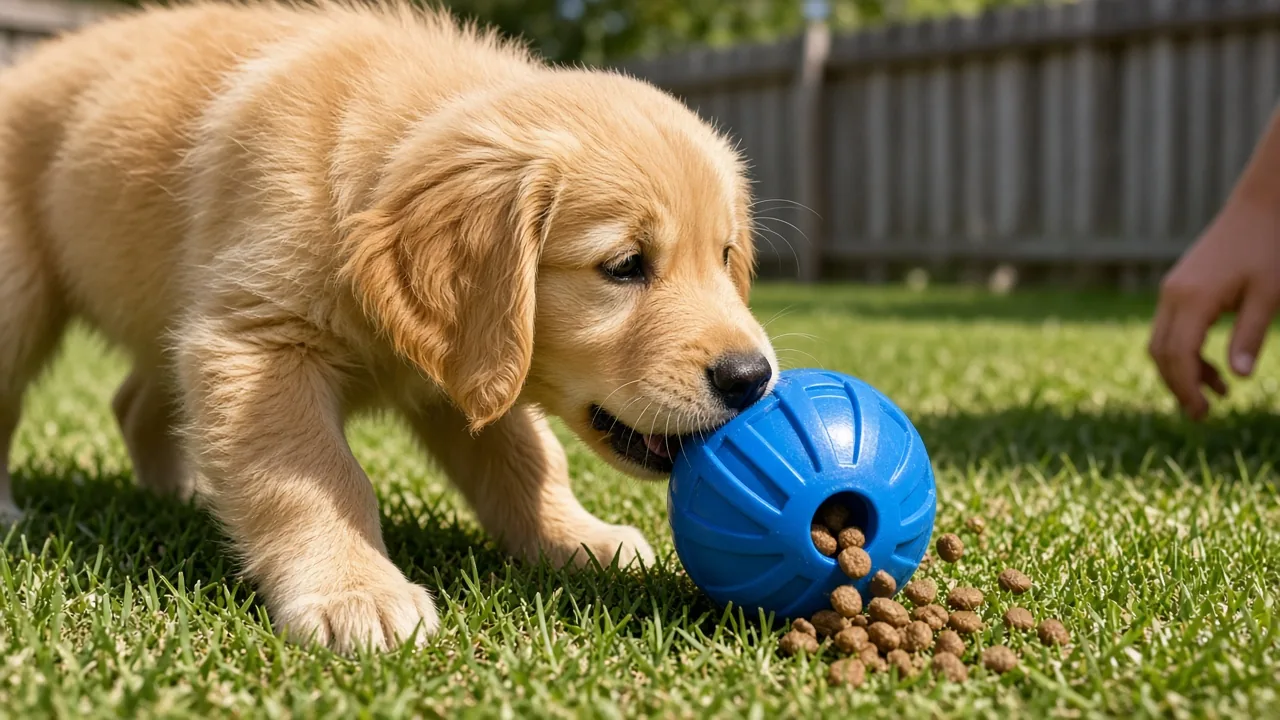
A treat ball rewards a dog for rolling and chasing it across the floor, which means food only falls out through movement. This makes it a solid entry-level option because the "solution" is mostly physical rather than mechanical — nudge the ball, treats fall, repeat.
Because it combines light exercise with light problem-solving, a treat ball works well as a first puzzle toy before moving into anything with lids or compartments.
Who it suits and who should skip it
Treat balls tend to suit puppies and medium-energy dogs who are just learning that effort equals reward. The constant motion keeps things interesting without requiring fine motor skills like lifting a flap or pressing a lever.
They’re a weaker fit for dogs that give up after a few failed rolls, or for dogs that prefer calmer, stationary toys. If your dog loses interest the moment a treat doesn’t fall immediately, a mat or tray may hold their attention longer.
2. Snuffle Mats: Using Scent Instead of Teeth or Paws
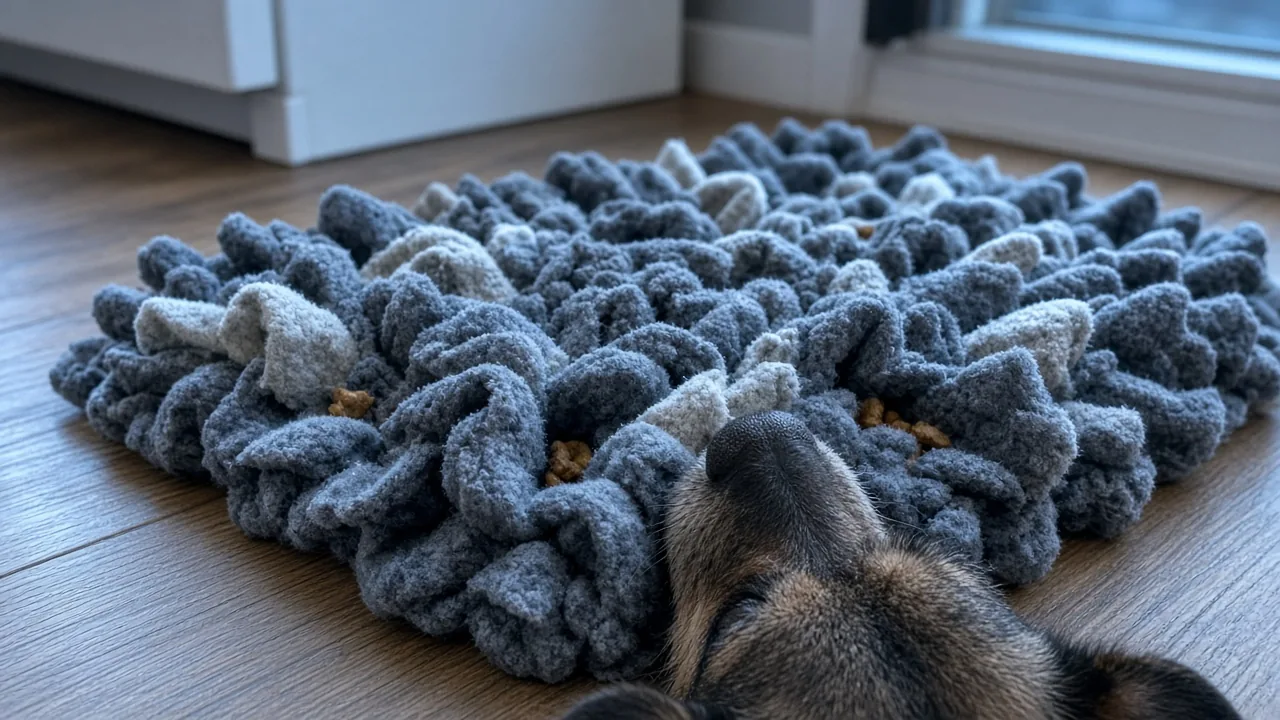
A snuffle mat hides small pieces of food inside woolly fabric strands instead of behind a mechanical barrier. Your dog has to search by smell, which taps into the same foraging instinct that drives sniffing on walks.
Because there’s no lock, lid, or hole to figure out, a snuffle mat works for dogs of nearly any age — puppies, adult dogs, and senior dogs with stiffer joints or less patience for complicated toys.
Why machine-washable design matters for daily use
A snuffle mat that goes straight into the washing machine stays sanitary enough for regular use, which matters because food residue builds up fast in fabric. Toys with tight crevices and no washing option trap grease and crumbs in ways a quick wipe-down can’t fix.
If you plan to use a snuffle mat several times a week, check the care label before buying. A mat that can’t handle a wash cycle will need hand-cleaning every time, which most owners skip after the first month.
3. Sliding and Lift-Lid Puzzle Bricks: A Step Up in Problem-Solving
Brick-style puzzle toys combine two different motions in one design: some compartments open with a sliding cover, while others require lifting a separate lid off entirely. That mix asks a dog to learn and remember two distinct actions instead of repeating the same motion over and over.
This makes a puzzle brick a reasonable next step once a dog has mastered a treat ball or snuffle mat and seems ready for something more involved.
How to demonstrate the mechanism before letting your dog try
Some dogs default to chewing or flipping a new toy rather than working through it. Showing your dog the sliding and lifting motion once yourself — sliding a cover open, lifting a lid off, and letting the treat appear — gives them a model to copy instead of a mystery to destroy.
- Place a treat in one compartment with the lid already open so your dog sees the reward.
- Close the lid or slide the cover shut while your dog watches.
- Slowly repeat the motion yourself, narrating with a cue word like "open" if you use one.
- Let your dog try the same compartment, guiding their paw or nose only if they seem stuck.
- Move to a second compartment once the first motion clicks.
4. Tumble-and-Shake Toys Like Bob-a-Lot: Built for Pushy, Active Dogs
A weighted tumbler toy holds food in a top chamber with a screw-on lid, and treats only fall through a bottom opening when the dog knocks, nudges, and rocks it repeatedly. Unlike a treat ball that rolls freely, a tumbler wobbles and rights itself, which demands sustained effort rather than a single push.
This design suits dogs that already enjoy shoving objects around the room. If your dog treats every ball or toy like something to body-check, a tumbler channels that energy into a useful task.
What to do if your dog won’t eat without a puzzle toy
Some dogs get so used to working for their food that they lose interest in a plain bowl of kibble. One owner of a Beagle mix and a Border Collie mix puppy found both dogs would barely touch dry food unless it came through a puzzle toy or mixed with something more appealing.
If this happens, rotate plain-bowl meals with puzzle sessions instead of feeding exclusively through toys every time. This keeps mealtime flexible for days when you’re traveling, boarding your dog, or simply don’t have time to load a puzzle feeder.
5. Separable Lick Mats and Bone-Shaped Trays: Easy to Clean, Freezer-Friendly
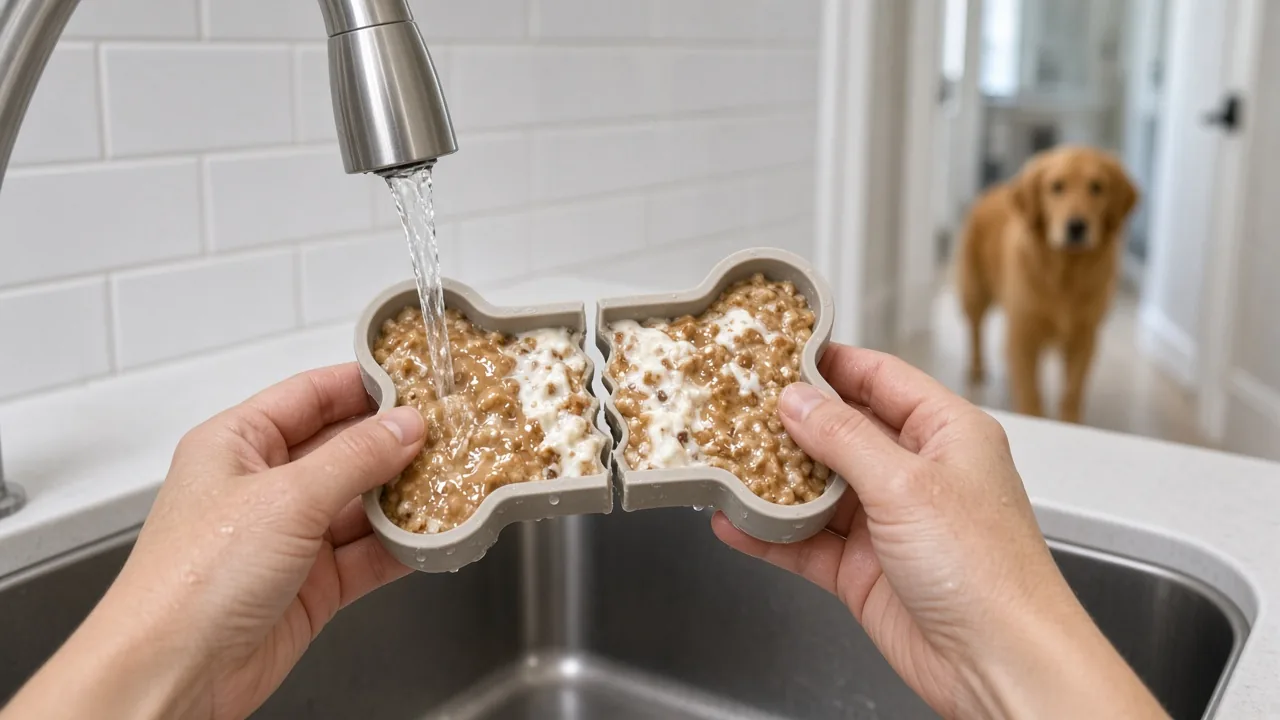
Trays that split into two or more pieces — rather than one molded block — hold semi-soft fillings like frozen yogurt or peanut butter well, and they extend play time because a dog has to lick through a frozen layer rather than crunch through dry kibble in seconds. Separable designs also come apart for washing, which matters once sticky fillings dry into the grooves.
Bone-shaped trays work on the same principle as compartmentalized trays: similar difficulty, different shape, and the same cleaning advantage over one-piece molds.
Why food choice changes how long a tray lasts
The filling you choose does more to set difficulty than the tray itself. Liquid or semi-soft foods — yogurt, pumpkin puree, peanut butter — freeze solid and force a slow, patient licking session, often the longest-lasting option on this list.
Dry treats pressed into the same tray finish in a few minutes since there’s no ice barrier to work through. If a tray feels too easy for your dog, switching from dry treats to a frozen semi-soft filling is often enough to raise the challenge without buying a new toy.
| Toy type | Material | Best for size | Chew durability | Cleaning | Play style |
|---|---|---|---|---|---|
| Treat ball | Hard plastic | Small to large | Moderate | Hand wash, some disassemble | Rolling, chasing |
| Snuffle mat | Fleece/fabric | Any size | Low (fabric wears) | Machine-washable | Scent search |
| Puzzle brick | Plastic with sliding/lift covers | Small to large | Moderate to high | Wipe down, hand wash | Sliding, lifting |
| Tumbler (Bob-a-Lot style) | Hard plastic, weighted base | Medium to large | High | Hand wash, unscrew lid | Nudging, knocking |
| Separable tray | Silicone or rubber | Any size | Moderate | Dishwasher-safe pieces | Licking, freezer play |
How to Progress from Beginner to Advanced Puzzle Feeders
Moving a dog up in difficulty works best as a gradual process rather than a jump straight to the hardest toy on the shelf.
- Start with a snuffle mat or separable tray, since both rely on scent and licking rather than complex mechanics.
- Once your dog solves those quickly and consistently, introduce a ribbon or strip of fabric threaded through a lid or lock to add resistance.
- When the ribboned version becomes easy, remove the ribbon and let your dog work the lock unassisted.
- Graduate to combination toys — a treat ball paired with a smaller ball inside, for example — or twist-lock designs that require more sustained problem-solving.
- Keep a toy in rotation even after your dog masters it; switching between difficulty levels prevents boredom and keeps the easier toys useful for calmer days.
When a ribbon trick can lower difficulty on a hard toy
A toy with a tight lock or screw lid can be too advanced for a beginner or a senior dog, even if the overall design would otherwise suit them. Threading a ribbon through the lock mechanism gives the dog a looser point of entry — something to pull or tug that loosens the seal without requiring full twisting strength.
As your dog’s skill improves, shorten or remove the ribbon in stages. This lets you use one toy across a wider range of skill levels instead of buying a separate easy version and a separate hard version.
Why budget combination toys make sense for puppies first
A puppy around four to five months old is still teething, testing bite strength, and likely to chew through or crack a toy that wasn’t built for puppy teeth. A lower-cost combination ball lets a puppy practice the same rolling-and-extracting motion as a pricier version, without you worrying about damage to an expensive toy.
Once a puppy’s adult teeth are in and their interest in puzzle feeding is clearly established, upgrading to a sturdier combination toy makes more sense. You’ll get more use out of a durable version once you know your dog will actually stick with that play style.
Matching Difficulty to Your Dog’s Size, Age, and Chewing Strength
Difficulty isn’t only about the mechanism — it’s also about whether the toy fits your dog’s body and bite force.
- Small dogs need smaller hole sizes so treats don’t spill out in one shake, and lighter-weight toys they can actually move or roll.
- Medium and large dogs can handle bigger compartments and heavier tumblers, since a toy that’s too light will just get knocked around without engaging their strength.
- Giant breeds often need reinforced, thicker-walled toys; standard plastic designed for smaller dogs may crack under sustained pressure.
- Puppies in the teething stage do best with softer, budget, or puppy-specific toys rather than a dog’s long-term "forever" puzzle feeder.
- Senior dogs often benefit from easier mechanisms or a ribbon-assisted lock, especially if arthritis or reduced patience makes twisting and prying harder than it used to be.
- Strong chewers of any age need thicker-walled, more durable materials regardless of size, since a toy built for light chewing can be cracked or punctured quickly.
Short-nosed breeds can also take longer with scent-based toys like snuffle mats, since their anatomy affects how efficiently they track scent compared to longer-nosed breeds. That doesn’t mean skip the mat — it may just mean starting with fewer hidden treats and building up gradually.
Are Puzzle Feeders Safe? What to Check Before and During Play
Puzzle feeders aren’t completely risk-free, and a few checks before and during play go a long way toward keeping them safe.
- Size check: the toy and any detachable pieces should be too large for your dog to swallow whole.
- No small snap-off parts: avoid toys with buttons, small caps, or add-ons that can break free with repeated chewing.
- Supervised first use: watch closely the first several times your dog uses a new puzzle feeder, since this is when you’ll learn whether they solve it, chew it, or try to swallow pieces.
- Stop if chewing replaces solving: if your dog starts gnawing through plastic instead of working the mechanism, take the toy away. A cracked or splintered piece is a choking risk, not a sign the puzzle is working as intended.
- Watch for loose threads: on snuffle mats, trim or remove any fabric strands that come loose, since dogs can swallow long threads.
Even a toy that holds up well for months can eventually crack or fray, so ongoing supervision matters even after the first few sessions go well.
How to Clean Puzzle Feeders So Grease and Bacteria Don’t Build Up
Cleaning routines vary a lot by design, and that difference is worth factoring in before you buy.
Separable trays — the kind that split into two or more pieces — are the easiest to keep clean, since every surface is reachable for washing or goes straight into the dishwasher. This matters most if you’re freezing fillings regularly, since residue left in a seam can turn rancid faster than you’d expect.
Machine-washable fabric mats handle frequent use well as long as you actually run them through a wash cycle on a regular basis — ideally weekly if used daily, since food oils soak into the fibers.
Solid, one-piece toys with narrow internal compartments are the hardest to clean thoroughly. Tight spaces trap grease and crumbs that a sponge or bottle brush can’t always reach, so these designs need more frequent attention, like a soak in warm soapy water, to avoid buildup.
When to Replace a Puzzle Feeder or Move Up a Difficulty Level
Two different signals tell you it’s time for a change, and they call for opposite responses.
Replace the toy if you see cracks in hard plastic, a lid that no longer locks securely, chewed-down edges with sharp points, or fabric with pulled, fraying threads. These are wear signs, not difficulty signs, and they mean the toy is becoming a safety risk rather than a challenge.
Move up a difficulty level if your dog solves the current toy within a minute or two every time, seems bored rather than engaged, or has stopped showing interest in a puzzle they used to enjoy. That’s less about damage and more about a dog who’s outgrown the challenge and needs something harder to stay mentally engaged.
FAQ: Common Questions About Choosing Puzzle Feeders by Difficulty
Can puppies use advanced puzzle toys?
Most puppies do better starting with easier mechanisms — snuffle mats, separable trays, or budget treat balls — before moving to locking or twist-style toys. Their teeth, patience, and problem-solving skills are still developing, and an advanced toy too early can lead to frustration or chewing damage rather than solving.
Do short-nosed breeds struggle with scent-based toys like snuffle mats?
They can take longer to locate hidden treats compared to longer-nosed breeds, since scent tracking relies partly on nasal structure. This doesn’t rule out snuffle mats — just start with fewer hidden treats and larger scent trails, then increase the challenge as your dog gets faster.
My dog only chews the toy instead of solving it. What should I do?
Demonstrate the mechanism yourself first, since some dogs genuinely don’t understand what’s expected and default to chewing as the only strategy they know. If chewing continues and seems compulsive or anxious rather than curious, it’s worth checking in with your veterinarian or a certified trainer, since persistent destructive chewing can also signal boredom or stress unrelated to the toy itself.
How do I know which difficulty level to start at?
Watch how your dog already plays with everyday objects. A dog that paws at things is ready for lift-lid designs; a dog that chases and rolls objects will take to treat balls faster; a dog that sniffs everything before touching it is a good match for snuffle mats.
Before picking a difficulty level, spend a few days watching how your dog naturally plays — chewing, chasing, sniffing, or pawing all point toward different toy types. Check every puzzle feeder regularly for cracks, loose lids, or chewed edges, and retire anything that’s showing wear so play stays both engaging and safe.
This article is for general information only and is not a substitute for advice from your veterinarian. Always supervise your pet with a new toy, and replace any toy that is damaged or small enough to swallow.

Contributor
admin
Continue reading
All stories
DOG TOYS · 11 October
Why Do Dogs Lose Interest in Rubber Toys So Fast?
DOG TOYS · 11 October
How to Use Nina Ottosson Puzzle Toys: A Level-by-Level Guide

DOG TOYS · 11 October
Responses
Moderated discussion