DOG TOYS
How to Use Nina Ottosson Puzzle Toys: A Level-by-Level Guide
A level-by-level guide to using Nina Ottosson puzzle toys, covering when to start, how to tell your dog is ready for a harder level, and what to watch for safety-wise.
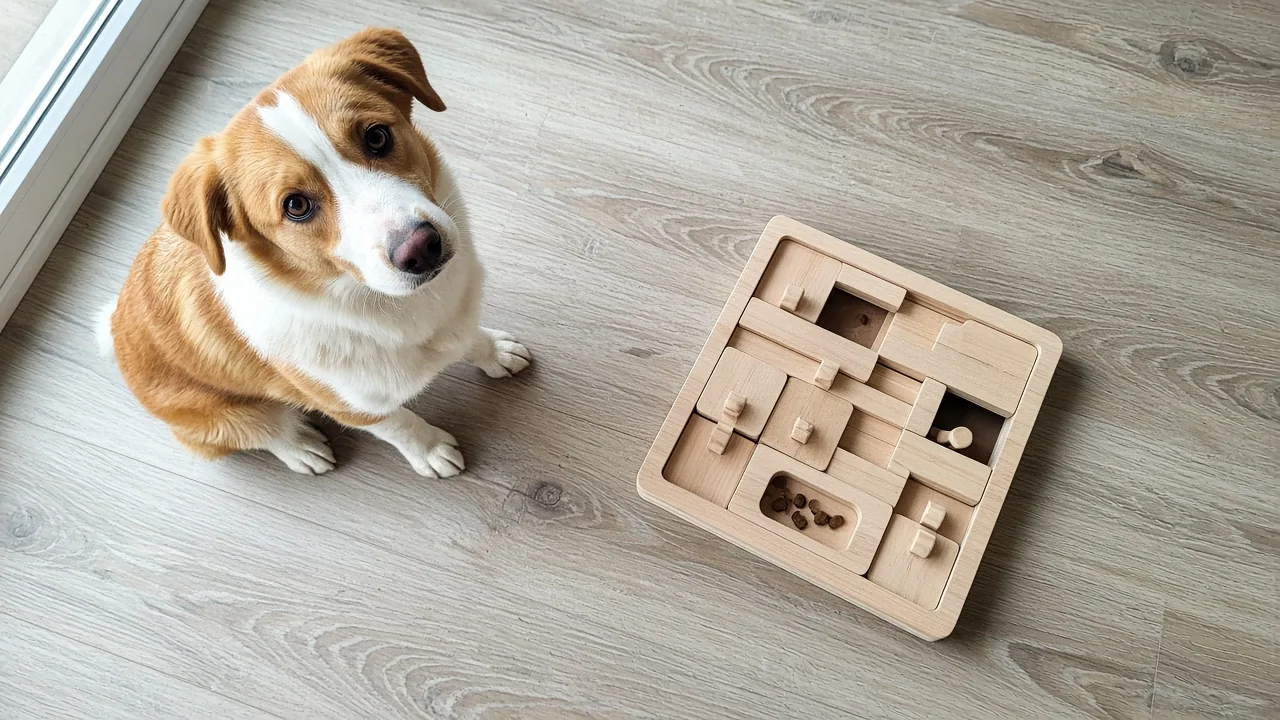
If you just brought home your first puzzle toy and your dog is staring at it like it’s a UFO, here’s the short version: start at Level 1 or Level 2, let your dog solve it reliably across a few sessions, and only move up when the toy stops being a real challenge. Learning how to use Nina Ottosson puzzle toys well is mostly about pacing — rushing the levels is the single most common reason owners end up with a frustrated dog and an untouched toy on the floor.
What Nina Ottosson Puzzle Toys Are and Why Dogs Need Them
A dog that’s had a full walk can still seem restless, pacing, chewing furniture, or whining at nothing. That’s often a sign of unused brain power rather than unused legs. Mental stimulation taps into problem-solving instincts that a leash walk simply doesn’t touch.
A rough rule some owners find useful: about 15 minutes of focused mental work can tire a dog out roughly the way 30 minutes of physical activity does. The exact ratio varies by dog, but the pattern holds — a short, engaging puzzle session often leaves a dog calmer than a long, repetitive walk.
Nina Ottosson’s puzzle line (made by Outward Hound) is built around this idea. The toys are organized into four difficulty tiers, from beginner-friendly designs with a few hiding spots to expert-level toys that require solving several steps in sequence. That tiered structure is also exactly why so many owners get stuck — they skip the early tiers and wonder why their dog gives up.
How to Use Nina Ottosson Puzzle Toys: Starting at Level 1 and 2
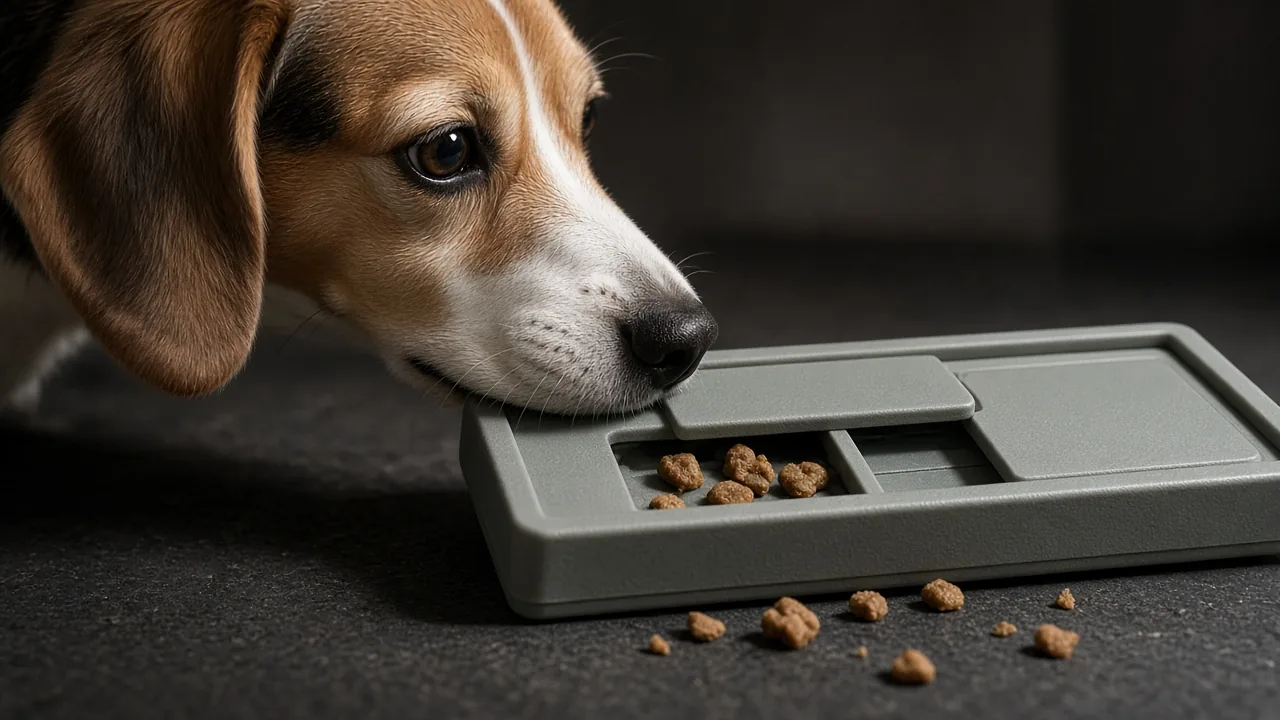
Every dog that has never seen a puzzle toy before should start at Level 1 or Level 2, regardless of breed or how clever you think they are. Three common entry points are Hide and Slide, Tornado, and Dog Brick, and each teaches a slightly different skill.
Hide and Slide has just a handful of hiding compartments. Your dog has to slide a cover open and flip a small panel to reach the treat underneath — two separate motions stacked together, which is why it counts as an early puzzle rather than a simple lid.
Tornado works in layers. Your dog rotates each tier to expose the treat wells hidden inside. Once a dog has the rotating motion down, you can raise the difficulty without buying a new toy: pour something like goat’s milk or bone broth into the wells and freeze it, so your dog has to spin the tray and then lick out a frozen treat, which stretches out play time considerably.
Dog Brick uses a mix of mechanisms in one toy — flip-up lids, blocks that lift out, and sliding covers. It tends to hold up well over repeated use, though the plastic pieces can occasionally pop loose if a dog steps on the toy mid-play. That’s not a sign of a defective toy; the pieces usually snap right back into place.
For the first few sessions with any of these:
- Break treats or kibble into small, uneven pieces rather than using whole biscuits.
- Scatter the pieces loosely in the compartments so your dog can’t scoop out a full mouthful in one try.
- Let your dog work at the toy without help for a minute or two before showing them how a panel moves.
- Repeat the same toy for several short sessions before judging whether it’s too easy or too hard.
Loose, broken-up treats matter more than it sounds like they would. If a dog can empty the whole compartment in one bite, the toy becomes a feeding bowl instead of a puzzle, and it loses the problem-solving value entirely.
Why some evaluators say the Hide and Slide tutorial skips a step
A few owners who’ve worked with Hide and Slide describe a step that demo videos tend to gloss over. Rather than the treat simply sitting under a flap, the intended setup has the treat placed inside the round sliding piece itself. Your dog needs to open the panel, slide the round piece across the opening so the treat drops through, and then slide the piece clear to actually retrieve it.
If your dog seems stuck on this toy longer than expected, that extra motion is probably why. It’s worth a few minutes of trial and error — or a quick demonstration from you — rather than assuming the toy is broken or your dog is uninterested.
When to Move Up to Level 3 and 4 Puzzles
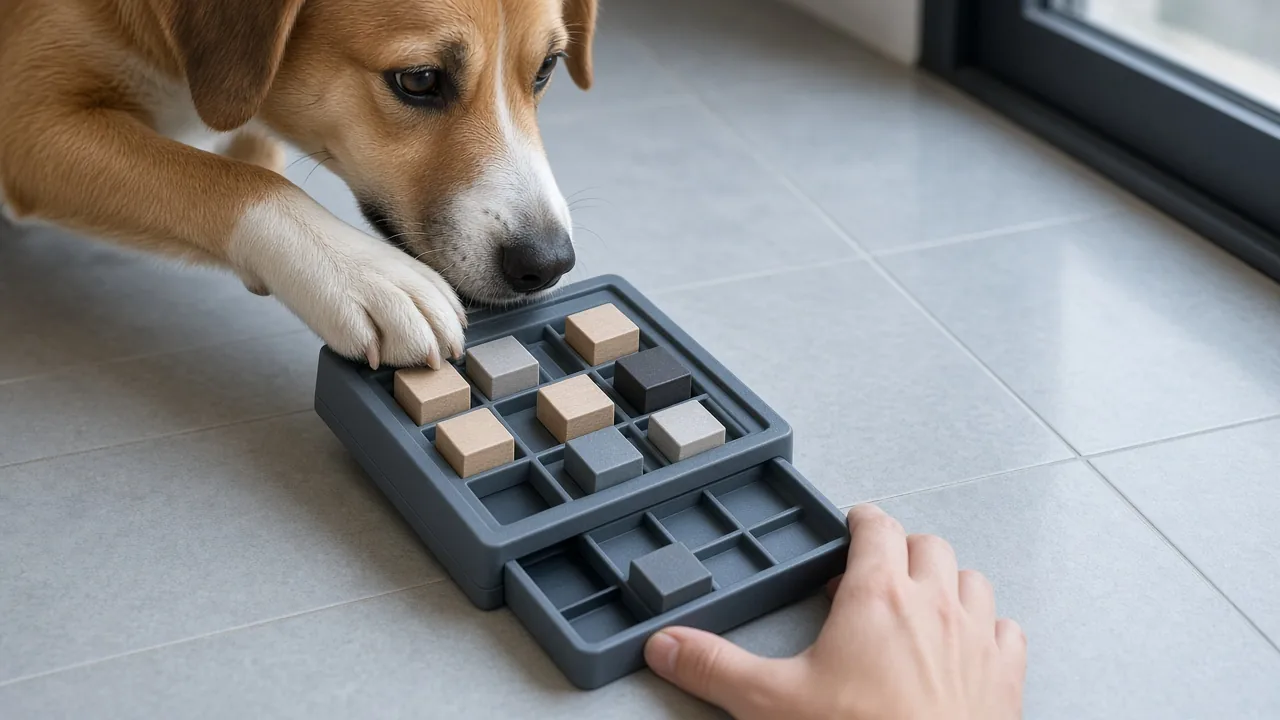
The clearest sign a dog is ready to move up isn’t a calendar date or a certain number of weeks — it’s speed and confidence. If your dog solves the current level quickly, without pausing to think, across several sessions in a row, it’s time to raise the difficulty.
Jumping straight to a Level 4 toy without that foundation is where most of the frustration comes from. One owner who tried the expert-level Dog Brick Multi — which requires sliding blocks on multiple sides, unlocking a mechanism before continuing, and lining up a rotating piece in the center section — found that their dog still hadn’t fully solved the center portion after several weeks of regular attempts. That’s a toy built on skills a dog needs to already have, not one meant to teach them from scratch.
Level 3 toys like the Challenge Slider sit in between. The tray pulls out so you can fill it, then slides back in, and your dog has to move several small blocks in sequence before any treat becomes reachable. It’s a reasonable bridge between the two-step logic of Level 2 and the layered logic of Level 4.
A practical checklist before buying up a level:
- Your dog solves the current toy in under a minute, consistently.
- Your dog doesn’t lose interest or walk away mid-puzzle.
- Your dog isn’t relying on brute force (chewing, flipping, or shaking the toy) to get treats out.
What to do if your dog solves a level too fast
Age and breed guidelines are a starting point, not a rule. One owner’s eight-week-old Border Collie puppy solved a Level 2 toy within a day of first seeing it and found the puzzle too easy almost immediately — well ahead of what general guidance would suggest for a puppy that young.
Herding breeds in particular can outpace typical progression timelines because problem-solving is part of what they were bred for. If your dog is working through a level with no hesitation at all, even if they’re young or new to puzzles, judge by what you’re actually seeing rather than sticking to an expected timeline. Moving up a level a little early is far less of a problem than leaving a bored dog stuck on something too simple.
Are Nina Ottosson Puzzle Toys Safe for All Dogs?
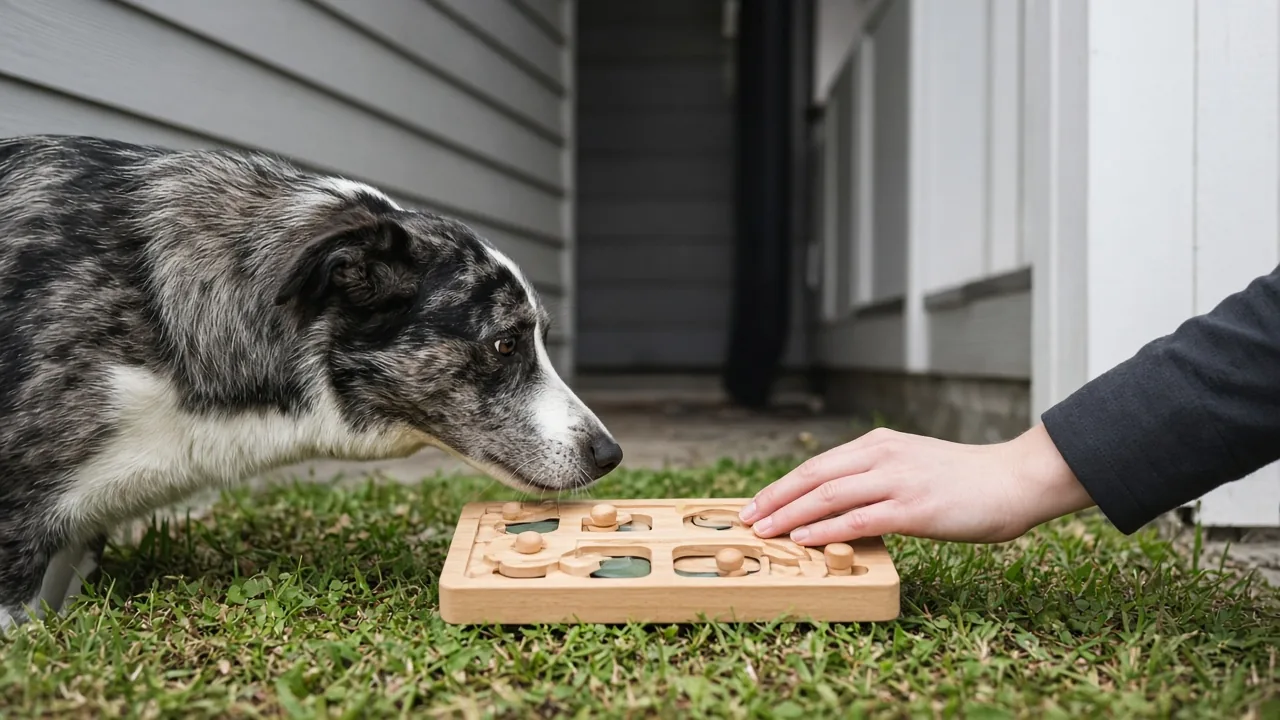
No puzzle toy is risk-free, and these are no exception. Supervise any new puzzle toy closely during the first several sessions, especially while your dog is still figuring out how the mechanism works.
A few specific things to watch for:
- Loose plastic pieces. Sliding covers and small blocks can come free, particularly if a dog steps on the toy or chews at the edges. Check for pieces that have popped out before leaving your dog alone with the toy.
- Breed-specific fit. Flat-faced breeds, such as pugs, may struggle to physically reach treats in deep hiding slots because of their shorter muzzle length. If your dog can’t get a paw or nose far enough into a compartment, that’s a sign the toy isn’t a good match, not that your dog isn’t trying.
- Chewing beyond normal play. If a dog starts gnawing on hard plastic edges out of frustration rather than working the mechanism, take the toy away and go back down a level.
None of this means these toys are inherently unsafe — it means they need the same ongoing attention you’d give any toy with moving parts. Check the toy before each use, and retire anything with a crack, a missing piece, or a mechanism that no longer locks or slides properly.
Nina Ottosson vs. Other Puzzle and Treat-Dispensing Toys
Not every interactive toy asks the same thing of a dog. Treat-dispensing toys like the Kong Gyro or Kong Snoop reward a repeated physical motion, while true puzzle toys like the Nina Ottosson line require solving a sequence of different steps.
| Toy type | What it tests | Best suited for | Difficulty to raise | Cleaning |
|---|---|---|---|---|
| Nina Ottosson (Levels 1–4) | Sequential problem-solving (slide, flip, rotate in order) | Dogs that enjoy figuring things out, not just moving things | Buy the next level, or freeze liquid treats inside | Hand wash; check moving parts for buildup |
| Kong Gyro / Kong Snoop | Repeated motion (spinning, batting) to dispense food | Dogs new to interactive feeding, or dogs that get frustrated by multi-step puzzles | Harder flooring (hardwood vs. carpet) adds challenge | Dishwasher-safe pieces vary by model; check hollow areas |
| TRIXIE Mad Scientist | Rotating a tube with a paw to release treats | Dogs that like batting and pawing motions | Takes practice even though it looks simple; speed matters | Rinse tube and base separately |
| Snuffle mat | Scent-based foraging, mimicking natural search behavior | Dogs that enjoy sniffing more than manipulating objects | Hide treats deeper in the fabric folds | Hand wash or machine wash depending on fabric |
| Carrot-style nose work toy | Pulling pieces apart by scent and shape | Small, medium, and large dogs with average muzzle length | Hide pieces inside each other for more steps | Wipe down; check for loose stitching |
A dog that gets frustrated by Nina Ottosson’s step-by-step logic might actually do better on a Kong Gyro first, since it rewards a single repeated action rather than a sequence. On the other hand, a dog that burns through Gyro-style toys in seconds is a good candidate to move straight into puzzle-style toys, since they’re clearly ready for more than one step.
Kong’s classic rubber toys deserve a separate mention here: they come in a range of sizes and rubber densities, and how you fill one depends heavily on whether your dog is still a beginner or already experienced with stuffed toys — that’s a topic on its own, but it’s worth knowing these aren’t puzzle toys in the Nina Ottosson sense, just a different category of mental engagement.
Low-Cost Alternatives and DIY Puzzle Ideas
You don’t need to own every level of every puzzle line to keep a dog mentally engaged. Several low-cost options can fill the gap between purchases or add variety without extra spending.
- Cardboard tubes. Fold or tape the ends shut around a treat and let your dog work out how to open it.
- Rolled towels. Roll a towel with treats tucked into the folds, similar to a snuffle mat but reusable with no sewing involved.
- Egg cartons. Place treats in a few cups and close the lid; your dog has to lift the lid and search each compartment.
- Kibble scattered on grass. Spreading a meal across a lawn turns ordinary feeding time into a foraging exercise with no equipment at all.
- A DIY rotating toy. An empty plastic bottle with a cord tied through it can mimic a simple spinning puzzle for dogs that enjoy that motion.
These aren’t substitutes for a well-built puzzle toy’s durability, but they’re a reasonable way to add variety on a budget, especially for a dog that gets bored of the same two or three toys in rotation.
How Puzzle Play Fits Into Early Puppy Routine and Training
Puppies under three months old shouldn’t be doing formal obedience drills — sit, stay, lie down, roll over, shake. Their joints and bones are still developing, and repetitive postural training at that age can put unnecessary strain on growing limbs.
That doesn’t mean a young puppy should go without any mental engagement. Calm, low-pressure puzzle sessions can fit alongside the priorities that actually matter in these early weeks: settling into a crate without distress, building a steady temperament, and starting house-training. A few minutes with a simple Level 1 toy gives a puppy something constructive to focus on without the physical demands of obedience work.
How crate size and potty training timing affect a puppy’s readiness for puzzles
A puppy’s readiness for puzzle toys has as much to do with routine as it does with age. A crate that’s sized correctly — just big enough for the puppy to stand, turn around, and lie down without extra space to spare — tends to produce a calmer, more focused puppy than an oversized crate or a large pen with room to wander.
House-training timing matters too. Many owners find it works best to wait about 10 days after bringing a puppy home before starting a structured potty routine, giving the puppy time to settle in first. A typical approach looks like this:
- Set up a small, enclosed potty area with barriers pressed tight against the walls so there’s no gap for the puppy to squeeze into a corner and avoid using it.
- Lead the puppy into the area every 2–3 hours with a treat, then close off the space.
- Wait 3–8 minutes to see if the puppy goes; if not, wait one more 3–8 minute stretch.
- If the puppy still hasn’t gone, a damp cotton swab inserted gently and briefly can help stimulate the urge — this usually works within a minute or two.
- Reward immediately after the puppy goes, then open the area right away so the puppy doesn’t linger near the mess.
Keeping this routine consistent for about a week, then gradually expanding where the puppy is allowed to roam, builds the same focus and patience that makes puzzle toys productive rather than frustrating. A puppy that hasn’t learned to settle and wait tends to paw and chew at a puzzle out of restlessness rather than actually working through it — so the groundwork from crate and potty training pays off once you bring puzzle toys into the mix.
FAQ: Common Questions About Nina Ottosson Puzzle Toy Levels
Are these toys mainly for curbing destructive chewing?
Mental stimulation is the stated purpose, but plenty of owners pick these toys up specifically because a bored dog chews furniture or shoes. Both reasons are valid — a dog occupied with a puzzle isn’t looking for something else to destroy, even if that’s a side benefit rather than the main point.
How often should you rotate puzzle toys?
There’s no fixed schedule, but a toy a dog has stopped engaging with — solving it instantly with no interest, or ignoring it entirely — is a sign it’s time to swap in something else, whether that’s a new level or a different type of toy altogether.
What about one-piece designs with fewer parts to lose?
Some owners prefer toys without small, separate pieces that can go missing or get chewed up. Simpler designs exist, but they tend to ask less of a dog — a toy that releases treats with one motion isn’t testing the same problem-solving skill as a multi-step slide-and-flip puzzle. If you want fewer loose parts, look for toys with locking blocks and rotating sections built into a single frame rather than separate inserts.
Watch how your dog naturally plays before picking the next puzzle — a dog that likes to chew, sniff, flip, or dig will do better with a toy that rewards that specific motion rather than one that fights against it. Check every puzzle toy for cracks, loose pieces, or a mechanism that’s stopped locking properly, and retire it the moment it shows real wear. If you’re also sorting out toy rotation or safety checks for the rest of your dog’s toy box, that’s worth the same regular attention as any puzzle you bring home.
This article is for general information only and is not a substitute for advice from your veterinarian. Always supervise your pet with a new toy, and replace any toy that is damaged or small enough to swallow.

Contributor
admin
Continue reading
All stories
DOG TOYS · 11 October
What Size Kong Is Safe for My Dog? A Weight and Bite Chart
DOG TOYS · 11 October
How to Make a DIY Lick Mat for Dogs: Layered Recipes That Calm
DOG TOYS · 11 October
Responses
Moderated discussion