DOG TOYS
Is a DIY Sock Water Bottle Dog Toy Safe or a Choking Risk?
A DIY sock water bottle dog toy can be fun for gentle chewers, but strong chewers and teething puppies face real choking and ingestion risks. This guide covers how to make it, when to avoid it, and safer alternatives.
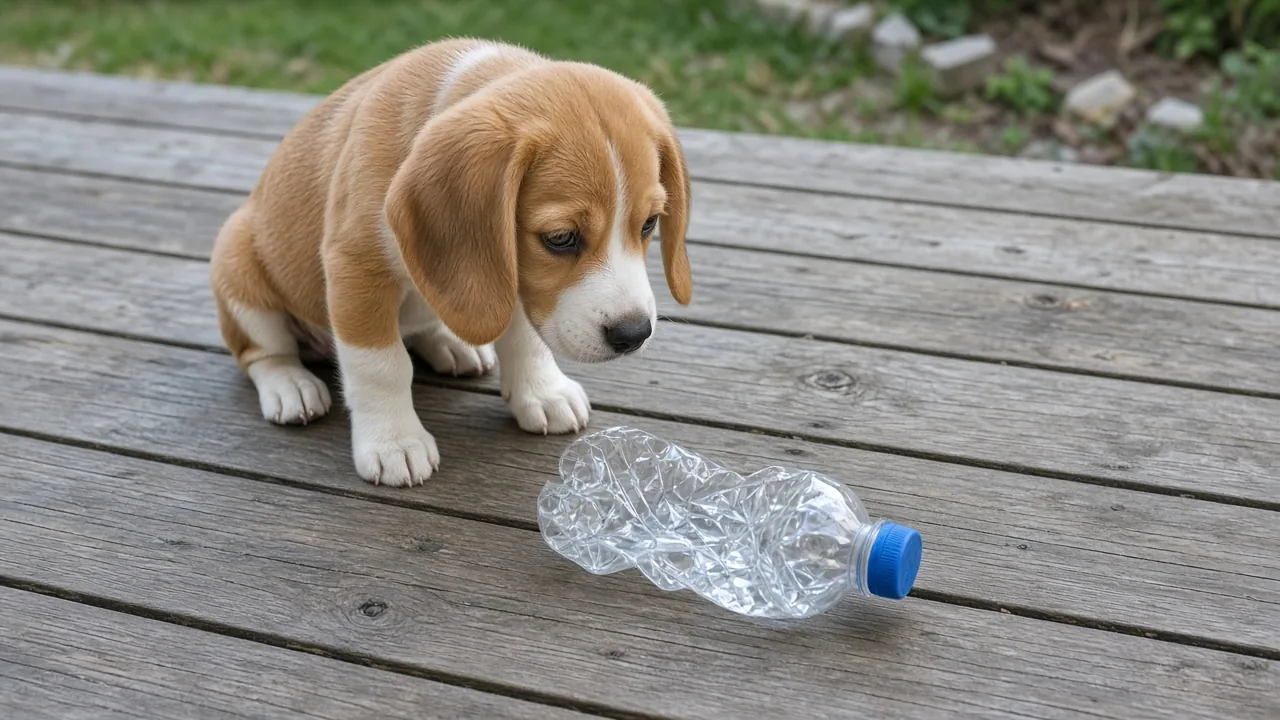
If you’re wondering whether a DIY sock water bottle dog toy is safe, the honest answer is: it depends entirely on your dog. For a gentle chewer who just wants a crinkly, noisy thing to carry around, it can work fine for a while. For a dog who tears into fabric and chews through plastic, this toy can turn into a choking and ingestion risk within minutes.
What You’ll Need and What You’ll Learn
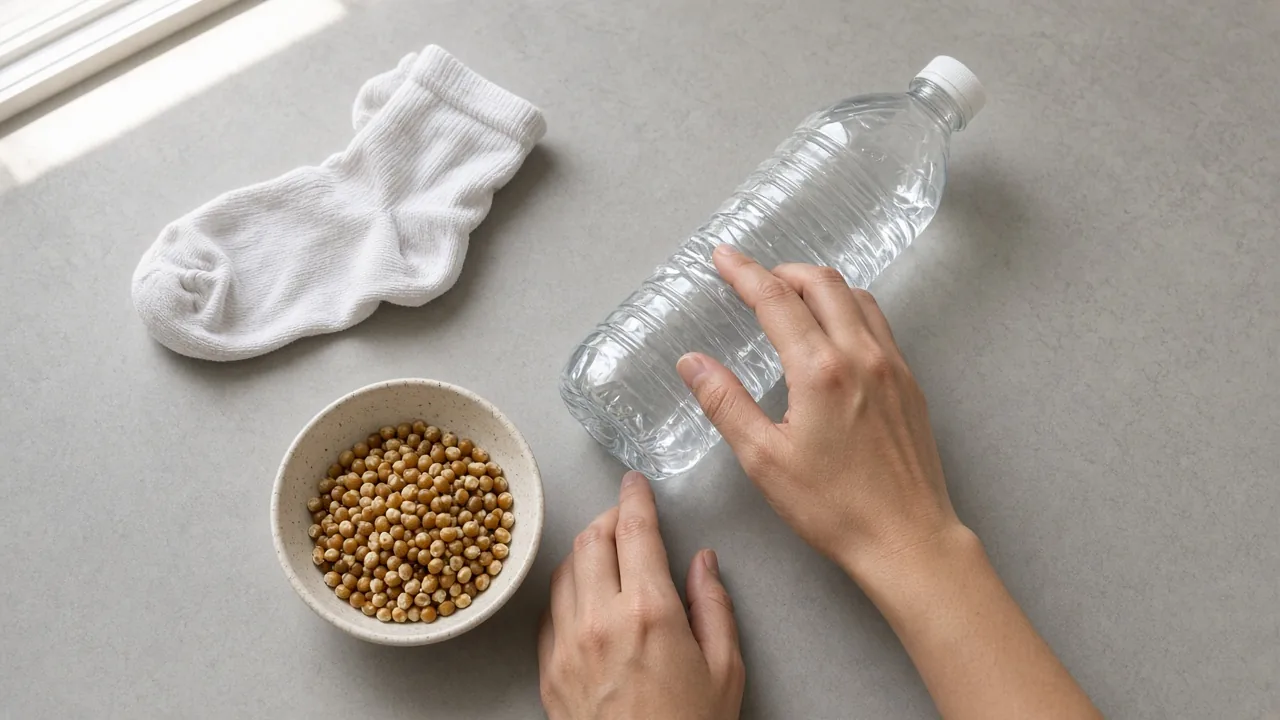
This particular toy comes together from three things you probably already have around the house: a clean sock, an empty plastic water bottle, and a handful of popcorn kernels. No glue, no sewing, no special tools, and no cost beyond what’s already sitting in your recycling bin.
Below, you’ll find the full build process first, then an honest look at when this toy makes sense and when it doesn’t. The goal isn’t to scare you away from DIY toys altogether — it’s to help you match the toy to your dog’s actual chewing style instead of guessing, and to give you a clear way to decide whether this specific project belongs in your dog’s toy basket at all.
How to Make the Sock and Water Bottle Dog Toy
The appeal here is simple: the crumpled plastic bottle crinkles when squeezed, and the kernels inside add a soft rattling sound that many dogs find interesting. It mimics some of the sensory feedback you’d get from a store-bought crinkle toy, just built from recycling-bin materials instead of a trip to the store.
Step-by-Step Instructions
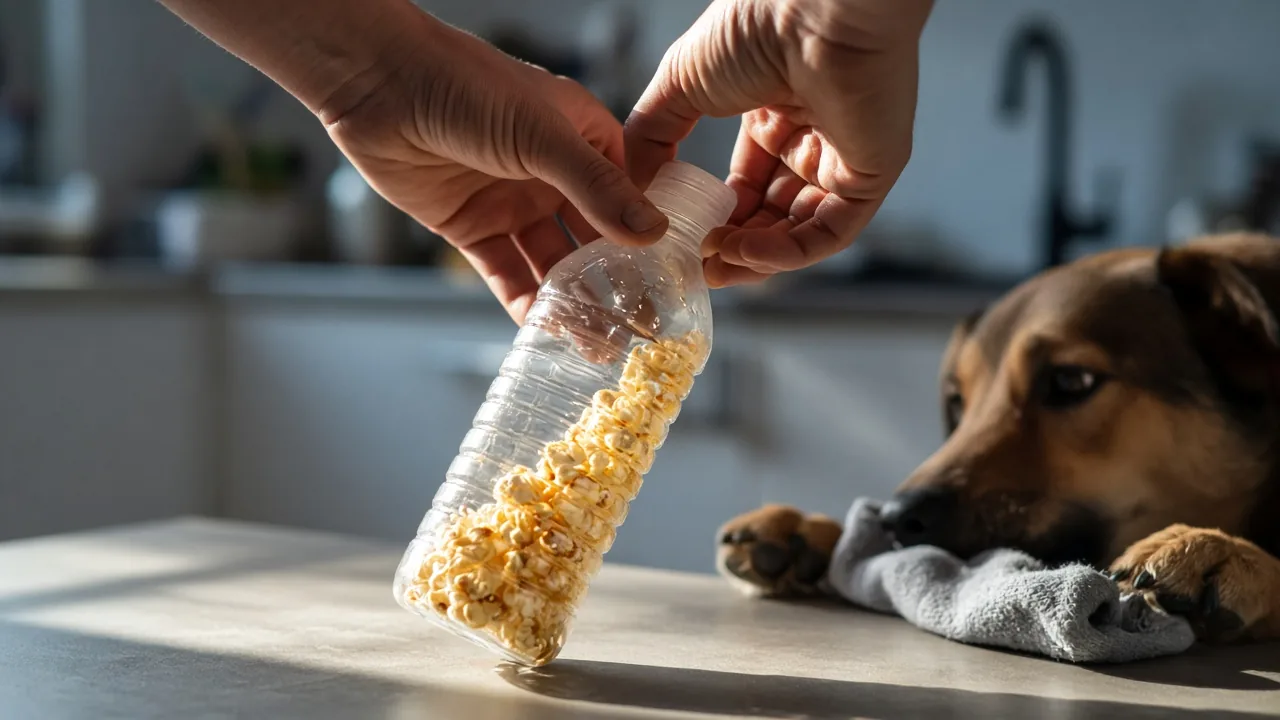
- Empty a plastic water bottle completely and rinse it out so no sticky residue is left inside.
- Peel off the outer label and any glue residue, since loose paper can be a separate chew hazard.
- Drop a handful of popcorn kernels into the bottle — enough to rattle, not so many that the bottle won’t crush.
- Screw the cap on tightly.
- Slide the capped bottle into a clean sock.
- Tie a secure knot at the open end of the sock to hold everything in place.
The whole process takes a few minutes, and that’s exactly why this toy shows up so often in DIY roundups: it’s fast, free, and uses materials you’d otherwise throw away. That low barrier to entry is also part of why it’s worth slowing down and thinking through the risks before handing it to your dog.
Is DIY Sock Water Bottle Dog Toy Safe for Every Dog?
Here’s where the enthusiasm needs a reality check. The crinkle sound that makes this toy fun is also what tells a determined chewer that something interesting is hiding under the sock fabric. Once a dog figures that out, the sock typically doesn’t last long.
One owner described exactly this pattern: her puppy beagle ripped the sock open and started trying to eat the popcorn kernels inside, essentially "making popcorn out of them." That’s not a hypothetical worst case — it’s a direct account of what can happen with a sock-and-bottle toy left unsupervised with a motivated chewer.
The real safety concerns stack up quickly:
- Choking risk from the bottle cap or cracked plastic pieces if a dog bites down hard enough to break the bottle.
- Ingestion risk from kernels spilling out once the sock tears, especially with small dogs that can swallow kernels whole.
- Fabric ingestion risk from the sock itself, since dogs can swallow strips of torn cloth.
None of this means the toy is unsafe for every dog in every situation. A low-key chewer who mostly just carries toys around or gives them a gentle squeeze may never get past the sock’s surface. But a dog with strong jaws, a habit of shredding soft toys, or a track record of eating things it shouldn’t is a poor match here.
Which Dogs Should Avoid This Toy
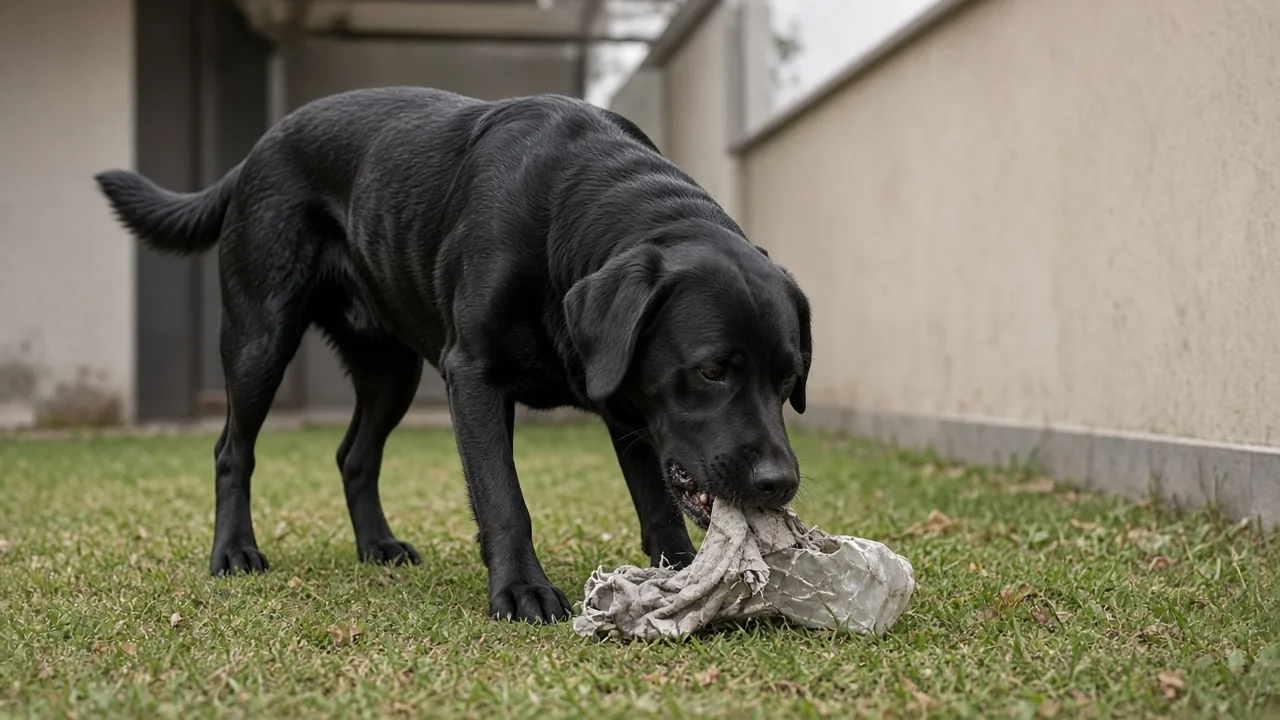
Skip this one, or only allow it under close supervision, if your dog fits any of these descriptions:
- Strong or persistent chewers. Dogs that reliably destroy stuffed toys, rope toys, or fabric items in one sitting will likely do the same here, and they’ll do it fast.
- Puppies in the teething stage. Teething puppies chew compulsively to relieve gum discomfort, and that drive doesn’t pause for safety. A puppy that’s already working through a sock-and-bottle toy unsupervised is at real risk of swallowing both kernels and plastic shards.
- Dogs that swallow debris quickly. Some dogs rip, chew, and swallow in nearly the same motion, giving you almost no window to intervene before a piece goes down.
- Small-breed dogs of any age. A toy-breed or small-breed dog has a narrower airway and a smaller digestive tract, so a kernel or plastic shard that might simply pass through a large dog can lodge or cause a blockage in a smaller one. Size works against small dogs here even if their chewing habits seem mild.
If your dog falls into any of these groups, this toy is better treated as a one-time supervised activity, if at all, rather than something left out for solo play.
Popcorn Kernels vs Rice: Which Filling Is Lower Risk
A common suggestion is swapping popcorn kernels for rice inside the bottle, and it’s a reasonable tweak. Rice is smaller and arguably less likely to lodge awkwardly compared to a kernel, but swapping the filling doesn’t solve the core problem.
Whether it’s rice or kernels, the risk isn’t really about which small object is inside — it’s about whether your dog can get to it at all. A dog that tears the sock and cracks the bottle open will have access to a pile of small, swallowable material either way. Filling choice is a minor adjustment; supervision and your dog’s chewing habits matter far more. If you want a filling that’s gentler on the stomach in the rare case a few grains do get swallowed, rice is a fine swap — just don’t treat it as a safety fix for a toy your dog can tear apart.
Why Plastic Water Bottles Inside Dog Toys Raise Safety Concerns
Beyond the sock tearing, the water bottle itself is a separate concern worth taking seriously. Plastic bottles aren’t designed to withstand repeated dog bites. Under enough pressure, they don’t bend cleanly — they crack and splinter into sharp-edged fragments.
Those fragments can cut the inside of a dog’s mouth, and if swallowed, they carry a risk of scraping or injuring the lining of the digestive tract on the way through. This is a big part of why plastic water bottles tend not to hold up well as a long-term material for feeder-style or chew-style dog toys, even outside of the sock-and-kernels design specifically.
This creates a genuine split in how DIY toy ideas and safety-focused buying guides treat the same material. Craft-style guides often list the water bottle method as a fun, low-cost project using household items. Safety-focused buying advice, on the other hand, tends to steer owners away from plastic bottles as a long-term toy material precisely because of the sharp-fragment risk. Both perspectives have a point — the project is genuinely easy and cheap, and the safety concern is genuinely real. The toy can be a fine one-time or closely watched activity; it’s a poor choice as an unsupervised, everyday chew option.
How to Check Any DIY Dog Toy for Safety Before and During Play
Whether it’s a sock-and-bottle toy or anything else you build at home, run through this short checklist before handing it over:
- Size relative to your dog’s mouth. A toy should be large enough that your dog can’t close its jaws around the entire thing. If a bottle or ball could disappear fully into your dog’s mouth, it’s too small for that dog.
- Supervision during the first use. The first few minutes with any new toy tell you a lot. Watch how your dog interacts with it — does she chew gently, or go straight for the seams and knots?
- Signs of fraying or cracking. Check knotted ends, sock fabric, and the bottle itself for any give, splitting, or exposed material. If you see it, that’s your cue to end the play session.
Signs It’s Time to Replace the Toy
Stop play and remove the toy immediately if you notice:
- Torn fabric or an opening in the sock
- Exposed plastic from the bottle poking through
- Kernels (or rice) missing or spilled nearby
This is exactly what happened with the beagle puppy mentioned earlier — the torn sock and scattered kernels were the clear signal that the toy needed to come out of rotation permanently, not just get re-tied and handed back.
Safer DIY and Store-Bought Alternatives by Chew Strength
If the sock-and-bottle toy doesn’t match your dog’s chewing style, there are other options at different durability levels.
| Toy Type | Material | Best For | Chew Durability | Cleaning | Play Style |
|---|---|---|---|---|---|
| Sock + water bottle | Fabric sock, plastic bottle, kernels | Light chewers, supervised play only | Low | Hand wash sock only; bottle is disposable | Carry, squeeze, crinkle sound |
| Tennis-ball sock tug toy | Fabric sock, tennis balls | Light to moderate chewers | Low to moderate | Hand wash | Tug-of-war, carry |
| Braided T-shirt pull toy | Cotton fabric strips | Moderate chewers, puppies in teething | Moderate | Machine washable | Tug-of-war, chew |
| Rope-filled plush toy | Fabric exterior, rope-knot filling | Moderate to strong chewers | Moderate to high | Hand wash, air dry | Shake, carry, light tug |
| Rubber feeder toy (established brand) | Food-grade rubber | Strong chewers, all ages | High | Dishwasher-safe (check label) | Chew, treat-dispensing |
The pattern across this table is pretty consistent: the softer and more improvised the materials, the better the toy is suited to light chewers under supervision rather than solo, unsupervised play. Durability also needs to scale with size — a small-breed dog with moderate chewing habits may do fine with a braided T-shirt toy, while a large or giant-breed dog with the same habits can shred the same toy in minutes simply because of jaw strength, not destructive intent.
Other Easy DIY Toys to Try Instead
If you like the DIY route but want something a bit more forgiving than plastic bottles, two options use softer materials and carry lower splinter and ingestion risk:
Tennis-ball tug toy. Drop a tennis ball into the toe of a sock, knot it tightly at the top of the ball, then tie a second knot a short distance up the sock. You can add a second ball and another knot if the sock is long enough, giving your dog multiple grip points for tug-of-war.
Braided T-shirt pull toy. Cut an old T-shirt into strips sized to your dog’s mouth. Use one longer strip to tie the other strips together at one end, braid them into a rope shape, then tie off the other end with another strip and trim any excess fabric.
Both skip the rigid plastic entirely, which removes the sharp-fragment concern. They’re still fabric, though, so the same fraying checks apply, and neither is a good match for a dog that swallows debris quickly rather than just chewing on it.
When to Choose a Store-Bought Feeder Toy Instead
For dogs that chew hard and often, a rubber feeder toy from an established toy brand is usually worth the higher price tag compared to a homemade plastic-bottle version. These toys are built specifically to resist cracking under repeated bite pressure, which is the exact failure point that makes bottle-based toys risky long term.
They also tend to be more versatile — many double as a chew toy, a treat-dispensing toy, and even a planter once retired from dog duty. The tradeoff is cost: these sit in the mid-range to premium price bracket compared to a free homemade option. For a dog that destroys cheaper toys quickly, though, the better durability often works out to a fairer cost over time than repeatedly replacing broken DIY versions.
How to Keep Your Dog Interested in Safer Toys
Dogs — like people — lose interest in the same toy over time. Rather than reaching back for the risky bottle-and-sock design to recapture that excitement, there are safer ways to refresh an old favorite.
One owner found success freezing pumpkin puree inside a toy her dog had grown bored of; after that, the dog was interested again almost immediately. Freezing food inside a toy adds a slower, more engaging challenge and works well with rubber feeder toys designed to hold frozen fillings.
Rotating toys also helps. Keeping a busy box (a large box filled with a mix of toys in different materials and textures), a flying disc, and a rope toy in rotation — swapping which ones are out and available every few days — tends to keep a dog’s interest higher than leaving the same single toy out indefinitely.
If your dog seems uninterested in any toy and would rather chew on shoes or furniture, that’s often less about the toy itself and more about activity level or mental stimulation. In that case, it’s worth increasing structured play time or talking to a certified trainer about enrichment options rather than cycling through more toys.
Frequently Asked Questions About the Sock Water Bottle Dog Toy
Is rice safer than popcorn kernels in this toy?
Not meaningfully. Rice may be slightly smaller than a kernel, but the real risk comes from your dog accessing the plastic bottle and loose filling at all, not from which small filler is used.
How long does this toy usually last?
It varies a lot by dog. A gentle chewer might carry it around for days without doing damage. A dog that targets seams and knots can tear through the sock in a single session, so there’s no fixed timeline — watch your dog’s behavior instead of the clock.
What should I do if my dog already swallowed a piece of the bottle or some kernels?
Contact your veterinarian right away, especially if you notice vomiting, gagging, lethargy, or refusal to eat. Don’t wait to see if symptoms resolve on their own, since plastic fragments and swallowed debris can cause blockages that need prompt attention.
Can I make this toy safer instead of avoiding it entirely?
Only using it as a supervised activity — never left out for solo play — and removing it at the first sign of tearing are the two biggest risk reducers. Beyond that, there’s no way to make a plastic bottle fully resistant to a strong chewer’s jaws.
Is this toy a reasonable option for puppies?
Only with heavy supervision, and even then it’s not the best choice. Puppies, especially during teething, chew more compulsively and less predictably than adult dogs, which raises the odds of both fabric and plastic ending up swallowed before you can step in.
Pay attention to whether your dog prefers chewing, chasing, carrying, or digging before picking a toy, since that preference tells you more about safety than the toy’s price tag ever will. Check every toy regularly for tears, cracks, or loose pieces, and pull it from rotation the moment something looks off — the same inspection habit applies whether you’re checking a snuffle mat, a tug toy, or anything else in your dog’s toy basket.
This article is for general information only and is not a substitute for advice from your veterinarian. Always supervise your pet with a new toy, and replace any toy that is damaged or small enough to swallow.

Contributor
admin
Continue reading
All stories
DOG TOYS · 11 October
What Size Kong Is Safe for My Dog? A Weight and Bite Chart
DOG TOYS · 11 October
How to Make a DIY Lick Mat for Dogs: Layered Recipes That Calm
DOG TOYS · 11 October
Responses
Moderated discussion