DOG TOYS
DIY Dog Toys From Old T-Shirts: No-Sew Braided Build
Learn two no-sew ways to make DIY dog toys from old t-shirts, including a tennis ball octopus and a quick three-strand braid. Includes safety checks and cleaning tips for light to moderate chewers.
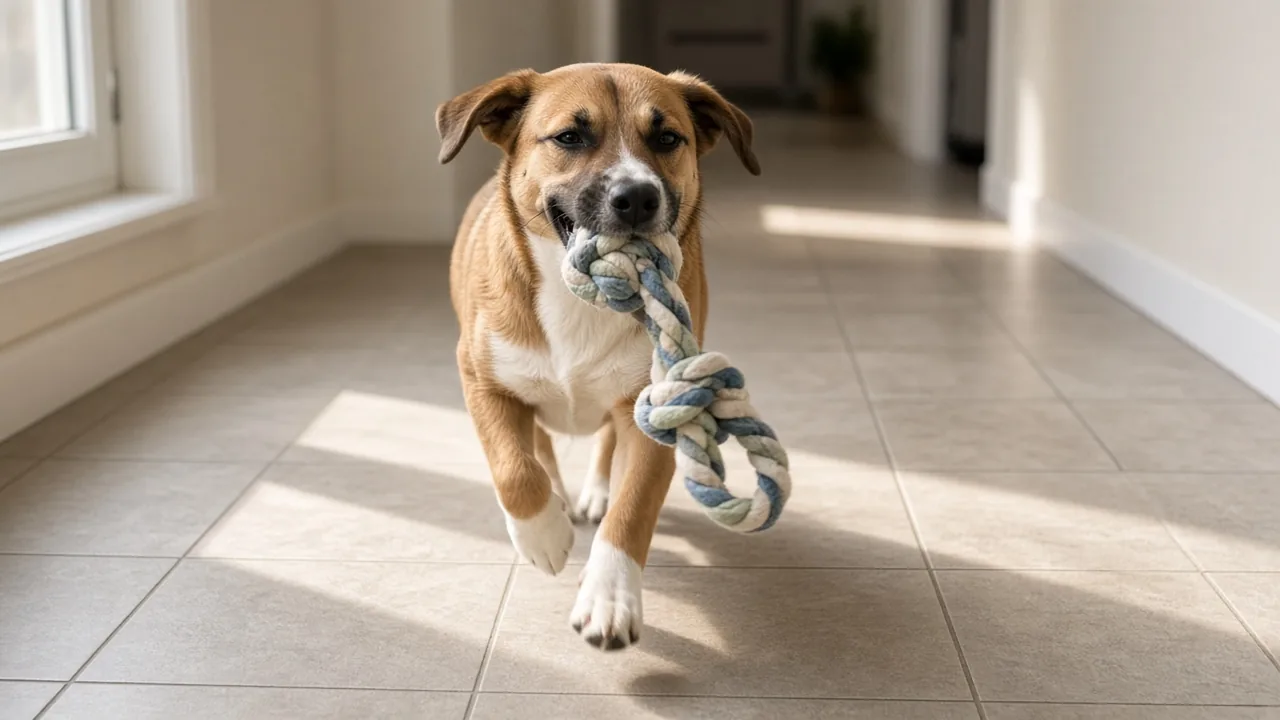
DIY dog toys from old t-shirts cost almost nothing and can be made in about ten minutes, but they are not equally durable for every dog. A tightly braided cotton toy works best for light to moderate chewers, short tug sessions, and dogs that like to carry something soft. For a determined shredder, the same toy may come apart within minutes. This guide covers two no-sew methods, explains how to size and inspect the finished toy, and gives you honest limits so you can decide whether this project fits your dog.
DIY Dog Toys From Old T-Shirts: What You’re Really Making
This is a fabric-only project using old cotton T-shirts, scissors, braiding, and an optional tennis ball. You don’t need a sewing machine, needle, thread, glue, or purchased parts. The finished toy is a dense cotton braid that can be used for tugging, carrying, or supervised chewing. One version wraps a tennis ball inside an octopus-shaped covering. The other is simply a tight three-strand braid with no ball.
Materials and Why Cotton T-Shirts Fit
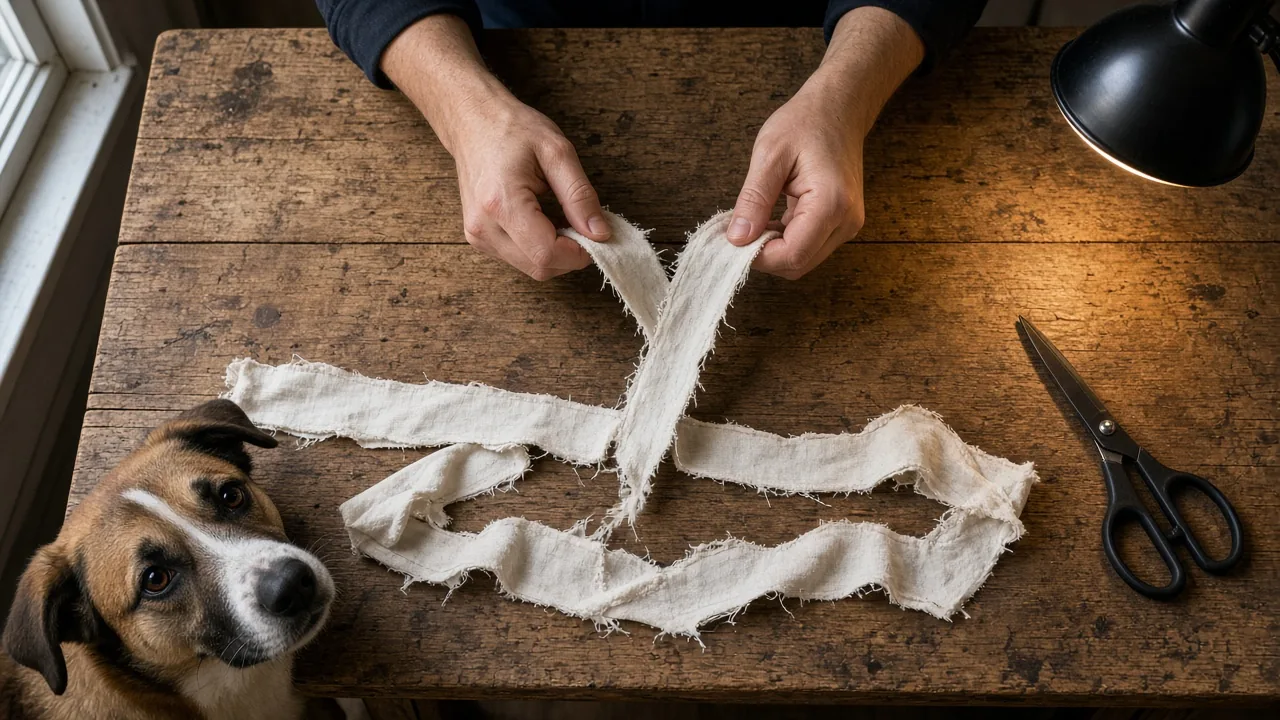
Old cotton T-shirts are soft enough to braid but sturdy enough for tugging. Their stretch gives you some grip when you pull the strips tight, which helps create a denser finished toy. Cotton also absorbs saliva, so the toy may feel damp after play. That is a cleaning issue, not a reason to avoid the material.
You probably already have the core supply on hand: a worn shirt with no snaps, zippers, or hard decorations. One note: avoid shirts with puffy ink prints or heat-transfer vinyl. Those sections can crack and come off in small pieces. Use the plain front or back panel of a shirt instead.
You don’t need a full craft kit. Scissors help, but you can tear most cotton jersey along the grain. For the tennis ball version, an old ball works, though a new one may hold its shape better. The only requirement is that you supervise chewing and remove the toy if the ball starts to split.
Two Build Options at a Glance
One version wraps a tennis ball inside an octopus-shaped covering. The ball creates a round center, and the braided arms act as handles for tugging. This shape tends to appeal to dogs that like to grab and shake. The other is a faster three-strand braid without a ball. It is a simpler project and easier to size up or down.
| Option | Core Material | Time Estimate | Best For |
|---|---|---|---|
| Tennis ball octopus toy | Cotton T-shirt + tennis ball | About 15–20 minutes | Dogs that like to grab, shake, and tug |
| Quick three-strand braid | Cotton T-shirt only | About 5–10 minutes | Light chewers, carriers, and first-time makers |
A thicker braid can withstand more pulling. A thinner one is easier for small dogs to carry. Neither version is a replacement for a heavy-duty chew toy.
How to Make a Braided T-Shirt Dog Toy Without Sewing
Both methods start by cutting or tearing T-shirt fabric into long strips, then braid tightly and secure each end with fabric knots. The material is jersey cotton, which rolls slightly at the edges when stretched. That is helpful: rolled strips form rounder braid strands.
Method 1: Tennis Ball Octopus Toy
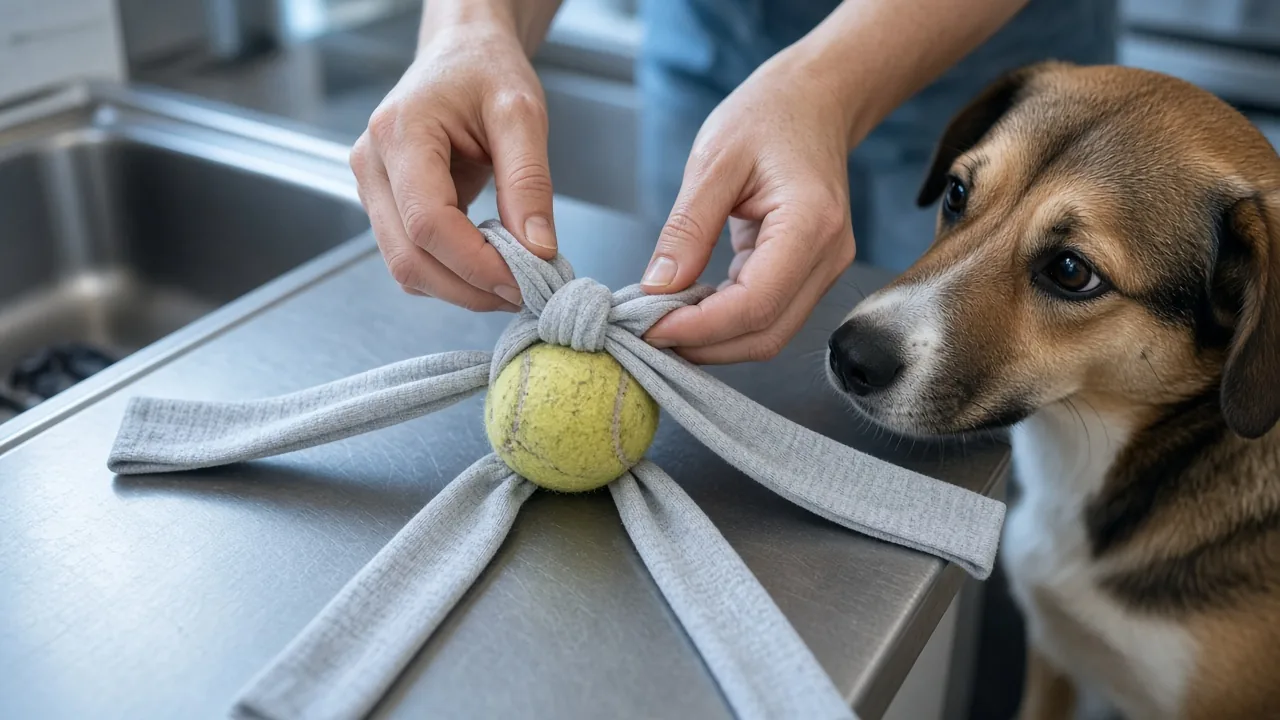
- Lay a T-shirt flat on a clean surface. Cut a square from the chest or back panel, avoiding seams and printed areas.
- Cut the square in half so you have two rectangles.
- Cut each rectangle in half again lengthwise. You should now have long fabric strips.
- Place two strips in an X shape.
- Set an old tennis ball in the center of the X.
- Pull the fabric up around the ball and use another T-shirt strip to wrap around the base several times. Tie that wrap tightly.
- Check the shape. If it looks like an octopus with a ball head and four hanging sections, it’s correct.
- Cut each hanging section into narrow strands about 2 to 3 inches wide.
- Take three strands at a time and braid tightly. Tie the end in a firm double knot.
- Repeat until every hanging section is braided.
The finished toy has a ball center and multiple braided legs. Some owners say their dogs target the ball end first, while others go for the braided arms.
Method 2: Quick Three-Strand Braid
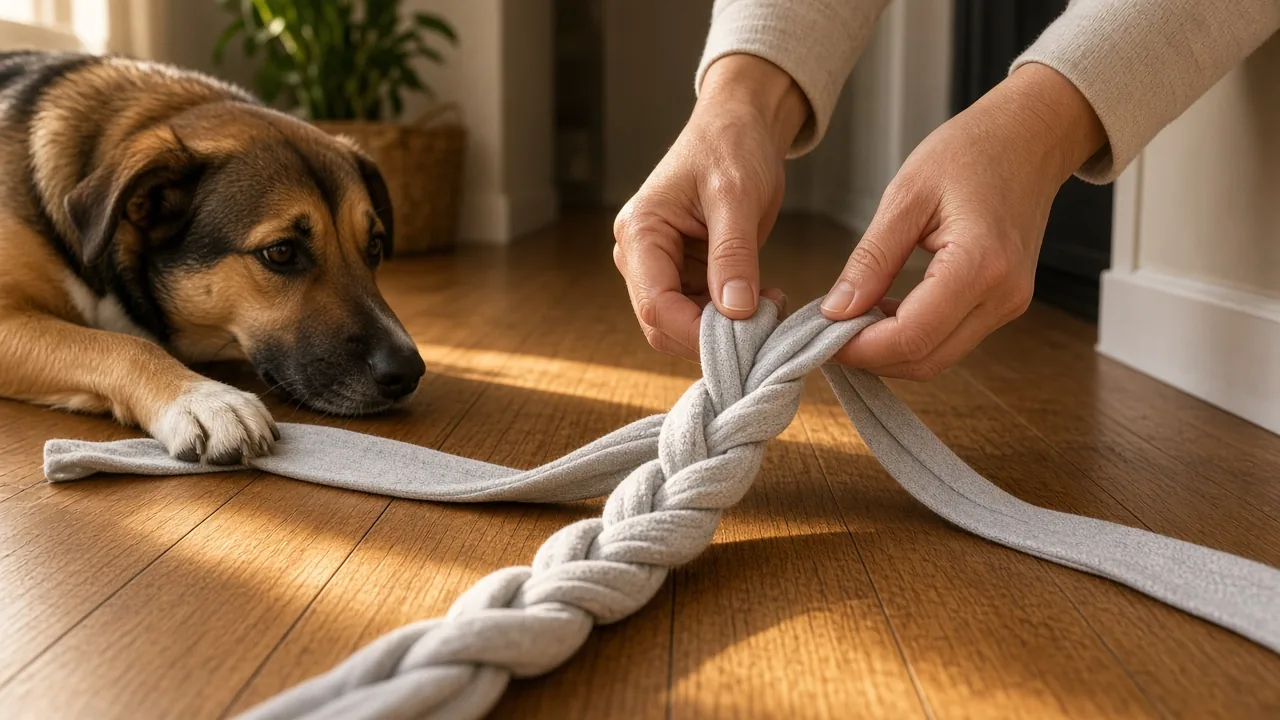
- Take another T-shirt square from a clean, plain section.
- Along one edge, cut a notch every few inches.
- Grasp each notch with both hands and rip down the length of the fabric. The jersey will tear into strips.
- Gather the strips. Divide them into three equal groups. Thicker groups make a bulkier braid.
- Tie the top of all three groups together using a separate small strip of shirt fabric. Pull the knot very tight.
- Braid the three sections as tightly as you can.
- When you reach the end, tie another small strip of fabric around the bottom in a tight double knot.
What Owners Liked About These Toys
Owners said the project took about ten minutes, cost nothing, and gave new puppies or first-time owners a quick way to add toys. The appeal is practical: if you have a worn shirt and ten spare minutes, you can replace a destroyed toy without a trip to the pet store.
Fast, Nearly Free, and Beginner-Friendly
The no-sew braiding method is forgiving for beginners. Even an uneven finished toy can still be sturdy enough for play. One owner reported that the result didn’t look good but held up well. That is a reasonable trade in a first DIY project.
Good Fit for Light Chewers and Dogs That Like Carrying or Tugging
Dogs in the source appeared willing to play with the finished toys, and some owners used them to redirect chewing from blankets. A braided fabric toy can satisfy the urge to mouth something soft. Some dogs also like carrying the braided shape around, especially if the toy is long enough to trail on the floor.
Real Drawbacks: Knots, Looks, and Heavy Chewers
The main concern is whether end knots stay closed. Some owners expect them to loosen within minutes under strong chewing. That matters because a single loose end gives a dog something to pick at.
Loose Ends Can Unravel Quickly
If your dog picks at knots or chews with sustained pressure, the fabric ends may come apart faster than a stitched or manufactured toy. A double knot helps, but it is not a permanent fix under concentrated chewing. This is why the toy should not be left with a dog during unsupervised time.
Appearance May Be Uneven, and That Is Acceptable Up to a Point
One owner reported a rough look but solid construction. Prioritize tight braids and secure knots over visual neatness. A lopsided toy can still work. What matters is that the braid remains dense and the ends don’t dangle loosely enough for a dog to swallow.
Are These Toys Safe and Durable Enough for Your Dog?
Safety depends on choosing a finished size your dog cannot swallow whole, using tight knots, and watching the first play session closely. A well-made fabric braid can handle some tugging, but it is still a soft textile toy. It will wear.
How to Size the Toy and Braid Thickness
Make the final toy large enough that your dog cannot fit the entire braid in its mouth. A toy that can be swallowed whole is a choking and obstruction hazard, not a toy. Use thicker braids for larger or stronger dogs. A three-strand braid made from thin strips may be fine for a small dog but too flimsy for a large one. If the toy feels like it could split with one hard tug, make the strands wider or use more fabric strips.
How to Inspect and When to Replace
Check before each play session for loose strings, frayed fabric, or unraveling ends. Pull gently on the knots. If anything moves, tighten it or cut the toy apart and reuse the intact strips in a larger braid. Remove the toy if it becomes small enough to swallow or starts to come apart. Ten minutes of fun is not worth a trip to the emergency clinic.
Hygiene and Edge Cases
Cotton braided toys can hold saliva and dirt. Wash or replace them more often if they stay damp. If the fabric starts to smell musty, that’s a sign it has sat wet. Avoid leaving a damp braid in a toy bin. Do not leave an unsupervised dog with a frayed toy, especially one with a tennis ball inside.
Who Should Make These Toys, and Who Should Skip Them
This project suits owners who want a fast, low-cost, no-sew option for light to moderate chewers. It is not a reliable substitute for heavy-duty chew toys. The key is matching the toy to the dog in front of you, not making one toy work for every dog.
Good Matches
First-time dog owners, new puppy households, light chewers, and school upcycling projects may benefit because the materials are simple and the skill level is low. A puppy in the chewing phase may enjoy a soft braid during teething, as long as the toy is large enough and knots are tight. Schools can use old T-shirt drives as a way to teach a practical craft.
Skip or Modify for Strong Jaws or Knot-Focused Dogs
If your dog destroys fabric quickly or targets the tied ends, a braided T-shirt toy may only last minutes. Use it only during supervised short sessions. For a heavy chewer, consider a larger, tighter braid with wider strands, but accept that the material has limits. Cotton fabric is not nylon-reinforced firehose material.
If You Want an Interactive Alternative
An electronic dog toy may offer a different kind of play, but source material on that option is limited to a product title with no usable detail. Treat that as a direction to research rather than a verified alternative. If you go that route, look for a product with clear safety information about materials, battery access, and durability.
How to Clean and Rotate DIY Dog Toys From Old T-Shirts
These cotton toys need regular cleaning and rotation to stay sanitary and interesting, but their fabric construction may limit how aggressively you can wash them. A braid that comes slightly undone in the wash can tangle around other items.
Cleaning Cotton Braided Toys
Check for stains or odor. Hand-wash or machine-wash in a laundry bag if the braids are still tight. Use cold or warm water rather than hot, and dry thoroughly before returning the toy to your dog. If the braid is starting to loosen, wash it by hand so the agitation doesn’t pull threads free. Throw away a toy that won’t come clean or keeps its odor after washing.
Rotate by Play Style
Keep two or three toys in rotation and offer this braided toy for tug or carry games, not as a chew-alone item if your dog tends to shred fabric. Putting it away after play keeps it feeling newer. Rotating also gives you a chance to inspect for damage between sessions.
Frequently Asked Questions About DIY Dog Toys From Old T-Shirts
Can I Use a New Tennis Ball Instead of an Old One?
Yes. The original method suggests an old ball to repurpose an item, but a new ball may work as long as you supervise chewing and remove the toy if the ball breaks apart. A broken tennis ball can expose small pieces or seams.
How Do I Stop the End Knots From Coming Loose?
Tie the ends as tightly as possible, use a double knot, and check them often. Some owners still report loosening under heavy chewing. If knots loosen quickly, the toy may only be safe for short tug sessions with a dog that doesn’t redirect to the ends.
How Long Does It Take to Make One?
One owner finished in about ten minutes, but your time may vary with braid thickness and how many strips you use. The three-strand version without a ball is the faster option.
Will My Dog Actually Like It?
Dogs in the source tried the toys, and some owners used them to redirect chewing from blankets. Individual play preferences still vary. A dog that ignores a braided toy on the floor may show more interest if you hold one end and invite a game of tug.
Before making several, watch whether your dog prefers chasing, tugging, carrying, or chewing, then rotate this toy with safer alternatives and check it every session for damage. A toy that fits your dog’s play style gets used more often and lasts longer, but no soft fabric toy should be left with an unsupervised heavy chewer.
This article is for general information only and is not a substitute for advice from your veterinarian. Always supervise your pet with a new toy, and replace any toy that is damaged or small enough to swallow.

Contributor
admin
Continue reading
All stories
DOG TOYS · 11 October
Raw Meaty Bones vs Recreational Bones for Dogs: What’s Safer
DOG TOYS · 11 October
What Size Kong Is Safe for My Dog? A Weight and Bite Chart
DOG TOYS · 11 October
Responses
Moderated discussion