SMALL PETS & BIRDS
Can Rabbits Use Cat Litter Safely? What Every Owner Should Know
Cat litter and rabbit litter often share the same bentonite clay, but whether rabbits can use cat litter safely depends on placement and supervision, not the material alone. This guide covers the ingestion risks, safer alternatives, and how to set up a chew-proof litter box.
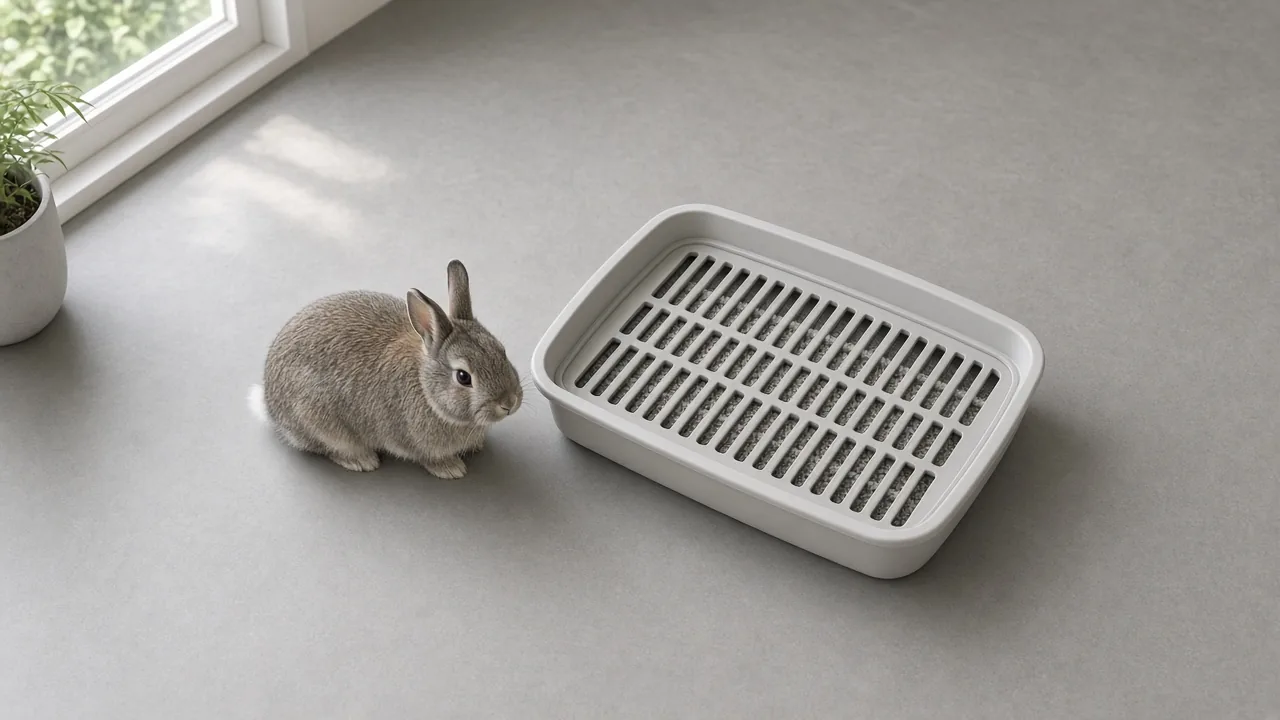
Cat litter and rabbit litter are often the same bentonite clay, so the question of whether rabbits can use cat litter safely comes down to placement and supervision rather than the material alone. A rabbit that can reach and chew loose clay litter faces a real risk of digestive blockage. A rabbit whose litter box keeps that clay sealed away from paws and mouth may tolerate it just fine.
Why People Ask If Rabbits Can Use Cat Litter Safely
Litter labeled specifically for rabbits often costs close to double what the same type of bentonite clay sells for when it’s marketed to cat owners. One owner comparing prices at a pet supply store found rabbit litter priced at roughly twice the cost of a similar bag of cat litter sitting on the next shelf, even though the ingredient list looked nearly identical.
That price gap is the main reason budget-minded rabbit owners keep bringing this question up. Nobody wants to pay extra for a label when the clay inside the bag might be the same thing. But rabbits are not cats, and the way each species interacts with a litter box is different enough that a direct swap deserves a closer look before you commit.
Cats generally scratch litter, bury waste, and move on. Rabbits often sit in the box for extended periods, dig at corners out of boredom or instinct, and sometimes nibble at whatever bedding is underfoot while they’re in there. That difference in behavior, not the clay itself, is what drives most of the safety advice you’ll read on this topic.
What Cat Litter and Rabbit Litter Actually Have in Common
Strip away the packaging and many products sold separately as cat litter and rabbit litter share the same bentonite clay base. Bentonite is a natural clumping clay that absorbs moisture and controls odor by binding to ammonia compounds as they form. The clay itself doesn’t know which species is using it.
So the material is not where the real difference lies. What matters more is particle size, dust level, and whether the specific product has been treated with added fragrances or clumping agents that aren’t meant for small-animal digestive systems. A fragrance-free, low-dust bentonite litter sold for cats is chemically closer to a bag labeled for rabbits than most owners expect.
Scented or dyed clumping litters marketed heavily to cat owners are worth skipping regardless of which species uses them. The added fragrance doesn’t make the clay more dangerous if a rabbit never touches it, but it does increase the odds that a sensitive rabbit’s nose reacts poorly to the box, which can discourage litter box use altogether.
How Bentonite Clay Behaves When a Rabbit Ingests It
The safety concern owners raise most often isn’t about the clay touching skin or fur — it’s about what happens if a rabbit eats it. Clumping bentonite is designed to swell when it meets moisture, which is exactly how it controls odor and forms solid clumps for scooping.
That same swelling reaction is the problem inside a digestive tract. If a rabbit chews on loose litter or licks it off its paws in any real quantity, the clay can expand and form a blockage. Rabbits already have digestive systems that depend on constant, steady movement, so anything that can physically obstruct that movement is a serious concern rather than a minor inconvenience.
This is why the debate over cat litter in a rabbit litter box isn’t really about whether bentonite is toxic in the traditional sense. It’s about exposure. A rabbit that never gets direct access to the clay faces a very different risk level than one that can dig through it or nibble at it during normal litter box use.
It’s worth noting that owners who use bentonite setups don’t always agree on how risky it actually is in practice. Some report years of trouble-free use with a secure liner in place, while others describe a rabbit that found a way to reach the clay within days. That split isn’t a contradiction so much as a reminder that individual rabbit behavior, not the litter brand, decides the outcome.
Comparing Litter Options for a Rabbit Litter Box
Before deciding whether bentonite clay belongs in your rabbit’s setup, it helps to see how it stacks up against the other common choices. Paper pellets, wood pellets, bentonite clay, and absorbent pee pads each handle moisture and odor differently, and each carries a different level of risk if your rabbit likes to dig or chew in the litter box.
Cost is part of the equation too, but it shouldn’t be the only factor. A cheaper litter that your rabbit can access and chew isn’t actually a good value if it leads to a vet visit.
Litter Type Comparison Table: Safety, Cost, and Odor Control
| Litter Type | Cost | Absorbency | Odor Control | Ingestion Risk | Best For |
|---|---|---|---|---|---|
| Paper pellets | Budget-friendly | Good | Moderate, improves with baking soda layer | Low — generally safe if nibbled | Rabbits that dig, chew, or free-roam near the box |
| Wood pellets (birch) | Moderate | Very good | Good | Low to moderate | Owners wanting strong moisture control |
| Wood pellets (pine) | Budget-friendly | Good | Good | Avoid — pine shavings release compounds some owners consider unsafe for rabbits | Not recommended for rabbit litter boxes |
| Bentonite clay | Budget-friendly (often cheapest) | Excellent | Excellent | High if directly accessible | Boxes with a secure, chew-proof liner only |
| Pee pads | Moderate | Good for light use | Can develop odor faster | Low | Travel setups, backup trays, foster situations |
Birch wood pellets tend to come up as a middle-ground choice: they clump less dramatically than bentonite but still control odor well, and most rabbits can chew on a stray pellet without the same swelling risk. Pine pellets are the one wood option worth steering clear of, since the aromatic compounds in pine are widely considered a problem for rabbit respiratory and liver health, even when the pellets themselves aren’t eaten.
Paper pellets sit at the safest end of the spectrum precisely because they’re forgiving of rabbit habits that would be risky with clay. If your rabbit is the type to dig a hole in the corner of the box and sit in it, paper pellets simply don’t carry the same consequence if a few end up in its mouth.
Choosing the Right Litter Box Setup for Your Rabbit’s Size and Habits
Litter safety isn’t only about the material inside the box — the box itself needs to match your rabbit’s size and digging style. A small or dwarf breed may do fine in a standard cat litter pan, but larger breeds like Flemish Giants or French Lops often need a box sized closer to a storage bin, with enough depth that digging doesn’t send litter flying over the sides.
A few questions worth asking before you settle on a setup:
- Does your rabbit dig aggressively, or does it mostly just sit and go? Diggers need a deeper box and a more secure liner.
- Is the box in a pen or free-roam area? Free-roaming rabbits often spend more unsupervised time near the box, which raises the stakes if the liner fails.
- Do you have more than one rabbit sharing a box? Multi-rabbit households should expect faster litter saturation and plan on more frequent scooping regardless of litter type.
How to Use Cat Litter in a Rabbit Litter Box Without Risk
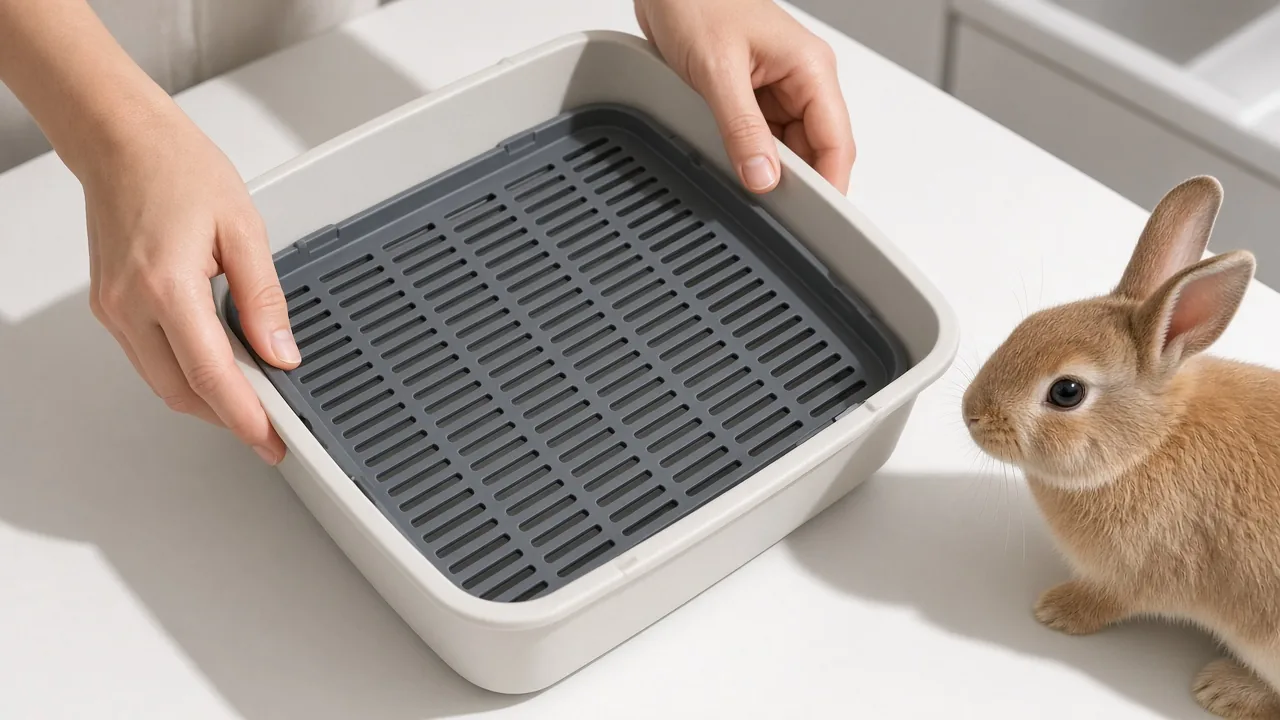
If you decide the cost savings on bentonite litter are worth pursuing, the setup matters more than the brand name on the bag. The goal is simple: the rabbit should never be able to touch the clay directly, whether with paws, nose, or mouth.
- Choose a litter box with a slotted plastic tray liner that sits above the litter, so urine and loose debris fall through but the clay stays underneath.
- Line the box with hay or a layer of paper-based bedding on top of the slotted tray, which gives your rabbit something safe to dig at instead of the clay below.
- Check the liner before every refill for cracks, gaps, or chewed edges, since any opening defeats the entire purpose of the barrier.
- Scoop and refresh the bentonite layer on a regular schedule rather than letting it sit, since a damp, overloaded layer is more likely to clump against the underside of the liner and eventually work its way through gaps.
- Watch your rabbit’s first few sessions in the box closely, the same way you’d supervise a new toy, to confirm the liner setup actually holds up to real digging and chewing.
A light dusting of baking soda between the clay and the liner can help cut down on ammonia smell without adding any extra risk, since baking soda itself is safe for rabbits in this kind of use. It’s a smell management tool, though, not a substitute for actually changing the litter on schedule.
If your rabbit has never used a slotted-liner box before, expect an adjustment period. Some rabbits take to it immediately, while others paw at the liner out of curiosity for the first week or two. That early curiosity is exactly why the supervision step in the list above matters — it’s your chance to catch a rabbit that treats the liner as a chew toy before any real damage is done.
When Cat Litter Makes Sense for Your Rabbit Setup vs. When It Doesn’t
Whether this setup is worth attempting depends heavily on your individual rabbit’s habits. A free-roaming rabbit that chews at the edges of its litter box, flips the tray, or burrows aggressively is a poor candidate for bentonite litter no matter how secure the liner looks on paper. Determined chewing eventually finds the weak point in any barrier.
A rabbit that uses its litter box calmly, sits or stands in it without excavating, and is confined to a smaller pen where you can monitor the box daily is a better fit. In that kind of setup, a slotted liner with bentonite underneath can hold up for a long time without the rabbit ever making contact with the clay.
If you’re unsure which category your rabbit falls into, watch a full week of litter box use before trusting the setup unsupervised. Rabbits that seem calm at first sometimes start digging harder once they’re fully settled into a home, so an early good impression isn’t a permanent guarantee.
Age and health also factor into this decision. A young rabbit still exploring its environment, or a senior rabbit with reduced mobility that spends long stretches sitting in the box, both warrant a more cautious approach than a calm, settled adult. When in doubt, paper or wood litter removes the guesswork entirely.
Budget-Friendly Litter Box Setups That Avoid the Cat Litter Debate Entirely
If you’d rather skip the liner-and-clay system altogether, paper-based litters sidestep the ingestion risk from the start, since they’re safe even if a rabbit eats a reasonable amount. They cost more than bentonite per bag but need less engineering around the box itself.
For travel or short-term use, a disposable aluminum roasting pan works as a one-time litter box that you line with paper litter and then recycle afterward, which is a practical option for weekend trips or vet visits where you don’t want to bring the regular box along. Dollar stores and general discount retailers also carry basic litter box supplies, scoops, and sometimes pee pads at a fraction of pet store prices, which can cover the basics without requiring any cat litter workaround at all.
Some owners also build their own low-cost hideouts and pen dividers from plain hardware store materials rather than paying extra for anything labeled as rabbit-specific. The principle that applies to litter also applies here: a generic product that’s the right size and made of safe, non-toxic material usually works just as well as one marketed directly to rabbit owners, often for less money.
Signs of a Litter-Related Problem to Watch For
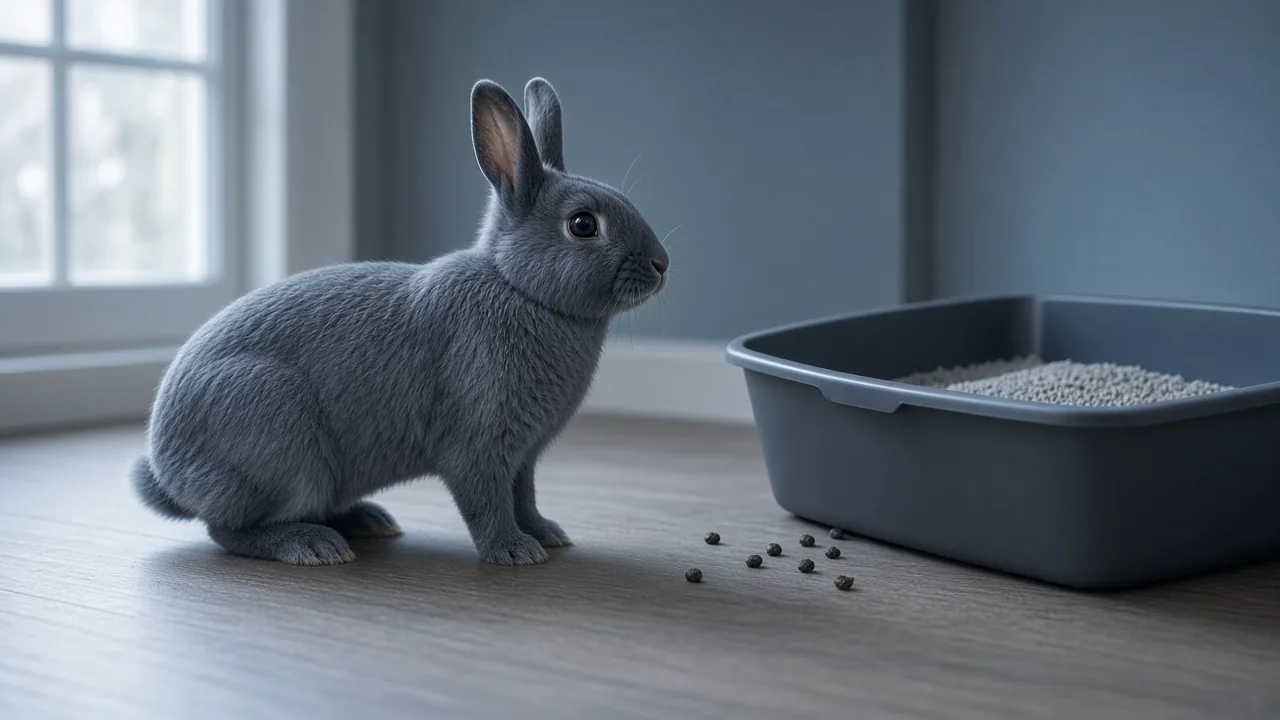
Because a digestive blockage from ingested clay can escalate quickly, it helps to know what early warning signs look like, even if you’re confident your setup is secure.
- Reduced appetite or skipping meals your rabbit normally finishes
- Smaller, fewer, or oddly shaped droppings, or no droppings at all over several hours
- Visible straining in the litter box without producing much
- Lethargy, hunching, or reluctance to move around normally
- Grinding teeth loudly, which can indicate pain
Any of these signs, especially a sudden drop in droppings, warrants a call to your veterinarian the same day rather than a wait-and-see approach. Rabbit digestive slowdowns, sometimes called gut stasis, can turn serious within hours, and a vet is better positioned than any home remedy to tell whether clay ingestion, a diet change, or something else is behind it.
How Often to Check and Replace Rabbit Litter Box Supplies
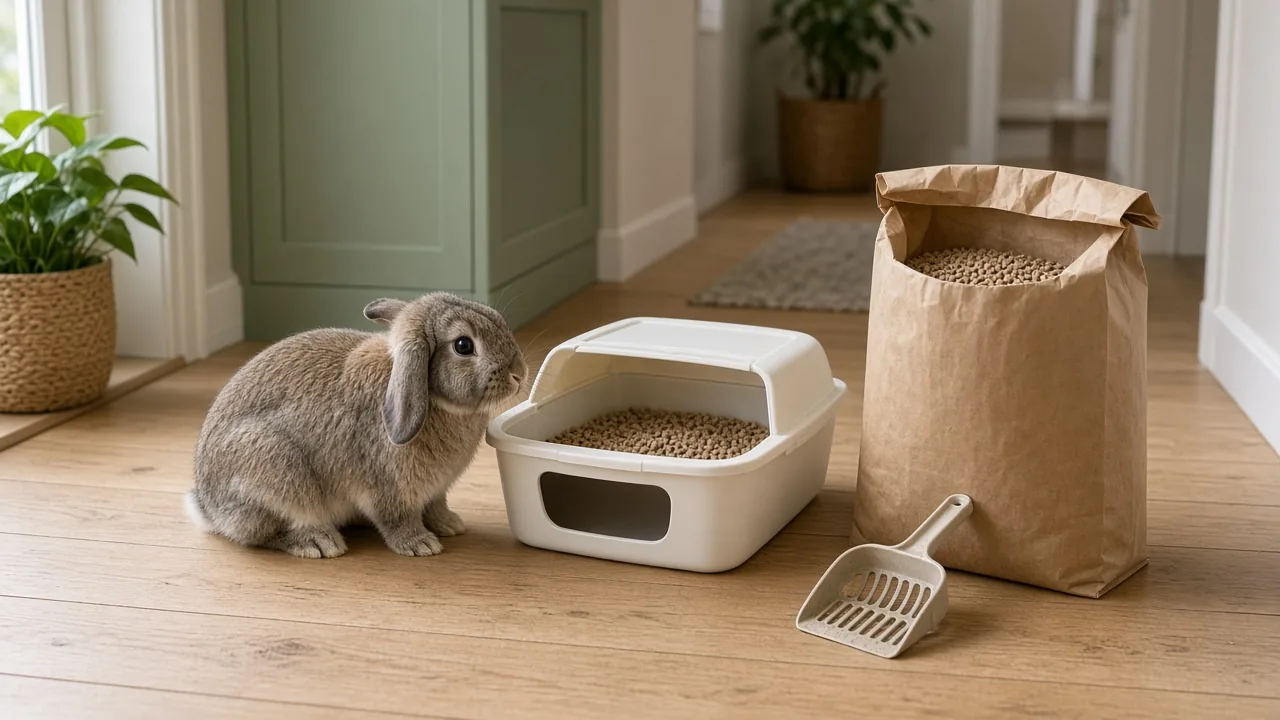
Regardless of which litter you choose, the physical condition of the box and liner matters more than the brand printed on the bag. A damaged liner is what actually exposes a rabbit to loose litter, not the litter type itself sitting safely underneath an intact barrier.
Build a habit of checking these points:
- Inspect the slotted liner for cracks or chew marks every time you clean the box, not just occasionally.
- Replace a liner immediately if you find any gap large enough for a paw or nose to reach through.
- Scoop solid waste and refresh damp litter on a consistent schedule rather than waiting until odor becomes obvious.
- Fully empty and wash the box on a regular rotation to prevent buildup that can make clumping litter stick and crack the liner underneath.
- Watch for behavior changes like reduced appetite or smaller droppings, which can signal a digestive issue worth mentioning to your veterinarian regardless of what’s in the litter box.
A full liner and litter check doesn’t take long, but it’s the single habit that determines whether any litter type stays safe over months of daily use. Set a recurring reminder if you tend to lose track of maintenance tasks between busy weeks — a liner that’s been quietly cracking for a while is far riskier than one you catch on day one.
Common Questions About Rabbit Litter Safety
Are wood pellets safer than clay? Birch wood pellets are generally considered a safer middle ground than bentonite clay, since they’re less likely to swell dangerously if a rabbit eats a small amount, though no litter is truly risk-free if eaten in quantity.
Why should I avoid pine pellets specifically? Pine, along with cedar, contains aromatic compounds that many rabbit owners and small-animal resources consider harmful with ongoing exposure, which is different from the physical blockage risk that bentonite carries. The concern with pine is more about long-term exposure than sudden ingestion.
My rabbit ignores the litter box completely. Does litter safety still matter? Yes. Even a rabbit that won’t use the box at all may still investigate it, dig at the edges, or chew the tray out of curiosity, so the same supervision and liner checks apply until you’re confident the box holds no appeal.
Can I mix litter types in one box? Layering paper litter or hay on top of a liner over bentonite is the main combination that makes sense, since it keeps the rabbit’s direct contact limited to the safer material on top.
Is clumping cat litter worse than non-clumping litter for a rabbit? Clumping formulas are generally the bigger concern, since the same swelling action that makes them effective for scooping is what causes a blockage if swallowed. Non-clumping clay litters still carry some risk but tend to be less aggressive about absorbing moisture once ingested.
How do I know if my rabbit’s litter setup needs to change? Watch for repeated digging at the liner, chewed corners, or litter escaping the box more than usual. Any of these signs suggest it’s time to reinforce the barrier or switch to a lower-risk litter entirely.
Watch how your own rabbit interacts with the litter box before deciding between bentonite, paper, or wood litter, and recheck the tray liner regularly for wear so nothing becomes reachable or swallowable. The same habit of watching how your pet actually plays and digs, then checking supplies for wear on a regular schedule, applies just as well to chew toys and hideouts around the rest of its enclosure.
This article is for general information only and is not a substitute for advice from your veterinarian. Always supervise your pet with a new toy, and replace any toy that is damaged or small enough to swallow.

Contributor
admin
Continue reading
All stories
SMALL PETS & BIRDS · 11 October
How to Build a DIY Acrylic Hamster Cage: Costs and Mistakes
SMALL PETS & BIRDS · 11 October
What Size Wheel Does a Hamster Need to Stay Healthy and Safe
SMALL PETS & BIRDS · 11 October
Responses
Moderated discussion