SMALL PETS & BIRDS
How to Charge Little Live Pets Butterfly Toy Without Breaking the Wings
Charging the Little Live Pets butterfly toy just means setting it flat on the floor, but handling it right after power-on is where most wing damage happens. Here's how to charge, clean, and store it without cracking the fragile wings.

If you’re wondering how to charge Little Live Pets butterfly toy, the answer is simpler than most electronic toys: you set it flat on the floor to recharge, and the moment it powers back on, you keep your hands away from the wings. Those wings are thin by design, which makes them easy to crack if someone grabs at them during that first flutter. Once you know this one habit, charging and handling the toy becomes routine, and most of the "my butterfly broke in a week" complaints you’ll see online trace back to skipping this single pause.
How to Charge Little Live Pets Butterfly Toy Step by Step
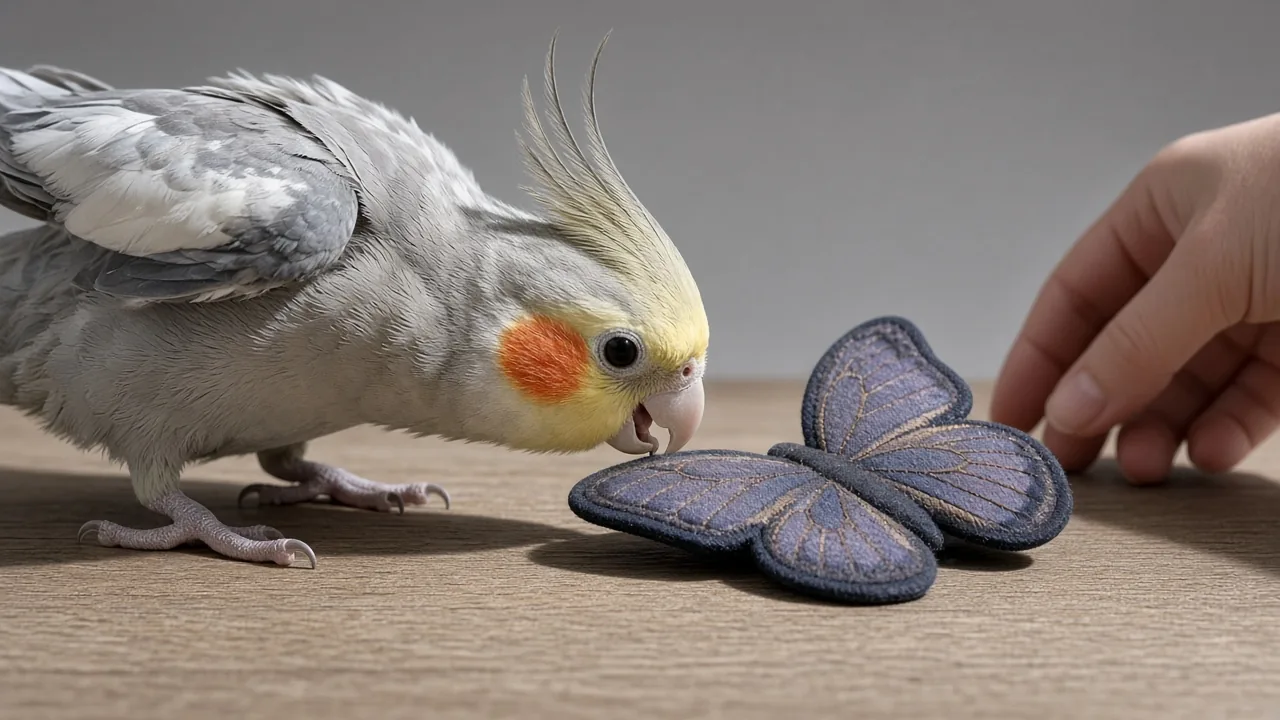
Unlike a phone or a remote-control car, this butterfly doesn’t plug into a wall charger, and there’s no USB port hidden under a wing or a battery door to pop open. Based on how the toy is designed to recharge, here’s the process a parent would follow from start to finish:
- Turn the butterfly off before setting it down, if it has an active switch, so the recharge cycle starts clean rather than mid-flutter.
- Clear a flat, open patch of floor away from foot traffic, pet paws, or a toy bin where something could land on top of it.
- Place the butterfly flat on the floor, body resting on a stable surface rather than propped against furniture, a couch cushion, or a shelf edge.
- Leave it undisturbed while it recharges in that flat position; resist the urge to check on it by picking it up partway through.
- Once it’s done, pick it up gently by the body, not the wings, before turning it back on.
This floor-based method surprises some households, since many electronic toys ship with a USB cable or a wall adapter tucked into the packaging. If you’ve never owned one of these toys before, don’t go searching for a charging port or a cable in the box, and don’t assume the toy is defective just because there’s nothing to plug in. The design relies on the flat position itself, which is also why storage and charging location matter more than they would with a typical battery-powered toy. A butterfly left charging on a slanted surface, a rug with a thick pile, or near a heating vent may not recharge as reliably, so a hard, level floor is worth the extra few seconds it takes to find one.
What Happens When You Turn On the Butterfly Toy

The riskiest moment for this toy isn’t during flight or play. It’s the instant right after charging, when you press the wing button and the butterfly starts flapping. If your hand or your child’s hand is resting on or near the wings at that exact second, the sudden motion can bend or crack the thin material, and because the mechanism moves on its own timing rather than yours, there’s no way to "ease into it" once the button is pressed.
A simple habit solves this: set the butterfly down, step back slightly, then press the button. Let the wings move freely before anyone reaches in to pick it up, put it on a flower prop, or wear it on their head. This small pause between powering on and handling is the single most useful safety step for this toy, and it costs almost nothing in terms of play time. Parents who build this pause into the routine from the first use tend to report far fewer wing problems than those who let kids crowd around the toy the moment it comes off the floor.
Why the Butterfly’s Wings Are So Easy to Break
The wings on this butterfly toy are intentionally lightweight and thin. That’s not a manufacturing shortcut, it’s the tradeoff that makes the flapping motion possible in the first place. A heavier or more rigid wing wouldn’t flex the way these are built to, so the toy sacrifices durability for a more realistic flutter. This is a common tradeoff across flapping or fluttering toys in general: the more lifelike the motion, the less structural reinforcement the moving part can carry without adding weight that would slow or stop the mechanism.
This is worth explaining to kids directly: the wings aren’t flimsy by accident, they’re built that way so the butterfly can "fly." Framing it this way often helps children understand why gentle handling matters, rather than treating the fragility as a flaw to complain about. It can also help to compare the wings to something a child already understands as delicate, like a paper fan or a real butterfly’s wing, so the idea of "look, don’t squeeze" has a reference point beyond this one toy.
Signs the Wings Are Already Damaged
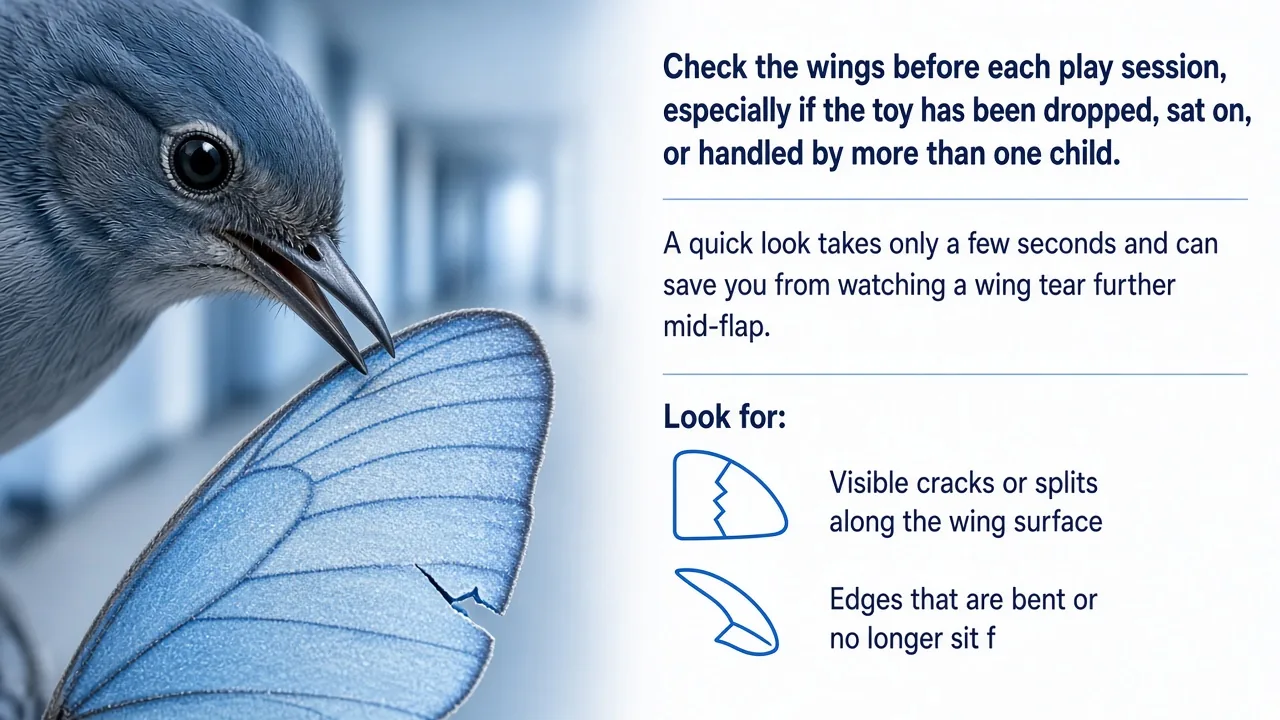
Check the wings before each play session, especially if the toy has been dropped, sat on, or handled by more than one child. A quick look takes only a few seconds and can save you from watching a wing tear further mid-flap. Look for:
- Visible cracks or splits along the wing surface
- Edges that are bent or no longer sit flat
- Loose spots where the wing attaches to the body
- Uneven flapping on one side compared to the other
- Small flakes of wing material on the floor or in the storage box
If you spot any of these, stop active play and set the toy aside. A cracked wing rarely gets worse slowly, it tends to tear further the next time the mechanism moves it, so catching damage early matters more than it would with a sturdier toy. Letting a child keep playing with a cracked wing "just a little longer" usually means the next flutter finishes the job rather than pausing it.
Is the Little Live Pets Butterfly Toy Safe for Young Kids
Supervision needs shift quite a bit depending on the child’s age. Toddlers and very young kids are the group most likely to grab at the wings mid-flight or while the toy rests on a flower prop or on someone’s head, simply because grabbing is how toddlers interact with anything that moves. Older kids, by contrast, usually understand "look don’t touch" instructions and can handle the toy with the lighter grip it needs, though even an older child can get rough during an excited moment, so a one-time instruction isn’t a substitute for keeping an eye on the first several sessions.
If you have a mix of ages in the house, the butterfly works best as a toy an older child operates while a younger sibling watches rather than touches. This isn’t about the toy being unsafe in a choking sense, it’s about matching the fragile wing material to a child’s natural impulse control. A parent who’s watched both age groups play with it will usually notice the younger one reaching for the wings within the first few minutes, which is exactly the moment damage happens. If that pattern shows up in your house, it can help to introduce a simple rule, such as "the butterfly flies, you watch," and repeat it each time the toy comes out until it sticks.
Small, loose parts are also worth a quick check before handing the toy to a very young child, since any toy with a battery compartment, a detachable flower prop, or small embellishments carries a swallowing risk if a piece works loose. None of that is unique to this butterfly, but it’s a habit worth applying to any small electronic toy in the house, not just this one.
How This Butterfly Toy Compares to the Little Live Pets Bird Toy
The bird toy in this same lineup takes a different design approach entirely. Instead of a delicate flapping mechanism, it relies on a cage structure with a food dish and water bowl, plus sound-based interaction: flip the switch and it chirps on its own, and holding down a button on its belly lets you record a phrase it will play back.
| Feature | Butterfly Toy | Bird Toy |
|---|---|---|
| Core mechanism | Wing-flapping, worn or displayed on a flower prop | Caged body with chirping sound and voice playback |
| Fragility | High, thin wings crack easily | Lower, cage and body hold up to more handling |
| Play style | Visual, movement-based, wearable | Audio-based, interactive recording |
| Best suited for | Kids who play gently and like to watch motion | Kids who enjoy sound play and talking back to a toy |
| Supervision needed | Close supervision during power-on and handling | Lighter supervision once the recording feature is understood |
If your child tends to grip toys firmly or wants to carry them around the house, the bird’s sturdier cage-and-sound setup is the safer match. If your child prefers quieter, visual play and can be trusted to watch rather than grab, the butterfly’s flapping and wearable features offer something the bird doesn’t. Households with siblings of different ages sometimes end up with both: the bird for the younger child who wants to press buttons and hear sounds, and the butterfly reserved for supervised play with an older sibling who already understands the "watch, don’t grab" rule.
How Little Live Pets Interactive Toys Compare to Role-Play Pet Toys
Electronic toys like the butterfly and the bird reward a specific kind of play: pressing a button, listening for a sound response, and handling the toy gently so the mechanism keeps working. Kids who enjoy that cause-and-effect feedback loop tend to get the most out of this category, and that feedback loop is part of why these toys hold attention even without a story attached to them.
Role-play "caretaking" toys work on a different premise. These are built around imaginative, narrative-driven play, where a child acts out a storyline, feeds a pretend pet, or walks through a caregiving scenario rather than operating a mechanism. One parent described buying a pair of role-play animal toys together at a combined price in the low double digits, framing the purchase as a budget-friendly way to let a child try out that style of play. That kind of toy asks less of the hands and more of the imagination, which can make it a gentler option for a child who isn’t ready for the careful handling an electronic flapping toy requires.
If your child gravitates toward making up stories and "taking care of" a toy rather than pressing buttons to trigger a reaction, a role-play toy may hold their attention longer than an electronic one. If they like the instant feedback of sound or movement, the interactive category, including this butterfly, is the better fit. Neither style is objectively better than the other, they simply ask different things of a child, and many households end up keeping one of each on hand so there’s always an option that matches the mood of the day.
How to Clean and Store the Butterfly Toy Between Uses
Cleaning this toy is straightforward since there’s no fabric or stuffing involved. Wipe the body down with a dry cloth to remove dust or fingerprints, and avoid water near the electronic components or the wing joints. Skip any wet wipes or sprays, since moisture near the mechanism can cause more harm than good, and a damp cloth left on the wings for even a few minutes can warp the thin material enough to throw off the flap.
Storage matters just as much as cleaning for this particular toy. Keep the butterfly flat in its original box or a similarly flat container between play sessions, rather than tossing it into a toy bin with other items. Wings that get bent while stored under heavier toys often won’t flap evenly afterward, even if they haven’t visibly cracked. If the original box gets damaged or lost, a shallow, flat drawer or a dedicated shelf works as a substitute, as long as nothing heavier ends up stacked on top of the butterfly between uses. Dust buildup in a shared toy bin is also worth avoiding, since dust along the wing hinge can make the flap stick slightly over time, even on a toy that’s otherwise undamaged.
How Much Do Little Live Pets Style Toys Typically Cost
Pricing on this category of interactive toy sits in the budget-to-mid-range tier, though exact figures shift often enough that it’s worth checking current listings rather than relying on a fixed number. As one data point, a parent reported buying two similar interactive-style toys together for a combined price in the mid-range, treating it as a reasonable bundle rather than a bargain or a premium purchase.
That single example shouldn’t be treated as a universal benchmark, since pricing varies by retailer, bundle, and promotion. It’s useful mainly as a rough sense of where this toy category typically lands rather than a guarantee of what you’ll pay. If you’re comparing listings across sellers, it can help to check whether the price includes the flower prop, headband attachment, or other accessories shown in product photos, since bundles that look similar on the surface sometimes differ in what’s actually in the box.
When to Replace the Butterfly Toy or Retire It for Good
Once the wings crack, detach, or stop flapping evenly on both sides, it’s time to retire the toy rather than attempt a repair. The wing mechanism relies on a precise, lightweight structure, and there’s rarely a practical way to fix a torn or bent wing once it’s happened. Trying to tape or glue the wing back into shape usually throws off the flapping motion rather than restoring it, and a glued wing that’s now heavier on one side can put extra strain on the motor that drives it.
This is a different retirement signal than you’d use for a sturdier toy. With something like the bird toy’s cage, a loose part might be tightened or a worn edge might not affect function much. With the butterfly, any structural damage to the wings is effectively the end of its usable life, so there’s little reason to keep pushing a cracked toy through more play sessions. If the toy stops accepting a charge altogether, or the wings no longer move at all after a full charge cycle on a flat surface, that’s a separate sign the internal mechanism has worn out rather than the wings themselves, and at that point replacement is generally simpler than troubleshooting further.
What to Do If the Butterfly Won’t Power On After Charging
Occasionally a butterfly will come off the charging floor and not respond when the switch is flipped or the wing button is pressed. Before assuming the toy is broken, it helps to rule out the simpler explanations first. Confirm the toy was left flat on a hard, level surface for the full recharge period, since a tilted position or a soft surface like carpet with thick padding can sometimes shorten an effective charge. Check that the switch, if there is one, is fully in the "on" position rather than caught halfway, which can happen if a small hand flips it quickly.
If the toy still won’t respond after a full recharge on a confirmed flat, hard surface, it’s reasonable to treat that as a sign the internal battery or mechanism has reached the end of its working life, particularly if the toy has seen regular use over several months. At that point, further troubleshooting at home usually isn’t worth the time, and replacement is the more practical next step.
Frequently Asked Questions About Charging and Handling This Toy
How long does a charge last before I need to recharge the butterfly again?
This depends on how much the wing-flapping feature gets used during play, since more active sessions will drain the charge faster than light handling or display-only use.
Does this toy use batteries, or only the floor-charging method?
The floor placement is the recharging method for this toy; it isn’t designed around a removable battery compartment the way some simpler toys are.
Why do some buyers question whether toys like this are authentic?
Online reviews for interactive and role-play toys in general sometimes raise authenticity questions, often because packaging, labeling, or seller listings vary between retailers. If a listing looks inconsistent with official product photos or descriptions, it’s worth double-checking the seller before buying.
Can I let my child wear the butterfly on their head right after charging?
Yes, but let the wings flap a few times first and confirm the mechanism is moving evenly before placing it on a flower prop or on a child’s head, since any hidden issue from charging will usually show up in that first flutter.
Is it normal for the butterfly to need charging more often as it gets older?
A gradual drop in how long a charge lasts is common in small rechargeable toys over time, and it’s usually a sign of normal wear on the internal battery rather than a defect, especially once a toy has been through many charge cycles.
Watch how your child naturally plays with their toys, whether they’re gentle and careful or more rough and grabby, and let that guide the choice between a delicate flapping toy like this butterfly and a sturdier role-play alternative. Either way, check the wings or moving parts for cracks before each use, and keep an eye out for similar wear-and-tear checks across the other toys in rotation at home.
This article is for general information only and is not a substitute for advice from your veterinarian. Always supervise your pet with a new toy, and replace any toy that is damaged or small enough to swallow.

Contributor
admin
Continue reading
All stories
SMALL PETS & BIRDS · 11 October
DIY Toilet Paper Roll Toys for Hamsters: A Step-by-Step Guide

SMALL PETS & BIRDS · 11 October
Why Does My Rabbit Ignore Chew Toys? What to Try Instead
SMALL PETS & BIRDS · 11 October
Responses
Moderated discussion