CAT TOYS
How to Retract a Cat Wand Toy: A Step-by-Step Guide for Telescopic Wands
Learn the correct segment-by-segment method for retracting a telescopic cat wand toy, plus how to spot debris, misalignment, or a bent rod that's causing it to stick.
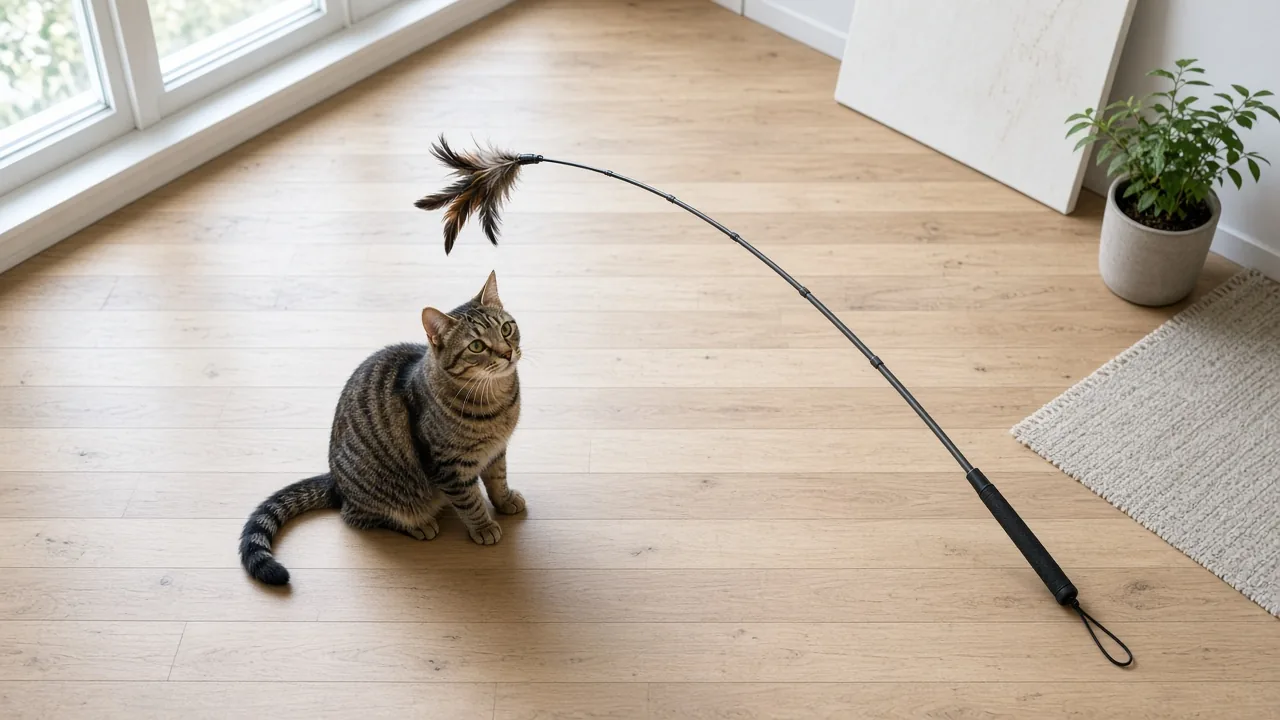
If your cat wand toy won’t collapse back down, the fix is usually simple: push each telescopic segment inward from the tip toward the handle, one section at a time, rather than trying to compress the whole rod in a single motion. This is one of the most common questions cat owners run into after buying a telescopic wand, and it’s rarely explained in product demos or packaging inserts. One reviewer’s otherwise detailed walkthrough of a retractable wand toy skipped the retraction step entirely, and her comment section filled up with people asking the same thing: how do you get it back to its original length? This guide covers exactly that, plus how to tell if your rod is sticking from debris versus actual damage, and when it’s time to replace the toy altogether.
What’s in a Typical Telescopic Cat Wand Set
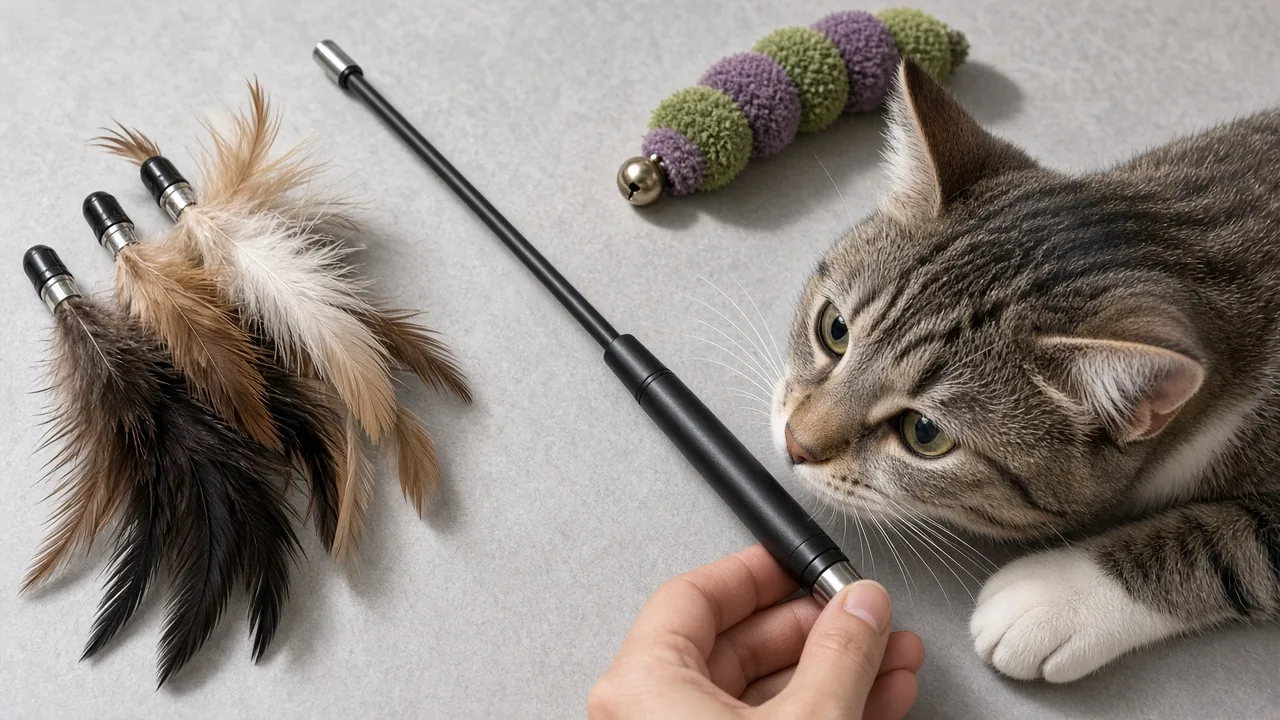
Before troubleshooting a wand that won’t retract, it helps to confirm your set is complete and you’re not missing a piece that affects how the rod collapses. A standard telescopic cat wand kit typically includes one collapsible rod, several feather attachments, and a few soft, flexible toy attachments shaped like caterpillars.
In one popular set, the rod extends from about 15 inches up to roughly 40 inches, and the handle has a cushioned grip that feels closer to a premium toy than a bargain one. The feather attachments are usually made of three feathers bundled together and marketed as higher-quality plumage, while the caterpillar-style pieces are soft and wiggle when you move the wand. Many wands also include a small bell near the attachment end, which jingles as you swing the toy and adds a sound cue that tends to grab a cat’s attention.
If any of these pieces are missing or the attachment end doesn’t screw or clip onto the rod securely, that’s worth checking before you assume the rod itself is defective. A loose attachment can sometimes mimic a "stuck" feeling when you’re trying to retract the toy, because the segments aren’t seating evenly. It’s also worth laying out all the pieces before the first play session so you know what you’re working with. If you unbox the set and only count three feather bundles instead of four, for example, that’s a packaging issue to flag with the seller rather than a sign the rod is faulty.
How to Retract a Cat Wand Toy Back to Its Original Length
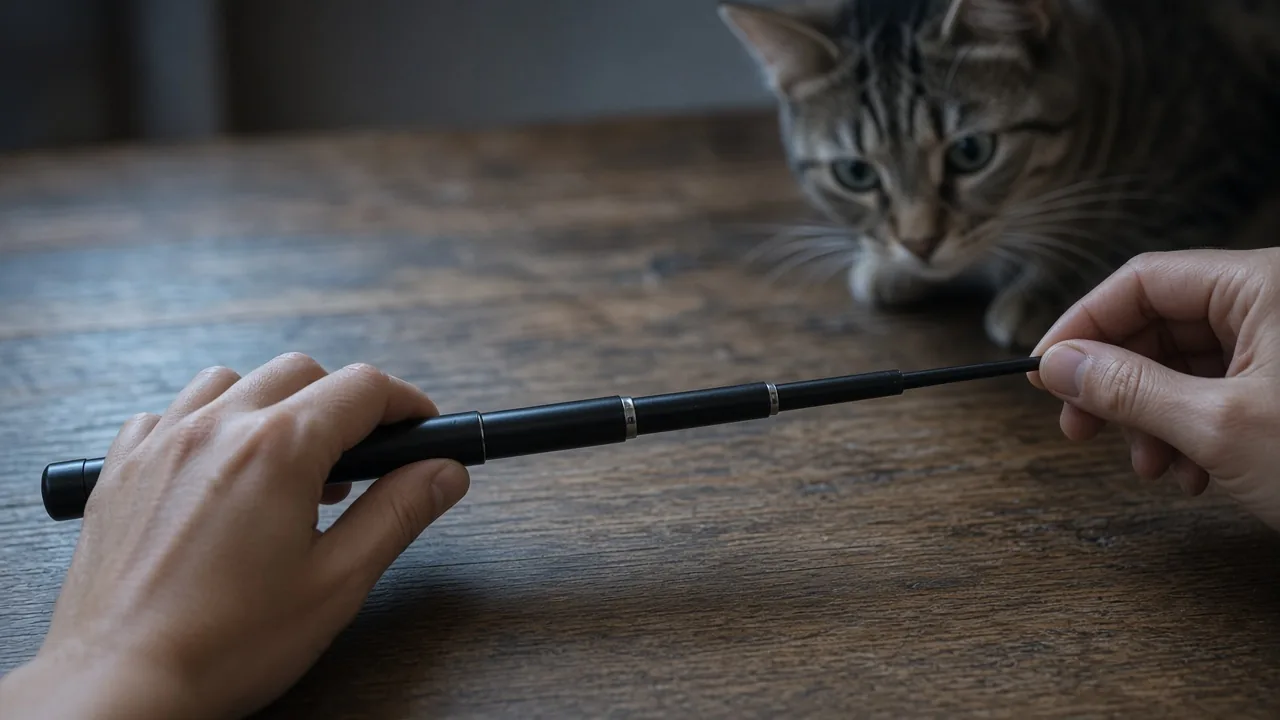
Here’s a straightforward process for collapsing a telescopic cat wand without forcing it or risking a bent segment:
- Set the wand down on a flat surface. Lay it out straight so the segments aren’t at an angle, which makes it easier to push them in line rather than sideways.
- Remove the attachment first. If your feather or caterpillar piece detaches, take it off before retracting. This reduces drag on the tip segment and prevents the attachment from catching on the opening of the next section.
- Start at the tip, not the handle. Hold the base segment (the one closest to the handle) steady with one hand. With the other hand, gently push the outermost tip segment inward.
- Work section by section, in order. Once the tip segment is pushed in, move to the next one down and repeat. Trying to collapse multiple sections at once is usually what causes jamming, since the segments need to slide into each other in sequence, smallest to largest.
- Apply steady, even pressure, not force. Each segment should slide in with light, consistent pressure. If one section resists, stop and address it (see below) rather than pushing harder.
- Reattach the feather or caterpillar piece once the rod is fully collapsed, if you want it ready for the next session, or store it separately to keep the attachment from getting crushed in a drawer or toy bin.
- Check the final length. Once fully collapsed, the wand should be back to its original compact length, typically around 15 inches depending on the model, and ready for storage.
This method works for most telescopic wands regardless of brand, since the collapsing mechanism is mechanically similar across most designs: nested tubes that slide into one another. Once you’ve done it a handful of times, the motion tends to become quick enough to manage with one hand while you’re holding the cat’s attention with the other.
Why the Rod May Stick or Feel Hard to Collapse
A rod that resists retraction usually has one of three causes:
- Debris inside the tube. Pet hair, dust, or dried saliva near the joints can create friction. This is especially likely if the wand has been used outdoors or stored in a bag with other items.
- Slight misalignment. If the segments aren’t perfectly straight when you push, the tip can catch on the inner wall of the next segment instead of sliding in cleanly.
- A bent segment. This is the one case where you shouldn’t force it, since pushing a bent tube further can crack the plastic or jam it permanently.
If the rod feels gritty or slightly rough rather than truly stuck, try wiggling it gently side to side while applying light inward pressure. This often works loose any debris without needing tools. If it doesn’t budge after a few gentle attempts, stop and inspect the segment visually rather than continuing to push. Forcing a stuck segment is where most breakage happens, not from normal play, so patience at this step saves you from buying a replacement sooner than you need to.
How to Tell if a Telescopic Rod Is Bent or Worn Out
Comparing an older wand to a newer one can make wear easier to spot. In one comparison, a well-used yellow wand toy showed a rod that had visibly bent out of a straight line, while a newer model stayed true and collapsed smoothly. A few checks you can do at home:
- Lay the rod on a flat table. A straight rod should sit flush along its length. Any gap or curve where the rod lifts off the table suggests bending.
- Run your fingers along the seams between segments. Rough edges, cracks, or burrs often mean the plastic has started to degrade.
- Listen for grinding sounds during extension or retraction. A smooth telescopic motion shouldn’t produce friction noise; if it does, something inside the tube has likely shifted or warped.
If the rod is bent, retraction will typically stay difficult no matter how carefully you work through the segments, and continuing to force it risks snapping the tube or stripping the smooth interior surface the segments need to glide on. At that point, replacement makes more sense than repair. It’s worth noting that a bent rod isn’t always obvious at a glance, especially on wands with darker-colored plastic, so the flat-table test is more reliable than a quick visual check from across the room.
Extended vs. Collapsed: When to Use Each Length During Play
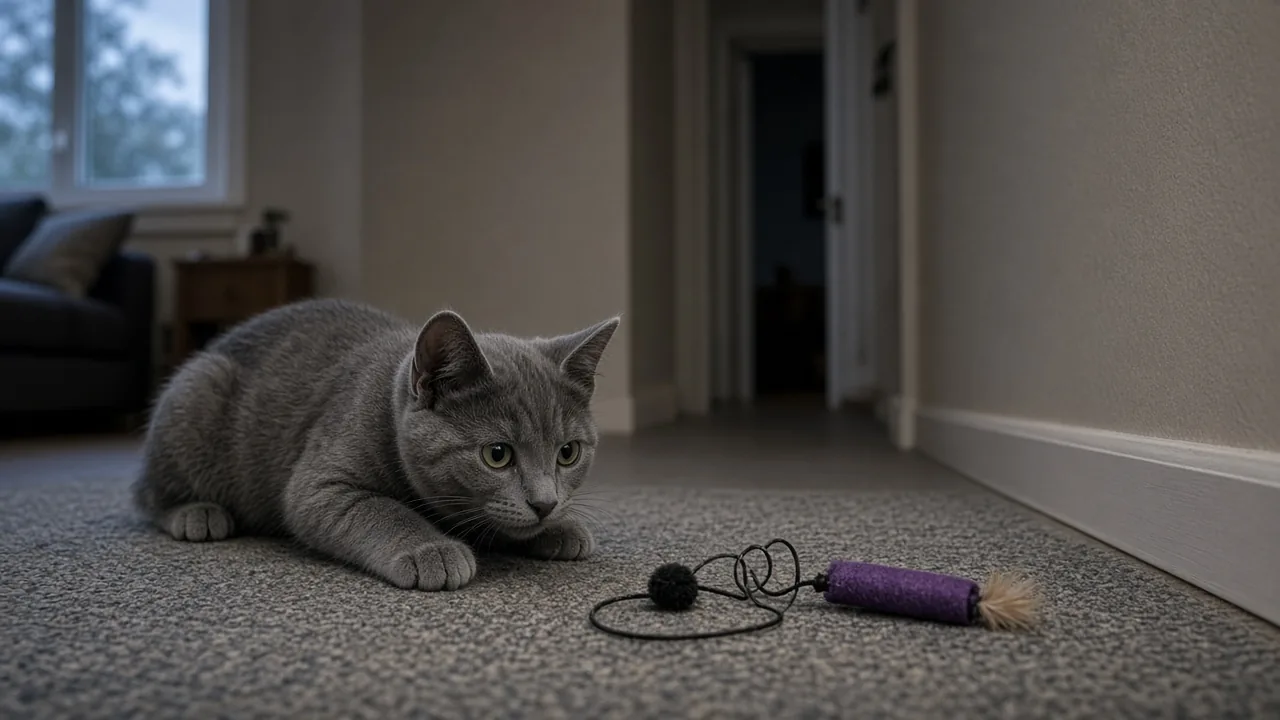
Telescopic wands give you flexibility in how you play, and matching the length to the moment can make sessions more engaging for your cat.
| Configuration | Approximate Length | Best For | Typical Cat Reaction |
|---|---|---|---|
| Fully extended | Up to 40 inches | Mimicking a bird’s flight path at a distance, encouraging big leaps and chases | High energy, more jumping and stalking from a distance |
| Partially extended | Mid-range | General interactive play across a room | Steady chasing and pouncing |
| Fully collapsed | Around 15 inches | Close-range play, teasing near the cat’s paws, easier storage | More controlled swats and pounces, good for kittens or small spaces |
Extending the wand fully works well when you want to simulate prey moving at a distance, since the extra length lets you create wider, more dramatic sweeping motions. Collapsing it down suits tighter spaces or cats that prefer close-up engagement rather than chasing across a room. Switching between lengths during a single play session can also help keep your cat interested, since it changes the rhythm and distance of the "prey" movement.
A cat that tends to lose interest after a minute or two of the same motion often re-engages when you shorten the wand and bring the action closer, almost like switching from a wide shot to a close-up. If your cat is older or has mobility limits, staying mostly at the shorter length and keeping movements low to the ground can make play more comfortable while still working the same stalk-and-pounce muscles.
Is a Telescopic Cat Wand Toy Safe for Daily Play
Telescopic wands can be a safe daily play option, but they do need a quick check before and after each session, since several parts are designed to detach or move.
Before playing:
- Check the handle grip. Make sure the cushioned section hasn’t started peeling or cracking, since a worn grip can shift mid-swing.
- Confirm the attachment is secure. Feather and caterpillar pieces that clip or screw onto the rod should feel snug, not loose.
- Inspect the bell. If your wand has a small bell for sound, make sure it’s still firmly attached and not working its way loose.
During and after play:
- Watch for loose feathers or fibers. Cats that grab and bite at the attachment can pull feathers free, and loose feather pieces are a choking risk if swallowed.
- Store the wand out of reach when not supervised. Long cords or rods left within a cat’s reach unsupervised can lead to chewing on parts not meant to be mouthed repeatedly.
- Supervise the first few sessions with any new wand. This lets you see how your cat interacts with it, whether they tend to bite and pull at the attachment, and whether any small parts come loose easily.
No toy is completely risk-free, and a wand with a bell, feathers, and a detachable attachment has more small components than a single-piece toy. That doesn’t rule it out as a daily option, but it does mean the pre-play check becomes part of the routine rather than a one-time step. Cats that are especially intense chasers, the kind that leap and bite down hard on the attachment rather than just swatting at it, may be more likely to work a feather loose over time, so these cats may need more frequent checks than a cat that mostly watches and taps the toy with a paw.
How Often to Replace a Cat Wand Toy
Even a well-made wand toy wears out eventually, regardless of how it’s marketed. Common signs it’s time for a replacement:
- Frayed or missing feathers. Once feathers start shedding during play, they’re more likely to break off and end up in your cat’s mouth.
- A loose or rattling bell. If the bell no longer sits firmly in its housing, remove it before the next session rather than waiting for it to fall off.
- A cracked or bent rod. As covered above, a bent rod that won’t retract cleanly is a sign the plastic has stressed past the point of reliable use.
- A grip that’s peeling or sticky. Cushioned handles can degrade over time, especially with regular handling.
There’s no fixed timeline for replacement since it depends on how often you play and how roughly your cat engages with the toy, but checking these points every few weeks is a reasonable habit. A household with one cat and a few short play sessions a week will likely get much more life out of a wand than a multi-cat home where the toy sees daily use and multiple cats competing to grab the attachment.
How to Clean a Cat Wand Toy and Its Attachments
Cleaning a wand toy is straightforward if you treat each part according to its material:
- The rod itself can be wiped down with a damp cloth. Avoid soaking it, since water can seep into the telescopic joints and cause sticking or rust on any metal components.
- Feather attachments are generally not washable in the traditional sense. Spot-clean lightly with a barely damp cloth if they get dusty, and let them air-dry fully before storing, since trapped moisture can cause feathers to mat or smell.
- Caterpillar-style soft attachments can often be wiped down the same way as the feathers, gently and without full submersion, unless the packaging specifically says the material is washable.
- The bell should be dried thoroughly after any cleaning, since moisture trapped inside can lead to a dull sound or rust over time.
Air-drying matters more than it might seem, since cats interact with these toys at close range, mouth-to-toy, and anything that stays damp can develop odor or mildew faster than you’d expect. A good habit is to do a quick wipe-down after any session where the toy got noticeably slobbery or dusty, rather than waiting for a scheduled cleaning day, since buildup is easier to remove when it’s fresh.
Who This Type of Toy Works Best For
Telescopic wand toys suit cats that enjoy stalking, chasing, and pouncing, which covers a large share of cats regardless of age. Indoor cats in particular tend to benefit, since they don’t get the same opportunities for movement and hunting behavior that outdoor cats do, and a wand toy gives you a way to replicate that chase-and-catch sequence safely indoors.
Kittens often respond well to the shorter, collapsed length, since the motion stays close and manageable for their smaller size and shorter attention span. Adult cats may prefer the fully extended length for more dramatic, sweeping play that mimics a bird or insect moving at a distance. Senior cats can still enjoy wand play, but shorter sessions with slower, lower movements usually suit them better than fast, high-energy chasing.
This style of toy generally isn’t designed with dogs in mind. The thin telescopic rod and lightweight feather or caterpillar attachments aren’t built to withstand a dog’s grip or bite pressure, and a dog that catches and chews on the attachment could break off small pieces quickly. If you’re looking for a similar interactive, chase-based toy for a dog, you’ll want something built with sturdier materials and a different attachment design made for stronger jaws. A dog’s play style also tends to involve more mouthing and tugging than a cat’s swat-and-pounce approach, which is another reason the two toy categories aren’t interchangeable even when they look similar at a glance.
Frequently Asked Questions About Retractable Cat Wand Toys
Can I retract the wand with one hand?
Once you’re used to the segment-by-segment motion, many people manage it one-handed, especially on wands with a smooth telescopic action. One cat owner noted that being able to retract the wand with one hand while doing something else, like starting dinner, made the toy noticeably more convenient for daily use.
Can wand play help with nighttime zoomies?
Interactive play that lets a cat fully act out the stalk-chase-pounce sequence can help burn off pent-up energy, and some owners have found that a focused play session before bed reduces late-night activity. Results vary by cat, and persistent nighttime restlessness that doesn’t improve with more play is worth mentioning to your veterinarian, since it can sometimes point to other causes.
Is this type of toy suitable for other pets, like dogs?
As covered above, the lightweight rod and attachments on most cat wands aren’t built for a dog’s strength, so a dog-specific toy is the safer choice if you’re shopping for a canine companion instead.
Why does my wand toy feel stiffer to retract after a few months?
Repeated extending and collapsing can introduce fine dust and hair into the joints over time, even with regular wiping. If the stiffness is gradual rather than sudden, a cleaning pass along the seams is usually enough. If it happens suddenly after one play session, check for a bent segment first, since that’s a different problem with a different fix.
Pay attention to how your own cat plays, whether they’re a stalker who waits and pounces, a chaser who wants constant motion, or a carrier who likes to grab the toy and run off with it, since that tells you a lot about which wand length and play style will hold their interest. Check the rod, feathers, and bell for wear every so often, and rotating in a different toy from time to time can keep play sessions feeling fresh rather than routine.
This article is for general information only and is not a substitute for advice from your veterinarian. Always supervise your pet with a new toy, and replace any toy that is damaged or small enough to swallow.

Contributor
admin
Continue reading
All stories
CAT TOYS · 11 October
Are Hanging Spring Cat Toys Safe? What Injury Reports and Owners Say
CAT TOYS · 11 October
Are Pipe Cleaner Cat Toys Safe? Risks and Better DIY Swaps
CAT TOYS · 11 October
Responses
Moderated discussion