CAT TOYS
Why Do Cats Ignore New Toys and Play With Socks Instead?
Socks beat new toys because they smell familiar, move unpredictably, and get rediscovered like real prey. Here's how to pick and rotate toys that actually compete.
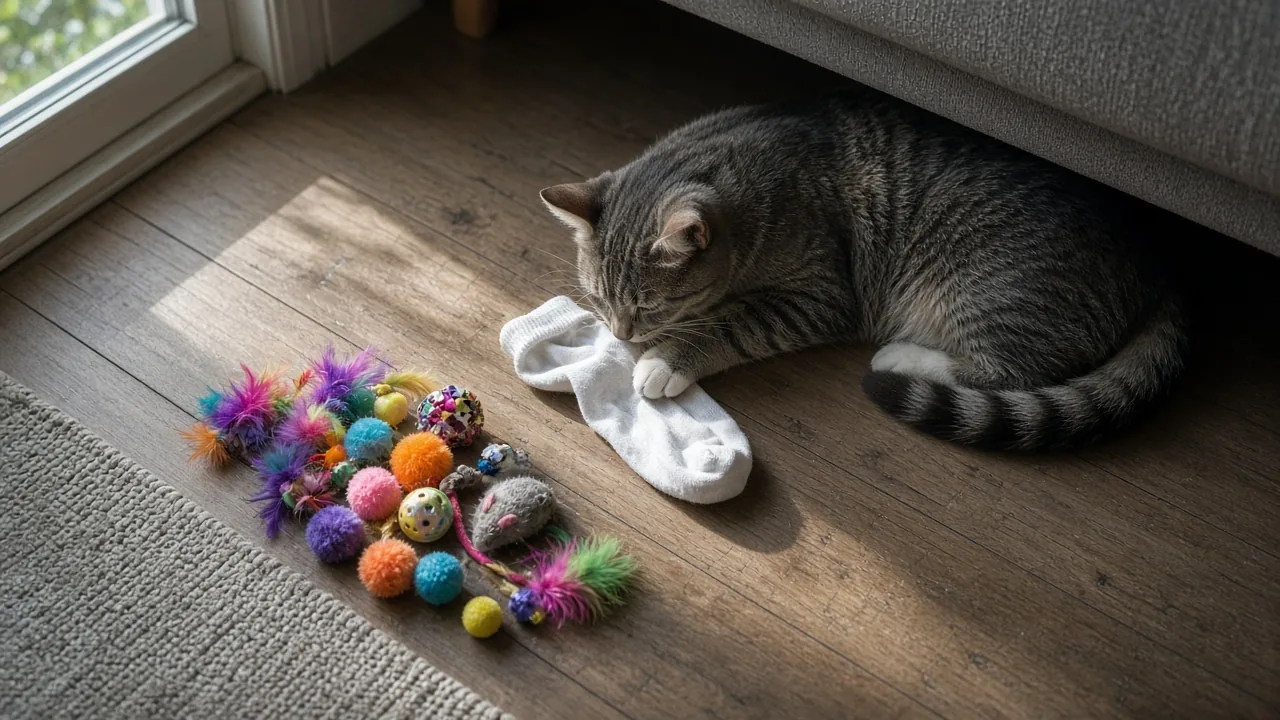
Your cat sniffs the $20 toy haul once, then disappears with your sock and parks herself under the couch with it for twenty minutes. If you’ve asked why do cats ignore new toys and play with socks, the short answer is that socks move, smell like you, and get "discovered" through play instead of sitting still waiting to be noticed — which lines up much better with a cat’s stalk-chase-pounce instincts than most toys sitting in a basket ever will. A few adjustments to how you present and rotate toys can close that gap.
Cats aren’t being difficult. They’re hunters working off a script that rewards unpredictability, scent, and texture over anything shiny and new. Once you understand that script, you can pick and present toys that actually compete with the sock.
Why Do Cats Ignore New Toys and Play With Socks Instead?
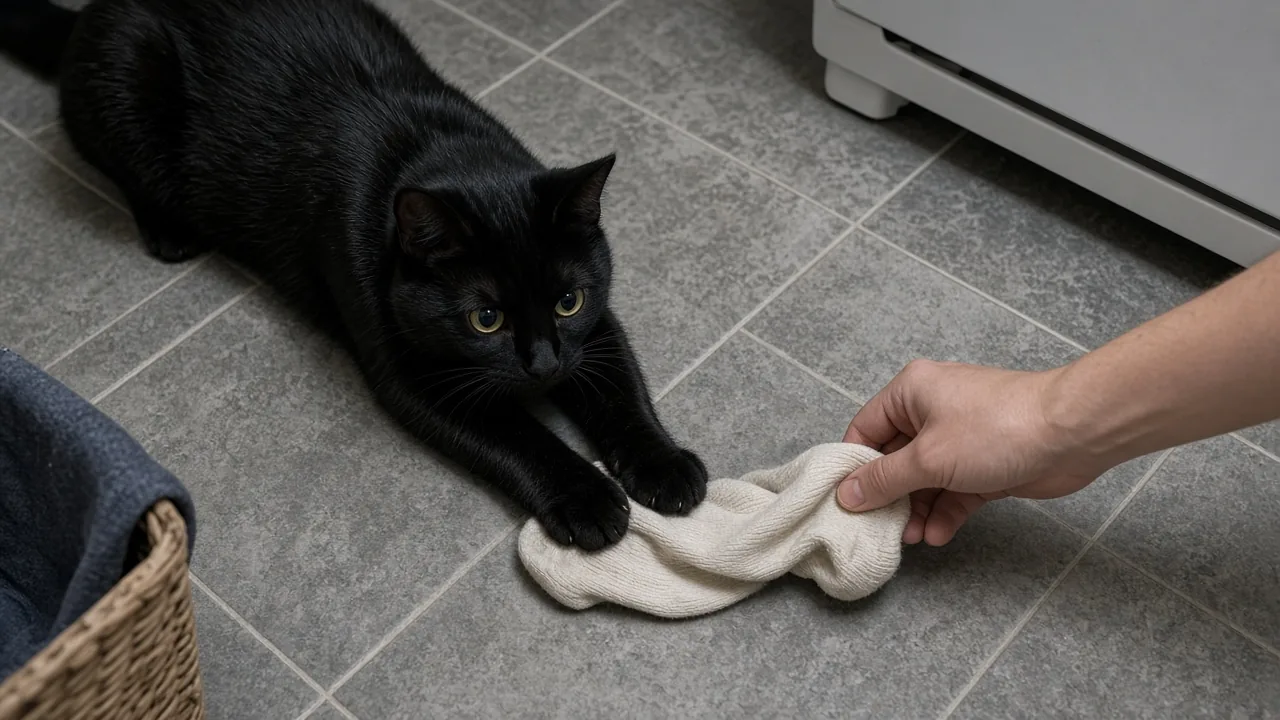
Store-bought toys often fail a simple test: they don’t move unless you move them, and once the newness wears off, they just sit there. A sock, on the other hand, already smells like your laundry basket, gets kicked under furniture, and turns up again days later in a spot your cat forgot about. That combination of familiar scent and sudden reappearance mimics the way real prey behaves — it hides, then shows up again when you least expect it.
A cat’s hunting sequence runs stalk, chase, pounce, and then a "capture" moment where she gets to bite, carry, or shake something. Plenty of toys, especially ones designed for a cat to play with alone, only cover the chase part. A sock can be carried, dragged, buried in a blanket, and dug back out, which checks more boxes in that sequence than a stationary mouse toy sitting on the floor.
What Makes an Object ‘Prey-Like’ to a Cat
Both homemade and store-bought toys that hold a cat’s attention tend to share the same handful of traits. None of them are about price or design complexity.
- Erratic motion — darting, fluttering, or jerking movement reads as alive, while a toy that rolls in a straight line and stops does not
- Soft, grippable texture — fleece, felt, and fabric let a cat bite and carry without the toy feeling like a hard, dead object
- Carry-friendly size — something a cat can pick up in her mouth or bat under a couch, rather than something too large or too smooth to move easily
Socks happen to check all three boxes by accident: they’re soft, light enough to carry, and they move unpredictably once batted or dragged. A toy that’s rigid, oversized, or motionless the second you let go of it is competing at a disadvantage from the start.
Why Even Good Toys Get Boring Fast
Even toys a cat genuinely likes, including wand toys, tend to lose their pull if they’re left out all the time. Owners who track this closely often notice the same pattern: a toy that got constant attention in week one barely gets a glance by week three, not because it stopped being a good toy, but because the novelty wore off. A sock doesn’t have this problem, since it’s not technically a toy that gets "used up" — it goes missing, turns up again, and feels new each time it reappears.
This is less about the sock being superior and more about timing. Rotating toys in and out of storage, rather than leaving the entire bin accessible at all times, resets that sense of novelty and can bring back interest in a toy your cat seemed to have abandoned.
Our Take: Which Toy Types Actually Hold a Cat’s Interest
Across reviews and demonstrations from different cat owners, one pattern shows up consistently: wand-style and other interactive toys outperform self-play toys by a wide margin, while toys meant to be played with alone get far more mixed results. Individual cats still vary quite a bit, but if you’re choosing one category to prioritize, interactive play wins more often than not.
Wand and Fishing-Rod Toys: The Most Reliable Favorite
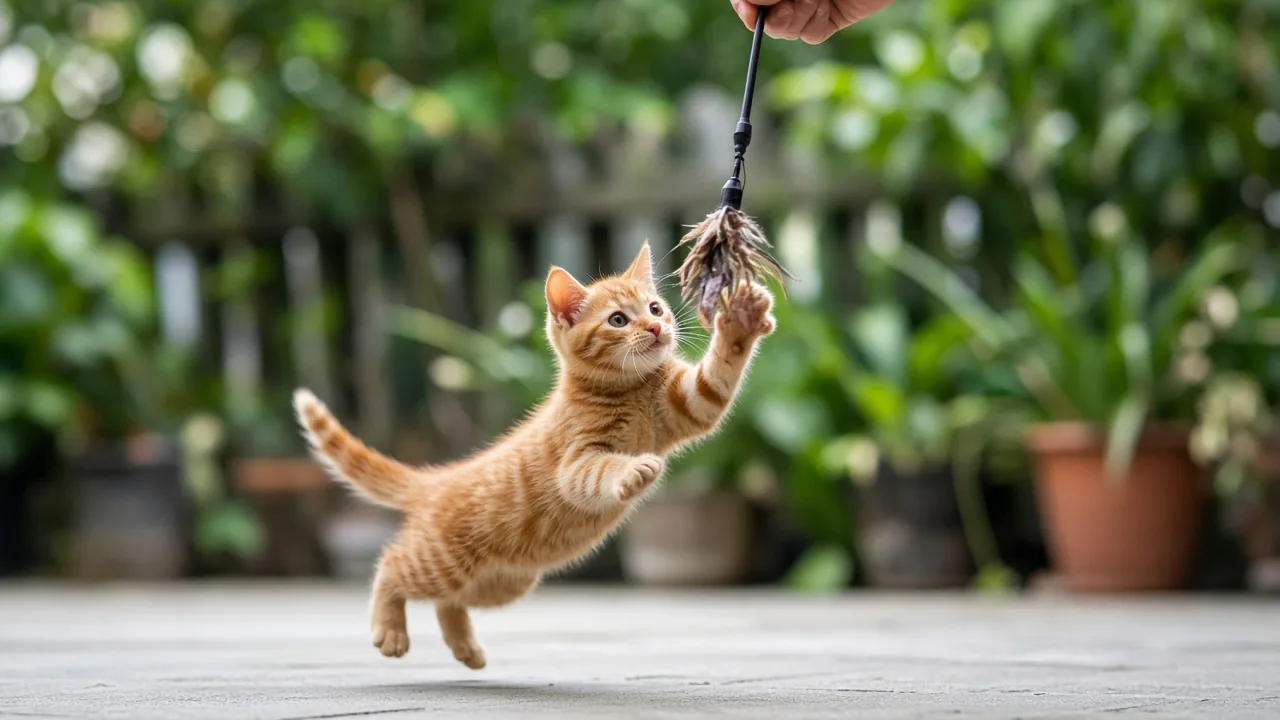
Wand toys that dangle a feather, fabric strip, or felt shape on a string consistently come up as the toy cats stick with longest, even after the toy itself looks worn out. One owner noted that a wand toy stayed popular with kittens even after the attached feather had been chewed off entirely — the motion and the game of chasing it mattered more than the decoration on the end.
The appeal makes sense given the hunting sequence described earlier: a wand toy lets you create the erratic, bird-like movement that a stationary toy can’t produce on its own. The tradeoff is that wand toys require you to be present and holding the stick. They also need supervision any time your cat is actively playing, since the string poses a tangling and swallowing risk if left attached and unattended, especially around kittens who can wrap it around a leg or neck without you noticing right away.
Self-Play Toys: Balls, Spinners, and Tunnels
Toys meant to be played with unsupervised get far less consistent results. In one household with three cats, a spinning disc toy became a two-month obsession for a single cat, while the other two completely ignored it — a reminder that self-play toys depend heavily on individual personality rather than the toy’s design.
Rollaway balls and bell balls have their own practical quirks. They tend to roll into gaps under furniture and get lost, so buying a couple of backups is worth it if your cat likes batting them around. Bell balls in particular make noise at night, so putting them away before bed avoids waking anyone up. Tunnels, including collapsible fabric ones, tend to do better than balls because they support the stalk-and-ambush part of play rather than just a single swat-and-chase.
DIY Toys vs. Store-Bought: Cost, Safety, and Effort Compared
Homemade toys can match or beat store-bought versions for interest level, but they come with different tradeoffs around safety and time. Here’s how the common options stack up:
| Toy | Material | Typical Cost | Supervision Needed | Cat Appeal | Durability |
|---|---|---|---|---|---|
| Pipe cleaner corkscrew | Pipe cleaner (chenille stem) | Under $5 for a pack | Low, but check ends for fraying | Moderate, good for batting | Low, wears down with chewing |
| Ping pong shaker ball | Ping pong ball + rice | Under $5 for several balls | Low once sealed well | High, rattling sound draws interest | Moderate |
| Fleece spider | Fleece strips + ring | Under $5, mostly free with scrap fabric | Low | High, carries and tosses well | Moderate to high |
| Chopstick wand toy | Chopstick, shoelace, felt | Under $5 | High, must supervise use | Very high | Moderate, string wears first |
| Paper tube toy | Toilet paper or paper towel roll | Essentially free | Low | Moderate, best for kittens | Low, disposable after one or two sessions |
| Store-bought wand toy | Plastic rod, feathers, fabric | Budget to mid-range | High, same string risk as DIY | Very high | Moderate |
| Store-bought ball/spinner | Plastic | Budget | Low | Varies a lot by cat | Moderate to high |
The DIY options win on cost by a wide margin, and several can be made almost entirely from things already in the house. The chopstick wand toy and any store-bought wand toy share the same safety profile, since both rely on a string your cat shouldn’t be left alone with.
Who Benefits Most From DIY Toys (and Who Should Skip Them)
DIY toys make the most sense for budget-conscious households and anyone volunteering with a shelter, since the materials cost next to nothing and batches can be made quickly. One longtime shelter volunteer found that simple ping pong shaker toys were consistently the biggest hit among kittens in her care, which says something about how little cats actually need to stay entertained.
Households with young kittens should be more careful, particularly with any string-based design like the chopstick wand toy. Kittens are more likely to get tangled around a leg or their neck during unsupervised play, so that category works best as a toy you bring out and put away yourself rather than one left in the toy basket.
How to Choose a Toy Your Cat Will Actually Play With
Rather than guessing, watch how your cat already plays and match toys to that style:
- Pounces on moving objects — wand toys, feather toys, or anything you can drag along the floor to trigger a stalk-and-pounce reaction
- Chases without stopping — laser pointers, balls, or spinner discs, though a laser needs to be followed up with a real toy or treat so your cat gets an actual "catch" at the end
- Carries things in her mouth — soft plush toys, fleece spiders, or socks themselves, since this instinct is exactly what makes socks appealing in the first place
- Digs or burrows — fabric tunnels or a simple cardboard box with holes cut into the sides
Living situation matters too. Indoor-only cats generally need more play sessions throughout the day to burn off energy they’d otherwise spend outdoors, so having two or three toy types on rotation works better than relying on one favorite. In multi-cat households, expect different cats to prefer different toys, sometimes dramatically so, and keep enough variety on hand that no one is left without something to do.
How to Make Safe DIY Cat Toys at Home
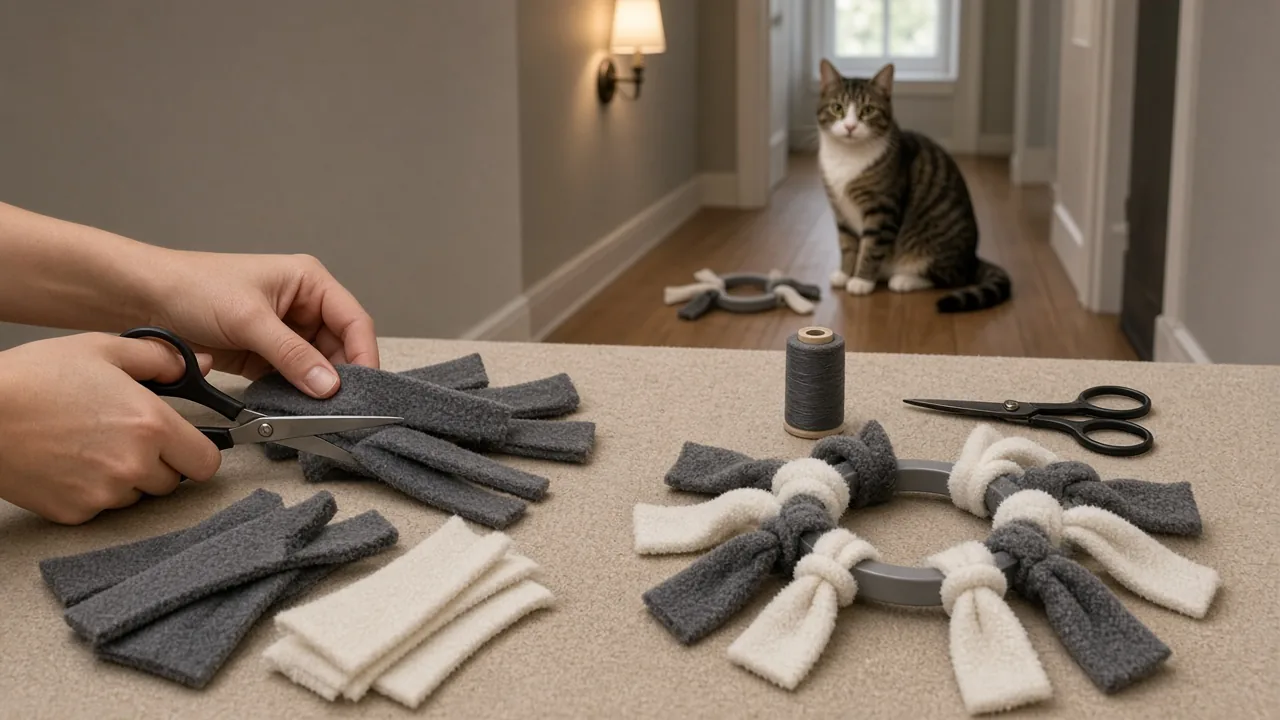
Two of the lower-risk builds are the fleece spider and the paper tube toy, since neither relies on loose string.
Fleece Spider
- Cut fleece fabric into strips roughly 9 to 10 inches long and about 1/2 inch wide.
- Gather six to eight strips and fold each one in half over a wood or plastic ring.
- Tie each folded strip onto the ring with a double knot so it won’t slip off during play.
- If you don’t have a ring on hand, a hair tie or a folded pipe cleaner can work as a substitute.
- Trim any uneven ends so there are no loose threads your cat could chew off and swallow.
Paper Tube Toy
- Save an empty toilet paper or paper towel roll.
- Use scissors to cut fringe into both ends, spacing the cuts about 1/4 inch apart to create a hedgehog or mouse-like shape.
- Gently bend the fringed sections outward so they resemble legs or a tail.
- Skip any tape, glue, or small plastic add-ons, since this toy is meant to be lightweight and disposable rather than reinforced.
Both of these are reasonable projects to make in batches and set aside for later, or to put together quickly if your cat has worn through her current rotation.
Are Homemade Cat Toys Safe? Risks to Check Before You Hand Them Over
Homemade toys aren’t automatically safer just because they’re simple, and a few materials deserve a closer look before you let your cat loose with them.
- Rice-filled balls — the rice itself is low-risk, but the ball needs to be fully sealed with tape so no rice escapes and ends up swallowed; check the seal every few play sessions
- Rubber bands — avoid using them in toys altogether, since they’re easy for a cat to accidentally ingest, and removing one surgically can run into real money if it gets stuck
- Pipe cleaner ends — fold the wire ends inward and tuck them flat rather than leaving a sharp point exposed, and consider wrapping the tips in a bit of non-toxic tape for extra protection
- String and shoelaces — only ever offer string-based toys during supervised play, and put them away afterward; string is a classic linear foreign body risk if swallowed and can cause serious internal injury
As a general rule, anything small enough for your cat to fit entirely in her mouth, or anything with loose fibers she could pull free and swallow, should either be reinforced or retired. When in doubt, supervise the first several play sessions with any new toy, homemade or store-bought, before deciding it’s safe to leave unattended.
How to Clean and Store Cat Toys Between Uses
Cleaning routines depend heavily on material:
- Fabric toys (fleece spiders, plush toys) — hand wash with mild soap and air dry, or toss in a mesh laundry bag for a gentle machine cycle
- Plastic toys (balls, spinners, wand handles) — wipe down with a damp cloth, and for anything heavily chewed on, a quick soak in warm water with a bit of dish soap works
- Paper toys (paper tube toys) — these aren’t meant to be washed; treat them as disposable and replace with a fresh tube once it’s shredded or soiled
Store toys in a closed bin rather than leaving the entire collection out at once. Pulling a few out at a time and swapping them every so often helps fight the novelty-fatigue issue covered earlier, and it keeps you in the habit of checking each toy for wear before it goes back into circulation.
Frequently Asked Questions About Cats and Sock Obsession
Does hiding toys in a drawer help bring back interest?
It can, though be ready for your cat to figure out the system. One owner found that after tucking a toy into a dresser drawer, her cat learned to open the drawer herself to retrieve it. Rotating toys through a closed bin rather than an easily accessible drawer tends to work better long-term.
Can I donate extra homemade toys to a shelter?
Yes, and it’s a good use for toys your own cat has lost interest in. Shelters often go through toys quickly, and simple builds like ping pong shaker toys and paper tube toys are easy to make in batches specifically for donation.
Does chewing on socks mean my cat has a behavior problem?
Not necessarily. Carrying or chewing on soft fabric fits normal hunting and comfort behaviors for a lot of cats. It’s worth a closer look if your cat is actually swallowing pieces of fabric, chewing obsessively to the point of hair loss or skin irritation, or showing other signs of stress, in which case a veterinarian or a certified behaviorist can help rule out an underlying issue.
Pay attention to how your cat naturally plays, whether she pounces, chases, carries things around, or digs through blankets, and pick toys that match that instinct instead of buying whatever looks appealing on the shelf. Check every toy regularly for fraying seams, loose string, or parts that have come loose, and swap in something new the moment it starts to look worn.
This article is for general information only and is not a substitute for advice from your veterinarian. Always supervise your pet with a new toy, and replace any toy that is damaged or small enough to swallow.

Contributor
admin
Continue reading
All stories
CAT TOYS · 11 October
Are Expensive Cat Toys Worth It, or Will a Box Do Just Fine?
CAT TOYS · 11 October
Are DIY Cat Toys Safe From Choking Hazards? What to Check First
CAT TOYS · 11 October
Responses
Moderated discussion