DOG TOYS
DIY Dog Puzzle Toys from Household Items That Cost You Nothing
Turn muffin tins, milk jugs, paper plates, and cardboard boxes into safe, free DIY dog puzzle toys that slow down eating and keep bored dogs mentally engaged.
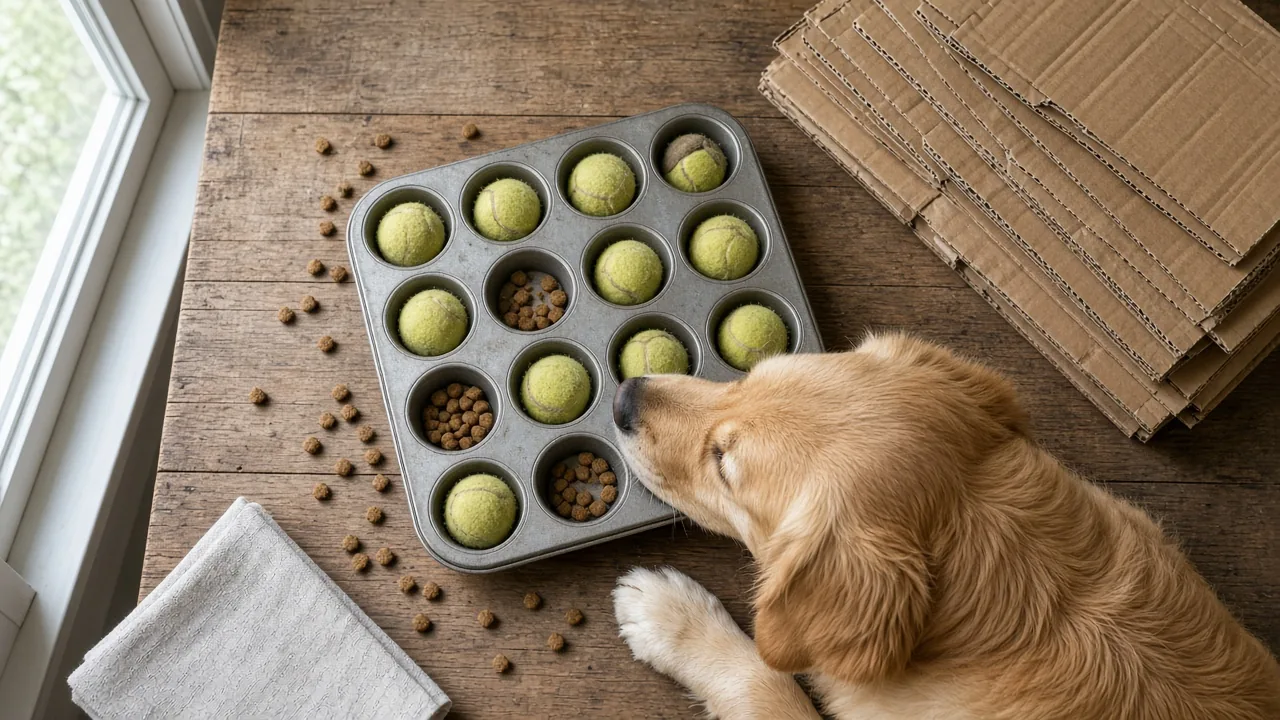
Muffin tins, milk jugs, paper plates, and cardboard boxes can all become safe DIY dog puzzle toys from household items without spending a dime. Each one solves a different problem: slowing down fast eaters, giving bored dogs something to think about, or helping anxious dogs re-engage with food. The catch is that homemade toys don’t hold up like store-bought plastic puzzles, so you need to watch for choking and chewing risks every time you set one up.
Why Make DIY Dog Puzzle Toys from Household Items Instead of Buying
Recycling bin and kitchen cabinet items can match the entertainment value of a commercial puzzle feeder at no cost at all. A milk jug, a few paper plates, or last year’s wrapping paper will do the job just as well as a $20 interactive toy, at least for one or two sessions.
The trade-off is durability. Hard plastic puzzle toys are built to survive repeated chewing and dropping. Cardboard, paper, and thin plastic bottles are not. They tear, crack, and shred faster, which means you need to supervise play more closely than you might with a sturdier commercial toy.
What Problems Do Puzzle Toys Solve for Dogs
Puzzle feeding changes how a dog eats and thinks, not just what it eats. Instead of finishing a bowl of kibble in under a minute, a dog has to paw, nose, or flip objects to get each piece of food. That extra effort slows eating down and gives the dog something to focus on besides pacing or barking.
The mental work matters as much as the physical slowdown. A dog that has to solve a small problem to get a treat burns through restless energy in a way that a quick walk sometimes doesn’t. Some owners have also found that puzzle play helps dogs who’ve lost interest in food or play, such as a dog grieving the loss of a companion or a newly adopted shelter dog still adjusting to a new home.
Comparing Common Household Materials for Dog Puzzle Toys
Not every item in your recycling bin makes a good puzzle toy, and the ones that do aren’t interchangeable. A muffin tin survives a determined nose but won’t hold up to chewing. A cardboard box does the opposite. Matching the material to how your dog actually plays matters more than which puzzle idea looks the most clever online.
Before building anything, think about three things: how hard your dog chews, how messy you’re willing to let things get, and how much cleanup time you want afterward. A dog that shreds everything in sight needs different materials than one that gently noses a treat free and walks away.
Material Comparison Table: Durability, Cleaning, and Best Chewers
| Material | Durability | Cleaning | Best For |
|---|---|---|---|
| Muffin tin | High (metal, reusable) | Rinse and reuse | Light to moderate nosers, all sizes |
| Plastic bottle/milk jug | Low to moderate | Rinse, discard once cracked | Supervised moderate chewers |
| Cardboard box | Low (single or few uses) | Toss after use | Diggers, shredders under supervision |
| Paper plate | Very low (single use) | Toss after use | Gentle, food-motivated sniffers |
| Towel | Moderate (washable) | Machine wash | Dogs who like to dig and unwrap |
| Ice cube tray | High (reusable) | Rinse and reuse | Any dog, especially in warm weather |
| Cones/cups | Moderate | Rinse or wipe down | Dogs learning scent discrimination |
The muffin tin and ice cube tray stand out because they’re reusable and hold up well. Everything paper-based is essentially a one-time toy. Bottles and boxes fall in between, lasting a session or two before they need to be tossed.
How to Choose the Right DIY Puzzle for Your Dog’s Size and Chewing Style
Size and chewing intensity should drive your material choice more than novelty. A small dog can comfortably work a muffin tin or paper plate without risking a mouthful of plastic. A large or giant breed with a strong jaw can crush a plastic bottle in seconds, turning a fun puzzle into a choking risk.
Think about what your dog already does with normal toys. If it gently carries things around, lighter materials like paper plates or wrapping paper are fine. If it tends to tear toys apart and try to swallow pieces, you’ll need to stick to supervised cardboard or towel setups and skip thin plastic altogether.
Best Options for Light Nibblers vs Heavy Chewers
Light nibblers, dogs that sniff and nose at food rather than attack it, do well with:
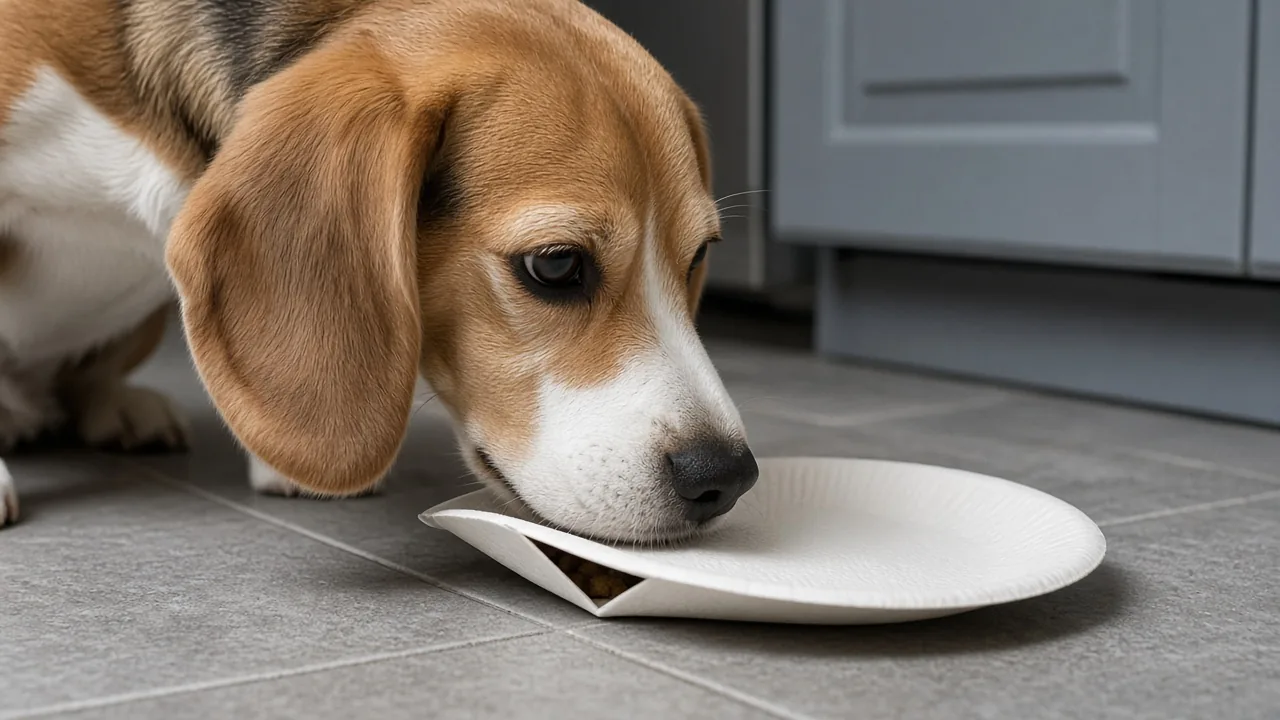
- Folded paper plates with treats tucked inside
- Loosely wrapped wrapping-paper balls
- Muffin tins with tennis balls
Heavy chewers need setups you can watch closely and take away fast if things go wrong:
- Nested cardboard boxes, sealed shut
- Towel bundles rolled around treats
- Ice cube tray treats, which take longer to destroy than paper or thin plastic
If your dog falls somewhere in between, start with the gentler options and watch how it handles them before moving up.
Puzzles for Puppies, Adult Dogs, and Senior Dogs
Puppies, especially during teething, do best with simple, low-risk setups. An open cardboard box with a few treats scattered inside lets a puppy practice searching without the complexity of flipping lids or nosing through enclosed spaces. Keep supervision close, since puppies explore with their mouths more than adult dogs do.
Adult dogs can usually handle more complexity: sealed boxes they need to open themselves, or a cone shell game that requires some patience and scent tracking. Senior dogs, particularly those with less patience or mobility, often do better with low-effort options like a muffin tin feeding puzzle that doesn’t require much physical exertion to solve.
Step-by-Step: How to Make Each DIY Dog Puzzle Toy Safely
Each of these puzzles takes just a few minutes to set up. Use your dog’s regular daily kibble portion instead of extra treats if you’re watching calories, or swap in a favorite treat for something more motivating.
Muffin Tin and Tennis Ball Puzzle
- Place one treat or a few pieces of kibble in the bottom of each muffin well.
- Cover each well with a tennis ball sized to fit snugly, not loosely.
- Set the tin on the floor and let your dog work out how to move the balls.
Results vary a lot by dog. Some will flip the whole tin over to dump the balls out, others will carefully nose or paw each ball aside one at a time. Either approach is fine as long as the tin stays stable enough not to pinch a paw.
Frozen Treat Puzzle Using an Ice Cube Tray
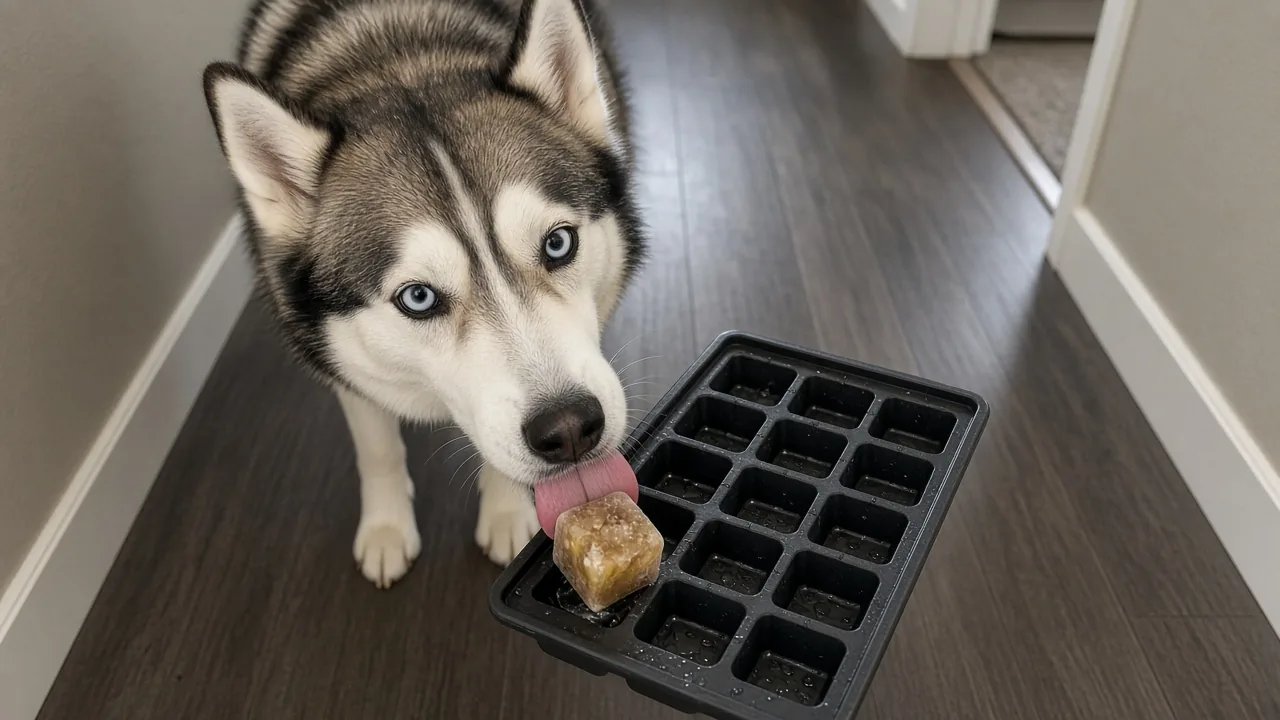
- Mix treats or a Kong filling recipe with a small amount of water.
- Pour the mixture into the wells of an ice cube tray.
- Freeze until solid, then pop out the cubes for your dog to work on.
This one is especially useful in warm weather, since the ice slows down fast eaters and keeps them occupied longer than a plain treat would. It’s also fully reusable, just rinse the tray and start again.
Milk Jug and Plastic Bottle Treat Dispenser
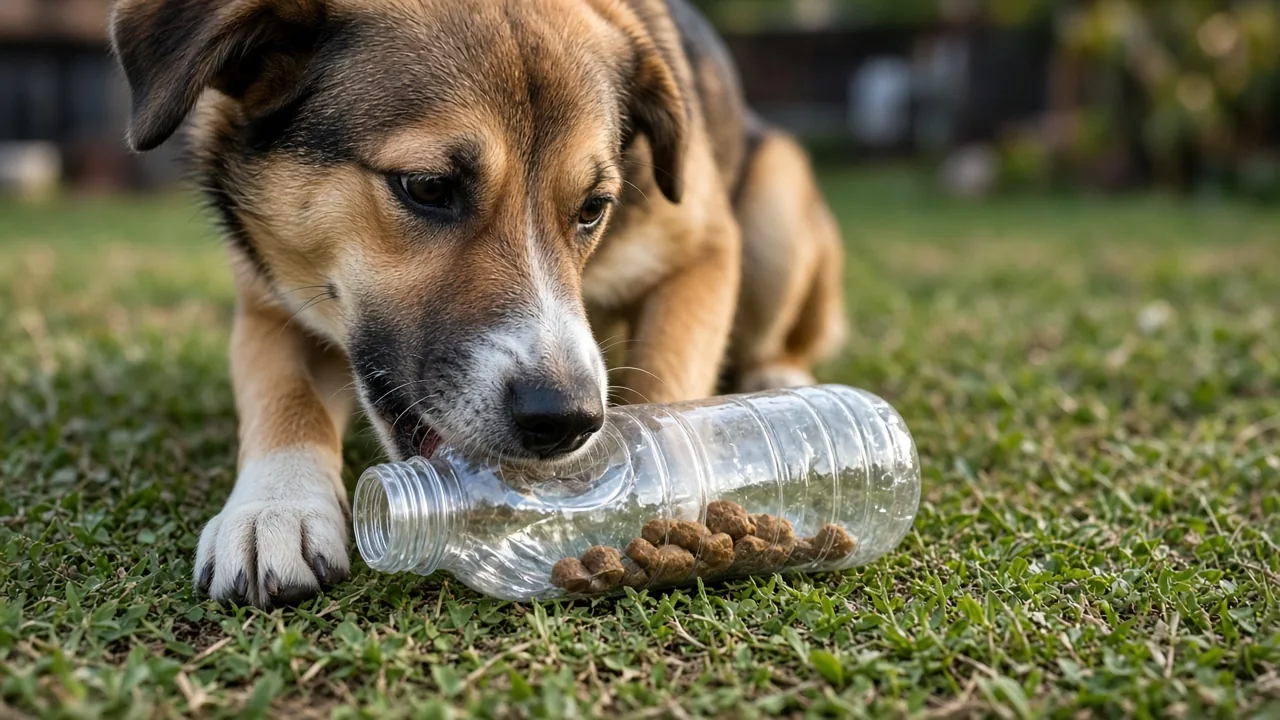
- Remove the cap completely before handing the jug or bottle to your dog.
- Drop treats or kibble inside so your dog has to nose it out through the opening.
- Optionally, cut a small opening in the side of a milk jug to make treats easier to access, keeping your fingers and your dog’s nose clear of the cut edges while you work.
Plastic bottles tend to work better than milk jugs for this because the opening is wider and easier for a dog to get its nose into. One owner’s experience is worth noting here: it’s safer to cut off the plastic ring left behind at the bottle’s neck after removing the cap, since dogs often focus their chewing on that one piece and can swallow it. If you’re cutting into a milk jug, a drilled hole with the edges sanded down afterward leaves a cleaner edge than scissors, though this approach hasn’t been tested by everyone who’s tried it.
Never leave a dog unsupervised with a plastic bottle. If the bottle gets torn open, a dog can shred the plastic itself and swallow fragments. Take the toy away the moment you see a crack or tear forming.
Paper Plate, Cardboard Box, and Wrapping Paper Puzzles
Paper plate:
- Place treats on one half of the plate.
- Fold the plate over.
- Fold the open edge over again to seal it shut, no tape or staples needed.
Cardboard box:
- For beginners, leave the box open and scatter treats loosely inside rather than piling them all on top.
- Once your dog catches on, move to a closed box your dog has to open itself.
- Add crumpled paper inside for extra difficulty.
Wrapping paper:
- Wrap a treat in a small piece of paper.
- Crumple it into a loose ball.
- Give it to your dog to unwrap and eat.
These three puzzles work as a natural difficulty ladder: start with the open box, move to the folded paper plate, then the sealed box, and finally the wrapping paper ball for dogs who’ve mastered the earlier steps. All of them are single-use and should be tossed afterward.
Cone or Cup Shell Game for Scent Work
- Line up a few cones or disposable cups.
- Place a treat under one, letting your dog watch at first.
- Lift the cone to reveal the treat so your dog connects the action with the reward.
- As your dog improves, stop showing where the treat is and let it rely on scent alone.
- For an added challenge, leave some cones empty so your dog has to figure out which one actually has a treat underneath.
This one builds gradually. Early sessions are mostly visual, with your dog watching where the treat goes. Later sessions shift toward scent discrimination as you remove the visual cues.
Advanced DIY Puzzle Games for Smart or Experienced Dogs
Once a dog has worked through the basic versions above, a few variations keep quick learners from getting bored.
Nesting several boxes inside each other, from smallest to largest, and sealing each one shut adds real difficulty for a dog that solves simple boxes in seconds. The dog has to open one box just to find another box inside, repeating the process until it reaches the treat.
A room-search game takes puzzle play to a different level. Hide a treat-filled Kong somewhere in a room, placing a few empty cardboard boxes around as decoys, some tipped over, some upside down, some up on furniture. Have your dog wait in another room, then let it in to search. This works best with dogs that already know the basic "find it" concept.
A shuffled-cup guessing game builds on the cone shell game. Show your dog a treat going under one cup, then mix up several cups’ positions before letting your dog choose. Repeating this regularly seems to sharpen a dog’s patience and scent focus over time, according to owners who’ve tried it with food-motivated dogs.
Safety Checks Before and During Play
Run through a quick check before handing over any homemade puzzle:
- Inspect plastic bottles for cracks, sharp edges, or a loose plastic ring at the neck
- Check cardboard boxes and paper plates for tears that could create small, swallowable pieces
- Look at towels for loose threads or fraying edges
- Make sure muffin tins sit flat and won’t tip and pinch a paw
During play, stay close enough to intervene. Stop the activity immediately if your dog starts swallowing pieces of plastic, cardboard, or paper rather than just playing with them. Some dogs solve these puzzles by chewing everything into pieces rather than working around the material, which can get noisy and messy fast. If that’s your dog’s style, you’ll need to supervise more closely or switch to a sturdier material like the muffin tin or ice cube tray.
How to Clean and Reuse Household Puzzle Toys
Paper-based toys, plates, wrapping paper, and crumpled boxes, are essentially disposable. Once your dog has torn into them, toss them rather than trying to reuse them for a second round.
Plastic bottles and muffin tins are a different story. Rinse them out after each use and they can go several rounds before showing wear. Keep using a bottle until it develops cracks, and keep using a muffin tin as long as it stays free of sharp edges or dents that could pinch a paw. Towels can go straight into the washing machine and come back good as new for the next session.
When to Retire a DIY Puzzle Toy
Replace any homemade puzzle the moment it’s cracked, torn, missing pieces, or worn down small enough for your dog to swallow. Because these toys aren’t built the way commercial ones are, they tend to wear out faster, sometimes in a single session.
Check bottles and tins for cracks or sharp edges before every use, not just after something looks obviously broken. If a cardboard box has been chewed into small cardboard fragments, that’s a sign to end the session, not keep going until it’s gone.
Are DIY Dog Puzzle Toys from Household Items Safe for Every Dog
These puzzles can genuinely help certain dogs: a nervous shelter dog still settling into a new home, a dog that’s lost interest in food after losing a companion, or a dog that’s never shown much interest in toys before. The low-pressure, food-focused nature of these games can rebuild some of that interest gradually.
That said, they’re not the right fit for every dog. A dog prone to destructive chewing or one that tends to swallow things quickly needs closer supervision than these materials can safely handle on their own. If your dog has a history of accidental ingestion of non-food items, talk to your vet before introducing cardboard or plastic puzzles, and stick to the sturdier, reusable options like muffin tins and ice cube trays in the meantime.
Frequently Asked Questions About DIY Dog Puzzle Toys
Will these puzzles be noisy?
Some of them, yes. Dogs that solve puzzles by chewing through cardboard or crunching plastic can get loud. If a quiet house matters, stick to muffin tins, ice cube trays, or cone games rather than box and bottle puzzles.
Are plastic bottles risky if I’m not watching?
Yes. Never leave a dog alone with a plastic bottle puzzle. Dogs can tear the bottle apart and swallow fragments, and the plastic ring at the bottle’s neck is a common spot where dogs focus their chewing. Remove the cap and that ring before handing the bottle over, and take it away the moment it cracks.
How do I make these puzzles harder for a bored dog?
Nest several boxes inside each other and seal each one, hide a treat-filled Kong around a room with decoy boxes scattered about, or shuffle several cups after showing your dog where the treat went. All three build on the basic versions once your dog has mastered them.
Watch how your dog naturally plays, whether it chews, chases, digs, or carries things around, before deciding which of these puzzles is worth setting up. And check homemade toys for wear just as often as you’d check any toy on the market, since paper and cardboard wear out a lot faster than they look like they will.
This article is for general information only and is not a substitute for advice from your veterinarian. Always supervise your pet with a new toy, and replace any toy that is damaged or small enough to swallow.

Contributor
admin
Continue reading
All stories
DOG TOYS · 11 October
Best Long Lasting Dog Chew Toys Ranked by Safety and Durability
DOG TOYS · 11 October
Is a Plastic Bottle Safe as a DIY Dog Toy? What to Check First
DOG TOYS · 11 October
Responses
Moderated discussion