SMALL PETS & BIRDS
Do Birds Need a Ceramic Heat Lamp Without a Heat Box or School Heater This Winter?
A properly sized, guarded ceramic heat lamp can keep most healthy indoor birds warm through winter without needing a full enclosed heat box.
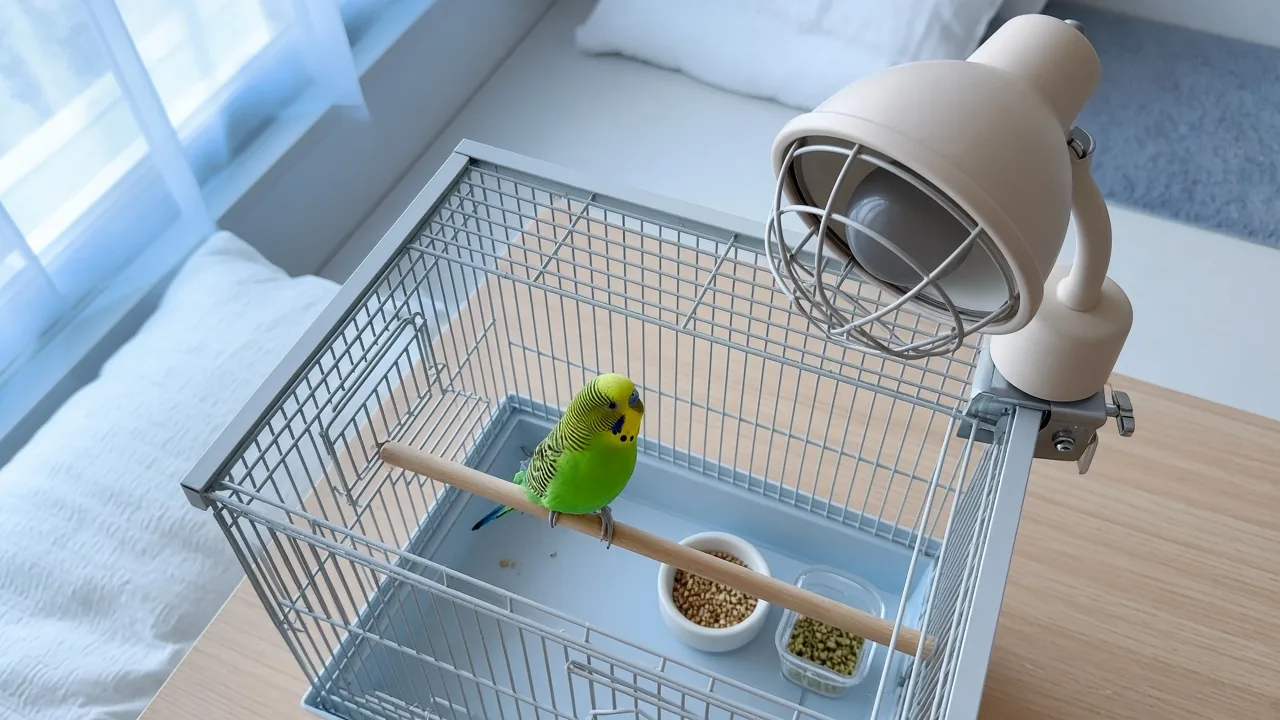
If you’re a student bird owner whose parents won’t approve a full heat box — or won’t let you run a bulky space heater borrowed from a dorm or school supply closet — you’re probably asking the practical question: do birds need a ceramic heat lamp without a heat box or school heater, or will a smaller lamp leave your bird cold? For most small parrots and finches kept indoors, a properly sized ceramic heat lamp with a protective guard can cover winter warmth needs on its own, with no heat box and no school-style heater required. The catch is that not every ceramic lamp on the market is built the same way, and picking the wrong one brings its own risks.
Do Birds Need a Ceramic Heat Lamp Without a Heat Box or School Heater?
A heat box is really just an enclosed, insulated space with a built-in heating element and thermostat. It holds temperature evenly and keeps drafts out, which matters most for birds that are sick, very young, or recovering from an injury. For a healthy adult budgie, lovebird, or cockatiel living in a normal indoor room, that level of enclosure usually isn’t necessary — and neither is a bulkier heater built for a classroom-sized space.
A ceramic heat lamp clipped near the cage can do the core job: raise the air temperature around your bird by several degrees without the cost or footprint of a full box or a heater sized for a room much larger than a bedroom. Where a heat box still earns its price is for birds with health conditions, for unheated rooms that drop well below normal indoor temperatures, or for species with very low cold tolerance. If your bird is otherwise healthy and your apartment stays reasonably warm, a ceramic lamp is a fair substitute for either option.
Why Ceramic Heat Lamps Are a Common Heat Box Alternative
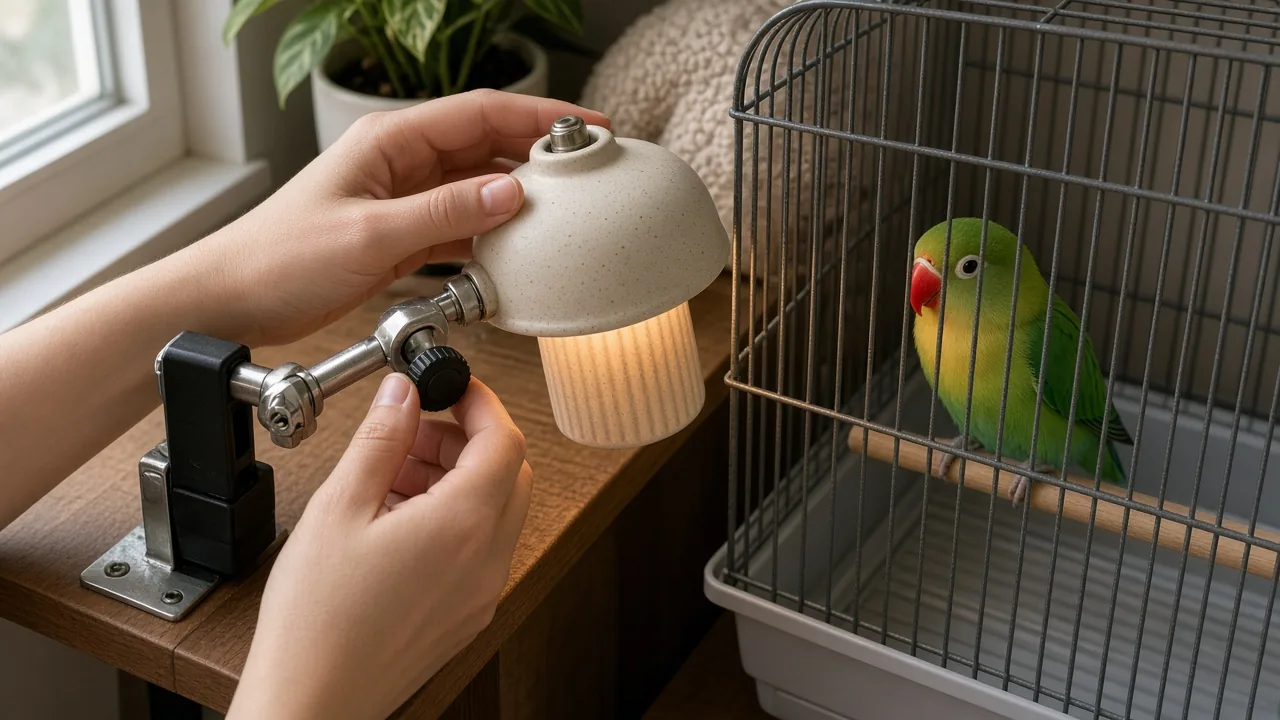
The reason ceramic lamps show up so often as a heat box swap is the way they generate heat. A ceramic heating element produces steady radiant warmth without emitting visible light, unlike a standard bulb-style heat lamp. That distinction matters more than it sounds.
Birds rely on light cues to regulate their internal clock. A bright heat bulb running overnight can throw off a bird’s sense of day and night, leading to restlessness or disrupted sleep. A no-light ceramic element delivers warmth through the night hours without that side effect, which is part of why many owners switch to this style once they know it exists.
Two 75-watt ceramic units tested side by side in one owner’s home showed how similar wattage can still perform very differently depending on the housing around the element — which brings up the comparison worth understanding before you buy.
Ceramic Heat Lamp vs Heat Box: Key Differences
| Feature | Ceramic Heat Lamp | Heat Box |
|---|---|---|
| Typical wattage | Often 75 watts for small cages | Varies, usually paired with a thermostat-controlled internal element |
| Enclosure type | Open clamp lamp mounted outside the cage | Fully enclosed insulated unit |
| Light emitted | None (heat-only ceramic element) | None, since the bird sits inside an enclosed space |
| Surface temperature risk | Depends heavily on whether a guard is included | Lower touch risk since the heating element is sealed inside |
| Approximate cost | Budget to mid-range | Mid-range to higher-end |
| Supervision needed | Daily housing touch-check, distance monitoring | Less frequent once temperature is set, but still needs occasional checks |
| Best fit | Healthy adult birds in normal indoor rooms | Sick, very young, or cold-sensitive birds, or unheated rooms |
Neither option is universally better. A ceramic lamp wins on cost and flexibility; a heat box wins on consistency and lower handling risk. Your bird’s health status and your room’s baseline temperature should drive the decision more than price alone.
How to Choose a Safe Ceramic Heat Lamp for Your Bird’s Cage
Once you’ve decided a ceramic lamp fits your situation, the model you pick matters as much as the decision itself. Three things separate a safe setup from a risky one: wattage matched to your room, a housing material that won’t scorch feathers on contact, and whether a protective guard comes included.
Skipping any one of these isn’t necessarily dangerous by itself, but combining mistakes — say, an unguarded metal housing paired with oversized wattage in a small room — is where most problems start.
Wire Guard or No Guard: Which Ceramic Lamp Is Safer?
A side-by-side test is the clearest way to see why a guard matters. Two 75-watt ceramic heaters were run for five minutes, and the difference on contact was immediate. The unit with a stainless steel wire guard stayed touch-warm on the outer housing — the kind of warm you can rest a hand against without discomfort. The unit without a guard, in contrast, got noticeably hot to the touch on its metal casing.
That difference matters because birds explore with their beaks and feet, and a cage bar or perch positioned too close to an unguarded housing creates a real burn risk. The price gap between guarded and unguarded versions tends to be small — often about what you’d spend on a coffee shop drink — which makes the guarded option the easy recommendation for most households, students included. If budget is genuinely tight, an unguarded lamp can still work, but only if you mount it with extra clearance from the cage and check it daily.
What Wattage Ceramic Heat Lamp Does a Small Bird Need?
Wattage needs depend on room size, how close the lamp sits to the cage, and how cold your home runs overnight. A 75-watt ceramic heater is a common reference point for a single small to medium cage in a bedroom-sized space that isn’t already near freezing. Larger rooms, drafty windows, or multiple cages may call for either a higher-wattage unit or a second lamp rather than pushing one unit past its intended coverage.
If you’re unsure where to start, 75 watts placed a safe distance from the cage and checked for comfortable warmth at the bird’s perch level is a reasonable baseline. Adjust from there based on how your bird behaves — fluffed feathers and huddling suggest more heat is needed, while panting or holding wings away from the body suggests too much.
How Bird Species and Age Affect Winter Heat Needs
Not every bird in the house needs the same amount of supplemental warmth, and treating a finch the same as a larger parrot can leave one of them under- or over-heated.
- Budgies and lovebirds generally tolerate normal indoor room temperatures well once past the chick stage, and a single 75-watt ceramic lamp positioned near — not inside — the cage is often enough on cold nights.
- Cockatiels sit in a similar range but can be more sensitive to drafts, so cage placement away from windows and doors matters as much as the lamp itself.
- Finches, being smaller-bodied, lose heat faster and may need the lamp running closer to the cage or for more hours overnight than a similarly housed parrot would.
- Chicks, molting birds, and older birds typically need steadier, more consistent warmth than a healthy adult in its prime. A bird going through a heavy molt is already spending extra energy regrowing feathers, and cold stress on top of that can slow recovery.
- Sick or recently injured birds are the clearest case where a heat box’s steady, enclosed warmth outperforms an open lamp — this is a situation worth discussing with an avian vet rather than solving with wattage alone.
If you keep more than one bird and their needs differ this much, it’s often more practical to give the more cold-sensitive bird its own heated space rather than cranking one lamp to cover the whole room.
How to Set Up a Ceramic Heat Lamp Safely in the Cage
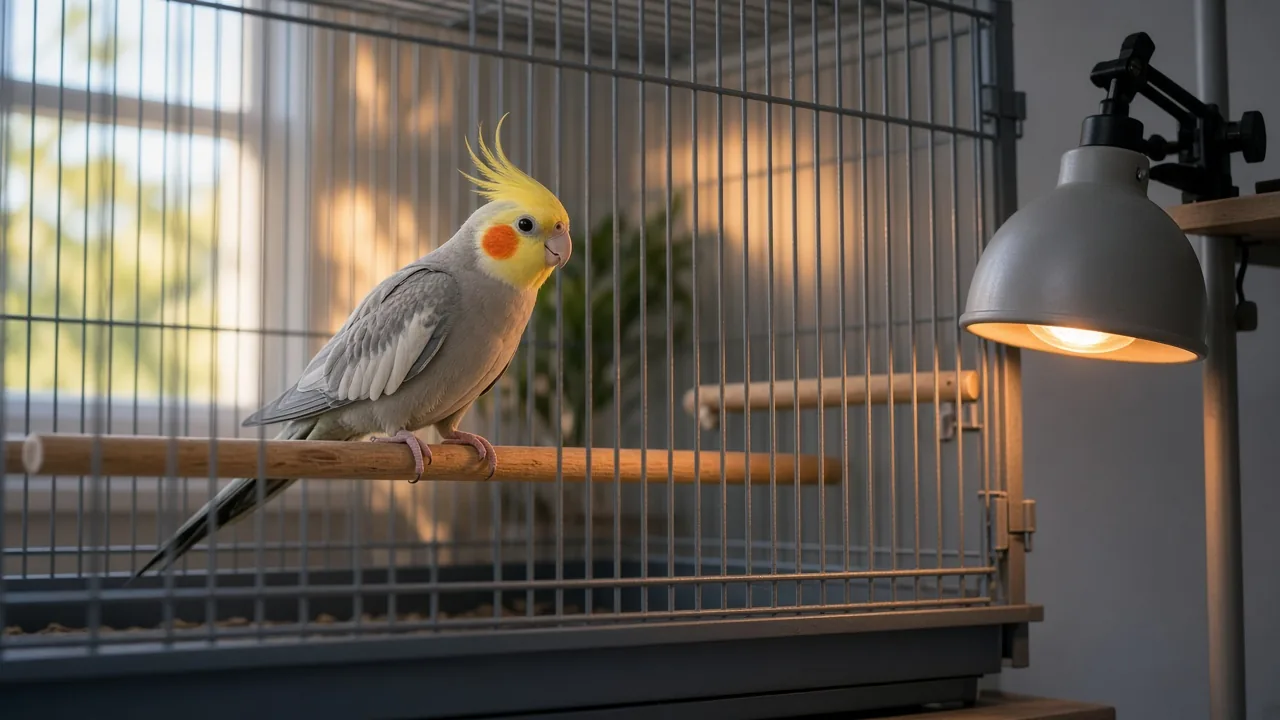
Placement affects both safety and how evenly heat actually reaches your bird. A lamp mounted too close concentrates heat in one small zone and risks burns; one mounted too far may barely raise the temperature at all.
A practical setup:
- Clamp the lamp to a stand or shelf outside the cage rather than resting it directly on the bars.
- Position it so the warmest zone covers one area of the cage, leaving a cooler spot elsewhere so your bird can move away if it gets too warm.
- Keep the housing itself at a distance from any perch a bird could climb onto or press against.
- Touch-test the outer housing daily, especially during the first week, to confirm it stays at a safe temperature rather than drifting hotter.
- Recheck placement any time you rearrange perches or add new cage accessories nearby.
Cage Size and Bar Spacing to Check Before Adding a Heat Lamp
Before you mount anything near the cage, confirm the cage itself fits your bird correctly. Bar spacing around 0.4 inches is suited to budgies and lovebirds, but a larger parrot needs wider spacing to avoid feeling cramped, while a smaller finch needs tighter spacing so it can’t squeeze through.
Cage height matters too. A peaked-roof style cage with roughly 3 inches of extra clearance at the top gives enough room to hang a swing without it sitting too close to any heat source mounted above. Cages with built-in wheels also make it easier to reposition the whole setup if you need to adjust distance from the lamp without lifting a heavy enclosure.
Bedding and Cleanup Tips While Running a Heat Lamp
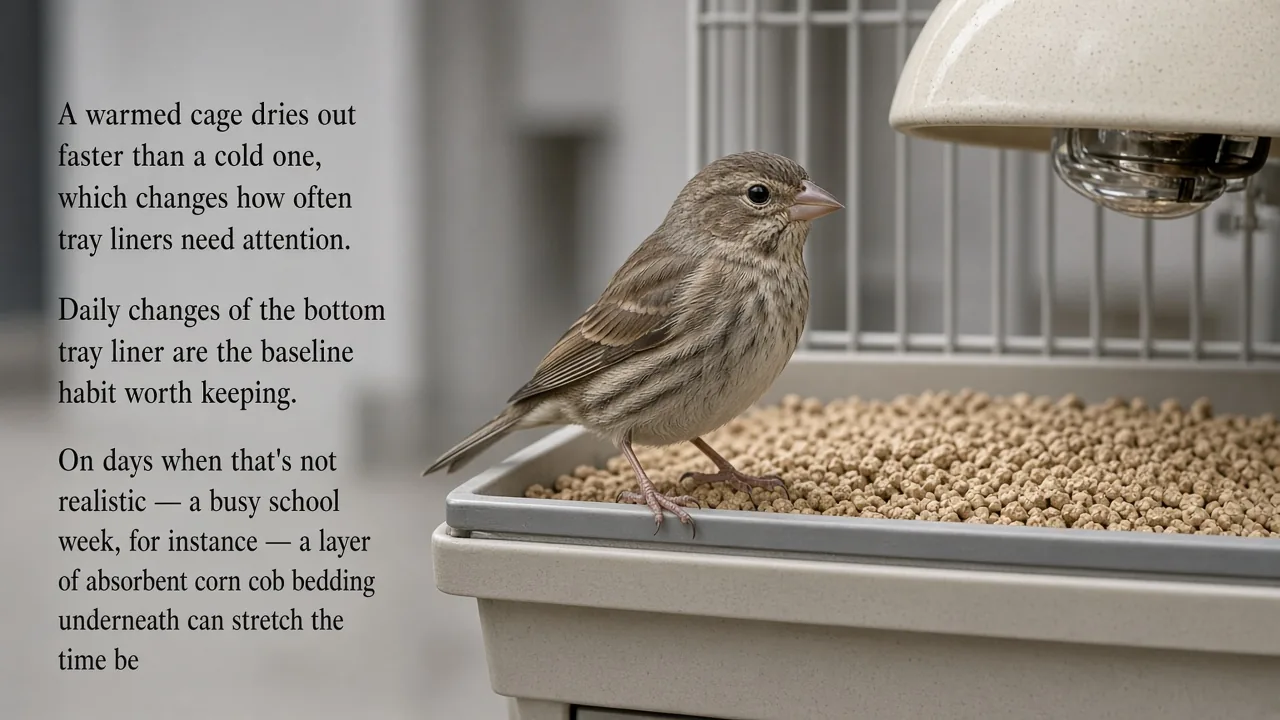
A warmed cage dries out faster than a cold one, which changes how often tray liners need attention. Daily changes of the bottom tray liner are the baseline habit worth keeping. On days when that’s not realistic — a busy school week, for instance — a layer of absorbent corn cob bedding underneath can stretch the time between full changes.
A 5.5-pound bag of corn cob bedding absorbs moisture well and can be used across several cycles before replacement, which keeps the warmed cage drier and less prone to odor buildup between cleanings. This isn’t a substitute for regular cleaning, just a buffer for the days you can’t get to it right away. A dry cage also matters for the lamp’s safety: damp bedding sitting close to a heat source is worth keeping clear of the warmest zone.
Supporting Your Bird’s Health Through Winter Beyond Heat
Temperature is only part of winter care. Diet adjustments matter too, particularly around molting season in fall, when birds put extra energy into regrowing feathers.
A simple egg yolk freeze-dried treat — made from egg yolk alone and sold in small packaging to limit moisture exposure — can help supplement protein during this period. Fruit and vegetable freeze-dried mixes made from a combination of produce with no added ingredients offer a different kind of support: mixed into seed or a regular feeding bowl, they add variety and a bit of food-based enrichment without requiring fresh produce prep every day.
Feeding setup also plays a role in a warmer cage. A heavier, wider feeder style is worth considering if you keep more than one bird or want a bowl sturdy enough to double as a bathing dish, since lighter feeders tend to tip more easily. Smaller feeder shapes work fine for a single small to medium parrot that doesn’t need the extra capacity. Keeping food and water bowls a reasonable distance from the heat lamp also helps prevent water from warming too quickly or treats from drying out faster than expected.
Common Mistakes When Keeping a Bird Warm Without a Heat Box or School Heater
A few recurring errors show up when owners try to replicate heat box warmth with a simpler lamp setup:
- Choosing an unguarded metal housing to save money. The cost difference is usually small, and the unguarded version runs hot enough to burn on contact.
- Undersized wattage for the room. A 75-watt unit in a large, drafty space may not raise temperature enough to matter, leaving your bird cold despite the lamp running.
- Skipping daily touch-checks. Housings can change performance over time, and a quick hand-check catches problems before they become a hazard.
- Ignoring bar spacing when adding accessories. A lamp or swing that fits the cage style doesn’t help if the cage itself doesn’t match your bird’s size.
- Running one setup for every bird. A young, molting, or sick bird may need more consistent warmth than a healthy adult, which is where a heat box still has an edge.
- Assuming any heater will do. A school-style space heater built for a much larger room can dry out the air or overheat a small space fast, which isn’t a safer shortcut even if it technically produces more warmth.
Keeping Your Bird Mentally Engaged During Short Winter Days
Shorter daylight hours mean less natural activity time, and heat alone doesn’t address that. Foraging-style feeders and bowl setups that take a little effort to access give your bird something to work for, which matters more during stretches of indoor-only time.
It’s worth noting that a lot of bird-themed content aimed at kids — color-matching games, cartoon birds feeding worms to a woodpecker, and similar activities — exists online and can be entertaining for younger family members. That kind of content is a fun diversion, not a source of actual bird care information, so keep it separate from decisions about your bird’s health, diet, or heating setup.
FAQ: Ceramic Heat Lamps and Winter Bird Care
How long can a ceramic heat lamp run each day?
Many owners run ceramic lamps overnight through the coldest stretch of winter, since the no-light design doesn’t disrupt sleep. During the day, whether you need it depends on your room’s baseline temperature — if the space stays comfortable without it, daytime use may not be necessary.
How far should the lamp sit from the cage?
Far enough that the outer housing never touches cage bars or perches directly, with the warmest zone reaching only part of the cage so your bird has a cooler spot to retreat to.
How do I know if my bird is still too cold?
Fluffed-out feathers held for long stretches, huddling in one corner, or reduced activity are common signs more warmth is needed. If these continue after adjusting the lamp, a check-in with an avian vet is worth it to rule out illness rather than assuming it’s purely a temperature issue.
Is a 75-watt lamp enough for every small bird?
It’s a reasonable starting point for a single cage in a normal indoor room, but larger rooms, bigger cages, or especially cold-sensitive species may need more wattage or an additional lamp.
Can I use a regular space heater instead of a ceramic lamp?
A general space heater built for heating a whole room — the kind sometimes borrowed from a school or dorm setting — isn’t designed for the close, controlled warmth a bird cage needs, and it can dry out the air or raise the room temperature unevenly. A ceramic lamp aimed at the cage area gives you more control over exactly where the heat goes.
Watch how your bird settles into the new setup over the first few nights, and keep checking the lamp housing by hand for unexpected heat or any sign of wear on the cord or guard. Swap out any part that loosens, cracks, or stops guarding properly the moment you notice it, rather than waiting for the next supply run.
This article is for general information only and is not a substitute for advice from your veterinarian. Always supervise your pet with a new toy, and replace any toy that is damaged or small enough to swallow.

Contributor
admin
Continue reading
All stories
SMALL PETS & BIRDS · 11 October
Why Does My Hamster Keep Digging Out of Its House? What Owners Observe
SMALL PETS & BIRDS · 11 October
How to Build a DIY Acrylic Hamster Cage: Costs and Mistakes
SMALL PETS & BIRDS · 11 October
Responses
Moderated discussion