SMALL PETS & BIRDS
Why Do Parrots Need Shreddable Chew Toys, and What Materials Are Safe?
Parrots need shreddable chew toys to manage continuous beak growth and release energy, preventing destructive habits like feather plucking. This guide covers safe materials, foraging toys, perch rotation, and how to inspect toys for hazards.
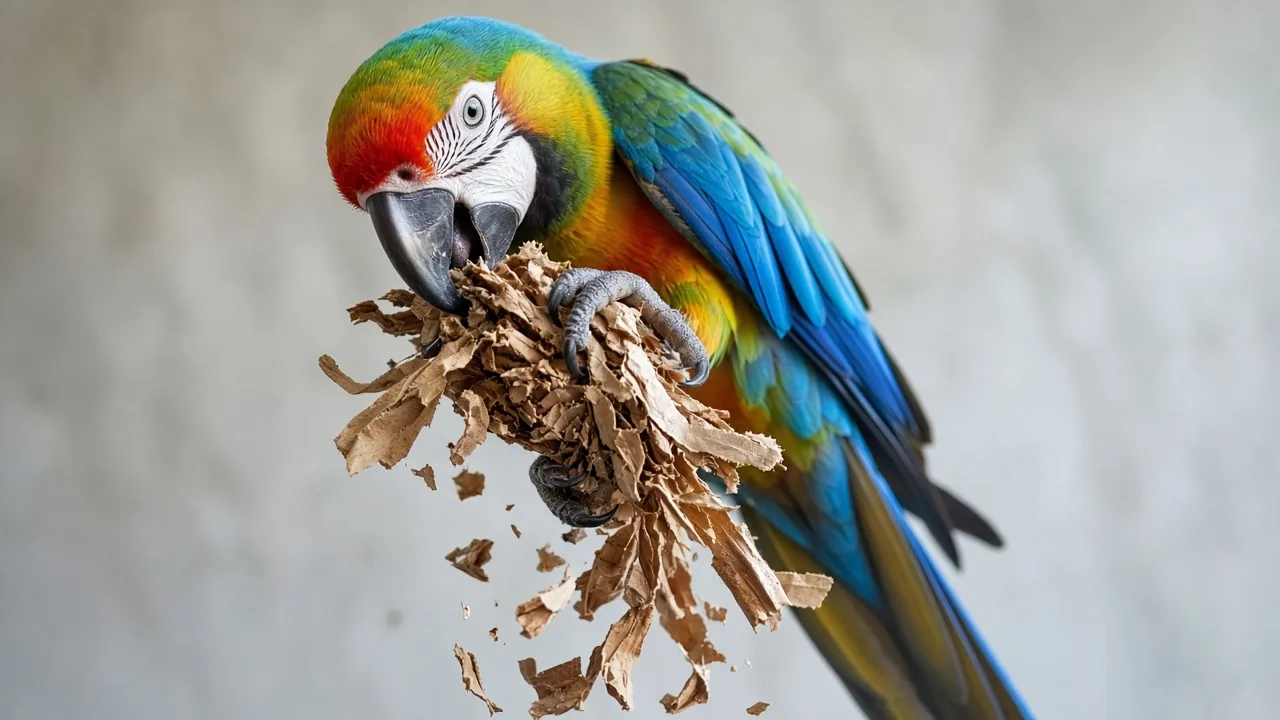
If your parrot is plucking feathers or chewing on the cage bars, it may be missing an outlet for a basic instinct. Why do parrots need shreddable chew toys? Because their beaks grow continuously, and tearing apart soft, destructible material is how they wear down that growth while releasing pent-up energy. Before you buy anything, it helps to understand this instinct and what materials actually hold up to it safely.
Why Do Parrots Need Shreddable Chew Toys in the First Place
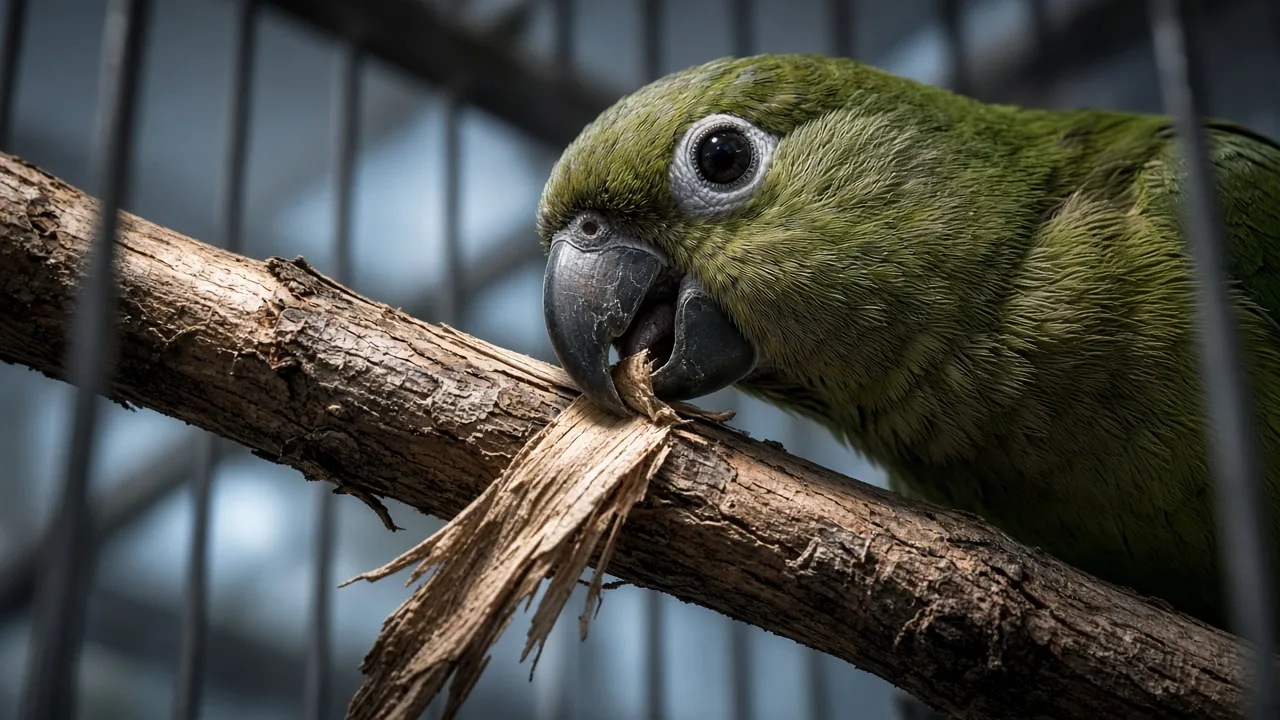
A parrot’s beak never stops growing. In the wild, birds keep that growth in check by stripping bark, cracking seed pods, and tearing into wood all day long. That same drive doesn’t disappear in a cage.
Shredding also appears to trigger a reward response in a parrot’s brain. When a bird successfully tears apart an object, it seems to release chemicals associated with pleasure, similar to how a dog feels satisfaction after finishing a long-lasting chew. That may explain why a parrot returns to a destructible toy again and again instead of losing interest after the first session.
What Happens When a Parrot Has No Toys to Destroy
Without a legal target for this instinct, parrots often look for something else to take apart. Common substitutes include the anti-rust paint on cage bars, exposed cords or electronics within reach, and even their own chest feathers.
This redirected chewing is one of the patterns associated with feather plucking. A bird that is not plucking from boredom alone, but from an unmet need to shred, may calm down noticeably once given appropriate material to destroy. That said, plucking can also stem from medical issues, stress, or diet, so a bird that plucks persistently is worth discussing with an avian veterinarian rather than assuming toys alone will fix it.
What You Need Before You Start: Materials, Sizes, and a Few Tools
Before shopping, it helps to gather a few categories of supplies rather than picking one random toy off a shelf.
- Soft, shreddable wood sized for your bird (yucca wood kabobs work well for small to medium birds)
- Fibrous foraging material, such as cotton-leaf fiber toys or natural fiber bundles with lotus pods and wheat straw
- At least two different perch textures, like a bottle-brush perch and a grapevine perch, instead of relying on one straight dowel
- A bird-safe cleaning spray made for droppings and cage surfaces, not a household cleaner
Sizing matters more than brand. A toy or perch built for a macaw can be too thick or too hard for a budgie to use safely, while something scaled for a small bird may disappear in a day under a large parrot’s beak. A good first test is whether your bird can comfortably grip the material with one foot while biting it. If a chew is so small that your parrot can close its beak around the entire piece, it may become a swallowing risk rather than a shredding outlet.
Step 1: Choose a Primary Destructible Chew Material for Your Bird’s Size
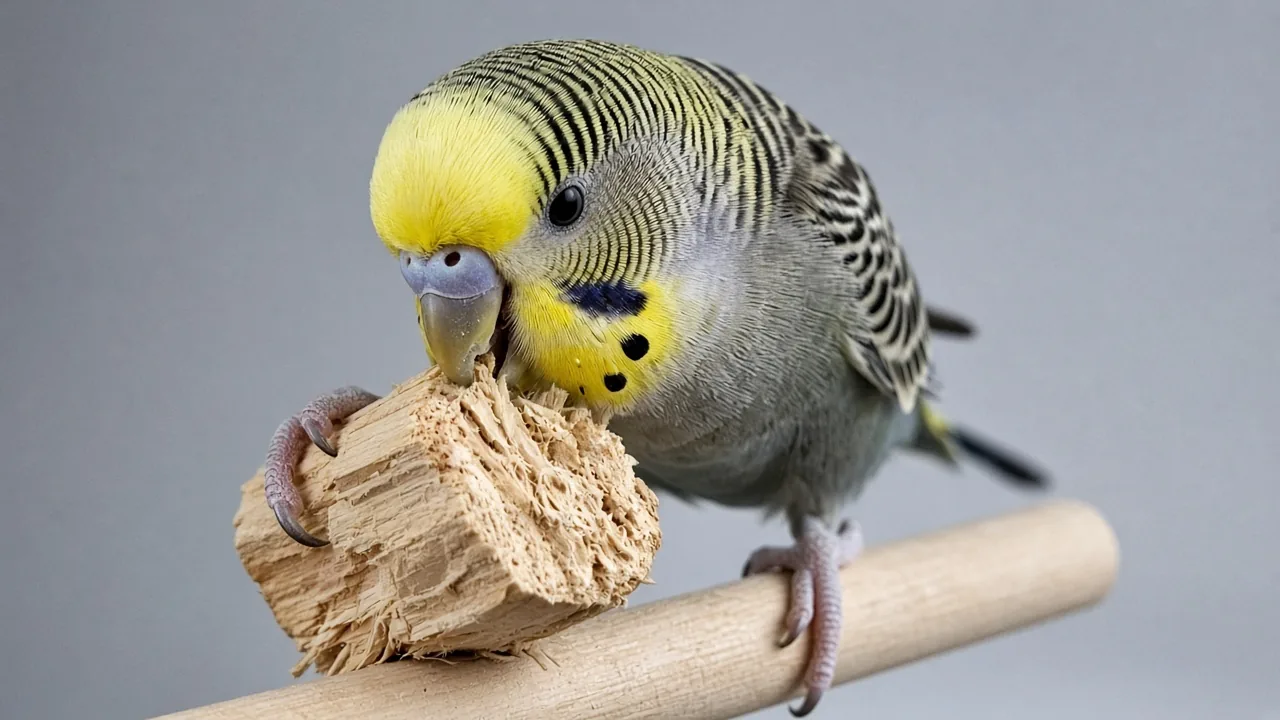
The right starting material depends mostly on your bird’s size and how hard it chews, not on how long the toy lasts. In this case, a toy that gets destroyed quickly is doing exactly what it’s supposed to do.
- For small birds like budgies or parrotlets, start with soft yucca wood kabobs. The wood is soft enough that you can break off a piece with a fingernail, and a budgie can reduce one to splinters within a few days. Birds with a stronger bite may finish one in a single day and leave wood shavings across the cage floor.
- For medium to large parrots, look at natural fiber bundles that combine lotus pods, wheat straw, and similar dense plant material. These require more force to break apart, which matches a stronger beak and keeps the bird occupied longer per session.
- For birds with a plucking habit, consider a paper-based fiber toy, such as one made from cotton-leaf fiber with a tasseled end. The texture is firmer than loose paper but still gives the bird something to pull apart, which can serve as a redirection target during plucking episodes.
Comparing Natural Chew Materials by Hardness and Bird Size
| Material | Hardness | Best Suited For | Play Style |
|---|---|---|---|
| Yucca wood | Very soft | Budgies, parrotlets, small conures | Quick shredding, splinters easily |
| Cotton-leaf fiber | Medium-firm | Birds with plucking tendencies, any size | Pulling, fraying, chew-and-forage combo |
| Lotus pods | Firm | Medium to large parrots | Requires sustained biting force |
| Wheat straw | Brittle | Any size, especially birds who like quick wins | Snaps instantly, satisfying "crunch" |
| Loofah | Soft to medium | Small to medium birds | Light shredding, good texture variety |
No single material fits every bird. A cockatiel that barely dents lotus pods might demolish a yucca kabob overnight, while a large macaw could ignore a wheat straw bundle entirely because it offers too little resistance to be interesting. Watch how your bird reacts during the first few days rather than relying on a hardness chart alone.
Step 2: Add Foraging Toys So Your Parrot Works for Its Food
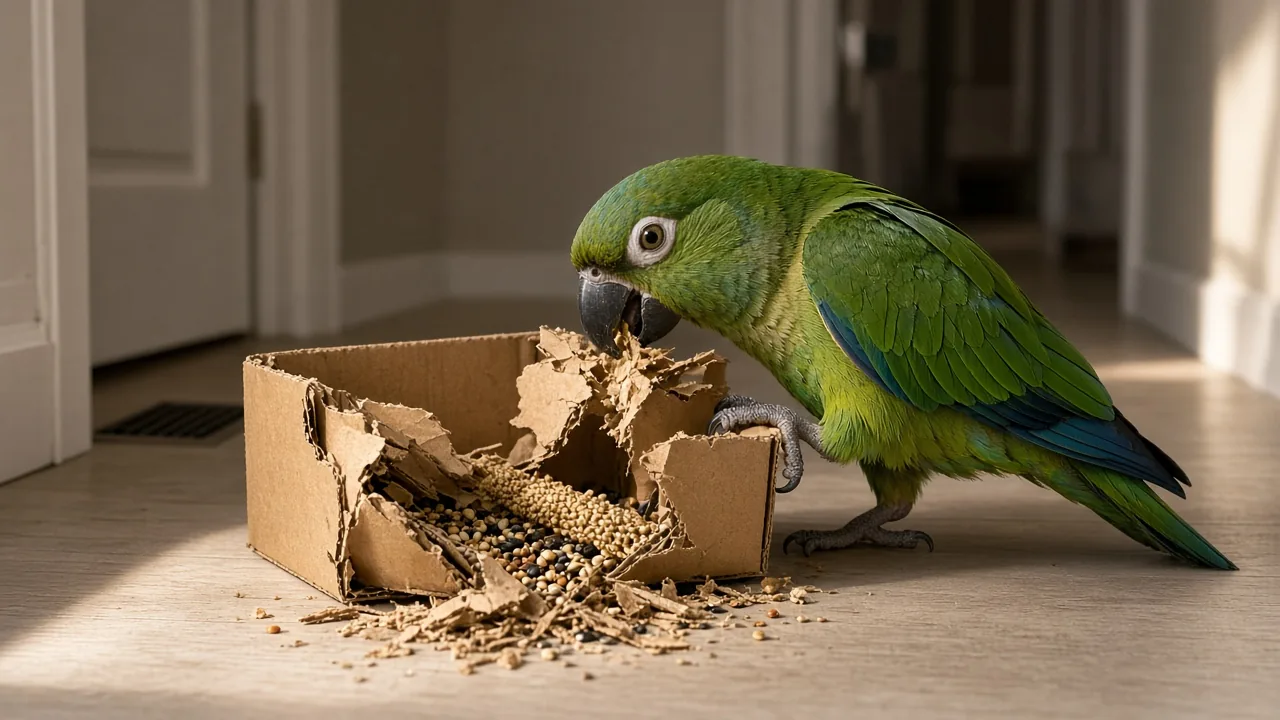
Shredding and foraging are related but separate needs, and it’s easy to cover one while overlooking the other. Foraging is about working for food, not just destroying material for its own sake.
A simple way to start is hiding seeds or millet inside a cardboard box with holes cut into the sides. The bird has to chew through cardboard to reach the food, which combines destructive chewing with a search-and-find task closer to what it would do in the wild. Some owners stack multiple boxes together for a sturdier, longer-lasting version when a single layer gets destroyed too fast.
Woven basket-style toys filled with crinkled paper offer a similar function. A bird can climb into or hang from the basket, dig through the paper, and pull out hidden treats. Birds that get bored quickly with plain chew toys often respond well to this format because it adds a problem to solve on top of the chewing itself. If your parrot ignores a plain wood block but tears through the same wood when a seed is hidden inside it, foraging may be the missing piece.
Step 3: Rotate Perch Styles to Protect Your Parrot’s Feet
Perches don’t get as much attention as toys, but relying on a single straight dowel perch day after day can cause real foot problems. When a bird’s foot sits in the same position constantly, it may develop arthritis, bumblefoot (a foot infection), or pressure sores.
- Bottle-brush perches keep some bark intact, which flakes off as the bird chews and stands on it. The rough, non-slip surface is especially useful for birds with weaker grip strength or existing foot issues.
- Grapevine perches have natural bumps, curves, and varying diameters, which forces the foot to shift position frequently instead of locking into one grip.
Using at least two different perch types, placed at different points in the cage, gives the bird’s feet regular variation. This is a low-cost change that doesn’t require new toys, just a willingness to swap out that single dowel perch most cages come with by default.
Step 4: Balance Chew Toys With a Pellet-Based Diet
Chew toys satisfy a behavioral need, but they don’t replace proper nutrition. Seeds are calorie- and fat-dense, which makes them a poor foundation for a daily diet even though parrots are drawn to them.
A pellet-based diet is generally recommended as the base, making up roughly half of what a bird eats day to day. The remaining half should come from fresh fruits and vegetables, grains, and sprouts, with seeds kept as an occasional treat rather than a staple. One bird owner found that switching her flock to an organic pellet brand free of artificial flavors, colors, and added sugar made a noticeable difference, though results like this vary by bird and are not something every pellet brand can promise.
Diet and chew behavior do connect in an indirect way: a bird fed mostly fatty seeds may have less energy for active shredding and foraging, while a well-balanced diet supports the activity level needed to actually use all those destructible toys.
How to Check Chew Toys and Perches for Safety
Before handing over any new toy, take a minute to inspect it.
- Loose fibers or strings that could wrap around a toe or neck
- Sharp splinters on wood toys, especially after the bird has already started chewing
- Chemical dyes or coatings instead of natural, unprocessed color
- Small detachable parts, such as plastic clips or beads, that a bird could swallow
This same checklist applies to toys already in the cage, not just new purchases. A toy that passed inspection last month can develop a sharp edge or a loose fiber after weeks of chewing, so periodic rechecks matter as much as the first look. Supervise the first few sessions with any new toy closely, since that’s when you’ll notice if a material breaks apart in a way you didn’t expect, such as splitting into long, swallowable strands rather than crumbling into small pieces.
Long strands deserve extra attention. A rope or fiber that unravels into a thread can create the same kind of linear-foreign-body risk as string in a dog or cat: one end can get swallowed while the other stays caught, and that can cause serious digestive injury. If a shreddable toy starts producing loose threads longer than about the length of your bird’s beak, trim them back or remove the toy entirely.
How to Clean Bird Toys and Cages Without Harming Your Parrot
Household cleaners that work fine on kitchen counters are not safe around birds. Products like bleach-based cleaners or Lysol can be toxic to a parrot’s respiratory system, which is far more sensitive than a dog’s or cat’s.
Instead, use a cleaner formulated specifically for bird droppings and cage surfaces. These products are designed to break down waste on cages, perches, and toys without leaving behind residue that’s harmful if the bird chews on a cleaned surface afterward. Clean perches and toys on a regular schedule rather than waiting until they look visibly dirty, since droppings and food residue build up faster than they’re noticeable at a glance. The same bird-safe cleaner can typically be used on cage bars, perches, toys, and nearby furniture, which makes weekly cage maintenance easier to keep consistent.
How Often to Replace Shredded or Worn Bird Toys
The short answer: once a toy is mostly shredded, splintered, or missing large chunks, it’s time to swap it out. Unlike many pet products, visible destruction here is a sign the toy worked, not a defect.
Replace a toy sooner if you notice any of the following, regardless of how "used up" it looks overall:
- Sharp splinter points sticking out
- Loose strings or fibers long enough to wrap around a foot or neck
- Small chewed-off pieces small enough to swallow whole
Budget for replacing destructible toys regularly, since that’s the nature of the category. A toy meant to be shredded that lasts for months either wasn’t being used, or wasn’t matched to your bird’s chewing strength in the first place.
Are DIY or Budget Chew Toys a Safe Alternative to Store-Bought Options
Plenty of bird owners skip store-bought bundles entirely in favor of free or low-cost natural materials. Pinecones, dried corn cobs, and simple cardboard-and-seed bundles (seeds tucked into a taped-up shipping box) are commonly mentioned as effective substitutes. Cuttlebones paired with small woven grass mats also show up often as a cheap gnawing option that satisfies the same beak-wear need without a specialty toy.
These options can work well, but they need the same safety screening as anything you’d buy. Pinecones collected outdoors should come from an area free of pesticide or herbicide use, and dried corn cobs should be fully dried with no mold developing in the kernels. Cardboard should be plain, undyed, and free of tape or staples before it goes in the cage.
One tradeoff worth knowing about: some commercial chew bundles that advertise being free of chemical treatment have drawn mixed reactions from owners. A few have reported that certain natural fiber bundles arrived with a noticeably sour, fermented smell, and their birds showed little interest in them. This doesn’t mean every natural bundle has this problem, but it’s a reasonable thing to check for when you open a new package, regardless of whether you bought it or made it yourself.
DIY options also tend to work best as part of a rotation rather than a permanent replacement. A homemade cardboard foraging box or a dried corn cob may be destroyed quickly, but that is often the point. The main risk is not that the toy fails, but that an owner keeps using a piece after it has become sharp, moldy, or small enough to swallow. Check homemade items on the same schedule you would check store-bought ones.
Frequently Asked Questions About Shreddable Parrot Toys
My chew bundle smells sour or fermented. Is that normal?
Natural, unprocessed materials can sometimes develop an off smell during storage or shipping, and some owners have noticed their birds avoid a bundle with a strong fermented odor. If a toy smells distinctly sour or moldy rather than simply earthy, it’s reasonable to toss it rather than risk offering spoiled material.
Are dried starfruit slices in chew bundles safe for humans to eat too?
Dried starfruit used in some bird chew products is generally the same fruit humans eat dried as a snack. That said, toys aren’t packaged or stored to food-safety standards for people, so it’s not a reliable snack source for yourself even if the fruit itself is edible.
Can hamsters use the same natural chew materials as parrots?
Many small pets, including hamsters, also benefit from gnawing on untreated natural wood or fiber material, since their teeth also grow continuously. However, sizing and texture needs differ between species, so a chew sized and shaped for a parrot’s beak may not suit a hamster’s much smaller mouth and grip.
My parrot seems afraid of new toys. How do I introduce a shreddable chew toy?
Some birds take days to approach anything unfamiliar, and forcing the issue often makes the fear worse. Place the new toy just outside the cage for a day or two so the bird can see it from a safe distance, then hang it near a perch that your parrot already uses confidently. You can also rub a little millet or another favorite treat onto the toy’s surface to encourage a first investigative bite. Once the bird starts shredding, keep the toy in that same approved location instead of moving it around too often.
Should I let my parrot build its own nest with shredded material?
Allowing a bird to pull apart soft fiber and then arrange the pieces can be satisfying, but store-bought woven or fabric nests can create hazards if they are chewed into sharp plastic or wire fragments. A safer middle ground is to offer natural nesting material like untreated grass, palm leaf, or torn cardboard as part of a supervised shredding activity rather than relying on a prefabricated nest that may break into dangerous pieces.
Watch how your own parrot plays before stocking up on any one category of toy. Some birds are driven mostly by shredding, others focus on foraging through hidden treats, and still others care more about perch variety than chew material at all. Keep checking every toy and perch for wear on a regular basis, the same way you’d check a chew toy or scratching post for any other pet, so you can swap things out before a worn piece becomes a hazard instead of a source of enrichment. If you are still unsure which behavior your bird favors most, start with one soft chew toy, one simple foraging option, and two different perches, then adjust from there.
This article is for general information only and is not a substitute for advice from your veterinarian. Always supervise your pet with a new toy, and replace any toy that is damaged or small enough to swallow.

Contributor
admin
Continue reading
All stories
SMALL PETS & BIRDS · 11 October
Best Cat Litter Box for Rabbits: Safe, Easy-Clean Picks
SMALL PETS & BIRDS · 11 October
Is Millet Spray Holder Safe for Birds? What to Check Before You Buy
SMALL PETS & BIRDS · 11 October
Responses
Moderated discussion