SMALL PETS & BIRDS
How Much Out of Cage Time Do Rabbits Need Every Day?
Rabbits typically need about 4 hours of supervised out-of-cage time each day, no matter how large their cage is. Here's how to meet that need and spot the signs when you're falling short.
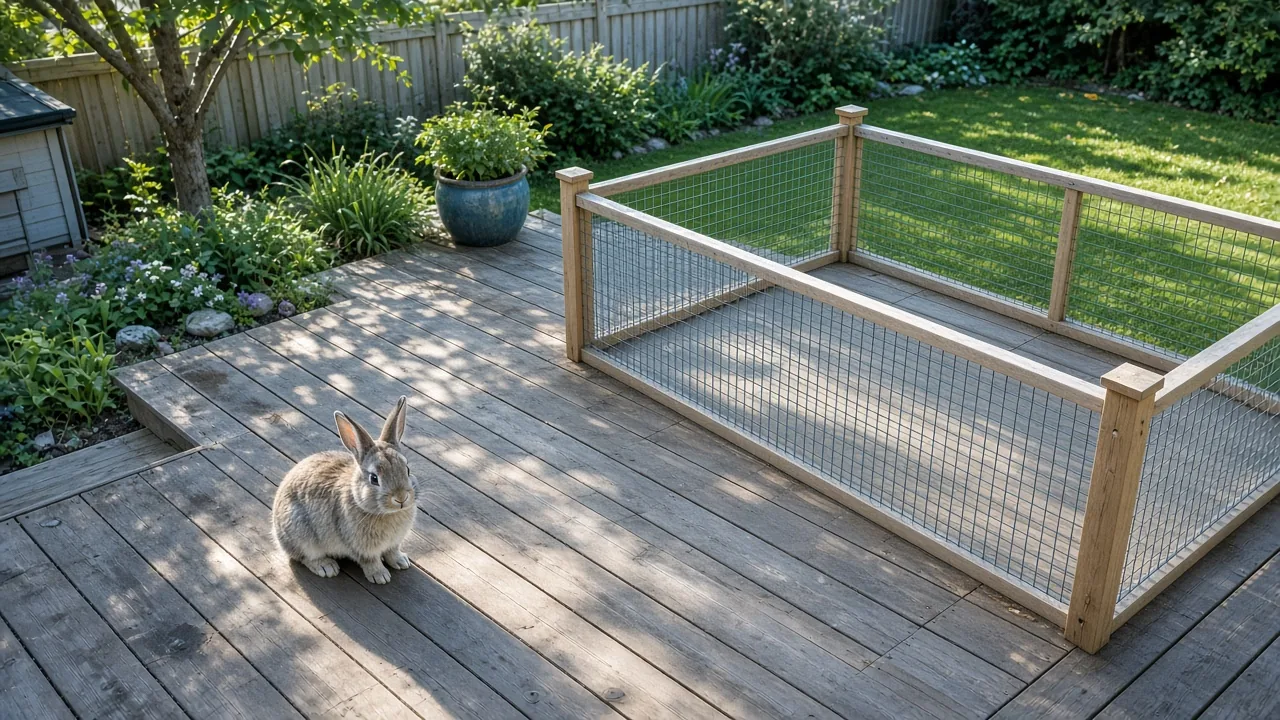
If you’re wondering how much out of cage time rabbits need, the short answer is roughly 4 hours a day, even when your rabbit already lives in a cage that’s noticeably larger than a hamster’s. A big cage covers rest and safety. It doesn’t cover the exercise and mental stimulation a rabbit needs to stay happy. This article walks through what counts as "enough" space, what counts as "enough" free time, and how to tell when your setup is falling short.
Why Rabbits Need Both a Big Cage and Out of Cage Time
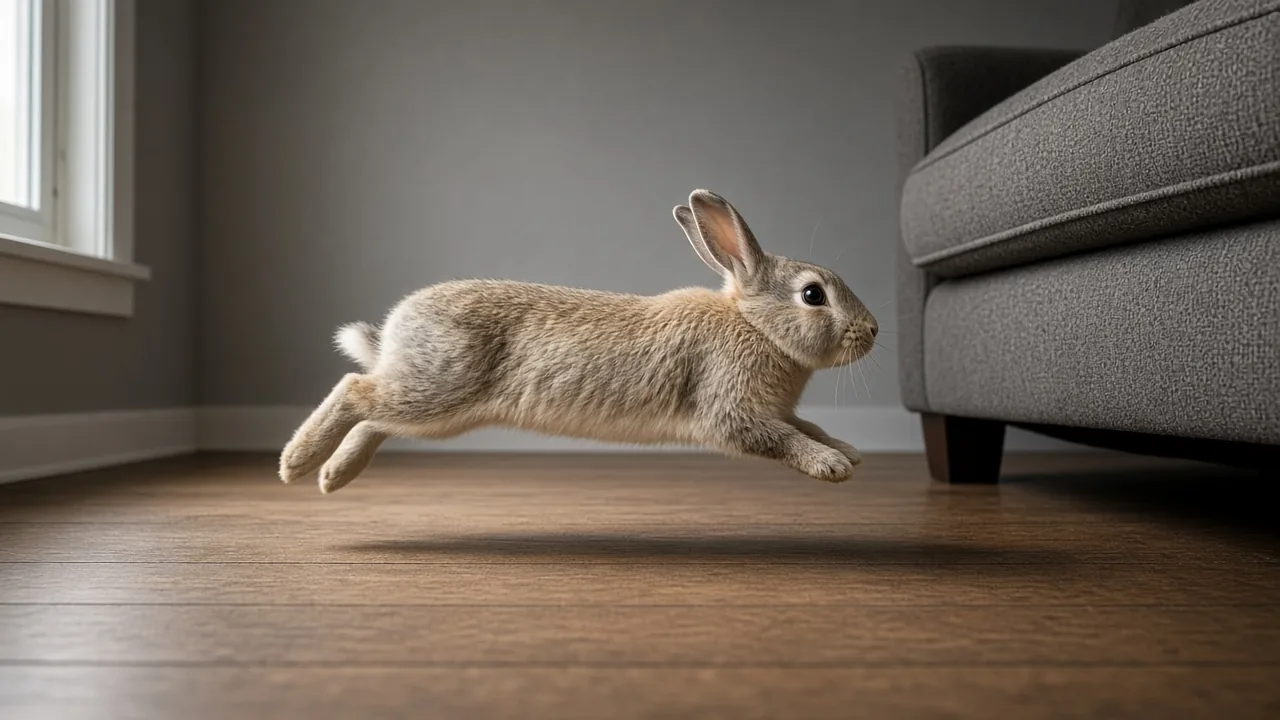
A cage and daily free-roam time solve two different problems, and mixing them up is one of the most common planning mistakes new rabbit owners make. The cage is where your rabbit sleeps, eats, and retreats when it wants to feel secure. Out-of-cage time is where it actually moves its body and uses its brain.
Rabbits are naturally active animals. In the wild, they spend hours each day foraging, digging, and investigating their surroundings. A cage, no matter how roomy, can’t replicate that kind of movement. That’s why shelters that place rabbits with new owners typically pair cage setup advice with a separate recommendation for daily time outside the cage.
Think of it the way you’d think of a dog’s crate versus its daily walk. A comfortable crate keeps a dog safe overnight, but it isn’t a substitute for exercise. The same logic applies to rabbits, just with a bigger cage and a longer stretch of free time. A dog that’s crated all day without a walk tends to get destructive or anxious. A rabbit confined to even a large cage without daily free time shows similar frustration, just expressed through chewing, thumping, or restlessness instead of barking at the door.
How a Rabbit’s Cage Compares to a Hamster’s Cage
Rabbit cages are built noticeably larger than hamster cages, and that size difference reflects real biological needs rather than just a marketing choice. A rabbit weighs several pounds and needs enough floor space to take a few hops and stretch out fully on its side. A hamster, by comparison, is small enough that a much smaller footprint still gives it room to move.
If you’ve shopped for small pet habitats before, you’ve probably noticed this size gap firsthand. A hamster cage that looks perfectly adequate for its resident would be far too cramped for even a small rabbit breed. When you’re sizing a cage, start from your rabbit’s body length and add enough extra space for it to stand up on its hind legs, turn around freely, and take three or four hops in a row without hitting a wall.
It helps to think about this in terms of adult size rather than the size your rabbit is the day you bring it home. A young rabbit can look deceptively small in a cage that will feel cramped within a few months, since most breeds reach close to their full adult length by around six months old. Sizing the cage for the adult your rabbit will become, rather than the baby in front of you, saves you from having to upgrade the setup twice.
How Much Out of Cage Time Do Rabbits Need Each Day?
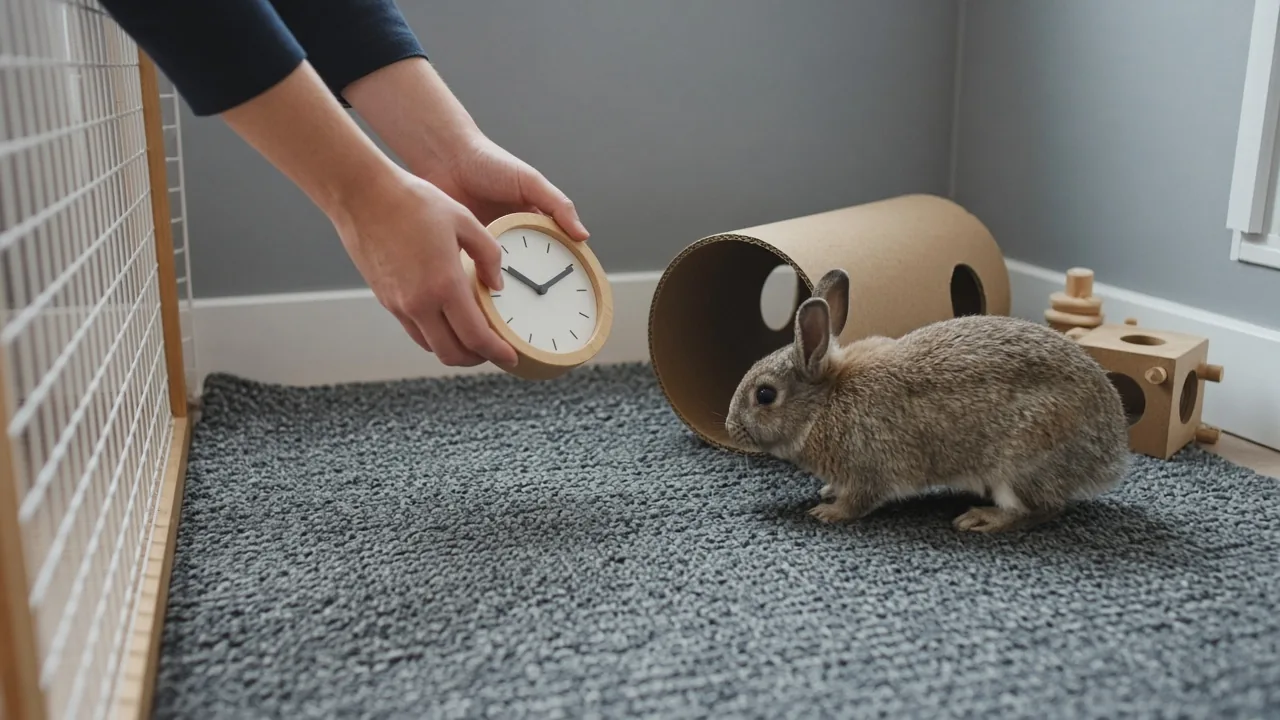
Even with a cage that meets those size requirements, the general guideline is still about 4 hours of out-of-cage time per day. This number holds up regardless of how spacious the cage itself is, which surprises some first-time owners who assume a bigger enclosure reduces the need for extra exercise time.
The reasoning behind the 4-hour guideline comes down to how rabbits are built. Their digestive systems work best when they’re moving regularly throughout the day, and their joints and muscles need more varied movement than hopping in circles inside even a large cage can provide. Four hours doesn’t need to happen in one block. Many owners split it into a couple of sessions, for example an hour in the morning and a few hours in the evening when the household is more active.
If your schedule makes a single 4-hour window unrealistic, shorter sessions spread across the day still count toward the daily total, as long as the total adds up and your rabbit gets at least one longer stretch rather than only brief five-minute check-ins. A pattern of three or four short bursts throughout the day tends to work better for many households than trying to carve out one uninterrupted afternoon, and it also gives your rabbit more variety in when it gets to move, rather than one predictable window it may start pacing around waiting for.
Does the Right Amount Change With Age or Health?
A young, healthy adult rabbit is usually the baseline for the 4-hour guideline, but the right amount can shift at different life stages. A senior rabbit with stiffer joints may still benefit from daily free time, though the pace and type of activity often looks different, more gentle exploring and less sprinting. A rabbit recovering from an illness or injury may need a vet’s guidance on how much activity is appropriate before returning to a full daily routine.
If your rabbit has a known health condition, mobility issue, or is recovering from a procedure, check with your veterinarian about how much and what kind of activity is reasonable rather than defaulting to the general guideline. The 4-hour figure is a reasonable starting point for most healthy rabbits, not a fixed rule that overrides your vet’s specific advice for your individual pet.
What Counts as Out of Cage Time
Out-of-cage time doesn’t strictly mean your rabbit has to be physically outside its cage for the entire period. What matters is that it’s getting supervised movement, exploration, and interaction, whether that’s hopping around a rabbit-proofed room, exploring a playpen set up next to the cage, or spending time with you on the floor.
Here’s what typically counts toward the daily total:
- Supervised hopping and exploring in a rabbit-proofed room or pen
- Gentle handling, petting, and lap time
- Investigating new objects, cardboard tunnels, or safe chew items
- Social interaction with you or a bonded rabbit companion
Time spent alone in a larger secondary enclosure, without any interaction or new space to explore, generally doesn’t count the same way. The goal is active engagement, not just a change of scenery. A bigger pen that your rabbit sits in without anything new to investigate still offers more room than the cage, but it doesn’t give the mental stimulation that comes from novelty and interaction, which is the part a lot of owners underestimate.
What a Rabbit-Safe Cage Setup Should Include
Cage size is the headline requirement, but a few other basics matter just as much for keeping a rabbit comfortable between out-of-cage sessions.
A rabbit-safe cage setup should include:
- Enough floor space for your rabbit to fully stretch out and take a few hops
- A separate resting area or hideaway where it can retreat and feel secure
- Safe, absorbent bedding that doesn’t shed loose fibers or dusty particles
- A stable, flat surface rather than wire flooring, which can irritate a rabbit’s feet over time
- Easy access to fresh water and hay at all times
Wire-bottom cages were once common, but many rabbit owners now avoid them because standing on wire for long periods can cause sore hocks. If your cage has a wire floor, a solid mat or liner over at least part of it gives your rabbit somewhere comfortable to rest.
Cage cleaning schedule matters here too. Rabbit urine is more concentrated than you might expect from a small animal, and a cage that goes several days without a spot clean can start to smell and irritate your rabbit’s respiratory system. Spot cleaning soiled areas every day or two, with a fuller clean of bedding and litter trays weekly, keeps the cage from becoming the kind of environment your rabbit wants to avoid, which can work against the goal of giving it a secure home base.
How Rabbits Compare to Guinea Pigs and Other Small Pets
Guinea pigs are often described as a bit less demanding than dogs or cats, since they don’t need daily walks or litter training the way a kitten does. That reputation sometimes gets stretched further than it should, as if guinea pigs are a low-maintenance pet overall.
In practice, guinea pigs still need their cage cleaned daily, a steady supply of food and water, and dedicated playtime every day. The workload isn’t dramatically lighter than caring for a rabbit; it’s just distributed differently.
| Care factor | Rabbits | Guinea Pigs |
|---|---|---|
| Cage size needed | Large, room to hop and stretch | Moderate, room to move and hide |
| Daily out-of-cage time | About 4 hours | Daily playtime recommended |
| Cage cleaning | Regular spot cleaning | Daily cleaning |
| Social needs | Enjoys handling and petting | Enjoys handling, often does well in pairs |
| Beginner friendliness | Moderate, needs space planning | Often considered a bit easier to start with |
The biggest practical difference is space. A rabbit’s cage and its daily free-roam area both need more square footage than a guinea pig’s setup, simply because rabbits are larger animals with a bigger range of motion. If your living situation genuinely doesn’t have room for a rabbit-sized cage plus a safe play area, a guinea pig may be a more realistic fit, though it still comes with daily responsibilities of its own.
It’s worth being honest with yourself about this comparison before bringing either animal home. A household that struggles to find an hour a day for a guinea pig’s cage cleaning and playtime is likely to struggle more with a rabbit’s larger space and longer daily free-roam requirement. Neither pet is truly low-maintenance; the difference is mostly in what kind of daily attention each one asks for.
Why Entertainment Content About Small Pets Isn’t the Same as Care Guidance
If you’ve spent time watching small pet videos online, you’ve probably come across playful clips of hamster treat unboxings or cute enclosure tours set to music. Content like that is entertaining, and there’s nothing wrong with enjoying it, but it isn’t the same as actual care guidance.
An unboxing video might show adorable footage of a hamster investigating a new treat, without ever mentioning cage size requirements, out-of-cage time, or signs of stress. That’s fine for what it is, a short, lighthearted clip, but it’s worth being clear-eyed about the difference. When you’re making real decisions about cage size or daily free time for your rabbit, guinea pig, or hamster, look for sources that actually walk through the reasoning, not just footage designed to be cute.
Signs Your Rabbit Isn’t Getting Enough Out of Cage Time
Rabbits tend to show their frustration through behavior rather than obvious distress, which means it’s easy to miss the early signals. Watch for these patterns if you suspect your rabbit needs more daily free time:
- Repeated chewing or gnawing on the cage bars, especially right before a usual out-of-cage session
- Restlessness, pacing, or circling in a small area of the cage
- Thumping a back foot more often than usual
- Reduced interest in toys or food it normally enjoys
- Increased digging at cage flooring or bedding in one spot
One or two of these on an off day isn’t necessarily a red flag. A consistent pattern over several days, though, usually means the current amount of free time isn’t meeting your rabbit’s needs and it’s worth adding an extra session or lengthening the existing ones.
It’s also worth separating frustration behavior from a behavior or health problem that needs a professional opinion. If increased chewing, aggression, or withdrawal continues even after you’ve added more daily free time, that’s a reasonable point to talk to your veterinarian or an experienced rabbit-savvy trainer, since persistent behavior changes can sometimes point to pain, illness, or a territorial issue rather than simple boredom.
How to Make the Most of Your Rabbit’s Daily Out of Cage Time
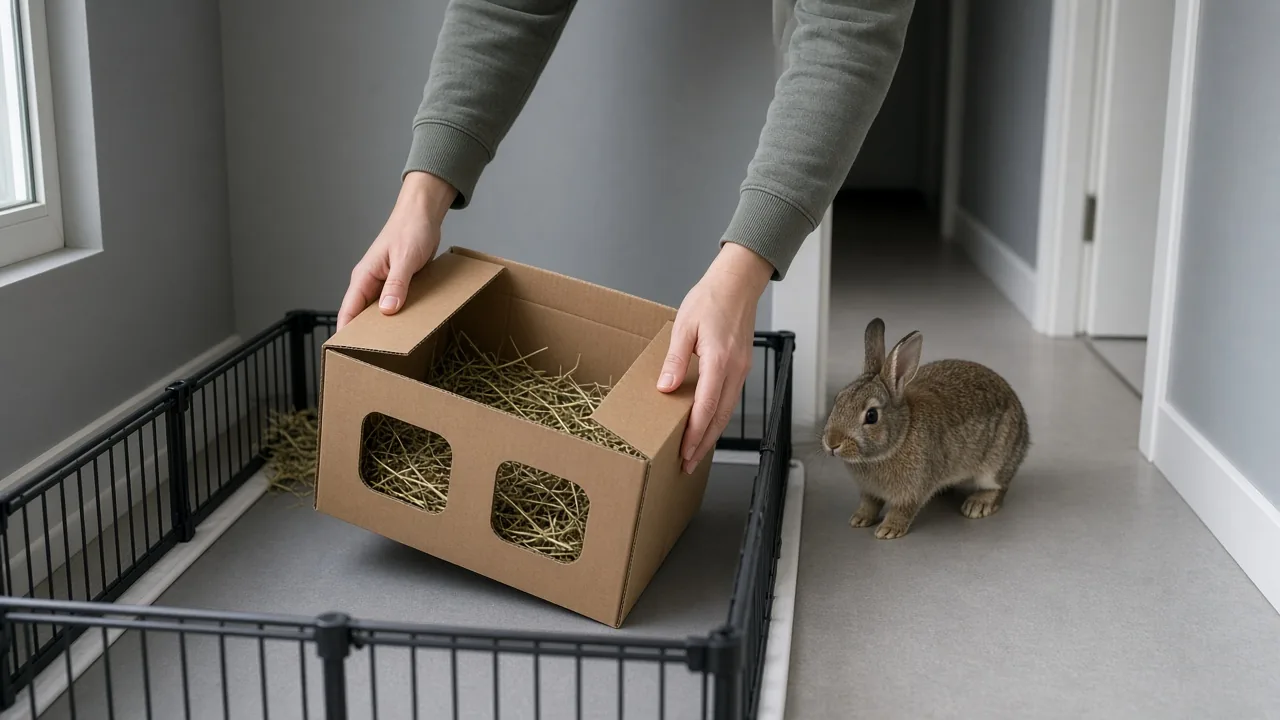
Four hours sounds like a lot until you think through how to actually fill it in a way that’s engaging rather than just letting your rabbit sit in an open pen.
- Start each session with a few minutes of gentle handling or petting so your rabbit settles before exploring.
- Set up a rabbit-proofed room or pen with safe hiding spots, like a cardboard box with two openings.
- Rotate in a few chew-safe items or tunnels so there’s something new to investigate each week.
- Sit on the floor at your rabbit’s level during part of the session rather than hovering above it.
- Watch how your rabbit moves, some rabbits want to run laps, others prefer slow investigation, and adjust the space accordingly.
- End the session with a calm petting period if your rabbit enjoys cuddling, which many do.
Supervision matters throughout. A rabbit-proofed space should have cords tucked away, baseboards protected if your rabbit chews, and no small objects it could swallow. Check the space each time before letting your rabbit out, since household items get moved around more than you’d expect.
If you have more than one rabbit, out-of-cage time can also double as bonding time between them, though introductions between unfamiliar rabbits should happen gradually and under close supervision rather than all at once in an open room. Two bonded rabbits often entertain each other during free time in a way that reduces how much direct engagement you need to provide, but a pair that isn’t fully bonded yet can turn a free-roam session into a conflict if left unsupervised.
Common Mistakes Owners Make With Rabbit Cage Size and Free Time
The most common mistake is assuming that a bigger cage reduces or replaces the need for daily out-of-cage time. It doesn’t. Even an unusually spacious cage still limits a rabbit to repetitive movement in one enclosed area, which isn’t the same as genuine exploration.
A few other patterns worth avoiding:
- Treating out-of-cage time as optional on busy days instead of splitting it into shorter sessions
- Assuming an open living room is automatically rabbit-safe without checking for cords, small gaps, or chewable furniture
- Skipping supervision because the rabbit "seems settled" in its play space
- Underestimating how much floor space a growing rabbit will need as it matures
- Keeping the same layout and toys in the play area week after week, which gives your rabbit less to investigate over time
If your schedule genuinely can’t support 4 hours most days, it’s better to be honest about that limitation and look for ways to add shorter sessions throughout the day than to assume the cage size alone is covering the gap.
Frequently Asked Questions About Rabbit Cage Size and Exercise
What’s the minimum cage size for a rabbit?
There’s no single universal number, since it depends on your rabbit’s breed and adult size, but the cage should be large enough for your rabbit to stand fully upright, stretch out on its side, and take a few hops in a row. If your rabbit looks cramped doing any of those, size up.
Can the 4 hours of out-of-cage time be split into shorter sessions?
Yes. Many owners split the daily total into two or three sessions rather than one long block, which often fits better around work schedules. What matters most is the daily total and at least one longer stretch rather than only brief check-ins throughout the day.
Does a larger cage mean I can reduce out-of-cage time?
No. Cage size and out-of-cage time address different needs, rest and safety versus exercise and mental stimulation, so a bigger cage doesn’t lower the recommended daily free time.
Is it okay to let my rabbit roam with other pets nearby?
Only with close supervision and a clear understanding of how your other pets react to rabbits. If you’re unsure how a dog or cat will behave, keep the rabbit’s out-of-cage time in a separate, secured space instead.
Can rabbits get too much out-of-cage time?
Not in the way you might get too much screen time. More supervised free time is generally fine for a healthy rabbit, as long as it still has access to its cage, food, water, and litter box when it wants them, and the space stays safe for the whole session rather than just the first few minutes.
Every rabbit has its own preferences for how it likes to move and explore, some want wide open space to sprint, others prefer a smaller area packed with things to investigate. Pay attention to what your rabbit actually does during its free time, size the cage and daily sessions around that, and check the setup regularly for anything that’s become worn, loose, or no longer safe.
This article is for general information only and is not a substitute for advice from your veterinarian. Always supervise your pet with a new toy, and replace any toy that is damaged or small enough to swallow.

Contributor
admin
Continue reading
All stories
SMALL PETS & BIRDS · 11 October
Best Chew Toys to Stop Parrot Plucking and Boredom
SMALL PETS & BIRDS · 10 October
Do Guinea Pigs Smell Bad Indoors? Causes and Odor Fixes
SMALL PETS & BIRDS · 10 October
Responses
Moderated discussion