CAT TOYS
Are Cat Tunnels Safe for Cats? Entrapment Risks and Safer Sizing Tips
Cat tunnels are generally safe, but wire-frame designs can wear through and expose sharp metal while fabric tunnels with tight holes can trap larger cats. Here's how to pick the right size and material and spot warning signs before they become a problem.
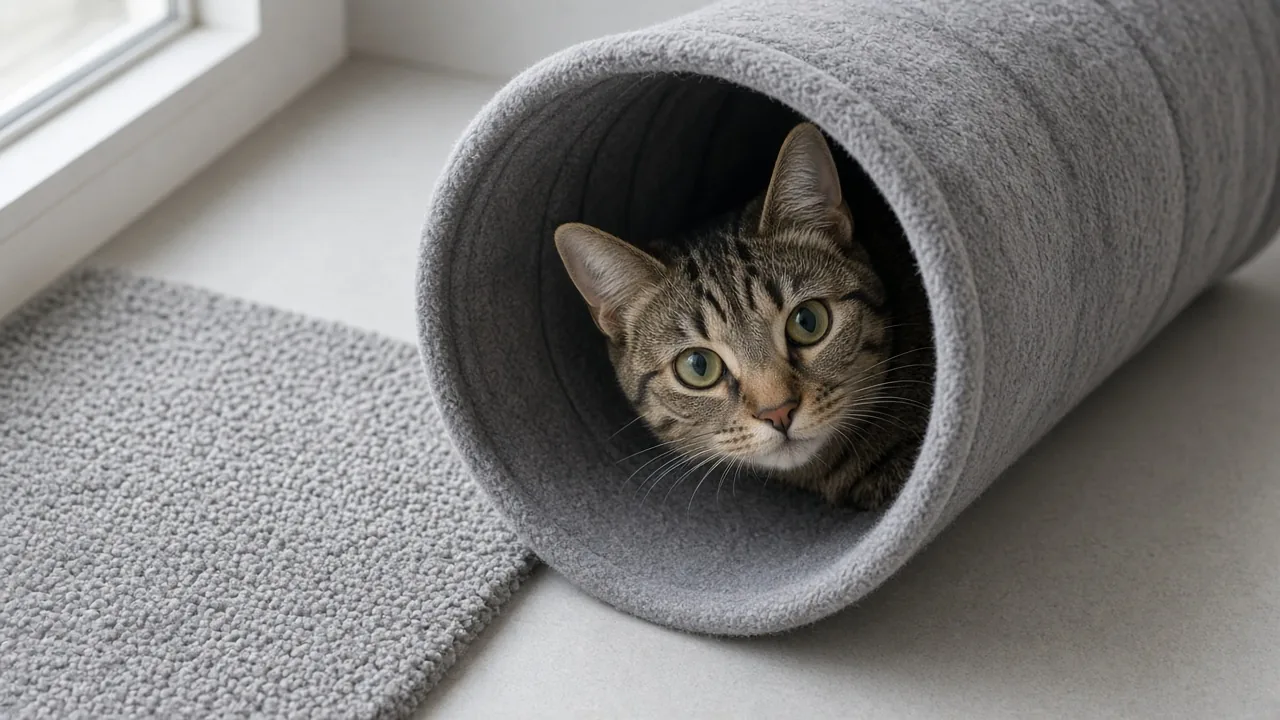
Are cat tunnels safe for cats? Mostly yes, but two specific designs cause real problems: rigid wire-frame tunnels that wear through and expose sharp metal, and fabric tunnels like the Ripple Rug where tight holes can trap a bigger cat’s shoulders or hips. One cat owner testing a Ripple Rug found her cat genuinely stuck in one of the smaller holes mid-play. Picking the right size and material up front prevents both the scrape and the stuck-cat scenario.
Are Cat Tunnels Safe for Cats? Understanding the Two Main Risk Types
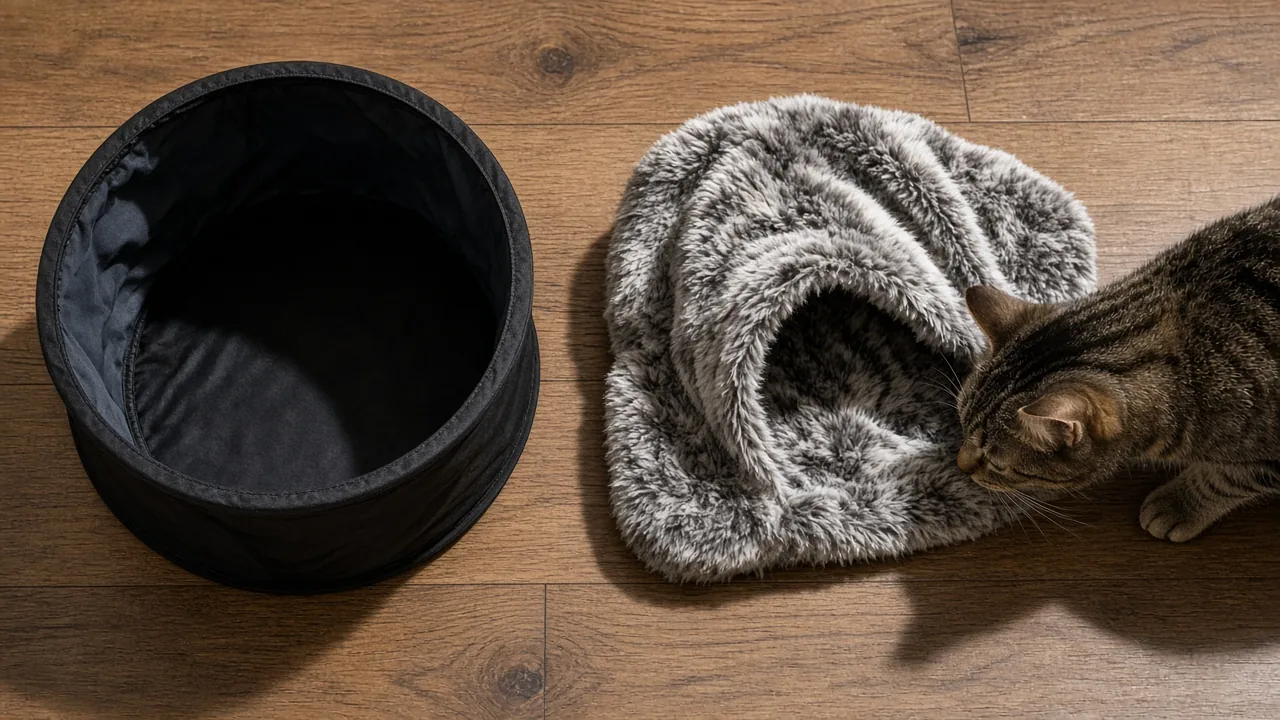
Tunnel-style cat toys aren’t one product category with one risk profile. They split into two very different builds, and each one fails in its own way, which is why a blanket "yes" or "no" answer doesn’t really hold up.
The first type is the classic pop-up tunnel with a wire frame sewn inside the fabric to hold its shape. The second is a fabric or rug-style tunnel, like the Ripple Rug, made of two connected pieces of material with cutout holes a cat climbs through. Both can be fun and both can hurt a cat, just for different reasons, and knowing which failure mode applies to the tunnel you own changes what you should actually check for.
Why wire-frame cat tunnels can scrape or cut your cat
The wire coil inside a standard pop-up tunnel keeps it round and springy, which is exactly what makes it collapse for storage. Over months of use, that coil can work its way through worn fabric and poke out along a seam or edge. A cat brushing against an exposed wire tip can get scraped, and a wire that’s been rubbing against damp paws or litter for a while can also start to rust, which makes any resulting scratch more likely to get irritated or infected.
This isn’t usually a problem on day one. It’s a long-term wear issue, which is why checking the seams periodically matters more than checking them once at purchase. A tunnel that passes inspection in month one can still develop a weak spot by month six, especially if your cat likes to claw at the fabric on the way in or out.
Why Ripple Rug-style tunnels can trap larger cats
Ripple Rug-type toys skip the wire frame entirely. Instead, they’re a soft mat with a second, hole-punched layer on top, so a cat can duck into the holes and create its own tunnel shape. One reviewer described her cat getting physically stuck in one of the smaller holes while playing, even though the cat clearly wanted to be in there, which is the detail that makes this risk tricky: the cat isn’t avoiding the toy, it’s actively choosing a gap that doesn’t quite fit.
The issue isn’t that the toy is poorly made. It’s that hole size is fixed, while cats range widely in chest and shoulder width. A hole that comfortably fits a lean, young cat can pinch a heavier or broader-chested one. This makes a Ripple Rug more of a body-size match than a general "cat toy," and it’s worth treating it that way before buying rather than assuming any cat-shaped hole will work for any cat.
How to Choose a Safer Cat Tunnel or Ripple Rug Size
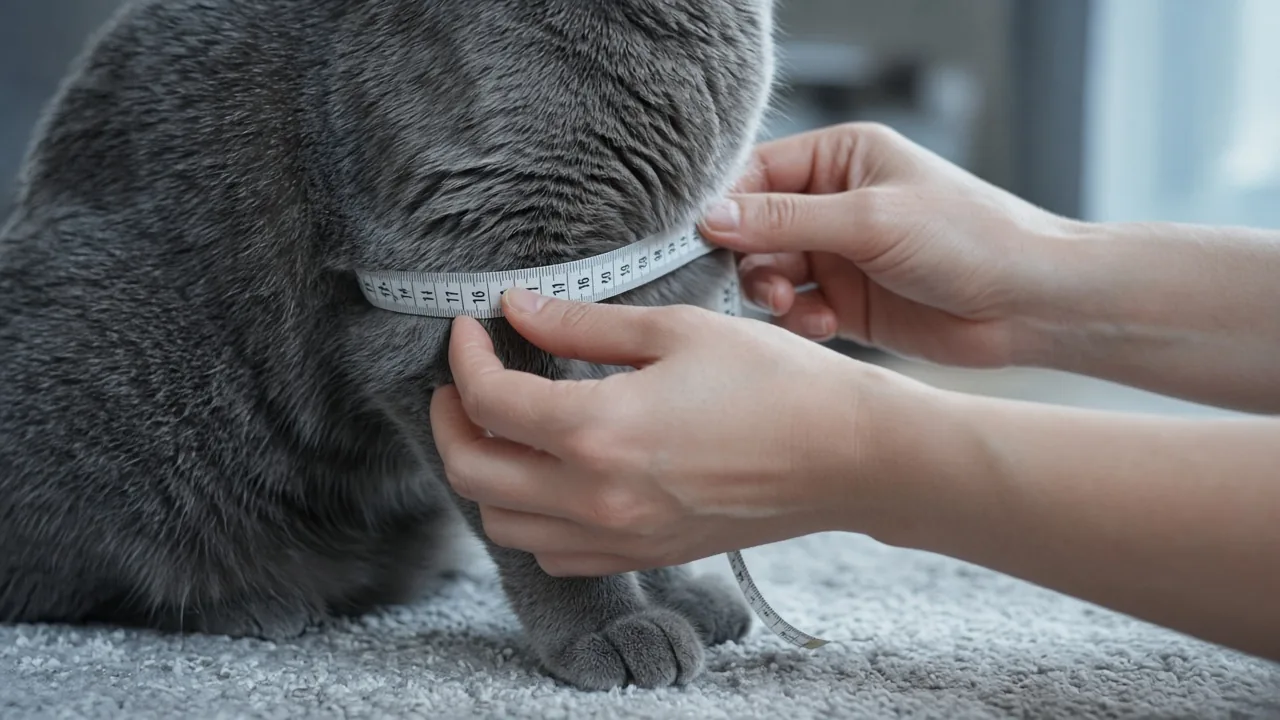
Picking a safer tunnel comes down to two questions: how big is your cat at the widest point, and what’s the tunnel actually made of? Both matter more than the total tunnel length or how it looks in photos.
Start by measuring your cat’s ribcage or shoulders, not just their general size or weight. A cat can be light but still have a wide ribcage, and that’s the measurement that determines whether a hole is too tight. If you don’t have a soft tape measure handy, a loose piece of string wrapped around the widest point of the chest and then measured against a ruler works just as well.
| Feature | Wire-frame tunnel | Ripple Rug-style tunnel |
|---|---|---|
| Material | Fabric over metal coil | Soft fabric only, no frame |
| Best for | Cats that like to dash through, not squeeze | Smaller or more flexible-bodied cats |
| Main risk | Exposed wire scraping skin over time | Tight holes trapping shoulders or hips |
| Inspection needed | Seams and wire coverage | Hole edges and stitching |
| Flexibility | Rigid once wire bends | Flexes with the cat’s body |
As a general rule, fabric tunnels without a frame are the more forgiving choice for cats that like to push and squeeze their way through tight spaces, since there’s no hard structure underneath to resist them. Wire-frame tunnels work fine for cats that run through rather than linger, but they need more routine checking, especially around seams that see the most friction from paws and claws.
Matching tunnel hole size to your cat’s body type
If your cat is on the larger side, moves cautiously, or isn’t especially acrobatic, look for tunnels with bigger holes or openings that stretch rather than hold a fixed shape. The Ripple Rug tested well and earned a strong rating in one review, but that same owner’s experience suggested it suits smaller, more agile cats better than heavier ones. That gap between a favorable rating and a specific fit problem is worth paying attention to when you’re reading reviews for your own cat.
For a bigger or stiffer-moving cat, a wider single-opening tunnel without multiple small cutout holes is usually the safer pick. Save the multi-hole rug style for cats you’ve already watched squeeze through tight spaces without trouble, such as narrow gaps under furniture or into cardboard boxes.
What to check before buying a wire-frame tunnel
Before you buy a wire-frame tunnel, run your hand along every seam, especially near the openings and anywhere the fabric is stitched over the frame. Look for thin spots where the wire is close to the surface, and gently flex the tunnel the way your cat would when pushing through it to see if any part of the frame shifts under the fabric.
This isn’t about rejecting every wire-frame tunnel. It’s about recognizing that exposed wire is a known failure point that shows up after months of use, not a defect you can always catch on day one. Buying from a seller with a reasonable return window gives you room to notice early fabric thinning before it becomes a real scrape risk, and keeping the original packaging until you’ve used the tunnel for a few weeks makes that return easier if something feels off.
How Often to Check Cat Tunnels and Ripple Rugs for Damage
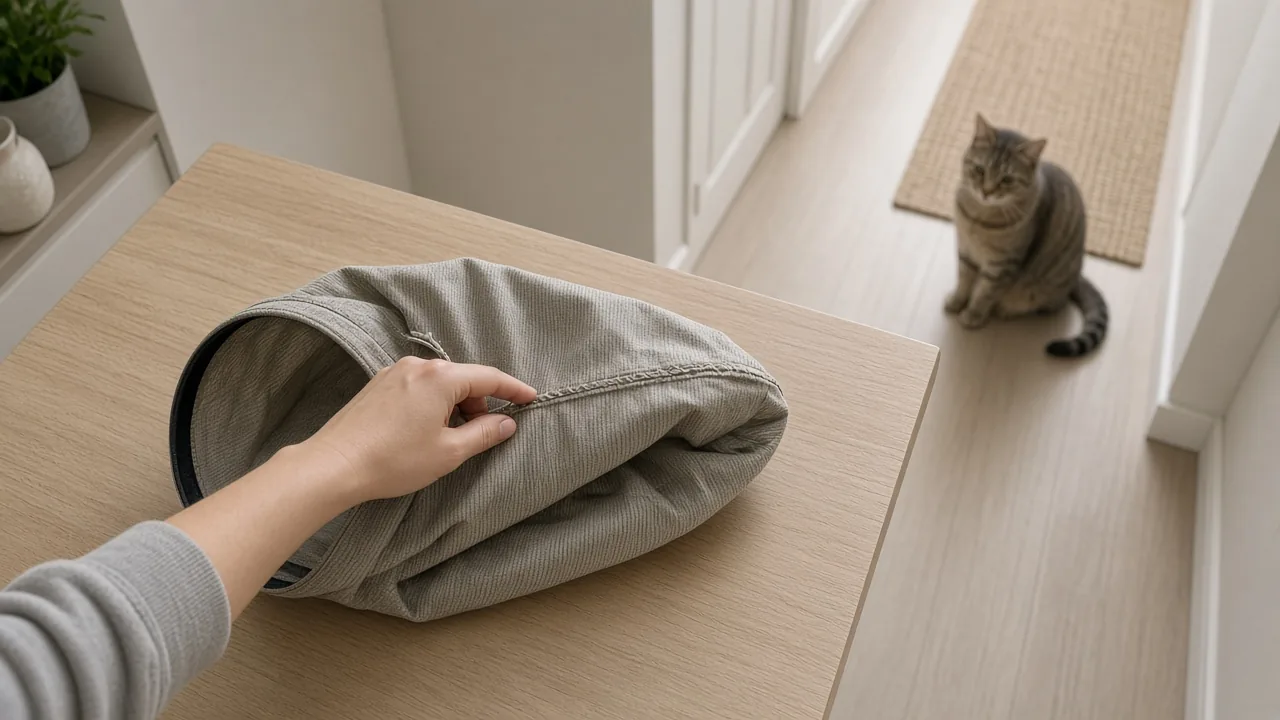
Both tunnel types need a repeat inspection, not a one-time check at purchase. Here’s a simple routine:
- Run your hand along every seam and hole edge once a week, feeling for any hard point poking through fabric.
- Check more often, even daily for a stretch, after you’ve seen your cat chew, pull, or claw at the fabric.
- Look at hole edges specifically on rug-style tunnels for fraying or loosened stitching that widens the gap or creates loose threads.
- Watch how your cat exits the tunnel. Hesitation or struggling in a spot that used to be easy can mean the fabric has stretched or torn in a way that’s changing the fit.
A quick weekly check takes under a minute and catches most problems before they become a scrape or a stuck cat. It’s a small habit to build, but it’s the difference between catching a thinning seam early and discovering it only after your cat gets hurt.
Signs a tunnel or rug needs to be retired
Replace the toy, don’t patch it, if you see any of the following:
- A wire tip poking through fabric anywhere, even slightly
- Rust on any visible metal
- Frayed or torn hole edges on a rug-style tunnel
- Loose stitching that’s widening a hole beyond its original size
- Your cat repeatedly struggling to get in or out of a spot that used to be easy
Once a hole has stretched or a wire has broken through, there’s no reliable way to make it safe again. It’s a replace situation, not a repair one, and taping over an exposed wire or sewing a quick patch over a frayed hole only delays the problem rather than solving it.
Beyond Tunnels: Other Interactive Cat Toys With Similar Entrapment or Injury Risks
Tunnels aren’t the only toy category where a cat can get caught or hurt. Hanging teasers, automatic lifting toys, and spring-loaded wands carry their own versions of the same basic problem: something designed to move can also catch, strike, or wrap around a cat.
Are motorized or hanging cat teasers safe to leave unsupervised?
An automatic lifting cat teaser with a remote control was popular with three cats in one household, according to a reviewer, but the same review noted that one of the cats got tangled in it and was injured. That’s the core risk with any motorized or string-based toy: a cat left alone with it can end up wrapped around a moving part or a length of cord, which raises a real strangulation risk, even when the toy works exactly as designed for the other cats in the house.
The safer approach is to treat motorized and hanging teasers as supervised-play toys only. Run them while you’re in the room, then put them away rather than leaving them set up for your cat to find on their own. This is true even for toys most owners rate highly, since the risk only shows up in a small fraction of play sessions but can be serious when it does.
Why vets often skip spring-loaded wand toys
One veterinary source steers away from recommending spring-loaded wand toys for two reasons: the rebound force can snap back and strike a cat directly in the head, and a cat playing alone with a springy toy can get tangled in a way that risks choking. Neither risk shows up every time, which is part of why it’s easy to underestimate how often a seemingly harmless toy can cause a problem.
If you already own a spring wand toy, the simplest fix isn’t throwing it out, it’s staying in the room while your cat plays with it and putting it away afterward instead of leaving it accessible. If your cat tends to bat at the spring with real force, it may be worth retiring that particular toy in favor of a softer, non-spring wand instead.
Which Cat Toys Actually Hold a Cat’s Interest Safely
Not every toy that looks exciting in a product photo actually interests a cat, and the ones that fall flat often share a common flaw: they let a cat chase but never actually catch anything.
Why laser pointers and flying discs often fall flat
A flying disc toy marketed for cats got a lukewarm reception in testing, with cats showing little interest as it moved through the air. One reviewer even noted it seemed better suited to dogs than cats. Laser pointers have a similar structural problem, according to a veterinary source: a cat can chase the dot endlessly but never physically catch it, and that chasing-without-catching pattern can build frustration over time rather than satisfaction.
Neither toy is dangerous in the way a tight tunnel hole or a tangled cord is. The issue is engagement, not injury, but a bored or frustrated cat is also less likely to get the exercise and enrichment that interactive play is supposed to provide. If you do use a laser pointer, following it up with a physical toy your cat can actually grab and "catch" helps close that loop instead of ending the session on frustration.
Why feather wands and sound-based toys perform better
A wand toy made with real feathers drew the strongest reaction in one round of testing, with cats responding immediately and intensely, in a way the tester linked to triggering something closer to natural hunting instinct than a plastic lure could. A veterinary source separately pointed to sound-emitting toys, like a star-shaped toy that chirps, as the kind of toy that taps into a cat’s instinct enough that the cat will seek it out and play on its own, sometimes staying near it even when there’s no one actively playing with the cat.
The pattern across both sources is consistent: toys that mimic the look, texture, or sound of real prey tend to hold attention far better than toys that just move or light up. If a toy in your house keeps getting ignored, it’s worth asking whether it actually resembles anything a cat would hunt, or whether it’s just motion without any of the sensory cues that trigger a stalk-chase-pounce response.
One practical note on feather wands specifically: check the string or cord regularly, since a cat that chews through the line during play can end up with a loose thread that becomes its own swallowing hazard. A frayed string is a quick fix, but it’s one more item to add to your regular toy check.
Common Mistakes Owners Make With Cat Tunnels and Interactive Toys
A few recurring mistakes show up again and again with tunnels and interactive toys, and most are easy to fix once you know to look for them:
- Buying a tunnel size based on your cat’s weight class instead of their actual ribcage or shoulder width
- Skipping periodic wear checks after the first week of use
- Leaving motorized or string-based teasers out for unsupervised solo play
- Assuming a toy is safe or effective because the packaging says so, without checking what real owners experienced
Trusting product claims without checking real reviews
An automatic cat deterrent spray is a good example of the gap between marketing and real-world use. It’s designed to detect a cat’s body heat and release a burst of air, no chemicals involved, to keep cats off counters or furniture. One buyer rated it poorly, though, reporting that it sprayed her instead of the cat, which suggests placement and angle may matter more than the product description implies.
The lesson isn’t that every gadget underperforms. It’s that a product description describes intent, not guaranteed results, and checking how real owners describe using a toy or device in their own home often reveals a detail the packaging leaves out, whether that’s a placement quirk, a sizing issue, or a part that wears faster than expected.
Frequently Asked Questions About Cat Tunnel and Toy Safety
Can multiple cats safely share one tunnel or feeder-adjacent toy?
It depends on how many cats you have and how the item is set up. One owner with four cats ran into trouble with an automatic feeder that only had three feeding ports, which created competition at feeding time. The same mismatch logic applies to tunnels and interactive toys: if you have several cats and only one high-value toy or tunnel, expect some pushing for access, and consider having a backup so no one gets squeezed out of play.
Why does my cat ignore a toy that seemed exciting in reviews?
Individual cats vary a lot. A toy that triggers a strong hunting response in one cat, like a real-feather wand, may barely register with another. If a toy isn’t getting attention, don’t assume it’s defective. Try rotating it with others, and watch whether your cat responds more to motion, sound, texture, or scent before buying another similar toy.
Is it normal for a cat to get mildly stuck in a tunnel while exploring it?
A quick squeeze or brief pause while maneuvering through a tight spot isn’t unusual, cats do this on purpose sometimes. What’s worth addressing is a cat that’s visibly struggling, can’t back out, or avoids a tunnel after a tight squeeze. That’s a sign the hole size doesn’t match your cat’s body and it’s time to size up.
How long should a cat tunnel typically last before it needs replacing?
There’s no fixed timeline, since it depends on how roughly your cat plays and how often the tunnel gets used. A cat that mostly walks through calmly will wear out a tunnel much more slowly than one that claws at the fabric, chews on the edges, or uses it as a scratching surface. Rather than watching the calendar, watch the toy itself using the weekly check described above, and let visible wear, not age, decide when it’s time to retire it.
Watch how your own cat actually plays, whether they like to squeeze into tight spots, chew on fabric edges, or chase and pounce, before settling on a tunnel or rug size. Check tunnels and other interactive toys for wear on a regular schedule, retire anything with exposed wire or frayed holes, and rotate toys in and out so your cat stays interested without any one item wearing out too fast.
This article is for general information only and is not a substitute for advice from your veterinarian. Always supervise your pet with a new toy, and replace any toy that is damaged or small enough to swallow.

Contributor
admin
Continue reading
All stories
CAT TOYS · 11 October
Are Hanging Spring Cat Toys Safe? What Injury Reports and Owners Say
CAT TOYS · 11 October
Are Pipe Cleaner Cat Toys Safe? Risks and Better DIY Swaps
CAT TOYS · 11 October
Responses
Moderated discussion